



DBeQ
Based on 8 publication(s) in Google Scholar
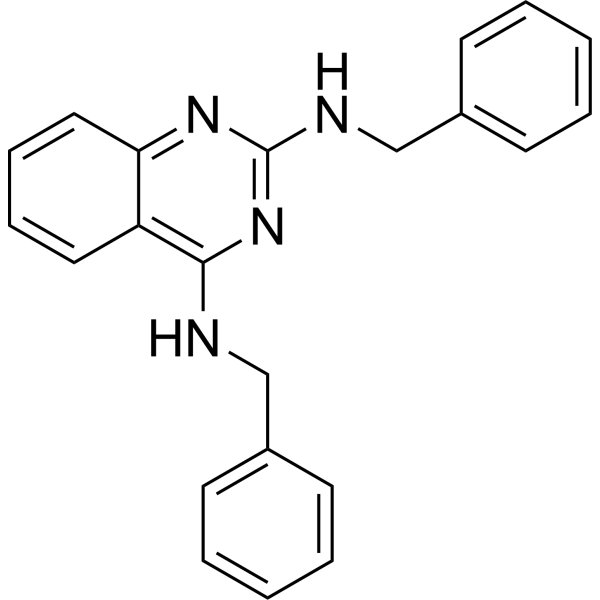
DBeQ is a selective, potent, reversible, and ATP-competitive p97 inhibitor, with an IC50 value of 1.5 μM and 1.6 μM for p97(wt) and p97(C522A), respectively; DBeQ also inhibits Vps4 with an IC50 of 11.5 μM.
For research use only. We do not sell to patients.
- Purity : 98.79%
- CAS No.: 177355-84-9
- Formula: C22H20N4
- Molecular Weight:340.42
-
Storage:Powder -20°C, 3 years , 4°C, 2 years ; In solvent -80°C, 2 years , -20°C, 1 year

To place orders, for customer services and technical support, please contact: MedChemExpress USA
Tel: 609-228-6898 E-mail: [email protected] [email protected]


-
 Biological Activity
-
Chemical Information
-
Solvent & Solubility
- Purity & Documentation
- References
-
 Help & FAQs


-
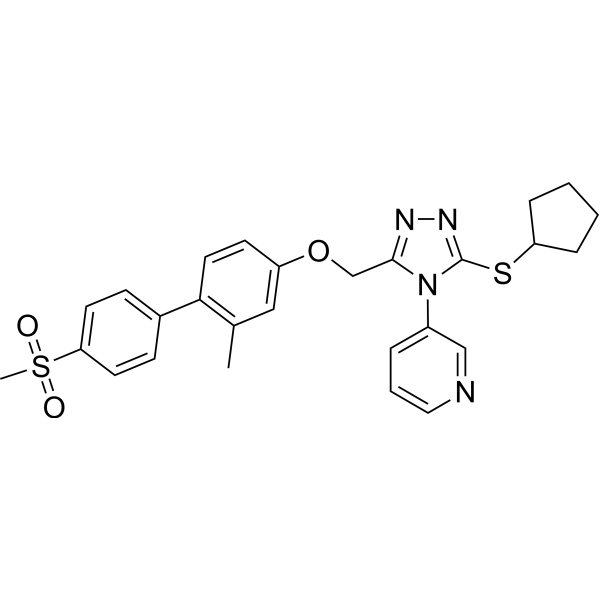
HY-15713
NMS-873VCP/p97 Inhibitor -
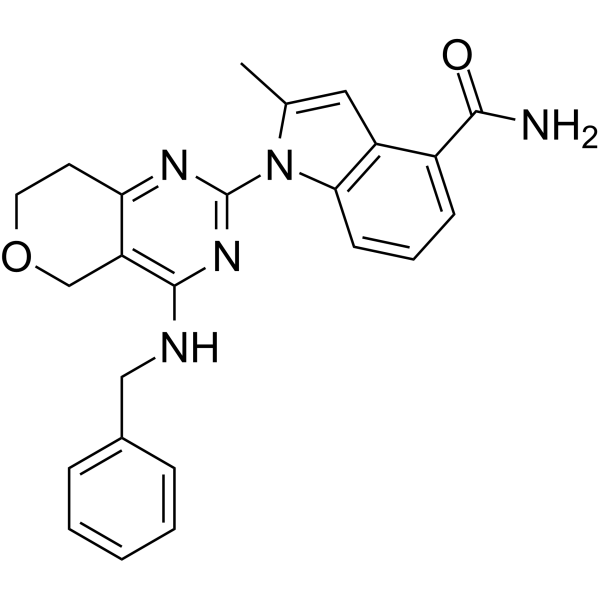
HY-12861
CB-5083p97 AAA ATPase/VCP Inhibitor -
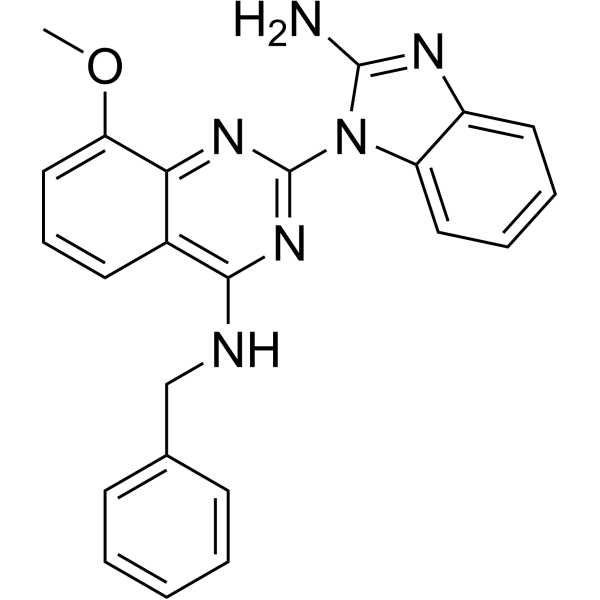
HY-19795
ML240p97 Inhibitor -
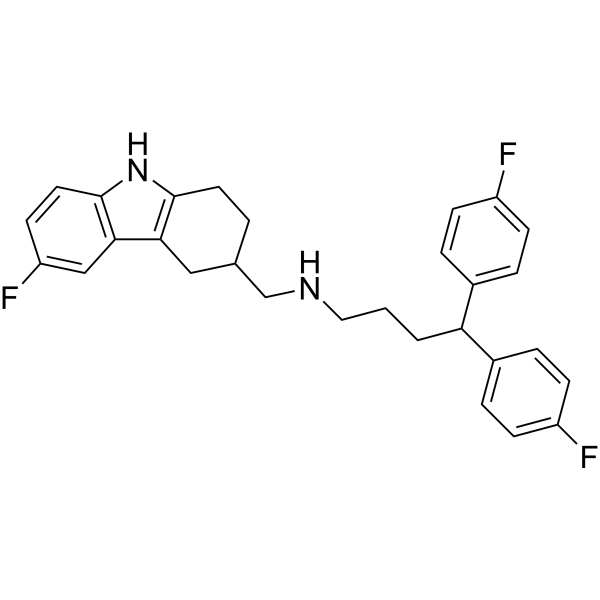
HY-123872
MSC1094308p97/VPS4B Inhibitor -
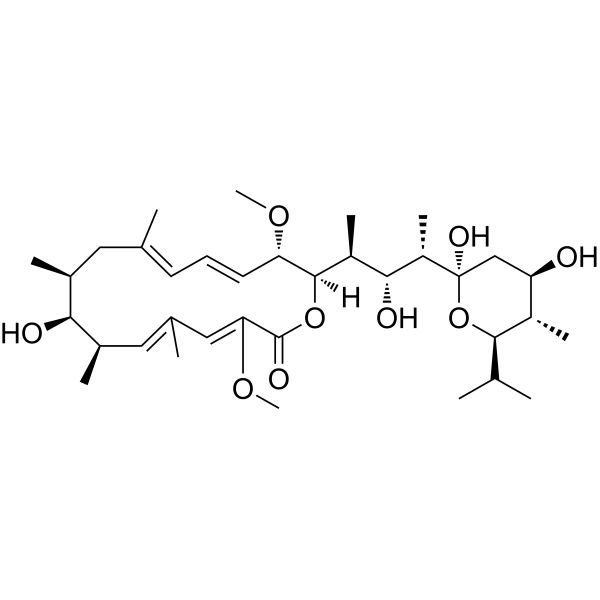
HY-100558
Bafilomycin A1V-ATPase Inhibitor -
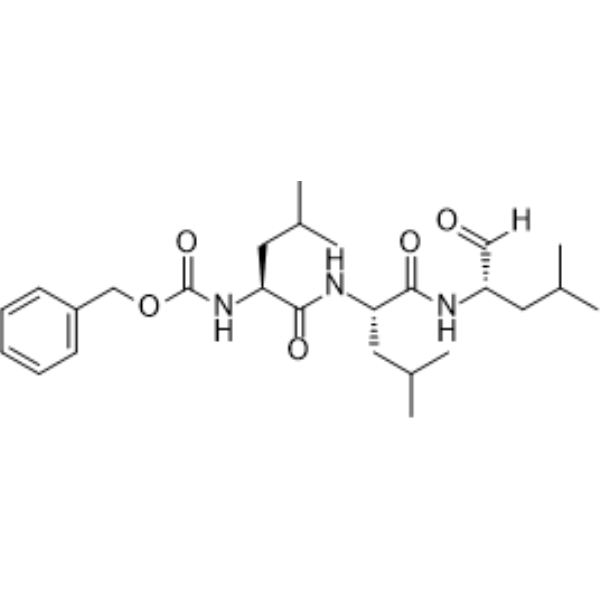
HY-13259
MG-132Proteasome Inhibitor -
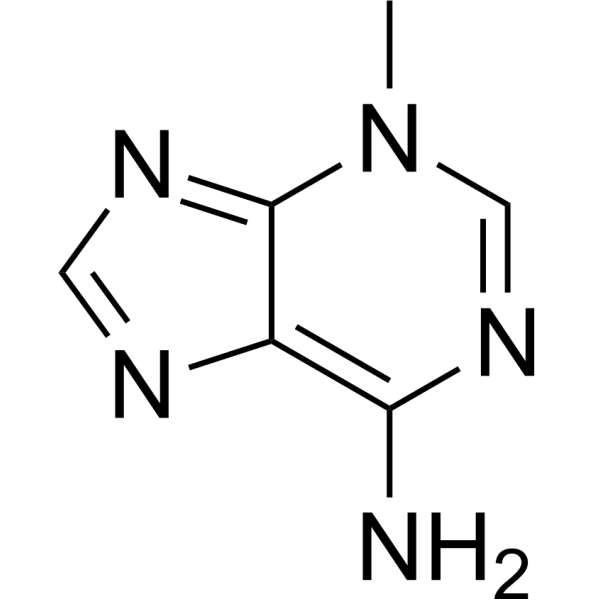
HY-19312
3-MethyladenineAutophagy/PI3K Inhibitor -
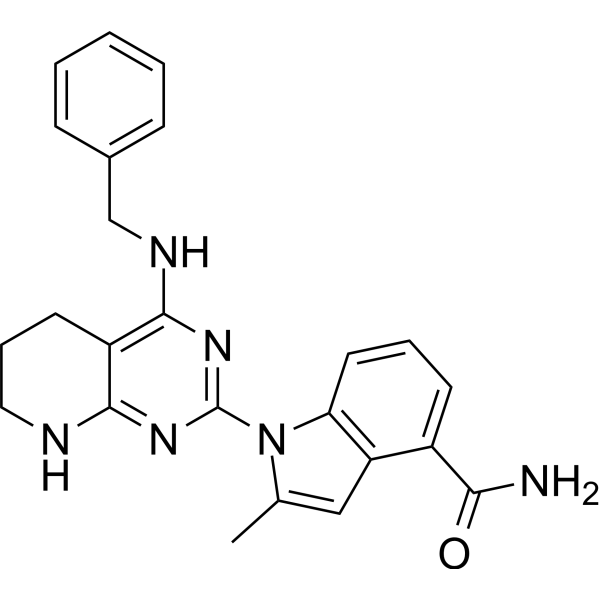
HY-128724
CB-5339p97 Inhibitor -
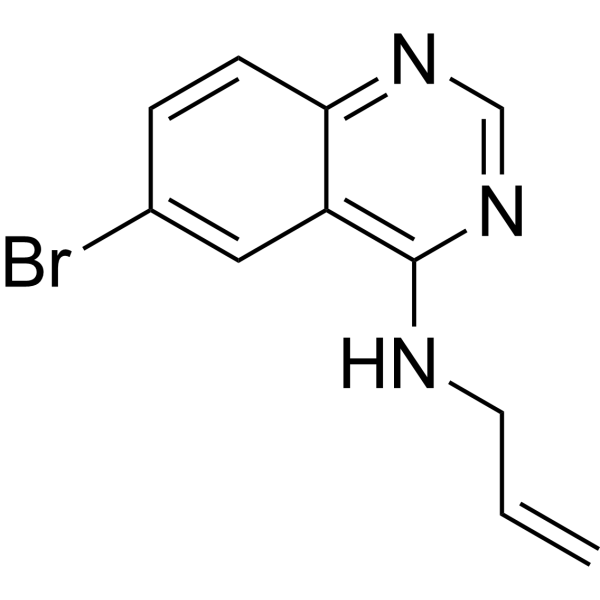
HY-100200
SMER28Autophagy Positive Regulator -
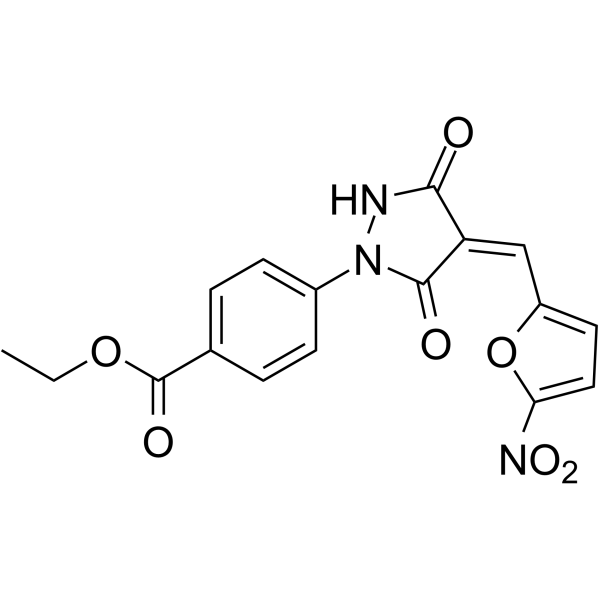
HY-13296
PYR-41Ubiquitin-Activating Enzyme E1 Inhibitor -
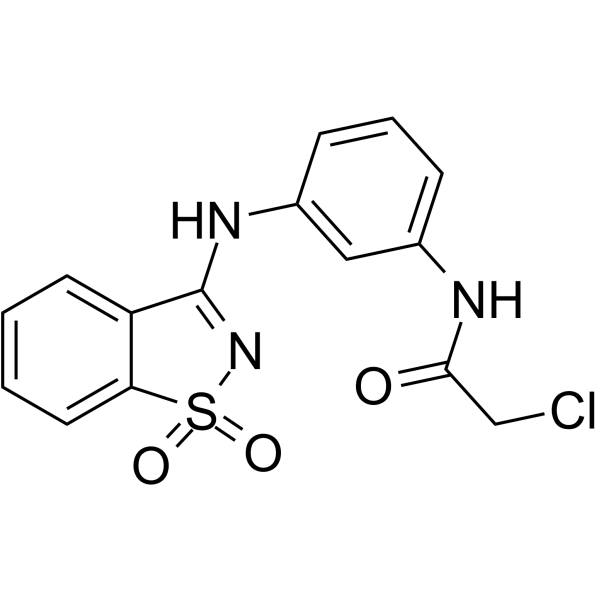
HY-15714
NMS-859VCP (p97) Inhibitor -
HY-10583
Y-27632 dihydrochlorideROCK Inhibitor
Publications Citing Use of MedChemExpress (MCE) DBeQ
More- Autophagy. 2025 Dec;21(12):2883-2902. [Abstract]
- Nat Commun. 2025 Nov 18;16(1):10094. [Abstract]
- Nat Commun. 2025 Oct 29;16(1):9554. [Abstract]
- Inflammation. 2024 Oct;47(5):1868-1883. [Abstract]
- PLoS Pathog. 2024 Oct 29;20(10):e1012674. [Abstract]
- Free Radic Res. 2026 Mar;60(3):270-288. [Abstract]
- Discov Oncol. 2023 Jun 3;14(1):86. [Abstract]
- Vet Microbiol. 2022 Sep:272:109511. [Abstract]
 Customer Validation & Images

-
WB
-
IF
-
RT-PCR
-
WB
-
Bio/Physico-chemical Assay


Biological Activity
Description
IC50 & Target
Cellular Effect
|
Cell Line

|
Type | Value | Description | References |
|---|---|---|---|---|
| HT-29 | IC50 |
4.72 μM
Compound: 3e
|
Cytotoxicity against human HT-29 cells after 72 hrs by neutral red dye assay
Cytotoxicity against human HT-29 cells after 72 hrs by neutral red dye assay
|
[PMID: 21700369] |
| HT-29 | IC50 |
4.72 μM
Compound: I
|
Antiproliferative activity against human HT-29 cells assessed as inhibition of cell growth incubated for 72 hrs by neutral red dye based spectrophotometric analysis
Antiproliferative activity against human HT-29 cells assessed as inhibition of cell growth incubated for 72 hrs by neutral red dye based spectrophotometric analysis
|
[PMID: 35694693] |
| J774.A1 | EC50 |
0.67 μM
Compound: 10
|
Antileishmanial activity against intracellular amastigote stage of Leishmania donovani MHOM/ET/67/L82 infected in mouse J774A1 cells by colorimetric assay
Antileishmanial activity against intracellular amastigote stage of Leishmania donovani MHOM/ET/67/L82 infected in mouse J774A1 cells by colorimetric assay
|
[PMID: 24874647] |
| J774.A1 | EC50 |
1.4 μM
Compound: 10
|
Antileishmanial activity against intracellular amastigote stage of Leishmania amazonensis LV78 infected in mouse J774A1 cells by colorimetric assay
Antileishmanial activity against intracellular amastigote stage of Leishmania amazonensis LV78 infected in mouse J774A1 cells by colorimetric assay
|
[PMID: 24874647] |
| J774.A1 | EC50 |
5.5 μM
Compound: 1
|
Cytotoxicity against mouse J774A.1 cells assessed as inhibition of cell viability after 72 hrs by MTT assay
Cytotoxicity against mouse J774A.1 cells assessed as inhibition of cell viability after 72 hrs by MTT assay
|
[PMID: 25749014] |
| J774.A1 | EC50 |
5.5 μM
Compound: 10
|
Cytotoxicity against mouse J774A1 cells after 72 hrs by MTT assay
Cytotoxicity against mouse J774A1 cells after 72 hrs by MTT assay
|
[PMID: 24874647] |
| MDA-MB-231 | IC50 |
1.79 μM
Compound: 3e
|
Cytotoxicity against human MDA-MB-231 cells after 72 hrs by neutral red dye assay
Cytotoxicity against human MDA-MB-231 cells after 72 hrs by neutral red dye assay
|
[PMID: 21700369] |
| MDA-MB-231 | IC50 |
1.79 μM
Compound: I
|
Antiproliferative activity against human MDA-MB-231 cells assessed as inhibition of cell growth incubated for 72 hrs by neutral red dye based spectrophotometric analysis
Antiproliferative activity against human MDA-MB-231 cells assessed as inhibition of cell growth incubated for 72 hrs by neutral red dye based spectrophotometric analysis
|
[PMID: 35694693] |
| T-24 | IC50 |
5.96 μM
Compound: 3e
|
Cytotoxicity against human T24 cells after 72 hrs by neutral red dye assay
Cytotoxicity against human T24 cells after 72 hrs by neutral red dye assay
|
[PMID: 21700369] |
| T-24 | IC50 |
5.96 μM
Compound: I
|
Antiproliferative activity against human T24 cells assessed as inhibition of cell growth incubated for 72 hrs by neutral red dye based spectrophotometric analysis
Antiproliferative activity against human T24 cells assessed as inhibition of cell growth incubated for 72 hrs by neutral red dye based spectrophotometric analysis
|
[PMID: 35694693] |
In Vitro
DBeQ is a ATP-competitive p97 inhibitor, with an IC50 value of 1.5 μM and 1.6 μM for p97(wt) and p97(C522A), respectively. DBeQ inhibits p97 competitively with respect to ATP, with a Ki of 3.2 ± 0.4 μM. DBeQ inhibits degradation of the p97-dependent substrate UbG76V-GFP, with IC50 value of 2.6 μM. DBeQ (10 μM) also significantly suppresses degradation of TCRα-GFP, induces CHOP but does not increase p21 level. Moreover, DBeQ inhibits the viability of MRC-5, Hek293, HeLa and RPMI8226 cells, with GI50s of 6.6 ± 2.9, 4 ± 0.6, 3.1 ± 0.5 and 1.2 ± 0.3, respectively[1]. DBeQ potently inhibits the AAA ATPase p97 by specifically binding to the ATPase site of its D2 domain (p97D2). DBeQ also inhibits Vps4, with an IC50 of 11.5 μM. Furthermore, DBeQ (30 μM) inhibits hyphal growth of the wild-type cell (strain YLZ0)[2].
MedChemExpress (MCE) has not independently confirmed the accuracy of these methods. They are for reference only.


Chemical Information
-
CAS No. 177355-84-9
-
Appearance Solid
-
Molecular Weight 340.42
-
Formula C22H20N4
-
Color White to off-white
-
SMILES
C1(NCC2=CC=CC=C2)=NC(NCC3=CC=CC=C3)=C4C=CC=CC4=N1
-
Synonyms
JRF 12
-
Shipping
Room temperature in continental US; may vary elsewhere.
-
Storage
Powder -20°C 3 years 4°C 2 years In solvent -80°C 2 years -20°C 1 year


Publications (8)
-
Journal Impact Factor
-
Most Recent
-
Autophagy
Pestivirus bovine viral diarrhea virus infection triggers lipophagy through the AMPK-PNPLA2/ATGL signaling pathway to promote viral replication. [Abstract]2025 Dec;21(12):2883-2902. PMID: 40790888 -
Nat Commun
Coronaviral nsp6 hijacks ERAD machinery to facilitate lipolysis and supply membrane components for DMV growth. [Abstract]2025 Nov 18;16(1):10094. PMID: 41253842
DBeQ purchased from MedChemExpress. Usage Cited in: Nat Commun. 2025 Nov 18;16(1):10094. [Abstract]
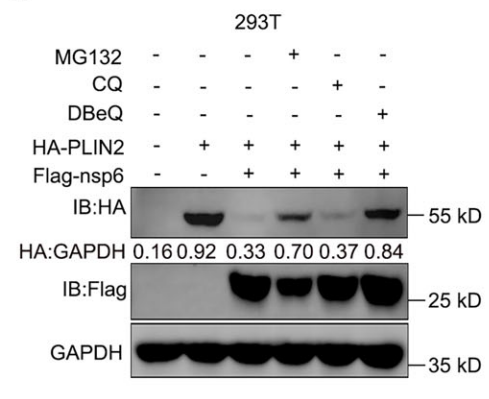
We examined the turnover of PLIN2 controlled by nsp6 and observed that nsp6 increased the degradation of PLIN2 protein, while the treatment of MG132 or the ERAD inhibitor DBeQ blocked nsp6-mediated reduction in PLIN2 protein level; CQ was used as a negative control.
DBeQ purchased from MedChemExpress. Usage Cited in: Nat Commun. 2025 Nov 18;16(1):10094. [Abstract]
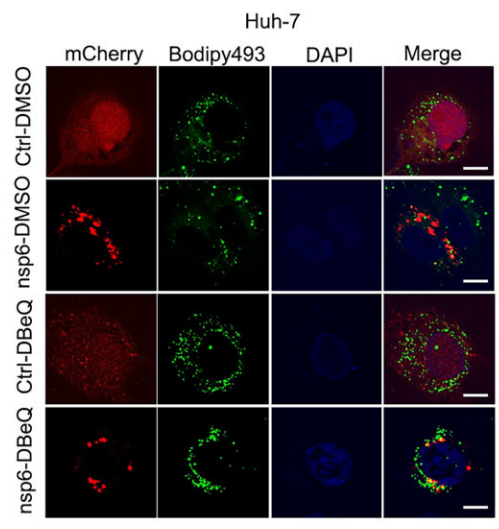
Confocal microscopy of Huh-7 cells transfected with mCherry-nsp6 for 24 h and then treated with 5 μM DBeQ for an additional 12 h.
DBeQ purchased from MedChemExpress. Usage Cited in: Nat Commun. 2025 Nov 18;16(1):10094. [Abstract]
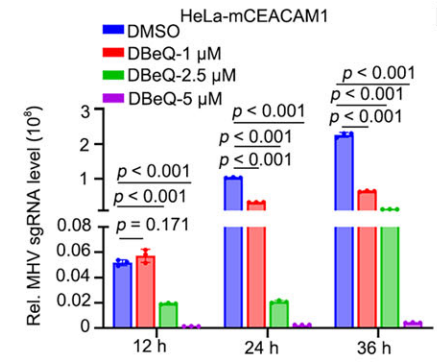
HeLa-mCEACAM1 cells were infected with MHV-A59 and treated with DBeQ (0-5 μM). The cell lysates were subjected to qRT-PCR.
DBeQ purchased from MedChemExpress. Usage Cited in: Nat Commun. 2025 Nov 18;16(1):10094. [Abstract]
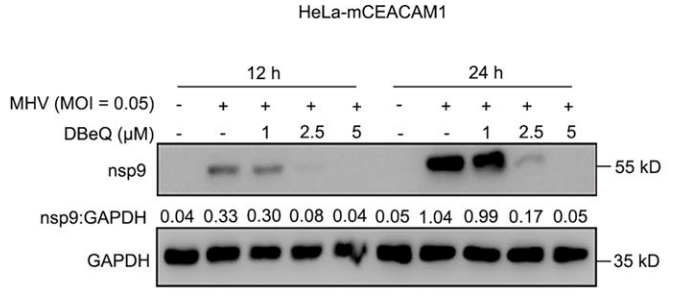
HeLa-mCEACAM1 cells were infected with MHV-A59 and treated with DBeQ (0-5 μM, 12-24 h). The cell lysates were subjected to immunoblot analysis.
DBeQ purchased from MedChemExpress. Usage Cited in: Nat Commun. 2025 Nov 18;16(1):10094. [Abstract]
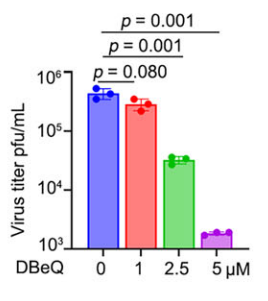
HeLa-mCEACAM1 cells were infected with MHV-A59 and treated with DBeQ (0-5 μM). The supernatant was used for plaque assay.
DBeQ purchased from MedChemExpress. Usage Cited in: Nat Commun. 2025 Nov 18;16(1):10094. [Abstract]
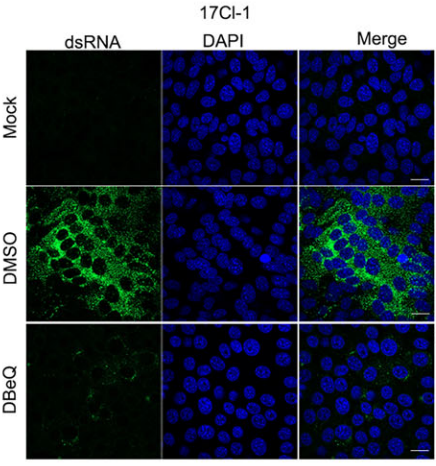
17Cl-1 cells were pre-treated with 5 μM DBeQ overnight and then infected with MHV-A59 at MOI of 5 for 12 h.
DBeQ purchased from MedChemExpress. Usage Cited in: Nat Commun. 2025 Nov 18;16(1):10094. [Abstract]
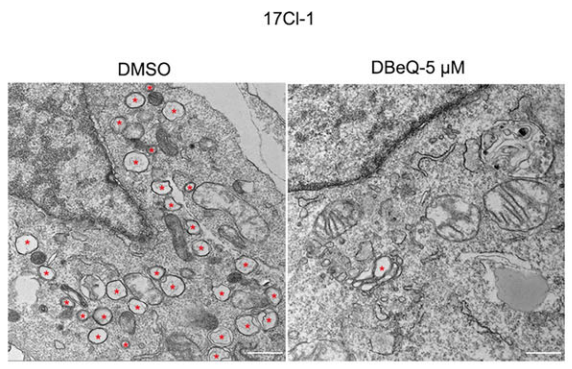
17Cl-1 cells were infected with MHV at MOI of 5 for 2 h and treated with 5 μM DBeQ for 10 h.
-
Nat Commun
Nanomaterial signatures program biomolecular condensates via triphasic separation for chemoplasticity remodeling. [Abstract]2025 Oct 29;16(1):9554. PMID: 41162367 -
Inflammation
2024 Oct;47(5):1868-1883. PMID: 38563877 -
PLoS Pathog
The protein segregase VCP/p97 promotes host antifungal defense via regulation of SYK activation. [Abstract]2024 Oct 29;20(10):e1012674. PMID: 39471181 -
Free Radic Res
4-HNE induces cell death through the VCP-related ubiquitination pathway in diabetic cardiomyopathy and the protective effect of metformin. [Abstract]2026 Mar;60(3):270-288. PMID: 42033421 -
Discov Oncol
CircHIPK3 negatively regulates autophagy by blocking VCP binding to the Beclin 1 complex in bladder cancer. [Abstract]2023 Jun 3;14(1):86. PMID: 37269429 -
Vet Microbiol
Valosin-containing protein (VCP/p97) is responsible for the endocytotic trafficking of classical swine fever virus. [Abstract]2022 Sep:272:109511. PMID: 35849988


Solvent & Solubility
In Vitro:
DMSO : 35.71 mg/mL (104.90 mM; Need ultrasonic; Hygroscopic DMSO has a significant impact on the solubility of product, please use newly opened DMSO)
Please refer to the solubility information to select the appropriate solvent. Once prepared, please aliquot and store the solution to prevent product inactivation from repeated freeze-thaw cycles.
Storage method and period of stock solution: -80°C, 2 years; -20°C, 1 year. When stored at -80°C, please use it within 2 years. When stored at -20°C, please use it within 1 year.
Please refer to the solubility information to select the appropriate solvent. Once prepared, please aliquot and store the solution to prevent product inactivation from repeated freeze-thaw cycles.
Storage method and period of stock solution: -80°C, 2 years; -20°C, 1 year. When stored at -80°C, please use it within 2 years. When stored at -20°C, please use it within 1 year.
Concentration (start) × Volume (start) = Concentration (final) × Volume (final)
In Vivo:
Select the appropriate dissolution method based on your experimental animal and administration route.
- For the following dissolution methods, please ensure to first prepare a clear stock solution using an In Vitro approach and then sequentially add co-solvents:
- To ensure reliable experimental results, the clarified stock solution can be appropriately stored based on storage conditions. As for the working solution for In Vivo experiments, it is recommended to prepare freshly and use it on the same day.
- The percentages shown for the solvents indicate their volumetric ratio in the final prepared solution. If precipitation or phase separation occurs during preparation, heat and/or sonication can be used to aid dissolution.
Add each solvent one by one: 10% DMSO 40% PEG300 5% Tween-80 45% Saline
Solubility: ≥ 2.5 mg/mL (7.34 mM); Clear solution
This protocol yields a clear solution of ≥ 2.5 mg/mL (saturation unknown).
Taking 1 mL working solution as an example, add 100 μL DMSO stock solution (25.0 mg/mL) to 400 μL PEG300, and mix evenly; then add 50 μL Tween-80 and mix evenly; then add 450 μL Saline to adjust the volume to 1 mL.
Preparation of Saline: Dissolve 0.9 g sodium chloride in ddH₂O and dilute to 100 mL to obtain a clear Saline solution.
In Vivo Dissolution Calculator
Please enter the basic information of animal experiments:
-
-
-
-
Recommended: Prepare an additional quantity of animals to account for potential losses during experiments.
Please enter your animal formula composition:
-
%DMSO +
Recommended: Keep the proportion of DMSO in working solution below 2% if your animal is weak.
-
%+
-
+%Tween-80 + +
-
%Saline +
The co-solvents required include: DMSO, . All of co-solvents are available by MedChemExpress (MCE). , Tween 80. All of co-solvents are available by MedChemExpress (MCE).
Working solution concentration: 0.22 mg/mL
Method for preparing stock solution: mg drug dissolved in μL DMSO. Stock solution concentration: mg/mL.
1. Take μL DMSO stock solution;
2. Add μL .
μL , mix evenly;
3. Then add μL Tween 80, mix evenly;
4. Then add μL
Please ensure that the stock solution in the first step is dissolved to a clear state, and add co-solvents in sequence. You can use ultrasonic heating (ultrasonic cleaner, recommended frequency 20-40 kHz), vortexing, etc. to assist dissolution.


Purity & Documentation
-
Data Sheet (279 KB)
-
SDS (393 KB)
- English - EN (393 KB)
- Français - FR (393 KB)
- Deutsch - DE (393 KB)
- Norwegian - NO (393 KB)
- Español - ES (393 KB)
- Swedish - SV (393 KB)
- Italian - IT (393 KB)
- Korean - KR (393 KB)
- Portuguese - PT (393 KB)
-
Handling Instructions (2659 KB)
References
[1]. Chou TF, et al.Reversible inhibitor of p97, DBeQ, impairs both ubiquitin-dependent and autophagic protein clearance pathways. Proc Natl Acad Sci U S A. 2011 Mar 22;108(12):4834-9. [Content Brief]
[2]. Zhang Y, et al. The AAA ATPase Vps4 Plays Important Roles in Candida albicans Hyphal Formation and is Inhibited by DBeQ. Mycopathologia. 2016 Jun;181(5-6):329-39. [Content Brief]


Complete Stock Solution Preparation Table
Please refer to the solubility information to select the appropriate solvent. Once prepared, please aliquot and store the solution to prevent product inactivation from repeated freeze-thaw cycles.
Storage method and period of stock solution: -80°C, 2 years; -20°C, 1 year. When stored at -80°C, please use it within 2 years. When stored at -20°C, please use it within 1 year.
| Optional Solvent | Concentration Solvent Mass | 1 mg | 5 mg | 10 mg | 25 mg |
|---|---|---|---|---|---|
| DMSO | 1 mM | 2.9375 mL | 14.6877 mL | 29.3755 mL | 73.4387 mL |
| 5 mM | 0.5875 mL | 2.9375 mL | 5.8751 mL | 14.6877 mL | |
| 10 mM | 0.2938 mL | 1.4688 mL | 2.9375 mL | 7.3439 mL | |
| 15 mM | 0.1958 mL | 0.9792 mL | 1.9584 mL | 4.8959 mL | |
| 20 mM | 0.1469 mL | 0.7344 mL | 1.4688 mL | 3.6719 mL | |
| 25 mM | 0.1175 mL | 0.5875 mL | 1.1750 mL | 2.9375 mL | |
| 30 mM | 0.0979 mL | 0.4896 mL | 0.9792 mL | 2.4480 mL | |
| 40 mM | 0.0734 mL | 0.3672 mL | 0.7344 mL | 1.8360 mL | |
| 50 mM | 0.0588 mL | 0.2938 mL | 0.5875 mL | 1.4688 mL | |
| 60 mM | 0.0490 mL | 0.2448 mL | 0.4896 mL | 1.2240 mL | |
| 80 mM | 0.0367 mL | 0.1836 mL | 0.3672 mL | 0.9180 mL | |
| 100 mM | 0.0294 mL | 0.1469 mL | 0.2938 mL | 0.7344 mL |


DBeQ Related Classifications
HY-15945 Related Classifications
 Powered by Bioz