



CB-5339
Based on 2 publication(s) in Google Scholar
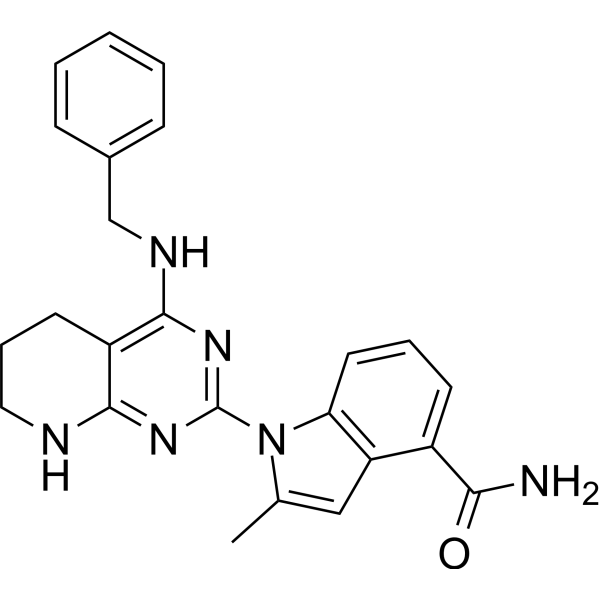
CB-5339 is an oral activity potent p97 inhibitor with an IC50 <30 nM. CB-5339 can be used for leukemia research. CB-5339 extracted from WO2015109285A1 compound FF07.
For research use only. We do not sell to patients.
- Purity : 98.58%
- CAS No.: 1863952-15-1
- Formula: C24H24N6O
- Molecular Weight:412.49
-
Storage:Powder -20°C, 3 years ; In solvent -80°C, 6 months , -20°C, 1 month

To place orders, for customer services and technical support, please contact: MedChemExpress USA
Tel: 609-228-6898 E-mail: [email protected] [email protected]


-
 Biological Activity
-
Chemical Information
-
Solvent & Solubility
- Protocols
- Purity & Documentation
- References
-
 Help & FAQs


-
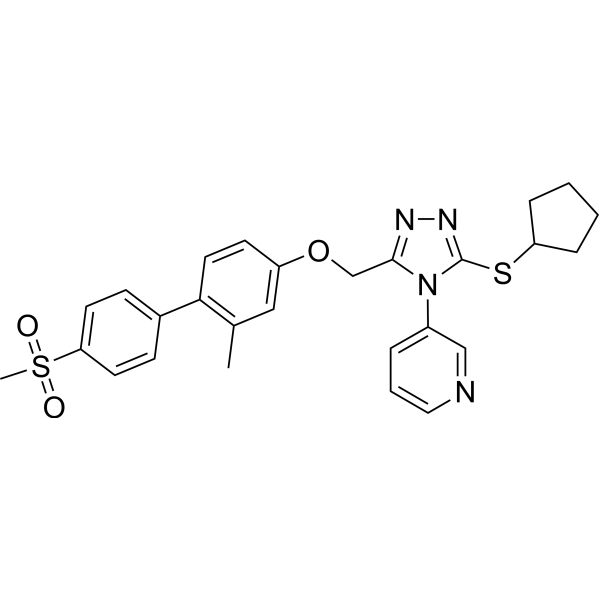
HY-15713
NMS-873VCP/p97 Inhibitor -
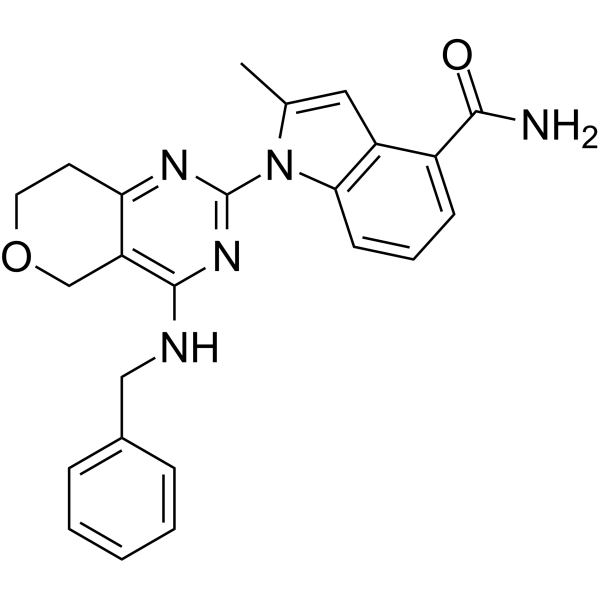
HY-12861
CB-5083p97 AAA ATPase/VCP Inhibitor -
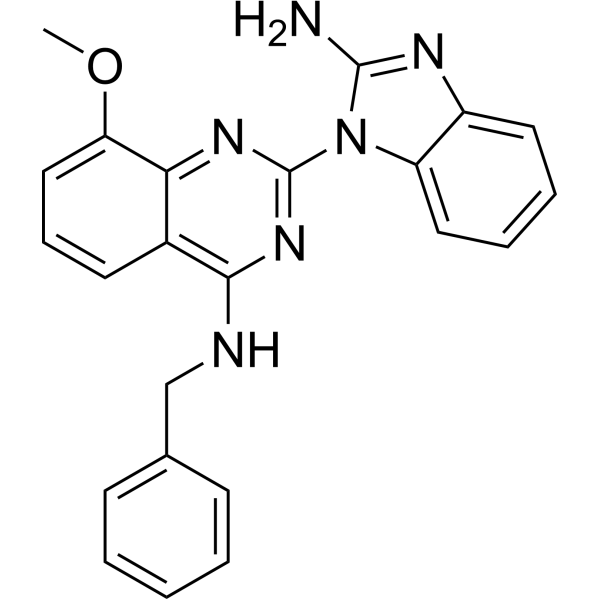
HY-19795
ML240p97 Inhibitor -
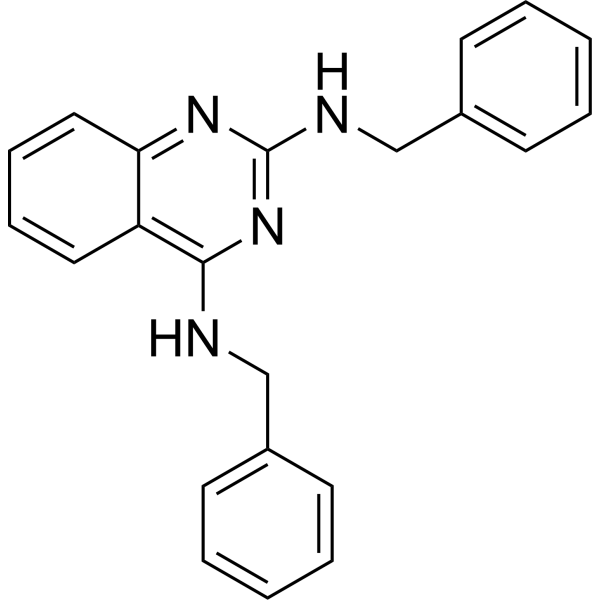
HY-15945
DBeQp97 Inhibitor -
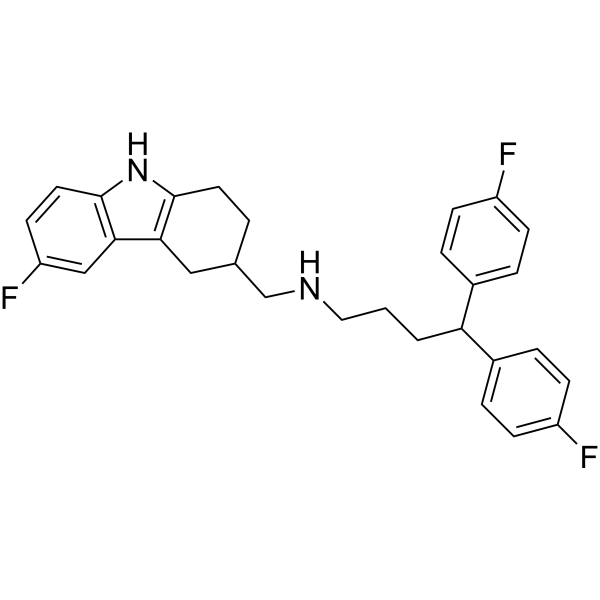
HY-123872
MSC1094308p97/VPS4B Inhibitor -
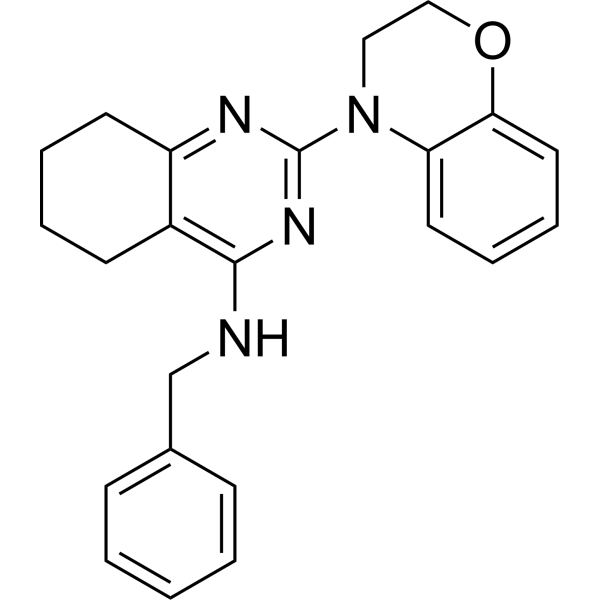
HY-19797
ML241p97 ATPase Inhibitor -
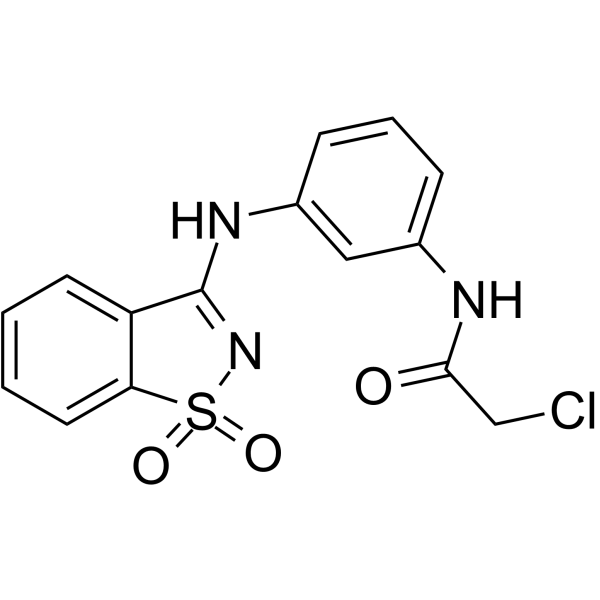
HY-15714
NMS-859VCP (p97) Inhibitor -
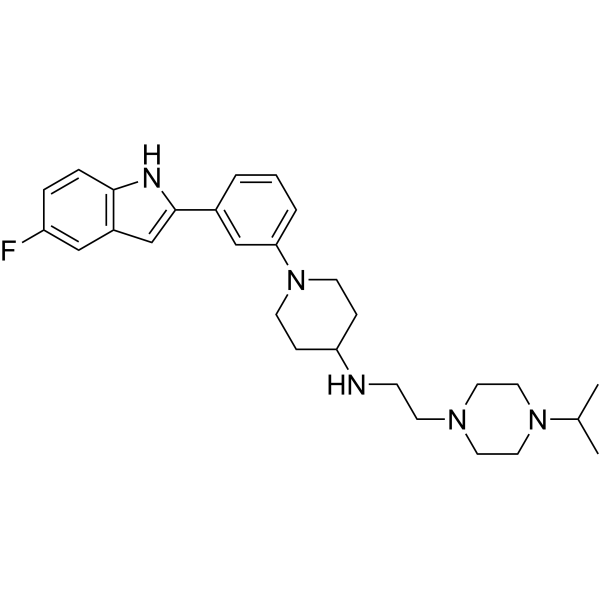
HY-123636
UPCDC-30245Allosteric p97 Inhibitor -
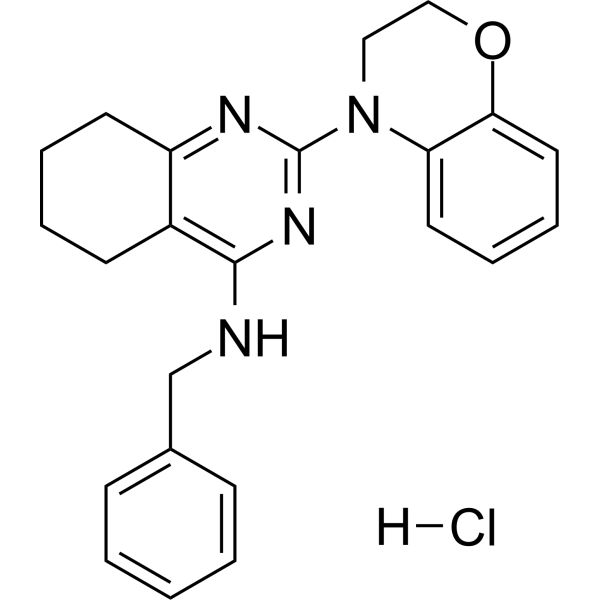
HY-19797A
ML241 hydrochloridep97 Inhibitor -
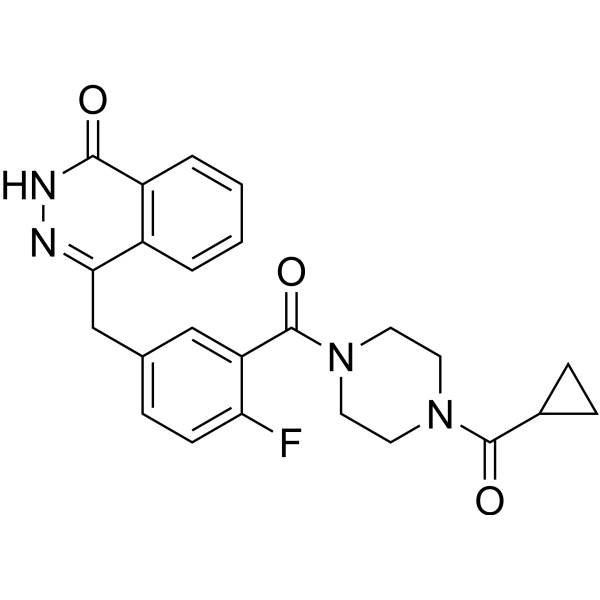
HY-10162
OlaparibPARP Inhibitor -
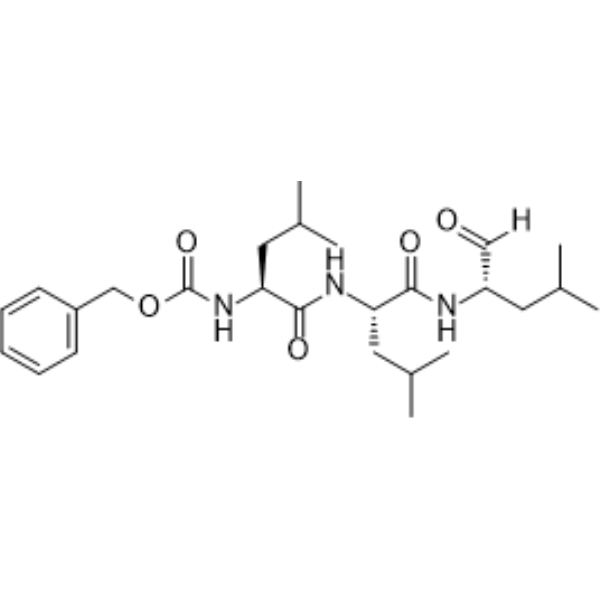
HY-13259
MG-132Proteasome Inhibitor -
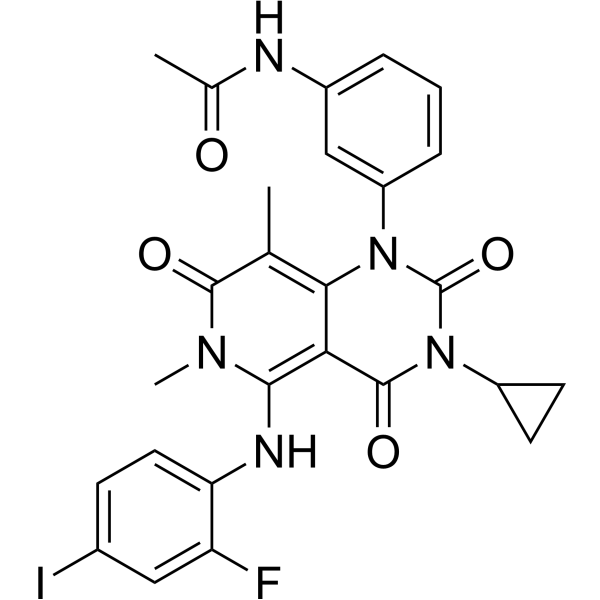
HY-10999
TrametinibMEK Inhibitor
Publications Citing Use of MedChemExpress (MCE) CB-5339
More

Biological Activity
Description
Cellular Effect
|
Cell Line

|
Type | Value | Description | References |
|---|---|---|---|---|
| HCT-116 | IC50 |
0.7 μM
Compound: CB-5339
|
Anti-proliferative activity against human HCT-116 cells assessed as inhibition of cell proliferation incubated for 72 hrs by CellTiter-Glo luminescent assay
Anti-proliferative activity against human HCT-116 cells assessed as inhibition of cell proliferation incubated for 72 hrs by CellTiter-Glo luminescent assay
|
[PMID: 36228523] |
In Vitro
CB-5339( 0-1.6 μM; 24-48 hours) induces polyubiquitin protein accumulation and activates of the unfolded protein response (UPR) in AML cells[2].
MedChemExpress (MCE) has not independently confirmed the accuracy of these methods. They are for reference only. Further protocols information, click here.
-
Cell Line:MV4-11 AML cell line
-
Concentration:0,0.2,0.4,0.8,1.6 μM
-
Incubation Time:24-48 hours
-
Result:Induced dose-dependent polyubiquitin protein accumulation at concentrations ≥ 0.4 μM.
Induced the ER stress marker GRP78 accumulated at concentrations ≥ 0.4 μM.
Induced spliced XBP-1 and ATF-4 accumulated after treatment with CB-5339 at concentrations ≥ 1.6 μM and 0.8 μM respectively arguing for a concentration-dependent increase in proteotoxic stress.
In Vivo
MedChemExpress (MCE) has not independently confirmed the accuracy of these methods. They are for reference only.
-
Animal Model:MLL-AF9-driven patient-derived xenograft (PDX) AML model in C57BL/6 male mice[2]
-
Dosage:90 mg/kg
-
Administration:oral gavage (p.o.)
-
Result:Decreased bone marrow leukemic infiltration and circulating leukemic cells.
Prolonged mice survival.
Clinical Trial
| NCT Number | Sponsor | Condition | Start Date |
Phase
|
|---|---|---|---|---|
| NCT01329991 | Plexxikon| | 2011-05 | PHASE1 |


Chemical Information
-
CAS No. 1863952-15-1
-
Appearance Solid
-
Molecular Weight 412.49
-
Formula C24H24N6O
-
Color Off-white to yellow
-
SMILES
O=C(C1=CC=CC2=C1C=C(C)N2C3=NC(NCC4=CC=CC=C4)=C(CCCN5)C5=N3)N
-
Shipping
Room temperature in continental US; may vary elsewhere.
-
Storage
Powder -20°C 3 years In solvent -80°C 6 months -20°C 1 month


Publications (2)
-
Journal Impact Factor
-
Most Recent
-
Proc Natl Acad Sci U S A
CRISPR screens identify the ATPase VCP as a druggable therapeutic vulnerability in cholangiocarcinoma. [Abstract]2025 Sep 30;122(39):e2519568122. PMID: 40991439 -
FASEB J
FAT1 Enhances the Sensitivity of Non-Small Cell Lung Cancer to VCP Inhibitors by Regulating the Activation of the Endoplasmic Reticulum Stress Pathway. [Abstract]2025 May 15;39(9):e70585. PMID: 40293794


Solvent & Solubility
In Vitro:
DMSO : 100 mg/mL (242.43 mM; ultrasonic and warming and heat to 80°C; Hygroscopic DMSO has a significant impact on the solubility of product, please use newly opened DMSO)
Please refer to the solubility information to select the appropriate solvent. Once prepared, please aliquot and store the solution to prevent product inactivation from repeated freeze-thaw cycles.
Storage method and period of stock solution: -80°C, 6 months; -20°C, 1 month. When stored at -80°C, please use it within 6 months. When stored at -20°C, please use it within 1 month.
Please refer to the solubility information to select the appropriate solvent. Once prepared, please aliquot and store the solution to prevent product inactivation from repeated freeze-thaw cycles.
Storage method and period of stock solution: -80°C, 6 months; -20°C, 1 month. When stored at -80°C, please use it within 6 months. When stored at -20°C, please use it within 1 month.
Concentration (start) × Volume (start) = Concentration (final) × Volume (final)
In Vivo:
Select the appropriate dissolution method based on your experimental animal and administration route.
- For the following dissolution methods, please ensure to first prepare a clear stock solution using an In Vitro approach and then sequentially add co-solvents:
- To ensure reliable experimental results, the clarified stock solution can be appropriately stored based on storage conditions. As for the working solution for In Vivo experiments, it is recommended to prepare freshly and use it on the same day.
- The percentages shown for the solvents indicate their volumetric ratio in the final prepared solution. If precipitation or phase separation occurs during preparation, heat and/or sonication can be used to aid dissolution.
Add each solvent one by one: 10% DMSO 40% PEG300 5% Tween-80 45% Saline
Solubility: ≥ 2.5 mg/mL (6.06 mM); Clear solution
This protocol yields a clear solution of ≥ 2.5 mg/mL (saturation unknown).
Taking 1 mL working solution as an example, add 100 μL DMSO stock solution (25.0 mg/mL) to 400 μL PEG300, and mix evenly; then add 50 μL Tween-80 and mix evenly; then add 450 μL Saline to adjust the volume to 1 mL.
Preparation of Saline: Dissolve 0.9 g sodium chloride in ddH₂O and dilute to 100 mL to obtain a clear Saline solution.
In Vivo Dissolution Calculator
Please enter the basic information of animal experiments:
-
-
-
-
Recommended: Prepare an additional quantity of animals to account for potential losses during experiments.
Please enter your animal formula composition:
-
%DMSO +
Recommended: Keep the proportion of DMSO in working solution below 2% if your animal is weak.
-
%+
-
+%Tween-80 + +
-
%Saline +
The co-solvents required include: DMSO, . All of co-solvents are available by MedChemExpress (MCE). , Tween 80. All of co-solvents are available by MedChemExpress (MCE).
Working solution concentration: 0.22 mg/mL
Method for preparing stock solution: mg drug dissolved in μL DMSO. Stock solution concentration: mg/mL.
1. Take μL DMSO stock solution;
2. Add μL .
μL , mix evenly;
3. Then add μL Tween 80, mix evenly;
4. Then add μL
Please ensure that the stock solution in the first step is dissolved to a clear state, and add co-solvents in sequence. You can use ultrasonic heating (ultrasonic cleaner, recommended frequency 20-40 kHz), vortexing, etc. to assist dissolution.

Protocols
-
Cell Cytotoxicity Assay
Cytotoxicity assays are usually based on the assessment of cell membrane damage, which can also be indirectly detected by measuring cell viability. Detection methods include MTT assay, CKK-8 assay, LDH assay and ATP assay, etc.


Purity & Documentation
-
Data Sheet (279 KB)
-
SDS (251 KB)
- English - EN (251 KB)
- Français - FR (251 KB)
- Deutsch - DE (251 KB)
- Norwegian - NO (251 KB)
- Español - ES (251 KB)
- Swedish - SV (251 KB)
- Italian - IT (251 KB)
- Korean - KR (251 KB)
- Portuguese - PT (251 KB)
-
Handling Instructions (2659 KB)
References
[1]. David Wustrow, et al. FUSED PYRIMIDINES AS INHIBITORS OF p97 COMPLEX. WO2015109285A1.
[2]. Roux B, et.al. Targeting acute myeloid leukemia dependency on VCP-mediated DNA repair through a selective second-generation small-molecule inhibitor. Sci Transl Med. 2021 Mar 31;13(587):eabg1168. [Content Brief]


Complete Stock Solution Preparation Table
Please refer to the solubility information to select the appropriate solvent. Once prepared, please aliquot and store the solution to prevent product inactivation from repeated freeze-thaw cycles.
Storage method and period of stock solution: -80°C, 6 months; -20°C, 1 month. When stored at -80°C, please use it within 6 months. When stored at -20°C, please use it within 1 month.
| Optional Solvent | Concentration Solvent Mass | 1 mg | 5 mg | 10 mg | 25 mg |
|---|---|---|---|---|---|
| DMSO | 1 mM | 2.4243 mL | 12.1215 mL | 24.2430 mL | 60.6075 mL |
| 5 mM | 0.4849 mL | 2.4243 mL | 4.8486 mL | 12.1215 mL | |
| 10 mM | 0.2424 mL | 1.2122 mL | 2.4243 mL | 6.0608 mL | |
| 15 mM | 0.1616 mL | 0.8081 mL | 1.6162 mL | 4.0405 mL | |
| 20 mM | 0.1212 mL | 0.6061 mL | 1.2122 mL | 3.0304 mL | |
| 25 mM | 0.0970 mL | 0.4849 mL | 0.9697 mL | 2.4243 mL | |
| 30 mM | 0.0808 mL | 0.4041 mL | 0.8081 mL | 2.0203 mL | |
| 40 mM | 0.0606 mL | 0.3030 mL | 0.6061 mL | 1.5152 mL | |
| 50 mM | 0.0485 mL | 0.2424 mL | 0.4849 mL | 1.2122 mL | |
| 60 mM | 0.0404 mL | 0.2020 mL | 0.4041 mL | 1.0101 mL | |
| 80 mM | 0.0303 mL | 0.1515 mL | 0.3030 mL | 0.7576 mL | |
| 100 mM | 0.0242 mL | 0.1212 mL | 0.2424 mL | 0.6061 mL |


CB-5339 Related Classifications
HY-128724 Related Classifications
 Powered by Bioz