



Cryptococcal Infection
-
Cryptococcal Infection (18)

- 1
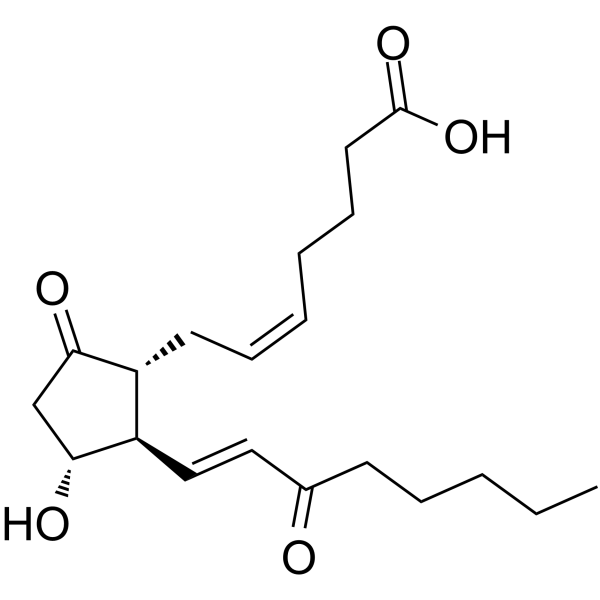
- Formula: C20H30O5
- Molecular Weight: 350.45
15-keto-Prostaglandin E2 (15-keto-PGE2) is an endogenous PGE2 metabolite. 15-keto-Prostaglandin E2 inhibits STAT3 activation by binding to the Cys259 residue of STAT3. 15-keto-Prostaglandin E2 binds to and stabilizes EP2 and EP4 receptors. 15-keto-Prostaglandin E2 inhibits the growth and progression of breast cancer cells. 15-keto-Prostaglandin E2 activates PPAR-γ and promotes fungal growth. 15-keto-Prostaglandin E2 disrupts glomerular vascularization during zebrafish development and reduces the surface area of the glomerular filtration barrier.
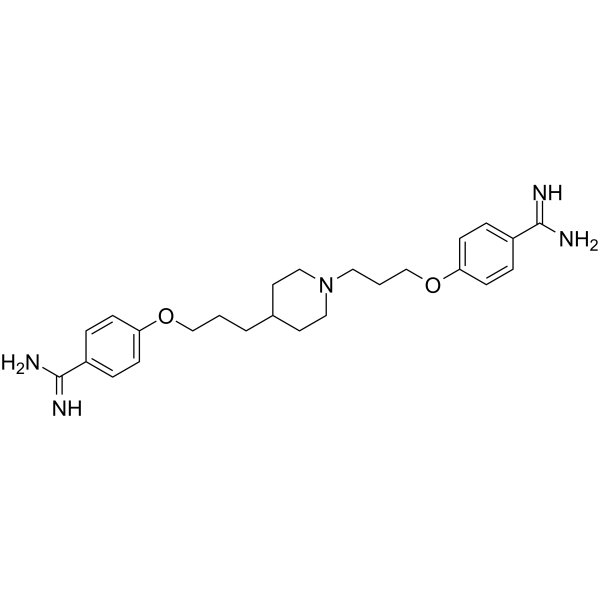
- Formula: C25H35N5O2
- Molecular Weight: 437.58
T-2307 is an antifungal agent with blood-brain barrier penetration. T-2307 exhibits broad-spectrum antifungal activity against Candida species, including echinocandin-resistant strains, Cryptococcus neoformans, Cryptococcus gattii, and some Aspergillus species. T-2307 selectively targets fungal mitochondrial respiratory chain complexes III and IV, causing collapse of the fungal mitochondrial membrane potential and exerting fungicidal or fungistatic effects. T-2307 can be used in research related to fungal infections such as invasive candidiasis, cryptococcosis, and aspergillosis.
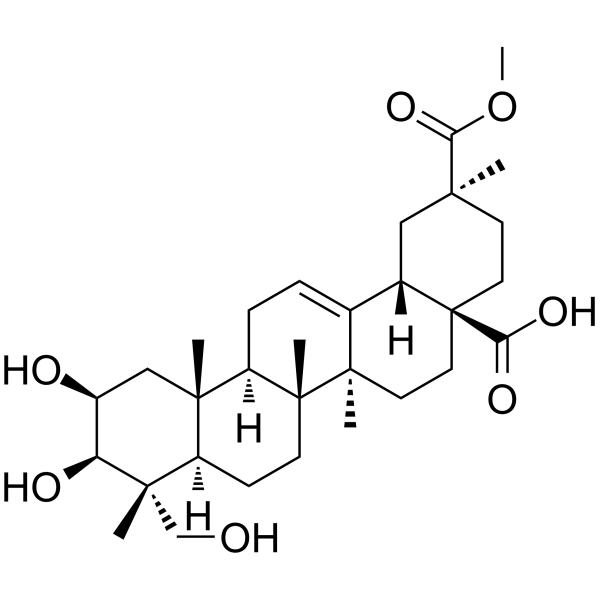
- Formula: C31H48O7
- Molecular Weight: 532.71
Phytolaccagenin is a triterpenoid saponin aglycone, Antifungal agent, vasodilator, antihypertensive agent, and anti-inflammatory agent. Phytolaccagenin activates vascular and cardiac Muscarinic receptors, blocks cardiac β-adrenergic receptors, and inhibits voltage-dependent calcium channels in blood vessels. Phytolaccagenin inhibits the growth of Candida albicans and Cryptococcus neoformans. Phytolaccagenin induces vasodilation, produces negative inotropic and negative chronotropic effects, reduces mean arterial pressure, and inhibits LPS-induced inflammation. Phytolaccagenin exhibits enhanced antihypertensive effects in high salt-induced hypertensive rats. Phytolaccagenin can be used in the research of candidiasis, cryptococcosis, hypertension, and inflammation-related diseases.

- Formula: C20H23F3N2O2
- Molecular Weight: 380.40
Antifungal agent 152 (Compound 27) is an antifungal agent. Antifungal agent 152 shows antifungal activity against C. neoformans, C. albicans, C. glabrata with MICs of 4 μg/mL, 16 μg/mL, 16 μg/mL, respectively.

India Ink is a negative staining agent. India Ink creates contrast against the polysaccharide capsule of Cryptococcus neoformans to enable visualization. India Ink enables automated measurement of Cryptococcus neoformans capsule diameter using computational image analysis. India Ink can be used for the research of cryptococcosis.

- Formula: C14H16N2O3Se
- Molecular Weight: 339.25
Urease-IN-24 is a cryptococcal urease inhibitor with a IC50 of 89.96 nM and a Ki of 64.3 nM. Urease-IN-24 acts as a competitive nickel-coordinating inhibitor that coordinates with the nickel center at the catalytic site of the enzyme via its carbonyl group. Urease-IN-24 reduces the capsule thickness of Cryptococcus neoformans and Cryptococcus gattii, increases cell membrane permeability, and inhibits melanin production. Urease-IN-24 exhibits fungicidal activity against Cryptococcus species. Urease-IN-24 can be used in the research of cryptococcosis.

- Formula: C14H16N2O2Se
- Molecular Weight: 323.25
Urease-IN-23 is a cryptococcal urease inhibitor with antifungal activity. AF55 exhibits mixed-type inhibition against cryptococcal urease, binds to both the nickel ion site at the enzyme's catalytic center and the allosteric site, impairs urease catalytic efficiency, simultaneously disrupts fungal virulence structures and damages cell membrane integrity. The IC50 and Ki values of Urease-IN-23 against cryptococcal urease are 54.92 nM and 149.1 nM, respectively. Urease-IN-23 significantly reduces the capsule thickness of Cryptococcus neoformans and Cryptococcus gattii, increases fungal cell membrane permeability, and completely blocks melanin synthesis. Urease-IN-23 shows no toxicity in the Galleria mellonella larval model. Urease-IN-23 can be used in studies related to fungal infections.

- Formula: C22H19F5N6O2
- Molecular Weight: 494.42
Antifungal agent-170 is an Antifungal agent. Antifungal agent-170 potently inhibits the growth of recombinant Saccharomyces cerevisiae strains expressing wild-type and mutant fungal CYP51 enzymes. Antifungal agent-170 potently inhibits the growth of Candida albicans, Candida glabrata, Candida krusei, Cryptococcus neoformans and Cryptococcus gattii. Antifungal agent-170 provides survival benefits in the Galleria mellonella (greater wax moth) infection model. Antifungal agent-170 can be used for the research of invasive fungal infections.

- Formula: C28H43NO6
- Molecular Weight: 489.64

- Formula: C24H22F3N4O8P
- Molecular Weight: 582.42
Fosmanogepix TFA (APX001 TFA) is an orally active APX001A (HY-18233) prodrug and antifungal agent. Fosmanogepix TFA is effective against Cryptococcus neoformans, Fluconazole (HY-B0101)-resistant C. auris. Fosmanogepix TFA is effective in the treatment of invasive pulmonary aspergillosis and pulmonary murine mucormycosis.
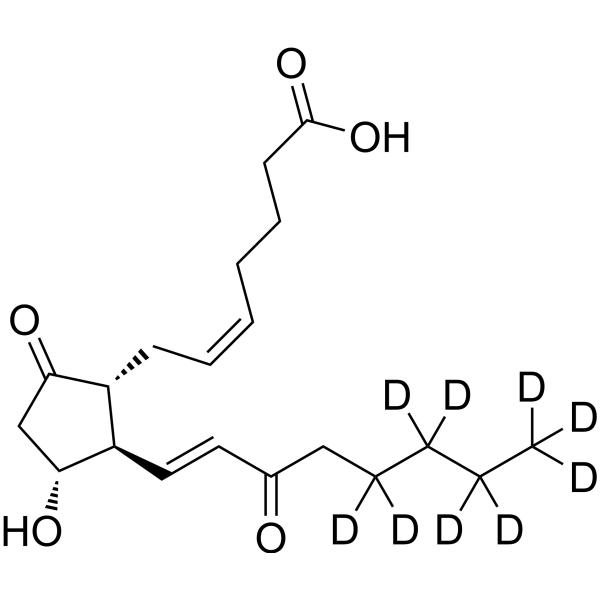
- Formula: C20H21D9O5
- Molecular Weight: 359.50
15-Keto-prostaglandin E2-d9 is the d9 labeled 15-keto-Prostaglandin E2 (HY-113205). 15-keto-Prostaglandin E2 (15-keto-PGE2) is an endogenous PGE2 metabolite. 15-keto-Prostaglandin E2 inhibits STAT3 activation by binding to the Cys259 residue of STAT3. 15-keto-Prostaglandin E2 binds to and stabilizes EP2 and EP4 receptors. 15-keto-Prostaglandin E2 inhibits the growth and progression of breast cancer cells. 15-keto-Prostaglandin E2 activates PPAR-γ and promotes fungal growth. 15-keto-Prostaglandin E2 disrupts glomerular vascularization during zebrafish development and reduces the surface area of the glomerular filtration barrier.

- Formula: C24H21F2N9O2S
- Molecular Weight: 537.54
Antifungal agent-166 is an antifungal agent. The combination of Antifungal agent-166 and Fluconazole exerts synergistic bacteriostatic effects against fluconazole-resistant Candida albicans. Antifungal agent-166 exhibits bacteriostatic activity against both Candida glabrata and Cryptococcus neoformans. Antifungal agent-166 reverses the fluconazole resistance of strains by downregulating ergosterol synthesis-related genes, drug resistance-related genes and virulence-related genes. Antifungal agent-166 can enhance the efficacy of Fluconazole in Galleria mellonella and mouse candidiasis models, reduce fungal load and improve survival rate. Antifungal agent-166 can be used in the research of fungal infections.

- Formula: C21H21ClF2N4O
- Molecular Weight: 418.87
CYP51-IN-5 is a cytochrome P450 14α-demethylase (CYP51) inhibitor and an antifungal (fungal) agent belonging to the triazole derivative class. CYP51-IN-5 is applicable to the research of Candida albicans, Cryptococcus neoformans, Candida parapsilosis, Candida tropicalis, Trichophyton rubrum, Candida krusei and Microsporum gypseum.

- Formula: C11H17N7O5S
- Molecular Weight: 359.36
Ac-CoA-IN-1 is an acyl-AMP phosphate analog and weak inhibitor of Candida albicans acetyl-CoA synthetase 2, with no activity against Cryptococcus neoformans acetyl-CoA synthetase 1. Ac-CoA-IN-1 crystallizes with Cryptococcus neoformans ACS1 enzyme to yield structural insight for inhibitor design. Ac-CoA-IN-1 can be used for the research of fungal infections.

- Formula: C16H12FN3O3S2
- Molecular Weight: 377.41
Antifungal agent 151 is a Prp8 intein inhibitor that inhibits the self-splicing process of the Prp8 intein, preventing maturation of the Prp8 protein. Antifungal agent 151 exerts in vitro antifungal activity against Cryptococcus neoformans and Cryptococcus gattii. Antifungal agent 151 can be used for the research of cryptococcus pneumonia.

- Formula: C23H20N2O
- Molecular Weight: 340.42
Antifungal agent 145 (Compound 14') is a highly effective fungicide. Antifungal agent 145 exhibits MICs against Candida albicans, Candida tropicalis, and Cryptococcus neoformans of 4, 8, and 8 μg/mL respectively. Antifungal agent 145 exerts a potent and rapid bactericidal effect by disrupting the fungal cell membrane, and can effectively inhibit and destroy biofilms. Antifungal agent 145 has improved safety and can be used in antifungal research.

- Formula: C28H30F3N3O2
- Molecular Weight: 497.55
Antifungal agent 141, a Phenoxazine (HY-34463) derivative, is an antifungal agent. Antifungal agent shows potent antifungal activity in Cryptococcus neoformans and Candida albicans with MIC values of 2 and 4 µg/mL. Antifungal agent 141 can be used for the research of cryptococcal meningitis.
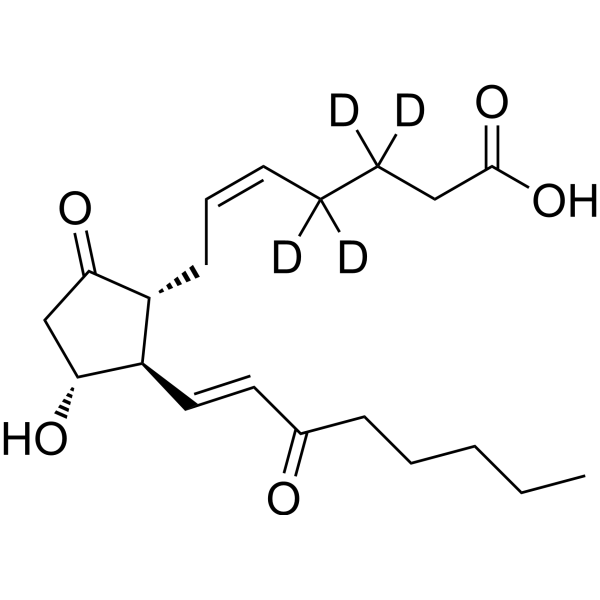
- Formula: C20H26D4O5
- Molecular Weight: 354.47
15-Keto-prostaglandin E2-d4 is the d4 labeled 15-keto-Prostaglandin E2 (HY-113205). 15-keto-Prostaglandin E2 (15-keto-PGE2) is an endogenous PGE2 metabolite. 15-keto-Prostaglandin E2 inhibits STAT3 activation by binding to the Cys259 residue of STAT3. 15-keto-Prostaglandin E2 binds to and stabilizes EP2 and EP4 receptors. 15-keto-Prostaglandin E2 inhibits the growth and progression of breast cancer cells. 15-keto-Prostaglandin E2 activates PPAR-γ and promotes fungal growth. 15-keto-Prostaglandin E2 disrupts glomerular vascularization during zebrafish development and reduces the surface area of the glomerular filtration barrier.
- 1



