



Rice Blast
-
Rice Blast (3)

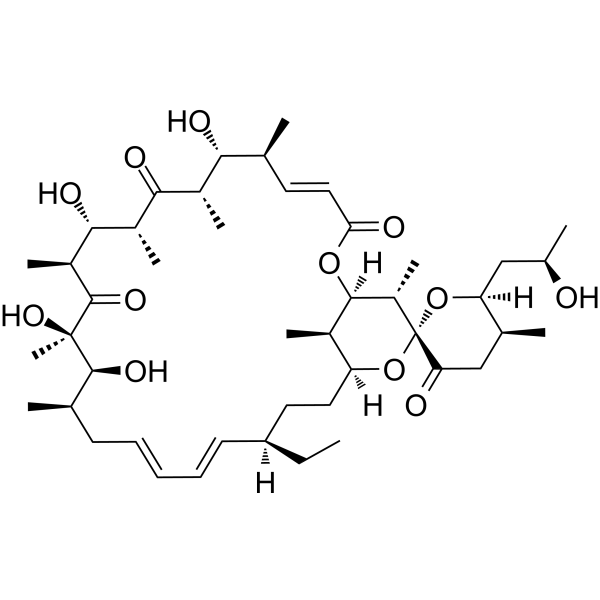
- Formule: C45H72O12
- Masse moléculaire: 805.05
Oligomycin B is an antibiotic that acts as a non-selective inhibitor of ATP Synthase. Oligomycin B increases mitochondrial membrane potential. Oligomycin B induces apoptosis and necrosis. Oligomycin B impairs the motility of Plasmopara viticola zoospores and induces their lysis. Oligomycin B inhibits Magnaporthe oryzae (wheat blast fungus) and suppresses the development of wheat blast. Oligomycin B reduces hyphal growth and spore germination of Botrytis cinerea, and protects Arabidopsis thaliana against Botrytis cinerea infection. Oligomycin B exacerbates cytotoxic brain edema in rats with cerebral cortical contusion, increases intracranial pressure and brain water content, and aggravates mitochondrial damage in these rats. Oligomycin B is used in studies related to grape downy mildew, traumatic brain injury, wheat blast, and gray mold.

- Formule: C12H16O4
- Masse moléculaire: 224.25
Phomopsinone A is an Antifungal agent. Phomopsinone A is isolated from Phomopsis sp. Phomopsinone A exhibits activity against plant and crop pathogens Pyricularia oryzae, Septoria tritici and Botrytis cinerea. Phomopsinone A can be used in the research of plant/crop fungal diseases.
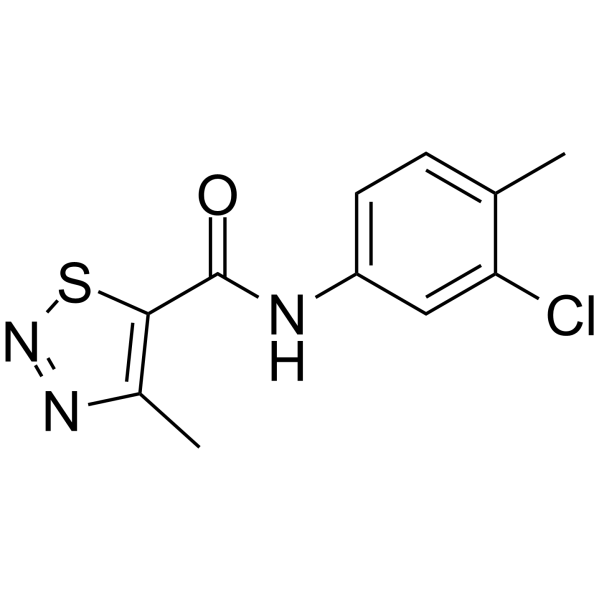
- Formule: C11H10ClN3OS
- Masse moléculaire: 267.73
Tiadinil is a systemic acquired resistance (SAR) inducer, plant elicitor and antifungal agent. Tiadinil promotes the production of herbivore-induced plant volatiles in Camellia sinensis (tea plant). Tiadinil inhibits mycelial growth, spore germination and germ tube elongation of Stagonosporopsis citrulli in vitro. Tiadinil can be used in studies related to vine blight.



