



Tacrine
Based on 8 publication(s) in Google Scholar
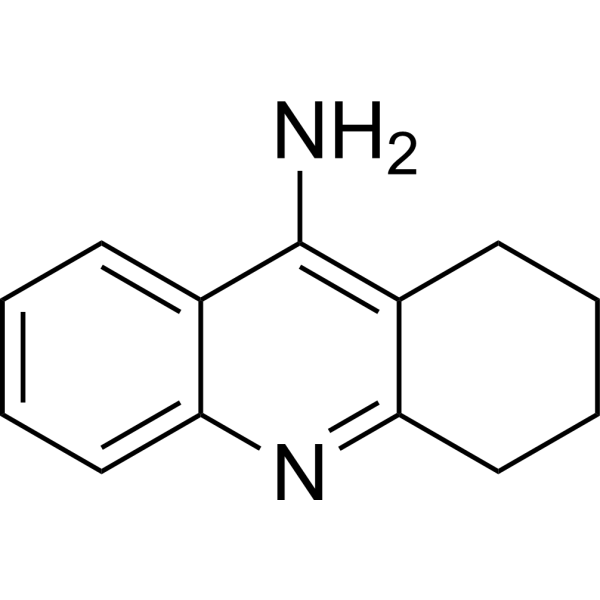
Tacrine is an effective oral acetylcholine (AChE) inhibitor (IC50 = 109 nM) and also acts as an active substrate for CYP1A2. Tacrine can restore cognitive dysfunction in elderly rats. Tacrine can cause liver toxicity and is used in research related to Alzheimer's disease.
For research use only. We do not sell to patients.
- Purity: 99.10%
- CAS No.: 321-64-2
- Formula: C13H14N2
- Molecular Weight:198.27
-
Storage:
4°C, sealed storage, away from moisture and light
* In solvent : -80°C, 6 months; -20°C, 1 month (sealed storage, away from moisture and light)

To place orders, for customer services and technical support, please contact: MedChemExpress USA
Tel: 609-228-6898 E-mail: [email protected] [email protected]


-
 Biological Activity
-
Chemical Information
-
Solvent & Solubility
- Purity & Documentation
- References
-
 Help & FAQs


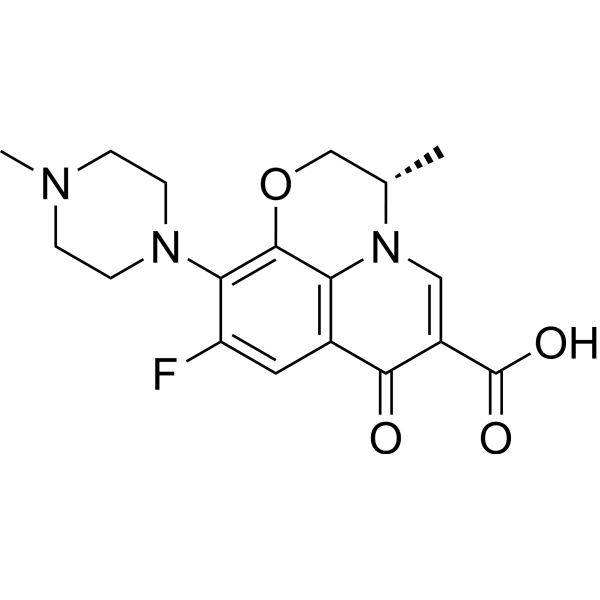
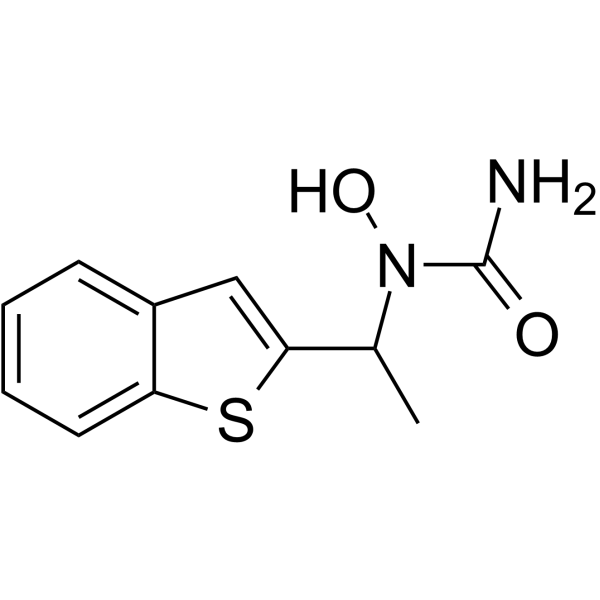
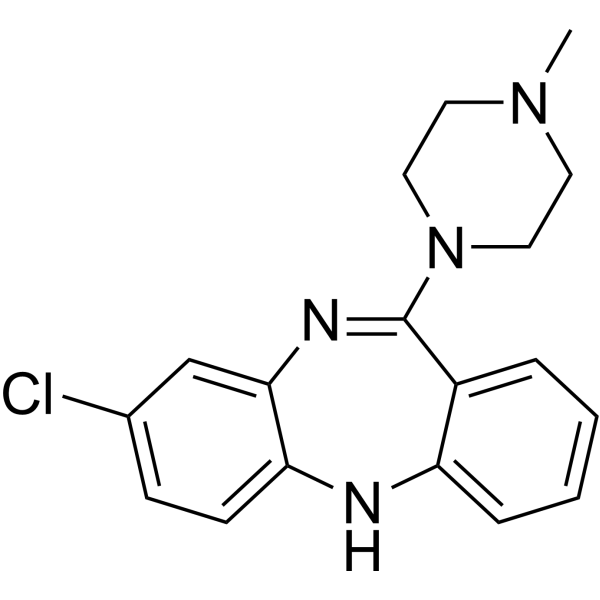
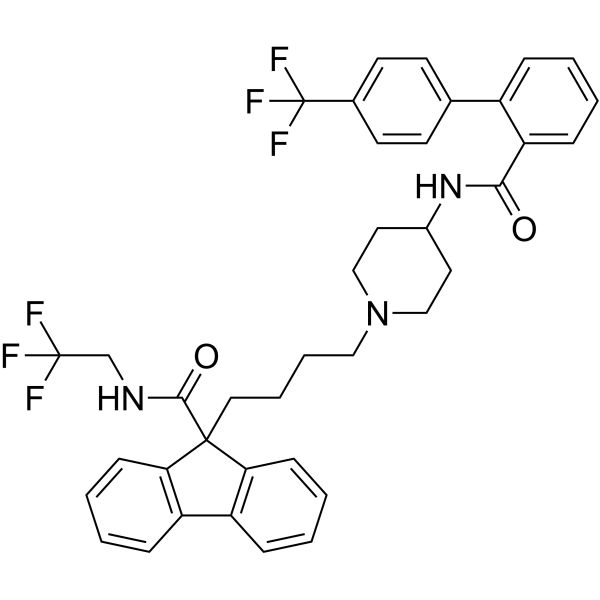
Publications Citing Use of MedChemExpress (MCE) Tacrine
More- Cell Death Dis. 2022 Jan 10;13(1):48. [Abstract]
- Drug Deliv. 2025 Dec 31;32(1):2585612. [Abstract]
- J Med Chem. 2025 Nov 27;68(22):24326-24357. [Abstract]
- Eur J Med Chem. 2024 Feb 5:265:116071. [Abstract]
- J Enzyme Inhib Med Chem. 2023 Dec;38(1):2192439. [Abstract]
- Bioorg Chem. 2024 Feb:143:107010. [Abstract]
- J Neurochem. 2025 Aug;169(8):e70178. [Abstract]
- Front Neurosci. 2020 May 28:14:458. [Abstract]


Biological Activity
Description
IC50 & Target
|
AChE 109 nM (IC50) |
Cellular Effect
|
Cell Line

|
Type | Value | Description | References |
|---|---|---|---|---|
| A549 | GI50 |
>100 μM
Compound: Tacrine
|
Antiproliferative activity against human A549 cells after 48 hrs by SRB assay
Antiproliferative activity against human A549 cells after 48 hrs by SRB assay
|
[PMID: 28728108] |
| C6 | IC50 |
450.7 μM
Compound: Tacrine
|
Cytotoxicity against rat C6 cells assessed as reduction in cell viability incubated for 24 hrs by MTT assay
Cytotoxicity against rat C6 cells assessed as reduction in cell viability incubated for 24 hrs by MTT assay
|
[PMID: 32904099] |
| Cerebral cortex neuron | EC50 |
1.33 μM
Compound: Tacrine
|
Neuroprotective activity in 20 uM rotenone and 10 uM oligomycin-treated Wistar rat primary cortical neurons assessed as increase in cell viability after 24 hrs by XTT assay
Neuroprotective activity in 20 uM rotenone and 10 uM oligomycin-treated Wistar rat primary cortical neurons assessed as increase in cell viability after 24 hrs by XTT assay
|
[PMID: 22795665] |
| CHO-K1 | IC50 |
248 μM
Compound: THA; 3
|
Cytotoxicity against CHOK1 cells assessed as reduction in cell viability incubated for 24 hrs by MTT assay
Cytotoxicity against CHOK1 cells assessed as reduction in cell viability incubated for 24 hrs by MTT assay
|
[PMID: 30851693] |
| CHO-K1 | IC50 |
303 μM
Compound: THA
|
Cytotoxicity against CHO-K1 cells incubated for 24 hrs by MTT assay
Cytotoxicity against CHO-K1 cells incubated for 24 hrs by MTT assay
|
[PMID: 38218127] |
| HBL-100 | GI50 |
50 μM
Compound: Tacrine
|
Antiproliferative activity against human HBL100 cells after 48 hrs by SRB assay
Antiproliferative activity against human HBL100 cells after 48 hrs by SRB assay
|
[PMID: 28728108] |
| HEK293 | IC50 |
122 nM
Compound: Tacrine
|
Inhibition of cerebral human recombinant AchE expressed in HEK293 cells using acetylthiocholine iodide as substrate preincubated for 10 mins measured after 15 mins of substrate addition by Ellman's method
Inhibition of cerebral human recombinant AchE expressed in HEK293 cells using acetylthiocholine iodide as substrate preincubated for 10 mins measured after 15 mins of substrate addition by Ellman's method
|
[PMID: 22023459] |
| HEK293 | IC50 |
0.13 μM
Compound: Tacrine
|
Inhibition of recombinant human AChE expressed in HEK293 cells using acetylthiocholine iodide as substrate pretreated for 5 mins followed by substrate addition measured after 5 mins by spectrophotometry based Ellman method
Inhibition of recombinant human AChE expressed in HEK293 cells using acetylthiocholine iodide as substrate pretreated for 5 mins followed by substrate addition measured after 5 mins by spectrophotometry based Ellman method
|
[PMID: 27918993] |
| HEK293 | IC50 |
21.72 μM
Compound: Tacrine
|
Inhibition of human OCT1 expressed in HEK293 cells assessed as decrease in uptake of ASP+ after 2 mins by fluorescence assay
Inhibition of human OCT1 expressed in HEK293 cells assessed as decrease in uptake of ASP+ after 2 mins by fluorescence assay
|
[PMID: 28230985] |
| HEK293 | IC50 |
412 nM
Compound: 1
|
Inhibition of human recombinant AChE expressed in HEK293 cells using acetylcholine iodide as substrate preincubated with enzyme for 20 mins followed by substrate addition and measured after 5 mins by Ellman's method
Inhibition of human recombinant AChE expressed in HEK293 cells using acetylcholine iodide as substrate preincubated with enzyme for 20 mins followed by substrate addition and measured after 5 mins by Ellman's method
|
[PMID: 31376562] |
| HEK293 | IC50 |
0.15 μM
Compound: Tacrine
|
Inhibition of recombinant human AChE expressed in HEK293 cells using acetylthiocholine iodide as substrate preincubated for 5 mins before substrate addition measured after 10 mins by Ellman's method
Inhibition of recombinant human AChE expressed in HEK293 cells using acetylthiocholine iodide as substrate preincubated for 5 mins before substrate addition measured after 10 mins by Ellman's method
|
10.1039/C1MD00221J |
| HeLa | GI50 |
51 μM
Compound: Tacrine
|
Antiproliferative activity against human HeLa cells after 48 hrs by SRB assay
Antiproliferative activity against human HeLa cells after 48 hrs by SRB assay
|
[PMID: 28728108] |
| HepG2 | IC50 |
98.73 μM
Compound: Tacrine
|
Antiproliferative activity against human HepG2 cells after 48 hrs by MTT assay
Antiproliferative activity against human HepG2 cells after 48 hrs by MTT assay
|
[PMID: 24794747] |
| HepG2 | IC50 |
19.37 μM
Compound: 1
|
Hepatotoxicity in human HepG2 cells assessed as cell viability after 24 hrs by MTT assay
Hepatotoxicity in human HepG2 cells assessed as cell viability after 24 hrs by MTT assay
|
[PMID: 26503905] |
| HepG2 | EC50 |
179 μM
Compound: Tacrine
|
Hepatotoxicity in human HepG2 cells assessed as reduction in cell viability by MTT assay
Hepatotoxicity in human HepG2 cells assessed as reduction in cell viability by MTT assay
|
[PMID: 27128182] |
| HepG2 | IC50 |
17.9 μg/mL
Compound: Tacrine
|
Cytotoxicity against human HepG2 cells assessed as reduction in cell viability after 24 hrs by MTT assay
Cytotoxicity against human HepG2 cells assessed as reduction in cell viability after 24 hrs by MTT assay
|
[PMID: 28189905] |
| HepG2 | IC50 |
168.47 μM
Compound: THA; Tacrine
|
Cytotoxicity against human HepG2 cells assessed as reduction in cell viability after 24 hrs by MTT assay
Cytotoxicity against human HepG2 cells assessed as reduction in cell viability after 24 hrs by MTT assay
|
[PMID: 29533874] |
| HepG2 | IC50 |
111 μM
Compound: 1
|
Cytotoxicity against human HepG2 cells after 72 hrs by alamar blue assay
Cytotoxicity against human HepG2 cells after 72 hrs by alamar blue assay
|
[PMID: 30108847] |
| HepG2 | IC50 |
98 μM
Compound: Tacrine
|
Cytotoxicity against human HepG2 cell assessed as reduction in cell viability incubated for 72 hrs by MTT assay
Cytotoxicity against human HepG2 cell assessed as reduction in cell viability incubated for 72 hrs by MTT assay
|
[PMID: 30771604] |
| HepG2 | IC50 |
190 μM
Compound: THA; 3
|
Cytotoxicity against human HepG2 cells assessed as reduction in cell viability incubated for 24 hrs by MTT assay
Cytotoxicity against human HepG2 cells assessed as reduction in cell viability incubated for 24 hrs by MTT assay
|
[PMID: 30851693] |
| HepG2 | IC50 |
114.9 μM
Compound: Tacrine
|
Cytotoxicity against human HepG2 cells assessed as reduction in cell viability incubated for 24 hrs by MTT assay
Cytotoxicity against human HepG2 cells assessed as reduction in cell viability incubated for 24 hrs by MTT assay
|
[PMID: 32904099] |
| HepG2 | IC50 |
168.47 μM
Compound: THA
|
Cytotoxicity against human HepG2 cells assessed as reduction in cell viability measured after 24 hrs by MTT assay
Cytotoxicity against human HepG2 cells assessed as reduction in cell viability measured after 24 hrs by MTT assay
|
[PMID: 33984470] |
| HepG2 | IC50 |
144826 nM
Compound: Tacrine
|
Cytotoxicity against human HepG2 cells assessed as reduction in cell viability incubated for 24 hrs by MTT assay
Cytotoxicity against human HepG2 cells assessed as reduction in cell viability incubated for 24 hrs by MTT assay
|
[PMID: 34530383] |
| J774.1 | IC50 |
>100 μM
Compound: 1a; Tacrine
|
Cytotoxicity against mouse J774.1 cells after 24 hrs by AlamarBlue based cytotoxicity assay
Cytotoxicity against mouse J774.1 cells after 24 hrs by AlamarBlue based cytotoxicity assay
|
[PMID: 27316542] |
| J774.1 | IC50 |
>100 μM
Compound: 1a
|
Cytotoxicity against mouse J774.1 cells after 24 hrs by alamar blue assay
Cytotoxicity against mouse J774.1 cells after 24 hrs by alamar blue assay
|
[PMID: 28698054] |
| Primary neuron | IC50 |
7.87 μM
Compound: Tacrine
|
Toxicity in mouse neuronal cells assessed as reduction in cell viability incubated for 72 hrs by MTT assay
Toxicity in mouse neuronal cells assessed as reduction in cell viability incubated for 72 hrs by MTT assay
|
[PMID: 30771604] |
| Sf21 | IC50 |
>1000 μM
Compound: Tacrine
|
Inhibition of human BSEP expressed in plasma membrane vesicles of Sf21 cells assessed as inhibition of ATP-dependent [3H]taurocholate uptake
Inhibition of human BSEP expressed in plasma membrane vesicles of Sf21 cells assessed as inhibition of ATP-dependent [3H]taurocholate uptake
|
[PMID: 21965623] |
| Sf21 | IC50 |
>1000 μM
Compound: Tacrine
|
Inhibition of Sprague-Dawley rat Bsep expressed in plasma membrane vesicles of Sf21 cells assessed as inhibition of ATP-dependent [3H]taurocholate uptake
Inhibition of Sprague-Dawley rat Bsep expressed in plasma membrane vesicles of Sf21 cells assessed as inhibition of ATP-dependent [3H]taurocholate uptake
|
[PMID: 21965623] |
| SH-SY5Y | IC50 |
120 μM
Compound: Tac
|
Cytotoxicity against human SH-SY5Y cells assessed as reduction in cell viability after 48 hrs by MTT assay
Cytotoxicity against human SH-SY5Y cells assessed as reduction in cell viability after 48 hrs by MTT assay
|
[PMID: 29541355] |
| SH-SY5Y | IC50 |
0.5 μM
Compound: 1; THA
|
Inhibition of human SH-SY5Y cell lysate acetylcholinesterase using acetylthiocholine iodide as substrate preincubated for 5 mins followed by substrate addition by Ellman's method
Inhibition of human SH-SY5Y cell lysate acetylcholinesterase using acetylthiocholine iodide as substrate preincubated for 5 mins followed by substrate addition by Ellman's method
|
[PMID: 30744931] |
| SH-SY5Y | IC50 |
165 μM
Compound: Tacrine
|
Cytotoxicity against human SH-SY5Y cells assessed as reduction in cell viability incubated for 24 hrs by crystal violet staining based analysis
Cytotoxicity against human SH-SY5Y cells assessed as reduction in cell viability incubated for 24 hrs by crystal violet staining based analysis
|
[PMID: 38401458] |
| SW1573 | GI50 |
50 μM
Compound: Tacrine
|
Antiproliferative activity against human SW1573 cells after 48 hrs by SRB assay
Antiproliferative activity against human SW1573 cells after 48 hrs by SRB assay
|
[PMID: 28728108] |
| Sympathetic neuron | IC50 |
30 μM
Compound: 4
|
Ability to inhibit after-hyperpolarization (AHP) in cultured rat sympathetic neurons. (number of neurons tested, n=3). Insufficient activity at this concentration
Ability to inhibit after-hyperpolarization (AHP) in cultured rat sympathetic neurons. (number of neurons tested, n=3). Insufficient activity at this concentration
|
[PMID: 7861407] |
| T47D | GI50 |
46 μM
Compound: Tacrine
|
Antiproliferative activity against human T47D cells after 48 hrs by SRB assay
Antiproliferative activity against human T47D cells after 48 hrs by SRB assay
|
[PMID: 28728108] |
| Vero | IC50 |
168.9 μM
Compound: Tacrine
|
Cytotoxicity against monkey Vero cells assessed as reduction in cell viability incubated for 24 hrs by MTT assay
Cytotoxicity against monkey Vero cells assessed as reduction in cell viability incubated for 24 hrs by MTT assay
|
[PMID: 32904099] |
| WiDr | GI50 |
34 μM
Compound: Tacrine
|
Antiproliferative activity against human WiDr cells after 48 hrs by SRB assay
Antiproliferative activity against human WiDr cells after 48 hrs by SRB assay
|
[PMID: 28728108] |
In Vivo
MedChemExpress (MCE) has not independently confirmed the accuracy of these methods. They are for reference only.
-
Animal Model:6- and 22-24-month-old rats[1]
-
Dosage:0.3, 1, 3 mg/kg; single dose
-
Administration:Oral
-
Result:Doubled the extracellular acetylcholine levels in young rats' hippocampal cells and increased it six times in older rats, improving discrimination ability, restoring passive avoidance conditioning responses, and enhancing behavioral function.
Clinical Trial
| NCT Number | Sponsor | Condition | Start Date |
Phase
|
|---|---|---|---|---|
| NCT01329991 | Plexxikon| | 2011-05 | PHASE1 |


Chemical Information
-
CAS No. 321-64-2
-
Appearance Solid
-
Molecular Weight 198.27
-
Formula C13H14N2
-
Color Off-white to light yellow
-
SMILES
NC1=C2CCCCC2=NC3=CC=CC=C31
-
Shipping
Room temperature in continental US; may vary elsewhere.
-
Storage
4°C, sealed storage, away from moisture and light
* In solvent : -80°C, 6 months; -20°C, 1 month (sealed storage, away from moisture and light)


Publications (8)
-
Journal Impact Factor
-
Most Recent
-
Cell Death Dis
A fragment of cell adhesion molecule L1 reduces amyloid-β plaques in a mouse model of Alzheimer's disease. [Abstract]2022 Jan 10;13(1):48. PMID: 35013124 -
Drug Deliv
A surrogate barrier model for high-throughput blood-brain barrier permeability prediction: integrating LLC-PK1-MOCK/MDR1 Cells and lysosomal trapping correction. [Abstract]2025 Dec 31;32(1):2585612. PMID: 41307200 -
J Med Chem
Fluorocyclopropyl-Containing Tacrine Derivatives as Potent and Selective Dual CDK2/CDK9 Inhibitors for the Treatment of Colorectal Cancer. [Abstract]2025 Nov 27;68(22):24326-24357. PMID: 41239996 -
Eur J Med Chem
Design, synthesis and biological evaluation of carbamate derivatives incorporating multifunctional carrier scaffolds as pseudo-irreversible cholinesterase inhibitors for the treatment of Alzheimer's disease. [Abstract]2024 Feb 5:265:116071. PMID: 38157596 -
J Enzyme Inhib Med Chem
Design, synthesis and evaluation of OA-tacrine hybrids as cholinesterase inhibitors with low neurotoxicity and hepatotoxicity against Alzheimer's disease. [Abstract]2023 Dec;38(1):2192439. PMID: 36950955 -
Bioorg Chem
Design, synthesis, and biological evaluation of novel donepezil-tacrine hybrids as multi-functional agents with low neurotoxicity against Alzheimer's disease. [Abstract]2024 Feb:143:107010. PMID: 38056387 -
J Neurochem
The Tacrine-Induced Endoplasmic Reticulum Stress in AChE-Expressed Cells Leads to Improper Assembly and Transport of the Oligomeric Enzyme: Reversal by Trehalose. [Abstract]2025 Aug;169(8):e70178. PMID: 40762084 -
Front Neurosci
Adhesion Molecule L1 Agonist Mimetics Protect Against the Pesticide Paraquat-Induced Locomotor Deficits and Biochemical Alterations in Zebrafish. [Abstract]2020 May 28:14:458. PMID: 32547358


Solvent & Solubility
In Vitro:
DMSO : ≥ 100 mg/mL (504.36 mM; Hygroscopic DMSO has a significant impact on the solubility of product, please use newly opened DMSO)
* "≥" means soluble, but saturation unknown.
Please refer to the solubility information to select the appropriate solvent. Once prepared, please aliquot and store the solution to prevent product inactivation from repeated freeze-thaw cycles.
Storage method and period of stock solution: -80°C, 6 months; -20°C, 1 month (sealed storage, away from moisture and light). When stored at -80°C, please use it within 6 months. When stored at -20°C, please use it within 1 month.
Please refer to the solubility information to select the appropriate solvent. Once prepared, please aliquot and store the solution to prevent product inactivation from repeated freeze-thaw cycles.
Storage method and period of stock solution: -80°C, 6 months; -20°C, 1 month (sealed storage, away from moisture and light). When stored at -80°C, please use it within 6 months. When stored at -20°C, please use it within 1 month.
Concentration (start) × Volume (start) = Concentration (final) × Volume (final)
In Vivo:
Select the appropriate dissolution method based on your experimental animal and administration route.
- For the following dissolution methods, please ensure to first prepare a clear stock solution using an In Vitro approach and then sequentially add co-solvents:
- To ensure reliable experimental results, the clarified stock solution can be appropriately stored based on storage conditions. As for the working solution for In Vivo experiments, it is recommended to prepare freshly and use it on the same day.
- The percentages shown for the solvents indicate their volumetric ratio in the final prepared solution. If precipitation or phase separation occurs during preparation, heat and/or sonication can be used to aid dissolution.
Add each solvent one by one: 10% DMSO 40% PEG300 5% Tween-80 45% Saline
Solubility: ≥ 2.5 mg/mL (12.61 mM); Clear solution
This protocol yields a clear solution of ≥ 2.5 mg/mL (saturation unknown).
Taking 1 mL working solution as an example, add 100 μL DMSO stock solution (25.0 mg/mL) to 400 μL PEG300, and mix evenly; then add 50 μL Tween-80 and mix evenly; then add 450 μL Saline to adjust the volume to 1 mL.
Preparation of Saline: Dissolve 0.9 g sodium chloride in ddH₂O and dilute to 100 mL to obtain a clear Saline solution.
Add each solvent one by one: 10% DMSO 90% (20% SBE-β-CD in Saline)
Solubility: ≥ 2.5 mg/mL (12.61 mM); Clear solution
This protocol yields a clear solution of ≥ 2.5 mg/mL (saturation unknown).
Taking 1 mL working solution as an example, add 100 μL DMSO stock solution (25.0 mg/mL) to 900 μL 20% SBE-β-CD in Saline, and mix evenly.
Preparation of 20% SBE-β-CD in Saline (4°C, storage for one week): 2 g SBE-β-CD powder is dissolved in 10 mL Saline, completely dissolve until clear.
In Vivo Dissolution Calculator
Please enter the basic information of animal experiments:
-
-
-
-
Recommended: Prepare an additional quantity of animals to account for potential losses during experiments.
Please enter your animal formula composition:
-
%DMSO +
Recommended: Keep the proportion of DMSO in working solution below 2% if your animal is weak.
-
%+
-
+%Tween-80 + +
-
%Saline +
The co-solvents required include: DMSO, . All of co-solvents are available by MedChemExpress (MCE). , Tween 80. All of co-solvents are available by MedChemExpress (MCE).
Working solution concentration: 0.22 mg/mL
Method for preparing stock solution: mg drug dissolved in μL DMSO. Stock solution concentration: mg/mL. * In solvent : -80°C, 6 months; -20°C, 1 month (sealed storage, away from moisture and light)
1. Take μL DMSO stock solution;
2. Add μL .
μL , mix evenly;
3. Then add μL Tween 80, mix evenly;
4. Then add μL
Please ensure that the stock solution in the first step is dissolved to a clear state, and add co-solvents in sequence. You can use ultrasonic heating (ultrasonic cleaner, recommended frequency 20-40 kHz), vortexing, etc. to assist dissolution.


Purity & Documentation
-
Data Sheet (277 KB)
-
SDS (483 KB)
- English - EN (483 KB)
- Français - FR (483 KB)
- Deutsch - DE (483 KB)
- Norwegian - NO (483 KB)
- Español - ES (483 KB)
- Swedish - SV (483 KB)
- Italian - IT (483 KB)
- Korean - KR (483 KB)
- Portuguese - PT (483 KB)
-
Handling Instructions (2659 KB)
References
[1]. C Scali, et al. Tacrine administration enhances extracellular acetylcholine in vivo and restores the cognitive impairment in aged rats. Pharmacol Res. 1997 Dec;36(6):463-9. [Content Brief]
[2]. Patocka J, et al. Possible role of hydroxylated metabolites of tacrine in drug toxicity and therapy of Alzheimer's disease. Curr Drug Metab. 2008;9(4):332-335. [Content Brief]
[3]. Bhatt S, et al. Assessment of the CYP1A2 Inhibition-Mediated Drug Interaction Potential for Pinocembrin Using In Silico, In Vitro, and In Vivo Approaches. ACS Omega. 2022;7(23):20321-20331. Published 2022 Jun 2. [Content Brief]
[4]. Romero A, et al. Novel tacrine-related drugs as potential candidates for the treatment of Alzheimer's disease. Bioorg Med Chem Lett. 2013;23(7):1916-1922. [Content Brief]


Complete Stock Solution Preparation Table
Please refer to the solubility information to select the appropriate solvent. Once prepared, please aliquot and store the solution to prevent product inactivation from repeated freeze-thaw cycles.
Storage method and period of stock solution: -80°C, 6 months; -20°C, 1 month (sealed storage, away from moisture and light). When stored at -80°C, please use it within 6 months. When stored at -20°C, please use it within 1 month.
| Optional Solvent | Concentration Solvent Mass | 1 mg | 5 mg | 10 mg | 25 mg |
|---|---|---|---|---|---|
| DMSO | 1 mM | 5.0436 mL | 25.2181 mL | 50.4363 mL | 126.0907 mL |
| 5 mM | 1.0087 mL | 5.0436 mL | 10.0873 mL | 25.2181 mL | |
| 10 mM | 0.5044 mL | 2.5218 mL | 5.0436 mL | 12.6091 mL | |
| 15 mM | 0.3362 mL | 1.6812 mL | 3.3624 mL | 8.4060 mL | |
| 20 mM | 0.2522 mL | 1.2609 mL | 2.5218 mL | 6.3045 mL | |
| 25 mM | 0.2017 mL | 1.0087 mL | 2.0175 mL | 5.0436 mL | |
| 30 mM | 0.1681 mL | 0.8406 mL | 1.6812 mL | 4.2030 mL | |
| 40 mM | 0.1261 mL | 0.6305 mL | 1.2609 mL | 3.1523 mL | |
| 50 mM | 0.1009 mL | 0.5044 mL | 1.0087 mL | 2.5218 mL | |
| 60 mM | 0.0841 mL | 0.4203 mL | 0.8406 mL | 2.1015 mL | |
| 80 mM | 0.0630 mL | 0.3152 mL | 0.6305 mL | 1.5761 mL | |
| 100 mM | 0.0504 mL | 0.2522 mL | 0.5044 mL | 1.2609 mL |


Tacrine Related Classifications
HY-111338 Related Classifications
 Powered by Bioz