



Gefitinib-based PROTAC 3
Based on 4 publication(s) in Google Scholar
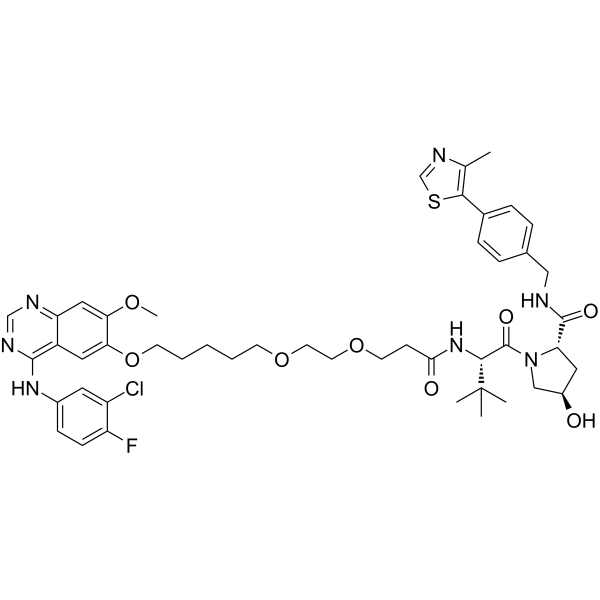
Gefitinib-based PROTAC 3 is a PROTAC degrader targeting EGFR, with a DC50 of 11.7 nM against exon 19 deletion mutants and a DC50 of 22.3 nM against EGFRL858R. Gefitinib-based PROTAC 3 selectively induces the ubiquitin-proteasome degradation of exon 19 deletion-mutant and L858R-mutant EGFR by recruiting the VHL E3 ligase. Gefitinib-based PROTAC 3 can be used for the research of EGFR mutation-positive cancers.
(Pink: EGFR ligand (HY-79511); Blue: VHL ligand (HY-125845); Black: linker).
For research use only. We do not sell to patients.
- Purity : 99.98%
- CAS No.: 2230821-27-7
- Formula: C47H57ClFN7O8S
- Molecular Weight:934.51
-
Storage:
4°C, sealed storage, away from moisture and light
* In solvent : -80°C, 6 months; -20°C, 1 month (sealed storage, away from moisture and light)

To place orders, for customer services and technical support, please contact: MedChemExpress USA
Tel: 609-228-6898 E-mail: [email protected] [email protected]


-
 Biological Activity
-
Chemical Information
-
Solvent & Solubility
- Protocols
- Purity & Documentation
- References
-
 Help & FAQs


-
HY-100972
ARV-771BET PROTAC Degrader -
HY-128359
ACBI1SMARCA2/SMARCA4/PBRM1 Degrader -
HY-50895
GefitinibEGFR Inhibitor -
HY-128600
ERD-308ER PROTAC Degrader -
HY-13259
MG-132Proteasome Inhibitor -
HY-15531
VenetoclaxBCL-2 Inhibitor -
HY-134541
SM-102Ionizable Amino Lipid -

HY-P9906
BevacizumabVEGF-A Inhibitor -
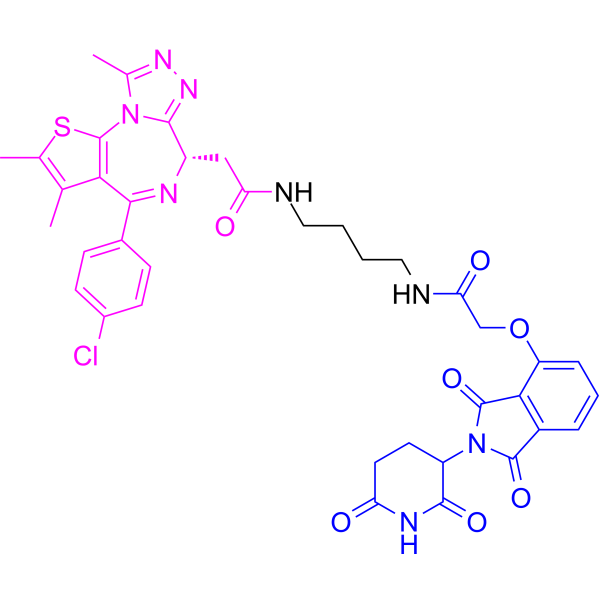
HY-101838
dBET1PROTAC BRD4 Degrader -
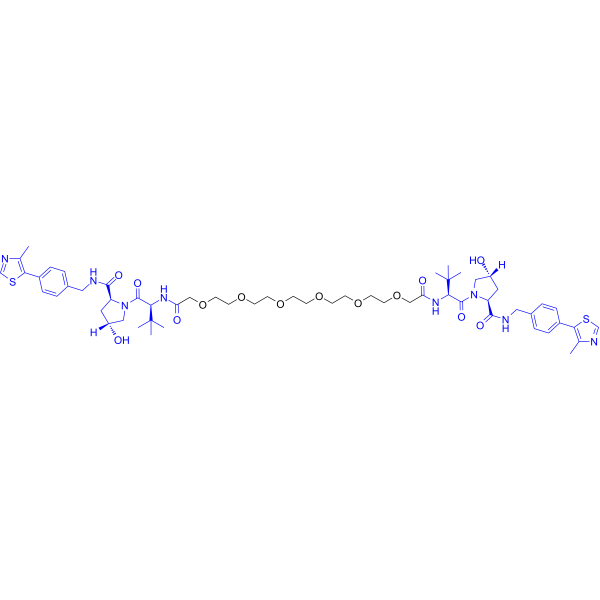
HY-111593
Homo-PROTAC pVHL30 degrader 1pVHL30/19 PROTAC Degrader -
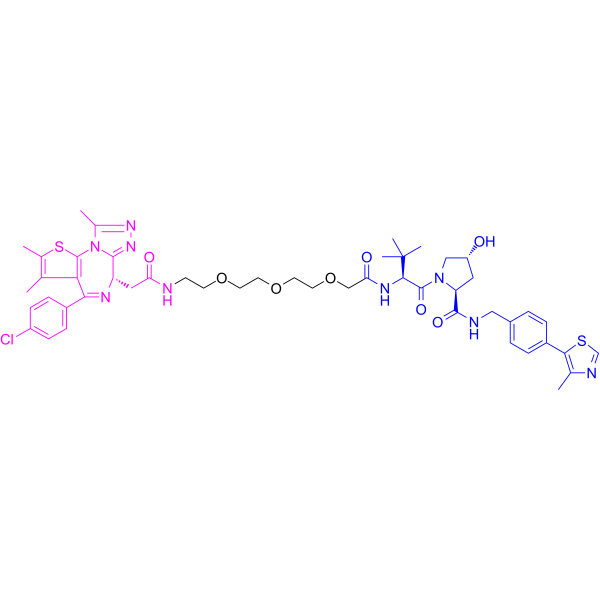
HY-107425
MZ 1PROTAC BRD4 Degrader -
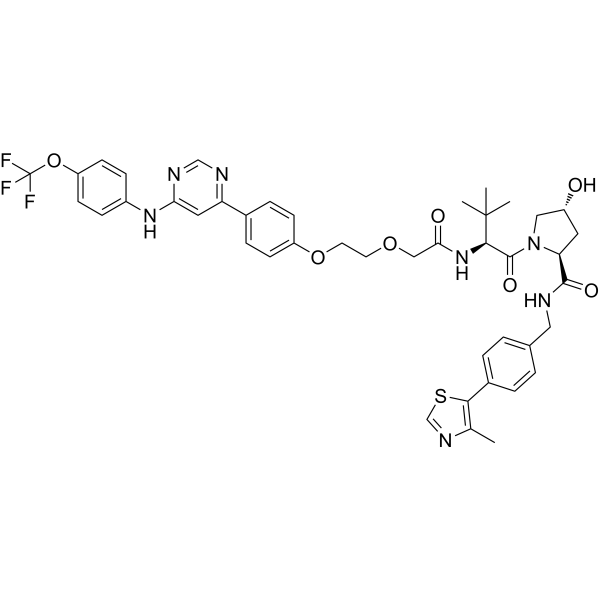
HY-125834
GMB-475PROTAC BCR-ABL1 Degrader
Publications Citing Use of MedChemExpress (MCE) Gefitinib-based PROTAC 3
MoreAll PROTACs Isoforms
MoreAll EGFR Isoforms
More

Biological Activity
Description
IC50 & Target
[1]|
EGFR 11.7 nM (DC50, HCC827(exon 19 del) cells) |
EGFR 22.3 nM (DC50, H3255L858R cells) |
Cellular Effect
|
Cell Line

|
Type | Value | Description | References |
|---|---|---|---|---|
| HCC827 | DC50 |
11.7 nM
|
Half-maximal degradation concentration of exon 19 deletion mutant EGFR in human HCC827 cells assessed by immunoblot-based target degradation assay following 24 h incubation.
Half-maximal degradation concentration of exon 19 deletion mutant EGFR in human HCC827 cells assessed by immunoblot-based target degradation assay following 24 h incubation.
|
29129716 |
| NCI-H3255 | DC50 |
22.3 nM
|
Half-maximal degradation concentration of L858R mutant EGFR in human H3255 cells assessed by immunoblot-based target degradation assay following 24 h incubation.
Half-maximal degradation concentration of L858R mutant EGFR in human H3255 cells assessed by immunoblot-based target degradation assay following 24 h incubation.
|
29129716 |
In Vitro
Gefitinib-based PROTAC 3 (compound 3) (100 nM-10 μM; 24 h) potently degrades exon 19 deletion-mutant EGFR in HCC827 cells, with a DC50 of 11.7 nM and a maximum degradation rate of 98.9%[1].
Gefitinib-based PROTAC 3 (25 nM-10 μM; 24 h) potently degrades EGFRL858R in H3255 cells, with a DC50 of 22.3 nM and a maximum degradation rate of 96.6%[1].
Gefitinib-based PROTAC 3 (25 nM-10 μM; 24 h) exerts no effect on wild-type EGFR in OVCAR8 cells, and exhibits selective degradation activity against mutant EGFR subtypes[1].
MedChemExpress (MCE) has not independently confirmed the accuracy of these methods. They are for reference only. Further protocols information, click here.
-
Cell Line:HCC827 cells
-
Concentration:100, 250 nM; 1, 2.5, 10 μM
-
Incubation Time:24 h
-
Result:Potently degraded exon 19 deletion mutant EGFR in HCC827 cells with a DC50 of 11.7 nM and achieves 98.9% maximum degradation.
-
Cell Line:H3255 cells
-
Concentration:25, 100, 250 nM; 1, 2.5, 10 μM
-
Incubation Time:24 h
-
Result:Potently degraded EGFRL858R in H3255 cells with a DC50 of 22.3 nM and achieves 96.6% maximum degradation.
-
Cell Line:OVCAR8 cells
-
Concentration:25, 100, 250 nM; 1, 2.5, 10 μM
-
Incubation Time:24 h
-
Result:Exerted no effect on wild-type EGFR in OVCAR8 cells, and exhibited selective degradation activity against mutant EGFR subtypes.


Chemical Information
-
CAS No. 2230821-27-7
-
Appearance Solid
-
Molecular Weight 934.51
-
Formula C47H57ClFN7O8S
-
Color Off-white to light yellow
-
SMILES
O=C([C@H]1N(C([C@@H](NC(CCOCCOCCCCCOC2=CC3=C(NC4=CC=C(F)C(Cl)=C4)N=CN=C3C=C2OC)=O)C(C)(C)C)=O)C[C@H](O)C1)NCC5=CC=C(C6=C(C)N=CS6)C=C5
-
Shipping
Room temperature in continental US; may vary elsewhere.
-
Storage
4°C, sealed storage, away from moisture and light
* In solvent : -80°C, 6 months; -20°C, 1 month (sealed storage, away from moisture and light)


Publications (4)
-
Journal Impact Factor
-
Most Recent
-
Structure
PROTAC-mediated activation, rather than degradation, of a nuclear receptor reveals complex ligand-receptor interaction network. [Abstract]2024 Dec 5;32(12):2352-2363.e8. PMID: 39389062 -
Drug Dev Res
Proteolysis targeting chimera (PROTAC) for epidermal growth factor receptor enhances anti-tumor immunity in non-small cell lung cancer. [Abstract]2021 May;82(3):422-429. PMID: 33231319 -
J Biol Chem
Low-dose EGFR inhibition unlocks ferroptosis susceptibility to sensitize chemotherapy in EGFR-high triple-negative breast cancer. [Abstract]2026 May 25:113185. PMID: 42190815 -
Int J Legal Med
Charting the growth through intelligence: A SWOC analysis on AI-assisted radiologic bone age estimation. [Abstract]2025 Mar;139(2):679-694. PMID: 39460772


Solvent & Solubility
In Vitro:
DMSO : ≥ 60 mg/mL (64.20 mM; Hygroscopic DMSO has a significant impact on the solubility of product, please use newly opened DMSO)
* "≥" means soluble, but saturation unknown.
Please refer to the solubility information to select the appropriate solvent. Once prepared, please aliquot and store the solution to prevent product inactivation from repeated freeze-thaw cycles.
Storage method and period of stock solution: -80°C, 6 months; -20°C, 1 month (sealed storage, away from moisture and light). When stored at -80°C, please use it within 6 months. When stored at -20°C, please use it within 1 month.
Please refer to the solubility information to select the appropriate solvent. Once prepared, please aliquot and store the solution to prevent product inactivation from repeated freeze-thaw cycles.
Storage method and period of stock solution: -80°C, 6 months; -20°C, 1 month (sealed storage, away from moisture and light). When stored at -80°C, please use it within 6 months. When stored at -20°C, please use it within 1 month.
Concentration (start) × Volume (start) = Concentration (final) × Volume (final)
In Vivo:
Select the appropriate dissolution method based on your experimental animal and administration route.
- For the following dissolution methods, please ensure to first prepare a clear stock solution using an In Vitro approach and then sequentially add co-solvents:
- To ensure reliable experimental results, the clarified stock solution can be appropriately stored based on storage conditions. As for the working solution for In Vivo experiments, it is recommended to prepare freshly and use it on the same day.
- The percentages shown for the solvents indicate their volumetric ratio in the final prepared solution. If precipitation or phase separation occurs during preparation, heat and/or sonication can be used to aid dissolution.
Add each solvent one by one: 10% DMSO 90% (20% SBE-β-CD in Saline)
Solubility: 2.5 mg/mL (2.68 mM); Suspended solution; Need ultrasonic
This protocol yields a suspended solution of 2.5 mg/mL. Suspended solution can be used for oral and intraperitoneal injection.
Taking 1 mL working solution as an example, add 100 μL DMSO stock solution (25.0 mg/mL) to 900 μL 20% SBE-β-CD in Saline, and mix evenly.
Preparation of 20% SBE-β-CD in Saline (4°C, storage for one week): 2 g SBE-β-CD powder is dissolved in 10 mL Saline, completely dissolve until clear.
Add each solvent one by one: 10% DMSO 40% PEG300 5% Tween-80 45% Saline
Solubility: ≥ 0.83 mg/mL (0.89 mM); Clear solution
This protocol yields a clear solution of ≥ 0.83 mg/mL (saturation unknown).
Taking 1 mL working solution as an example, add 100 μL DMSO stock solution (8.3 mg/mL) to 400 μL PEG300, and mix evenly; then add 50 μL Tween-80 and mix evenly; then add 450 μL Saline to adjust the volume to 1 mL.
Preparation of Saline: Dissolve 0.9 g sodium chloride in ddH₂O and dilute to 100 mL to obtain a clear Saline solution.
In Vivo Dissolution Calculator
Please enter the basic information of animal experiments:
-
-
-
-
Recommended: Prepare an additional quantity of animals to account for potential losses during experiments.
Please enter your animal formula composition:
-
%DMSO +
Recommended: Keep the proportion of DMSO in working solution below 2% if your animal is weak.
-
%+
-
+%Tween-80 + +
-
%Saline +
The co-solvents required include: DMSO, . All of co-solvents are available by MedChemExpress (MCE). , Tween 80. All of co-solvents are available by MedChemExpress (MCE).
Working solution concentration: 0.22 mg/mL
Method for preparing stock solution: mg drug dissolved in μL DMSO. Stock solution concentration: mg/mL. * In solvent : -80°C, 6 months; -20°C, 1 month (sealed storage, away from moisture and light)
1. Take μL DMSO stock solution;
2. Add μL .
μL , mix evenly;
3. Then add μL Tween 80, mix evenly;
4. Then add μL
Please ensure that the stock solution in the first step is dissolved to a clear state, and add co-solvents in sequence. You can use ultrasonic heating (ultrasonic cleaner, recommended frequency 20-40 kHz), vortexing, etc. to assist dissolution.

Protocols
-
Genotoxicity/Mutagenicity Study
The bacterial reverse mutation assay detects point mutations that restore amino-acid prototrophy in auxotrophic Salmonella typhimurium or Escherichia coli tester strains; after exposure to a test article, mutagenic activity is read out as an increased number of revertant colonies on minimal agar compared with the vehicle control. The assay uses tester strains with different mutation targets so that base-substitution and frameshift mutagens can be detected, and testing is performed with and without exogenous mammalian metabolic activation because some chemicals require biotransformation to become mutagenic.


Purity & Documentation
-
Data Sheet (286 KB)
-
SDS (394 KB)
- English - EN (394 KB)
- Français - FR (394 KB)
- Deutsch - DE (394 KB)
- Norwegian - NO (394 KB)
- Español - ES (394 KB)
- Swedish - SV (394 KB)
- Italian - IT (394 KB)
- Korean - KR (394 KB)
- Portuguese - PT (394 KB)
-
Handling Instructions (2659 KB)
References


Complete Stock Solution Preparation Table
Please refer to the solubility information to select the appropriate solvent. Once prepared, please aliquot and store the solution to prevent product inactivation from repeated freeze-thaw cycles.
Storage method and period of stock solution: -80°C, 6 months; -20°C, 1 month (sealed storage, away from moisture and light). When stored at -80°C, please use it within 6 months. When stored at -20°C, please use it within 1 month.
| Optional Solvent | Concentration Solvent Mass | 1 mg | 5 mg | 10 mg | 25 mg |
|---|---|---|---|---|---|
| DMSO | 1 mM | 1.0701 mL | 5.3504 mL | 10.7008 mL | 26.7520 mL |
| 5 mM | 0.2140 mL | 1.0701 mL | 2.1402 mL | 5.3504 mL | |
| 10 mM | 0.1070 mL | 0.5350 mL | 1.0701 mL | 2.6752 mL | |
| 15 mM | 0.0713 mL | 0.3567 mL | 0.7134 mL | 1.7835 mL | |
| 20 mM | 0.0535 mL | 0.2675 mL | 0.5350 mL | 1.3376 mL | |
| 25 mM | 0.0428 mL | 0.2140 mL | 0.4280 mL | 1.0701 mL | |
| 30 mM | 0.0357 mL | 0.1783 mL | 0.3567 mL | 0.8917 mL | |
| 40 mM | 0.0268 mL | 0.1338 mL | 0.2675 mL | 0.6688 mL | |
| 50 mM | 0.0214 mL | 0.1070 mL | 0.2140 mL | 0.5350 mL | |
| 60 mM | 0.0178 mL | 0.0892 mL | 0.1783 mL | 0.4459 mL |


Gefitinib-based PROTAC 3 Related Classifications
HY-123921 Related Classifications
 Powered by Bioz