








365 Results for "

glp-1

" in MedChemExpress (MCE) Product Catalog:
Products (365)

365 Results for "glp-1" in MCE Product Catalog:

45
45 Publications Verification
Cat. No.: HY-P0264A
CAS No.: 2051593-46-3
Synonyms: Avexitide acetate
Target:  

GLP Receptor

Research Areas:  

Metabolic Disease

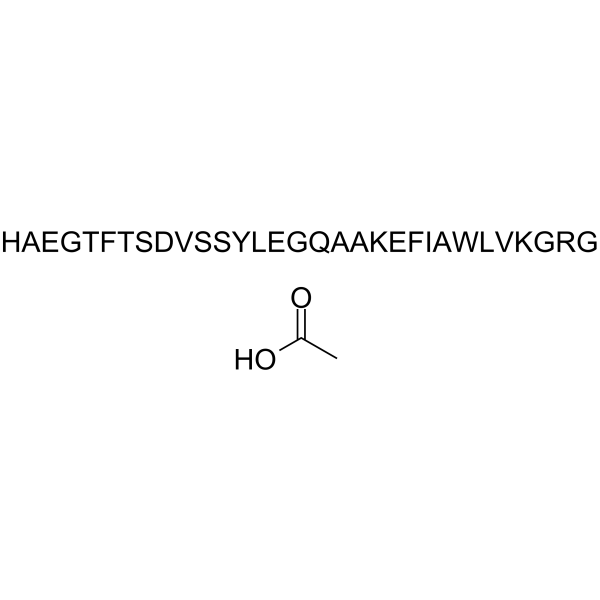
Exendin(9-39) amide (Avexitide) acetate is a glucagon-like peptide-1 (GLP-1) antagonist that competes with endogenous GLP-1 for the GLP-1R, counteracting the effects of excessive GLP-1 secretion. Exendin(9-39) amide acetate can be utilized in Postbariatric hypoglycemia (PBH) research [1].
loading...
    loading...
45
45 Publications Verification
Cat. No.: HY-P0264
CAS No.: 133514-43-9
Synonyms: Avexitide
Target:  

GLP Receptor

Research Areas:  

Metabolic Disease

Exendin(9-39) amide (Avexitide) is a glucagon-like peptide-1 (GLP-1) antagonist that competes with endogenous GLP-1 for binding to GLP-1 receptors, thereby antagonizing the effects of excess GLP-1 secretion. Exendin(9-39) amide can be used to study postoperative hypoglycemia (PBH) [1].
loading...
    loading...
45
45 Publications Verification
Cat. No.: HY-114118
CAS No.: 910463-68-2
Purity:  99.84%
Semaglutide is a long-acting, selective, competitive GLP-1R agonist that can penetrate the blood-brain barrier. After activating GLP-1R, Semaglutide promotes insulin secretion, inhibits gastric emptying and appetite, and at the same time enhances autophagy, inhibits oxidative stress and apoptosis. Semaglutide also regulates mitochondrial function and lipid metabolism (such as reducing de novo lipogenesis in the liver). Semaglutide has activities such as lowering blood sugar, reducing weight, neuroprotection (such as improving motor function in Parkinson's disease models, reducing α-synuclein aggregation) and improving hepatic steatosis. Semaglutide can be used for the study of neurodegenerative diseases and liver diseases such as type 2 diabetes, obesity, Parkinson's disease, metabolic associated fatty liver disease (MASLD), and cancer [1] .
loading...
    loading...
45
45 Publications Verification
Cat. No.: HY-114118B
CAS No.: 1997361-85-9
Purity:  99.92%
Semaglutide acetate is a long-acting, selective, competitive GLP-1R agonist that can penetrate the blood-brain barrier. After activating GLP-1R, Semaglutide acetate promotes insulin secretion, inhibits gastric emptying and appetite, and at the same time enhances autophagy, inhibits oxidative stress and apoptosis. Semaglutide acetate also regulates mitochondrial function and lipid metabolism (such as reducing de novo lipogenesis in the liver). Semaglutide acetate has activities such as lowering blood sugar, reducing weight, neuroprotection (such as improving motor function in Parkinson's disease models, reducing α-synuclein aggregation) and improving hepatic steatosis. Semaglutide acetate can be used for the study of neurodegenerative diseases and liver diseases such as type 2 diabetes, obesity, Parkinson's disease, metabolic associated fatty liver disease (MASLD), and cancer [1] .
loading...
    loading...
45
45 Publications Verification
Cat. No.: HY-114118A
Purity:  99.92%
Semaglutide TFA is a long-acting, selective, competitive GLP-1R agonist that can penetrate the blood-brain barrier. After activating GLP-1R, Semaglutide TFA promotes insulin secretion, inhibits gastric emptying and appetite, and at the same time enhances autophagy, inhibits oxidative stress and apoptosis. Semaglutide TFA also regulates mitochondrial function and lipid metabolism (such as reducing de novo lipogenesis in the liver). Semaglutide TFA has activities such as lowering blood sugar, reducing weight, neuroprotection (such as improving motor function in Parkinson's disease models, reducing α-synuclein aggregation) and improving hepatic steatosis. Semaglutide TFA can be used for the study of neurodegenerative diseases and liver diseases such as type 2 diabetes, obesity, Parkinson's disease, metabolic associated fatty liver disease (MASLD), and cancer [1] .
loading...
    loading...
42
42 Cited Publications
Cat. No.: HY-P0014B
Target:  

GLP Receptor

Research Areas:  

Metabolic Disease

Liraglutide (TFA) is an agonist of glucagon-like peptide 1 receptor (GLP-1). Liraglutide (TFA) can activate GLP-1, leading to the release of insulin in the presence of increased glucose concentration. Liraglutide (TFA) also reduces glucagon secretion in a glucose-dependent manner. Liraglutide (TFA) can be studied in research on type 2 diabetes [1].
loading...
    loading...
42
42 Cited Publications
Cat. No.: HY-P0014
CAS No.: 204656-20-2
Target:  

GCGR GLP Receptor

Research Areas:  

Metabolic Disease Cancer

Liraglutide is a glucagon-like peptide-1 (GLP-1) receptor agonist used clinically to treat type 2 diabetes mellitus.
loading...
    loading...
31
31 Cited Publications
Cat. No.: HY-13749
CAS No.: 486460-32-6
Purity:  99.75%
Synonyms: MK-0431
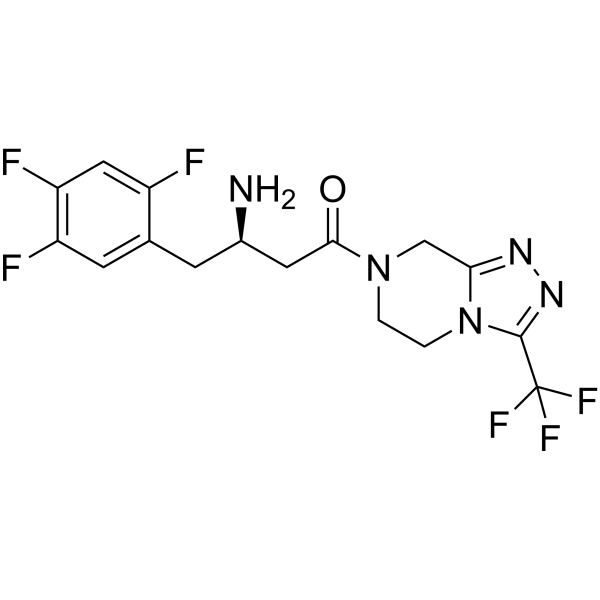
Sitagliptin (MK-0431) is an orally active and highly selective DPP4 inhibitor with an IC50 value of 19 nM. Sitagliptin blocks the degradation of glucagon-like peptide-1 (GLP-1) and glucose-dependent insulinotropic peptide (GIP) by competing inhibition mechanism (Kᵢ = 1 nM), thereby increasing the level of active incretin. Sitagliptin can also directly stimulate the secretion of GLP-1 by intestinal L cells by activating the cAMP/PKA and ERK1/2 pathways, and this effect is independent of DPP-4. Sitagliptin shows protective effects on pancreatic islet grafts in 1-type diabetes models. Sitagliptin can be used for the study of 1-type and 2-type diabetes [1] .
loading...
    loading...
31
31 Cited Publications
Cat. No.: HY-13749A
CAS No.: 654671-78-0
Purity:  99.79%
Synonyms: MK-0431 phosphate
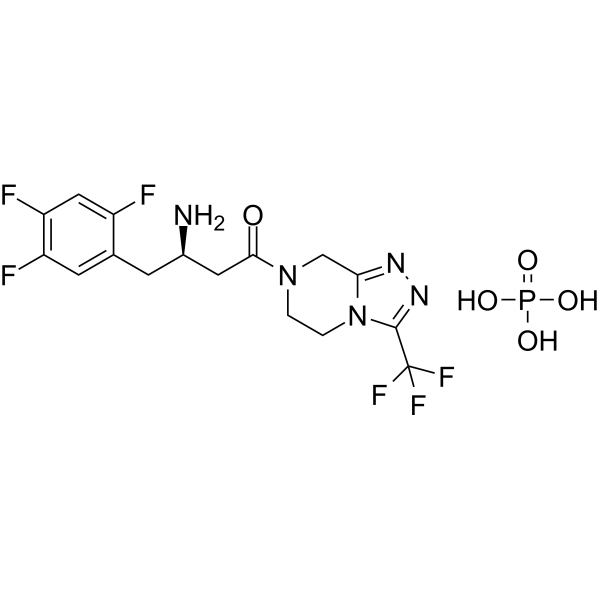
Sitagliptin (MK-0431) phosphate is an orally active and highly selective DPP4 inhibitor with an IC50 value of 19 nM. Sitagliptin phosphate blocks the degradation of glucagon-like peptide-1 (GLP-1) and glucose-dependent insulinotropic peptide (GIP) by competing inhibition mechanism (Kᵢ = 1 nM), thereby increasing the level of active incretin. Sitagliptin phosphate can also directly stimulate the secretion of GLP-1 by intestinal L cells by activating the cAMP/PKA and ERK1/2 pathways, and this effect is independent of DPP-4. Sitagliptin phosphate shows protective effects on pancreatic islet grafts in 1-type diabetes models. Sitagliptin phosphate can be used for the study of 1-type and 2-type diabetes [1] .
loading...
    loading...
31
31 Cited Publications
Cat. No.: HY-13749B
CAS No.: 654671-77-9
Purity:  99.83%
Synonyms: MK-0431 phosphate monohydrate
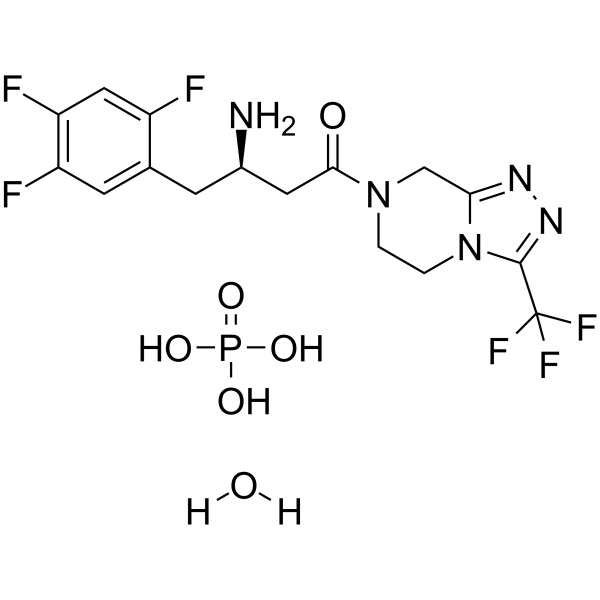
Sitagliptin (MK-0431) phosphate monohydrate is an orally active and highly selective DPP4 inhibitor with an IC50 value of 19 nM. Sitagliptin phosphate monohydrate blocks the degradation of glucagon-like peptide-1 (GLP-1) and glucose-dependent insulinotropic peptide (GIP) by competing inhibition mechanism (Kᵢ = 1 nM), thereby increasing the level of active incretin. Sitagliptin phosphate monohydrate can also directly stimulate the secretion of GLP-1 by intestinal L cells by activating the cAMP/PKA and ERK1/2 pathways, and this effect is independent of DPP-4. Sitagliptin phosphate monohydrate shows protective effects on pancreatic islet grafts in 1-type diabetes models. Sitagliptin phosphate monohydrate can be used for the study of 1-type and 2-type diabetes [1] .
loading...
    loading...
10
10 Cited Publications
Cat. No.: HY-P0054A
CAS No.: 107444-51-9
Synonyms: Glucagon-like peptide-1 (glp-1)(7-36), amide; Human glp-1 (7-36), amide
Target:  

GCGR

Research Areas:  

Metabolic Disease

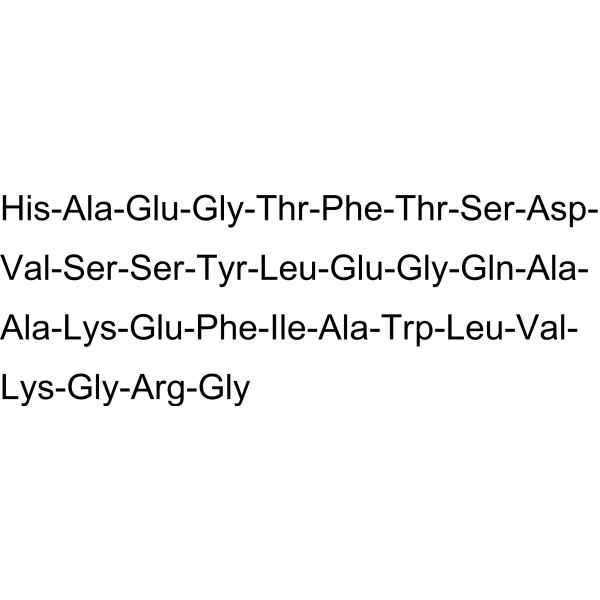
GLP-1(7-36), amide is a physiological incretin hormone that stimulates insulin secretion.
loading...
    loading...
10
10 Cited Publications
Cat. No.: HY-P0054
CAS No.: 1119517-19-9
Synonyms: Glucagon-like peptide-1 (glp-1)(7-36), amide acetate; Human glp-1 (7-36), amide acetate
Target:  

GCGR

Research Areas:  

Metabolic Disease

GLP-1(7-36), amide acetate is a major intestinal hormone that stimulates glucose-induced insulin secretion from β cells.
loading...
    loading...
10
10 Cited Publications
Cat. No.: HY-P0054B
Synonyms: Glucagon-like peptide-1 (glp-1)(7-36), amide TFA; Human glp-1 (7-36), amide TFA
Target:  

GCGR

Research Areas:  

Metabolic Disease

GLP-1(7-36), amide TFA is a major intestinal hormone that stimulates glucose-induced insulin secretion from β cells [1].
loading...
    loading...
10
10 Cited Publications
Cat. No.: HY-P0055
CAS No.: 106612-94-6
Target:  

GLP Receptor

Research Areas:  

Metabolic Disease

GLP-1(7-37) is an intestinal insulinotropic hormone that augments glucose induced insulin secretion.
loading...
    loading...
10
10 Cited Publications
Cat. No.: HY-P0055A
CAS No.: 1450806-98-0
Target:  

GLP Receptor

Research Areas:  

Metabolic Disease

GLP-1(7-37) acetate is an intestinal insulinotropic hormone that augments glucose induced insulin secretion [1].
loading...
    loading...
7
7 Cited Publications
Cat. No.: HY-101116
CAS No.: 488097-06-9
Purity:  99.67%
Target:  

GCGR

Research Areas:  

Metabolic Disease

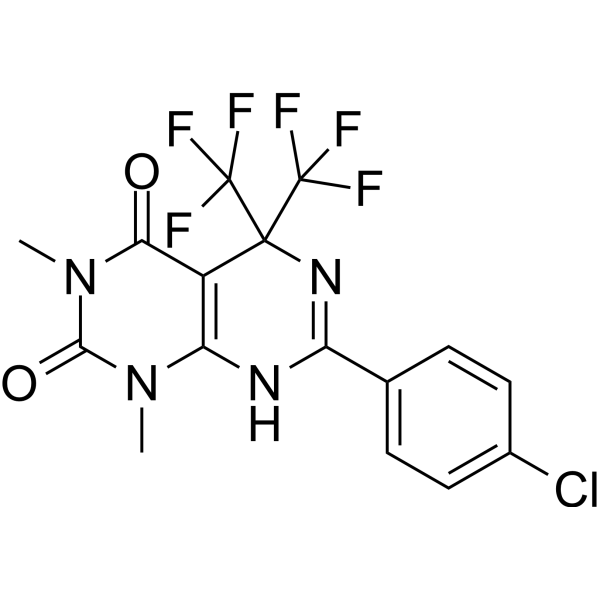
GLP-1R Antagonist 1 (compound 5d) is an orally active, CNS penetrant and non-competitive antagonist of glucagon-like peptide 1 receptor (GLP-1R), with an IC50 of 650 nM [1].
loading...
    loading...
4
4 Cited Publications
Cat. No.: HY-125824
CAS No.: 2230198-02-2
Purity:  99.85%
Synonyms: PF-06882961
Target:  

GCGR

Research Areas:  

Metabolic Disease

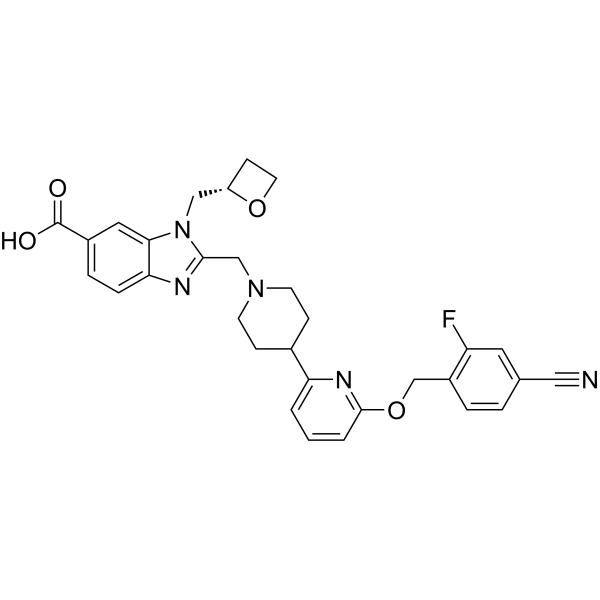
Danuglipron (PF-06882961) is an orally active glucagon-like peptide-1 receptor (GLP-1R) agonist. Danuglipron has the potential for type 2 diabetes research [1] .
loading...
    loading...
3
3 Cited Publications
Cat. No.: HY-P0119
CAS No.: 320367-13-3
Lixisenatide is a glucagon-like peptide-1 (GLP-1) receptor agonist. Lixisenatide inhibits the inflammatory response through down regulation of pro-inflammatory cytokines, and suppresses of the Akt-MEK1/2 signaling pathway. Lixisenatide can inhibit oxidative stress, mitochondrial dysfunction and apoptosis. Lixisenatide can be used for the researches of inflammation, metabolic disease, neurological disease and cardiovascular disease, such as rheumatoid arthritis, diabetes, Alzheimer's disease and atherosclerosis [1] .
loading...
    loading...
3
3 Cited Publications
Cat. No.: HY-P0119A
CAS No.: 1997361-87-1
Lixisenatide acetate is a glucagon-like peptide-1 (GLP-1) receptor agonist. Lixisenatide acetate inhibits the inflammatory response through down regulation of pro-inflammatory cytokines, and suppresses of the Akt-MEK1/2 signaling pathway. Lixisenatide acetate can inhibit oxidative stress, mitochondrial dysfunction and apoptosis. Lixisenatide acetate can be used for the researches of inflammation, metabolic disease, neurological disease and cardiovascular disease, such as rheumatoid arthritis, diabetes, Alzheimer's disease and atherosclerosis [1] .
loading...
    loading...
3
3 Cited Publications
Cat. No.: HY-P3506
CAS No.: 2381089-83-2
Synonyms: LY3437943
Target:  

GCGR GLP Receptor

Research Areas:  

Metabolic Disease

Retatrutide (LY3437943) is a triple agonist peptide of the glucagon receptor (GCGR), glucosedependent insulinotropic polypeptide receptor (GIPR), and glucagon-like peptide-1 receptor (GLP-1R). Retatrutide binds human GCGR, GIPR, and GLP-1R with EC50 values of 5.79, 0.0643 and 0.775 nM, respectively. Retatrutide can be used for the research of obesity [1].
loading...
    loading...

