



Torkinib
Based on 30 publication(s) in Google Scholar
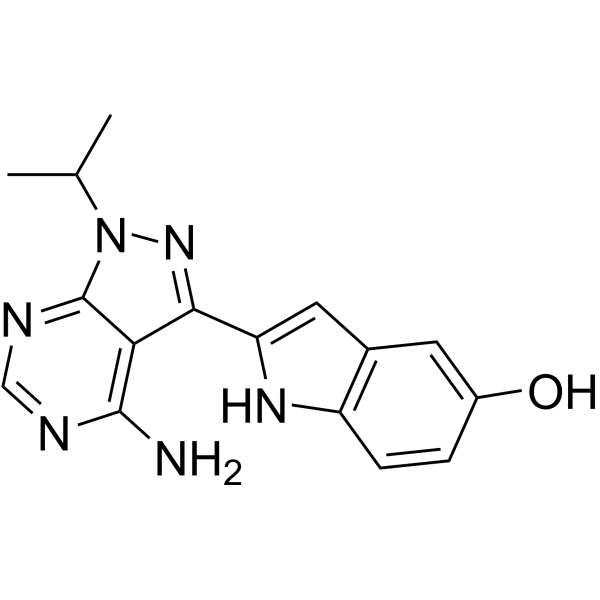
Torkinib (PP 242) is a selective and ATP-competitive mTOR inhibitor with an IC50 of 8 nM. PP242 inhibits both mTORC1 and mTORC2 with IC50s of 30 nM and 58 nM, respectively.
For research use only. We do not sell to patients.
- Purity: 99.03%
- CAS No.: 1092351-67-1
- Formula: C16H16N6O
- Molecular Weight:308.34
-
Storage:Powder -20°C, 3 years , 4°C, 2 years ; In solvent -80°C, 1 year , -20°C, 6 months

To place orders, for customer services and technical support, please contact: MedChemExpress USA
Tel: 609-228-6898 E-mail: [email protected] [email protected]


-
 Biological Activity
-
Chemical Information
-
Solvent & Solubility
- Protocol
- Purity & Documentation
- References
-
 Help & FAQs
-


Antioxidant Compound Library
HY-L037
-
Differentiation Inducing Compound Library
HY-L038
-
Reprogramming Compound Library
HY-L039
-
Oxygen Sensing Compound Library
HY-L045
-
Glycolysis Compound Library
HY-L058
-
Cytoskeleton Compound Library
HY-L060
-
Glutamine Metabolism Compound Library
HY-L064
-
Anti-Breast Cancer Compound Library
HY-L074
-
Anti-Lung Cancer Compound Library
HY-L075
-
Anti-Pancreatic Cancer Compound Library
HY-L077
-
Anti-Blood Cancer Compound Library
HY-L079
-
Anti-Cancer Metabolism Compound Library
HY-L083
-
Anti-Obesity Compound Library
HY-L087
-
Angiogenesis-Related Compound Library
HY-L088
-
Mitochondria-Targeted Compound Library
HY-L089
-
Lipid Metabolism Compound Library
HY-L091
-
Glucose Metabolism Compound Library
HY-L092
-
Anti-Liver Cancer Compound Library
HY-L101
-
Anti-Colorectal Cancer Compound Library
HY-L103
-
Human Metabolite Library
HY-L123
-
Anti-Prostate Cancer Compound Library
HY-L124
-
Anti-Pulmonary Fibrosis Compound Library
HY-L125
-
Cancer Stem Cells Compound Library
HY-L135
-
Heterocyclic Compound Library
HY-L138
-
Pain-Related Compound Library
HY-L139
-
Mitochondrial Protection Compound Library
HY-L144
-
Highly Selective Inhibitors Library
HY-L158
-
Highly Selective Activators Library
HY-L159
-
Cell Death Library
HY-L162
-
Serine/Threonine Kinase Inhibitor Library
HY-L164
-
Anti-Hematopathy Compound Library
HY-L171
-
Anti-Ovarian Cancer Compound Library
HY-L173
-
Multi-Target Compound Library
HY-L176
-
Radioprotector Library
HY-L178
-
Mitophagy Compound Library
HY-L180
-
Bioactive Compound Library Max
HY-L181
-
MCE Bioactive Compound Library
HY-L001V
-
Bioactive Compound Library
HY-L001
-
Anti-Gastric Cancer Compound Library
HY-L184
-
Anti-Fibrosis Compound Library
HY-L185
-
Anti-Brain Cancer Compound Library
HY-L188
-
Non-Alcoholic Fatty Liver Disease (NAFLD) Compound Library
HY-L199
-
High-Throughput Bioactive Compound Library
HY-L205
-
Mass Spectrometry Human Metabolite Library
HY-L215
-
Posttranslational Modification Library
HY-L226
-
Lactylation Compound Library
HY-L249
-
Apoptosis Compound Library
HY-L003
-
Kinase Inhibitor Library
HY-L009
-
PI3K/Akt/mTOR Compound Library
HY-L015
-
Stem Cell Signaling Compound Library
HY-L017
-
Anti-Cancer Compound Library
HY-L025
-
Autophagy Compound Library
HY-L029
-
Anti-Aging Compound Library
HY-L034


Publications Citing Use of MedChemExpress (MCE) Torkinib
More- Cancer Res. 2013 Apr 15;73(8):2574-86. [Abstract]
- Theranostics. 2022 Jan 1;12(2):675-688. [Abstract]
- Acta Pharm Sin B. 2020 Jun;10(6):1004-1019. [Abstract]
- J Exp Clin Cancer Res. 2021 Jan 9;40(1):25. [Abstract]
- Adv Sci (Weinh). 2025 May;12(18):e2412677. [Abstract]
- Environ Int. 2025 Jan:195:109255. [Abstract]
- Oncogene. 2024 Sep;43(38):2885-2899. [Abstract]
- Curr Biol. 2023 May 8;33(9):1744-1752.e7. [Abstract]
- Br J Pharmacol. 2025 Jul;182(13):2930-2949. [Abstract]
- Breast Cancer Res. 2020 Jun 3;22(1):59. [Abstract]
- Geroscience. 2026 Apr 30. [Abstract]
- Mol Cancer Res. 2020 Aug;18(8):1142-1152. [Abstract]
- Mar Drugs. 2020 Jan 10;18(1):46. [Abstract]
- Inflammation. 2024 Dec;47(6):2196-2214. [Abstract]
- Front Pharmacol. 2020 Nov 11:11:580407. [Abstract]
- Molecules. 2020 Apr 23;25(8):1980. [Abstract]
- PLoS Pathog. 2025 Jan 2;21(1):e1012800. [Abstract]
- Sci Rep. 2020 Oct 16;10(1):17523. [Abstract]
- J Virol. 2024 Nov 19;98(11):e0143724. [Abstract]
- J Biol Chem. 2023 Aug;299(8):104941. [Abstract]
- J Cell Sci. 2025 Dec 15;138(24):jcs264267. [Abstract]
- ACS Chem Biol. 2012 Jun 15;7(6):982-7. [Abstract]
- Front Oncol. 2022 Jul 4;12:936550. [Abstract]
- Mol Biol Rep. 2022 Jan;49(1):451-461. [Abstract]
- Hum Cell. 2023 Jul;36(4):1429-1440. [Abstract]
- Biochem Biophys Res Commun. 2025 Aug 11:781:152474. [Abstract]
- bioRxiv. 2025 Jul 21:2025.07.16.665230. [Abstract]
- Res Sq. 2025 Jul 13.
- Ghent University. 2021 Oct.
- Research Square Preprint. 2021 May.
 Customer Validation & Images

-
WB
-
Cell Proliferation/Viability Assay
-
WB
-
Cell Migration/Invasion Assay
-
Flow Cytometry


Biological Activity
|
mTOR 8 nM (IC50) |
mTORC1 30 nM (IC50) |
mTORC2 58 nM (IC50) |
p110δ 100 nM (IC50) |
PDGFR 410 nM (IC50) |
DNA-PK 410 nM (IC50) |
p110γ 1.3 μM (IC50) |
p110α 2 μM (IC50) |
p110β 2.2 μM (IC50) |
Hck 1.2 μM (IC50) |
Scr 1.4 μM (IC50) |
VEGFR2 1.5 μM (IC50) |
Abl 3.6 μM (IC50) |
EphB4 3.4 μM (IC50) |
EGFR 4.4 μM (IC50) |
Scr(T338I) 5.1 μM (IC50) |
Autophagy |
Mitophagy |
Torkinib (PP 242) potently inhibits mTOR (IC50=8 nM) but is much less active against other PI3K family members. Testing of Torkinib (PP 242) against 219 protein kinases reveals remarkable selectivity relative to the protein kinome: at a concentration 100-fold above its IC50 for mTOR, Torkinib (PP 242) inhibits only one kinase by more than 90% (Ret) and only three by more than 75% (PKCα, PKCβII and JAK2V617F)[1]. Torkinib (PP 242) has a dose-dependent effect on proliferation and at higher doses is much more effective than Rapamycin at blocking cell proliferation. The ability of Torkinib (PP 242) to block cell proliferation more efficiently than Rapamycin could be a result of its ability to inhibit mTORC1 and mTORC2, because Rapamycin can only inhibit mTORC1. In SIN1-/- mouse embryonic fibroblasts (MEFs), Rapamycin is also less effective at blocking cell proliferation than Torkinib. That Torkinib (PP 242) and Rapamycin exhibit very different anti-proliferative effects in SIN1-/- MEFs suggests that the two compounds differentially affect mTORC1[2].
MedChemExpress (MCE) has not independently confirmed the accuracy of these methods. They are for reference only.
MedChemExpress (MCE) has not independently confirmed the accuracy of these methods. They are for reference only.


Chemical Information
-
CAS No. 1092351-67-1
-
Appearance Solid
-
Molecular Weight 308.34
-
Formula C16H16N6O
-
Color Light yellow to yellow
-
SMILES
NC1=C2C(N(N=C2C3=CC4=C(N3)C=CC(O)=C4)C(C)C)=NC=N1
-
Synonyms
PP 242
-
Shipping
Room temperature in continental US; may vary elsewhere.
-
Storage
Powder -20°C 3 years 4°C 2 years In solvent -80°C 1 year -20°C 6 months


Publications (30)
-
Journal Impact Factor
-
Most Recent
-
Cancer Res
2013 Apr 15;73(8):2574-86. PMID: 23436801 -
Theranostics
β-glucan-coupled superparamagnetic iron oxide nanoparticles induce trained immunity to protect mice against sepsis. [Abstract]2022 Jan 1;12(2):675-688. PMID: 34976207 -
Acta Pharm Sin B
RICTOR/mTORC2 affects tumorigenesis and therapeutic efficacy of mTOR inhibitors in esophageal squamous cell carcinoma. [Abstract]2020 Jun;10(6):1004-1019. PMID: 32642408
Torkinib purchased from MedChemExpress. Usage Cited in: Acta Pharm Sin B. 2020 Jun;10(6):1004-1019. [Abstract]
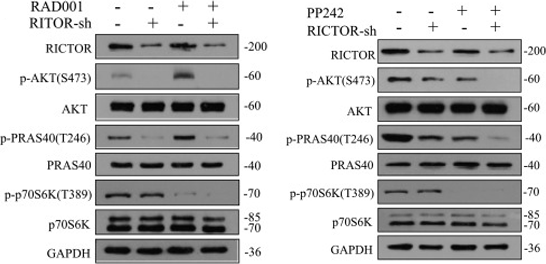
ECa109 cells stably transfected with control shRNA or RICTOR shRNA were treated with RAD001 (10 μmol/L) or Torkinib (PP242, 2 μmol/L) for 48 h, and total proteins were extracted to analysis the expression of RICTOR, p-AKT (Ser473), AKT, p-PRAS40 (Thr246), PRAS40, p-p70S6K and p70S6K by Western blot (n=5).
Torkinib purchased from MedChemExpress. Usage Cited in: Acta Pharm Sin B. 2020 Jun;10(6):1004-1019. [Abstract]
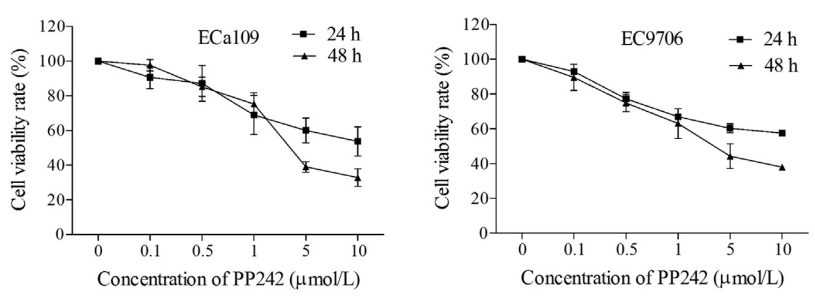
ECa109 and EC9706 cells were treated with Torkinib (PP242) for 24 or 48 h, respectively, and the cell viability was assessed by CCK-8 assay (n = 5).
Torkinib purchased from MedChemExpress. Usage Cited in: Acta Pharm Sin B. 2020 Jun;10(6):1004-1019. [Abstract]
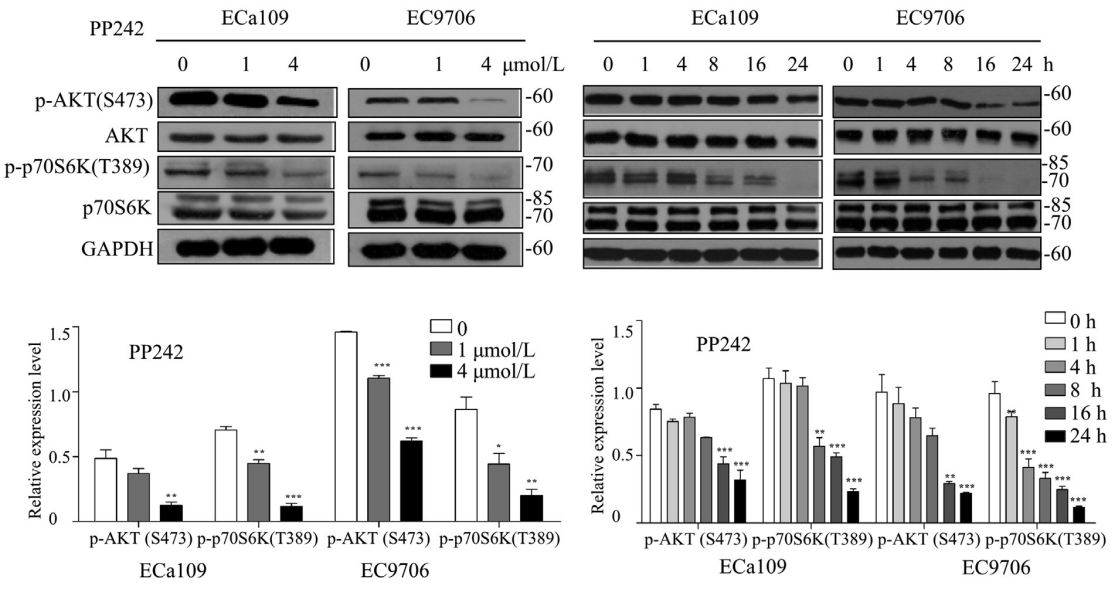
After ECa109 and EC9706 cells were treated with Torkinib (PP242) (0, 1 and 4 μmol/L) for 24 h or at the same concentration (4 μmol/L of PP242) for different time, total proteins were extracted to analyze the expression of p-AKT (Ser473), AKT, p-p70S6K and p70S6K by Western blot (n = 5). The results showed that PP242 decreased the expression of p-AKT (Ser473) and p-p70S6K (Thr389) in dose- and time-dependent manners.
Torkinib purchased from MedChemExpress. Usage Cited in: Acta Pharm Sin B. 2020 Jun;10(6):1004-1019. [Abstract]
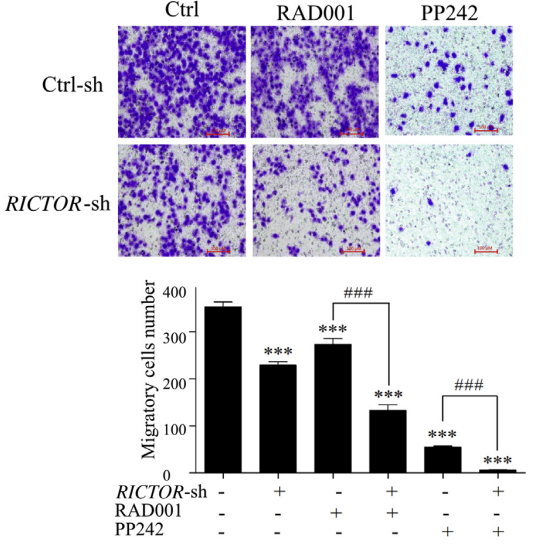
ECa109 RICTOR-KD cells or control cells were treated with RAD001 (10 μmol/L) or Torkinib (PP242) (2 μmol/L) for 48 h, and then the cell migration was assessed by transwell migration assay (n = 3). Scale bar = 100 μm.
Torkinib purchased from MedChemExpress. Usage Cited in: Acta Pharm Sin B. 2020 Jun;10(6):1004-1019. [Abstract]
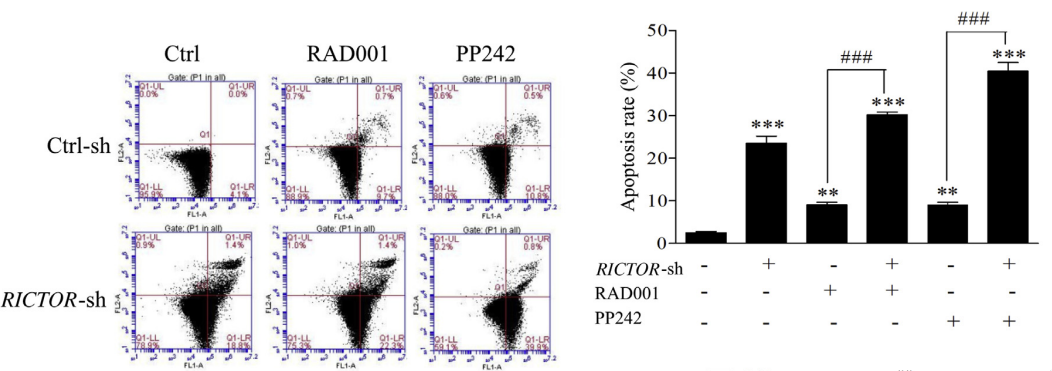
ECa109 RICTOR-KD cells or control cells were treated with RAD001 (20 μmol/L) or Torkinib (PP242) (4 μmol/L) for 48 h, and then cell apoptosis was assessed by flow cytometry (n = 3).
Torkinib purchased from MedChemExpress. Usage Cited in: Acta Pharm Sin B. 2020 Jun;10(6):1004-1019. [Abstract]
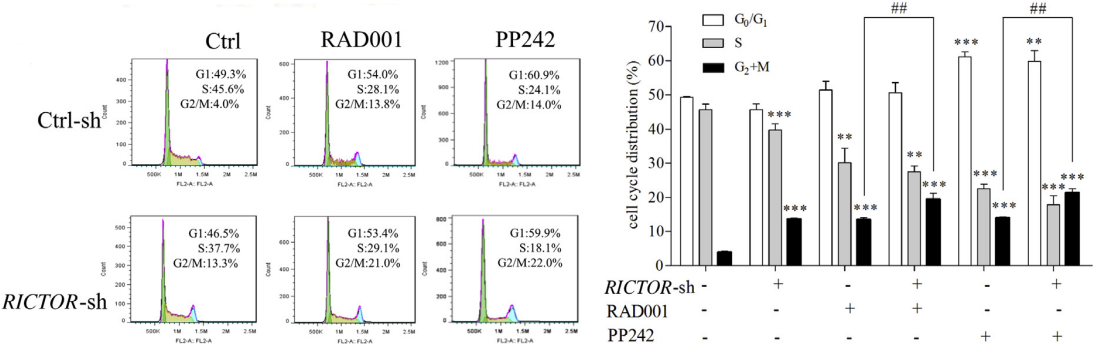
ECa109 RICTOR-KD cells or control cells were treated with RAD001 (10 μmol/L) or PP242 (2 μmol/L ) for 48 h, and then the cell cycle were assessed by flow cytometer (n = 3).
Torkinib purchased from MedChemExpress. Usage Cited in: Acta Pharm Sin B. 2020 Jun;10(6):1004-1019. [Abstract]
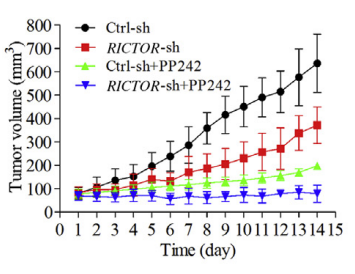
Stable knockdown of RICTOR inhibited tumor growth and potentiated the antitumor effect of Torkinib (PP242) in nude mice. Nude mice bearing tumors derived from ECa109 RICTOR-KD cells or control cells were treated by Torkinib (PP242) (5 mg/kg every other day, i.p.) for 14 days (n = 5). Tumor growth curves were graphed with the tumor volume of each mouse measured and recorded every day (n = 5).
Torkinib purchased from MedChemExpress. Usage Cited in: Acta Pharm Sin B. 2020 Jun;10(6):1004-1019. [Abstract]
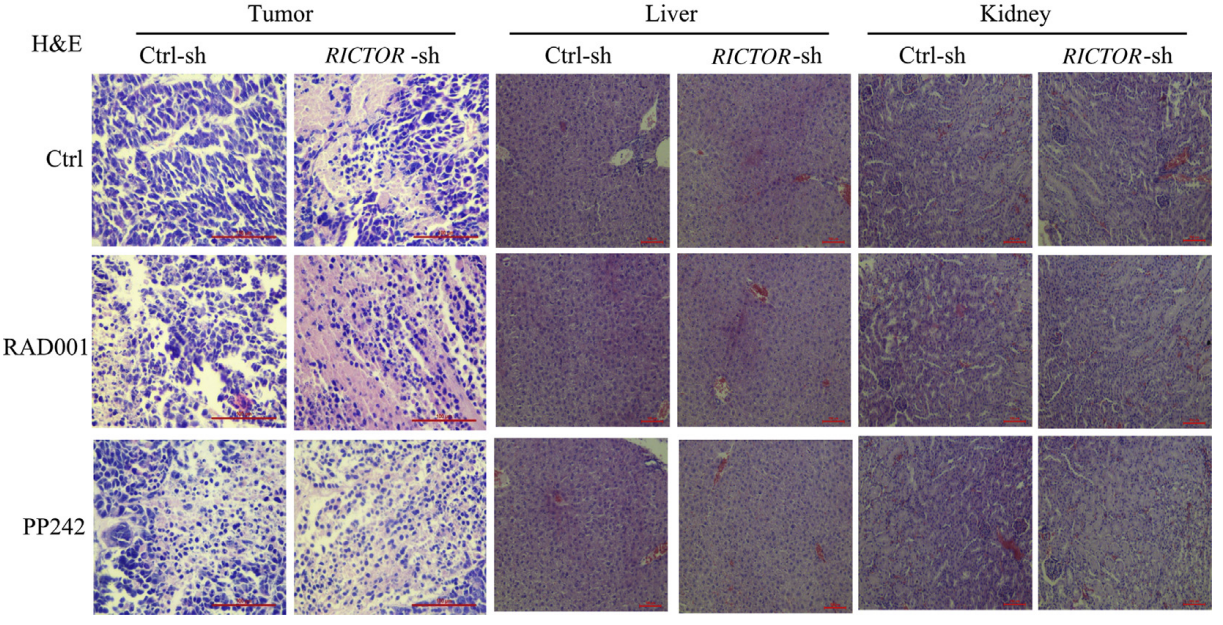
Nude mice bearing tumors derived from ECa109 RICTOR-KD cells or control cells were treated by Torkinib (PP242) (5 mg/kg every other day, i.p.) for 14 days (n = 5). Paraffin-embedded tumor was used to analyze the cell apoptosis as well as livers and kidneys of mice were used to evaluate the potential hepatorenal toxicity by H&E staining (n = 5). Scale bar = 100 μm.
-
J Exp Clin Cancer Res
2021 Jan 9;40(1):25. PMID: 33422093 -
Adv Sci (Weinh)
Depletion of Hepatic SREBP2 Protects Against Hypercholesterolemia and Atherosclerosis through the ANGPTL3-LPL Axis. [Abstract]2025 May;12(18):e2412677. PMID: 40106311 -
Environ Int
Exploring seasonal dynamics of sea spray aerosol bioactivity: Insights into molecular effects on human bronchial epithelial cells. [Abstract]2025 Jan:195:109255. PMID: 39787780 -
Oncogene
2024 Sep;43(38):2885-2899. PMID: 39154123 -
Curr Biol
2023 May 8;33(9):1744-1752.e7. PMID: 37080197 -
Br J Pharmacol
High-throughput screening identifies bazedoxifene as a potential therapeutic for dysferlin-deficient limb girdle muscular dystrophy. [Abstract]2025 Jul;182(13):2930-2949. PMID: 40108832 -
Breast Cancer Res
FAK activates AKT-mTOR signaling to promote the growth and progression of MMTV-Wnt1-driven basal-like mammary tumors. [Abstract]2020 Jun 3;22(1):59. PMID: 32493400 -
Geroscience
Autophagy revealed as a targetable vulnerability in senescent cells by cell painting phenotypic profiling: a mechanistic study of MCOPPB and related compounds. [Abstract]2026 Apr 30. PMID: 42062708 -
Mol Cancer Res
Dual Regulation of Histone Methylation by mTOR Complexes Controls Glioblastoma Tumor Cell Growth via EZH2 and SAM. [Abstract]2020 Aug;18(8):1142-1152. PMID: 32366675 -
Mar Drugs
Aerosolizable Marine Phycotoxins and Human Health Effects: In Vitro Support for the Biogenics Hypothesis. [Abstract]2020 Jan 10;18(1):46. PMID: 31936833 -
Inflammation
Oroxylin A-induced Trained Immunity Promotes LC3-associated Phagocytosis in Macrophage in Protecting Mice Against Sepsis. [Abstract]2024 Dec;47(6):2196-2214. PMID: 38739341 -
Front Pharmacol
CC-223, NSC781406, and BGT226 Exerts a Cytotoxic Effect Against Pancreatic Cancer Cells via mTOR Signaling. [Abstract]2020 Nov 11:11:580407. PMID: 33343350 -
Molecules
In Vitro and in Vivo Activity of mTOR Kinase and PI3K Inhibitors Against Leishmania donovani and Trypanosoma brucei. [Abstract]2020 Apr 23;25(8):1980. PMID: 32340370 -
PLoS Pathog
2025 Jan 2;21(1):e1012800. PMID: 39746094 -
Sci Rep
Evaluation of the antitumor effects of PP242 in a colon cancer xenograft mouse model using comprehensive metabolomics and lipidomics. [Abstract]2020 Oct 16;10(1):17523. PMID: 33067464 -
J Virol
Tripartite motif 25 inhibits protein aggregate degradation during PRRSV infection by suppressing p62-mediated autophagy. [Abstract]2024 Nov 19;98(11):e0143724. PMID: 39480084 -
J Biol Chem
Phosphatases maintain low catalytic activity of SGK1: DNA damage resets the balance in favor of phosphorylation. [Abstract]2023 Aug;299(8):104941. PMID: 37343701 -
J Cell Sci
A C-terminal cytoplasmic retention motif and nuclear localization signal regulates nuclear import of TP53INP2. [Abstract]2025 Dec 15;138(24):jcs264267. PMID: 41368677 -
ACS Chem Biol
Selective ATP-competitive inhibitors of TOR suppress rapamycin-insensitive function of TORC2 in Saccharomyces cerevisiae. [Abstract]2012 Jun 15;7(6):982-7. PMID: 22496512 -
Front Oncol
RAD21 Confers Poor Prognosis and Affects Ovarian Cancer Sensitivity to Poly(ADP-Ribose)Polymerase Inhibitors Through DNA Damage Repair. [Abstract]2022 Jul 4;12:936550. PMID: 35860572 -
Mol Biol Rep
mTOR inhibitor PP242 increases antitumor activity of sulforaphane by blocking Akt/mTOR pathway in esophageal squamous cell carcinoma. [Abstract]2022 Jan;49(1):451-461. PMID: 34731371 -
Hum Cell
Multi-omics data integration reveals the molecular network of dysregulation IQGAP2-mTOR promotes cell proliferation. [Abstract]2023 Jul;36(4):1429-1440. PMID: 37154877 -
Biochem Biophys Res Commun
mTORC2/Akt axis promotes proteotoxic stress and mitochondrial Ca2+ overload during celastrol-induced paraptosis. [Abstract]2025 Aug 11:781:152474. PMID: 40834605 -
bioRxiv
2025 Jul 21:2025.07.16.665230. PMID: 40777316 -
-
-


Solvent & Solubility
DMSO : 50 mg/mL (162.16 mM; Need ultrasonic; Hygroscopic DMSO has a significant impact on the solubility of product, please use newly opened DMSO)
Please refer to the solubility information to select the appropriate solvent. Once prepared, please aliquot and store the solution to prevent product inactivation from repeated freeze-thaw cycles.
Storage method and period of stock solution: -80°C, 1 year; -20°C, 6 months. When stored at -80°C, please use it within 1 year. When stored at -20°C, please use it within 6 months.
Please refer to the solubility information to select the appropriate solvent. Once prepared, please aliquot and store the solution to prevent product inactivation from repeated freeze-thaw cycles.
Storage method and period of stock solution: -80°C, 1 year; -20°C, 6 months. When stored at -80°C, please use it within 1 year. When stored at -20°C, please use it within 6 months.
Concentration (start) × Volume (start) = Concentration (final) × Volume (final)
Select the appropriate dissolution method based on your experimental animal and administration route.
- For the following dissolution methods, please ensure to first prepare a clear stock solution using an In Vitro approach and then sequentially add co-solvents:
- To ensure reliable experimental results, the clarified stock solution can be appropriately stored based on storage conditions. As for the working solution for In Vivo experiments, it is recommended to prepare freshly and use it on the same day.
- The percentages shown for the solvents indicate their volumetric ratio in the final prepared solution. If precipitation or phase separation occurs during preparation, heat and/or sonication can be used to aid dissolution.
Add each solvent one by one: 10% DMSO 40% PEG300 5% Tween-80 45% Saline
Solubility: ≥ 2.5 mg/mL (8.11 mM); Clear solution
This protocol yields a clear solution of ≥ 2.5 mg/mL (saturation unknown).
Taking 1 mL working solution as an example, add 100 μL DMSO stock solution (25.0 mg/mL) to 400 μL PEG300, and mix evenly; then add 50 μL Tween-80 and mix evenly; then add 450 μL Saline to adjust the volume to 1 mL.
Preparation of Saline: Dissolve 0.9 g sodium chloride in ddH₂O and dilute to 100 mL to obtain a clear Saline solution.
Add each solvent one by one: 10% DMSO 90% (20% SBE-β-CD in Saline)
Solubility: ≥ 2.5 mg/mL (8.11 mM); Clear solution
This protocol yields a clear solution of ≥ 2.5 mg/mL (saturation unknown).
Taking 1 mL working solution as an example, add 100 μL DMSO stock solution (25.0 mg/mL) to 900 μL 20% SBE-β-CD in Saline, and mix evenly.
Preparation of 20% SBE-β-CD in Saline (4°C, storage for one week): 2 g SBE-β-CD powder is dissolved in 10 mL Saline, completely dissolve until clear.
Please enter the basic information of animal experiments:
-
-
-
-
Recommended: Prepare an additional quantity of animals to account for potential losses during experiments.
Please enter your animal formula composition:
-
%DMSO +
Recommended: Keep the proportion of DMSO in working solution below 2% if your animal is weak.
-
%+
-
+%Tween-80 + +
-
%Saline +
The co-solvents required include: DMSO, . All of co-solvents are available by MedChemExpress (MCE). , Tween 80. All of co-solvents are available by MedChemExpress (MCE).
Working solution concentration: 0.22 mg/mL
Method for preparing stock solution: mg drug dissolved in μL DMSO. Stock solution concentration: mg/mL.
1. Take μL DMSO stock solution;
2. Add μL .
μL , mix evenly;
3. Then add μL Tween 80, mix evenly;
4. Then add μL
Please ensure that the stock solution in the first step is dissolved to a clear state, and add co-solvents in sequence. You can use ultrasonic heating (ultrasonic cleaner, recommended frequency 20-40 kHz), vortexing, etc. to assist dissolution.

Protocol
Wild-type and SIN1-/- MEFs are plated in 96-well plates at approximately 30% confluence and left overnight to adhere. The following day cells are treated with Torkinib (PP 242) (1 nM, 10 nM, 100 nM, 1 μM, and 10 μM), Rapamycin, or vehicle (0.1% DMSO). After 72 h of treatment, 10 μL of 440 μM resazurin sodium salt is added to each well, and after 18 h, the florescence intensity in each well is measured using a top-reading florescent plate reader with excitation at 530 nm and emission at 590 nm[2].
MedChemExpress (MCE) has not independently confirmed the accuracy of these methods. They are for reference only.
Mice[2]
Six-wk-old male C57BL/6 mice are fasted overnight prior to drug treatment. Torkinib (PP 242) (0.4 mg), Rapamycin (0.1 mg), or vehicle alone is injected IP. After 30 min for the Rapamycin-treated mouse or 10 min for the Torkinib (PP 242) and vehicle-treated mice, 250 mU of insulin in 100 μL of saline is injected IP. 15 min after the insulin injection, the mice are killed by CO2 asphyxiation followed by cervical dislocation. Tissues are harvested and frozen on liquid nitrogen in 200 μL of cap lysis buffer. The frozen tissue is thawed on ice, manually disrupted with a mortar and pestle, and then further processed with a micro tissue-homogenizer. Protein concentration of the cleared lysate is measured by Bradford assay and 5-10 μg of protein is analyzed by Western blot[2].
MedChemExpress (MCE) has not independently confirmed the accuracy of these methods. They are for reference only.


Purity & Documentation
-
Data Sheet (284 KB)
-
SDS (393 KB)
- English - EN (393 KB)
- Français - FR (393 KB)
- Deutsch - DE (393 KB)
- Norwegian - NO (393 KB)
- Español - ES (393 KB)
- Swedish - SV (393 KB)
- Italian - IT (393 KB)
- Korean - KR (393 KB)
- Portuguese - PT (393 KB)
-
Handling Instructions (2659 KB)
References
[1]. Apsel B, et al. Targeted polypharmacology: discovery of dual inhibitors of tyrosine and phosphoinositide kinases. Nat Chem Biol. 2008 Nov;4(11):691-9. [Content Brief]
[2]. Feldman ME, et al. Active-site inhibitors of mTOR target rapamycin-resistant outputs of mTORC1 and mTORC2. PLoS Biol. 2009 Feb 10;7(2):e38. [Content Brief]


Complete Stock Solution Preparation Table
Please refer to the solubility information to select the appropriate solvent. Once prepared, please aliquot and store the solution to prevent product inactivation from repeated freeze-thaw cycles.
Storage method and period of stock solution: -80°C, 1 year; -20°C, 6 months. When stored at -80°C, please use it within 1 year. When stored at -20°C, please use it within 6 months.
| Optional Solvent | Concentration Solvent Mass | 1 mg | 5 mg | 10 mg | 25 mg |
|---|---|---|---|---|---|
| DMSO | 1 mM | 3.2432 mL | 16.2159 mL | 32.4317 mL | 81.0793 mL |
| 5 mM | 0.6486 mL | 3.2432 mL | 6.4863 mL | 16.2159 mL | |
| 10 mM | 0.3243 mL | 1.6216 mL | 3.2432 mL | 8.1079 mL | |
| 15 mM | 0.2162 mL | 1.0811 mL | 2.1621 mL | 5.4053 mL | |
| 20 mM | 0.1622 mL | 0.8108 mL | 1.6216 mL | 4.0540 mL | |
| 25 mM | 0.1297 mL | 0.6486 mL | 1.2973 mL | 3.2432 mL | |
| 30 mM | 0.1081 mL | 0.5405 mL | 1.0811 mL | 2.7026 mL | |
| 40 mM | 0.0811 mL | 0.4054 mL | 0.8108 mL | 2.0270 mL | |
| 50 mM | 0.0649 mL | 0.3243 mL | 0.6486 mL | 1.6216 mL | |
| 60 mM | 0.0541 mL | 0.2703 mL | 0.5405 mL | 1.3513 mL | |
| 80 mM | 0.0405 mL | 0.2027 mL | 0.4054 mL | 1.0135 mL | |
| 100 mM | 0.0324 mL | 0.1622 mL | 0.3243 mL | 0.8108 mL |


Torkinib Related Classifications
HY-10474 Related Classifications
 Powered by Bioz