



Minodronic acid
Based on 1 publication(s) in Google Scholar
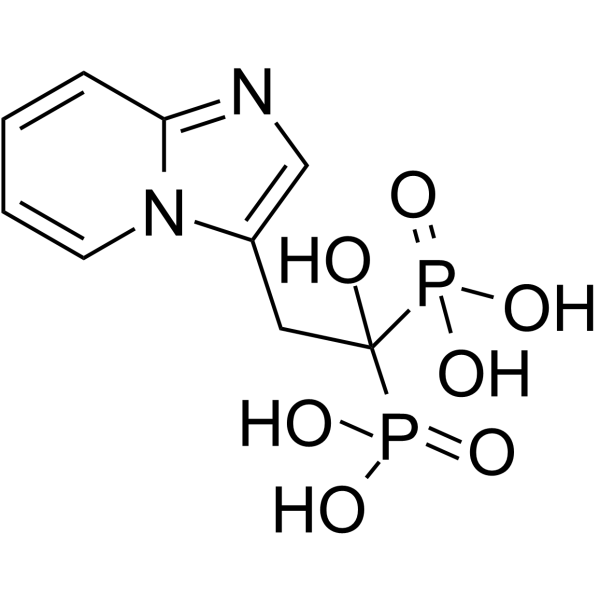
Minodronic acid (YM-529) is an FPP synthase inhibitor with an IC50 of 3 nM, and also an antagonist of P2X2/3 receptors with an IC50 of 62.7 μM. Minodronic acid induces tumor cell apoptosis and inhibits cell growth. Minodronic acid also suppresses bone resorption. Minodronic acid can be used in research related to osteoporosis and cancer.
商品は「研究用試薬」です。人や動物の医療用・臨床診断用・食品用の製品ではありません。
研究用途以外に使用した場合、当社は一切の責任を負いかねます。
- 純度: 99.67%
- CAS 番号: 180064-38-4
- 分子式: C9H12N2O7P2
- 分子量:322.15
-
保管条件:Powder -20°C, 3 years , 4°C, 2 years ; In solvent -80°C, 2 years , -20°C, 1 year

To place orders, for customer services and technical support, please contact: MedChemExpress USA
Tel: 609-228-6898 E-mail: [email protected] [email protected]


-
 生物活性
生物活性
-
化学情報
-
溶剤 & 溶解度
- 純度とドキュメンテーション
- 参考文献
-
 Help & FAQs


-
HY-13062
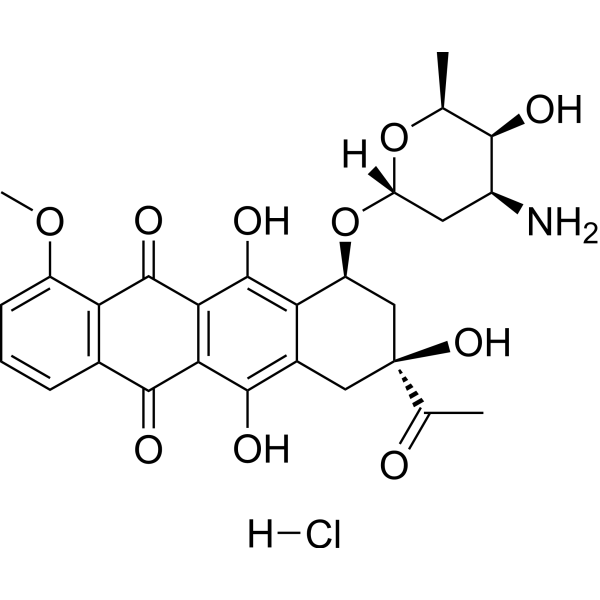
Daunorubicin hydrochloride
-
HY-B0631
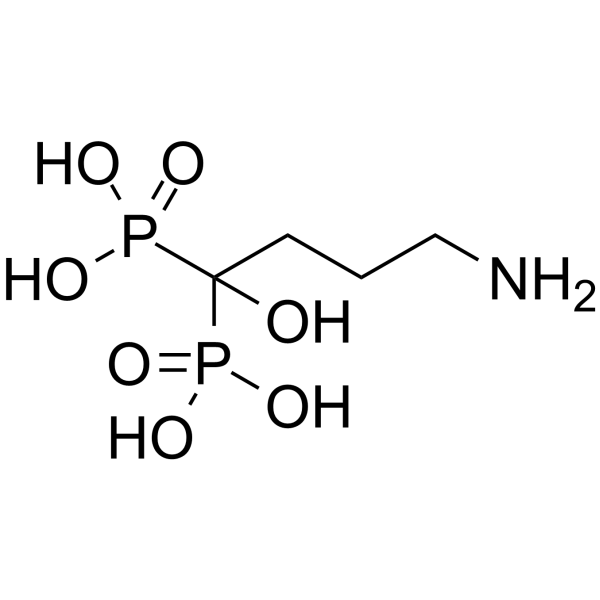
Alendronic acid
-
HY-B0148
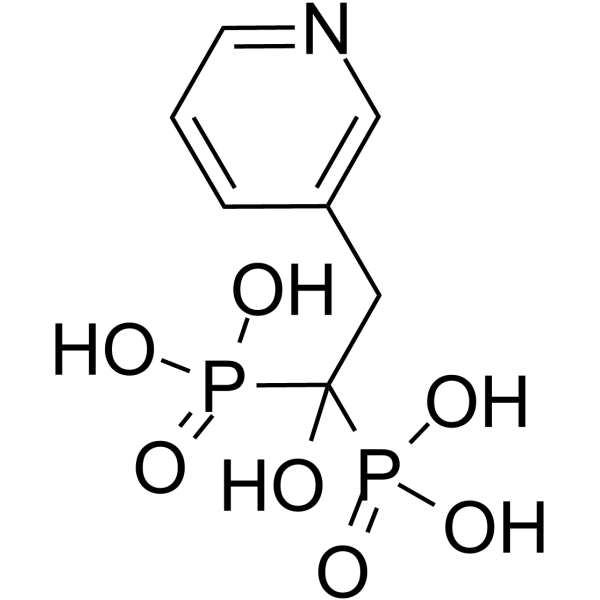
Risedronic acid
-
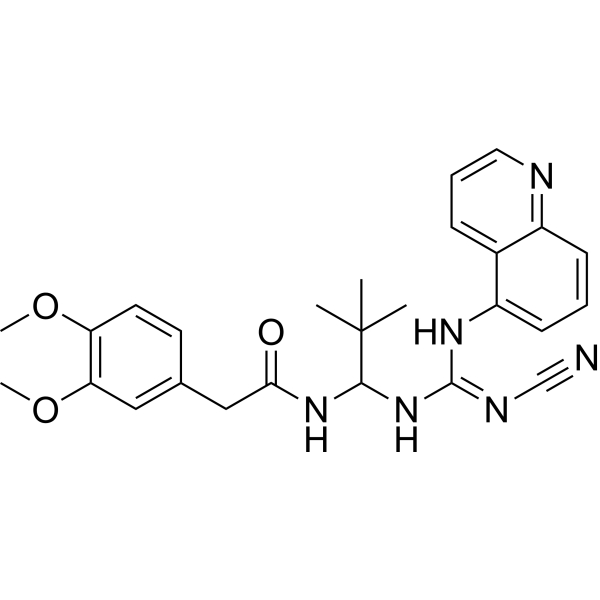
HY-50697
A-740003
-
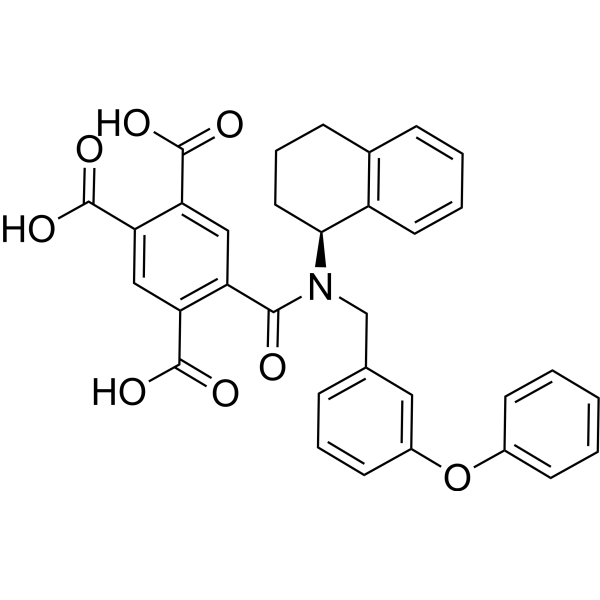
HY-15568
A-317491
-
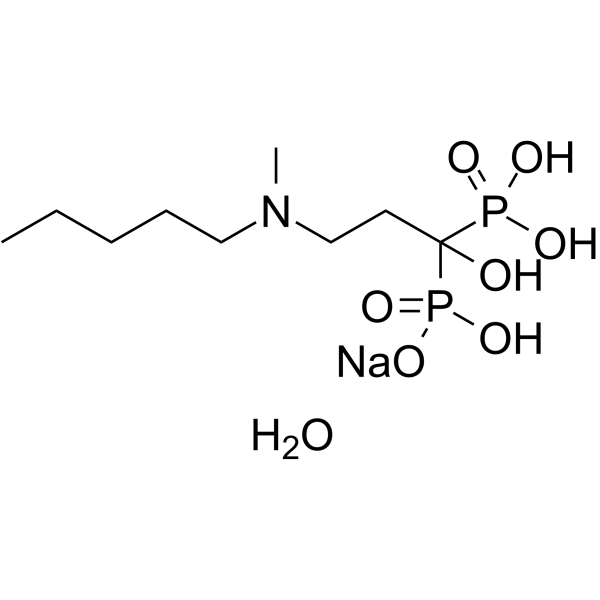
HY-B0515
Ibandronate Sodium Monohydrate
-
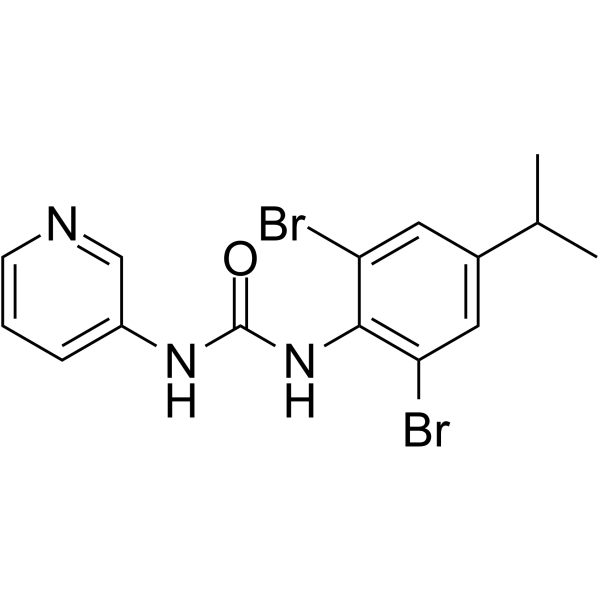
HY-110237
BX430
-
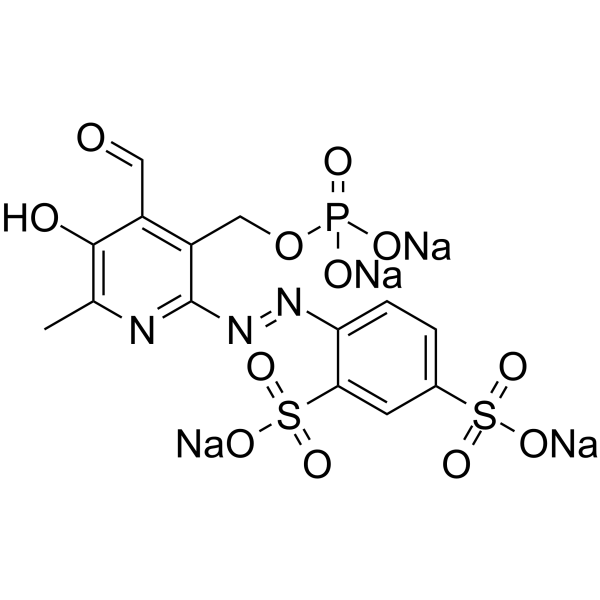
HY-101044
PPADS tetrasodium
-
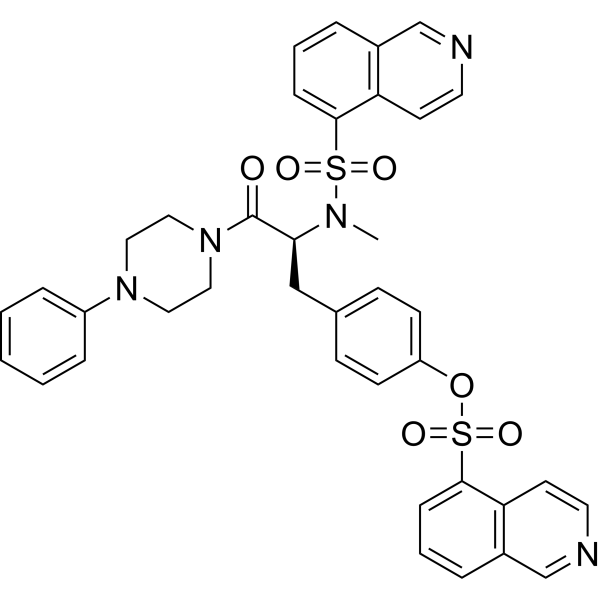
HY-13290
KN-62
-
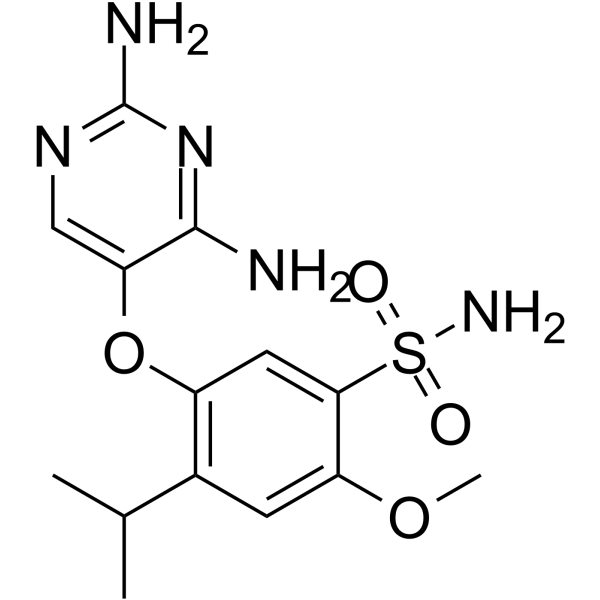
HY-101588
Gefapixant
-
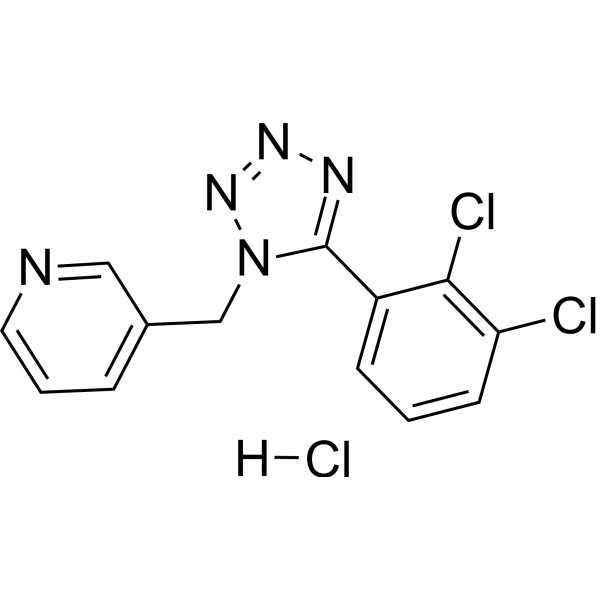
HY-15488A
A 438079 hydrochloride
-
HY-B0879A
Suramin sodium salt
MedChemExpress(MCE)の使用を引用している文献 Minodronic acid
MoreP2X Receptor アイソフォーム固有の製品をすべて表示
More

生物活性
|
P2X2 Receptor |
P2X3 Receptor |
|
Cell Line

|
Type | Value | Description | References |
|---|---|---|---|---|
| HFF | IC50 |
1.88 μM
Compound: 4
|
In vitro inhibitory concentration against the growth of Toxoplasma gondii in human foreskin fibroblast monolayer cells (HFF cells)
In vitro inhibitory concentration against the growth of Toxoplasma gondii in human foreskin fibroblast monolayer cells (HFF cells)
|
[PMID: 15857119] |
| J774 | IC50 |
3 μM
Compound: 4
|
Cytotoxicity against mouse J774 cells assessed as cell viability after 48 hrs by alamar blue assay
Cytotoxicity against mouse J774 cells assessed as cell viability after 48 hrs by alamar blue assay
|
[PMID: 20394422] |
| T-cell | IC50 |
4.1 μM
Compound: 3
|
Inhibitory activity, for stimulation of TNF-alpha release in gamma-delta T cells, using individual observed maximum TNF-alpha release
Inhibitory activity, for stimulation of TNF-alpha release in gamma-delta T cells, using individual observed maximum TNF-alpha release
|
[PMID: 14711309] |
| T-cell | IC50 |
8 μM
Compound: 3
|
Inhibitory activity, for stimulation of TNF-alpha release in gamma-delta T cells, using a constrained maximum TNF-alpha release of 2700 pg/mL
Inhibitory activity, for stimulation of TNF-alpha release in gamma-delta T cells, using a constrained maximum TNF-alpha release of 2700 pg/mL
|
[PMID: 14711309] |
Minodronic acid (5-100 μM; 72 h) inhibits the proliferation of human bladder cancer cell lines 253J, 5637, RT4, RT112, TCCSUP, KU-7 and UM-UC-3 in a dose-dependent manner[1].
Minodronic acid (30 μM; 48 h) induces apoptosis in human bladder cancer cells[1].
Minodronic acid (0.25-2.0 × IC50; 72 h) exhibits synergistic or additive antiproliferative effects when combined with Cisplatin (HY-17394) or Paclitaxel (HY-B0015) in human bladder cancer cell lines KU-7, RT112 and UM-UC-3[1].
Minodronic acid (0.1-1 μM; 3 days) potently inhibits osteoclast-mediated bone resorption in rabbits and induces dose-dependent morphological changes; at 1 μM, it almost completely inhibits bone resorption and causes osteoclast detachment, while at 0.1 μM, it only exerts partial inhibitory effects accompanied by the disappearance of the ruffled border[2].
MedChemExpress (MCE) has not independently confirmed the accuracy of these methods. They are for reference only.
-
Cell Line:253J, 5637, RT4, RT112, TCCSUP, KU-7, UM-UC-3 human bladder cancer cells
-
Concentration:5, 10, 25, 50, 100 μM
-
Incubation Time:72 h
-
Result:Inhibited cell growth in a dose-dependent manner.
Achieved IC50 values of 12.2 μM (253J), 7.1 μM (5637), 12.2 μM (RT4), 15.4 μM (RT112), 21.8 μM (TCCSUP), 24.8 μM (KU-7), and 20.8 μM (UM-UC-3).
Minodronic acid (30-100 μM; transurethral administration; 5 days) inhibits the growth of orthotopic bladder cancer in SCID mice [1].
Minodronic acid (0.05-5 mg/kg; subcutaneous injection; single administration) accumulates in the calcified and ossified regions of rat bones, concentrates in osteoclast-containing bone tissue sites, and exhibits dose-dependent bone tissue localization characteristics[2].
MedChemExpress (MCE) has not independently confirmed the accuracy of these methods. They are for reference only.
-
Animal Model:BALB/c nu/nu (female, 6-8 weeks old, intracardiac injection of 1×10⁶ UM-UC-3^LUC cells to induce bone metastases)[1]
-
Dosage:80 μg/kg
-
Administration:s.c.; once weekly; 3 weeks
-
Result:Significantly reduced growth of bone metastatic lesions compared to untreated mice.
Did not significantly inhibit visceral metastases.
Showed no significant differences in body weight or serum components (AST, ALT, LDH, TP, BUN, Cre, Ca) compared to untreated mice.
-
Animal Model:SCID (female, 6-8 weeks old, orthotopic implantation of 2×10⁶ UM-UC-3^LUC cells into bladder)[1]
-
Dosage:30 μM; 100 μM
-
Administration:transurethral; daily for 5 consecutive days (days 5-9)
-
Result:Significantly suppressed orthotopic bladder tumor growth, no significant systemic toxicity was observed, and occasional deaths were attributed to mechanical renal injury rather than drug-related toxicity.
-
Animal Model:F334/DuCrj rats (female, 4 days postpartum, 5-7 g)[2]
-
Dosage:0.05 mg/kg (0.311 MBq/kg); 0.5 mg/kg (3.11 MBq/kg); 5 mg/kg (31.1 MBq/kg)
-
Administration:s.c.; single dose
-
Result:Localized approximately 2% of total administered radioactivity to right humeri at 24 hours post-administration, with radioactivity increasing linearly with dose.
Showed radioactive silver grains distributed in the calcified zone, ossification zone, and spongiosa of femurs, but absent in the hypertrophic cartilage zone.
Detected condensed silver grains in spongiosa under and surrounding osteoclasts, with low levels of intracellular silver grains present in osteoclasts.


化学情報
-
CAS 番号 180064-38-4
-
性状 Solid
-
分子量 322.15
-
分子式 C9H12N2O7P2
-
Color White to off-white
-
SMILES
OC(P(O)(O)=O)(P(O)(O)=O)CC1=CN=C2C=CC=CN21
-
別名
YM-529
-
輸送条件
Room temperature in continental US; may vary elsewhere.
-
保管条件
Powder -20°C 3 years 4°C 2 years In solvent -80°C 2 years -20°C 1 year


Publications (1)
-
Journal Impact Factor
-
Most Recent
-
Int J Biol Macromol
Reticuline isomerase AKR1B1 with aldo-keto reductase activity and detoxification function from the insect Blaps rhynchopetera. [Abstract]2026 Mar:352:151224. PMID: 41791543


溶剤 & 溶解度
H2O : 5 mg/mL (15.52 mM; Need ultrasonic and warming)
H2O : 5 mg/mL (15.52 mM; ultrasonic and warming and adjust pH to 10 with NaOH and heat to 80°C)
DMSO : < 1 mg/mL (insoluble or slightly soluble)
Please refer to the solubility information to select the appropriate solvent. Once prepared, please aliquot and store the solution to prevent product inactivation from repeated freeze-thaw cycles.
Storage method and period of stock solution: -80°C, 2 years; -20°C, 1 year. When stored at -80°C, please use it within 2 years. When stored at -20°C, please use it within 1 year.
* Note: If you choose water as the stock solution, please dilute it to the working solution, then filter and sterilize it with a 0.22 μm filter before use.
Please refer to the solubility information to select the appropriate solvent. Once prepared, please aliquot and store the solution to prevent product inactivation from repeated freeze-thaw cycles.
Storage method and period of stock solution: -80°C, 2 years; -20°C, 1 year. When stored at -80°C, please use it within 2 years. When stored at -20°C, please use it within 1 year.
* Note: If you choose water as the stock solution, please dilute it to the working solution, then filter and sterilize it with a 0.22 μm filter before use.
濃度 (開始) × 体積 (開始) = 濃度 (終了) × 体積 (終了)
For the following dissolution methods, please prepare the working solution directly:
It is recommended to prepare fresh solutions and use them promptly within a short period of time.
The percentages shown for the solvents indicate their volumetric ratio in the final prepared solution. If precipitation or phase separation occurs during preparation, heat and/or sonication can be used to aid dissolution.
Add each solvent one by one: PBS
Solubility: 2 mg/mL (6.21 mM); Clear solution; Need ultrasonic


純度とドキュメンテーション
-
データシート (316 KB)
-
SDS (393 KB)
- English - EN (393 KB)
- Français - FR (393 KB)
- Deutsch - DE (393 KB)
- Norwegian - NO (393 KB)
- Español - ES (393 KB)
- Swedish - SV (393 KB)
- Italian - IT (393 KB)
- Korean - KR (393 KB)
- Portuguese - PT (393 KB)
-
取扱説明書 (2659 KB)
参考文献
[1]. Sato K, et al. A third-generation bisphosphonate, minodronic acid (YM529), successfully prevented the growth of bladder cancer in vitro and in vivo. Br J Cancer. 2006;95(10):1354-1361. [Content Brief]
[2]. Tanaka M, et al. Minodronic acid induces morphological changes in osteoclasts at bone resorption sites and reaches a level required for antagonism of purinergic P2X2/3 receptors. J Bone Miner Metab. 2018;36(1):54-63. [Content Brief]


Complete Stock Solution Preparation Table
Please refer to the solubility information to select the appropriate solvent. Once prepared, please aliquot and store the solution to prevent product inactivation from repeated freeze-thaw cycles.
Storage method and period of stock solution: -80°C, 2 years; -20°C, 1 year. When stored at -80°C, please use it within 2 years. When stored at -20°C, please use it within 1 year.
| Optional Solvent | Concentration Solvent Mass | 1 mg | 5 mg | 10 mg | 25 mg |
|---|---|---|---|---|---|
| H2O / H2O | 1 mM | 3.1041 mL | 15.5207 mL | 31.0414 mL | 77.6036 mL |
| 5 mM | 0.6208 mL | 3.1041 mL | 6.2083 mL | 15.5207 mL | |
| 10 mM | 0.3104 mL | 1.5521 mL | 3.1041 mL | 7.7604 mL | |
| 15 mM | 0.2069 mL | 1.0347 mL | 2.0694 mL | 5.1736 mL |
* Note: If you choose water as the stock solution, please dilute it to the working solution, then filter and sterilize it with a 0.22 μm filter before use.


Minodronic acid 関連分類
HY-16322 関連分類
 Powered by Bioz