



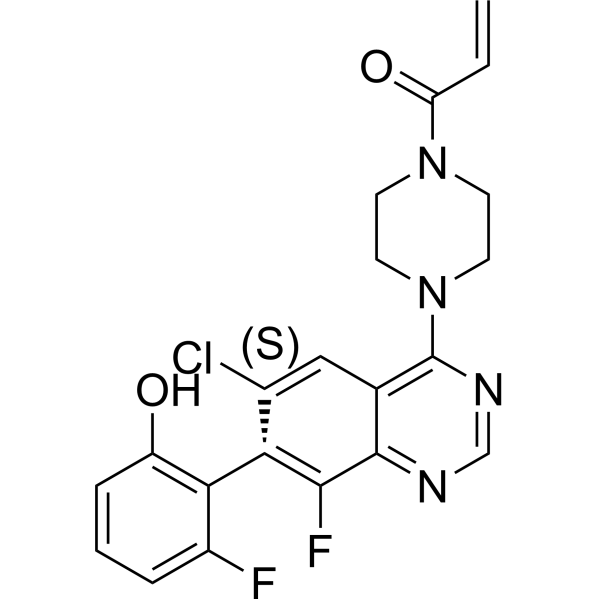
ARS-1620
Based on 13 publication(s) in Google Scholar
ARS-1620 is an atropisomeric selective KRASG12C inhibitor with desirable pharmacokinetics.
For research use only. We do not sell to patients.
- Purity : 99.59%
- CAS No.: 1698055-85-4
- Formula: C21H17ClF2N4O2
- Molecular Weight:430.84
-
Storage:Powder -20°C, 3 years , 4°C, 2 years ; In solvent -80°C, 2 years , -20°C, 1 year

To place orders, for customer services and technical support, please contact: MedChemExpress USA
Tel: 609-228-6898 E-mail: [email protected] [email protected]


-
 Biological Activity
-
Chemical Information
-
Solvent & Solubility
- Protocols
- Purity & Documentation
- References
-
 Help & FAQs


-
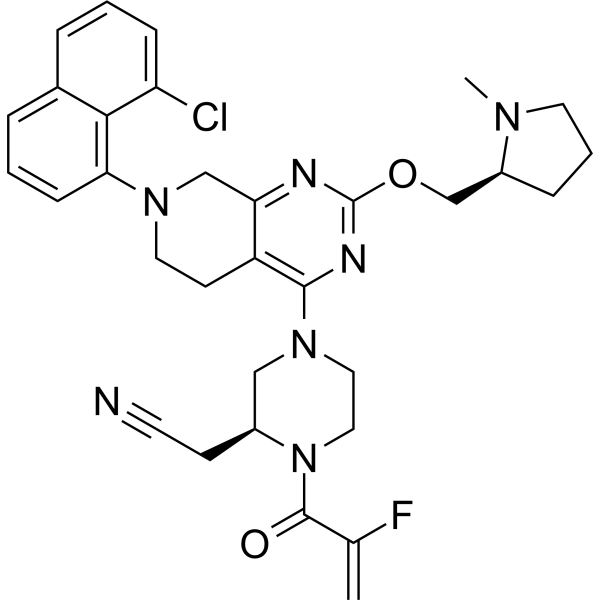
HY-130149
AdagrasibKRAS G12C Inhibitor -
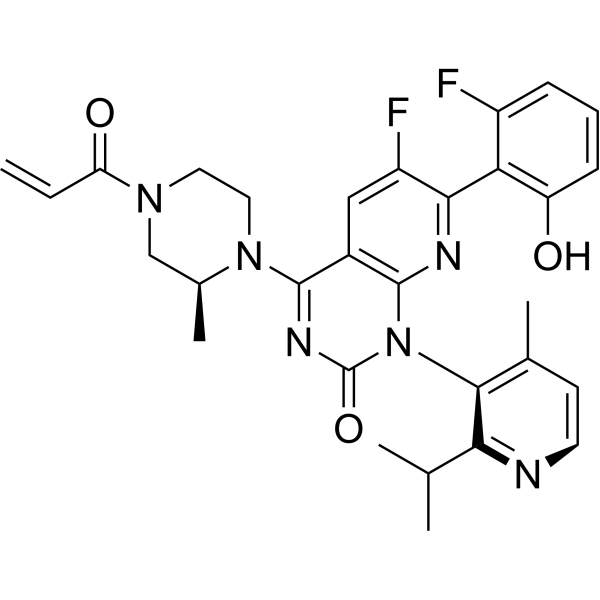
HY-114277
SotorasibKRAS G12C Inhibitor -
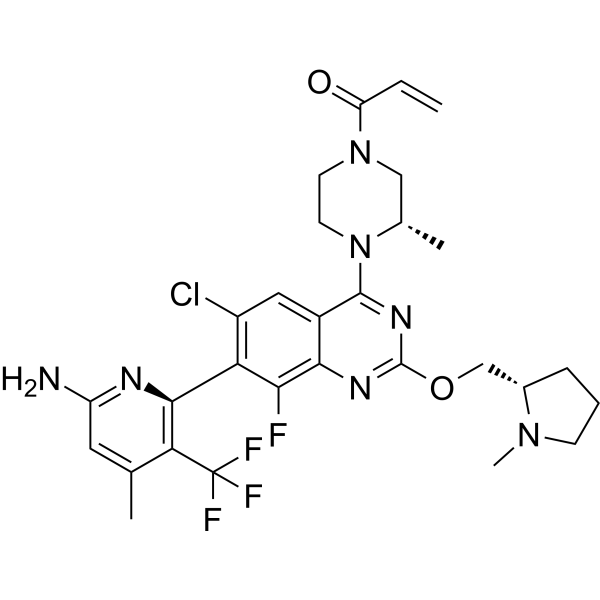
HY-145928
DivarasibKRAS G12C Inhibitor -
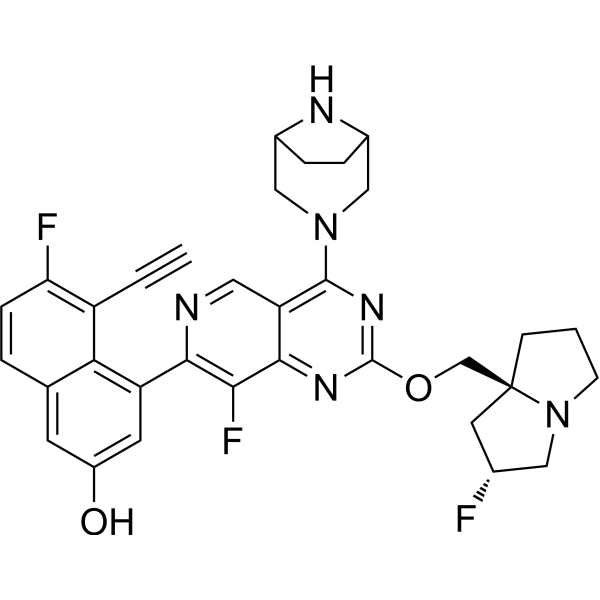
HY-134813
MRTX1133KRAS G12D Inhibitor -
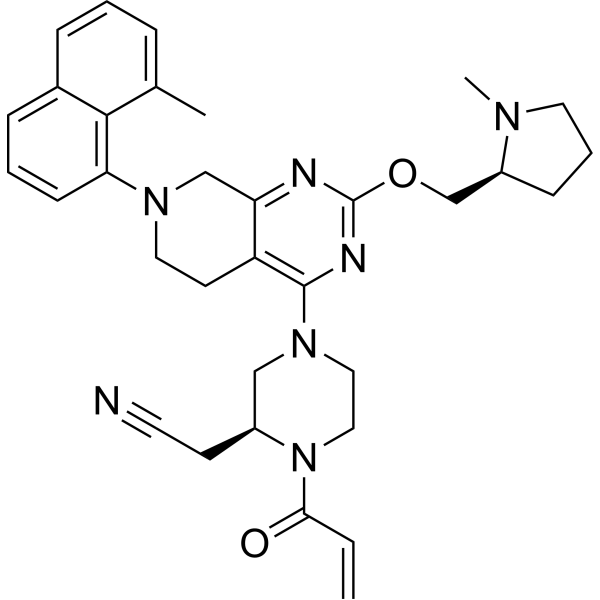
HY-114436
MRTX-1257KRAS G12C Inhibitor -
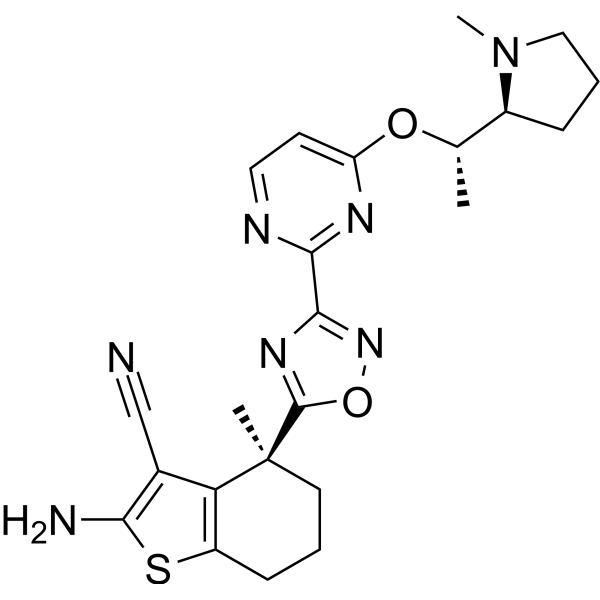
HY-153724
BI-2865Pan-KRAS Inhibitor -
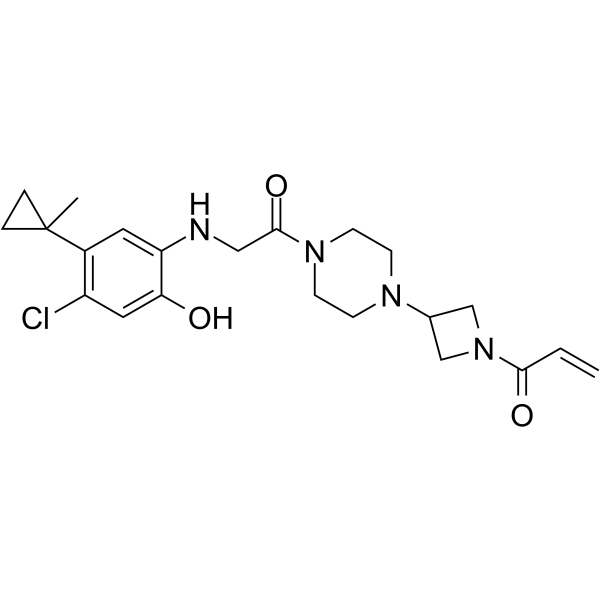
HY-19706
ARS-853KRAS G12C Inhibitor -
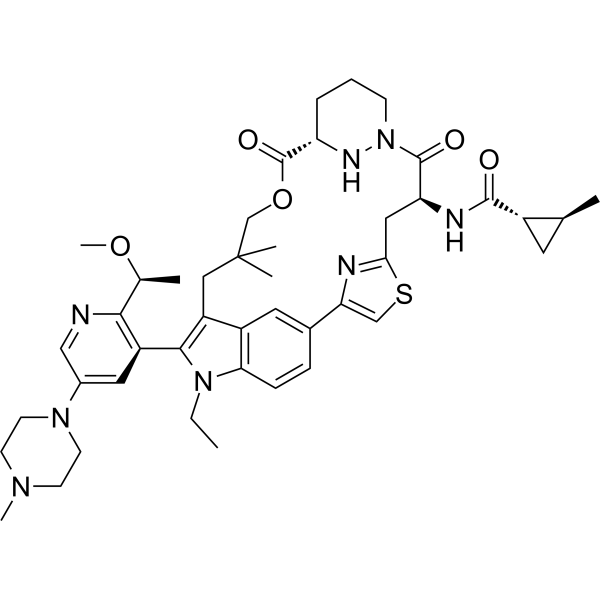
HY-148439
DaraxonrasibRAS(ON) Inhibitor -
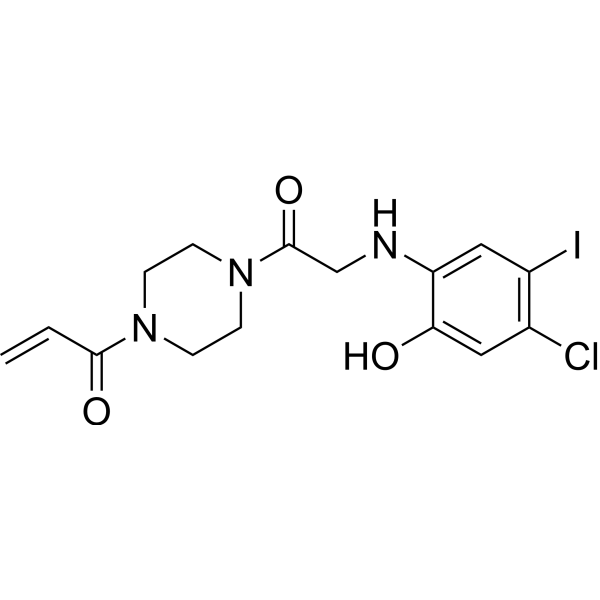
HY-18707
K-Ras(G12C) inhibitor 12K-Ras Inhibitor -
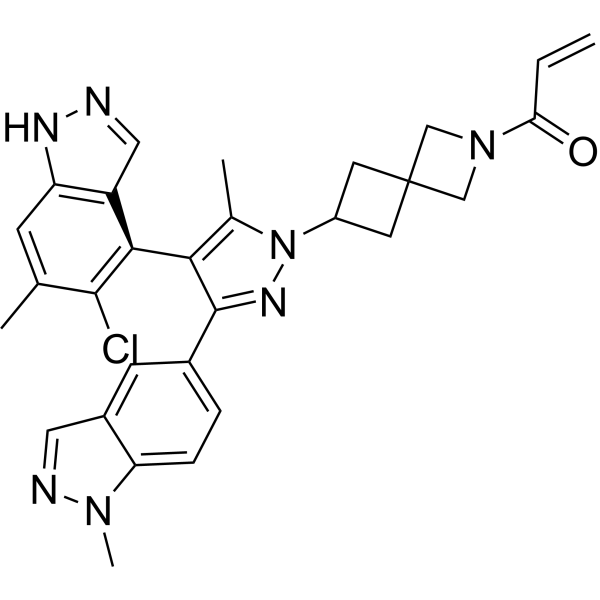
HY-139612
OpnurasibKRAS G12C Inhibitor -
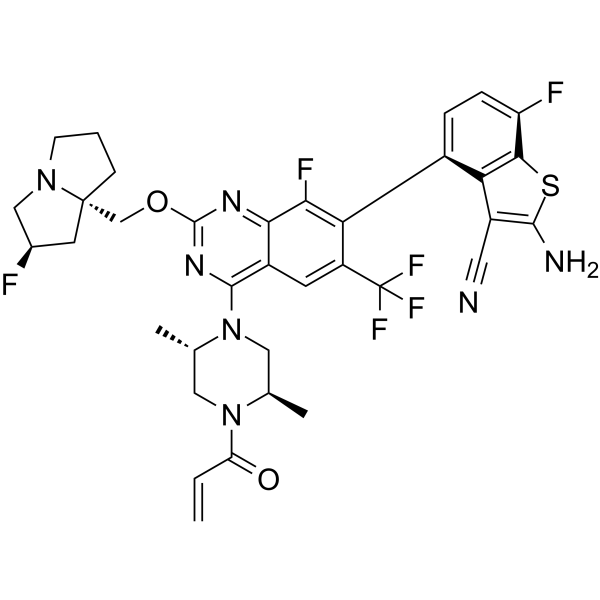
HY-158107
BBO-8520KRAS(G12C) Inhibitor -
HY-126247
BI-2852KRAS Switch I/II Pocket Inhibitor
Publications Citing Use of MedChemExpress (MCE) ARS-1620
More- Nat Med. 2019 Apr;25(4):628-640. [Abstract]
- Cancer Discov. 2024 Sep 4;14(9):1675-1698. [Abstract]
- Nat Cancer. 2026 Feb 24. [Abstract]
- Clin Cancer Res. 2021 May 1;27(9):2533-2548. [Abstract]
- Clin Cancer Res. 2020 Nov 15;26(22):5962-5973. [Abstract]
- Clin Cancer Res. 2020 Apr 1;26(7):1633-1643. [Abstract]
- Cell Death Discov. 2023 Feb 6;9(1):45. [Abstract]
- Cell Chem Biol. 2026 Feb 11:S2451-9456(26)00027-9. [Abstract]
- Mol Cancer Ther. 2023 Apr 3;22(4):529-538. [Abstract]
- ACS Chem Biol. 2026 Jun 11. [Abstract]
- Patent. US20240219403A1.
- bioRxiv. 2023 Oct 6.
- Virginia Commonwealth University. 2019 May.
 Customer Validation & Images

-
WB


Biological Activity
Description
IC50 & Target
[1]|
KRAS(G12C) |
In Vitro
ARS-1620 is an atropisomeric selective KRASG12C inhibitor with desirable pharmacokinetics. ARS-1620 exhibits complete growth suppression of p.G12C cell lines (IC50=150 nM) with relatively benign effects on control cell lines. It is found that ARS-1620 significantly reduces expression of the gene set in p.G12C mutant cells in a time-dependent manner but not in the p.G12S mutant cells. Following a 5-day treatment period, only a minority of G12C mutant cell lines are sensitive to ARS-1620 under monolayer culture conditions, whereas in 3D-spheroid conditions, ARS-1620 elicits a robust response (p=0.0140)[1].
MedChemExpress (MCE) has not independently confirmed the accuracy of these methods. They are for reference only.
In Vivo
MedChemExpress (MCE) has not independently confirmed the accuracy of these methods. They are for reference only.


Chemical Information
-
CAS No. 1698055-85-4
-
Appearance Solid
-
Molecular Weight 430.84
-
Formula C21H17ClF2N4O2
-
Color Off-white to light yellow
-
SMILES
C=CC(N1CCN(C2=C3C=C(Cl)[C@]([C@]4=C(O)C=CC=C4F)=C(F)C3=NC=N2)CC1)=O.[S]
-
Shipping
Room temperature in continental US; may vary elsewhere.
-
Storage
Powder -20°C 3 years 4°C 2 years In solvent -80°C 2 years -20°C 1 year


Publications (13)
-
Journal Impact Factor
-
Most Recent
-
Nat Med
Combination of ERK and autophagy inhibition as a treatment approach for pancreatic cancer. [Abstract]2019 Apr;25(4):628-640. PMID: 30833752 -
Cancer Discov
D3S-001, a KRAS G12C inhibitor with rapid target engagement kinetics, overcomes nucleotide cycling and demonstrates robust preclinical and clinical activities. [Abstract]2024 Sep 4;14(9):1675-1698. PMID: 38717075 -
Nat Cancer
The GENEVA platform models tumor mosaicism to reveal variations of responses to KRAS inhibitors and identify improved drug combinations. [Abstract]2026 Feb 24. PMID: 41735640 -
Clin Cancer Res
2021 May 1;27(9):2533-2548. PMID: 33619172 -
Clin Cancer Res
Epithelial-to-Mesenchymal Transition is a Cause of Both Intrinsic and Acquired Resistance to KRAS G12C Inhibitor in KRAS G12C-Mutant Non-Small Cell Lung Cancer. [Abstract]2020 Nov 15;26(22):5962-5973. PMID: 32900796 -
Clin Cancer Res
Vertical Pathway Inhibition Overcomes Adaptive Feedback Resistance to KRASG12C Inhibition. [Abstract]2020 Apr 1;26(7):1633-1643. PMID: 31776128 -
Cell Death Discov
Gemcitabine promotes autophagy and lysosomal function through ERK- and TFEB-dependent mechanisms. [Abstract]2023 Feb 6;9(1):45. PMID: 36746928
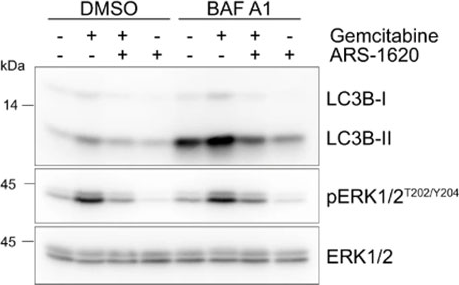
ARS-1620 purchased from MedChemExpress. Usage Cited in: Cell Death Discov. 2023 Feb 6;9(1):45. [Abstract]
In MIA PaCa-2 cells, ARS-1620 (10 µM; 48 h) limites Gemcitabine (10 µM)-induced ERK phosphorylation and autophagy flux, thus reinforcing the contribution of the RAS–ERK pathway in Gemcitabine-induced autophagy.
-
Cell Chem Biol
2026 Feb 11:S2451-9456(26)00027-9. PMID: 41679298 -
Mol Cancer Ther
Efficacious Combination Drug Treatment for Colorectal Cancer that Overcomes Resistance to KRAS G12C Inhibitors. [Abstract]2023 Apr 3;22(4):529-538. PMID: 36780229 -
ACS Chem Biol
2026 Jun 11. PMID: 42275002 -
-
-


Solvent & Solubility
In Vitro:
DMSO : 125 mg/mL (290.13 mM; Need ultrasonic; Hygroscopic DMSO has a significant impact on the solubility of product, please use newly opened DMSO)
H2O : 11 mg/mL (25.53 mM; ultrasonic and adjust pH to 3 with HCl)
Please refer to the solubility information to select the appropriate solvent. Once prepared, please aliquot and store the solution to prevent product inactivation from repeated freeze-thaw cycles.
Storage method and period of stock solution: -80°C, 2 years; -20°C, 1 year. When stored at -80°C, please use it within 2 years. When stored at -20°C, please use it within 1 year.
* Note: If you choose water as the stock solution, please dilute it to the working solution, then filter and sterilize it with a 0.22 μm filter before use.
Please refer to the solubility information to select the appropriate solvent. Once prepared, please aliquot and store the solution to prevent product inactivation from repeated freeze-thaw cycles.
Storage method and period of stock solution: -80°C, 2 years; -20°C, 1 year. When stored at -80°C, please use it within 2 years. When stored at -20°C, please use it within 1 year.
* Note: If you choose water as the stock solution, please dilute it to the working solution, then filter and sterilize it with a 0.22 μm filter before use.
Concentration (start) × Volume (start) = Concentration (final) × Volume (final)
In Vivo:
Select the appropriate dissolution method based on your experimental animal and administration route.
- For the following dissolution methods, please ensure to first prepare a clear stock solution using an In Vitro approach and then sequentially add co-solvents:
- To ensure reliable experimental results, the clarified stock solution can be appropriately stored based on storage conditions. As for the working solution for In Vivo experiments, it is recommended to prepare freshly and use it on the same day.
- The percentages shown for the solvents indicate their volumetric ratio in the final prepared solution. If precipitation or phase separation occurs during preparation, heat and/or sonication can be used to aid dissolution.
Add each solvent one by one: 10% DMSO 40% PEG300 5% Tween-80 45% Saline
Solubility: ≥ 2.08 mg/mL (4.83 mM); Clear solution
This protocol yields a clear solution of ≥ 2.08 mg/mL (saturation unknown).
Taking 1 mL working solution as an example, add 100 μL DMSO stock solution (20.8 mg/mL) to 400 μL PEG300, and mix evenly; then add 50 μL Tween-80 and mix evenly; then add 450 μL Saline to adjust the volume to 1 mL.
Preparation of Saline: Dissolve 0.9 g sodium chloride in ddH₂O and dilute to 100 mL to obtain a clear Saline solution.
Add each solvent one by one: 10% DMSO 90% (20% SBE-β-CD in Saline)
Solubility: ≥ 2.08 mg/mL (4.83 mM); Clear solution
This protocol yields a clear solution of ≥ 2.08 mg/mL (saturation unknown).
Taking 1 mL working solution as an example, add 100 μL DMSO stock solution (20.8 mg/mL) to 900 μL 20% SBE-β-CD in Saline, and mix evenly.
Preparation of 20% SBE-β-CD in Saline (4°C, storage for one week): 2 g SBE-β-CD powder is dissolved in 10 mL Saline, completely dissolve until clear.
In Vivo Dissolution Calculator
Please enter the basic information of animal experiments:
-
-
-
-
Recommended: Prepare an additional quantity of animals to account for potential losses during experiments.
Please enter your animal formula composition:
-
%DMSO +
Recommended: Keep the proportion of DMSO in working solution below 2% if your animal is weak.
-
%+
-
+%Tween-80 + +
-
%Saline +
The co-solvents required include: DMSO, . All of co-solvents are available by MedChemExpress (MCE). , Tween 80. All of co-solvents are available by MedChemExpress (MCE).
Working solution concentration: 0.22 mg/mL
Method for preparing stock solution: mg drug dissolved in μL DMSO. Stock solution concentration: mg/mL.
1. Take μL DMSO stock solution;
2. Add μL .
μL , mix evenly;
3. Then add μL Tween 80, mix evenly;
4. Then add μL
Please ensure that the stock solution in the first step is dissolved to a clear state, and add co-solvents in sequence. You can use ultrasonic heating (ultrasonic cleaner, recommended frequency 20-40 kHz), vortexing, etc. to assist dissolution.


Purity & Documentation
-
Data Sheet (281 KB)
-
SDS (392 KB)
- English - EN (392 KB)
- Français - FR (392 KB)
- Deutsch - DE (392 KB)
- Norwegian - NO (392 KB)
- Español - ES (392 KB)
- Swedish - SV (392 KB)
- Italian - IT (392 KB)
- Korean - KR (392 KB)
- Portuguese - PT (392 KB)
-
Handling Instructions (2659 KB)
References


Complete Stock Solution Preparation Table
Please refer to the solubility information to select the appropriate solvent. Once prepared, please aliquot and store the solution to prevent product inactivation from repeated freeze-thaw cycles.
Storage method and period of stock solution: -80°C, 2 years; -20°C, 1 year. When stored at -80°C, please use it within 2 years. When stored at -20°C, please use it within 1 year.
| Optional Solvent | Concentration Solvent Mass | 1 mg | 5 mg | 10 mg | 25 mg |
|---|---|---|---|---|---|
| H2O / DMSO | 1 mM | 2.3210 mL | 11.6052 mL | 23.2105 mL | 58.0262 mL |
| 5 mM | 0.4642 mL | 2.3210 mL | 4.6421 mL | 11.6052 mL | |
| 10 mM | 0.2321 mL | 1.1605 mL | 2.3210 mL | 5.8026 mL | |
| 15 mM | 0.1547 mL | 0.7737 mL | 1.5474 mL | 3.8684 mL | |
| 20 mM | 0.1161 mL | 0.5803 mL | 1.1605 mL | 2.9013 mL | |
| 25 mM | 0.0928 mL | 0.4642 mL | 0.9284 mL | 2.3210 mL | |
| DMSO | 30 mM | 0.0774 mL | 0.3868 mL | 0.7737 mL | 1.9342 mL |
| 40 mM | 0.0580 mL | 0.2901 mL | 0.5803 mL | 1.4507 mL | |
| 50 mM | 0.0464 mL | 0.2321 mL | 0.4642 mL | 1.1605 mL | |
| 60 mM | 0.0387 mL | 0.1934 mL | 0.3868 mL | 0.9671 mL | |
| 80 mM | 0.0290 mL | 0.1451 mL | 0.2901 mL | 0.7253 mL | |
| 100 mM | 0.0232 mL | 0.1161 mL | 0.2321 mL | 0.5803 mL |
* Note: If you choose water as the stock solution, please dilute it to the working solution, then filter and sterilize it with a 0.22 μm filter before use.


ARS-1620 Related Classifications
HY-U00418 Related Classifications
 Powered by Bioz