



Okadaic acid ammonium salt
Based on 24 publication(s) in Google Scholar
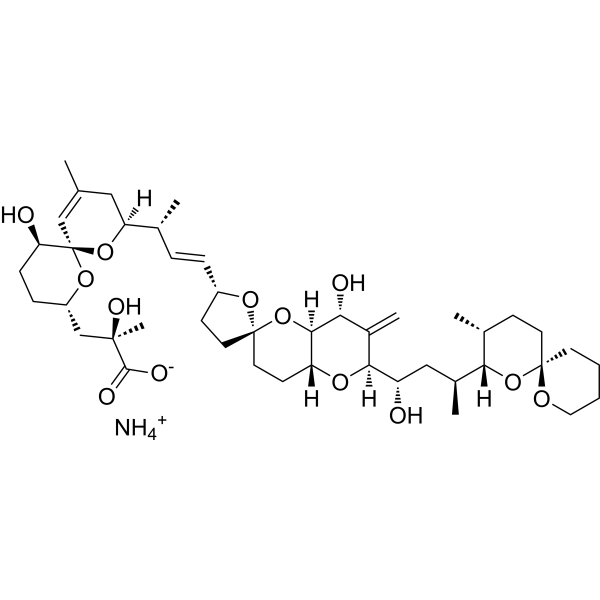
Okadaic acid ammonium salt, a marine toxin, is an inhibitor of protein phosphatases (PP). Okadaic acid ammonium salt has a significantly higher affinity for PP2A (IC50=0.1-0.3 nM), and inhibits PP1 (IC50=15-50 nM), PP3 (IC50=3.7-4 nM), PP4 (IC50=0.1 nM), PP5 (IC50=3.5 nM), but does not inhibit PP2C. Okadaic acid ammonium salt increases of phosphorylation of a number of proteins by inhibiting PP, and acts as a tumor promoter. Okadaic acid ammonium salt induces tau phosphorylation.
For research use only. We do not sell to patients.
- Purity: 99%
- CAS No.: 175522-42-6
- Formula: C44H71NO13
- Molecular Weight:822.03
-
Storage:Powder -20°C, 3 years ; In solvent -80°C, 6 months , -20°C, 1 month

To place orders, for customer services and technical support, please contact: MedChemExpress USA
Tel: 609-228-6898 E-mail: [email protected] [email protected]


-
 Biological Activity
-
Chemical Information
- Purity & Documentation
- References
-
 Help & FAQs


Publications Citing Use of MedChemExpress (MCE) Okadaic acid ammonium salt
More- Science. 2026 Jan 15;391(6782):eadq9006. [Abstract]
- Bone Res. 2025 Jan 2;13(1):3. [Abstract]
- Adv Sci (Weinh). 2026 Mar 12:e22837. [Abstract]
- Biomaterials. 2025 Jan:312:122749. [Abstract]
- Cancer Lett. 2021 May 28:506:67-82. [Abstract]
- Cell Commun Signal. 2024 Aug 7;22(1):391. [Abstract]
- Int J Biol Macromol. 2025 Sep 24;329(Pt 2):147874. [Abstract]
- Int J Biol Macromol. 2023 Jul 1;242(Pt 4):125171. [Abstract]
- NPJ Parkinsons Dis. 2026 Jun 6. [Abstract]
- Cell Rep. 2026 Mar 20;45(4):117130. [Abstract]
- BioChip J. 2025 Aug 1.
- Int Immunopharmacol. 2024 Sep 30:139:112680. [Abstract]
- Mol Med Rep. 2024 Sep;30(3):155. [Abstract]
- Cell Signal. 2026 Mar:139:112333. [Abstract]
- Mol Divers. 2025 Jul 13. [Abstract]
- Transcription. 2021 Oct;12(5):277-293. [Abstract]
- Int J Biochem Cell Biol. 2021 Aug:137:106036. [Abstract]
- Mol Cell Endocrinol. 2025 Aug 28:609:112645. [Abstract]
- Biochem Biophys Res Commun. 2023 Nov 5:680:127-134. [Abstract]
- Heidelberg University. 2025.
- Precision medication. 2025 Sep 17;2(3):100050.
- University of Padova. 2025.
- bioRxiv. 2023 Jun 6.
- Research Square Preprint. 2022 Mar.
 Customer Validation & Images

-
WB
-
IP
-
Flow Cytometry
-
Cell Imaging/Staining
-
IF


Biological Activity
Description
IC50 & Target
[1]|
PP1 15-50 nM (IC50) |
PP2A 0.1-0.3 nM (IC50) |
PP3 3.7-4 nM (IC50) |
PP4 0.1 nM (IC50) |
PP5 3.5 nM (IC50) |
PP2B ~4000 nM (IC50) |
PP7 >1000 nM (IC50) |
In Vitro
Okadaic acid ammonium salt (0-100 nM; 24 h or 48 h) inhibits the proliferation of AGS, MNK-45, Caco 2 cells[3].
Okadaic acid (10 nM, 8 hours) ammonium salt increases Drp1 phosphorylation and mitochondrial fission in rat cortical neurons[4].
MedChemExpress (MCE) has not independently confirmed the accuracy of these methods. They are for reference only.
-
Cell Line:AGS, MNK-45 and Caco 2 cell lines
-
Concentration:0-100 nM
-
Incubation Time:24 h or 48 h
-
Result:Inhibited the proliferation of AGS, MNK-45, Caco 2 cells.
In Vivo
-
Animal Model:Female wild-type C57BL/6 mice (6 to 8 months)[5]
-
Dosage:100 μM
-
Administration:Injected unilaterally to the lateral amygdala
-
Result:Induced Tau phosphorylation and protein aggregation in anatomically distinct brain regions 24 h post-injection.
Induced Disease Models
Please do not refer to only one article to determine the experimental conditions. It is recommended to determine the optimal experimental conditions (animal strain, age, dosage, frequency and cycle, detection time and indicators, etc.) through preliminary experiments before the formal experiment.
Okadaic acid ammonium salt can be used in animal modeling to create Alzheimer's disease and skin tumor models[6][7][8].
Administration: 200 ng • icv • single dose
(2) After intracerebroventricular injection of Okadaic acid, administer intraperitoneal gentamicin (5 mg/kg) to prevent sepsis.
(3) Combined treatment with hypoxia can enhance the neurotoxic effects induced by Okadaic acid. Hypoxia treatment method: After intracerebroventricular injection of Okadaic acid, place the rats in a hypoxic chamber with 10% oxygen for 22 hours/day for 3 consecutive days.
Phenotypic observations: Neuronal damage and death in the rat brain, with cell swelling and nuclear chromatin condensation.
Administration: 10 μg • topical application • twice a week for 30 weeks
(2) The induction of skin tumors can be divided into two stages, with local application of Okadaic acid being the second stage. The first stage involves local application of DMBA dissolved in acetone (100 μg DMBA in 0.1 mL acetone), followed by the second stage one week later. Both Okadaic acid alone and the combination of Okadaic acid and DMBA induce skin tumors, with the combined treatment showing enhanced induction effects.
MedChemExpress (MCE) has not independently confirmed the accuracy of these methods. They are for reference only.


Chemical Information
-
CAS No. 175522-42-6
-
Appearance Solid
-
Molecular Weight 822.03
-
Formula C44H71NO13
-
Color White to off-white
-
SMILES
O[C@H](CC1)[C@@](O[C@@H]1C[C@@](C)(O)C([O-])=O)(C=C2C)O[C@](C2)([H])[C@H](C)/C=C/[C@@H]3O[C@@]4(O[C@]([C@@H](C5=C)O)([H])[C@@](O[C@]5([H])[C@@H](O)C[C@@H]([C@@]6([H])O[C@@]7(CCCCO7)CC[C@H]6C)C)([H])CC4)CC3.[NH4+]
-
Shipping
Room temperature in continental US; may vary elsewhere.
-
Storage
Powder -20°C 3 years In solvent -80°C 6 months -20°C 1 month


Publications (24)
-
Journal Impact Factor
-
Most Recent
-
Science
2026 Jan 15;391(6782):eadq9006. PMID: 41538457 -
Bone Res
MYSM1 attenuates osteoarthritis by recruiting PP2A to deubiquitinate and dephosphorylate RIPK2. [Abstract]2025 Jan 2;13(1):3. PMID: 39746943
Okadaic acid ammonium salt purchased from MedChemExpress. Usage Cited in: Bone Res. 2025 Jan 2;13(1):3. [Abstract]
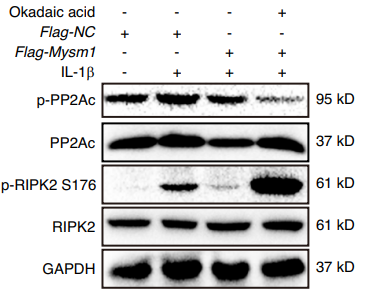
Western blots of p-PP2Ac, PP2Ac, p-RIPK2, and RIPK2 in mouse chondrocytes transfected with Mysm1with or without Okadaic Acid (10 μM) treatment.
Okadaic acid ammonium salt purchased from MedChemExpress. Usage Cited in: Bone Res. 2025 Jan 2;13(1):3. [Abstract]
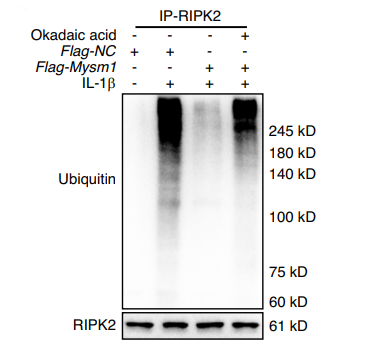
Immunoprecipitation assay showing RIPK2 ubiquitination after Okadaic Acid(10 μM) treatment.
-
Adv Sci (Weinh)
Detachment-Induced FAK-STAT3-NNMT Inhibits CTCs Anoikis to Promote Breast Cancer Metastasis by Enhancing Fatty Acid Oxidation. [Abstract]2026 Mar 12:e22837. PMID: 41816955 -
Biomaterials
Highly BBB-permeable nanomedicine reverses neuroapoptosis and neuroinflammation to treat Alzheimer's disease. [Abstract]2025 Jan:312:122749. PMID: 39121725
Okadaic acid ammonium salt purchased from MedChemExpress. Usage Cited in: Biomaterials. 2025 Jan:312:122749. [Abstract]
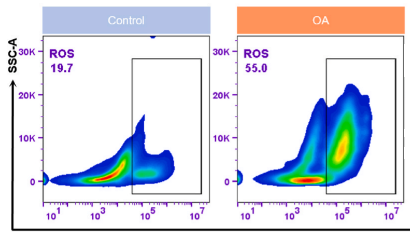
Okadaic acid (30 nM; 24 h). Flow cytometry analysis of intracellular ROS in PC12 cells after different treatments.
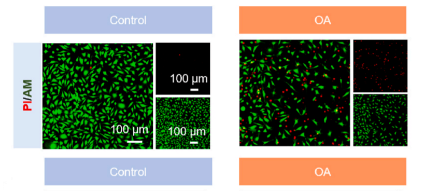
Okadaic acid ammonium salt purchased from MedChemExpress. Usage Cited in: Biomaterials. 2025 Jan:312:122749. [Abstract]
Okadaic acid (30 nM; 24 h). Live/dead fluorescence images of PC12 cells after different treatments.
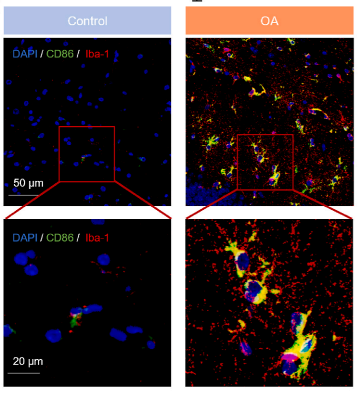
Okadaic acid ammonium salt purchased from MedChemExpress. Usage Cited in: Biomaterials. 2025 Jan:312:122749. [Abstract]
Okadaic acid (100 μM; 130 nL). Immunofluorescence staining of CD86− and Iba-1 positive cells in the cortex of mice subjected to different treatments.
-
Cancer Lett
2021 May 28:506:67-82. PMID: 33675985 -
Cell Commun Signal
Concomitant targeting of FLT3 and SPHK1 exerts synergistic cytotoxicity in FLT3-ITD+ acute myeloid leukemia by inhibiting β-catenin activity via the PP2A-GSK3β axis. [Abstract]2024 Aug 7;22(1):391. PMID: 39113090 -
Int J Biol Macromol
Multi-omics integration reveals key miRNAs, immune inflammation, and signaling pathways in Alzheimer's disease: Implications for targeted therapy. [Abstract]2025 Sep 24;329(Pt 2):147874. PMID: 41005404 -
Int J Biol Macromol
2023 Jul 1;242(Pt 4):125171. PMID: 37271265 -
NPJ Parkinsons Dis
Metabotropic signaling downstream of GABAA receptors suppresses neuroinflammation in Parkinson's disease. [Abstract]2026 Jun 6. PMID: 42251036 -
Cell Rep
Autoinhibitory control of MLKL governs pseudokinase domain phosphorylation and oligomerization during necroptosis. [Abstract]2026 Mar 20;45(4):117130. PMID: 41863805 -
-
Int Immunopharmacol
LincR-PPP2R5C regulates IL-1β ubiquitination in macrophages and promotes airway inflammation and emphysema in a murine model of COPD. [Abstract]2024 Sep 30:139:112680. PMID: 39018689 -
Mol Med Rep
Identification and immunological characterization of genes associated with ferroptosis in Alzheimer's disease and experimental demonstration. [Abstract]2024 Sep;30(3):155. PMID: 38963039 -
Cell Signal
PERK-eIF2alpha-mediated translational inhibition of MCL-1 contributes to potential 2-deoxy-D-glucose and BAD mimetic combinatorial cancer therapy. [Abstract]2026 Mar:139:112333. PMID: 41423011 -
Mol Divers
Synthesis and multi-target evaluation of 2-(2-phenylethyl)/2,3-styrylchromone derivatives as potential anti-Alzheimer's disease agents. [Abstract]2025 Jul 13. PMID: 40652414 -
Transcription
Oxidative stress induces Ser 2 dephosphorylation of the RNA polymerase II CTD and premature transcription termination. [Abstract]2021 Oct;12(5):277-293. PMID: 34874799 -
Int J Biochem Cell Biol
Modified 5-aminolevulinic acid photodynamic therapy (M-PDT) inhibits cutaneous squamous cell carcinoma cell proliferation via targeting PP2A/PP5-mediated MAPK signaling pathway. [Abstract]2021 Aug:137:106036. PMID: 34217813 -
Mol Cell Endocrinol
The N-terminal region of HASPIN regulates phosphorylation of AURKA and meiotic progression in spermatocytes. [Abstract]2025 Aug 28:609:112645. PMID: 40885374 -
Biochem Biophys Res Commun
Engrailed 2 triggers the activation of multiple phosphorylation-induced signaling pathways in both transcription-dependent and -independent manners. [Abstract]2023 Nov 5:680:127-134. PMID: 37738902 -
-
-
-
-


Purity & Documentation
-
Data Sheet (287 KB)
-
SDS (251 KB)
- English - EN (251 KB)
- Français - FR (251 KB)
- Deutsch - DE (251 KB)
- Norwegian - NO (251 KB)
- Español - ES (251 KB)
- Swedish - SV (251 KB)
- Italian - IT (251 KB)
- Korean - KR (251 KB)
- Portuguese - PT (251 KB)
-
Handling Instructions (2659 KB)
References
[1]. Kleppe R, et al. Cell Death Inducing Microbial Protein Phosphatase Inhibitors--Mechanisms of Action. Mar Drugs. 2015 Oct 22;13(10):6505-20. [Content Brief]
[2]. Valdiglesias V, et al. Okadaic acid: more than a diarrheic toxin. Mar Drugs. 2013 Oct 31;11(11):4328-49. [Content Brief]
[3]. del Campo M, et al. Okadaic acid toxin at sublethal dose produced cell proliferation in gastric and colon epithelial cell lines. Mar Drugs. 2013;11(12):4751-4760. [Content Brief]
[4]. Cho MH, et al. Increased phosphorylation of dynamin-related protein 1 and mitochondrial fission in okadaic acid-treated neurons. Brain Res. 2012 May 15;1454:100-10. [Content Brief]
[5]. Baker S, et al. A local insult of okadaic acid in wild-type mice induces tau phosphorylation and protein aggregation in anatomically distinct brain regions. Acta Neuropathol Commun. 2016;4:32. [Content Brief]
[6]. Kamat P K, et al. Okadaic acid induced neurotoxicity: an emerging tool to study Alzheimer's disease pathology[J]. Neurotoxicology, 2013, 37: 163-172. [Content Brief]
[7]. Kaushal A, et al. Okadaic Acid and Hypoxia Induced Dementia Model of Alzheimer's Type in Rats. Neurotox Res. 2019 Apr;35(3):621-634. [Content Brief]
[8]. Suganuma M, et al. Okadaic acid: an additional non-phorbol-12-tetradecanoate-13-acetate-type tumor promoter. Proc Natl Acad Sci U S A. 1988 Mar;85(6):1768-71. [Content Brief]
[9]. Fujiki H, et al. Cancer progression by the okadaic acid class of tumor promoters and endogenous protein inhibitors of PP2A, SET and CIP2A. J Cancer Res Clin Oncol. 2023 Sep;149(11):9425-9433. [Content Brief]

Calculators
Concentration (start) × Volume (start) = Concentration (final) × Volume (final)


Okadaic acid ammonium salt Related Classifications
HY-115760 Related Classifications
 Powered by Bioz
Keywords