



RS 504393
Based on 35 publication(s) in Google Scholar
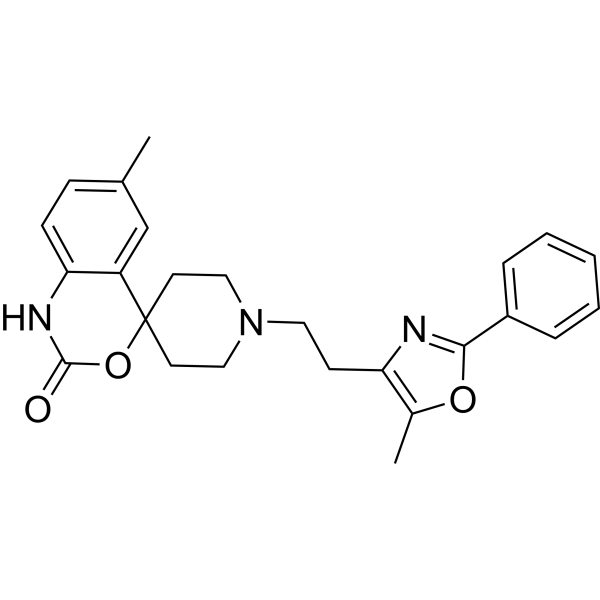
RS 504393 is a selective CCR2 chemokine receptor antagonist (IC50 values are 89 nM and > 100 μM for inhibition of human recombinant CCR2 and CCR1 receptors respectively).
연구목적의 판매만을 진행합니다. 환자를 대상으로 한 판매는 하지 않습니다.
- Purity : 99.72%
- CAS No.: 300816-15-3
- 화학식: C25H27N3O3
- 분자량:417.50
-
보관:Powder -20°C, 3 years , 4°C, 2 years ; In solvent -80°C, 2 years , -20°C, 1 year

To place orders, for customer services and technical support, please contact: MedChemExpress USA
Tel: 609-228-6898 E-mail: [email protected] [email protected]


-
 Biological Activity
-
Chemical Information
-
용액&용해도
- 순도&문서
- References
-
 Help & FAQs


-
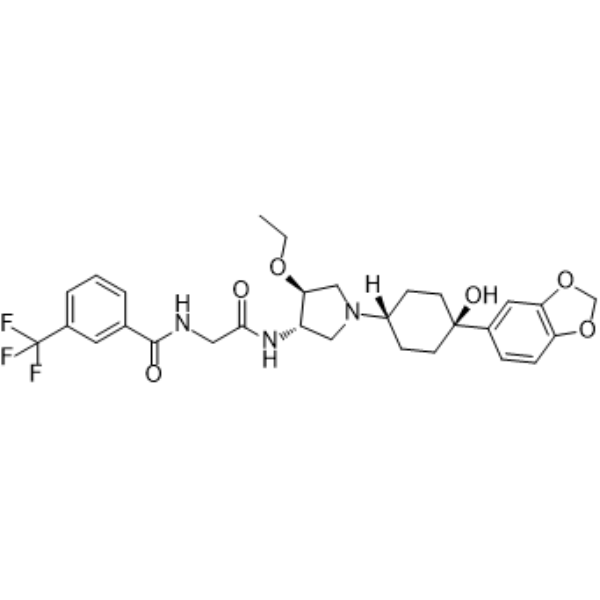
HY-50674
INCB3344CCR2 Antagonis -
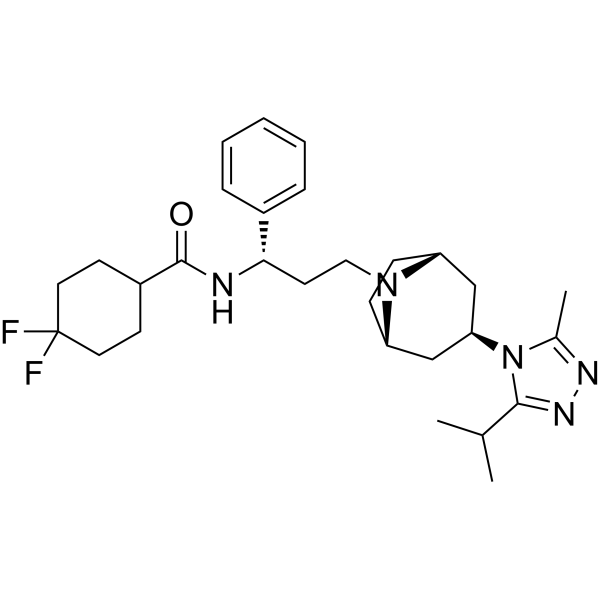
HY-13004
MaravirocCCR5 Antagonist -
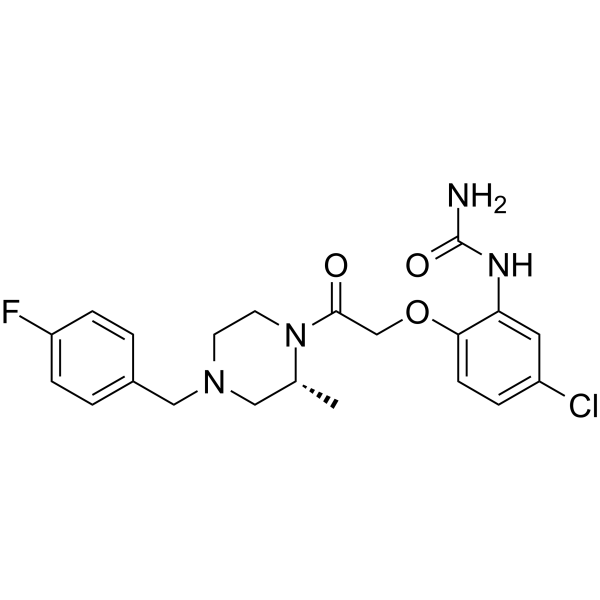
HY-12080
BX471CCR1 Antagonist -
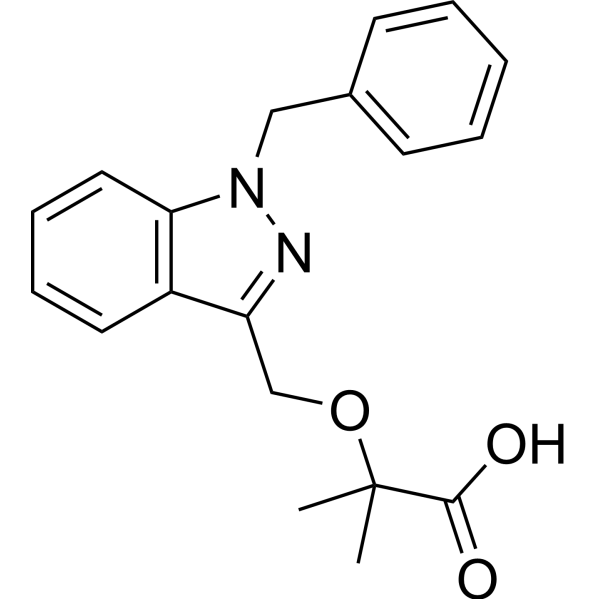
HY-B0498
BindaritMCP/CCL Inhibitor -
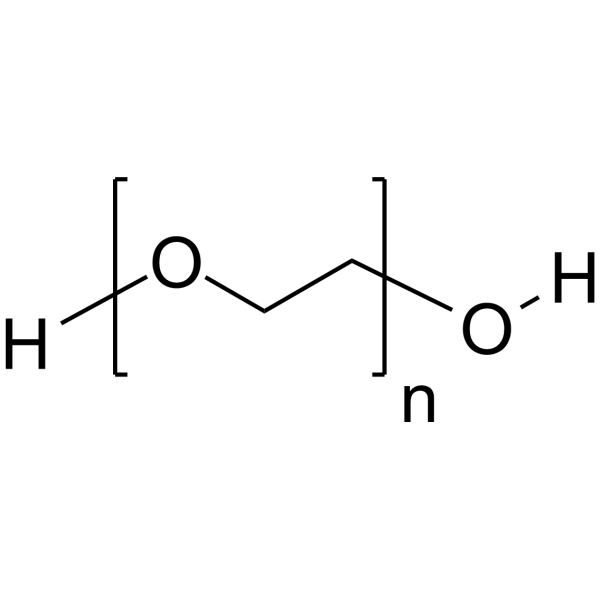
HY-Y0873
PEG300Neutral Polymer -

HY-Y1891
Tween 80 -

HY-P7764
MCP-1/CCL2 Protein, Mouse -

HY-Y0320
Dimethyl sulfoxide, meets analytical specification of Ch.P.Aprotic Solvent -
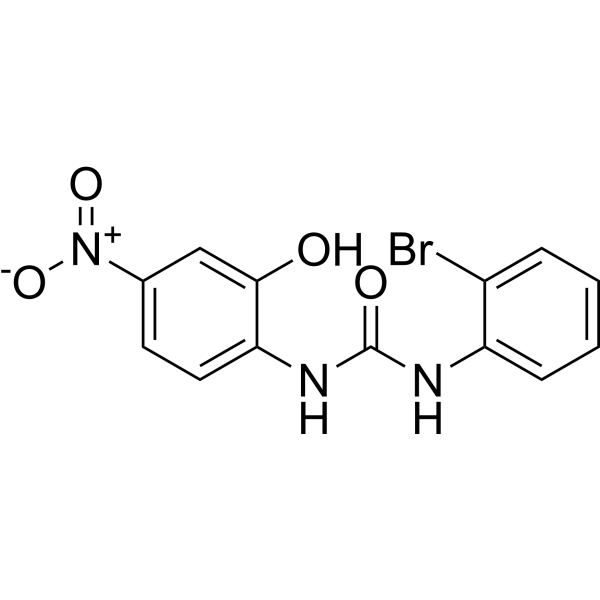
HY-16711
SB225002CXCR2 Antagonist -
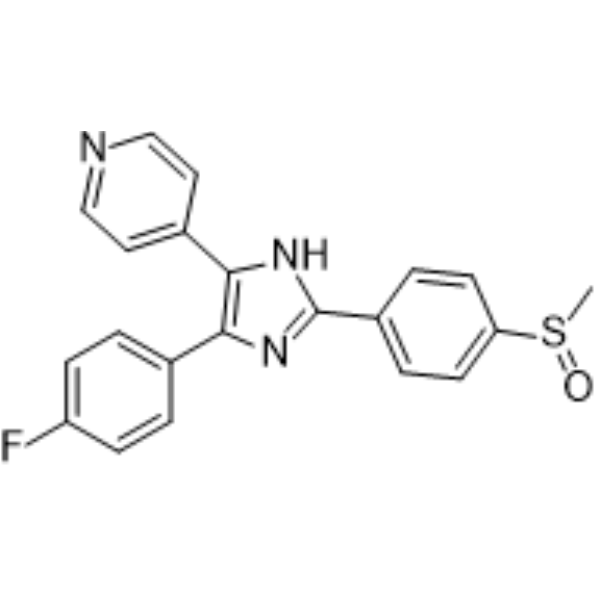
HY-10256
Adezmapimodp38 MAPK Inhibitor -
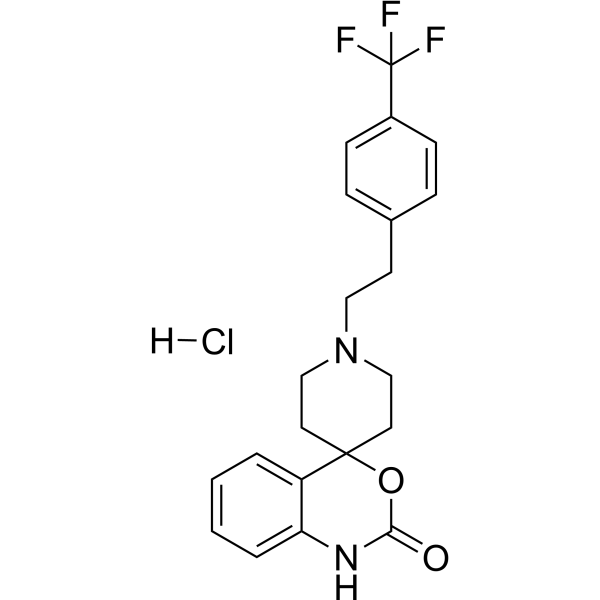
HY-18611
Abaucin hydrochlorideCCR2antagonist -

HY-Y1888
Corn oil
Publications Citing Use of MedChemExpress (MCE) RS 504393
More- Cancer Res. 2025 Jan 15;85(2):263-276. [Abstract]
- Nat Commun. 2022 Nov 26;13(1):7281. [Abstract]
- ACS Nano. 2024 Mar 5;18(9):7267-7286. [Abstract]
- J Adv Res. 2025 Aug:74:237-253. [Abstract]
- Cell Discov. 2023 Sep 12;9(1):94. [Abstract]
- J Nanobiotechnology. 2025 Aug 29;23(1):592. [Abstract]
- Theranostics. 2024 Oct 7;14(17):6543-6559. [Abstract]
- J Clin Invest. 2025 Jan 16;135(2):e178198. [Abstract]
- J Exp Clin Cancer Res. 2024 Mar 12;43(1):76. [Abstract]
- Adv Sci (Weinh). 2025 Aug 7:e03480. [Abstract]
- Sci Adv. 2023 Nov 3;9(44):eadi7337. [Abstract]
- Environ Sci Technol. 2023 Oct 3;57(39):14502-14514. [Abstract]
- Cell Death Dis. 2022 Aug 29;13(8):748. [Abstract]
- J Exp Med. 2023 Aug 7;220(8):e20220509. [Abstract]
- Phytomedicine. 2026 Nov:161:158749.
- Phytomedicine. 2026 Apr:153:157988. [Abstract]
- Cell Rep. 2024 Feb 17;43(2):113804. [Abstract]
- Cell Rep. 2023 Apr 20;42(5):112424. [Abstract]
- Front Immunol. 2022 Jun 30;13:857311. [Abstract]
- Front Immunol. 2022 Feb 4;13:835986. [Abstract]
- Int Immunopharmacol. 2025 Feb 20:148:114009. [Abstract]
- Invest Ophthalmol Vis Sci. 2026 Aug 3;67(10):22. [Abstract]
- J Cell Mol Med. 2024 May;28(9):e18315. [Abstract]
- Mol Hum Reprod. 2023 May 31;29(6):gaad014. [Abstract]
- Curr Issues Mol Biol. 2026 Feb 28;48(3):259. [Abstract]
- BMC Cancer. 2025 Jul 31;25(1):1250. [Abstract]
- Mol Pain. 2025 Jan-Dec:21:17448069251323668. [Abstract]
- Mol Immunol. 2019 May:109:140-148. [Abstract]
- Cytokine. 2018 Oct:110:70-77. [Abstract]
- Neurosci Lett. 2019 May 14:701:100-105. [Abstract]
- In Vivo. 2021 Nov-Dec;35(6):3053-3066. [Abstract]
- bioRxiv. 2026 Jun 20.
- bioRxiv. 2026 May 29.
- SSRN. 2026 Apr 21.
- Weill Medical College of Cornell University. 2025.
 Customer Validation & Images

-
In Vivo Efficacy Study
-
Histological Imaging/Staining
-
In Vivo Efficacy Study
-
Cell Migration/Invasion Assay
-
Cell Migration/Invasion Assay


Biological Activity
제품 설명
IC50 & Target
[5]|
CCR2 89 nM (IC50) |
Human α1a receptor 72 nM (IC50) |
Human α1d receptor 460 nM (IC50) |
5HT-1a receptor 1070 nM (IC50) |
In Vitro
RS 504393 inhibits the MCP-1-induced chemotaxis with an IC50 of 330 nM. RS 504393 treatment suppresses allergen induced β-hexosaminidase release significantly. Without allergen priming, MCP-1 induces mast cell degranulation, which is completely suppressed by RS 504393[4].
MedChemExpress (MCE) has not independently confirmed the accuracy of these methods. They are for reference only.
In Vivo
MedChemExpress (MCE) has not independently confirmed the accuracy of these methods. They are for reference only.


Chemical Information
-
CAS No. 300816-15-3
-
Appearance Solid
-
분자량 417.50
-
화학식 C25H27N3O3
-
Color White to off-white
-
SMILES
O=C1NC2=CC=C(C)C=C2C3(CCN(CCC4=C(C)OC(C5=CC=CC=C5)=N4)CC3)O1
-
선적
Room temperature in continental US; may vary elsewhere.
-
보관
Powder -20°C 3 years 4°C 2 years In solvent -80°C 2 years -20°C 1 year


Publications (35)
-
Journal Impact Factor
-
Most Recent
-
Cancer Res
Ephrin A1 Stimulates CCL2 Secretion to Facilitate Premetastatic Niche Formation and Promote Gastric Cancer Liver Metastasis. [Abstract]2025 Jan 15;85(2):263-276. PMID: 39412948 -
Nat Commun
ARID1A loss induces polymorphonuclear myeloid-derived suppressor cell chemotaxis and promotes prostate cancer progression. [Abstract]2022 Nov 26;13(1):7281. PMID: 36435834 -
ACS Nano
Reinforced Immunogenic Endoplasmic Reticulum Stress and Oxidative Stress via an Orchestrated Nanophotoinducer to Boost Cancer Photoimmunotherapy. [Abstract]2024 Mar 5;18(9):7267-7286. PMID: 38382065 -
J Adv Res
The fatty acid receptor CD36 promotes macrophage infiltration via p110γ signaling to stimulate metastasis. [Abstract]2025 Aug:74:237-253. PMID: 39419288 -
Cell Discov
2023 Sep 12;9(1):94. PMID: 37699875 -
J Nanobiotechnology
The bone marrow mesenchymal stem cells derived migrasomes induced by Titania nanotubes surface serve as chemotaxis effect for osteogenesis. [Abstract]2025 Aug 29;23(1):592. PMID: 40877924 -
Theranostics
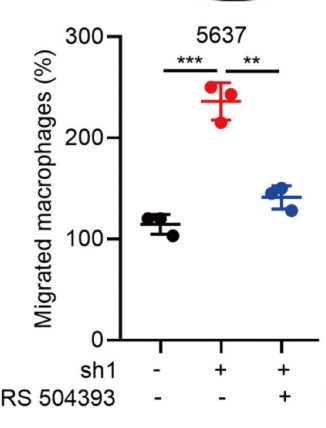
SPOP downregulation promotes bladder cancer progression based on cancer cell-macrophage crosstalk via STAT3/CCL2/IL-6 axis and is regulated by VEZF1. [Abstract]2024 Oct 7;14(17):6543-6559. PMID: 39479456
RS 504393 purchased from MedChemExpress. Usage Cited in: Theranostics. 2024 Oct 7;14(17):6543-6559. [Abstract]
Quantification of U937 cell migration in a transwell system in response to the CM from 5637 cells (shNC, sh1, and sh1 treated with RS 504393 (2 μM), a CCL2 receptor inhibitor).
-
J Clin Invest
Inhibition of aortic CX3CR1+ macrophages mitigates thoracic aortic aneurysm progression in Marfan syndrome in mice. [Abstract]2025 Jan 16;135(2):e178198. PMID: 39817456
RS 504393 purchased from MedChemExpress. Usage Cited in: J Clin Invest. 2025 Jan 16;135(2):e178198. [Abstract]
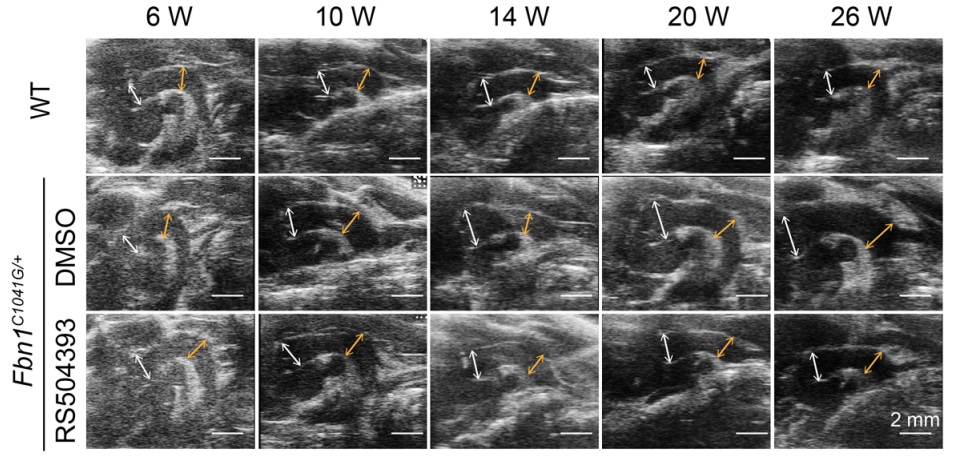
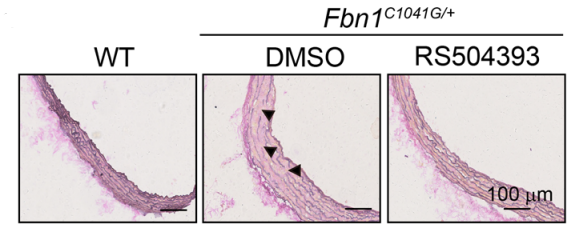
Administered the CCR2 inhibitor RS504393 (4 mg/kg/d) to Fbn1C1041G/+ mice to inhibit monocyte recruitment from the age of 6 weeks to 26 weeks. Both aortic root and ascending aortic aneurysms as well as related aortic wall pathologies were alleviated following RS504393 administration.
RS 504393 purchased from MedChemExpress. Usage Cited in: J Clin Invest. 2025 Jan 16;135(2):e178198. [Abstract]
Administered the CCR2 inhibitor RS504393 (4 mg/kg/d) to Fbn1C1041G/+ mice to inhibit monocyte recruitment from the age of 6 weeks to 26 weeks. Both aortic root and ascending aortic aneurysms as well as related aortic wall pathologies were alleviated following RS504393 administration.
RS 504393 purchased from MedChemExpress. Usage Cited in: J Clin Invest. 2025 Jan 16;135(2):e178198. [Abstract]
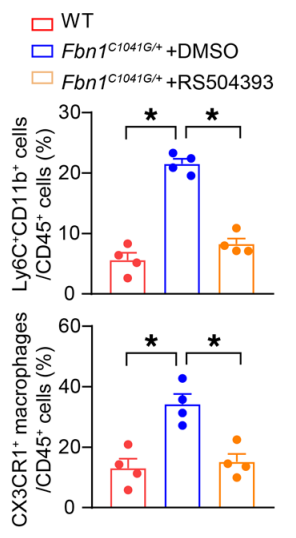
Administered the CCR2 inhibitor RS504393 (4 mg/kg/d) to Fbn1C1041G/+ mice to inhibit monocyte recruitment from the age of 6 weeks to 26 weeks. RS504393 did not affect body weights and blood pressures in Fbn1C1041G/+ mice, but succeeded in inhibiting Ly6Chi monocyte infiltration and subsequent CX3CR1+ macrophage accumulation without influencing other CX3CR1– cells in thoracic aneurysmal aortas.
-
J Exp Clin Cancer Res
Combined IL6 and CCR2 blockade potentiates antitumor activity of NK cells in HPV-negative head and neck cancer. [Abstract]2024 Mar 12;43(1):76. PMID: 38468260 -
Adv Sci (Weinh)
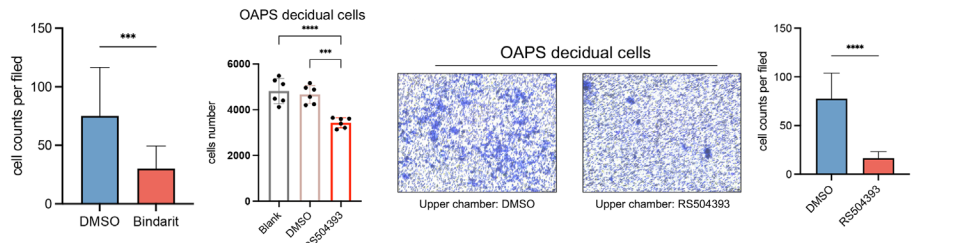
Deciphering the Role and Mechanism of Decidual Monocyte-Derived Macrophage Infiltration in Obstetric Antiphospholipid Syndrome at Single-Cell Resolution. [Abstract]2025 Aug 7:e03480. PMID: 40776470
RS 504393 purchased from MedChemExpress. Usage Cited in: Adv Sci (Weinh). 2025 Aug 7:e03480. [Abstract]
After the pre‐treatment of RS504393 (500 nM, 3h), the medium supernatant of OAPS primary decidual cells and aPL‐IgG/β2GPI complex‐stimulated HC primary decidual cells exhibited inhibited chemotactic effects on both THP‐1 and THP‐1‐derived macrophages.
-
Sci Adv
Lachnospiraceae-derived butyrate mediates protection of high fermentable fiber against placental inflammation in gestational diabetes mellitus. [Abstract]2023 Nov 3;9(44):eadi7337. PMID: 37922350 -
Environ Sci Technol
Crystalline Silica-Induced Proinflammatory Interstitial Macrophage Recruitment through Notch3 Signaling Promotes the Pathogenesis of Silicosis. [Abstract]2023 Oct 3;57(39):14502-14514. PMID: 37721423 -
Cell Death Dis
Regulation of CCL2 by EZH2 affects tumor-associated macrophages polarization and infiltration in breast cancer. [Abstract]2022 Aug 29;13(8):748. PMID: 36038549 -
J Exp Med
2023 Aug 7;220(8):e20220509. PMID: 37166450 -
-
Phytomedicine
Celastrol disrupts the inflammatory feedback loop driven by Tenascin-C⁺ fibroblast subtype in psoriasis: Insights from single-cell RNA sequencing and experimental validation. [Abstract]2026 Apr:153:157988. PMID: 41763138 -
Cell Rep
A microglial activation cascade across cortical regions underlies secondary mechanical hypersensitivity to amputation. [Abstract]2024 Feb 17;43(2):113804. PMID: 38368612 -
Cell Rep
CX3CR1hi macrophages sustain metabolic adaptation by relieving adipose-derived stem cell senescence in visceral adipose tissue. [Abstract]2023 Apr 20;42(5):112424. PMID: 37086405 -
Front Immunol
Human IL-17 and TNF-α Additively or Synergistically Regulate the Expression of Proinflammatory Genes, Coagulation-Related Genes, and Tight Junction Genes in Porcine Aortic Endothelial Cells. [Abstract]2022 Jun 30;13:857311. PMID: 35844613 -
Front Immunol
2022 Feb 4;13:835986. PMID: 35185928 -
Int Immunopharmacol
Downregulation of CCR2 reduces ventricular remodeling after myocardial infarction by splenic nerve neuromodulation in acute and chronic rat models. [Abstract]2025 Feb 20:148:114009. PMID: 39832456 -
Invest Ophthalmol Vis Sci
Inflammatory Myeloid Cell Resurgence and Impaired Pro-Resolution Macrophage Maintenance Characterize Chronic Corneal Alkali Burn. [Abstract]2026 Aug 3;67(10):22. PMID: 42573185 -
J Cell Mol Med
Tumour-derived exosome SNHG17 induced by oestrogen contributes to ovarian cancer progression via the CCL13-CCR2-M2 macrophage axis. [Abstract]2024 May;28(9):e18315. PMID: 38680032 -
Mol Hum Reprod
Escherichia coli inhibits endometriosis by inducing M1 polarity of peritoneal macrophages and the IL-1 signaling pathway. [Abstract]2023 May 31;29(6):gaad014. PMID: 37079746 -
Curr Issues Mol Biol
Meningeal Lymphatics Drives Macrophage Clearance via CCL2-CCR2 Axis After Cerebral Ischemia. [Abstract]2026 Feb 28;48(3):259. PMID: 41899411 -
BMC Cancer
Azelaic acid attenuates CCL2/CCR2 axis-mediated skin trafficking of acute myeloid leukemia cells through NF-κB/MAPK signaling modulation in keratinocytes. [Abstract]2025 Jul 31;25(1):1250. PMID: 40745589 -
Mol Pain
Curcumin relieves CFA-induced inflammatory pain by inhibiting the AP-1/c-Jun-CCL2-CCR2 pathway in the spinal dorsal horn. [Abstract]2025 Jan-Dec:21:17448069251323668. PMID: 39950445 -
Mol Immunol
RS 504393 inhibits M-MDSCs recruiting in immune microenvironment of bladder cancer after gemcitabine treatment. [Abstract]2019 May:109:140-148. PMID: 30951933 -
Cytokine
Chemokine receptor antagonist block inflammation and therapy Japanese encephalitis virus infection in mouse model. [Abstract]2018 Oct:110:70-77. PMID: 29704821 -
Neurosci Lett
PI3K/Akt signaling pathway may be involved in MCP-1-induced P2X4R expression in cultured microglia and cancer-induced bone pain rats. [Abstract]2019 May 14:701:100-105. PMID: 30776493 -
In Vivo
Silica Induced Lung Fibrosis Is Associated With Senescence, Fgr, and Recruitment of Bone Marrow Monocyte/Macrophages. [Abstract]2021 Nov-Dec;35(6):3053-3066. PMID: 34697137 -
-
-
-


용액&용해도
In Vitro:
DMSO : 10 mg/mL (23.95 mM; ultrasonic and warming and heat to 60°C; Hygroscopic DMSO has a significant impact on the solubility of product, please use newly opened DMSO)
Please refer to the solubility information to select the appropriate solvent. Once prepared, please aliquot and store the solution to prevent product inactivation from repeated freeze-thaw cycles.
Storage method and period of stock solution: -80°C, 2 years; -20°C, 1 year. When stored at -80°C, please use it within 2 years. When stored at -20°C, please use it within 1 year.
Please refer to the solubility information to select the appropriate solvent. Once prepared, please aliquot and store the solution to prevent product inactivation from repeated freeze-thaw cycles.
Storage method and period of stock solution: -80°C, 2 years; -20°C, 1 year. When stored at -80°C, please use it within 2 years. When stored at -20°C, please use it within 1 year.
Concentration (start) × Volume (start) = Concentration (final) × Volume (final)
In Vivo:
Select the appropriate dissolution method based on your experimental animal and administration route.
- For the following dissolution methods, please ensure to first prepare a clear stock solution using an In Vitro approach and then sequentially add co-solvents:
- To ensure reliable experimental results, the clarified stock solution can be appropriately stored based on storage conditions. As for the working solution for In Vivo experiments, it is recommended to prepare freshly and use it on the same day.
- The percentages shown for the solvents indicate their volumetric ratio in the final prepared solution. If precipitation or phase separation occurs during preparation, heat and/or sonication can be used to aid dissolution.
Add each solvent one by one: 10% DMSO 40% PEG300 5% Tween-80 45% Saline
Solubility: ≥ 1.25 mg/mL (2.99 mM); Clear solution
This protocol yields a clear solution of ≥ 1.25 mg/mL (saturation unknown).
Taking 1 mL working solution as an example, add 100 μL DMSO stock solution (12.5 mg/mL) to 400 μL PEG300, and mix evenly; then add 50 μL Tween-80 and mix evenly; then add 450 μL Saline to adjust the volume to 1 mL.
Preparation of Saline: Dissolve 0.9 g sodium chloride in ddH₂O and dilute to 100 mL to obtain a clear Saline solution.
For the following dissolution methods, please prepare the working solution directly:
It is recommended to prepare fresh solutions and use them promptly within a short period of time.
The percentages shown for the solvents indicate their volumetric ratio in the final prepared solution. If precipitation or phase separation occurs during preparation, heat and/or sonication can be used to aid dissolution.
Add each solvent one by one: 50% PEG300 50% Saline
Solubility: 5 mg/mL (11.98 mM); Suspended solution; Need ultrasonic
In Vivo Dissolution Calculator
Please enter the basic information of animal experiments:
-
-
-
-
Recommended: Prepare an additional quantity of animals to account for potential losses during experiments.
Please enter your animal formula composition:
-
%DMSO +
Recommended: Keep the proportion of DMSO in working solution below 2% if your animal is weak.
-
%+
-
+%Tween-80 + +
-
%Saline +
The co-solvents required include: DMSO, . All of co-solvents are available by MedChemExpress (MCE). , Tween 80. All of co-solvents are available by MedChemExpress (MCE).
Working solution concentration: 0.22 mg/mL
Method for preparing stock solution: mg drug dissolved in μL DMSO. Stock solution concentration: mg/mL.
1. Take μL DMSO stock solution;
2. Add μL .
μL , mix evenly;
3. Then add μL Tween 80, mix evenly;
4. Then add μL
Please ensure that the stock solution in the first step is dissolved to a clear state, and add co-solvents in sequence. You can use ultrasonic heating (ultrasonic cleaner, recommended frequency 20-40 kHz), vortexing, etc. to assist dissolution.


순도&문서
-
Data Sheet (283 KB)
-
SDS (396 KB)
- English - EN (396 KB)
- Français - FR (396 KB)
- Deutsch - DE (396 KB)
- Norwegian - NO (396 KB)
- Español - ES (396 KB)
- Swedish - SV (396 KB)
- Italian - IT (396 KB)
- Korean - KR (396 KB)
- Portuguese - PT (396 KB)
-
Handling Instructions (2659 KB)
References
[1]. Baamonde, Ana., et al. Involvement of glutamate NMDA and AMPA receptors, glial cells and IL-1β in the spinal hyperalgesia evoked by the chemokine CCL2 in mice. Neuroscience Letters (2011), 502(3), 178-181. [Content Brief]
[2]. Yang, Dong., et al. Roles of CC chemokine receptors (CCRs) on lipopolysaccharide-induced acute lung injury. Respiratory Physiology & Neurobiology (2010), 170(3), 253-259. [Content Brief]
[3]. Kitagawa, Kiyoki., et al. Blockade of CCR2 ameliorates progressive fibrosis in kidney. American Journal of Pathology (2004), 165(1), 237-246. [Content Brief]
[4]. Tominaga T, et al. Blocking mast cell-mediated type I hypersensitivity in experimental allergic conjunctivitis by monocyte chemoattractant protein-1/CCR2. Invest Ophthalmol Vis Sci. 2009 Nov;50(11):5181-8. [Content Brief]
[5]. Mirzadegan T, et al. Identification of the binding site for a novel class of CCR2b chemokine receptor antagonists: binding to a common chemokine receptor motif within the helical bundle. J Biol Chem. 2000 Aug 18;275(33):25562-71. [Content Brief]


Complete Stock Solution Preparation Table
Please refer to the solubility information to select the appropriate solvent. Once prepared, please aliquot and store the solution to prevent product inactivation from repeated freeze-thaw cycles.
Storage method and period of stock solution: -80°C, 2 years; -20°C, 1 year. When stored at -80°C, please use it within 2 years. When stored at -20°C, please use it within 1 year.
| Optional Solvent | Concentration Solvent Mass | 1 mg | 5 mg | 10 mg | 25 mg |
|---|---|---|---|---|---|
| DMSO | 1 mM | 2.3952 mL | 11.9760 mL | 23.9521 mL | 59.8802 mL |
| 5 mM | 0.4790 mL | 2.3952 mL | 4.7904 mL | 11.9760 mL | |
| 10 mM | 0.2395 mL | 1.1976 mL | 2.3952 mL | 5.9880 mL | |
| 15 mM | 0.1597 mL | 0.7984 mL | 1.5968 mL | 3.9920 mL | |
| 20 mM | 0.1198 mL | 0.5988 mL | 1.1976 mL | 2.9940 mL |


RS 504393 Related Classifications
HY-15418 Related Classifications
 Powered by Bioz