1. Search Result
Search Result
Results for "

2B subtype

" in MedChemExpress (MCE) Product Catalog:
Cat. No. Product Name Target Research Areas Chemical Structure
  • HY-B1404

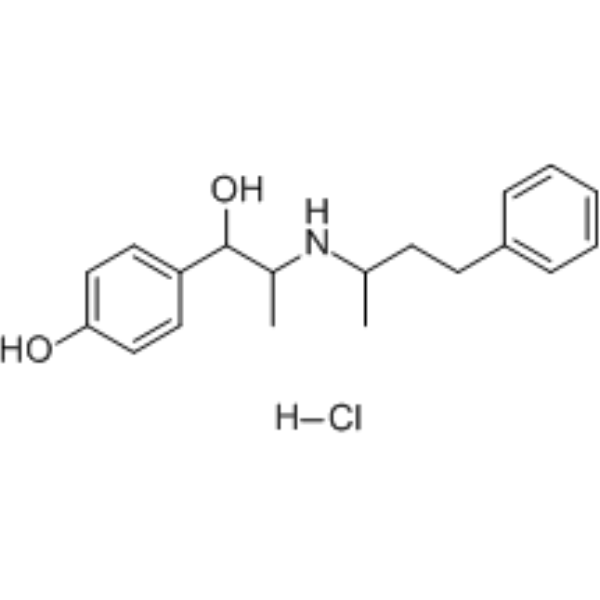
    Buphenine hydrochloride

    iGluR Influenza Virus Infection Cardiovascular Disease Inflammation/Immunology
    Nylidrin hydrochloride (Buphenine hydrochloride) is an orally active β-adrenergic agonist. Nylidrin hydrochloride antagonizes NR1A/2B NMDA receptors (IC50 = 0.18 μM in Xenopus oocytes). Nylidrin hydrochloride reduces the levels of NP, HA, and M1. Nylidrin hydrochloride has antiviral activity against multiple H1N1 subtype influenza A viruses. Nylidrin hydrochloride improves hemorrhagic shock and anti-allergic effects .
    Nylidrin hydrochloride
  • HY-W008038

    iGluR Others
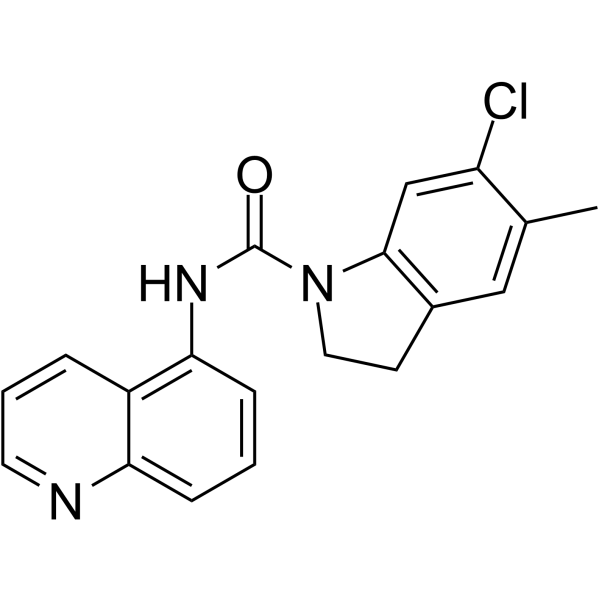
    NMDAR antagonist 3 (Compound 2) is an antagonist of the NMDA receptor. NMDAR antagonist 3 has a certain but weak inhibitory activity against the NR1A/2B subtype of the NMDA receptor .
    NMDAR antagonist 3
  • HY-103212A

    B-HT 933 hydrochloride; Oxazoloazepin hydrochloride

    Adrenergic Receptor Cardiovascular Disease
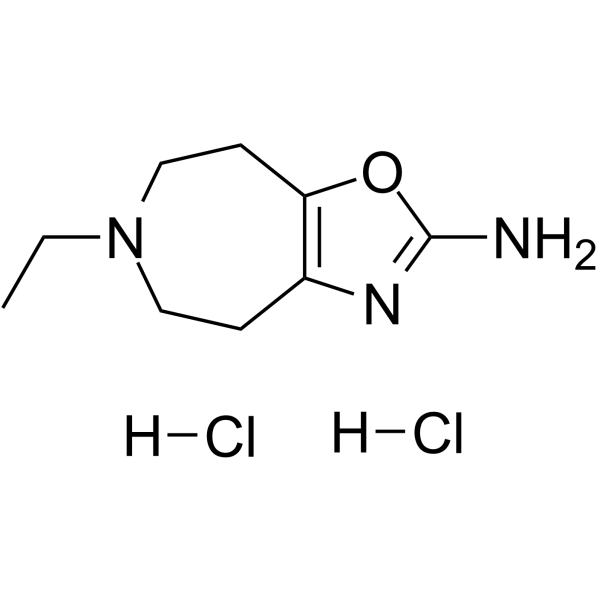
    Azepexole hydrochloride (B-HT 933 dihydrochloride; Oxazoloazepin dihydrochloride) is a selective agonist for α 2-adrenoceptor, with pKi of 8.3, 7.6, and 7.5 for α2A-, α2B- and α2C-adrenoceptor subtypes, resepctively. Azepexole dihydrochloride causes concentration-dependent inhibition of peristaltic contractions with IC50 of 78.72 nM. Azepexole hydrochloride exhibits antitussive and analgesic efficacy .
    Azepexole hydrochloride
  • HY-145897

    iGluR Neurological Disease
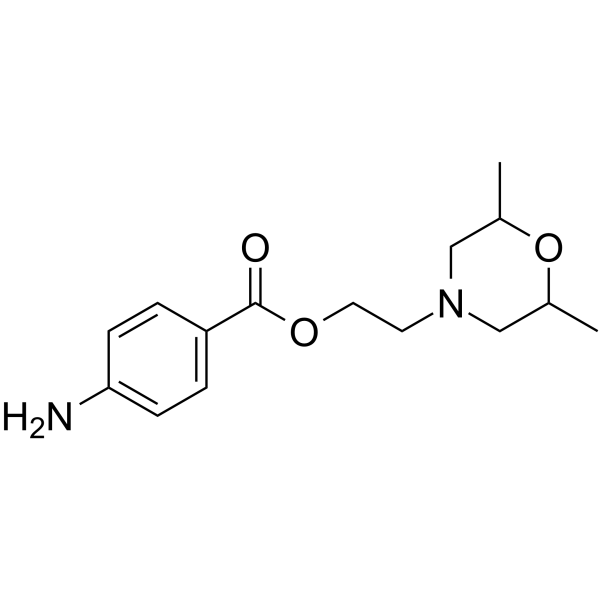
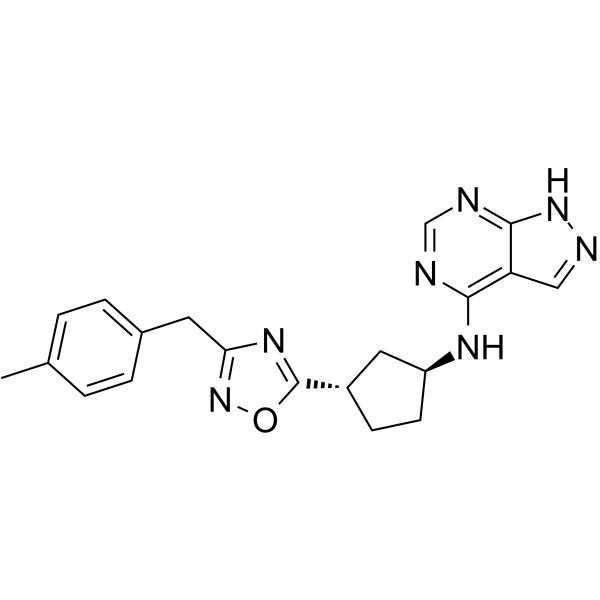
    NMDA-IN-2 (compound 6b), a Procaine derivative, is a NMDA receptor 2B subtype inhibitor .
    NMDA-IN-2
  • HY-W014208

    AF-267B

    mAChR Others
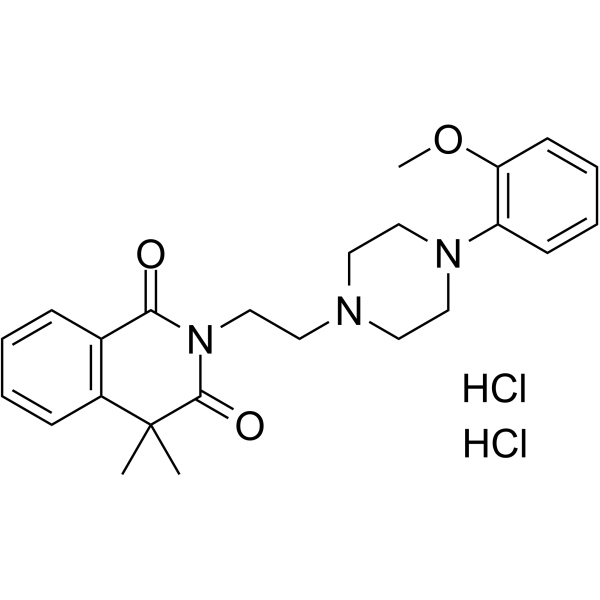
    NGX-267 is a selective agonist of the actin M1 receptor, which has high selectivity among the five actin receptor subtypes, especially for the M1 receptor rather than the M3 receptor. NGX-267 also has significant differences in affinity for dopamine D2 and 5-HT2B receptors .
    NGX-267
  • HY-12709A
    ARC 239 dihydrochloride
    1 Publications Verification

    Adrenergic Receptor Cardiovascular Disease Inflammation/Immunology
    ARC 239 dihydrochloride is a selective α2B/2C adrenoceptor antagonist (pKd values are 5.95, 7.41 and 7.56 at α2A, α2B, and α2C receptors respectively). ARC 239 dihydrochloride binds to CHO cell membranes expressing human recombinant a2A-, a2B- or a2C-adrenoceptor subtypes with pKis of 5.6, 8.4, and 7.08, respectively .
    ARC 239 dihydrochloride
  • HY-179277

    Adenosine Receptor Cardiovascular Disease
    MIPS3526 is a potent and selective A2B adenosine receptor (A2BR) agonist with a pEC50 of 10.17 (EC50 of 58 pM). MIPS3526 shows highly receptor subtype selective versus the A1R, A2AR, and A3R. MIPS3526 ameliorates angiotensin II stimulating effects in both cardiac myocytes and fibroblasts. MIPS3526 can be used for the study of cardiovascular disease including heart failure where cardiac remodeling is a major driver .
    MIPS3526
  • HY-118574

    iGluR Neurological Disease
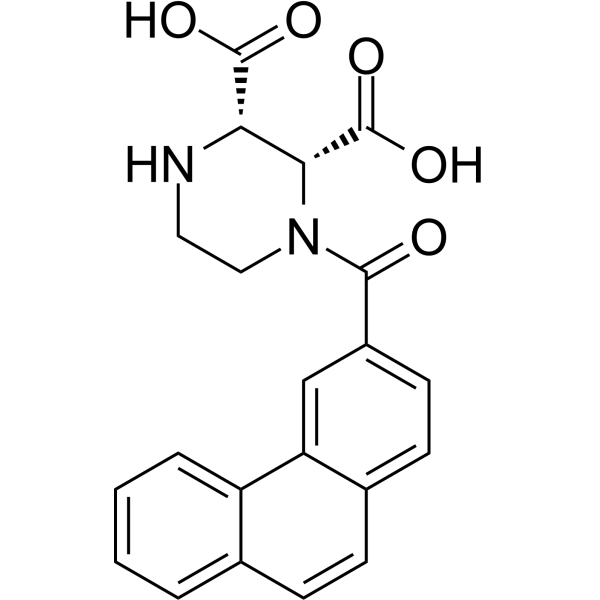
    UBP141 is a GluN2C/2D (NR2C/2D)-preferring receptor antagonist, with Kds of 2.8, 4.2, 14.2, and 19.3 μM for NMDA receptor subtypes: GluN2C, 2D, 2A, and 2B, respectively. UBP141 can induce potent motor impairment in WT mice .
    UBP141
  • HY-B1404R

    Buphenine hydrochloride (Standard)

    Reference Standards iGluR Influenza Virus Infection Cardiovascular Disease Inflammation/Immunology
    Nylidrin (hydrochloride) (Standard) is the analytical standard of Nylidrin hydrochloride (HY-B1404). This product is intended for research and analytical applications. Nylidrin hydrochloride (Buphenine hydrochloride) is an orally active β-adrenergic agonist. Nylidrin hydrochloride antagonizes NR1A/2B NMDA receptors (IC50 = 0.18 μM in Xenopus oocytes). Nylidrin hydrochloride reduces the levels of NP, HA, and M1. Nylidrin hydrochloride has antiviral activity against multiple H1N1 subtype influenza A viruses. Nylidrin hydrochloride improves hemorrhagic shock and anti-allergic effects .
    Nylidrin hydrochloride (Standard)
  • HY-117792

    5-HT Receptor Inflammation/Immunology
    LY314228 is an aminoguanidine 5-HT2 antagonist with relative selectivity for 5-HT2A receptors (IC50: 147.9 nM). The Ki values of LY314228 targeting different 5-HT subtypes are 65 nM (5-HT 2A), 1214 nM (5-HT 2B), and 168 nM (5-HT 2C), respectively. LY314228 is an effective inhibitor of 5-HT-induced paw edema in rats with an ED50 of 6.4 mg/kg in ovariectomized female rats. .
    LY314228
  • HY-18596

    5-HT Receptor Neurological Disease
    SB-215505 is an orally active and subtype-selective 5-HT2B receptor antagonist with pKi values of 8.3, 6.77, 7.66 for 5-HT2B, 5-HT2A, 5-HT2C, respectively . SB-215505 increases wakefulness and motor activity in rats .
    SB-215505
  • HY-136459

    iGluR Neurological Disease
    NMDA receptor antagonist 2 is a potent and orally active NR2B subtype-selective NMDA antagonist with an IC50 and a Ki of 1.0 nM and 0.88 nM, respectively. NMDA receptor antagonist 2 is used for the study of neuropathic pain and Parkinson’s disease .
    NMDA receptor antagonist 2
  • HY-120523

    iGluR Neurological Disease
    UBP646 is a potent GluN1/GluN2D receptors potentiator, and also potentiates the other three subtypes, GluN1/GluN2A, GluN1/GluN2B, and GluN1/GluN2C receptors .
    UBP646
  • HY-172884

    Cholinesterase (ChE) iGluR Neurological Disease
    MDAR IN-1 (Compound 5m) is a brain-penetrant inhibitor of acetylcholinesterase (AChE) and antagonist of the GluN1/GluN2B subtype of NMDAR receptor. MDAR IN-1 effectively inhibits AChE activity, enhances cholinergic neurotransmission, and blocks NMDAR, reducing excitatory neurotoxicity. MDAR IN-1 is promising for research of Alzheimer's disease .
    MDAR-IN-1
  • HY-103212

    B-HT 933 dihydrochloride; Oxazoloazepin dihydrochloride

    Adrenergic Receptor Cardiovascular Disease Endocrinology
    Azepexole (B-HT 933) dihydrochloride is a potent and selective alpha 2-adrenoceptor agonist with pKis of 8.3, 7.6, and 7.5 for α2A-, α2B- and α2C-adrenoceptor subtypes, resepctively . Azepexole dihydrochloride causes concentration-dependent inhibition of peristaltic contractions (IC50= 78.72 nM) .
    Azepexole dihydrochloride
  • HY-W008038R

    Reference Standards iGluR Others
    NMDAR antagonist 3 (Standard) is the analytical standard of NMDAR antagonist 3. This product is intended for research and analytical applications. NMDAR antagonist 3 (Compound 2) is an antagonist of the NMDA receptor. NMDAR antagonist 3 has a certain but weak inhibitory activity against the NR1A/2B subtype of the NMDA receptor .
    NMDAR antagonist 3 (Standard)
  • HY-117467

    iGluR Neurological Disease
    BMT-108908 is a negative allosteric modulator with selective activity on the NR2B subtype of the NMDA receptor. BMT-108908 has been shown to damage cognition in research, affecting cognitive functions in multiple areas. BMT-108908 failed to show a significant impact on the γ wave power of the EEG in the experiment, but it had a significant inhibitory and enhancement effect on the β wave and δ wave power .
    BMT-108908
  • HY-116142

    iGluR Neurological Disease
    CP-283097 is an orally active and conformationally restricted and NR2B subtype-selective NMDA antagonist. CP-283097 efficiently competitively inhibits the binding of [³H]CP-101,606 to the rat meninges, with an IC50 value of 18 nM. CP-283097 exhibits nearly complete inhibition of the current mediated by the NR2B receptor (IC50 = 206 nM), while the inhibitory effect on the NR2A or NR2C receptors is very weak. CP-283097 demonstrates excellent central nervous system permeability and in vivo efficacy in animal models. CP-283097 can be used for neurological diseases related to excessive activation of NMDA receptors .
    CP-283097
  • HY-W069173

    Adenosine Receptor Others
    2-Thioadenosine is a selective A1 adenosine receptor (A1AR) ligand with a Ki of 80.3 nM. 2-Thioadenosine shows very low affinity for the A2A, A2B and A3 adenosine receptor subtypes. 2-Thioadenosine acts as a precursor for the synthesis of fluorescent A3 adenosine receptor-selective agonists .
    2-Thioadenosine
  • HY-15210

    Potassium Channel Metabolic Disease
    Meglitinide is an ATP-sensitive potassium (KATP) channel inhibitor. Meglitinide exhibits IC50 values of 0.26 μM, 0.53 μM and 1.6 μM against KATP channels containing SUR1, SUR2A and SUR2B, respectively, with a Kd value of 7 μM for both SUR1 and SUR2A, and a Kd value of 8 μM for SUR2B. Meglitinide binds to the SUR1, SUR2A and SUR2B subunits with high affinity to close KATP channels, acting on a binding site shared by all SUR subtypes, and its interaction with SUR1 carrying the S1237Y mutation remains unchanged. Meglitinide is applicable to research related to type 2 diabetes .
    Meglitinide

Inquiry Online

Your information is safe with us. * Required Fields.

Salutation


Country or Region *

Applicant Name *


Organization Name *

Department *


Email Address *


Product Name *

Cat. No.


Requested quantity *

Phone Number *


Remarks

Inquiry Online

Inquiry Information

Product Name:
Cat. No.:
Quantity:
MCE Japan Authorized Agent:

