4 Results for "

5743-28-2

" in MedChemExpress (MCE) Product Catalog:
Products (4)

4 Results for "5743-28-2" in MCE Product Catalog:

80
80 Cited Publications
Cat. No.: HY-B0166C
CAS No.: 5743-28-2
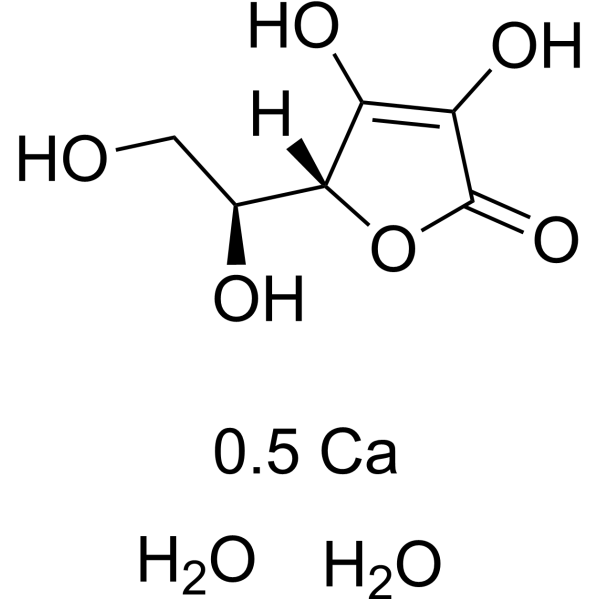
Synonyms: L-Ascorbate calcium dihydrate; Vitamin C calcium dihydrate
L-Ascorbic acid (calcium dihydrate) (L-Ascorbate (calcium dihydrate); Vitamin C (calcium dihydrate)) is a biochemical reagent that can be used as a biological material or organic compound for life science related research.
loading...
    loading...
Cat. No.: HY-B0166CR
CAS No.: 5743-28-2
Synonyms: L-Ascorbate calcium dihydrate (Standard); Vitamin C calcium dihydrate (Standard)
L-Ascorbic acid (calcium dihydrate) (Standard) is the analytical standard of L-Ascorbic acid (calcium dihydrate). This product is intended for research and analytical applications. L-Ascorbic acid (calcium dihydrate) (L-Ascorbate (calcium dihydrate); Vitamin C (calcium dihydrate)) is a biochemical reagent that can be used as a biological material or organic compound for life science related research.
loading...
    loading...
87
87 Cited Publications
Cat. No.: HY-B0166
CAS No.: 50-81-7
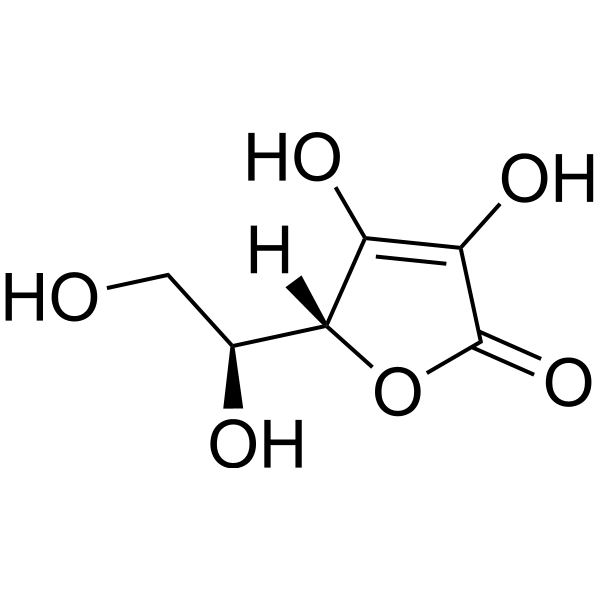
Synonyms: L-Ascorbate; Vitamin C
L-Ascorbic acid (L-Ascorbate), an electron donor, is an endogenous antioxidant agent. L-Ascorbic acid inhibits selectively Cav3.2 channels with an IC50 of 6.5 μM. L-Ascorbic acid is also a collagen deposition enhancer and an elastogenesis inhibitor . L-Ascorbic acid exhibits anti-cancer effects through the generation of reactive oxygen species (ROS) and selective damage to cancer cells .
loading...
    loading...
Cat. No.: HY-B0166GL
CAS No.: 50-81-7
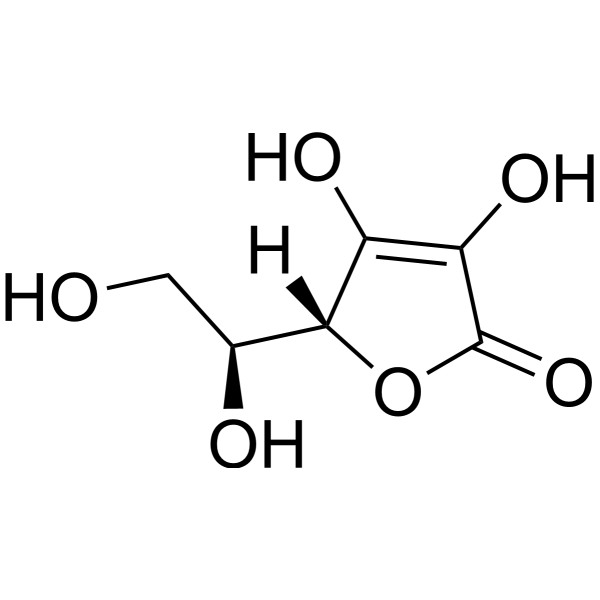
Synonyms: L-Ascorbate (GMP Like); Vitamin C (GMP Like)
L-Ascorbic acid (GMP Like) is the GMP Like class L-Ascorbic acid (HY-B0166). L-Ascorbic acid (L-Ascorbate, Vitamin C), an electron donor, is an endogenous antioxidant agent. L-Ascorbic acid inhibits selectively Cav3.2 channels with an IC50 of 6.5 μM. L-Ascorbic acid is also a collagen deposition enhancer and an elastogenesis inhibitor . L-Ascorbic acid exhibits anti-cancer effects through the generation of reactive oxygen species (ROS) and selective damage to cancer cells .
loading...
    loading...

