
1. Search Result
Search Result
Results for "

A549/T

" in MedChemExpress (MCE) Product Catalog:

46

Inhibitors & Agonists

1

Peptides

2

Inhibitory Antibodies

1

Natural
Products

1

Isotope-Labeled Compounds

Cat. No. Product Name Target Research Areas Chemical Structure
  • HY-P990957

    BCA-101; FMAB2

    EGFR TGF-beta/Smad Inflammation/Immunology Cancer
    Ficerafusp alfa (BCA-101) is a bispecific antibody targeting EGFR and TGFβ, with a Kd of 2.58 nM against EGFR and a Kd of 61.3 nM against TGFβ1. Ficerafusp alfa binds to EGFR, inhibits EGFR phosphorylation, blocks EGF-dependent cell proliferation, and mediates antibody-dependent cellular cytotoxicity against EGFR-positive tumor cells. Ficerafusp alfa sequesters TGFβ via its TGFβRII ECD domain, neutralizes the activity of TGFβ and TGFβ1, and blocks TGFβ-dependent processes, including epithelial-mesenchymal transition, cell invasion, and differentiation of inducible regulatory T cells. Ficerafusp alfa is applicable to research related to head and neck squamous cell carcinoma, advanced solid tumors, squamous non-small cell lung cancer, anal squamous cell carcinoma, colorectal cancer, and pancreatic cancer .
    Ficerafusp alfa
  • HY-P99345

    TSR-042; ANB-011; WBP-285

    PD-1/PD-L1 Cancer
    Dostarlimab (TSR-042) is a humanized anti-PD-1 monoclonal antibody. Dostarlimab binds with high affinity to human PD-1 and competitively inhibits its interaction with its ligands, PD-L1 and PD-L2, with IC50s of 1.8 and 1.5 nM, respectively .
    Dostarlimab
  • HY-119631

    Bacterial Infection
    Nornidulin is a depsidone originally isolated from A. nidulans that has antibacterial activity against M. tuberculosis and M. ranoe as well as antifungal activity against T. tonsurans and M. audouini. It also inhibits the growth of methicillin-resistant S. aureus (MRSA; MIC=2 μg/mL).2 Nornidulin has cytotoxic activity in MOLT-3 cells (IC50=35.7 μM) but not HuCCA-1, HepG2, or A549 cells (IC50s=>116.4 μM).
    Nornidulin
  • HY-124429

    ERK Cancer
    FQI1 is a Late SV40 Factor (LSF) inhibitor. FQI1 inhibits cell proliferation, with IC50s of 3, 0.79, 6.3 μM for NIH/3T3, HeLa, A549 cells. FQI1 can be used for cancer research .
    FQI1
  • HY-155231

    Elastase Cancer
    Neutrophil elastase inhibitor 4 (compound 4f) is a competitive human neutrophil elastase (HNE) inhibitor (IC50: 42.30 nM, Ki: 8.04 nM). Neutrophil elastase inhibitor 4 induces T47D cell apoptosis. Neutrophil elastase inhibitor 4 inhibits cell proliferation with IC50s of 21.25, 34.17, 29.93, 99.11 nM for T47D, RPMI 8226, A549, and HSF cells .
    Neutrophil elastase inhibitor 4
  • HY-130723A

    AMPK Cancer
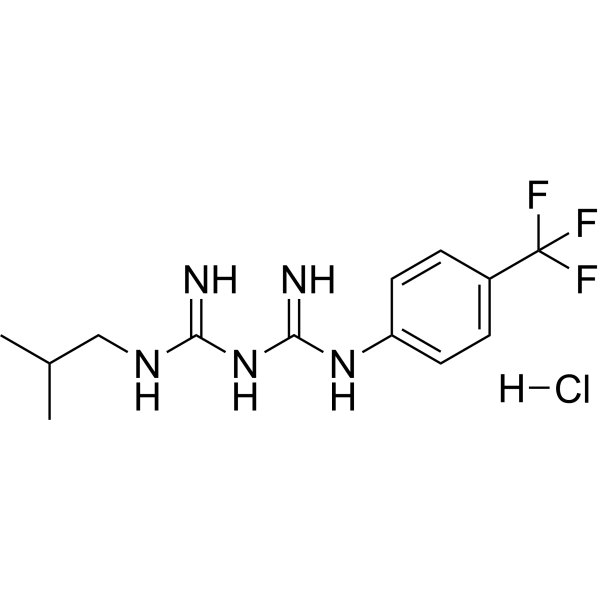
    AMPK activator 2 (compound 7a) hydrochloride, a fluorine-containing proguanil derivative, up-regulates AMPK signal pathway and downregulates mTOR/4EBP1/p70S6K. AMPK activator 2 hydrochloride inhibits proliferation and migration of human cancer cell lines (UMUC3, T24, A549) .
    AMPK activator 2 hydrochloride
  • HY-101450

    EGFR Cancer
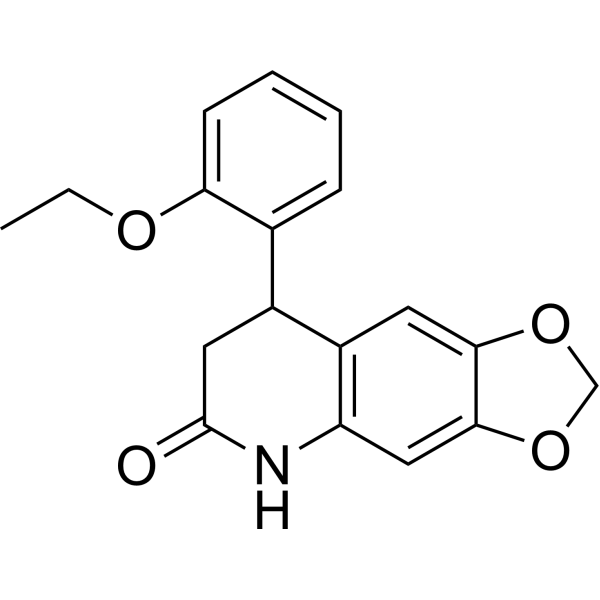
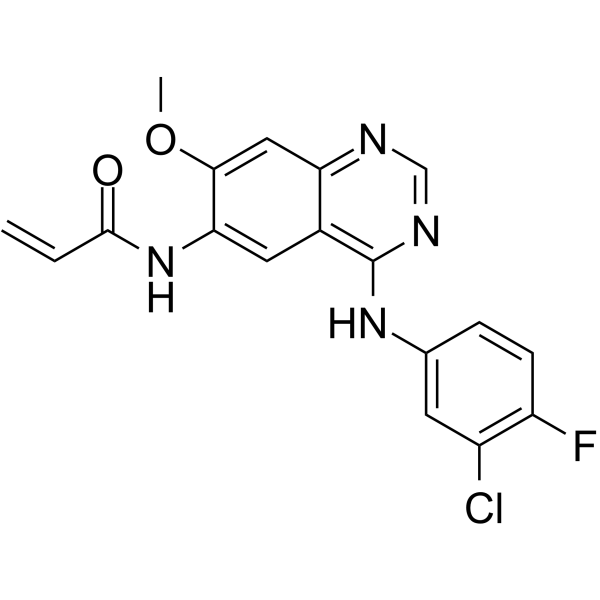
    PF-6274484 is a potent EGFR inhibitor with Kis of 0.14 nM and 0.18 nM for EGFR-L858R/T790M and WT EGFR, respectively. PF-6274484 inhibits EGFR-L858R/T790M autophosphorylation in H1975 tumor cells and EGFR WT in A549 tumor cells with IC50s of 6.6 and 5.8 nM, respectively .
    PF-6274484
  • HY-172394

    HDAC ADAMTS Apoptosis Bcl-2 Family Cyclin G-associated Kinase (GAK) Cancer
    ZSNI-21 is a ADAM17/HDAC2 inhibitor with ADAM17 IC50 0.939 μM and HDAC2 IC50 0.844 μM. ZSNI-21 regulates the expression of apoptosis-related proteins (Bax, Bcl-2) and Cyclin D1, and induces apoptosis.. ZSNI-21 can be used for the research of hepatocellular carcinoma, breast cancer, and non-small cell lung cancer .
    ZSNI-21
  • HY-155050

    Apoptosis Histone Methyltransferase Cancer
    PRMT5-IN-31 (Compound 3m) is a selective PRMT5 inhibitor (IC50: 0.31 μM). PRMT5-IN-31 up-regulates hnRNP E1 protein level. PRMT5-IN-31 occupies the substrate site of PRMT5 and forms essential interactions with amino acid residues. PRMT5-IN-31 has antiproliferative effects against A549 cells by inducing apoptosis and inhibiting cell migration. PRMT5-IN-31 has high metabolic stability on human liver microsomes (T1/2: 132.4 min) .
    PRMT5-IN-31
  • HY-175874

    Microtubule/Tubulin PI3K Akt Apoptosis Cancer
    Tubulin-IN-55 is a tubulin inhibitor. Tubulin-IN-55 disrupts the PI3K/Akt signaling pathway in cancer cells. Tubulin-IN-55 exerts broad-spectrum anti-proliferative activity against multiple tumor cells (HeLa, HCT116, 4T1, A549, H1299, MDA-MB231). Tubulin-IN-55 induces G2/M phase arrest and apoptosis, and inhibits tumor cell migration/invasion in cancer cells. Tubulin-IN-55 demonstrates potent antitumor efficacy in orthotopic autologous transplantation mice. Tubulin-IN-55 can be used for the study of cancer .
    Tubulin-IN-55
  • HY-173489

    Wnt β-catenin Cancer
    Wnt/β-catenin-IN-5 (compound 19T) is a Wnt/β-catenin signaling pathway inhibitor. Wnt/β-catenin-IN-5 inhibits HCT 116, SW480, and A549 cells activity with IC50s of 3.05, 3.27 and 34.91 μM, respectively .
    Wnt/β-catenin-IN-5
  • HY-159123

    MAP4K Cancer
    KHK-6 is an inhibitor for serine/threonine kinase hematopoietic progenitor kinase 1 (HPK 1) with an IC50 of 20 nM. KHK-6 enhances CD3/CD28-induced cytokine production, enhances CD69, CD25 and HLA-DR markers on CD4+ and CD8+ T cells, and enhances T cell-mediated killing activity of SKOV3 and A549 cells .
    KHK-6
  • HY-170910

    HSP Cancer
    Hsp90-IN-39 (Compound 16t) is a HSP90 inhibitor with notable selectivity for the HSP90α isoform. Hsp90-IN-39 demonstrates significant antiproliferative activity in various cancer cell lines, including MCF-7, HCT116, SKBr3, K562, and A549. Hsp90-IN-39 holds potential for cancer research .
    Hsp90-IN-39
  • HY-170568

    Microtubule/Tubulin Apoptosis Cancer
    Tubulin polymerization-IN-73 (Compound 37) is an inhibitor for microtubule polymerization with an IC50 of 1.8 μM. Tubulin polymerization-IN-73 arrests the cell cycle at G2/M phase, induces apoptosis in A549 cell, inhibits the proliferation of A549 WT and A549/T resistant cell with IC50 of 0.023 μM and 0.057 μM. Tubulin polymerization-IN-73 exhibits antitumor efficacy in mouse model .
    Tubulin polymerization-IN-73
  • HY-176051

    RgE

    GLUT Cancer
    Rapaglutin E (RgE) is a glucose transporter (GLUT) inhibitor. Rapaglutin E exhibits dose-dependent inhibition of [ 3H]-2DG uptake in A549, Jurkat T, PANC10.05, and RBC, with IC50 values 8.9 nM, 3.1 nM, 35.5 nM, 74.2 nM. Rapaglutin E inhibits cell proliferation in A549, PANC10.05, HeLa, Jurkat T, and HEK293T cells .
    Rapaglutin E
  • HY-165114

    Endogenous Metabolite Cancer
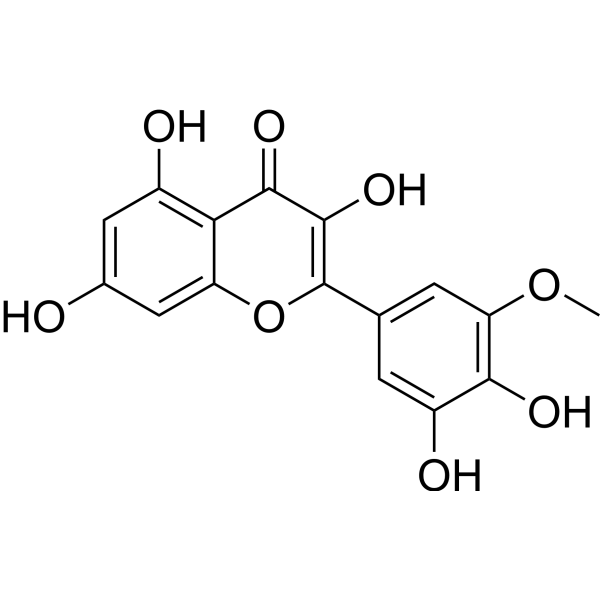
    6-Hydroxyramulosin is a fungal metabolite with antiancer effects. 6-Hydroxyramulosin shows cytotoxic effects against A549 and T24, showing IC50 values of 14.2 µg/mL and 15.3 µg/mL, respectively .
    6-Hydroxyramulosin
  • HY-172112

    VEGFR Apoptosis Cancer
    VEGFR-2-IN-64 (Compound 28) is the inhibitor for VEGFR2 with IC50 of 27.8 nM. VEGFR-2-IN-64 inhibits the proliferation of cancer cell A549, T-47D and Caco-2, exhibits anti-migration and anti-cloning activities in cell T-47D, induces apoptosis in T-47D .
    VEGFR-2-IN-64
  • HY-129765

    Reactive Oxygen Species (ROS) Cancer
    Thiobenzanilide 63T (63T) is a small molecule that selectively induces cancer cell death in a caspase-independent pathway. Thiobenzanilide 63T induces reactive oxygen species and lipid peroxidation. Thiobenzanilide 63T demonstrates strong cytotoxic activity against a lung-derived cancer cell line. Thiobenzanilide 63T decreases the expression of heme oxygenase (HO-1) in A549 cells .
    Thiobenzanilide 63T
  • HY-162885

    Proteasome JAK STAT Interleukin Related Cancer
    YSY01A is a proteasome inhibitor that can suppress cancer cell survival by inducing apoptosis (Apoptosis). Its IC50 values are 51.0 nM for HEK293T, 9.2 nM for A549, 5.2 nM for MCF-7, 8.9 nM for MGC-803, and 35.4 nM for PC-3M cells. Additionally, YSY01A eliminates constitutive STAT3 signaling by downregulating gp130 and JAK2 in human A549 lung cancer cells. YSY01A holds promise for research in the field of cancer therapy .
    YSY01A
  • HY-158090

    Drug Derivative Cancer
    Triptolide palmitate is the derivative of Triptolide (HY-32735). Triptolide palmitate exhibits cytotoxicity against cancer cell MCF-7 and A549, with IC50 of 7.5 and 6.4 μM. Triptolide palmitate exhibits a half-time T1/2 of 50.4 min in Sprague Dawley rats. Triptolide palmitate can be utilizd as drug carrier .
    Triptolide palmitate
  • HY-147862

    EGFR Apoptosis Cancer
    EGFR-IN-62 (compound 9h) is a potent and reversible EGFR kinase inhibitor, with IC50 values of 10 nM (L858R/T790 M), 29 nM (WT), and 242 nM (L858R/T790 M/C797S), respectively. EGFR-IN-62 shows antiproliferative activity against A549 and H1975 cell lines, with IC50 values of 2.53 and 1.56 μM, respectively. EGFR-IN-62 induces dose-dependent apoptosis process, G1/G0-phase arrestation, and the inhibition of motility on A549 and/or H1975 cell lines .
    EGFR-IN-62
  • HY-157398

    EGFR Cancer
    EGFR T790M/L858R-IN-3 (compound B1) is a EGFR L858R/T790M inhibitor with IC50 value of 13?nM. EGFR T790M/L858R-IN-3 shows anti-tumour activity in H1975 cells with an IC50 value of 0.087 μΜ. EGFR T790M/L858R-IN-3 inhibits cell migration in A549 cells and induces apoptosis in H1975 cells .
    EGFR T790M/L858R-IN-3
  • HY-162342

    Topoisomerase Cancer
    Topoisomerase I inhibitor 14 (Compound 4h) is an inhibitor for Topoisomerase I. Topoisomerase I inhibitor 14 inhibits proliferation of A549 and C6 with IC50s of 4.56 μM and 13.17 μM, without significant toxicity in healthy cells NIH3T3 (IC50 is 74.44 μM), which exhibits anticancer potency .
    Topoisomerase I inhibitor 14
  • HY-130723

    AMPK Cancer
    AMPK activator 2 (compound 7a), a fluorine-containing proguanil derivative, up-regulates AMPK signal pathway and downregulates mTOR/4EBP1/p70S6K. AMPK activator 2 inhibits proliferation and migration of human cancer cell lines (UMUC3, T24, A549) .
    AMPK activator 2
  • HY-159176

    Cytochrome P450 Cancer
    Antitumor agent-183 (compound 3f) has antitumor activity with metabolic stability. Antitumor agent-183 inhibits cancer cell growth, with IC50s less than 5 nM for A549, HCT116, and HS578T cells. The albumin-bound nanoparticle formulation of Antitumor agent-183 has prolonged retention in the tumor tissues .
    Antitumor agent-183
  • HY-147860

    EGFR Cancer
    EGFR-IN-61 (compound 22a) is a potent EGFR kinase inhibitor, with IC50 values of 42 nM (L858R/T790 M), 137 nM (L858R/T790 M/C797S), and 743 nM (WT), respectively. EGFR-IN-61 shows antiproliferative activity against A549 and H1975 cell lines, with IC50 values of 2.14 and 1.82 μM, respectively .
    EGFR-IN-61
  • HY-171038

    STAT Inflammation/Immunology
    STAT3-IN-39 (compound 10K) is an orally active STAT3 inhibitor that exhibits excellent inhibitory activity against STAT3 phosphorylation, with an IC50 of 0.47 μM in NIH-3T3 cells. STAT3-IN-39 inhibits the TGF-β1-induced fibrotic response and blocks the epithelial-mesenchymal transition in A549. STAT3-IN-39 can be utilized in research related to idiopathic pulmonary fibrosis .
    STAT3-IN-39
  • HY-146461

    Apoptosis Caspase ROS Kinase Cancer
    Anticancer agent 58 (compound 16) has inhibitory activity against kinds of cancer cell lines, especially in A549 and T24 with IC50s of 0.6 μM and 0.7 μM, respectively. Anticancer agent 58 induces apoptosis by activating caspase 3/8/9 activity, and induces an increase of Ca 2+ and ROS in cancer cells. Anticancer agent 58 significantly decreases mitochondrial membrane potential. Anticancer agent 58 can suppress tumor growth in T24 mouse xenograft model .
    Anticancer agent 58
  • HY-147708

    Calcium Channel Cancer
    T-Type calcium channel inhibitor 2 (compound 6g) is a potent T-type calcium channel inhibitor with IC50s of 31.0, 83.1, 69.3 µM for Cav3.1 (α1G), Cav3.2 (α1H), Cav3.3 (α1I) (α1H), respectively. T-Type calcium channel inhibitor 2 shows cytotoxicity for A549, HCT-116 cells with IC50s of 5.0, 6.4 µM, respectively .
    T-Type calcium channel inhibitor 2
  • HY-N15636

    (-)-Coccinine

    Serotonin Transporter P-glycoprotein Neurological Disease Cancer
    Coccinine ((-)-Coccinine) is a weak inhibitor of SERT (IC50: 196.3 μM; Ki: 106.8 μM) and P-gp (IC50: 0.96 mM). Coccinine exhibits significant anti-tumor activity against various cancer cell lines, such as breast cancer (MCF7, Hs578T, MDA-MB-231), colon cancer (HCT-15), and lung cancer (A549). Coccinine can be used in the research of tumors and neurological diseases .
    Coccinine
  • HY-175297

    VEGFR EGFR Cancer
    EGFR T790M/VEGFR-2-IN-1 (Compound 6) is a dual EGFR T790M mutant (IC50=0.26 μM) and VEGFR-2 (IC50=0.95 μM) inhibitor. EGFR T790M/VEGFR-2-IN-1 blocks tumor cell proliferation and angiogenesis signaling pathways. EGFR T790M/VEGFR-2-IN-1 exhibits potent cytotoxicity against multiple cancer cell lines (HCT116, MCF-7, HepG2, A549; IC50=5.35-9.90 μM). EGFR T790M/VEGFR-2-IN-1 is promising for research of non-small cell lung cancer and solid tumors .
    EGFR T790M/VEGFR-2-IN-1
  • HY-161825

    Microtubule/Tubulin Apoptosis Cancer
    Tubulin polymerization-IN-66 (Compound 13) inhibits colony formation and tubulin polymerization. Tubulin polymerization-IN-66 induces apoptosis. Tubulin polymerization-IN-66 inhibits cell viability of A549, A2780, SKOV3, HCC827 cells, with IC50s of 0.84, 0.38, 0.31, 0.34 nM respectively. Tubulin polymerization-IN-66 is also active against the Paclitaxel (HY-B0015)-resistant cancer cell line A2780/T and its parental cell line A2780 .
    Tubulin polymerization-IN-66
  • HY-155051

    Apoptosis Histone Methyltransferase Cancer
    Antiproliferative agent-25 (Compound 3s4) is a selective PRMT5 inhibitor (IC50: 0.11 μM). Antiproliferative agent-25 up-regulates hnRNP E1 protein level. Antiproliferative agent-25 forms H-bond interactions with SAM and E444 residue of PRMT5. Antiproliferative agent-25 has antiproliferative effects against A549 cells by inducing apoptosis and inhibiting cell migration. Antiproliferative agent-25 has high clearances with T1/2 of only 21.8 and 4.7 min in human and rat liver microsomes .
    Antiproliferative agent-25
  • HY-136727A

    Caspase Apoptosis Cancer
    Ac-LEVD-CHO (TFA) is an inhibitor of caspase-4. Ac-LEVD-CHO (TFA) can inhibit the expression and secretion of IL-1α expression as well as the activation of caspase-4 induced by the T. denticola periodontal pathogen surface protein Td92 in human gingival fibroblasts. Ac-LEVD-CHO (TFA) can also reduce the apoptosis due to the expression of the dominant negative adenoviral RNA-dependent protein kinase in A549 and PC3 cancer cell lines .
    Ac-LEVD-CHO TFA
  • HY-170438

    EGFR Cancer
    EGFR-IN-139 (compound PD 18) is an epidermal growth factor receptor (EGFR) inhibitor, with IC50s of 12.88 (wild type), 10.84 (L858R/T790M), 42.68 (L858R/T790M/C797S) nM, respectively. EGFR-IN-139 displays strong anticancer activity against A549 and H1975 cancer cell lines, which are highly expressed EGFR. EGFR-IN-139 has a strong selectivity to cancer cells. EGFR-IN-139 can be used for nonsmall cell lung cancer (NSCLC) research[1].
    EGFR-IN-139
  • HY-161641

    Microtubule/Tubulin Cancer
    Tubulin polymerization-IN-62 (Compound 14b) is an inhibitor for microtubule polymerization (IC50 is 7.5 μM) and a degrader for α- and β-tubulin. Tubulin polymerization-IN-62 inhibits proliferation of cancer cells MCF-7, A549 and HCT-116, with IC50 of 32, 60 and 29 nM, respectively. Tubulin polymerization-IN-62 arrests the cell cycle at G2/M phase, inhibits the migration of MCF-7. Tubulin polymerization-IN-62 exhibits antitumor efficacy with a tumor growth inhibition rate (TGI) of 74.27% in 4T1 homograft mouse model .
    Tubulin polymerization-IN-62
  • HY-174425

    Cytochrome P450 Cancer
    CYP1B1-IN-9 is a highly selective and competitive CYP1B1 Inhibitor with IC50 values of 1.48 nM, > 100 μM, and > 80 μM for CYP1B1, CYP1A1, and CYP1A2, respectively. CYP1B1-IN-9 significantly inhibits the migration and invasion of A549/T cells. CYP1B1-IN-9 has the ability to resensitize Paclitaxel (HY-B0015)-resistant cells, and good metabolic stability and safety, and shows favorable pharmacokinetic parameters. CYP1B1-IN-9 can be used for the study of tumor-drug resistance .
    CYP1B1-IN-9
  • HY-170932

    EGFR COX Apoptosis Cancer
    EGFR/COX-2-IN-1 is an EGFR/COX-2 inhibitor. EGFR/COX-2-IN-1 inhibits EGFR WT, EGFR T790M, COX-1 and COX-2 with IC50s of 0.12, 0.076, 20.1 and 1.52 μM respectively. EGFR/COX-2-IN-1 inhibits and with IC50s of , respectively. EGFR/COX-2-IN-1 inhibits MCF-7, HT-29 and A-549 with IC50s of 1.20, 5.14 and 14.81 μM, respectively. EGFR/COX-2-IN-1 displays Apoptosis induction by up-regulating Bax and down-regulating Bcl-2 protein levels. EGFR/COX-2-IN-1 results in a significant increase in the percentage of cells at the G2/M in MFC-7 cells. EGFR/COX-2-IN-1 exhibits broad-spectrum antitumor effects .
    EGFR/COX-2-IN-1
  • HY-144395

    HDAC Apoptosis Inflammation/Immunology Cancer
    HDAC6-IN-4 (C10) is a potent, orally active and highly selective HDAC6 inhibitor with an IC50 value of 23 nM. HDAC6-IN-4 induces cancer cells apoptosis and shows significant antitumor efficacy, without obvious toxicity .
    HDAC6-IN-4
  • HY-170883

    Photosensitizer Cancer
    Type-I/-II Photosensitizer-1 (compound 8b) is a photosensitizer with anticancer activity. Type-I/-II Photosensitizer-1 exhibits significant phototoxicity against both A549 and 4T1 tumor cells. Type-I/-II Photosensitizer-1 shows a strong oxygen-independent antitumor effect under laser irradiation (IC50=1.50-1.76 μM) .
    Type-I/-II Photosensitizer-1
  • HY-179451

    Apoptosis p38 MAPK Parasite Infection Inflammation/Immunology Cancer
    Apoptosis inducer 53 is an apoptosis inducer. Apoptosis inducer 53 can inhibit proliferation of human tumor cell lines (A549, HeLa, SW1573, T-47D, WiDr) with GI50 values of 2.5-9.1 μM. Apoptosis inducer 53 can induce cancer cells apoptosis and reduce colony formation. Apoptosis inducer 53 can activate p38α MAPK signaling and exerts anti-inflammatory effect. Apoptosis inducer 53 also shows anti-Leishmania donovani activity. Apoptosis inducer 53 can be used for the researches of cancer, infection and inflammation .
    Apoptosis inducer 53
  • HY-181663

    PD-1/PD-L1 JAK Cancer
    PJ27 is a dual PD-1/PD-L1/JAK1 inhibitor, with an IC50 of 414 nM against PD-1/PD-L1, an IC50 of 786 nM against JAK1, a Ka of 294 nM for human PD-1/PD-L1, and a Ka of 473 nM for murine PD-1/PD-L1. PJ27 promotes the infiltration of CD3 +CD8 + and CD3 +CD4 + cells into the tumor microenvironment and exerts a significant immune activation effect. PJ27 inhibits tumor growth in a dose-dependent manner in the LLC lung cancer mouse model. PJ27 is applicable to relevant research on lung cancer .
    PJ27
  • HY-181685

    LAG-3 TNF Receptor Cancer
    LAGi-DEL is a LAG-3 inhibitor, with Kd values of 97.33 nM and 271 nM in surface plasmon resonance (SPR) assay and microscale thermophoresis (MST) assay, respectively. LAGi-DEL blocks the LAG-3/MHC-II interaction, with an EC50 of 138 nM. LAGi-DEL restores T cell activation, enhances IFN-γ secretion and promotes immune-mediated cytotoxicity. LAGi-DEL can be used in the research of acute myeloid leukemia, lung cancer and melanoma .
    LAGi-DEL
  • HY-181673

    Microtubule/Tubulin Apoptosis Bcl-2 Family Caspase PARP Cancer
    ICD inducer-2 is a immunogenic cell death inducer. ICD inducer-2 binds to the colchicine binding site on tubulin to inhibit tubulin polymerization. ICD inducer-2 exhibits broad-spectrum antiproliferative activity across multiple cancer cell lines. ICD inducer-2 inhibits cells migration, causes G2/M phase and induces apoptosis. ICD inducer-2 promotes infiltration of CD4+ and CD8+ T cells into the tumor microenvironment. ICD inducer-2 downregulates antiapoptotic protein Bcl-2, upregulates proapoptotic proteins Bax and Bim-1, and increases cleaved caspase 3, cleaved caspase 9, and cleaved PARP levels. ICD inducer-2 overcomes paclitaxel resistance in xenograft models and achieves tumor growth inhibition. ICD inducer-2 can be used for the research of cancer, such as lung carcinoma .
    ICD inducer-2
  • HY-181507

    CD28 IFNAR TNF Receptor Interleukin Related Cancer
    CD28-IN-3 is a CD28 inhibitor with an IC50 of 7.80 μM and a Kd of 52.45 μM. CD28-IN-3 selectively blocks the CD28-B7 interaction, thereby inhibiting CD28-mediated costimulation. CD28-IN-3 suppresses the production of proinflammatory cytokines IFN-γ, IL-2 and TNF-α. CD28-IN-3 can be used in the research of checkpoint-resistant cancers .
    CD28-IN-3
  • HY-182693

    PI3K IFNAR Reactive Oxygen Species (ROS) Interleukin Related Inflammation/Immunology
    CPL302-253 is a PI3Kδ inhibitor with an IC50 of 12.20 nM and a human Kd of 0.85 nM. CPL302-253 functionally regulates PI3Kδ activity, blocks the production of IFNγ, IL-33 and ROS in immune cells, and affects immune function. CPL302-253 blocks the progression of asthma-inducing inflammatory responses in a mouse model of asthma. CPL302-253 can be used for research related to asthma .
    CPL302-253

Inquiry Online

Your information is safe with us. * Required Fields.

Salutation


Country or Region *

Applicant Name *


Organization Name *

Department *


Email Address *


Product Name *

Cat. No.


Requested quantity *

Phone Number *


Remarks

Inquiry Online

Inquiry Information

Product Name:
Cat. No.:
Quantity:
MCE Japan Authorized Agent:

