1. Search Result
Search Result
Pathways Recommended: Stem Cell/Wnt Cell Cycle/DNA Damage
Results for "

ALT cells

" in MedChemExpress (MCE) Product Catalog:

13

Inhibitors & Agonists

1

Peptides

2

Inhibitory Antibodies

2

Natural
Products

Cat. No. Product Name Target Research Areas Chemical Structure
  • HY-150279
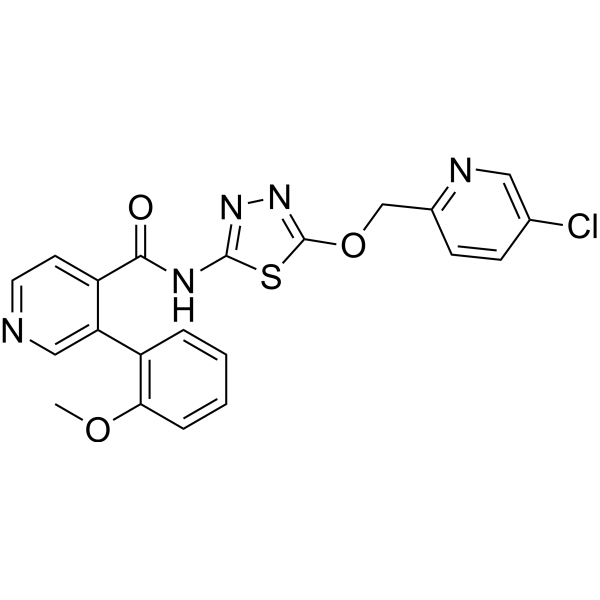
    PolQi2
    3 Publications Verification

    DNA/RNA Synthesis Others
    PolQi2 is a PolΘ inhibitor that targets and inhibits alt-EJ (alternative end-joining) repair by inhibiting the helicase domain at the N-terminus of PolΘ. PolQi2 enhances the precision and integration efficiency of gene editing at different loci and in various cell lines. Furthermore, the combined use of PolQi2 with DNA-PK inhibitors reduces the off-target effects of Cas9. PolQi2 can be used in gene editing research .
    PolQi2
  • HY-147041
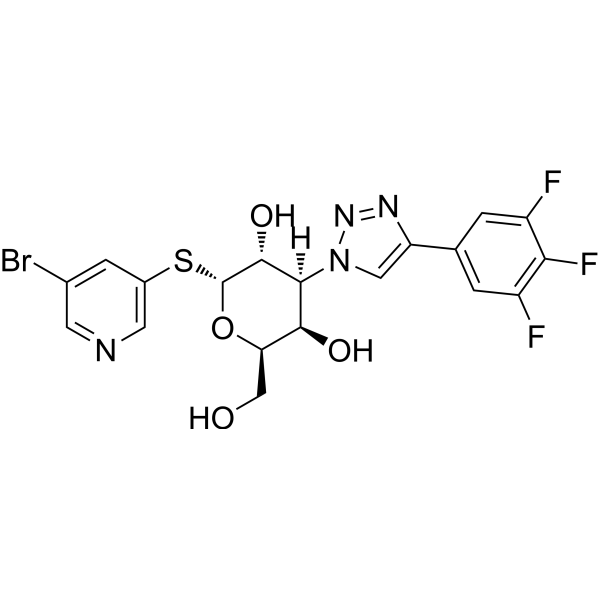
    Selvigaltin
    1 Publications Verification

    GB1211

    Galectin Inflammation/Immunology Cancer
    Selvigaltin (GB1211) is an orally active galectin-3 small molecule inhibitor with an IC50 value of 12 nM in rabbits, showing anti-tumor activity. Selvigaltin decreases galectin-3 levels in the liver and reduces biomarkers of liver function (AST, ALT, bilirubin), inflammation (cells foci) and fibrosis (PSR, SHG), as well as decreasing the mRNA and protein expression of several key inflammation and fibrosis biomarkers (IL6, TGFβ3, SNAI2, collagen). Selvigaltin restores T-cell activity and induces less tumors and metastasis .
    Selvigaltin
  • HY-159078

    DNA/RNA Synthesis Cancer
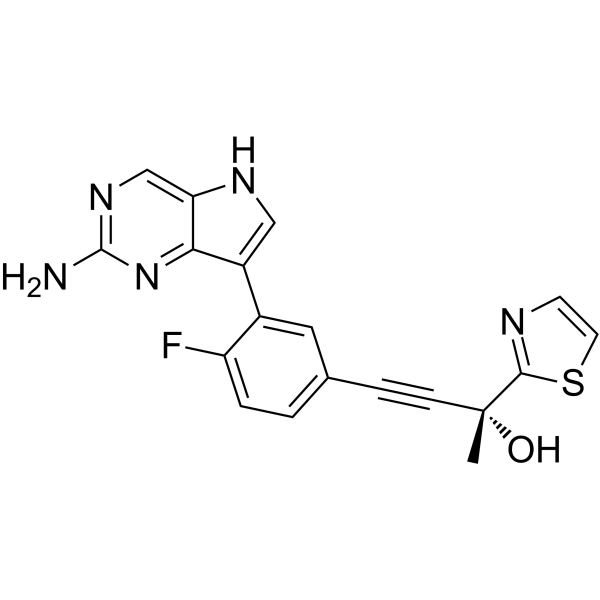
    PolQi1 is a selective inhibitor targeting the Polθ domain of DNA polymerase. PolQi1 inhibits the Polθ-mediated microhomology end joining (TMEJ/alt-EJ) pathway, reducing insertion/deletion (Indels) and imprecise editing events during DNA repair. PolQi1 can enhance the efficiency and accuracy of homology-directed repair (HDR) or Prime editing, and reduce off-target effects; and in combination with DNA-PK inhibitor AZD-7648 (HY-111783), exert efficient genome editing capabilities with dual pathway regulation. PolQi1 can be mainly used in gene editing research (such as CRISPR-Cas9 or Prime editing system optimization) to improve the precision editing efficiency of difficult-to-edit cells (such as primary hepatocytes and mouse embryos) .
    PolQi1
  • HY-145801
    XT2
    2 Publications Verification

    NF-κB Inflammation/Immunology
    XT2 is a potent, orally active, and selective inhibitor of NF-κB-inducing kinase (NIK) with an IC50 of 9.1 nM. XT2 suppresses CCl4-induced upregulation of ALT, a key biomarker of acute liver injury. XT2 also decreases immune cell infiltration into the injured liver tissue. XT2 has the potential for the research of liver inflammatory diseases . XT2 is a click chemistry reagent, it contains an Alkyne group and can undergo copper-catalyzed azide-alkyne cycloaddition (CuAAc) with molecules containing Azide groups.
    XT2
  • HY-P99409

    ALT-2 monoclonal antibody; MAB-B43.13; Oregovamab

    Transmembrane Glycoprotein Cancer
    Oregovomab (Alt-2 monoclonal antibody) is a murine mAb targeting CA125. Oregovomab induces cytotoxic immune response against CA125 expressing tumor cells .
    Oregovomab
  • HY-146812

    G-quadruplex Cancer
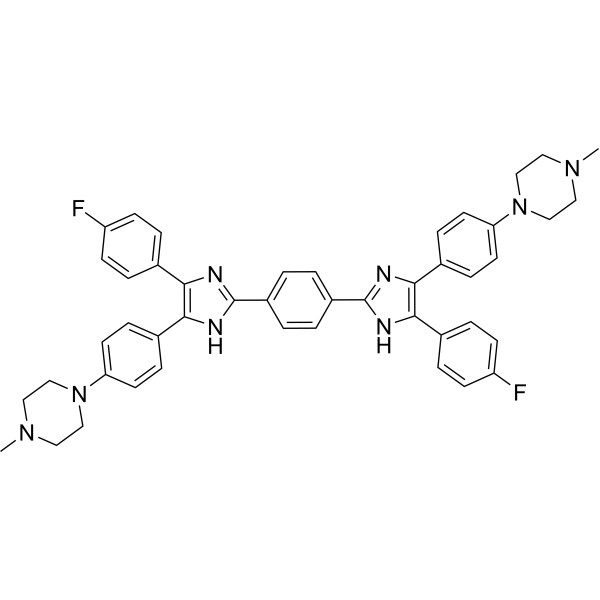
    DIZ-3 is a selective multimeric G4 ligand based on a G4-ligand-dimerizing strategy. DIZ-3 intercalates into the G4-G4 interface, stabilizing the higher-order structure. DIZ-3 induces cell cycle arrest and apoptosis, and thus inhibits cell proliferation in alternative lengthening of telomere (ALT) cancer cells .
    DIZ-3
  • HY-P11224

    DNA/RNA Synthesis Cancer
    RMI-L4 is an efficient cyclic peptide inhibitor that can specifically disrupt the interaction between FANCM and RMI proteins with an IC50 of 54 nM. RMI-L4 engages the FANCM-binding pocket of RMI1/2 with nanomolar affinity (KD = 2.5 nM). RMI-L4 cannot penetrate the cell membrane and can be used to study the FANCM-RMI pathway targeting cancer with alternate lengthening of telomeres (ALT) .
    RMI-L4
  • HY-159595

    LDLR PCSK9 Metabolic Disease Inflammation/Immunology
    PCSK9-IN-29 is a lipid-lowering agent. PCSK9-IN-29 can increase low-density lipoprotein receptor (LDLR) protein expression and decrease PCSK9 protein expression in hepG2 cells. PCSK9-IN-29 can reduce the levels of serum LDL-C, TC, and liver enzyme ALT in crab eating macaques fed a high-fat diet, lower body weight and fat, and increase bone mineral content. PCSK9-IN-29 can be used for research on non-alcoholic fatty liver disease and obesity .
    PCSK9-IN-29
  • HY-N6595

    Others Others
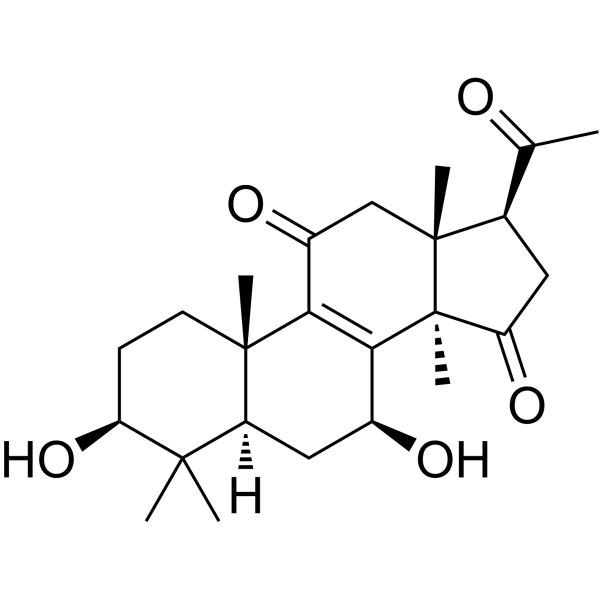
    Lucidone A is a lanostanoid isolated from the fruiting bodies of G. resinaceum. lucidone A showed inhibitory effects against the increase of ALT and AST levels in HepG2 cells induced by H2O2 compared to a control group in the range of their maximum non-toxic concentration (MNTC) .
    Lucidone A
  • HY-N15378

    IAP Bcl-2 Family COX TNF Receptor Caspase Apoptosis Inflammation/Immunology Cancer
    β-carotene-15,15ʹ-epoxide is a XIAP antagonist with apoptosis-inducing and antitumor activity, found in the leaves of Spondias mombin. In a DMBA (HY-W011845)-induced rat model of breast cancer, β-carotene-15,15ʹ-epoxide binds to the BIR3 domain of the anti-apoptotic protein XIAP, blocking its interaction with caspase-9 and thereby promoting tumor cell apoptosis. In addition, β-carotene-15,15ʹ-epoxide significantly downregulates the expression of BCL-2, COX-2, and TNF-α in tumor tissues, reduces MDA levels, increases catalase activity, and modulates serum levels of LDH, ALP, and ALT, demonstrating strong antioxidant, anti-inflammatory, and metabolic protective effects. β-carotene-15,15ʹ-epoxide may be used in research on inflammation-related conditions and cancers such as breast cancer .
    β-Carotene-15,15'-epoxide
  • HY-182469

    Lactate Dehydrogenase AMPK FOXO Interleukin Related Reactive Oxygen Species (ROS) TNF Receptor Bcl-2 Family Caspase Apoptosis Neurological Disease
    FuBIG is an iminoguanidine derivative with neuroprotective effects. FuBIGL inhibits L-LDH activation and reduces lactate production. FuBIGL exerts protective effects on inflammatory nerve cells, upregulates the expressions of AMPK, pAMPK and FOXO3, and activates the AMPK pathway in cells. FuBIG exerts anti-inflammatory effects by reducing pro-inflammatory cytokines (IL-6, IL-1β, TNF-α) and increasing the anti-inflammatory cytokine IL-10. FuBIG maintains mitochondrial membrane potential, alleviates mitochondrial dysfunction, reduces ROS production, and relieves oxidative stress. FuBIG upregulates Bcl-2, downregulates Bax and Caspase-3, and inhibits cell apoptosis (apoptosis). FuBIG improves metabolic disorders in diabetic mice, decreases the levels of LDL-C, ALT and AST, and increases HDL-C level simultaneously. FuBIG can be used in the research of diabetic neuroinflammation .
    FuBIG
  • HY-19009B

    CCR Metabolic Disease Inflammation/Immunology Cancer
    Propagermanium is an orally active and selective CCR2 inhibitor. Propagermanium enhances IFN-γ, IL-2, 2',5'-oligoadenylate synthetase, and unspecified cytokine production, and induces mature cytolytic NK cell subsets. Propagermanium reduces HBe antigen and HBV DNA polymerase levels, promotes HBV clearance and lowers serum ALT. Propagermanium downregulates STAT1, inhibits pro-inflammatory microglia polarization, pro-inflammatory cytokine release, and monocyte/macrophage infiltration. Propagermanium can be used for the research of chronic hepatitis B, atherosclerosis, breast cancer, non-alcoholic steatohepatitis, insulin resistance, refractory gastric cancer, multiple myeloma, type 2 diabetes .
    Propagermanium
  • HY-183337

    NOD-like Receptor (NLR) Interleukin Related Inflammation/Immunology
    ZM734 is an orally active and selective NLRP3 inflammasome inhibitor. ZM734 inhibits the secretion of IL-1β. ZM734 alleviates pulmonary inflammation in a mouse model of acute lung injury. ZM734 can be used for the research of inflammatory diseases such as acute lung injury .
    ZM734

Inquiry Online

Your information is safe with us. * Required Fields.

Salutation


Country or Region *

Applicant Name *


Organization Name *

Department *


Email Address *


Product Name *

Cat. No.


Requested quantity *

Phone Number *


Remarks

Inquiry Online

Inquiry Information

Product Name:
Cat. No.:
Quantity:
MCE Japan Authorized Agent:

