25 Results for "

AQP Inhibitors

" in MedChemExpress (MCE) Product Catalog:
Products (25)

25 Results for "AQP Inhibitors" in MCE Product Catalog:

25
25 Publications Verification
Cat. No.: HY-W008574
CAS No.: 51987-99-6
Target:  

PROTAC Linkers

Research Areas:  

Inflammation/Immunology Cancer

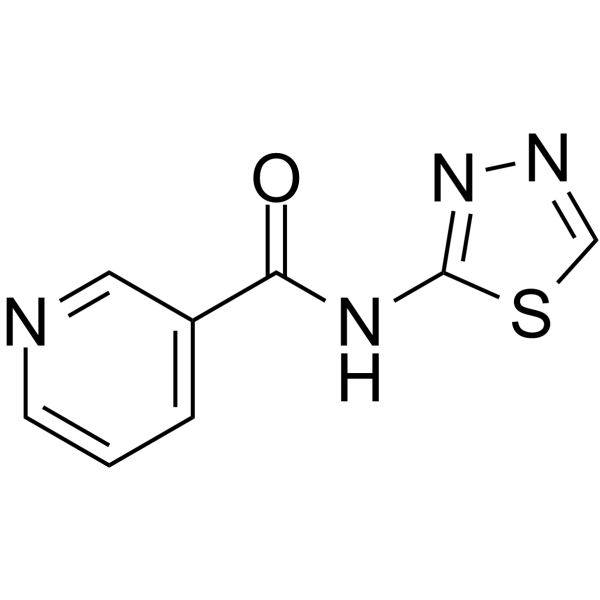
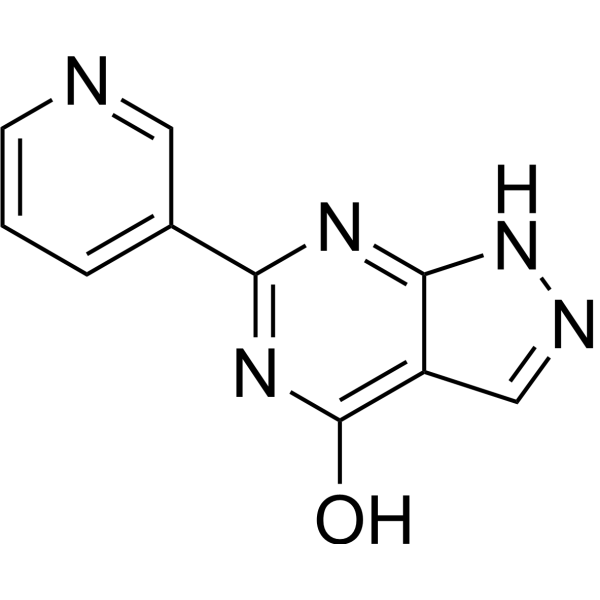
TGN-020 is a selective Aquaporin 4 (AQP4) inhibitor with an IC50 of 3.1 μM . TGN-020 is an alkyl chain-based PROTAC linker that can be used in the synthesis of PROTACs .TGN-020 alleviates edema and inhibits glial scar formation after spinal cord compression injury in rats .
loading...
    loading...
25
25 Publications Verification
Cat. No.: HY-W008574A
CAS No.: 1313731-99-5
Target:  

PROTAC Linkers

Research Areas:  

Inflammation/Immunology Cancer

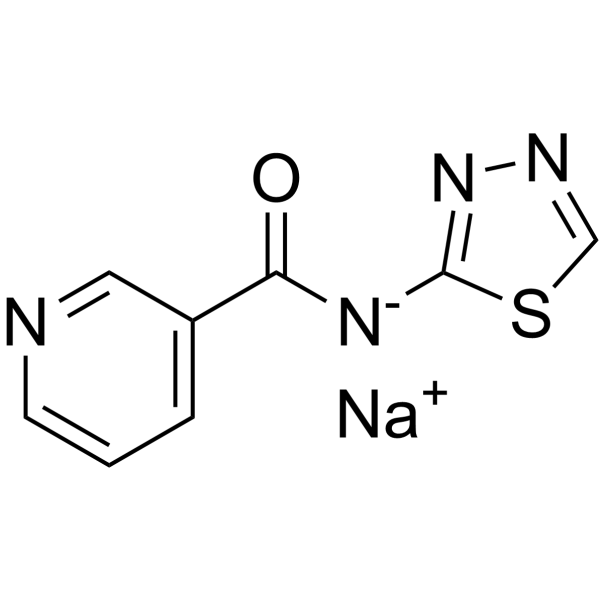
TGN-020 sodium is a selective Aquaporin 4 (AQP4) inhibitor with an IC50 of 3.1 μM . TGN-020 sodium is an alkyl chain-based PROTAC linker that can be used in the synthesis of PROTACs . TGN-020 sodium alleviates edema and inhibits glial scar formation after spinal cord compression injury in rats .
loading...
    loading...
7
7 Cited Publications
Cat. No.: HY-126073
CAS No.: 672286-03-2
Purity:  99.46%
Target:  

Aquaporin

Research Areas:  

Inflammation/Immunology Cancer

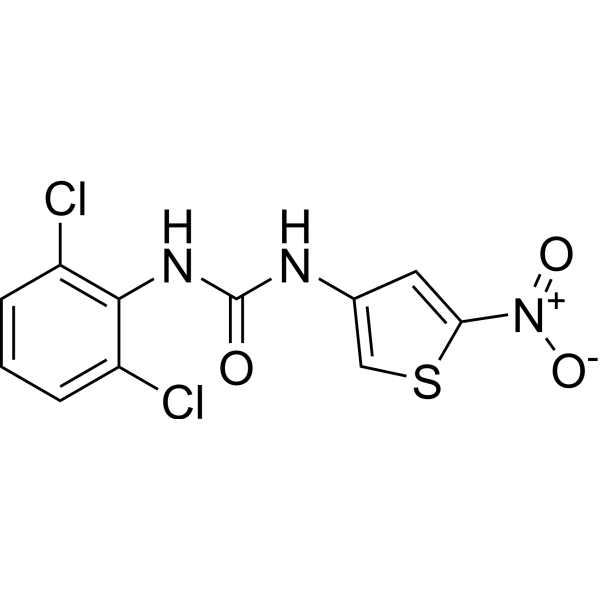
DFP00173 is a potent and selective aquaporin-3 (AQP3) inhibitor. DFP00173 inhibits mouse and human AQP3 with an IC50 of ~0.1-0.4 μM. DFP00173 is selective for AQP3 over the homologous AQP isoforms AQP7 and AQP9 .
loading...
    loading...
2
2 Cited Publications
Cat. No.: HY-B0557
CAS No.: 603-50-9
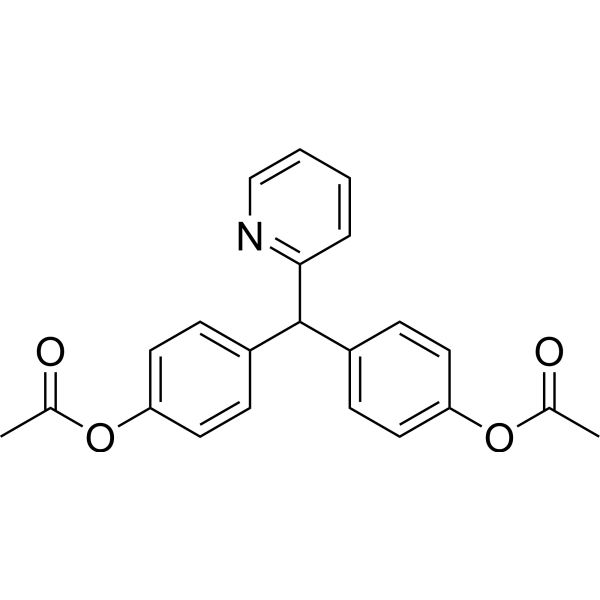
Bisacodyl is a stimulant laxative agent that works directly on the colon to produce a bowel movement. Bisacodyl increases the secretion of PGE2 by direct activation of colon macrophages. PGE2 acts as a paracrine factor and decreases the expression of AQP3 in the colon, which inhibits water transfer from the luminal to the vascular side and leads to a laxative effect .
loading...
    loading...
2
2 Cited Publications
Cat. No.: HY-N6016
CAS No.: 382146-66-9
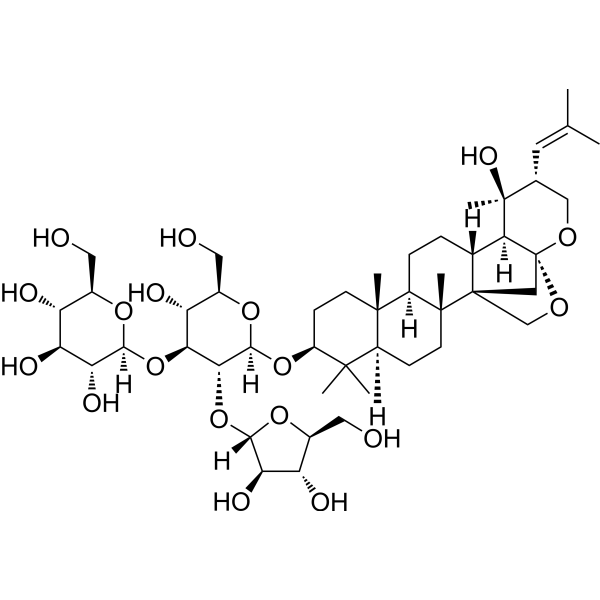
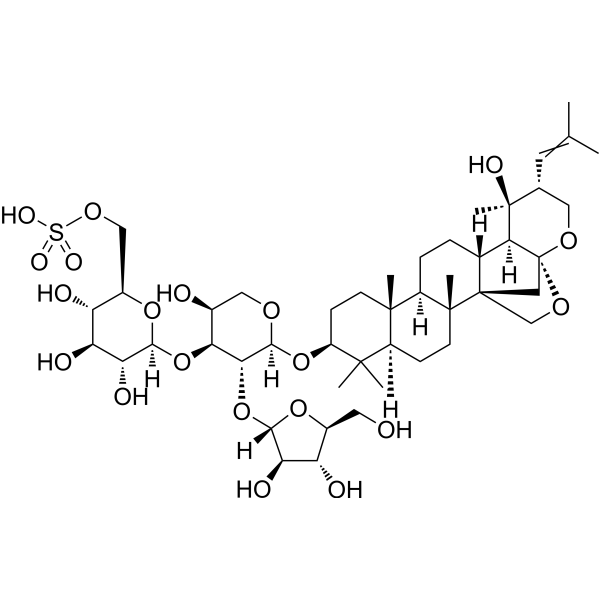
Bacopaside II, an extract from the medicinal herb Bacopa monnieri. Bacopaside II is the inhibitor for AQP1 that exhibits anti-angiogenesis activity. Bacopaside II exhibits cytotoxicity and induces apoptosis in cancer cells .
loading...
    loading...
2
2 Cited Publications
Cat. No.: HY-110200
CAS No.: 37710-81-9
Purity:  98.51%
Synonyms: m-Phenylenediacrylic acid; m-Benzenediacrylic acid
Target:  

Aquaporin

Research Areas:  

Metabolic Disease Cancer

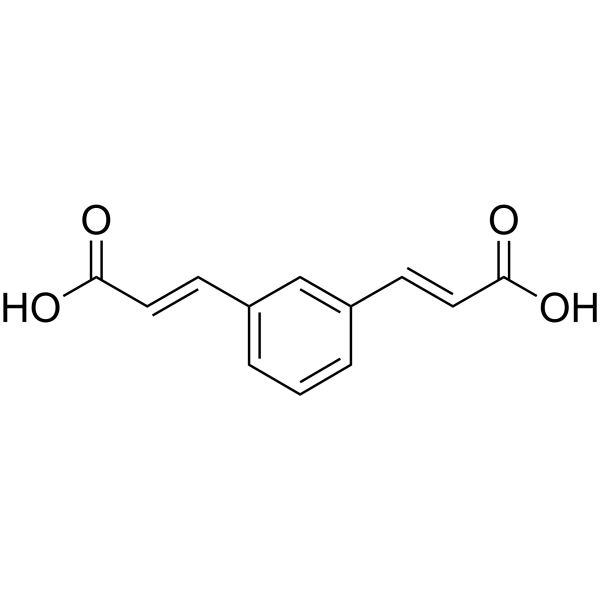
TC AQP1 1 (m-Phenylenediacrylic acid) is a potent AQP1 inhibitor. TC AQP1 1 inhibits AQP1-mediated water flux in oocytes, with an IC50 of 8 μM .
loading...
    loading...
1
1 Cited Publications
Cat. No.: HY-161834
CAS No.: 2140901-88-6
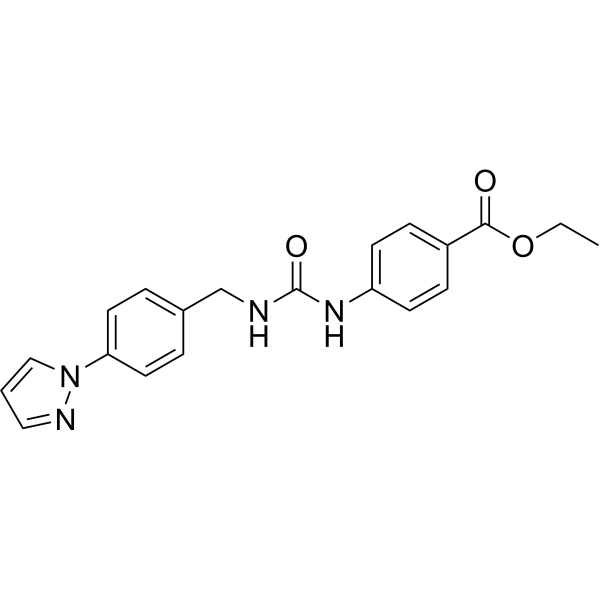
RG100204 is a selective, orally available inhibitor of the aquaporin AQP9. RG100204 directly inhibits AQP9 channel function, preventing the transmembrane transport of water, glycerol, and H 2O 2. RG100204 reduces the activation of the NLRP3 inflammasome and p38 MAPK signaling pathways, thereby alleviating inflammation and pyroptosis. RG100204 reduces multi-organ dysfunction in a mouse sepsis model and shows glucose-regulating effects in diabetic db/db mice .
loading...
    loading...
1
1 Cited Publications
Cat. No.: HY-126074
CAS No.: 1005883-72-6
Purity:  98.11%
Target:  

Aquaporin

Research Areas:  

Others

Z433927330 is a potent and selective inhibitor of Aquaporin-7 (AQP7), less potently inhibits AQP3 and AQPs9, with IC50s of ~0.2 µM, ~0.7 µM and ~1.1 µM for mAQP7, mAQP3 and mAQP9, respectively .
loading...
    loading...
1
1 Cited Publications
Cat. No.: HY-N2013
CAS No.: 13395-02-3
Synonyms: Aristololactam; Aristolactam
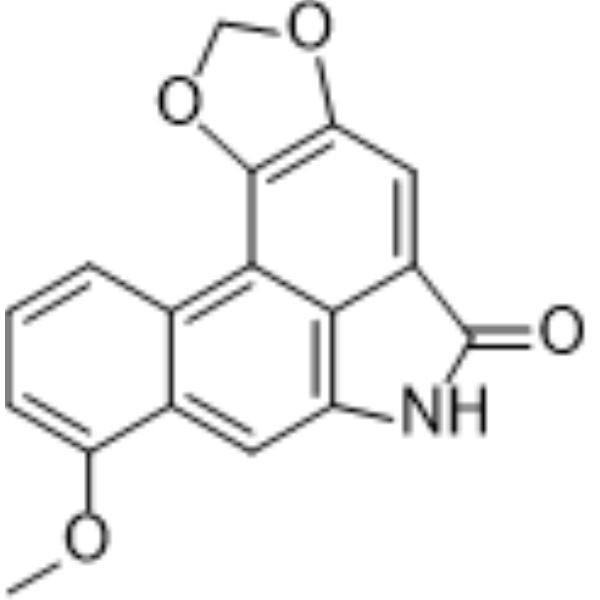
Aristolactam I is an AQP1 inhibitor and Aristolochic acid I metabolite. Aristolactam I can be isolated from Aristolochia plants. Aristolactam I downregulates Twist1 expression, increases E-cadherin expression, and activates the TGF-β/Smad signaling pathway. Aristolactam I has anticancer activity against breast cancer. Aristolactam I is nephrotoxic. Aristolactam I is mainly used in the study of breast cancer and kidney diseases such as renal interstitial fibrosis .
loading...
    loading...
1
1 Cited Publications
Cat. No.: HY-115460
CAS No.: 634913-39-6
Purity:  98.00%
Target:  

Aquaporin

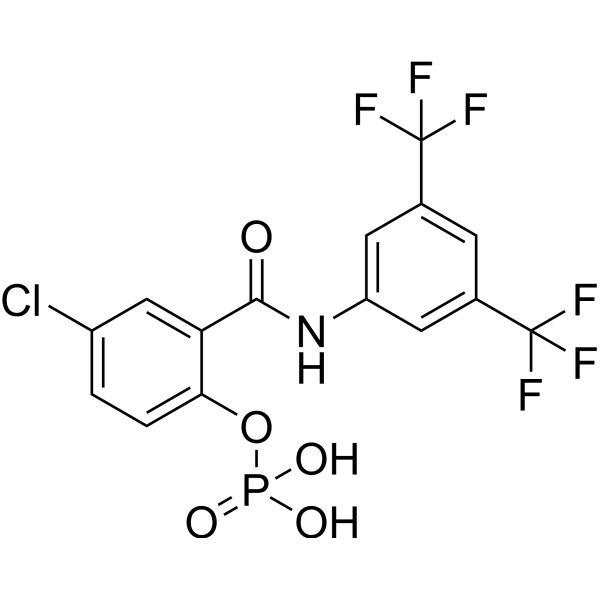
AER-271, a phosphonate proagent derivative of AER-270, is an aquaporin-4 (AQP4) inhibitor for the research of acute ischemic stroke .
loading...
    loading...
Cat. No.: HY-N2057
CAS No.: 471-80-7
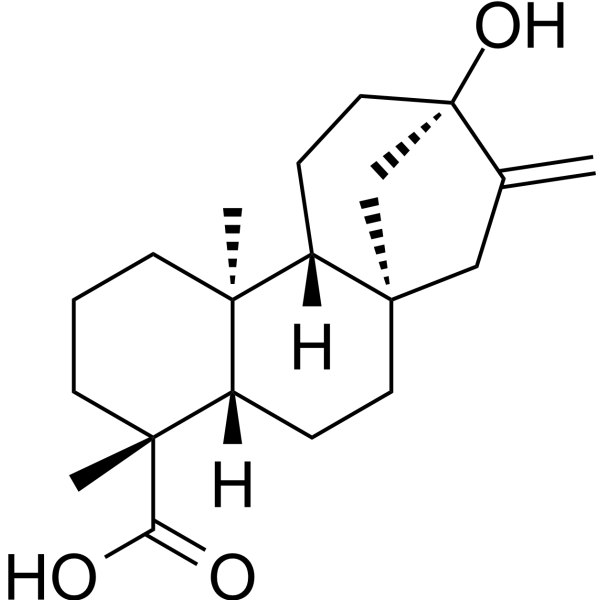
Steviol is the main metabolite of steviol glycosides and an inhibitor of AQP2/CFTR. Steviol slows down the growth of renal cysts by inhibiting the activity of CFTR, reducing the expression of AQP2, and promoting the degradation of AQP2 and CFTR. Steviol can be used in the research of polycystic kidney disease .
loading...
    loading...
Cat. No.: HY-N4246
CAS No.: 382148-47-2
Bacopaside I is an orally active aquaporin AQP1 inhibitor and PKC modulator with neuroprotective and anticancer activities. Bacopaside I specifically blocks the water channel and cGMP-gated ion channel activities of AQP1 without affecting AQP4, thereby inhibiting the migration of colon cancer cells expressing AQP1. Bacopaside I activates the Akt pathway by interacting with PI3K, specifically inhibits MAO-A, effectively alleviates neuron necrosis and apoptosis induced by oxygen-glucose deprivation, reduces oxidative stress, and regulates the surface expression of neuroreceptors. When combined with Bacopaside II (HY-N6016), Bacopaside I significantly reduces the viability, proliferation and invasion ability of breast cancer cells, and binds to the pregnane X receptor (PXR). Bacopaside I is applicable to the research of colon cancer, breast cancer, vascular dementia, cerebral ischemia and other related diseases .
loading...
    loading...
Cat. No.: HY-157979
CAS No.: 198711-19-2
Target:  

Aquaporin

Research Areas:  

Cancer

AQP3-IN-1 (compounds 3) is an AQP3 inhibitor with a IC50 value of 8.91 μM. AQP3-IN-1 inhibits cell proliferation of melanoma cells .
loading...
    loading...
Cat. No.: HY-157226
Target:  

Aquaporin

Research Areas:  

Others

ORI-TRN-002 is an AQP4 inhibitor with an IC50 value of 3μM. ORI-TRN-002 can be used in the research area of cerebral edema .
loading...
    loading...
Cat. No.: HY-148600
CAS No.: 727359-12-8
HTS13286 is a novel AQP9 inhibitor. HTS13286 prevents the LPS-induced increase of NO. HTS13286 reduces glucose output. HTS13286 can be used in the research of endotoxin shock .
loading...
    loading...
Cat. No.: HY-W288951
CAS No.: 16523-28-7
Target:  

PKA

Research Areas:  

Metabolic Disease

FMP-API-1 is an A-kinase anchoring protein (AKAP)-PKA interaction inhibitor. FMP-API-1 binds to the allosteric site of PKA R subunits and increases the activity of PKA and AQP2 in PKA-knockout cell lines of renal cortical collecting ducts (mpkCCD cells). FMP-API-1 has the potential for the study of nephrogenic diabetes insipidus (NDI) .
loading...
    loading...
Cat. No.: HY-N2057R
CAS No.: 471-80-7
Steviol (Standard) is the analytical standard of Steviol (HY-N2057). This product is intended for research and analytical applications. Steviol is the main metabolite of steviol glycosides and an inhibitor of AQP2/CFTR. Steviol slows down the growth of renal cysts by inhibiting the activity of CFTR, reducing the expression of AQP2, and promoting the degradation of AQP2 and CFTR. Steviol can be used in the research of polycystic kidney disease .
loading...
    loading...
Cat. No.: HY-N4246R
CAS No.: 382148-47-2
Bacopaside I (Standard) is the analytical standard of Bacopaside I. This product is intended for research and analytical applications. Bacopaside I is an orally active aquaporin AQP1 inhibitor and PKC modulator with neuroprotective and anticancer activities. Bacopaside I specifically blocks the water channel and cGMP-gated ion channel activities of AQP1 without affecting AQP4, thereby inhibiting the migration of colon cancer cells expressing AQP1. Bacopaside I activates the Akt pathway by interacting with PI3K, specifically inhibits MAO-A, effectively alleviates neuron necrosis and apoptosis induced by oxygen-glucose deprivation, reduces oxidative stress, and regulates the surface expression of neuroreceptors. When combined with Bacopaside II (HY-N6016), Bacopaside I significantly reduces the viability, proliferation and invasion ability of breast cancer cells, and binds to the pregnane X receptor (PXR). Bacopaside I is applicable to the research of colon cancer, breast cancer, vascular dementia, cerebral ischemia and other related diseases .
loading...
    loading...
Cat. No.: HY-B0557R
CAS No.: 603-50-9
Bisacodyl (Standard) is the analytical standard of Bisacodyl. This product is intended for research and analytical applications. Bisacodyl is a stimulant laxative agent that works directly on the colon to produce a bowel movement. Bisacodyl increases the secretion of PGE2 by direct activation of colon macrophages. PGE2 acts as a paracrine factor and decreases the expression of AQP3 in the colon, which inhibits water transfer from the luminal to the vascular side and leads to a laxative effect .
loading...
    loading...
Cat. No.: HY-N2013R
CAS No.: 13395-02-3
Synonyms: Aristololactam (Standard); Aristolactam (Standard)
Aristolactam I (Standard) is the analytical standard of Aristolactam I. This product is intended for research and analytical applications. Aristolactam I is an AQP1 inhibitor and Aristolochic acid I metabolite. Aristolactam I can be isolated from Aristolochia plants. Aristolactam I downregulates Twist1 expression, increases E-cadherin expression, and activates the TGF-β/Smad signaling pathway. Aristolactam I has anticancer activity against breast cancer. Aristolactam I is nephrotoxic. Aristolactam I is mainly used in the study of breast cancer and kidney diseases such as renal interstitial fibrosis .
loading...
    loading...

