1. Search Result
Search Result
Results for "

Allium cepa

" in MedChemExpress (MCE) Product Catalog:

14

Inhibitors & Agonists

1

Fluorescent Dyes

11

Natural
Products

Cat. No. Product Name Target Research Areas Chemical Structure
  • HY-B0860
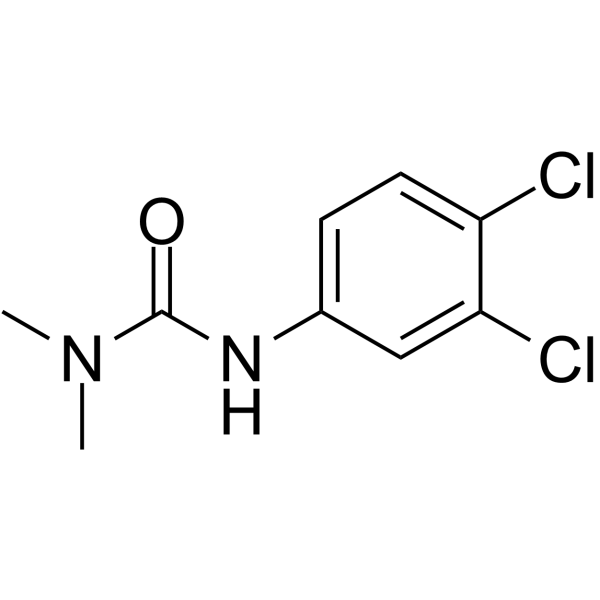
    Diuron
    2 Publications Verification

    Environmental Pollutants Reactive Oxygen Species (ROS) Herbicide MDM-2/p53 Cancer
    Diuron is an orally active phenylurea herbicide. Diuron inhibits photosynthesis in plants by blocking the formation of ATP and NADH. Diuron increases the production of ROS. Diuron increases expression of p53 in certain cell lines. Diuron has herbicidal activity against annual and perennial broadleaf weeds and grass weeds. Diuron promotes DMBA/BBN-induced bladder cancer. Diuron can be used in breast cancer research .
    Diuron
  • HY-N12422
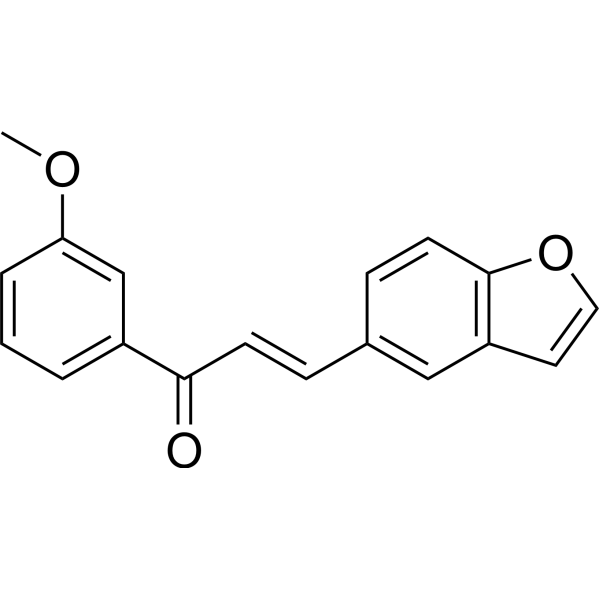
    A2AAR antagonist 2
    1 Publications Verification

    Adenosine Receptor Inflammation/Immunology Cancer
    3′-Methoxyfurano[4″,5″:3,4]chalcone (compound 2) is a selective A2AAR antagonist (IC50=33.5 nM) with high affinity. 3′-Methoxyfurano[4″,5″:3,4]chalcone is also a natural product obtained from the bark of Allium cepa L. 3′-Methoxyfurano[4″,5″:3,4]chalcone can promote T cell activation and can be used in cancer immunity research .
    A2AAR antagonist 2
  • HY-N2492

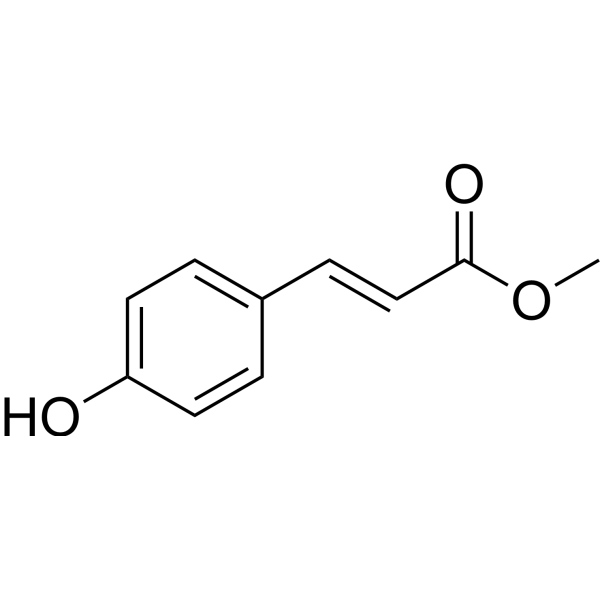
    Methyl trans-p-coumarate

    Apoptosis Interleukin Related GSK-3 Parasite Infection Cancer
    (E)-Methyl 4-coumarate (Methyl 4-hydroxycinnamate) is a phenolic compound and derivative of Cinnamic acid (HY-N0610A). (E)-Methyl 4-coumarate can be found in several plants, such as the leaves of Allium cepa and Morinda citrifolia L. (E)-Methyl 4-coumarate, when combined with Carnosic acid (HY-N0644), induces Apoptosis. (E)-Methyl 4-coumarate inhibits GSK3β activity and modulates inflammatory cytokine levels (increasing IL-10 and decreasing IL-4). (E)-Methyl 4-coumarate combined with Carnosic acid exhibits anticancer effects against acute myeloid leukemia. (E)-Methyl 4-coumarate ameliorates Plasmodium berghei NK65 infection .
    (E)-Methyl 4-coumarate
  • HY-N8685

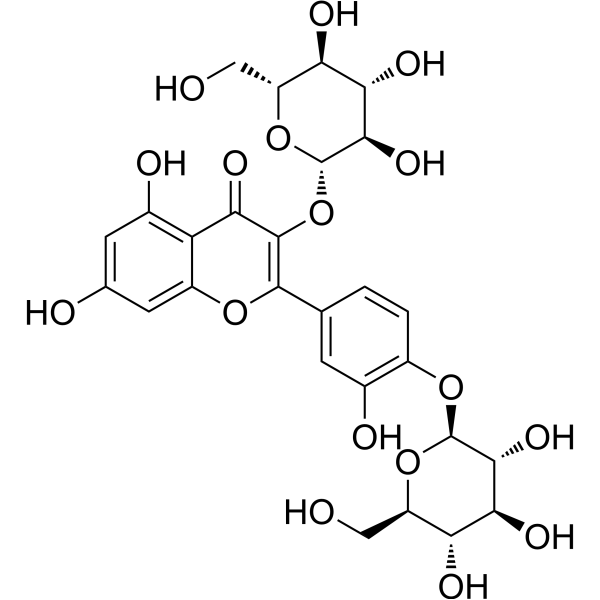
    Quercetin 3,4′-di-O-glucoside

    Others Others
    Quercetin-3,4-di-O-glucoside is a flavonoid that can be isolated from Allium cepa .
    Quercetin 3,4′-diglucoside
  • HY-W329835

    Fungal Infection
    Fenbuconazole is a triazole fungicide that has fungicidal activity through inhibiting sterol biosynthesis. Fenbuconazole is an inhibitor of human aromatase activity in human choriocarcinoma JEG-3 cell line. Fenbuconazole can result in a significant increase in DNA damage in Allium cepa root cells. Fenbuconazole significantly increases the abnormal cell frequency in vitro. Fenbuconazole exhibits ED50 of 0.21 μg/mL with M.citri and 1.01 μg/mL with C. acutatum .
    Fenbuconazole
  • HY-N12510

    Others Others
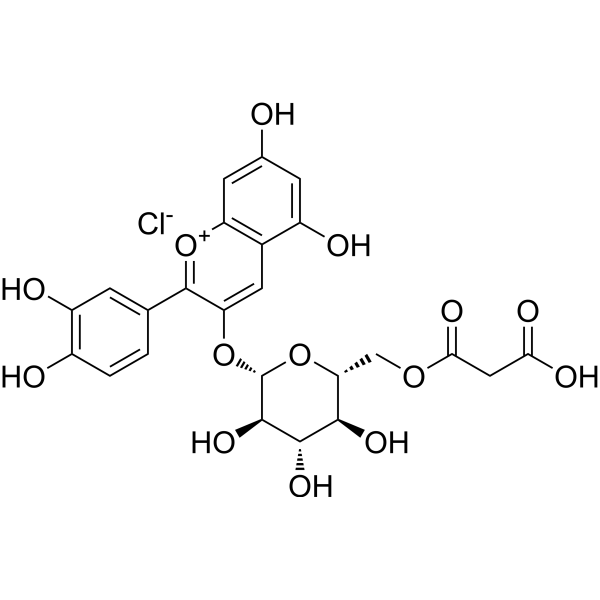
    Cyanidin 3-(6′′-malonylglucoside) (Compound 3) is an anthocyanin that can be isolated from Bulbs of Red Onion, Allium cepa L .
    Cyanidin 3-(6′′-malonylglucoside)
  • HY-N4014

    Others Others
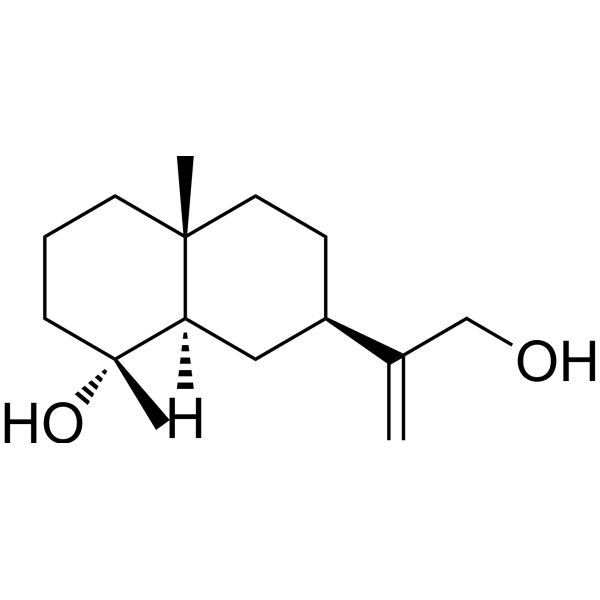
    Ilicol is a natural product isolated from the roots of Saussurea lappa Clarke. Ilicol inhibits root growth and shows IC50 values of 1.22, 2.90, 7.35, 8.07 mM against P. miliaceum , A. sativa, L. sativa , and R. sativus, respectively. Ilicol reduces Allium cepa cell division without chromosome aberration .
    Ilicol
  • HY-B1899AR

    Taurodeoxycholate sodium hydrate (Standard)

    Reference Standards G protein-coupled Bile Acid Receptor 1 Endogenous Metabolite Metabolic Disease
    (E)-Methyl 4-coumarate (Standard) is the analytical standard of (E)-Methyl 4-coumarate. This product is intended for research and analytical applications. (E)-Methyl 4-coumarate (Methyl 4-hydroxycinnamate), found in several plants, such as Allium cepa or Morinda citrifolia L. leaves. (E)-Methyl 4-coumarate cooperates with Carnosic Acid in inducing apoptosis and killing acute myeloid leukemia cells, but not normal peripheral blood mononuclear cells. Antioxidant and antimicrobial activity.
    Taurodeoxycholic acid sodium hydrate (Standard)
  • HY-N11889

    Others Others
    Isorhamnetin 3,4′-diglucoside is a flavonol diglucoside that can be isolated from red-skinned onions (Allium cepa L.) from southern Italy, shallots (Allium ascalonicum Hort.), Zea mays pollen, and flowers of Crocus chrysanthus-biflorus cultivars .
    Isorhamnetin 3,4′-diglucoside
  • HY-N11839

    Drug Derivative Others
    Quercetin 7,4′-diglucoside is a flavonol diglucoside and a derivative of Quercetin (HY-18085) that can be found in Allium cepa L. Quercetin is a natural flavonoid compound that can activate or inhibit the activity of many proteins .
    Quercetin 7,4′-diglucoside
  • HY-N11890

    Others Others
    Isorhamnetin 4′-glucoside is a flavonol monoglycoside and also a minor flavonoid component. Isorhamnetin 4′-glucoside can be isolated from red-skinned onions (Allium cepa L.) in southern Italy .
    Isorhamnetin 4′-glucoside
  • HY-N2492R

    Methyl trans-p-coumarate (Standard)

    Reference Standards Apoptosis Parasite Interleukin Related GSK-3 Infection Cancer
    (E)-Methyl 4-coumarate (Standard) is the analytical standard of (E)-Methyl 4-coumarate (HY-N2492). This product is intended for research and analytical applications. (E)-Methyl 4-coumarate (Methyl 4-hydroxycinnamate) is a phenolic compound and derivative of Cinnamic acid (HY-N0610A). (E)-Methyl 4-coumarate can be found in several plants, such as the leaves of Allium cepa and Morinda citrifolia L. (E)-Methyl 4-coumarate, when combined with Carnosic acid (HY-N0644), induces Apoptosis. (E)-Methyl 4-coumarate inhibits GSK3β activity and modulates inflammatory cytokine levels (increasing IL-10 and decreasing IL-4). (E)-Methyl 4-coumarate combined with Carnosic acid exhibits anticancer effects against acute myeloid leukemia. (E)-Methyl 4-coumarate ameliorates Plasmodium berghei NK65 infection .
    (E)-Methyl 4-coumarate (Standard)
  • HY-182089A

    Drug Intermediate Others
    γ-Glutamyl-S-(2-carboxypropyl) cysteine TFA is a chemical intermediate. γ-Glutamyl-S-(2-carboxypropyl) cysteine can be used in the synthesis of Alliin (HY-N0661) and Isoalliin (HY-111825A) .
    γ-Glutamyl-S-(2-carboxypropyl)cysteine TFA
  • HY-D0335

    Biochemical Assay Reagents Others
    Acid blue 9 diammonium is a triarylmethane dye and inducer. Acid blue 9 diammonium induces chromosomal aberrations in onion root tip meristematic cells. Acid blue 9 diammonium exhibits cytogenetic toxicity to onion root tip meristematic cells .
    Acid blue 9 diammonium

Inquiry Online

Your information is safe with us. * Required Fields.

Salutation


Country or Region *

Applicant Name *


Organization Name *

Department *


Email Address *


Product Name *

Cat. No.


Requested quantity *

Phone Number *


Remarks

Inquiry Online

Inquiry Information

Product Name:
Cat. No.:
Quantity:
MCE Japan Authorized Agent:

