1. Search Result
Search Result
Results for "

Angiotensin II human

" in MedChemExpress (MCE) Product Catalog:

34

Inhibitors & Agonists

15

Peptides

1

Inhibitory Antibodies

2

Natural
Products

1

Recombinant Proteins

6

Isotope-Labeled Compounds

3

Antibodies

Cat. No. Product Name Target Research Areas Chemical Structure
  • HY-13948
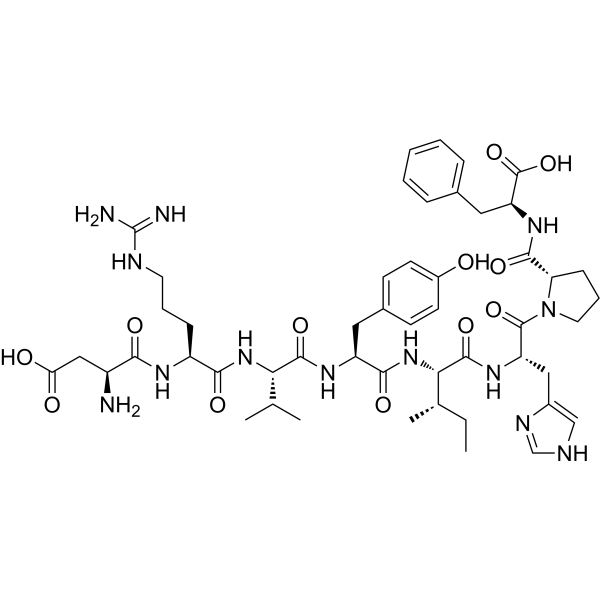
    Angiotensin II human
    Maximum Cited Publications
    222 Publications Verification

    Angiotensin II; Ang II; DRVYIHPF

    Angiotensin Receptor Apoptosis Cardiovascular Disease Infection Metabolic Disease Inflammation/Immunology Cancer
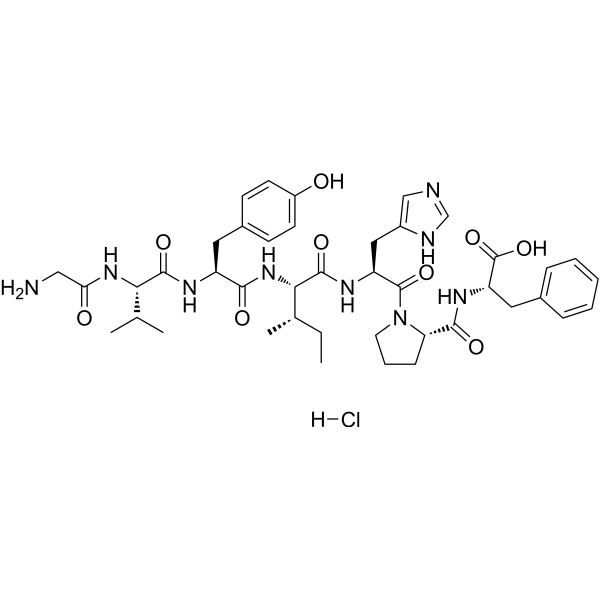
    Angiotensin II (Angiotensin II) is a vasoconstrictor and a major bioactive peptide of the renin/angiotensin system. Angiotensin II human plays a central role in regulating human blood pressure, which is mainly mediated by interactions between Angiotensin II and the G-protein-coupled receptors (GPCRs) Angiotensin II type 1 receptor (AT1R) and Angiotensin II type 2 receptor (AT2R). Angiotensin II human stimulates sympathetic nervous stimulation, increases aldosterone biosynthesis and renal actions. Angiotensin II human induces growth of vascular smooth muscle cells, increases collagen type I and III synthesis in fibroblasts, leading to thickening of the vascular wall and myocardium, and fibrosis. Angiotensin II human also induces apoptosis. Angiotensin II induces capillary formation from endothelial cells via the LOX-1 dependent redox-sensitive pathway .
    Angiotensin II human
  • HY-13948A
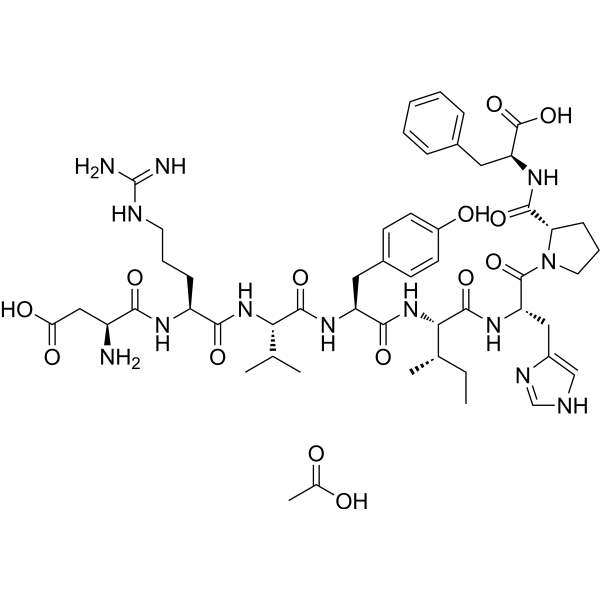
    Angiotensin II human acetate
    Maximum Cited Publications
    222 Publications Verification

    Angiotensin II acetate; Ang II acetate; DRVYIHPF acetate

    Angiotensin Receptor Apoptosis Cardiovascular Disease Infection Metabolic Disease Inflammation/Immunology Cancer
    Angiotensin II human (Angiotensin II) acetate is a vasoconstrictor and a major bioactive peptide of the renin/angiotensin system. Angiotensin II human acetate plays a central role in regulating human blood pressure, which is mainly mediated by interactions between Angiotensin II and the G-protein-coupled receptors (GPCRs) Angiotensin II type 1 receptor (AT1R) and Angiotensin II type 2 receptor (AT2R). Angiotensin II human acetate stimulates sympathetic nervous stimulation, increases aldosterone biosynthesis and renal actions. Angiotensin II human acetate induces growth of vascular smooth muscle cells, increases collagen type I and III synthesis in fibroblasts, leading to thickening of the vascular wall and myocardium, and fibrosis. Angiotensin II human acetate also induces apoptosis. Angiotensin II human acetate induces capillary formation from endothelial cells via the LOX-1 dependent redox-sensitive pathway .
    Angiotensin II human acetate
  • HY-P990117

    Integrin Cardiovascular Disease Cancer
    Anti-Mouse/Rat/Human Osteopontin/SPP1 Antibody (MPIIIB10) is a mouse-derived Osteopontin/SPP1 IgG1 κ type antibody inhibitor. Anti-Mouse/Rat/Human Osteopontin/SPP1 Antibody (MPIIIB10) blocks Angiotensin II (HY-13948)-induced DNA synthesis and collagen gel contraction in cardiac fibroblasts. Anti-Mouse/Rat/Human Osteopontin/SPP1 Antibody (MPIIIB10) significantly inhibits tumor growth in CT26 or MC38 tumors mice models .
    Anti-Mouse/Rat/Human Osteopontin/SPP1 Antibody (MPIIIB10)
  • HY-117743
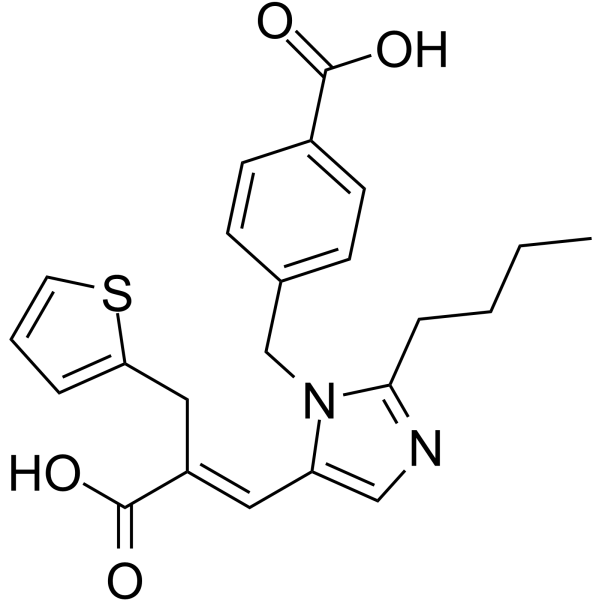
    Eprosartan
    4 Publications Verification

    SKF-108566J free base

    Angiotensin Receptor Cardiovascular Disease
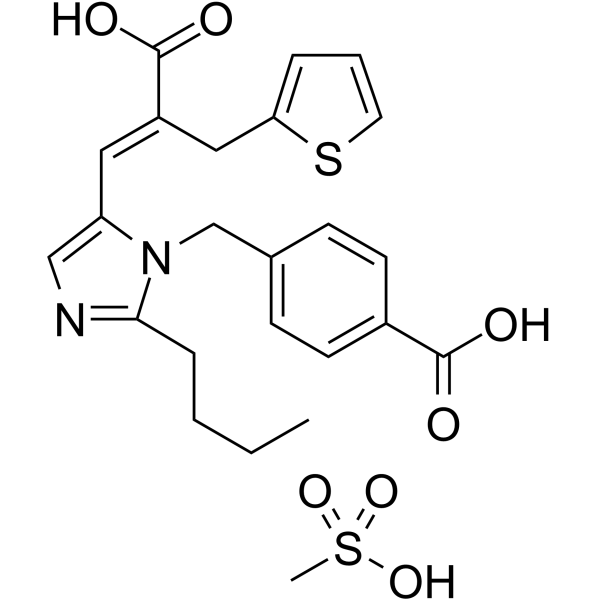
    Eprosartan (SKF-108566J free base) is a selective, competitive, nonpeptid and orally active angiotensin II receptor antagonist, used as an antihypertensive. Eprosartan binds angiotensin II receptor with IC50s of 9.2 nM and 3.9 nM in rat and human adrenal cortical membranes, respectively .
    Eprosartan
  • HY-15834A
    Eprosartan mesylate
    4 Publications Verification

    SKF-108566J

    Angiotensin Receptor Cardiovascular Disease Endocrinology
    Eprosartan mesylate (SKF-108566J) is a selective, competitive, nonpeptid and orally active angiotensin II receptor antagonist, used as an antihypertensive. Eprosartan mesylate binds angiotensin II receptor with IC50s of 9.2 nM and 3.9 nM in rat and human adrenal cortical membranes, respectively .
    Eprosartan mesylate
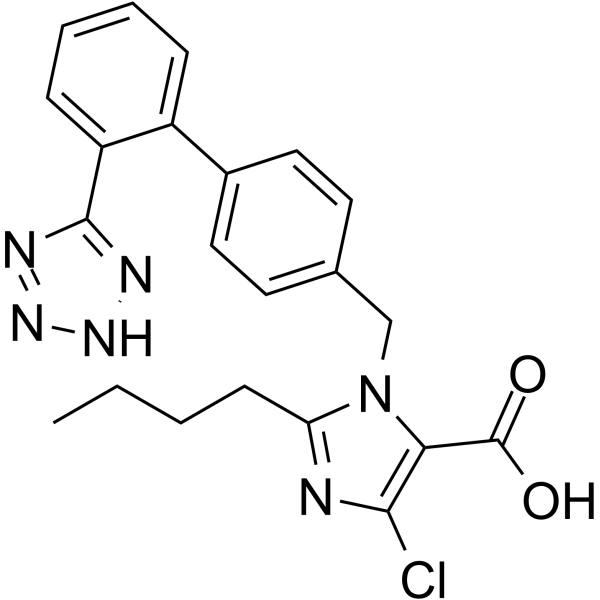
  • HY-12765

    E-3174; EXP-3174

    Drug Metabolite Angiotensin Receptor Cardiovascular Disease
    Losartan Carboxylic Acid (E-3174), an active carboxylic acid metabolite of Losartan, is an angiotensin II receptor type 1 (AT1) antagonist. The Ki values are 0.97, 0.57, 0.67 nM for rat AT1B/AT1A and human AT1, respectively. Losartan Carboxylic Acid blocks the angiotensin II-induced responses in vascular smoothmuscle cells (VSMC). Losartan Carboxylic Acid elevates plasma renin activities and reduces mean arterial pressure .
    Losartan Carboxylic Acid
  • HY-13948B
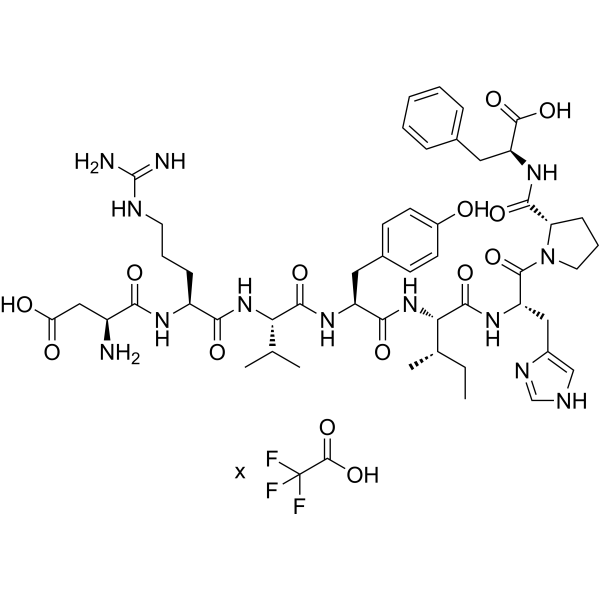
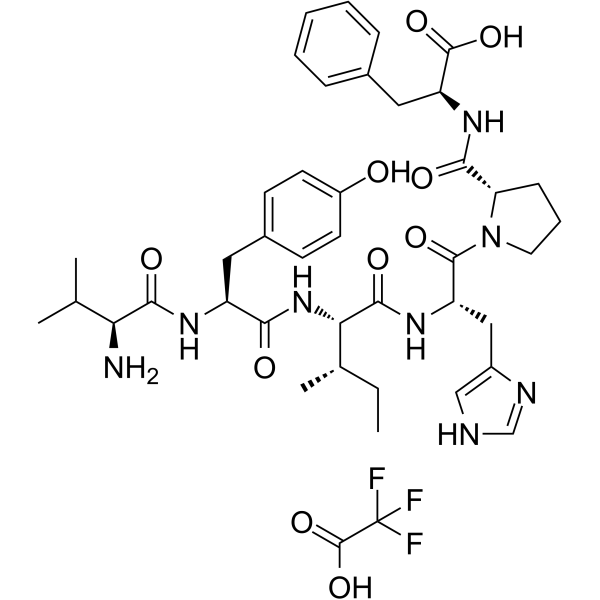
    Angiotensin II human TFA
    Maximum Cited Publications
    222 Publications Verification

    Angiotensin II TFA; Ang II TFA; DRVYIHPF TFA

    Angiotensin Receptor Apoptosis Cardiovascular Disease Metabolic Disease Cancer
    Angiotensin II human (Angiotensin II) TFA is a vasoconstrictor and a major bioactive peptide of the renin/angiotensin system. Angiotensin II human TFA plays a central role in regulating human blood pressure, which is mainly mediated by interactions between Angiotensin II and the G-protein-coupled receptors (GPCRs) Angiotensin II type 1 receptor (AT1R) and Angiotensin II type 2 receptor (AT2R). Angiotensin II human TFA stimulates sympathetic nervous stimulation, increases aldosterone biosynthesis and renal actions. Angiotensin II human TFA induces growth of vascular smooth muscle cells, increases collagen type I and III synthesis in fibroblasts, leading to thickening of the vascular wall and myocardium, and fibrosis. Angiotensin II human TFA also induces apoptosis. Angiotensin II human TFA induces capillary formation from endothelial cells via the LOX-1 dependent redox-sensitive pathway .
    Angiotensin II human TFA
  • HY-118060

    N-Valyltryptophan; Val-Trp

    Angiotensin-converting Enzyme (ACE) Calcium Channel NO Synthase Cardiovascular Disease
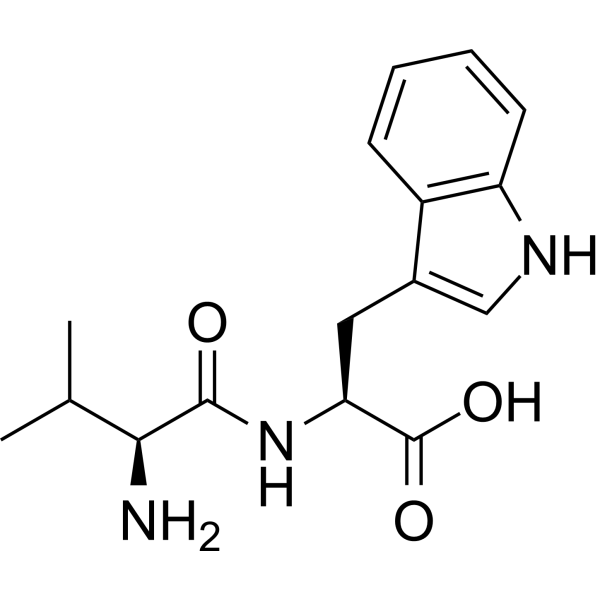
    Dipeptide 2 (N-Valyltryptophan) is an orally active, competitive angiotensin-converting enzyme (ACE) inhibitory peptide with an IC50 of 10.50 μM. Dipeptide 2 reduces intracellular Calcium ions. Dipeptide 2 significantly increases the content of NO, inhibits the production of ET-1, and induces the phosphorylation of eNOS. Dipeptide 2 decreases the systolic and diastolic blood pressure of spontaneously hypertensive rats .
    Dipeptide 2
  • HY-113248

    Endogenous Metabolite Adrenergic Receptor Reactive Oxygen Species (ROS) Cardiovascular Disease Inflammation/Immunology
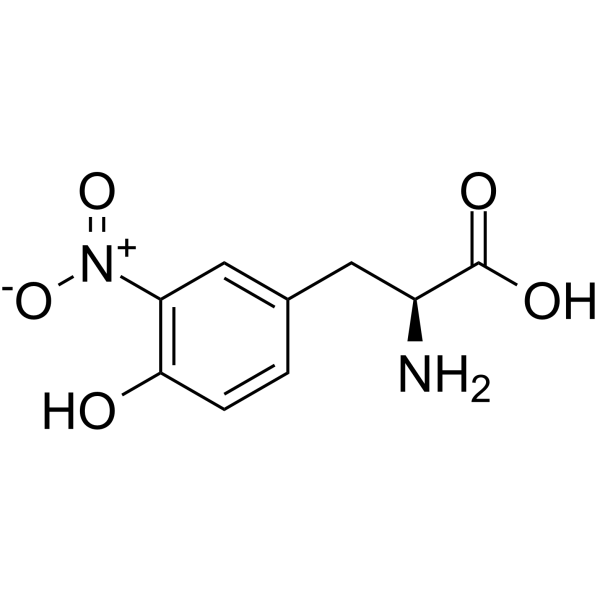
    3-Nitro-L-tyrosine serves as a biomarker of oxidative stress. 3-Nitro-L-tyrosine attenuates the pressor and vasoconstrictive effects of angiotensin II by inhibiting the α1-adrenergic receptor-mediated signaling pathway, and participates in hemodynamic regulation under pathological conditions such as inflammation and ischemia. 3-Nitro-L-tyrosine can be used in studies related to atherosclerosis, ischemia-reperfusion and sepsis .
    3-Nitro-L-tyrosine
  • HY-13948F1

    Angiotensin II, FAM-labeled ; Ang II, FAM-labeled ; DRVYIHPF, FAM-labeled

    Angiotensin Receptor Cardiovascular Disease Endocrinology Cancer
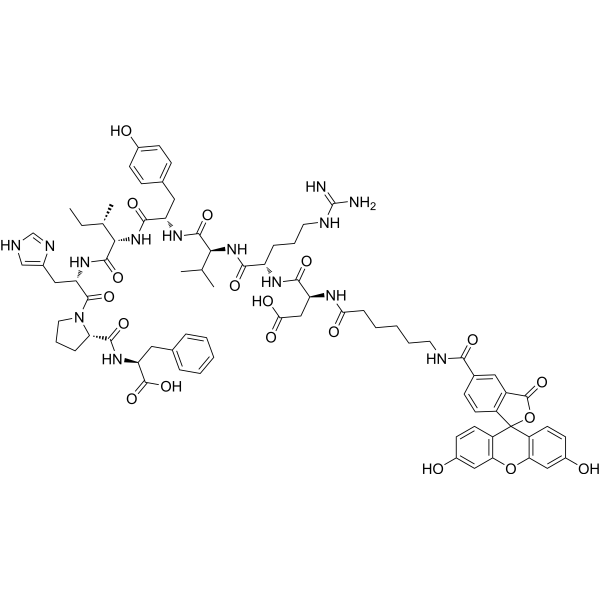
    Angiotensin II human, FAM-labeled (Angiotensin II, FAM-labeled) is a FAM labeled Angiotensin II human (HY-13948).
    Angiotensin II human, FAM-labeled
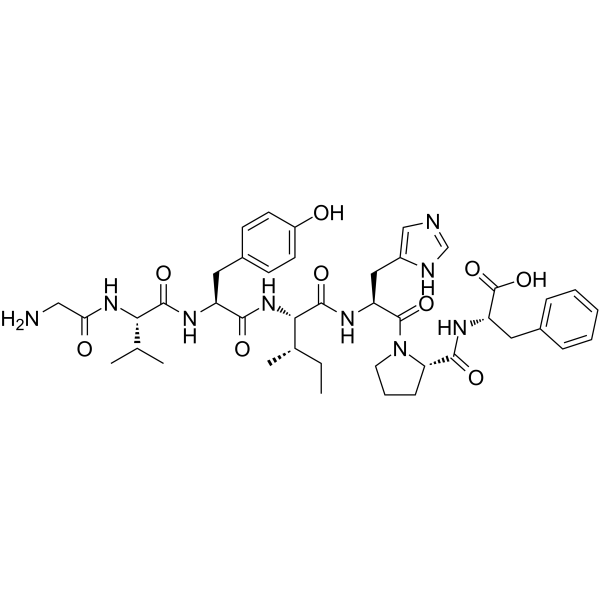
  • HY-P1769

    Angiotensin Receptor Metabolic Disease Endocrinology
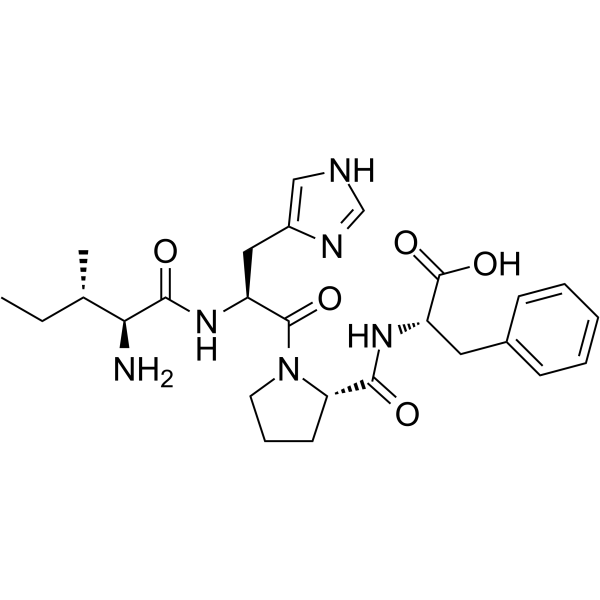
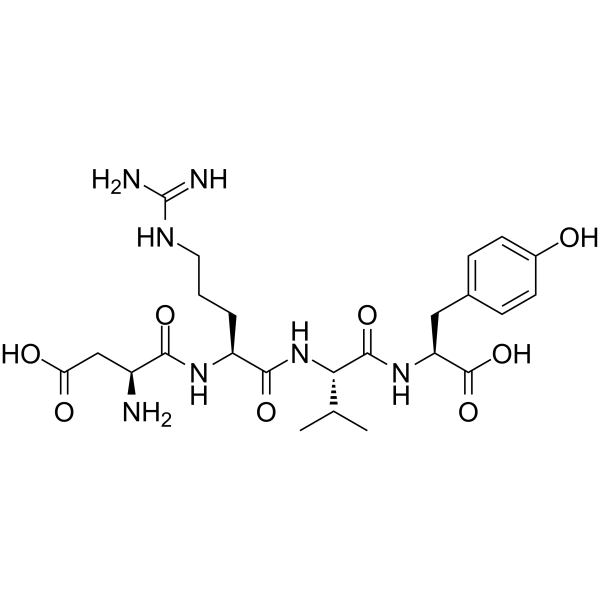
    Angiotensin II (5-8), human is an endogenous C-terminal fragment of the peptide vasoconstrictor angiotensin II . Angiotensin II binds the AT II type 1 (AT1) receptor, stimulating GPCRs in vascular smooth muscle cells and increasing intracellular Ca 2+ levels. Angiotensin II also acts at the Na +/H + exchanger in the proximal tubules of the kidney .
    Angiotensin II (5-8), human
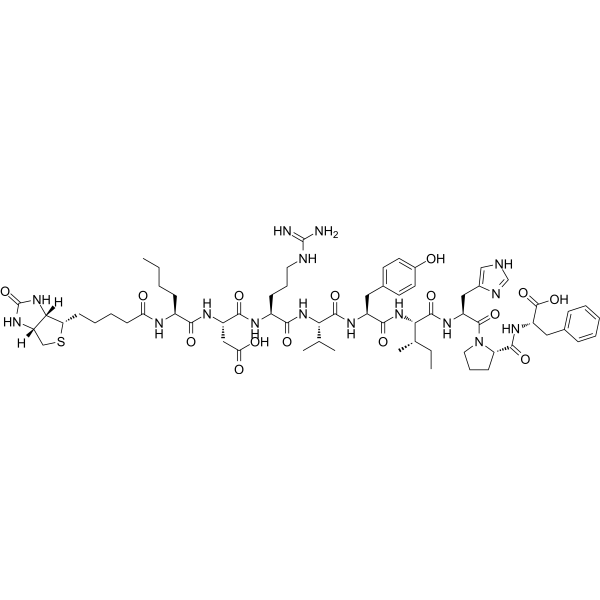
  • HY-13948F

    Biotin-Ahx-Angiotensin II; Biotin-Ahx-Ang II; Biotin-Ahx-DRVYIHPF

    Angiotensin Receptor Others
    Biotin-Ahx-Angiotensin II human (Biotin-Ahx-Angiotensin II; Biotin-Ahx-Ang II; Biotin-Ahx-DRVYIHPF) is a biological active peptide. (biotin labeled HY-13948)
    Biotin-Ahx-Angiotensin II human
  • HY-P1515A
    Angiotensin II (3-8), human TFA
    2 Publications Verification

    Angiotensin Receptor Cardiovascular Disease Endocrinology
    Angiotensin II (3-8), human (TFA) is a less effective agonist at the angiotensin AT1 receptor.
    Angiotensin II (3-8), human TFA
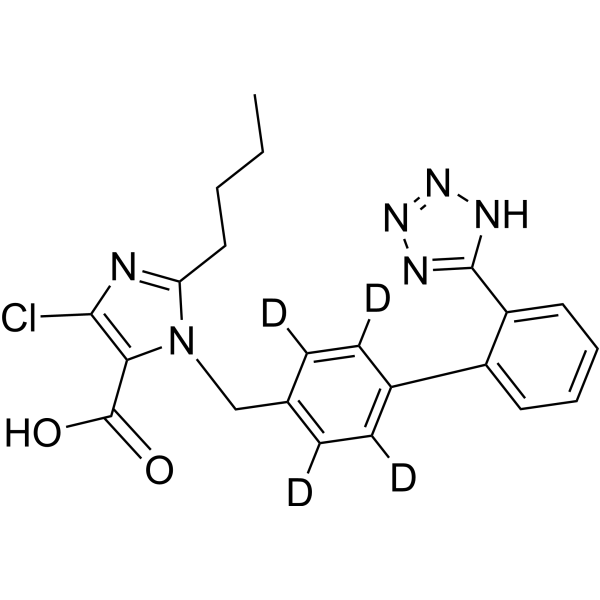
  • HY-12765S

    E-3174 d4; EXP-3174 d4

    Angiotensin Receptor Cardiovascular Disease Endocrinology Cancer
    Losartan-d4 carboxylic acid (E-3174-d4) is the deuterium labeled Losartan Carboxylic Acid (HY-12765). Losartan Carboxylic Acid (E-3174), an active carboxylic acid metabolite of Losartan, is an angiotensin II receptor type 1 (AT1) antagonist. The Ki values are 0.97, 0.57, 0.67 nM for rat AT1B/AT1A and human AT1, respectively. Losartan Carboxylic Acid blocks the angiotensin II-induced responses in vascular smoothmuscle cells (VSMC). Losartan Carboxylic Acid elevates plasma renin activities and reduces mean arterial pressure.
    Losartan-d4 (carboxylic acid)
  • HY-P3136

    TRV120055

    Angiotensin Receptor ERK Cardiovascular Disease
    TRV055 (TRV120055) is a G protein-biased agonist of angiotensin II type 1 receptors (AT1Rs). TRV120055 induces fibroblast proliferation, overexpression of collagen I and α-SMA, and stress fibre formation in human cardiac fibroblasts. TRV055 activates AT1 receptor/Gαq-mediated signaling pathways, upregulates TGF-β1 and p-ERK1/2. TRV055 induces collagen secretion in adult rat myofibroblasts at a level comparable to Ang II. TRV055 can be used to study the role of G protein-biased signaling of AT1Rs in regulating fibrotic responses [1]
    TRV055
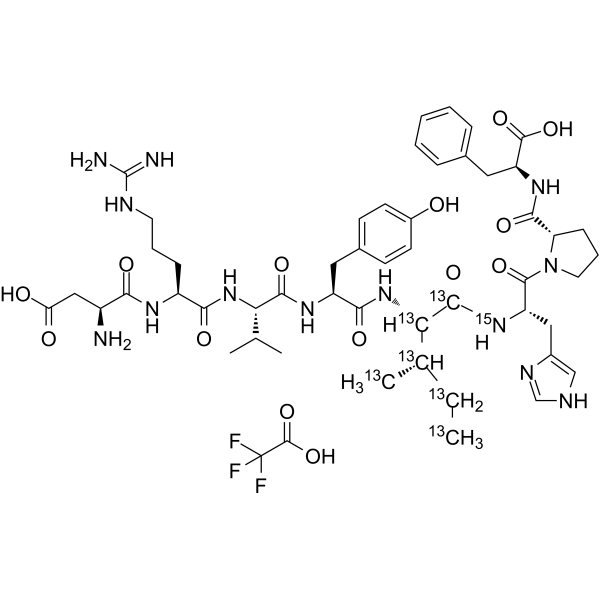
  • HY-13948BS

    Angiotensin II-13C6,15N TFA; Ang II-13C6,15N TFA; DRVY(I-13C6,15N)HPF TFA

    Isotope-Labeled Compounds Cancer
    Angiotensin II human- 13C6, 15N TFA (Ang II- 13C6, 15N TFA) is 13C- and 15N-labeled Angiotensin II human (TFA) (HY-13948B). Angiotensin II human (Angiotensin II) TFA is a vasoconstrictor and a major bioactive peptide of the renin/angiotensin system. Angiotensin II human TFA plays a central role in regulating human blood pressure, which is mainly mediated by interactions between Angiotensin II and the G-protein-coupled receptors (GPCRs) Angiotensin II type 1 receptor (AT1R) and Angiotensin II type 2 receptor (AT2R). Angiotensin II human TFA stimulates sympathetic nervous stimulation, increases aldosterone biosynthesis and renal actions .
    Angiotensin II human-13C6,15N TFA
  • HY-P3136A

    TRV120055 hydrochloride

    Angiotensin Receptor Cardiovascular Disease
    TRV055 (TRV120055) hydrochloride is a G protein-biased agonist of angiotensin II type 1 receptors (AT1Rs). TRV055 hydrochloride induces fibroblast proliferation, overexpression of collagen I and α-SMA, and stress fibre formation in human cardiac fibroblasts. RV055 hydrochloride activates AT1 receptor/Gαq-mediated signaling pathways, upregulates TGF-β1 and p-ERK1/2. RV055 hydrochloride induces collagen secretion in adult rat myofibroblasts at a level comparable to Ang II. RV055 hydrochloride can be used to study the role of G protein-biased signaling of AT1Rs in regulating fibrotic responses [1]
    TRV055 hydrochloride
  • HY-P1032S2

    Isotope-Labeled Compounds Endogenous Metabolite Others
    Angiotensin I-13C6,15N (human, mouse, rat) TFA is 13C and 15N labeled Angiotensin I (human, mouse, rat) TFA. Angiotensin I-13C6,15N (human, mouse, rat) TFA is a precursor of angiotensin II and is cleaved into angiotensin II by angiotensin converting enzyme (ACE) .
    Angiotensin I-13C6,15N (human, mouse, rat) TFA
  • HY-P1792

    Angiotensin Receptor Metabolic Disease Endocrinology
    Angiotensin II (1-4), human is an endogenous peptide produced from AT I by angiotensin-converting-enzyme (ACE). Angiotensin II binds the AT II type 1 (AT1) receptor, stimulating GPCRs in vascular smooth muscle cells and increasing intracellular Ca 2+ levels. Angiotensin II also acts at the Na +/H + exchanger in the proximal tubules of the kidney .
    Angiotensin II (1-4), human
  • HY-P1515

    Angiotensin Receptor Cardiovascular Disease Endocrinology
    Angiotensin II (3-8), human is a less effective agonist at the angiotensin AT1 receptor.
    Angiotensin II (3-8), human
  • HY-P1792A

    Angiotensin Receptor Metabolic Disease Endocrinology
    Angiotensin II (1-4), human (TFA) is an endogenous peptide produced from AT I by angiotensin-converting-enzyme (ACE). Angiotensin II binds the AT II type 1 (AT1) receptor, stimulating GPCRs in vascular smooth muscle cells and increasing intracellular Ca 2+ levels. Angiotensin II also acts at the Na +/H + exchanger in the proximal tubules of the kidney .
    Angiotensin II (1-4), human TFA
  • HY-108120

    Angiotensin Receptor Cardiovascular Disease
    L-162537 is a competitive human angiotensin II receptor 1 (AT1) and receptor 2 (AT2) antagonist with an IC50=1.7 nM for AT1. L-162537 inhibits Ang II-mediated vasoconstriction, blood pressure elevation and related pathological signaling pathways. L-162537 is promising for research of angiotensin II-related cardiovascular diseases such as hypertension .
    L-162537
  • HY-146410

    Angiotensin Receptor Others
    AT2R antagonist 1 (compound 21) is a potent and high selective AT2R (angiotensin II AT2 receptor) ligand. AT2R antagonist 1 exhibits a fair AT2R affinity, with a Ki of 29 nM. AT2R antagonist 1 also inhibits common agent-metabolizing CYP enzymes. AT2R antagonist 1 shows high stability in human, rat and mouse liver microsomes .
    AT2R antagonist 1
  • HY-P1032F

    Endogenous Metabolite Endocrinology
    Biotinyl-Angiotensin I (human, mouse, rat) is biotin-labeled Angiotensin I . Angiotensin I (human, mouse, rat) is the precursor to the vasoconstrictor peptide angiotensin II, cleaved by the angiotensin-converting enzyme (ACE) .
    Biotinyl-Angiotensin I (human, mouse, rat)
  • HY-117743S

    Isotope-Labeled Compounds Angiotensin Receptor Cardiovascular Disease
    Eprosartan-d3 is the deuterium labeled Eprosartan. Eprosartan (SKF-108566J free base) is a selective, competitive, nonpeptid and orally active angiotensin II receptor antagonist, used as an antihypertensive. Eprosartan binds angiotensin II receptor with IC50s of 9.2 nM and 3.9 nM in rat and human adrenal cortical membranes, respectively .
    Eprosartan-d3
  • HY-15834AR

    SKF-108566J (Standard)

    Reference Standards Angiotensin Receptor Cardiovascular Disease Endocrinology
    Eprosartan (mesylate) (Standard) is the analytical standard of Eprosartan (mesylate). This product is intended for research and analytical applications. Eprosartan mesylate (SKF-108566J) is a selective, competitive, nonpeptid and orally active angiotensin II receptor antagonist, used as an antihypertensive. Eprosartan mesylate binds angiotensin II receptor with IC50s of 9.2 nM and 3.9 nM in rat and human adrenal cortical membranes, respectively .
    Eprosartan mesylate (Standard)
  • HY-117743R

    SKF-108566J free base (Standard)

    Reference Standards Angiotensin Receptor Cardiovascular Disease
    Eprosartan (Standard) is the analytical standard of Eprosartan. This product is intended for research and analytical applications. Eprosartan (SKF-108566J free base) is a selective, competitive, nonpeptid and orally active angiotensin II receptor antagonist, used as an antihypertensive. Eprosartan binds angiotensin II receptor with IC50s of 9.2 nM and 3.9 nM in rat and human adrenal cortical membranes, respectively .
    Eprosartan (Standard)
  • HY-117743S1

    SKF-108566J free base-d6

    Angiotensin Receptor Isotope-Labeled Compounds Cardiovascular Disease
    Eprosartan-d6 is deuterated labeled Eprosartan (HY-117743). Eprosartan (SKF-108566J free base) is a selective, competitive, nonpeptid and orally active angiotensin II receptor antagonist, used as an antihypertensive. Eprosartan binds angiotensin II receptor with IC50s of 9.2 nM and 3.9 nM in rat and human adrenal cortical membranes, respectively .
    Eprosartan-d6
  • HY-12765S1

    Isotope-Labeled Compounds Angiotensin Receptor Cardiovascular Disease
    Losartan carboxylic acid-d4 (hydrochloride) is deuterium labeled Losartan Carboxylic Acid. Losartan Carboxylic Acid (E-3174), an active carboxylic acid metabolite of Losartan, is an angiotensin II receptor type 1 (AT1) antagonist. The Ki values are 0.97, 0.57, 0.67 nM for rat AT1B/AT1A and human AT1, respectively. Losartan Carboxylic Acid blocks the angiotensin II-induced responses in vascular smoothmuscle cells (VSMC). Losartan Carboxylic Acid elevates plasma renin activities and reduces mean arterial pressure .
    Losartan carboxylic acid-d4 hydrochloride
  • HY-12765R

    E-3174 (Standard); EXP-3174 (Standard)

    Drug Metabolite Reference Standards Angiotensin Receptor Cardiovascular Disease
    Losartan Carboxylic Acid (Standard) is the analytical standard of Losartan Carboxylic Acid. This product is intended for research and analytical applications. Losartan Carboxylic Acid (E-3174), an active carboxylic acid metabolite of Losartan, is an angiotensin II receptor type 1 (AT1) antagonist. The Ki values are 0.97, 0.57, 0.67 nM for rat AT1B/AT1A and human AT1, respectively. Losartan Carboxylic Acid blocks the angiotensin II-induced responses in vascular smoothmuscle cells (VSMC). Losartan Carboxylic Acid elevates plasma renin activities and reduces mean arterial pressure [4].
    Losartan Carboxylic Acid (Standard)
  • HY-114284

    Angiotensin Receptor Cardiovascular Disease
    L-163958 is an efficient, orally active, balanced angiotensin II receptor (AII receptor) antagonist. L-163958 has balanced high affinity for AT1 and AT2, with its IC50 values being 0.16, 0.12, 0.50, and 0.64 nM in rabbit aorta (AT1), rat midbrain (AT2), human adrenal gland (AT1), and human adrenal gland (AT2), respectively. L-163958 has a strong inhibitory effect on the pressor activity in rats. L-163958 can be used for the study of hypertension and related cardiovascular diseases .
    L-163958
  • HY-76652

    Renin Cardiovascular Disease Inflammation/Immunology
    VTP-27999 Hydrochloride is an orally active renin inhibitor. VTP-27999 Hydrochloride functionally inhibits renin and acid-activated prorenin, suppresses plasma renin activity and modulates plasma and urinary aldosterone levels. VTP-27999 Hydrochloride reduces mean arterial blood pressure, induces plasma renin concentration increases, decreases plasma angiotensin II levels and enhances renin immunoreactivity. VTP-27999 (Hydrochloride) can be used for the research of hypertension and chronic renal disease .
    VTP-27999 (Hydrochloride)
  • HY-125094

    Angiotensin Receptor Cardiovascular Disease
    L-162782 is a high affinity AT1 receptor ligand for rat and human wild-type AT1 with IC50 values of 28.5 and 24.6 nM, respectively. L-162782 acts as a partial agonist (EC50 ≈ 30 nM) and insurmountable antagonist (IC50 = 6.5 μM) on wild-type rat AT1 receptors in COS-7 cells. L-162782 reduces Angiotensin II (HY-13948)-induced phosphatidylinositol turnover. L-162782 can be used for hypertension research .
    L-162782
  • HY-100113A

    AT2 receptor agonist C21 hydrochloride

    Angiotensin Receptor p38 MAPK TGF-β Receptor TGF-beta/Smad MMP Cardiovascular Disease Neurological Disease Inflammation/Immunology
    Buloxibutid (AT2 receptor agonist C21) hydrochloride is an orally active, selective angiotensin II type 2 receptor (AT2R) agonist, with a Ki value of 0.4 nM for porcine AT2R. Buloxibutid hydrochloride exerts vasodilatory, anti-inflammatory, antifibrotic (promoting the expression of collagenase MMP-13) and tissue repair effects mainly by activating the NO/cGMP pathway, inhibiting the pro-proliferative MAPK signaling, and suppressing the pro-fibrotic TGF-β/Smad pathway and inflammatory NF-κB pathway. Buloxibutid hydrochloride can be used in research related to idiopathic pulmonary fibrosis, hypertension, systemic sclerosis and other conditions .
    Buloxibutid hydrochloride

Inquiry Online

Your information is safe with us. * Required Fields.

Salutation


Country or Region *

Applicant Name *


Organization Name *

Department *


Email Address *


Product Name *

Cat. No.


Requested quantity *

Phone Number *


Remarks

Inquiry Online

Inquiry Information

Product Name:
Cat. No.:
Quantity:
MCE Japan Authorized Agent:

