1. Search Result
Search Result
Results for "

Apis mellifera

" in MedChemExpress (MCE) Product Catalog:

10

Inhibitors & Agonists

1

Peptides

4

Natural
Products

Cat. No. 상품명 Target 연구분야 Chemical Structure
  • HY-128030

    Others Endocrinology
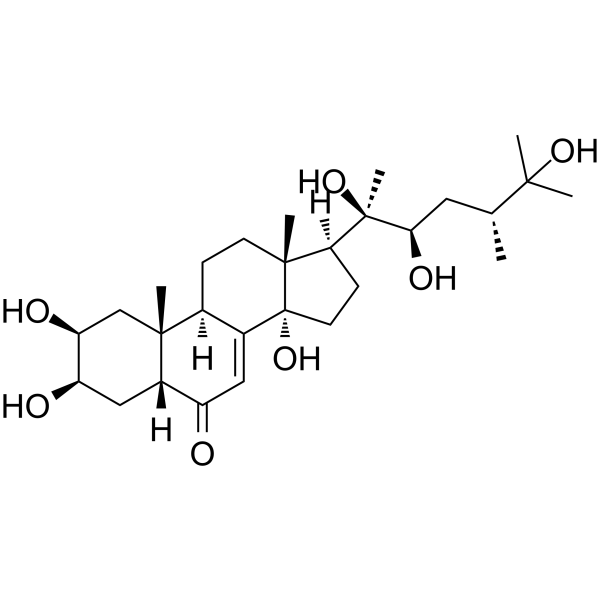
    Makisterone A, a 28-carbon moulting hormone, has been identified as the major free pupal ecdysteroid in the honey bee, Apis mellifera .
    Makisterone A
  • HY-N8491A

    Others Others
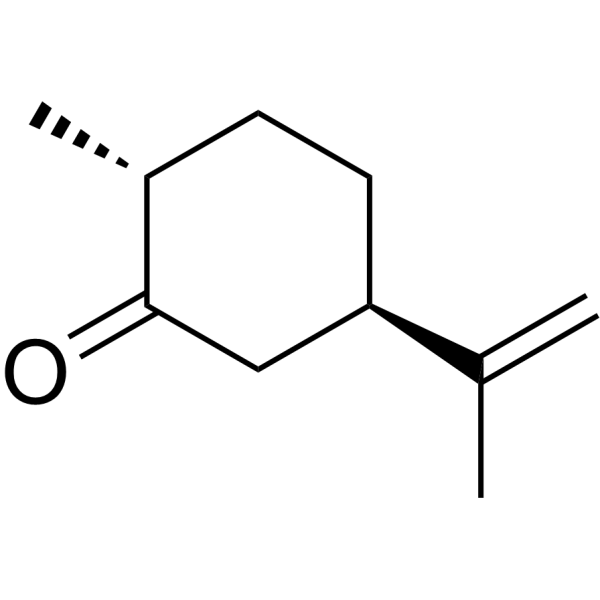
    (+)-Dihydrocarvone elicits strong antennal responses of A. mellifera. (+)-Dihydrocarvone influences bee foraging preference for tomato .
    (+)-Dihydrocarvone
  • HY-W339331

    NNI-0001

    Insecticide Calcium Channel Reactive Oxygen Species (ROS) Apoptosis Infection Metabolic Disease
    Flubendiamide (NNI-0001) is an orally active phthalic diamide insecticide that acts by targeting insect ryanodine receptors (RyRs), causing insect muscle dysfunction, paralysis and death. Flubendiamide disrupts molting, metamorphosis and reproductive processes, induces oxidative stress by increasing the levels of ROS/RNS, MDA and 8OHdG and decreasing the levels of SOD, CAT and GST, activates the CncC/Maf apoptosis pathway, impairs calcium homeostasis, promotes adipogenesis, increases triglyceride accumulation, and upregulates the expression of regulatory factors for adipocyte differentiation and adipogenesis .
    Flubendiamide
  • HY-B2021

    Insecticide Neurological Disease
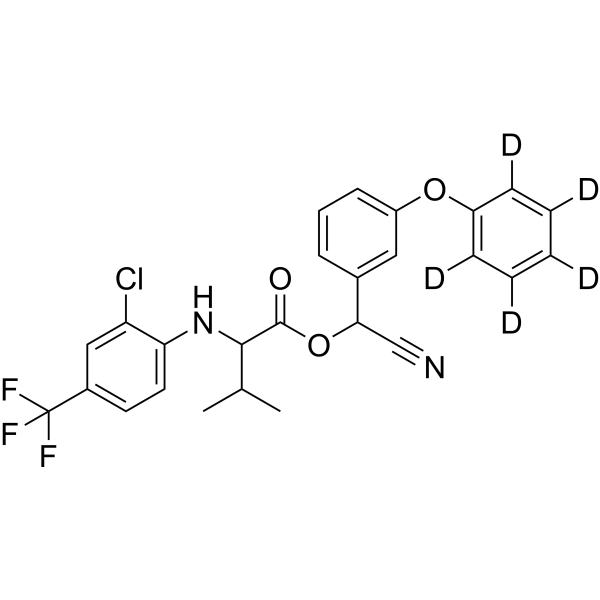
    τ-Fluvalinate is an insecticide and in-hive miticide, with its mechanism involving interfering with nervous systems. τ-Fluvalinate binds to the open state of Varroa destructor (VdNaV1) and Apis mellifera (AmNaV1) voltage-dependent sodium channels, with EC50 values of 160 nM and 60 nM respectively. τ-Fluvalinate has higher affinity for AmNaV1, which causes sublethal toxicity to honeybees. τ-Fluvalinate can be applied for research on Varroa destructor infestation in honeybee colonies .
    τ-Fluvalinate
  • HY-W714006

    Reactive Oxygen Species (ROS) Metabolic Disease
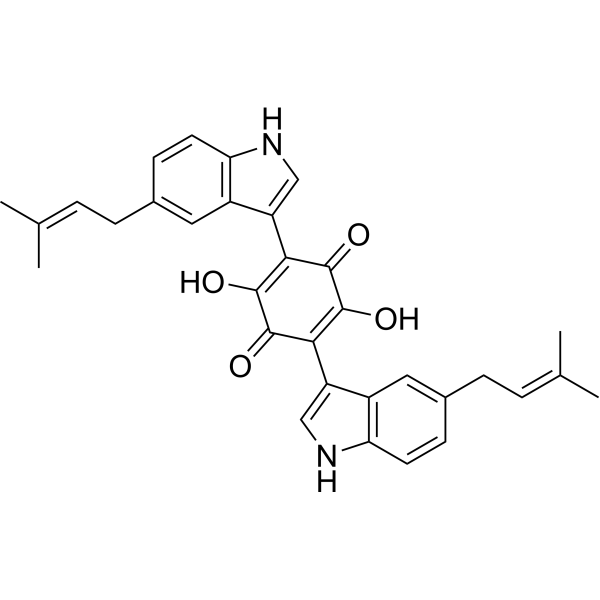
    Cochliodinol (compound 1) is a metabolite derived from the Apis mellifera ligustica. Cochliodinol has strong free radical scavenging activity of 2, 2-diphenyl-1-picrohydrazine (DPPH) (IC50=3.06 μg/mL) .
    Cochliodinol
  • HY-B0827B

    (S)-MTI-446

    nAChR Parasite Infection
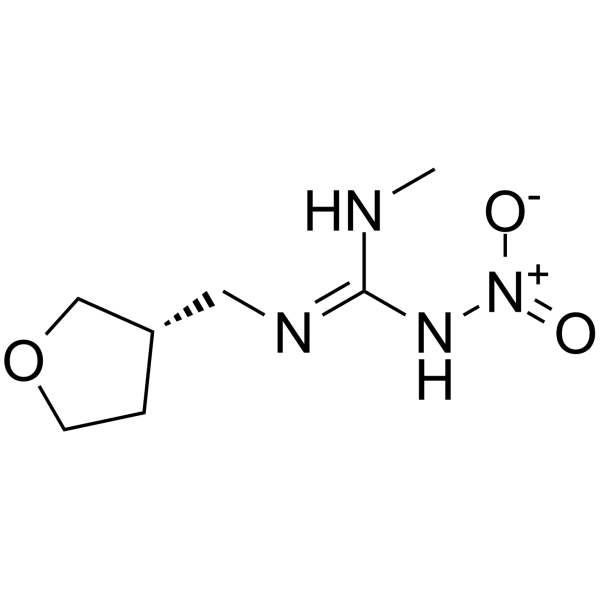
    (S)-Dinotefuran ((S)-MTI-446), a neonicotinoid pesticide, is toxic by binding to α8 subunit of nAChR of honeybee Apis mellifera (Apis mellifera Linnaeus). (S)-Dinotefuran shows more toxic than R-dinotefuran to honeybee Apis mellifera .
    (S)-Dinotefuran
  • HY-P3029D

    Biochemical Assay Reagents Metabolic Disease
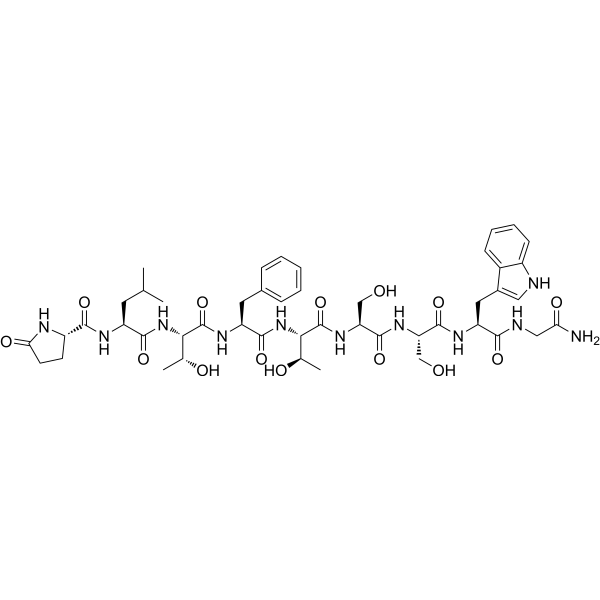
    Phospholipase A2, Honey bee venom (Apis mellifera) (EC 3.1.1.4) hydrolyzes the β-ester bond of zwitterionic glycerophospholipids. Preferred substrates are phosphatidylcholine, phosphatidylethanolamine, and their plasmalogen analogues.
    Phospholipase A2, Honey bee venom (Apis mellifera)
  • HY-W710697

    Triclopyr 2-butoxyethylester

    Herbicide Others
    Triclopyr ester (Triclopyr 2-butoxyethylester) is a bioactive substance with activity in controlling harmful woody plants. Triclopyr ester showed toxicity to honeybees (Apis mellifera) in greenhouse trials. Triclopyr ester in combination with other herbicides is effective in removing the canopy of plants such as honey trees and whitebrush. Triclopyr ester can quickly assess its weeding effectiveness when treating trees in greenhouses, providing potential treatment options for field experiments .
    Triclopyr ester
  • HY-181985

    Insecticide Infection
    Insecticidal agent 30 is an orally active insecticidal agent. Insecticidal agent 30 induces rapid contact mortality in adult Brassicogethes aeneus, achieves 100% 24-hour contact mortality against Brassicogethes aeneus, and exhibits moderate insecticidal activity against Drosophila melanogaster. Insecticidal agent 30 can be used for the research of pollen beetle (brassicogethes aeneus) infestation .
    Insecticidal agent 30
  • HY-N18016

    Hesperitin-5,7-dimethyl-ether

    Drug Derivative Others
    4'-Hydroxy-5,7,3'-trimethoxyflavanone (Hesperitin-5,7-dimethyl-ether) (Compound 13) is an O-methylated flavanone and a derivative of Hesperetin (HY-N0168) .
    4'-Hydroxy-5,7,3'-trimethoxyflavanone

온라인 문의

Your information is safe with us. * Required Fields.

호칭


Country or Region *

고객명 *


회사명 *

Department *


메일주소 *


상품명 *

Cat. No.


Requested quantity *

전화번호 *


비고

온라인 문의

Inquiry Information

상품명:
Cat. No.:
수량:
MCE Japan Authorized Agent:

