




23 Results for "

Asia

" in MedChemExpress (MCE) Product Catalog:
Products (23)

23 Results for "Asia" in MCE Product Catalog:

10
10 Publications Verification
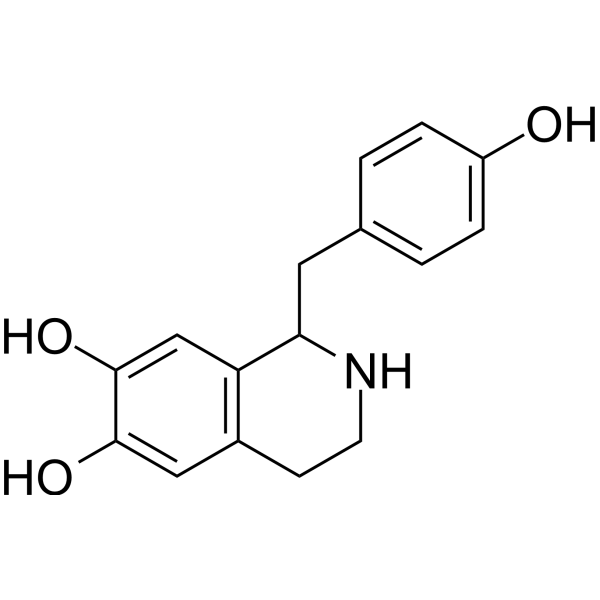
Cat. No.: HY-N2037
CAS No.: 5843-65-2
Synonyms: Norcoclaurine; Demethyl-Coclaurine
Higenamine (Norcoclaurine), a β2-AR agonist with antioxidant capability, is a key component of the Chinese herb aconite root that prescribes for treating symptoms of heart failure in the oriental Asian countries. Higenamine is also a α1-adrenergic receptor antagonist with hypotensive effect. is a selective LSD1 inhibitor (IC50=1.47 μM) that can be isolated from aconite. Higenamine hydrochloride has anti-inflammatory and antibacterial activity. Higenamine protects myocyte Apoptosis and ischemia/reperfusion (I/R) injury through selective activation of beta2-adrenergic receptor (β2-AR). Higenamine also reduces I/R-induced myocardial infarction in mice. Higenamine can attenuate IL-1β-induced Apoptosis through ROS-mediated PI3K/Akt signaling pathway. Higenamine protects brain cells from oxygen deprivation. Higenamine can promote bone formation in osteoporosis through the SMAD2/3 pathway. Higenamine can be used to study cancer, inflammation, cardiorenal syndrome and other diseases .
loading...
    loading...
2
2 Cited Publications
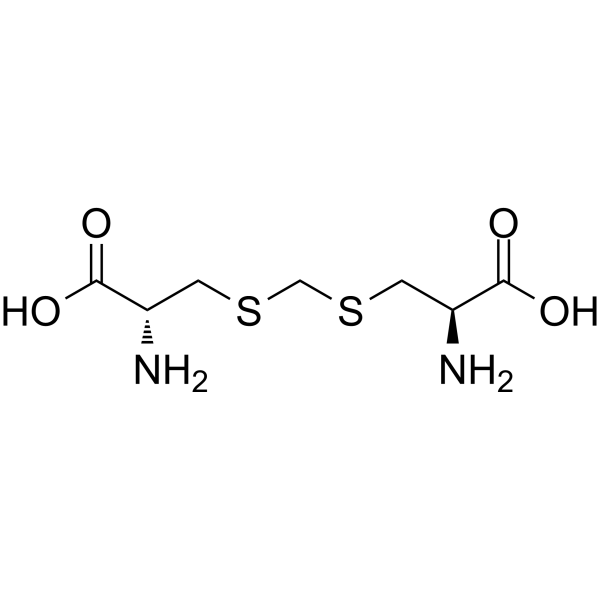
Cat. No.: HY-125923
CAS No.: 498-59-9
Pureté:  ≥98.0%
Djenkolic acid is a sulfur-containing amino acid. Djenkolic acid can be isolated from the djenkol beans of the Southeast Asian plant Archidendron jiringa. Djenkolic acid de-inhibits the SO4 2- uptake system in Pseudomonas fluorescens. Djenkolic acid causes supersaturation of the urinary system with djenkolic acid crystals, leading to urinary tract obstruction and acute kidney injury .
loading...
    loading...
2
2 Cited Publications
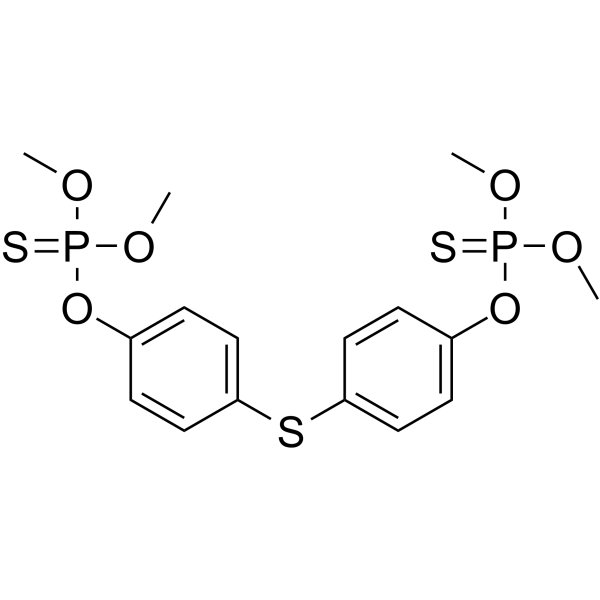
Cat. No.: HY-B1120
CAS No.: 3383-96-8
Synonyms: Temefos
Domaines de recherche:  

Infection

Temephos (Temefos) is an orally active, blood-brain barrier-permeable organophosphate insecticide and AChE inhibitor. By irreversibly inhibiting AChE to induce cholinergic overactivation, Temephos effectively blocks larval development of Aedes aegypti (yellow fever mosquito) and Aedes albopictus (Asian tiger mosquito), and is commonly used in studies related to Dengue Virus, Zika Virus and other relevant pathogens. Temephos exhibits genotoxicity and neurodevelopmental toxicity, and may also cause liver injury, reproductive system abnormalities and cholinergic poisoning symptoms in mammals. Temephos tends to accumulate in adipose tissues and aquatic organisms, and is excreted via feces after metabolism through oxidation and hydrolysis. Note that CYP-mediated metabolic detoxification may reduce the actual larvicidal efficacy of Temephos against some mosquito species. Temephos can be used in research related to dengue fever, Zika virus disease, chikungunya and dracunculiasis .
loading...
    loading...
Cat. No.: HY-P1630
CAS No.: 172998-24-2
Target:  

Bacterial

Domaines de recherche:  

Infection

Buforin II, derived from buforin I, a protein isolated from the stomach of the Asian toad Bufo bufo gargarizans, is a potent antimicrobial peptide. Buforin II has antimicrobial activity against a broad spectrum of Gram-positive and Gram-negative bacteria .
loading...
    loading...
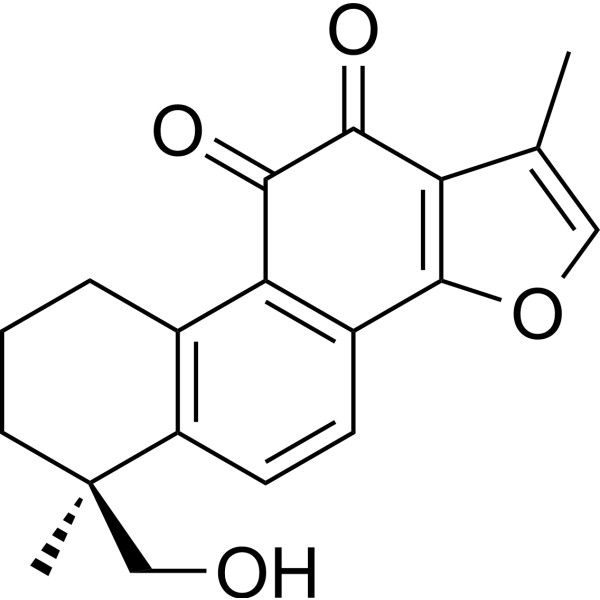
Cat. No.: HY-N1179
CAS No.: 17397-93-2
Tanshinone IIB is a major active constituent of the roots of Salvia miltiorrhiza (Danshen) widely used for the research of stroke and coronary heart disease in Asian countries. Tanshinone IIB has a neuroprotective effect via inhibition of apoptosis .
loading...
    loading...
Cat. No.: HY-N10220
CAS No.: 125600-53-5
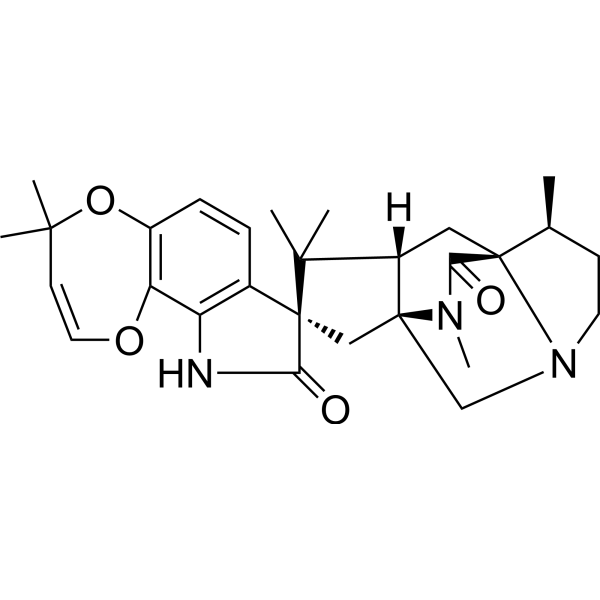
Paraherquamide E is a paraherquamide alkaloid and 14C-deshydroxy paraherquamide analog found in Aspergillus aculeatus GC-147‑5 and Penicillium charlesii, with insecticidal and reproductive toxicant activity, high selectivity, and negligible toxicity to nontarget ladybugs .Paraherquamide E disrupts fatty acid synthesis, inhibits vitellogenin production, alters metabolic homeostasis, induces ovarian abnormalities, and causes Asian citrus psyllid mortality, while remaining inactive against Asian citrus psyllid cholinergic systems .
loading...
    loading...
Cat. No.: HY-P99867
CAS No.: 1204390-13-5
Synonyms: MEDI 573

Target:  

Inhibitory Antibodies

Domaines de recherche:  

Cancer

Dusigitumab is a fully human IgG2λ monoclonal antibody that targets IGF-1 and IGF-2 with picomolar binding affinity. Dusigitumab blocks IGF-1 and IGF-2-induced phosphorylation of IGF-1R as well as activation of IR-A, thereby inhibiting the activation of downstream signaling pathways. Dusigitumab is applicable to research related to advanced solid tumors and hormone receptor-positive metastatic breast cancer .
loading...
    loading...
Cat. No.: HY-W585959
CAS No.: 62235-06-7
(E,E)-4,8,12-Trimethyl-1,3,7,11-tridecatetraene (TMTT), a sesquiterpene, is the major herbivore-induced plant volatile that help in defense directly by acting as repellants and indirectly by recruiting insects' natural enemies. (E,E)-4,8,12-Trimethyl-1,3,7,11-tridecatetraene attractes Asian corn borer (ACB, Ostrinia furnacalis) larvae. External supplementation with (E,E)-4,8,12-Trimethyl-1,3,7,11-tridecatetraene hampered the larvae's ability to locate pre-infested maize .
loading...
    loading...
Cat. No.: HY-N2037R
CAS No.: 5843-65-2
Synonyms: Norcoclaurine (Standard); Demethyl-Coclaurine (Standard)
Higenamine (Norcoclaurine), a β2-AR agonist with antioxidant capability, is a key component of the Chinese herb aconite root that prescribes for treating symptoms of heart failure in the oriental Asian countries. Higenamine is also a α1-adrenergic receptor antagonist with hypotensive effect. is a selective LSD1 inhibitor (IC50=1.47 μM) that can be isolated from aconite. Higenamine hydrochloride has anti-inflammatory and antibacterial activity. Higenamine protects myocyte Apoptosis and ischemia/reperfusion (I/R) injury through selective activation of beta2-adrenergic receptor (β2-AR). Higenamine also reduces I/R-induced myocardial infarction in mice. Higenamine can attenuate IL-1β-induced Apoptosis through ROS-mediated PI3K/Akt signaling pathway. Higenamine protects brain cells from oxygen deprivation. Higenamine can promote bone formation in osteoporosis through the SMAD2/3 pathway. Higenamine can be used to study cancer, inflammation, cardiorenal syndrome and other diseases .
loading...
    loading...
Cat. No.: HY-P5633
CAS No.: 138220-01-6
Synonyms: BLP-2
Target:  

Bacterial

Domaines de recherche:  

Infection

Bombinin-like peptide 2 is an antimicrobial peptide derived from skin secretions of asian toad Bombina orientalis .
loading...
    loading...
Cat. No.: HY-P5634
CAS No.: 138220-02-7
Synonyms: BLP-3
Target:  

Bacterial

Domaines de recherche:  

Infection

Bombinin-like peptide 3 is an antimicrobial peptide derived from skin secretions of asian toad Bombina orientalis .
loading...
    loading...
Cat. No.: HY-P5635
CAS No.: 138220-03-8
Synonyms: BLP-4
Target:  

Peptides

Domaines de recherche:  

Infection

Bombinin-like peptide 4 is an antimicrobial peptide derived from skin secretions of asian toad Bombina orientalis .
loading...
    loading...
Cat. No.: HY-W710976
CAS No.: 35900-26-6
Category:  

Natural Products Animals

Target:  

Sex Pheromone

4-Methyl-5-nonanone is a species-specific sex pheromone isolated from the Asian palm red weevil (Rhynehophorus ferrugineus) .
loading...
    loading...
Cat. No.: HY-N2621
CAS No.: 22318-10-1
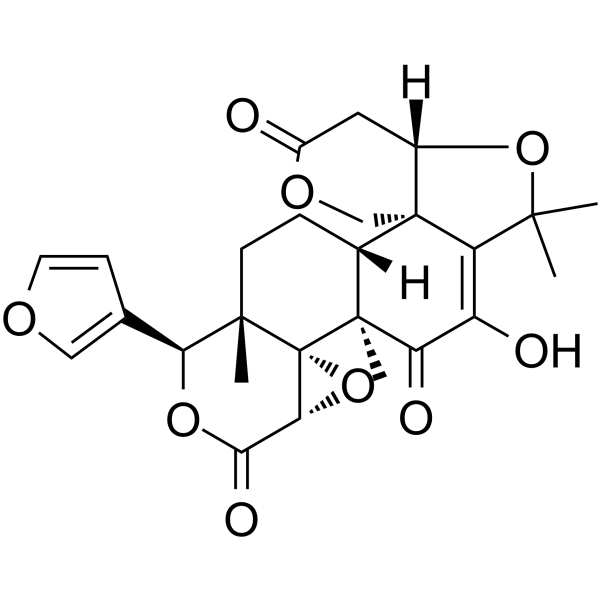
Evodol is a natural product isolated from the dried and nearly ripe fruits of Euodia rutaecarpa. Evodol shows inhibitory activity against NO production . Evodol possesses larvicidal activity against the Asian tiger mosquitoes with a LC50 value of 32.43 μg/ml . Evodol has the inhibitory effect on CYP3A .
loading...
    loading...
Cat. No.: HY-125923R
CAS No.: 498-59-9
Djenkolic acid (Standard) is the analytical standard of Djenkolic acid (HY-125923). This product is intended for research and analytical applications. Djenkolic acid is a sulfur-containing amino acid. Djenkolic acid can be isolated from the djenkol beans of the Southeast Asian plant Archidendron jiringa. Djenkolic acid de-inhibits the SO4 2- uptake system in Pseudomonas fluorescens. Djenkolic acid causes supersaturation of the urinary system with djenkolic acid crystals, leading to urinary tract obstruction and acute kidney injury .
loading...
    loading...
Cat. No.: HY-B1120R
CAS No.: 3383-96-8
Synonyms: Temefos (Standard)
Temephos (Standard) is the analytical standard of Temephos. This product is intended for research and analytical applications. Temephos (Temefos) is an orally active, blood-brain barrier-permeable organophosphate insecticide and AChE inhibitor. By irreversibly inhibiting AChE to induce cholinergic overactivation, Temephos effectively blocks larval development of Aedes aegypti (yellow fever mosquito) and Aedes albopictus (Asian tiger mosquito), and is commonly used in studies related to Dengue Virus, Zika Virus and other relevant pathogens. Temephos exhibits genotoxicity and neurodevelopmental toxicity, and may also cause liver injury, reproductive system abnormalities and cholinergic poisoning symptoms in mammals. Temephos tends to accumulate in adipose tissues and aquatic organisms, and is excreted via feces after metabolism through oxidation and hydrolysis. Note that CYP-mediated metabolic detoxification may reduce the actual larvicidal efficacy of Temephos against some mosquito species. Temephos can be used in research related to dengue fever, Zika virus disease, chikungunya and dracunculiasis .
loading...
    loading...
Cat. No.: HY-B1120S
CAS No.: 1219795-39-7
Synonyms: Temefos-d12
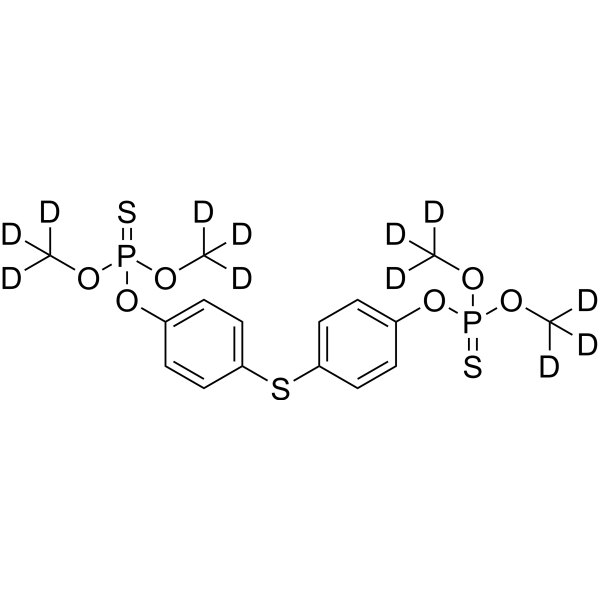
Temephos-d12 is the deuterium labeled Temephos. Temephos (Temefos) is an orally active, blood-brain barrier-permeable organophosphate insecticide and AChE inhibitor. By irreversibly inhibiting AChE to induce cholinergic overactivation, Temephos effectively blocks larval development of Aedes aegypti (yellow fever mosquito) and Aedes albopictus (Asian tiger mosquito), and is commonly used in studies related to Dengue Virus, Zika Virus and other relevant pathogens. Temephos exhibits genotoxicity and neurodevelopmental toxicity, and may also cause liver injury, reproductive system abnormalities and cholinergic poisoning symptoms in mammals. Temephos tends to accumulate in adipose tissues and aquatic organisms, and is excreted via feces after metabolism through oxidation and hydrolysis. Note that CYP-mediated metabolic detoxification may reduce the actual larvicidal efficacy of Temephos against some mosquito species. Temephos can be used in research related to dengue fever, Zika virus disease, chikungunya and dracunculiasis .
loading...
    loading...
Cat. No.: HY-N20514
Synonyms: Asian puccoon extract; Puccoon extract
Category:  

Extract

Target:  

Others

Lithospermum erythrorhizon extract (Asian puccoon extract) is an extract of Lithospermum erythrorhizon, which has anti-inflammatory activity.
loading...
    loading...
Cat. No.: HY-N20035
Synonyms: Asian chives extract; Oriental garlic extract; Chinese chives extract; Chinese leek extract
Category:  

Extract

Target:  

Others

Garlic chives extract (Asian chives extract) is an extract from leeks (Allium tuberosum) that can be used in inflammation research.
loading...
    loading...
Cat. No.: HY-184009
CAS No.: 892237-40-0
Target:  

Insecticide

Domaines de recherche:  

Infection

TBZ-15 is an orally active competitive Chitinase inhibitor and Insecticide, with an IC50 of 1.00 μM against Ostrinia furnacalis Chitinase-h and an IC50 of 1.01 μM against Ostrinia furnacalis Chitinase-I. TBZ-15 exhibits insecticidal activity against the Asian corn borer (O. furnacalis) and the diamondback moth (P. xylostella) .
loading...
    loading...

