



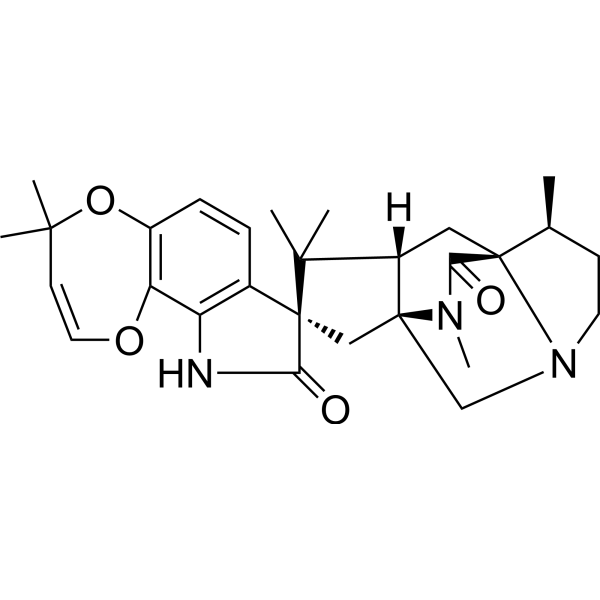
Paraherquamide E
Paraherquamide E is a paraherquamide alkaloid and 14C-deshydroxy paraherquamide analog found in Aspergillus aculeatus GC-147‑5 and Penicillium charlesii, with insecticidal and reproductive toxicant activity, high selectivity, and negligible toxicity to nontarget ladybugs.Paraherquamide E disrupts fatty acid synthesis, inhibits vitellogenin production, alters metabolic homeostasis, induces ovarian abnormalities, and causes Asian citrus psyllid mortality, while remaining inactive against Asian citrus psyllid cholinergic systems.
Nur für Forschungszwecke. Wir verkaufen nicht an Patienten.
- CAS. Nr.: 125600-53-5
- Formel: C28H35N3O4
- Molecular Weight:477.60
-
Speicherung:Powder -20°C, 3 years ; In solvent -80°C, 6 months , -20°C, 1 month

To place orders, for customer services and technical support, please contact: MedChemExpress USA
Tel: 609-228-6898 E-mail: [email protected] [email protected]


-
 Biologische Aktivität
-
Chemical Information
-
Lösungsmittel & Löslichkeit
- Reinheit & Dokumentation
- Verweise
-
 Help & FAQs


-
HY-129591
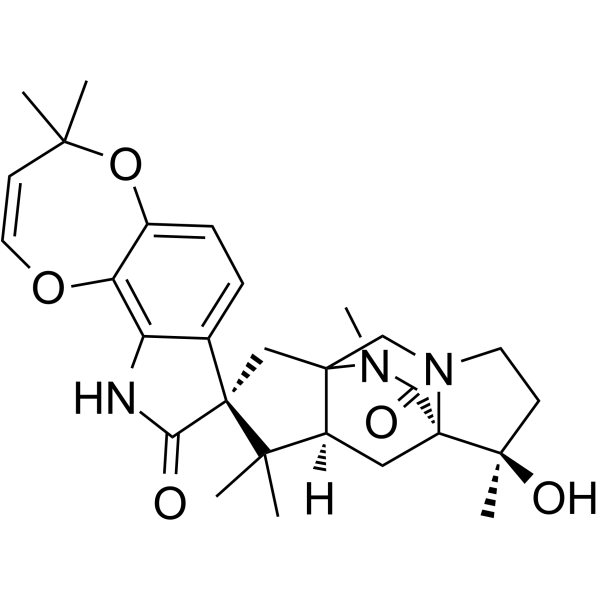
Paraherquamide AAnthelmintic -
HY-B0221
Amphotericin BAntifungal Agent -
HY-107483
CambendazoleAnthelmintic Compound -
HY-141617
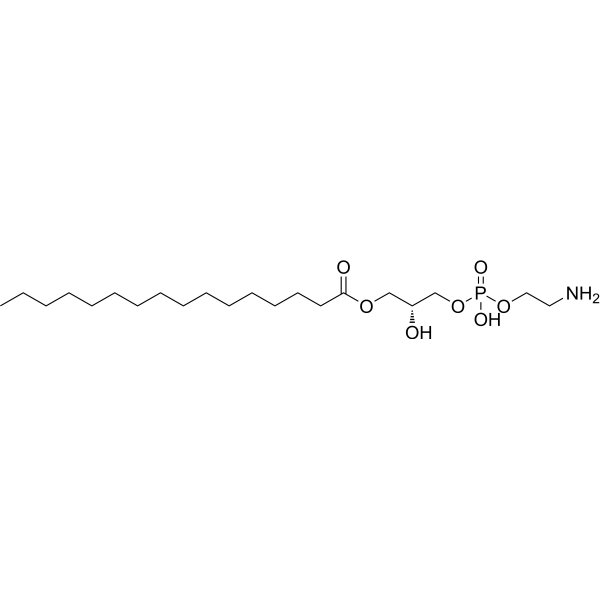
1-Palmitoyl-2-hydroxy-sn-glycero-3-PEOccurring Lysophospholipid -
HY-103056
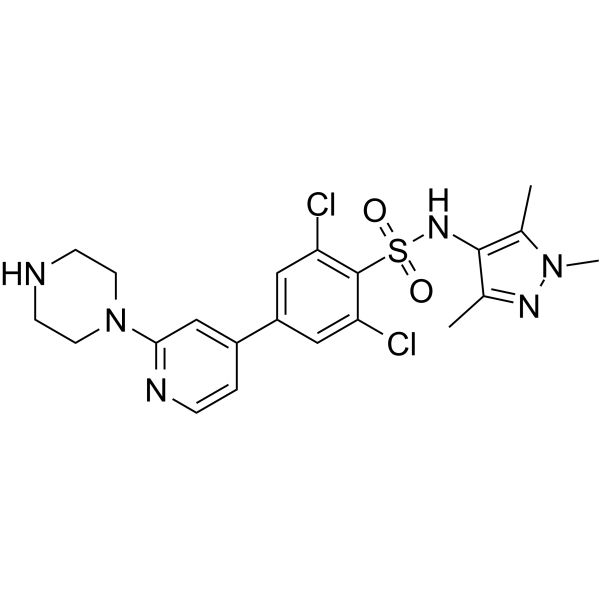
DDD85646NMT Inhibitor -

HY-107483R
Cambendazole (Standard)Anthelmintic Compound -
HY-B1864A
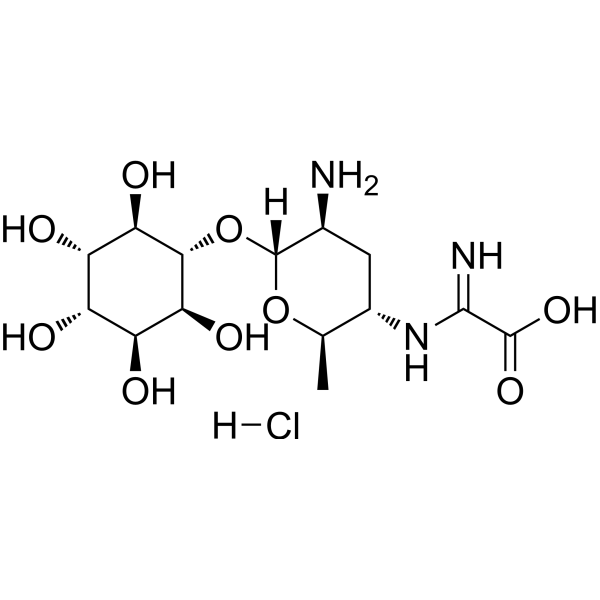
Kasugamycin hydrochlorideAntibiotic -

HY-138149
2-epi-Abamectin -
HY-B0221R
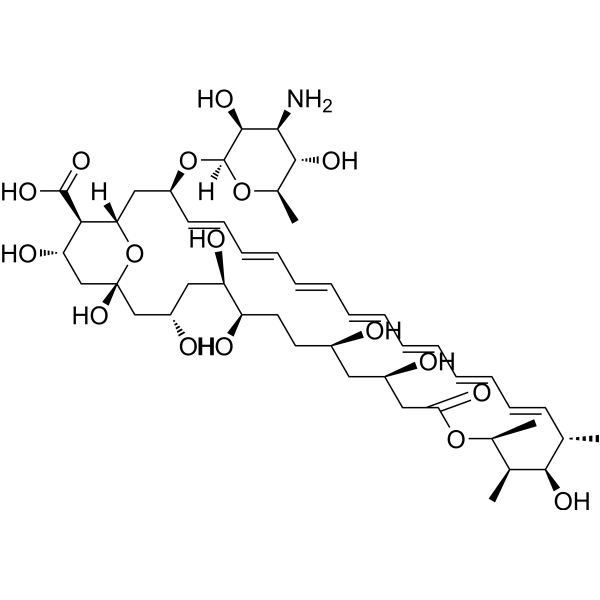
Amphotericin B (Standard) -

HY-W007416
3,5-Dihydroxybenzaldehydeα-glucosidase Inhibitor -
HY-130423
Milbemycin A3Insecticide -
HY-B0767
Spinosyn AInsecticide


Biologische Aktivität
Beschreibung
In Vitro
Paraherquamide E (11.17 μg/mL; 6-24 h) transiently inhibits the expression of vitellogenin and fatty acid synthesis genes in adult Asian citrus psyllids, and exerts biphasic regulatory effects on the expression of PPIF and H2B genes within 6-24 h[1].
Paraherquamide E (11.17 μg/mL; 12 h) alters gene expression in adult Asian citrus psyllids, and exerts significant effects on nutrient storage activity, lipid transport activity, and the fatty acid biosynthesis pathway[1].
MedChemExpress (MCE) has not independently confirmed the accuracy of these methods. They are for reference only.
In Vivo
Paraherquamide E (11.17 μg/mL; 7 days) causes ovarian abnormalities in adult female Asian citrus psyllids when applied to fifth-instar nymphs[1].
Paraherquamide E (50-2000 μg/mL; 48-60 h) exhibits negligible toxicity to adult *Harmonia axyridis*, with LD50 values >2000 μg/mL at both 48 h and 60 h[1].
Paraherquamide E (50-2000 μg/mL; spray; single administration) shows extremely low toxicity to non-target ladybugs, with LD50 values >2000 μg/mL at both 48 h and 60 h post-treatment[1].
Paraherquamide E (11.17 μg/mL; 6-24 h) transiently inhibits the expression of vitellogenin and fatty acid synthesis genes in adult Asian citrus psyllids, and exerts biphasic regulatory effects on the expression of PPIF and H2B genes within 6-24 h[1].
Paraherquamide E (11.17 μg/mL; 12 h) alters gene expression in adult Asian citrus psyllids, and exerts significant effects on nutrient storage activity, lipid transport activity, and the fatty acid biosynthesis pathway[1].
MedChemExpress (MCE) has not independently confirmed the accuracy of these methods. They are for reference only.


Chemical Information
-
CAS. Nr. 125600-53-5
-
Appearance Solid
-
Molecular Weight 477.60
-
Formel C28H35N3O4
-
Color White to off-white
-
SMILES
CC1([C@@]2([H])[C@@](CN3[C@@](C4=O)([C@H](CC3)C)C2)(N4C)C[C@]15C6=C(C7=C(OC(C)(C)C=CO7)C=C6)NC5=O)C
-
Structure Classification
-
Initial Source
Penicillium charlesii
-
Versand
Room temperature in continental US; may vary elsewhere.
-
Speicherung
Powder -20°C 3 years In solvent -80°C 6 months -20°C 1 month


Lösungsmittel & Löslichkeit
In Vitro:
Methanol : 1 mg/mL (2.09 mM; Need ultrasonic and warming)
Please refer to the solubility information to select the appropriate solvent. Once prepared, please aliquot and store the solution to prevent product inactivation from repeated freeze-thaw cycles.
Storage method and period of stock solution: -80°C, 6 months; -20°C, 1 month. When stored at -80°C, please use it within 6 months. When stored at -20°C, please use it within 1 month.
Please refer to the solubility information to select the appropriate solvent. Once prepared, please aliquot and store the solution to prevent product inactivation from repeated freeze-thaw cycles.
Storage method and period of stock solution: -80°C, 6 months; -20°C, 1 month. When stored at -80°C, please use it within 6 months. When stored at -20°C, please use it within 1 month.
Konzentration (Stammlösung) × Volumen (Stammlösung) = Konzentration (Ziellösung) × Volumen (Ziellösung)


Reinheit & Dokumentation
-
Data Sheet (290 KB)
-
SDS (251 KB)
- English - EN (251 KB)
- Français - FR (251 KB)
- Deutsch - DE (251 KB)
- Norwegian - NO (251 KB)
- Español - ES (251 KB)
- Swedish - SV (251 KB)
- Italian - IT (251 KB)
- Korean - KR (251 KB)
- Portuguese - PT (251 KB)
-
Handling Instructions (2659 KB)
Verweise
[1].
You M, et al. Discovery of Paraherquamide E as an Eco-Friendly Insecticide against Asian Citrus Psyllid from the Endophyte Aspergillus aculeatus GC-147-5 and Its Mode of Action. J Agric Food Chem. 2025 Oct 15;73(41):26101-26113.
[Content Brief]
[2]. Liesch JM, et al. Novel antinematodal and antiparasitic agents from Penicillium charlesii. II. Structure determination of paraherquamides B, C, D, E, F, and G. J Antibiot (Tokyo). 1990 Nov;43(11):1380-6. [Content Brief]


Complete Stock Solution Preparation Table
Please refer to the solubility information to select the appropriate solvent. Once prepared, please aliquot and store the solution to prevent product inactivation from repeated freeze-thaw cycles.
Storage method and period of stock solution: -80°C, 6 months; -20°C, 1 month. When stored at -80°C, please use it within 6 months. When stored at -20°C, please use it within 1 month.
| Optional Solvent | Concentration Solvent Mass | 1 mg | 5 mg | 10 mg | 25 mg |
|---|---|---|---|---|---|
| Methanol | 1 mM | 2.0938 mL | 10.4690 mL | 20.9380 mL | 52.3451 mL |


Paraherquamide E Related Classifications
HY-N10220 Related Classifications
 Powered by Bioz