20 Results for "

Bamboo

" in MedChemExpress (MCE) Product Catalog:
Products (20)

20 Results for "Bamboo" in MCE Product Catalog:

Cat. No.: HY-N1958
CAS No.: 66791-77-3
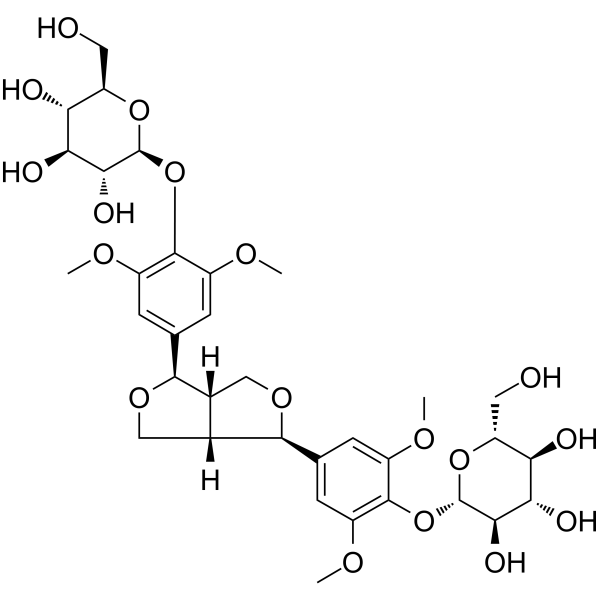
Synonyms: Syringaresinol-di-O-glucoside
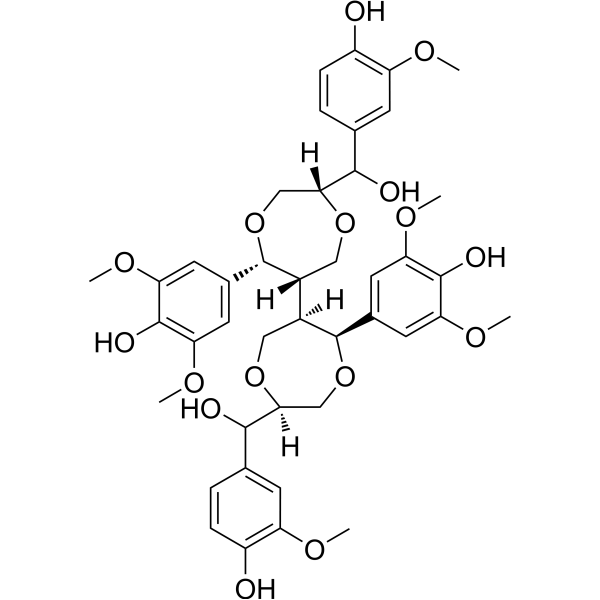
Syringaresinol diglucoside is a natural compound from bamboo leaves .
loading...
    loading...
Cat. No.: HY-Y1129
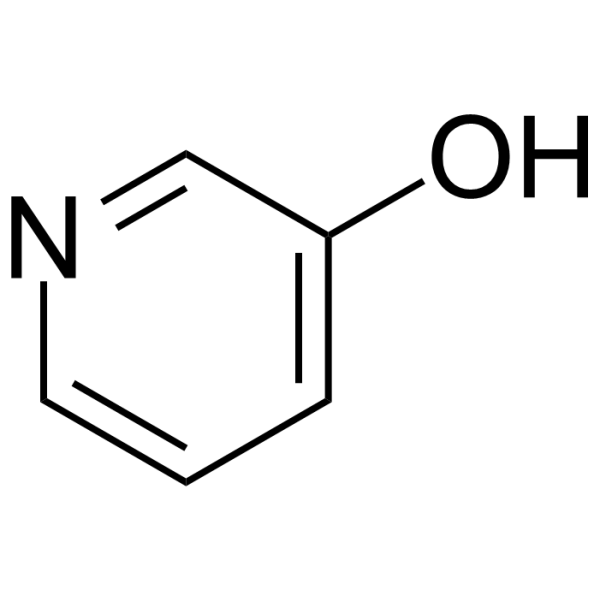
CAS No.: 109-00-2
3-Hydroxypyridine is a compound that can be isolated from bamboo grass. As an endogenous photosensitizer present in human skin, 3-hydroxypyridine can mediate oxidative stress, proliferation inhibition and apoptosis of skin cells through UVA/UVB excitation .
loading...
    loading...
Cat. No.: HY-W002168
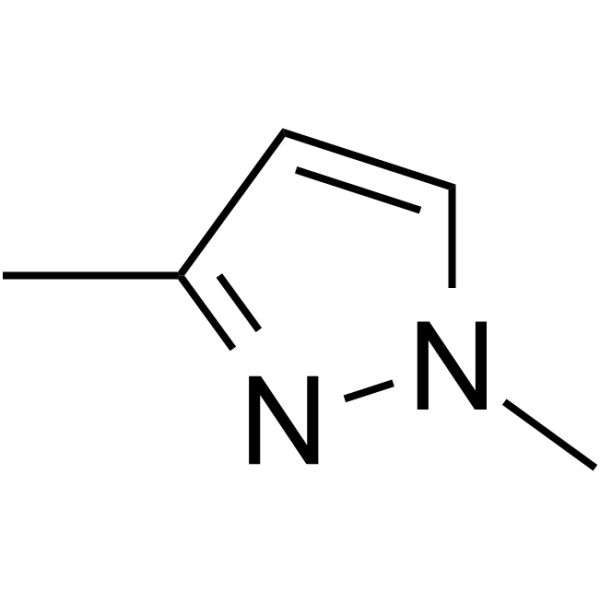
CAS No.: 694-48-4
1,3-Dimethylpyrazole is a bioactive compound isolated from Moso Bamboo Root .
loading...
    loading...
Cat. No.: HY-N16416
CAS No.: 2299-26-5
Dregamine is a monoterpene indole organism that can be isolated from methanol extracts of bamboo and rattan roots and can induce apoptosis. Dregamine has anti-tumor activity .
loading...
    loading...
Cat. No.: HY-Y0313S
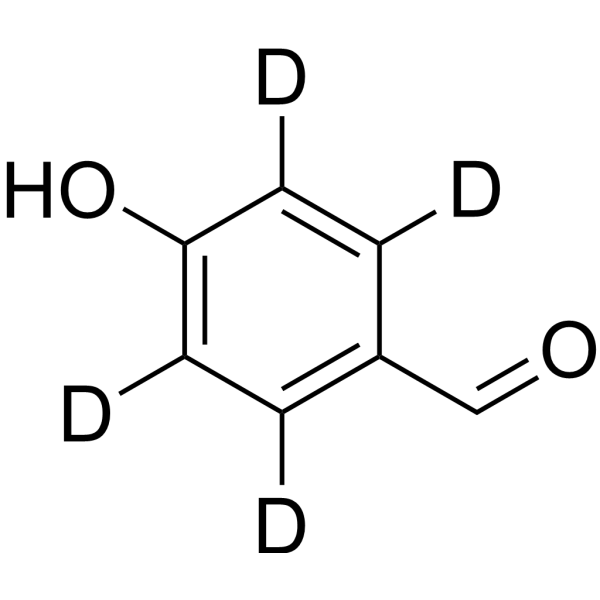
CAS No.: 284474-52-8
p-Hydroxybenzaldehyde-d4 is the deuterium labeled p-Hydroxybenzaldehyde. p-Hydroxybenzaldehyde is a one of the major components in Dendrocalamus asper bamboo shoots, with antagonistic effect on GABAA receptor of the α1β2γ2S subtype at high concentrations.
loading...
    loading...
Cat. No.: HY-Y0313S1
CAS No.: 152404-52-9
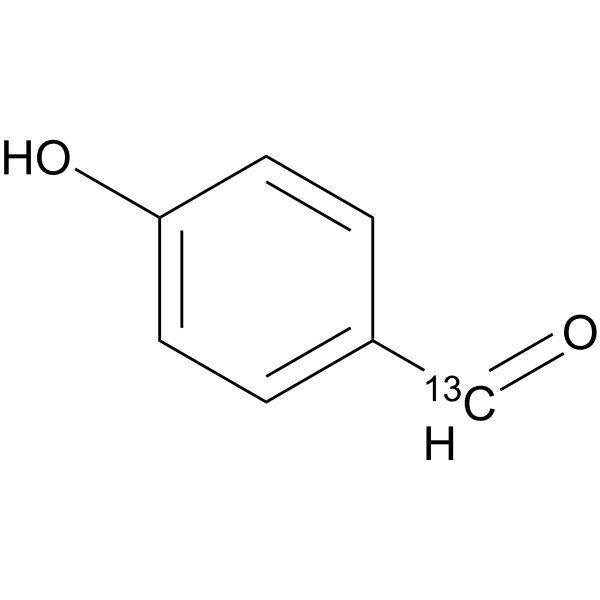
p-Hydroxybenzaldehyde- 13C is the 13C-labeled p-Hydroxybenzaldehyde. p-Hydroxybenzaldehyde is a one of the major components in Dendrocalamus asper bamboo shoots, with antagonistic effect on GABAA receptor of the α1β2γ2S subtype at high concentrations.
loading...
    loading...
Cat. No.: HY-N1958R
CAS No.: 66791-77-3
Synonyms: Syringaresinol-di-O-glucoside (Standard)
Syringaresinol diglucoside (Standard) is the analytical standard of Syringaresinol diglucoside. This product is intended for research and analytical applications. Syringaresinol diglucoside is a natural compound from bamboo leaves .
loading...
    loading...
Cat. No.: HY-N11810
CAS No.: 108886-03-9
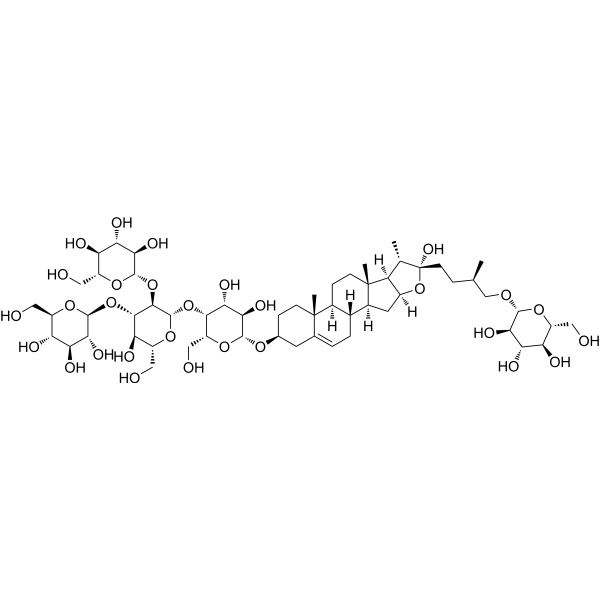
Polyfuroside is a triterpenoid saponin, which can be isolated from the defatted rhizome of jade bamboo .
loading...
    loading...
Cat. No.: HY-167870
CAS No.: 116181-54-5
Piceatannol 4'-O-glucoside is an antioxidant. Piceatannol 4'-O-glucoside is active against oxidation of the human LDL. Piceatannol 4'-O-glucoside can be isolated from Mexican Bamboo .
loading...
    loading...
Cat. No.: HY-N20027
Category:  

Extract

Target:  

Others

Bamboo sap extract is a bamboo sap extract that can be used for oxygenation care of skin, hair, and nails.
loading...
    loading...
Cat. No.: HY-143482
CAS No.: 2650213-59-3
Research Areas:  

Infection

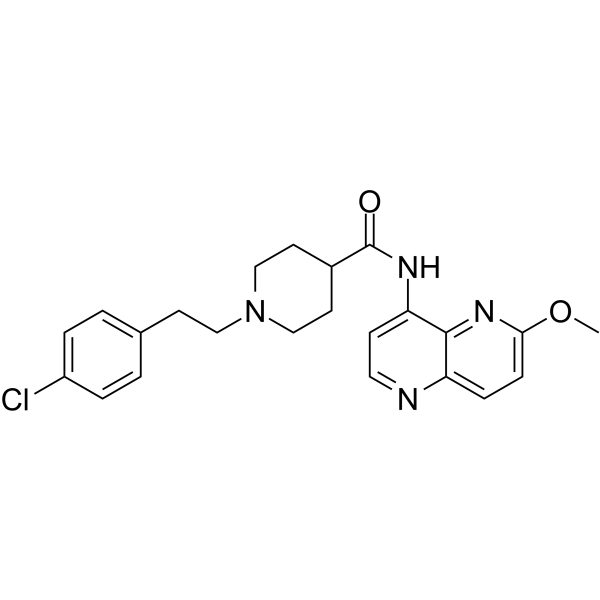
MMV688844 is a potent Mycobacterium abscessus (Mabs) DNA Gyrase inhibitor with an IC50 value of 2 μM. MMV688844 has bactericidal properties against Mabs bamboo with a MIC50 of 12 μM. MMV688844 can be used for researching anti-bacteria .
loading...
    loading...
Cat. No.: HY-143483
CAS No.: 2767443-78-5
Target:  

Bacterial

Research Areas:  

Infection

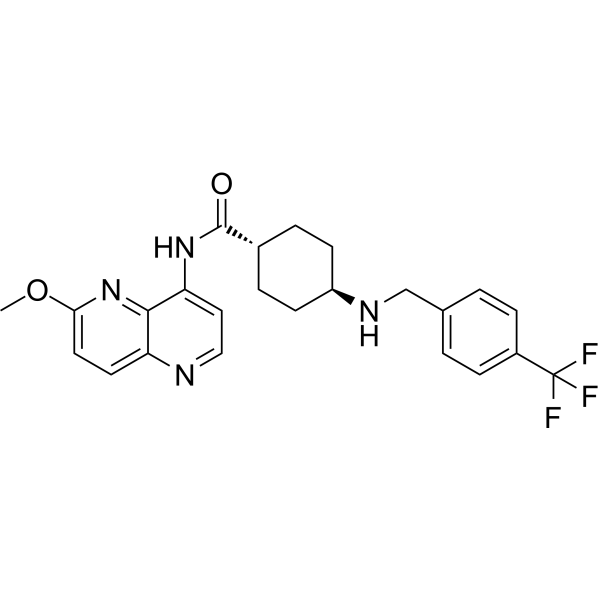
NBTIs-IN-5 (Compound 5r) is a NBTI (Novel Bacterial Topoisomerase Inhibitor) DNA gyrase inhibitor with an IC50 of 1.5 μM against Mycobacterium abscessus (Mabs) DNA gyrase. NBTIs-IN-5 inhibits Mabs bamboo bacterial growth with an MIC90 of 0.4 μM .
loading...
    loading...
Cat. No.: HY-Y1129S
CAS No.: 2241864-90-2
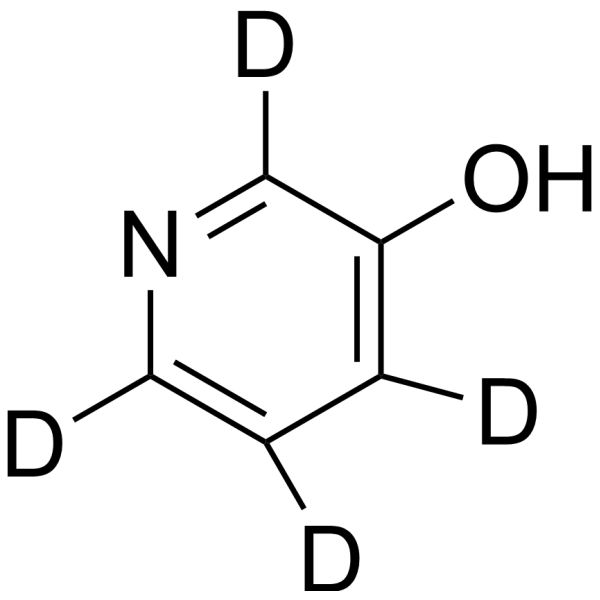
3-Hydroxypyridine-d4 is the deuterium labeled 3-Hydroxypyridine (HY-Y1129). 3-Hydroxypyridine is a compound that can be isolated from bamboo grass. As an endogenous photosensitizer present in human skin, 3-hydroxypyridine can mediate oxidative stress, proliferation inhibition and apoptosis of skin cells through UVA/UVB excitation .
loading...
    loading...
Cat. No.: HY-Y1129R
CAS No.: 109-00-2
3-Hydroxypyridine (Standard) is the analytical standard of 3-Hydroxypyridine (HY-Y1129). This product is intended for research and analytical applications. 3-Hydroxypyridine is a compound that can be isolated from bamboo grass. As an endogenous photosensitizer present in human skin, 3-hydroxypyridine can mediate oxidative stress, proliferation inhibition and apoptosis of skin cells through UVA/UVB excitation .
loading...
    loading...
Cat. No.: HY-N20401
Synonyms: Caulis bambusae in taeniis extract
Category:  

Extract

Target:  

Others

Bamboo shaving extract (Caulis bambusae in taeniis extract) is an extract of bamboo shavings (Bambusa) with antioxidant activity.
loading...
    loading...
Cat. No.: HY-N3077
CAS No.: 638203-32-4
Phyllostadimer A is an antioxidant. Phyllostadimer A can be isolated from Bamboo. Phyllostadimer A inhibits lipid peroxidation. Phyllostadimer A has potent antioxidant activity with an IC50 of 15 mM .
loading...
    loading...
Cat. No.: HY-W002168R
CAS No.: 694-48-4
1,3-Dimethylpyrazole (Standard) is the analytical standard of 1,3-Dimethylpyrazole (HY-W002168). This product is intended for research and analytical applications. 1,3-Dimethylpyrazole is a bioactive compound isolated from Moso Bamboo Root .
loading...
    loading...
Cat. No.: HY-W746295
3-Hydroxypyridine-d5 is the deuterium labeled 3-Hydroxypyridine (HY-Y1129). 3-Hydroxypyridine is a compound that can be isolated from bamboo grass. As an endogenous photosensitizer present in human skin, 3-hydroxypyridine can mediate oxidative stress, proliferation inhibition and apoptosis of skin cells through UVA/UVB excitation .
loading...
    loading...
Cat. No.: HY-W072994
CAS No.: 1338-02-9
Target:  

Fungal Insecticide

Research Areas:  

Infection

Copper naphthenate is an organocopper compound with the properties of a fungicide, preservative, oil-borne protectant, and toxicant. Copper naphthenate increases serum and urine copper levels in exposed populations, causes skin irritation, and induces intraperitoneal toxicity in rats. Copper naphthenate inhibits the growth of decay fungi and molds on moso bamboo, kills the free-living stages of Ichthyophthirius multifiliis, and controls wood-boring insects and termites .
loading...
    loading...
Cat. No.: HY-28911
CAS No.: 141-46-8
Target:  

LDLR

Research Areas:  

Others

2-Hydroxyacetaldehyde acts as a ribonucleotide synthesis precursor and a LDL modifier. 2-Hydroxyacetaldehyde specifically targets lysine residues of high-affinity LDL receptors and their apolipoproteins. By blocking the ε-amino groups of apolipoproteins, 2-Hydroxyacetaldehyde prevents receptor recognition, thereby reducing LDL degradation by macrophages. 2-Hydroxyacetaldehyde generates modified LDL, which serves as a probe for investigating non-receptor-dependent catabolic pathways .
loading...
    loading...
  • 1

