1. Search Result
Search Result
Results for "

Bcr-abl

" in MedChemExpress (MCE) Product Catalog:

180

Inhibitors & Agonists

6

Screening Libraries

1

Fluorescent Dye

1

Biochemical Assay Reagents

1

Peptides

2

Natural
Products

12

Isotope-Labeled Compounds

1

Oligonucleotides

2

GMP Molecules

Targets Recommended:
Cat. No. Product Name Target Research Areas Chemical Structure
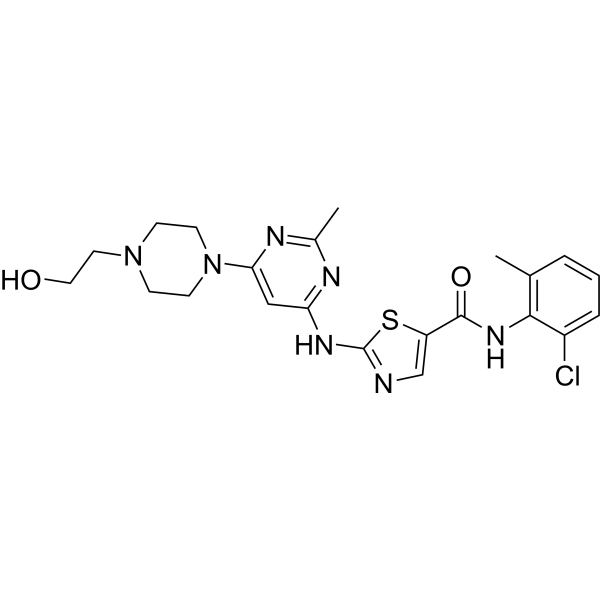
  • HY-10181
    Dasatinib
    Maximum Cited Publications
    168 Publications Verification

    BMS-354825

    Bcr-Abl Src Autophagy Apoptosis Ligands for Target Protein for PROTAC Infection Neurological Disease Inflammation/Immunology Cancer
    Dasatinib (BMS-354825) is a highly potent, ATP competitive, orally active dual Src/Bcr-Abl inhibitor with potent antitumor activity. The Kis are 16 pM and 30 pM for Src and Bcr-Abl, respectively. Dasatinib inhibits Bcr-Abl and Src with IC50s of <1.0 nM and 0.5 nM, respectively. Dasatinib also induces apoptosis and autophagy, and can cross the blood-brain barrier .
    Dasatinib
  • HY-10159
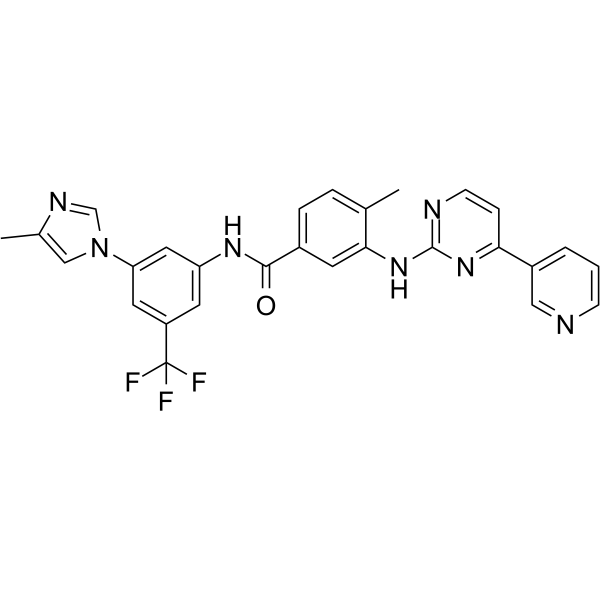
    Nilotinib
    45+ Cited Publications

    AMN107

    Bcr-Abl Autophagy Cancer
    Nilotinib is an orally available Bcr-Abl tyrosine kinase inhibitor with antineoplastic activity.
    Nilotinib
  • HY-50946
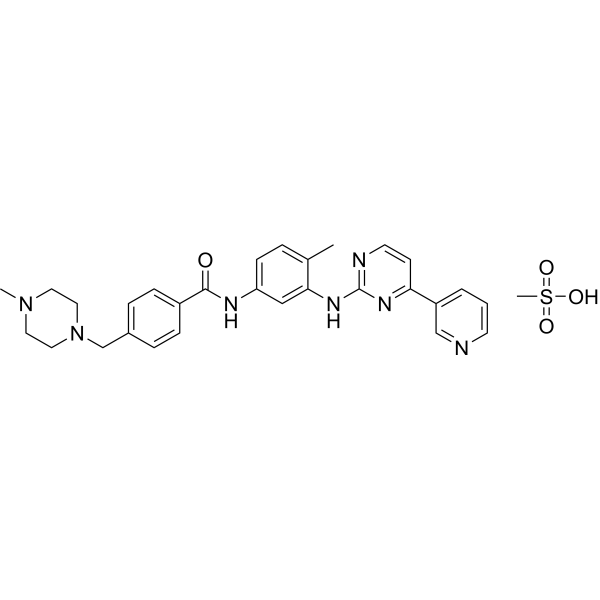
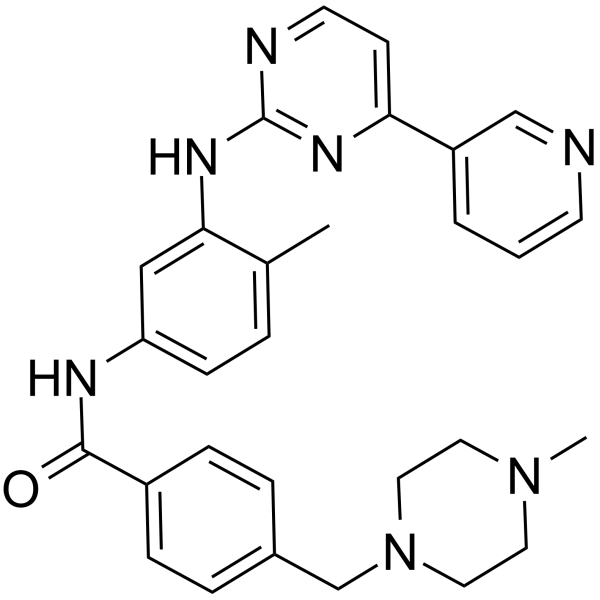
    Imatinib Mesylate
    115+ Cited Publications

    STI571 Mesylate; CGP-57148B Mesylate

    c-Kit Bcr-Abl PDGFR Autophagy Infection Neurological Disease Inflammation/Immunology Cancer
    Imatinib Mesylate (STI571 Mesylate) is an orally active tyrosine kinases inhibitor that inhibits c-Kit, Bcr-Abl, and PDGFR (IC50=100 nM) tyrosine kinases.
    Imatinib Mesylate
  • HY-104010
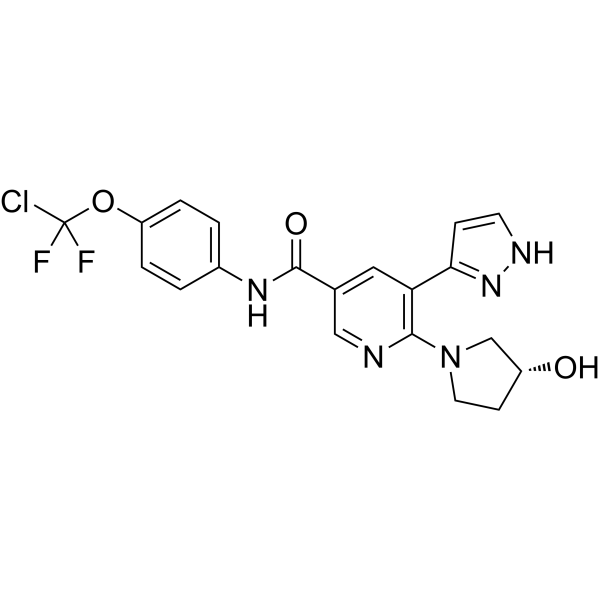
    Asciminib
    10+ Cited Publications

    abl001

    Bcr-Abl Cancer
    Asciminib (ABL001) is a potent and selective allosteric BCR-ABL1 inhibitor, which inhibits Ba/F3 cells grown with an IC50 of 0.25 nM .
    Asciminib
  • HY-15666
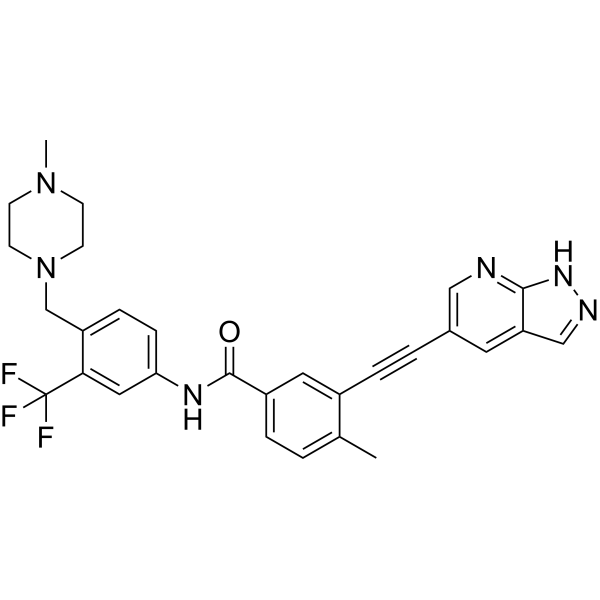
    Olverembatinib
    5+ Cited Publications

    GZD824; HQP1351

    Bcr-Abl Cancer
    Olverembatinib (GZD824) is a potent and orally active pan-Bcr-Abl inhibitor. Olverembatinib potently inhibits a broad spectrum of Bcr-Abl mutants. Olverembatinib strongly inhibits native Bcr-Abl and Bcr-Abl T315I with IC50s of 0.34 nM and 0.68 nM, respectively. Olverembatinib has antitumor activity . Olverembatinib is a click chemistry reagent, it contains an Alkyne group and can undergo copper-catalyzed azide-alkyne cycloaddition (CuAAc) with molecules containing Azide groups.
    Olverembatinib
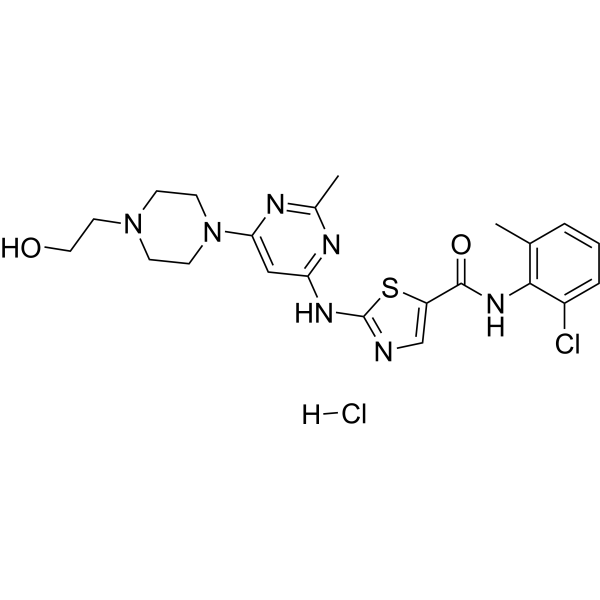
  • HY-10181A
    Dasatinib hydrochloride
    Maximum Cited Publications
    168 Publications Verification

    BMS-354825 hydrochloride

    Bcr-Abl Src Autophagy Apoptosis Cancer
    Dasatinib (BMS-354825) hydrochloride is a highly potent, ATP competitive, orally active dual Src/Bcr-Abl inhibitor with potent antitumor activity. The Kis are 16 pM and 30 pM for Src and Bcr-Abl, respectively. Dasatinib hydrochloride inhibits Bcr-Abl and Src with IC50s of <1.0 nM and 0.5 nM, respectively . Dasatinib hydrochloride also induces apoptosis and autophagy.
    Dasatinib hydrochloride
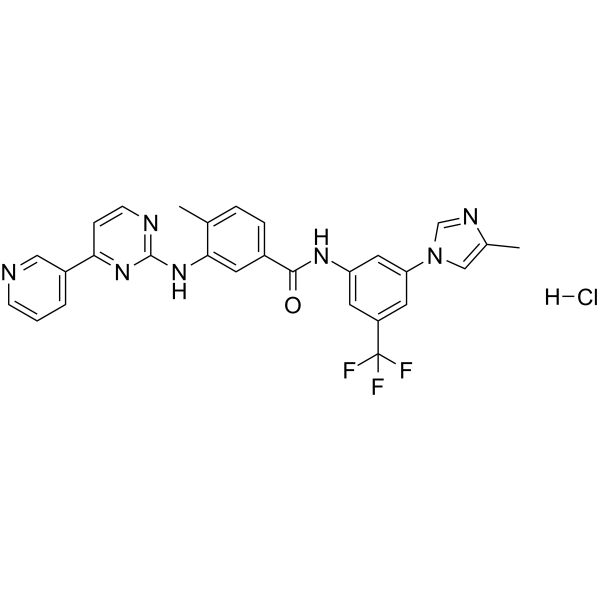
  • HY-10159A

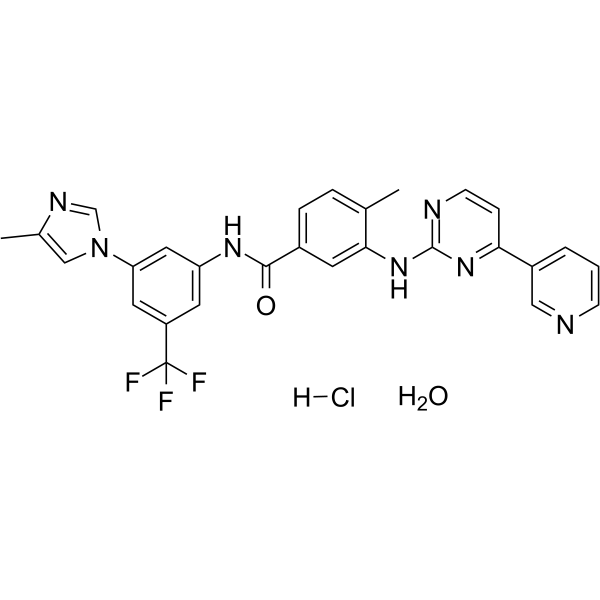
    AMN107 monohydrochloride monohydrate

    Bcr-Abl Autophagy Cancer
    Nilotinib monohydrochloride monohydrate is a second generation tyrosine kinase inhibitor (TKI), is significantly potent against BCR-ABL, and is active against many BCR-ABL mutants.
    Nilotinib monohydrochloride monohydrate
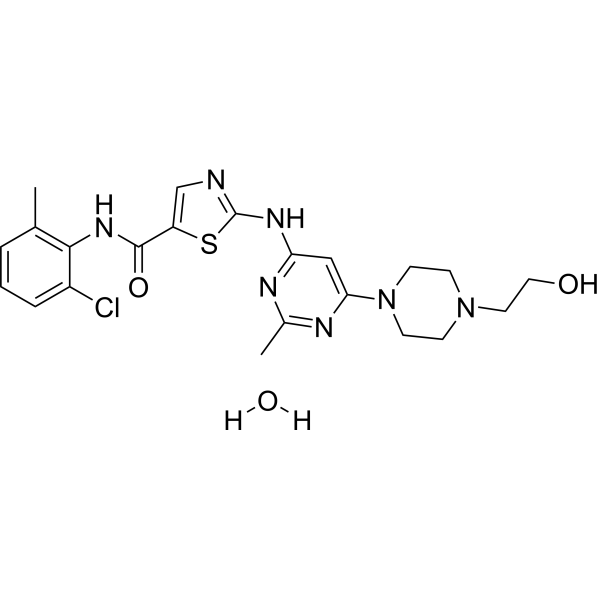
  • HY-10181B
    Dasatinib monohydrate
    Maximum Cited Publications
    168 Publications Verification

    BMS-354825 monohydrate

    Bcr-Abl Src Autophagy Apoptosis Cancer
    Dasatinib (BMS-354825) monohydrate is a highly potent, ATP competitive, orally active dual Src/Bcr-Abl inhibitor with potent antitumor activity. The Kis are 16 pM and 30 pM for Src and Bcr-Abl, respectively. Dasatinib monohydrate inhibits Bcr-Abl and Src with IC50s of <1.0 nM and 0.5 nM, respectively . Dasatinib monohydrate also induces apoptosis and autophagy.
    Dasatinib monohydrate
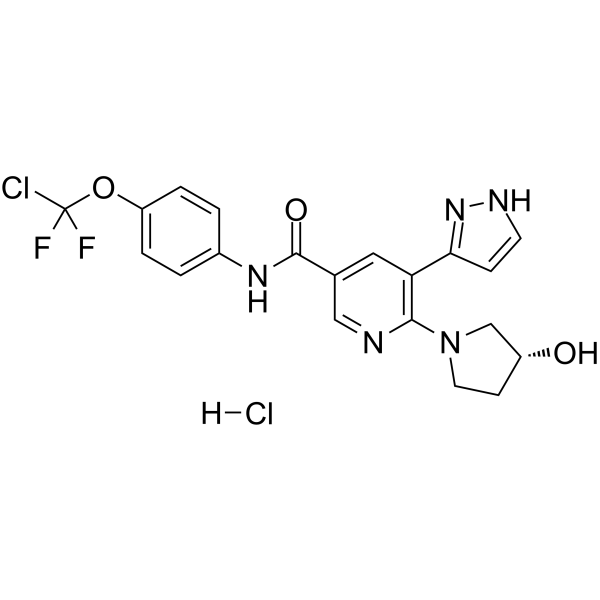
  • HY-104010A
    Asciminib hydrochloride
    10+ Cited Publications

    abl001 hydrochloride

    Bcr-Abl Cancer
    Asciminib (ABL001) hydrochloride is a potent and selective allosteric BCR-ABL1 inhibitor, which inhibits Ba/F3 cells grown with an IC50 of 0.25 nM .
    Asciminib hydrochloride
  • HY-11007
    GNF-2
    3 Publications Verification

    Bcr-Abl SARS-CoV Cancer
    GNF-2 is a highly selective, allosteric, non-ATP competitive inhibitor of Bcr-Abl. GNF-2 inhibits Ba/F3.p210 proliferation with an IC50 of 138 nM .
    GNF-2
  • HY-10943
    GNF-7
    2 Publications Verification

    Bcr-Abl Ack1 Cancer
    GNF-7 is a multikinase inhibitor. GNF-7 is a Bcr-Abl inhibitor, with IC50s of 133 nM and 61 nM for Bcr-Abl WT and Bcr-Abl T315I, respectively. GNF-7 also possesses inhibitory activity against both ACK1 (activated CDC42 kinase 1) and GCK (germinal center kinase) with IC50s of 25 nM and 8 nM, respectively. GNF-7 can be used for the research of hematologic malignancies .
    GNF-7
  • HY-137460
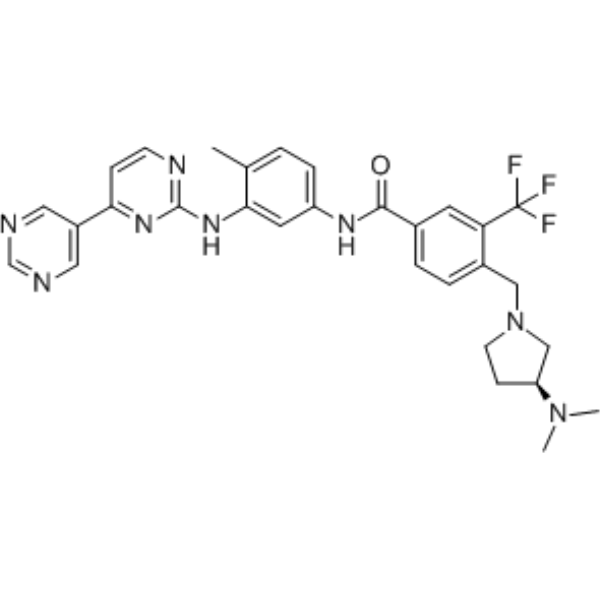
    Vodobatinib
    2 Publications Verification

    K0706

    Bcr-Abl Cancer
    Vodobatinib (K0706) is a potent, third generation and orally active Bcr-Abl1 tyrosine kinase inhibitor with an IC50 of 7 nM. Vodobatinib exhibits activity against most BCR-ABL1 point mutants, and has no activity against BCR-ABL1T315I. Vodobatinib can be used for chronic myeloid leukemia (CML) research . Vodobatinib is a click chemistry reagent, it contains an Alkyne group and can undergo copper-catalyzed azide-alkyne cycloaddition (CuAAc) with molecules containing Azide groups.
    Vodobatinib
  • HY-153415

    PROTACs Bcr-Abl Cancer
    PROTAC BCR-ABL Degrader-1 (compound PROTAC 1) is a PROTAC with a 2-oxoethyl linker. PROTAC BCR-ABL Degrader-1 induces Bcr-Abl degradation in a ubiquitinproteasom-dependent manner. PROTAC BCR-ABL Degrader-1 exhibits antiproliferative activity against K562 cells, and has the potential to study cancer .
    PROTAC BCR-ABL Degrader-1
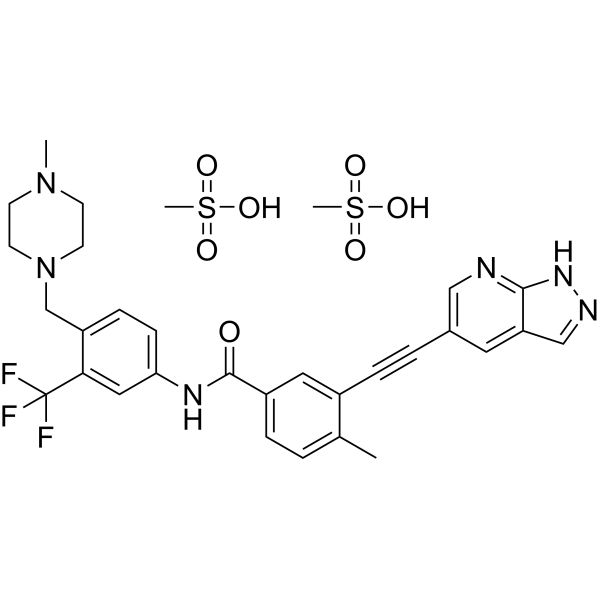
  • HY-15666A
    Olverembatinib dimesylate
    5+ Cited Publications

    GZD824 dimesylate; HQP1351 dimesylate

    Bcr-Abl Cancer
    Olverembatinib (GZD824) dimesylate is a potent and orally active pan-Bcr-Abl inhibitor. Olverembatinib dimesylate potently inhibits a broad spectrum of Bcr-Abl mutants. Olverembatinib dimesylate strongly inhibits native Bcr-Abl and Bcr-Abl T315I with IC50s of 0.34 nM and 0.68 nM, respectively. Olverembatinib dimesylate has antitumor activity . Olverembatinib (dimesylate) is a click chemistry reagent, it contains an Alkyne group and can undergo copper-catalyzed azide-alkyne cycloaddition (CuAAc) with molecules containing Azide groups.
    Olverembatinib dimesylate
  • HY-15738
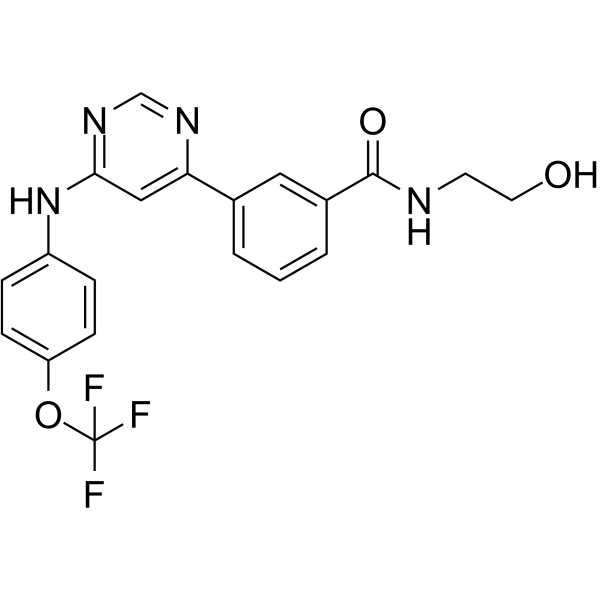
    GNF-5
    4 Publications Verification

    Bcr-Abl Cancer
    GNF-5, the N-hydroxyethyl carboxamide analog of GNF-2, is an orally active Bcr-Abl inhibitor. GNF-5 has Bcr-Abl inhibition activity with an IC50 value of 0.22 µM. GNF-5 has good favorable pharmacokinetic properties. GNF-5 can be used for the research of kinds of cancer including chronic myelogenous leukemia (CML) and breast cancer .
    GNF-5
  • HY-13905
    Flumatinib mesylate
    3 Publications Verification

    HHGV678 mesylate

    Bcr-Abl c-Kit PDGFR Cancer
    Flumatinib (HHGV678) mesylate is an orally active and selective inhibitor of Bcr-Abl. Flumatinib mesylate inhibits c-Abl, PDGFRβ and c-Kit with IC50 values of 1.2, 307.6 and 665.5 nM, respectively. Flumatinib mesylate inhibits Bcr-Abl autophosphorylation and Stat5 and Erk1/2 phosphorylation. Flumatinib mesylate inhibits tumor growth in chronic myelogenous leukemia model .
    Flumatinib mesylate
  • HY-118144

    Src Bcr-Abl p38 MAPK Cancer
    PD166326 is an orally active tyrosine kinase inhibitor with a IC50 of 8 nM against abl tyrosine kinase and a IC50 of 6 nM against src tyrosine kinase. PD166326 blocks Bcr/Abl kinase activity. PD166326 inhibits Bcr/Abl-dependent proliferation and cell cycle progression. PD166326 reduces peripheral blood granulocytosis, alleviates splenomegaly and prolongs survival in a mouse model of chronic myeloid leukemia. PD166326 can be used in research related to chronic myeloid leukemia .
    PD166326
  • HY-10181S
    Dasatinib-d8
    1 Publications Verification

    BMS-354825-d8

    Bcr-Abl Src Apoptosis Autophagy Cancer
    Dasatinib-d8 (BMS-354825-d8) is a deuterium labeled Dasatinib. Dasatinib is a dual Bcr-Abl and Src family tyrosine kinase inhibitor.
    Dasatinib-d8
  • HY-128756

    PROTACs Bcr-Abl Cancer
    SIAIS178 is a potent and selective BCR-ABL degrader based on PROTAC technology with an IC50 of 24 nM. SIAIS178 causes effective degradation of BCR-ABL protein by recruiting Von Hippel-Lindau (VHL) E3 ubiquitin ligase. SIAIS178 has anticancer activity .
    SIAIS178
  • HY-153996

    Deubiquitinase Apoptosis Bcr-Abl STAT c-Myc Cancer
    CT1113 is a selective, orally active USP25/USP28 inhibitor. CT1113 inhibits cancer cell proliferation, induces apoptosis, and causes G2/S phase cell cycle arrest. CT1113 reduces the levels of total BCR-ABL1, phosphorylated BCR-ABL1, total STAT5, and phosphorylated STAT5, but does not alter the mRNA level of BCR-ABL1. CT1113 is applicable to research related to pancreatic cancer, colon cancer, and acute leukemia .
    CT1113
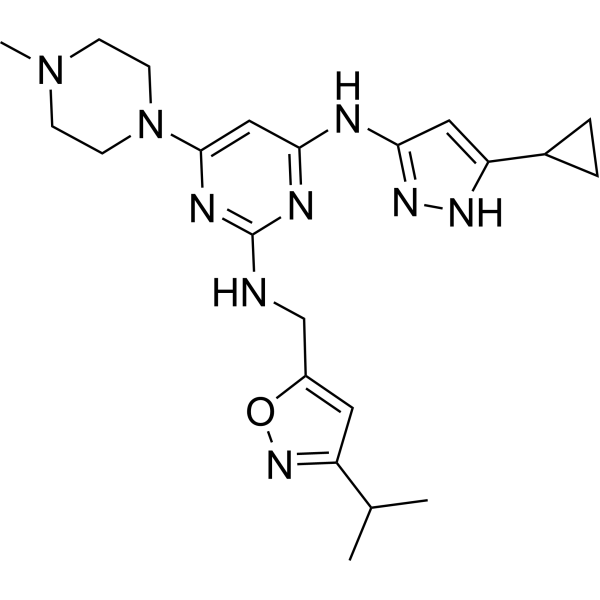
  • HY-125834

    PROTACs Bcr-Abl Apoptosis STAT JAK Cancer
    GMB-475 is a potent BCR-ABL1 PROTAC based on Von Hippel-Lindau (VHL). GMB-475 targets the nutmeg pocket of ABL1 in an ectopic manner and degrades BCR-ABL1 protein through the ubiquitin proteasome pathway. GMB-475 inhibits the proliferation of human K562 cells and mouse Ba/F3 cells, and is used for the study of chronic myeloid leukemia. (Blue: VHL ligand (HY-125845); Black: Linker; Pink: BCR-ABL1 ligand (HY-11007)) .
    GMB-475
  • HY-103274

    Bcr-Abl Src c-Kit Apoptosis Neurological Disease Cancer
    PD180970 is a highly potent and ATP-competitive p210 Bcr-Abl kinase inhibitor, with an IC50 of 5 nM for inhibiting the autophosphorylation of p210 Bcr-Abl. PD180970 also inhibits Src and KIT kinase with IC50s of 0.8 nM and 50 nM, respectively. PD180970 indcues apoptosis of K562 leukemic cells, and can be used for chronic myelogenous leukemia research .
    PD180970
  • HY-125845
    (S,R,S)-AHPC
    2 Publications Verification

    VH032-NH2; VHL ligand 1

    Ligands for E3 Ligase Cancer
    (S,R,S)-AHPC (VH032-NH2) is the VH032-based VHL ligand used in the recruitment of the von Hippel-Lindau (VHL) protein. (S,R,S)-AHPC can be connected to the ligand for protein (e.g., BCR-ABL1) by a linker to form PROTACs (e.g., GMB-475). GMB-475 induces the degradation of BCR-ABL1 with an IC50 of 1.11 μM in Ba/F3 cells .
    (S,R,S)-AHPC
  • HY-15814

    Bcr-Abl PDGFR c-Kit Src JAK Apoptosis Cancer
    HG-7-85-01 is a type II ATP competitive inhibitor of wild-type and gatekeeper mutations forms of Bcr-Abl, PDGFRα, Kit, and Src kinases. HG-7-85-01 inhibits T315I mutant Bcr-Abl kinase, KDR and RET with IC50s of 3 nM, 20 nM and 30 nM, and is only weak or no inhibition of other kinases (IC50>2 μM). HG-7-85-01 inhibits the cell proliferation, which is mediated by the induction of apoptosis, and inhibition of cell-cycle progression .
    HG-7-85-01
  • HY-152036A

    PROTACs Bcr-Abl Cancer
    SIAIS100 TFA is a potent BCR-ABL PROTAC degrader with an DC50 value of 2.7 nM. SIAIS100 TFA can be used to research chronic myeloid leukemia (CML) .
    SIAIS100 TFA
  • HY-10159S

    AMN107-d6

    Bcr-Abl Autophagy Cancer
    Nilotinib-d6 is a deuterium labeled Nilotinib. Nilotinib is an orally available Bcr-Abl tyrosine kinase inhibitor with antineoplastic activity .
    Nilotinib-d6
  • HY-117718

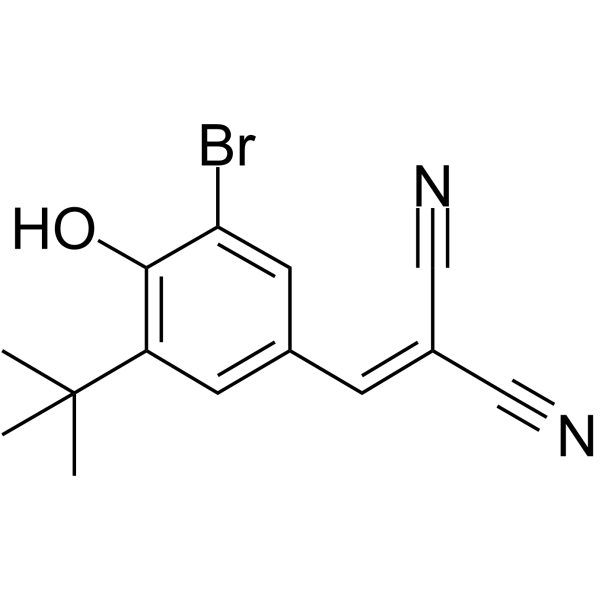
    Tyrphostin AG957; NSC 654705

    Bcr-Abl Cancer
    AG957 (Tyrphostin AG957;NSC 654705) is a tyrosine kinase inhibitor with anti-BCR/ABL tyrosine kinase activity . AG957 is a bcr/abl kinase inhibitor with an IC50 of 2.9 μM for p210 bcr/abl autokinase activity .
    AG957
  • HY-101489A

    PDGFR Bcr-Abl Apoptosis Cancer
    GZD856 formic is a potent and orally active PDGFRα/β inhibitor, with IC50s of 68.6 and 136.6 nM, respectively. GZD856 formic is also a Bcr-Abl T315I inhibitor, with IC50s of 19.9 and 15.4 nM for native Bcr-Abl and the T315I mutant. GZD856 formic has antitumor activity . GZD856 (formic) is a click chemistry reagent, it contains an Alkyne group and can undergo copper-catalyzed azide-alkyne cycloaddition (CuAAc) with molecules containing Azide groups.
    GZD856 formic
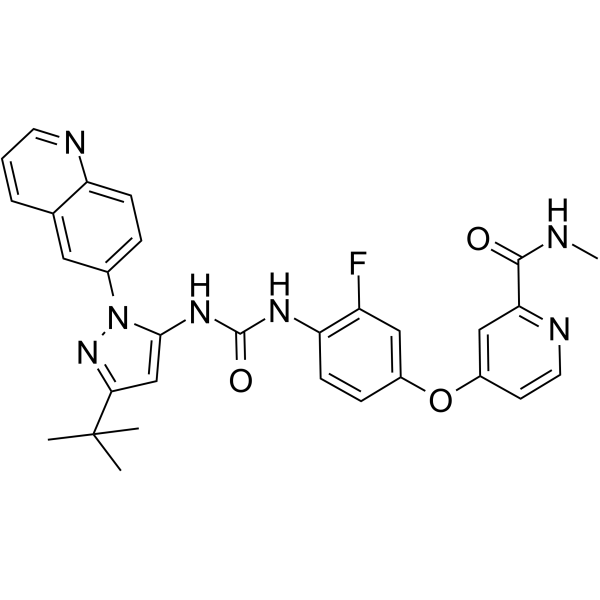
  • HY-130297

    Bcr-Abl Ligands for Target Protein for PROTAC Cancer
    PROTAC BCR-ABL1 ligand 1, compound GMB-475, is the ligand of PROTAC that allosterically targets BCR-ABL1 protein and recruits the E3 ligase Von Hippel-Lindau, resulting in ubiquitination and subsequent degradation of BCR-ABL1 .
    PROTAC  BCR-ABL1 ligand 1
  • HY-10159C

    AMN107 hydrochloride dihydrate

    Autophagy Bcr-Abl Cancer
    Nilotinib (AMN107) hydrochloride dihydrate is an orally active Bcr-Abl tyrosine kinase inhibitor with antineoplastic activity and can be used in studies of chronic myelogenous leukaemia .
    Nilotinib hydrochloride dihydrate
  • HY-145887

    Bcr-Abl Cancer
    BCR-ABL1-IN-1 (Example 74) is the inhibitor for ABL1 (64-515) with IC50 of 8.7 nM. BCR-ABL1-IN-1 can be used in research on diseases related to the central nervous system (CNS) .
    BCR-ABL1-IN-1
  • HY-10181R

    BMS-354825 (Standard)

    Reference Standards Bcr-Abl Src Autophagy Apoptosis Cancer
    Dasatinib (Standard) is the analytical standard of Dasatinib. This product is intended for research and analytical applications. Dasatinib (BMS-354825) is a highly potent, ATP competitive, orally active dual Src/Bcr-Abl inhibitor with potent antitumor activity. The Kis are 16 pM and 30 pM for Src and Bcr-Abl, respectively. Dasatinib inhibits Bcr-Abl and Src with IC50s of <1.0 nM and 0.5 nM, respectively . Dasatinib also induces apoptosis and autophagy.
    Dasatinib (Standard)
  • HY-10181S1

    BMS-354825-d4

    Isotope-Labeled Compounds Autophagy Bcr-Abl Apoptosis Src Cancer
    Dasatinib-d4 (BMS-354825-d4) is deuterium labeled Dasatinib. Dasatinib (BMS-354825) is a highly potent, ATP competitive, orally active dual Src/Bcr-Abl inhibitor with potent antitumor activity. The Kis are 16 pM and 30 pM for Src and Bcr-Abl, respectively. Dasatinib inhibits Bcr-Abl and Src with IC50s of <1.0 nM and 0.5 nM, respectively . Dasatinib also induces apoptosis and autophagy.
    Dasatinib-d4
  • HY-120508

    AN-9; Pivalyloxymethyl butyrate

    HDAC Bcr-Abl Apoptosis Inflammation/Immunology Cancer
    Pivanex (AN-9), a derivative of Butyric acid, is an orally active HDAC inhibitor. Pivanex down-regulates bcr-abl protein and enhances apoptosis. Pivanex has antimetastic and antiangiogenic properties .
    Pivanex
  • HY-157327

    Bcr-Abl Cancer
    AKE-72 (compound 5) is a potent inhibitor of Pan-BCR-ABL. AKE-72 inhibits BCR-ABL WT, BCR-ABL T315, BCR-ABL E255K, BCR-ABL F3171, BCR-ABL H396P and BCR-ABL Q252H with IC50s of < 0.5, 9, 8.98, 3.12, < 1.0 and 3.88 nM, respectively. AKE-72 has anti-leukemic activity against K-562 cell line .
    AKE-72
  • HY-160174

    Bcr-Abl Cancer
    BCR-ABL kinase-IN-3 (example 1) is a potent inhibitor of BCR-ABL that plays an important role in acute myeloid leukemia (AML) research .
    BCR-ABL kinase-IN-3
  • HY-160174A

    Bcr-Abl Cancer
    BCR-ABL kinase-IN-3 (dihydrocholide) (example 1) is a potent inhibitor of BCR-ABL that plays an important role in acute myeloid leukemia (AML) research .
    BCR-ABL kinase-IN-3 (dihydrocholide)
  • HY-10159R

    AMN107 (Standard)

    Reference Standards Bcr-Abl Autophagy Cancer
    Nilotinib (Standard) is the analytical standard of Nilotinib. This product is intended for research and analytical applications. Nilotinib is an orally available Bcr-Abl tyrosine kinase inhibitor with antineoplastic activity.
    Nilotinib (Standard)
  • HY-10159B
    Nilotinib hydrochloride
    45+ Cited Publications

    AMN107 hydrochloride

    Bcr-Abl Autophagy Cancer
    Nilotinib (AMN107) hydrochloride is an orally active Bcr-Abl tyrosine kinase inhibitor with antineoplastic activity and can be used in studies of chronic myelogenous leukaemia .
    Nilotinib hydrochloride
  • HY-179247

    Bcr-Abl Cancer
    BCR-ABL1-IN-2 (compound 8) is a potent BCR-ABL1 tyrosine kinase inhibitor. BCR-ABL1-IN-2 exhibits activity in Imatinib (HY-15463) resistant K562/DOX cells with LC50 of 5.29 μM. BCR-ABL1-IN-2 shows no significant toxicity in nontumor cells. BCR-ABL1-IN-2 can be used for chronic myeloid leukemia research .
    BCR-ABL1-IN-2
  • HY-18819

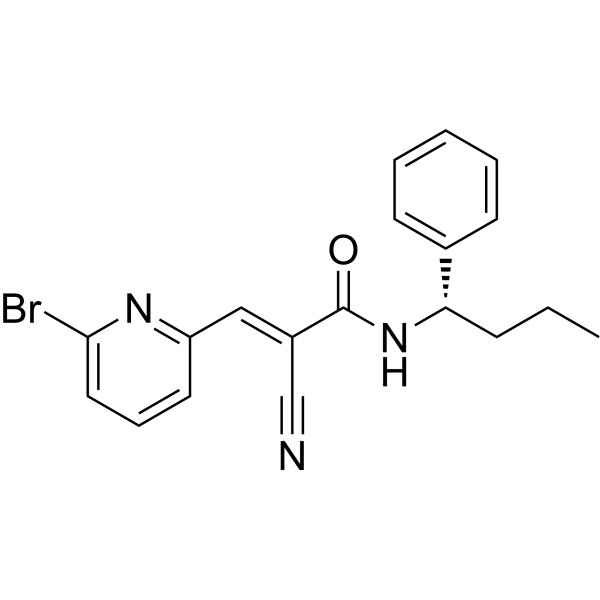
    Bcr-Abl Cancer
    BCR-ABL-IN-2 is an inhibitor of BCR-ABL1 tyrosine kinase, with IC50s of 57 nM, 773 nm for ABL1 native and ABL1 T315I, respectively.
    BCR-ABL-IN-2
  • HY-111872

    SNIPERs Bcr-Abl Cancer
    SNIPER(ABL)-020, conjugating Dasatinib (ABL inhibitor) to Bestatin (IAP ligand) with a linker, induces the reduction of BCR-ABL protein .
    SNIPER(ABL)-020
  • HY-150908

    Ligands for Target Protein for PROTAC Anaplastic lymphoma kinase (ALK) Cancer
    Brigatinib A is an GID4 ligand. Brigatinib A can be used for synthesizing PROTAC BCR-ABL Degrader-2 (HY-174368) .
    Brigatinib A
  • HY-152036

    PROTACs Bcr-Abl Cancer
    SIAIS100 is a potent BCR-ABL PROTAC degrader with an DC50 value of 2.7 nM. SIAIS100 can be used to research chronic myeloid leukemia (CML) .
    SIAIS100
  • HY-111860

    SNIPERs Bcr-Abl Cancer
    SNIPER(ABL)-013, conjugating GNF5 (ABL inhibitor) to Bestatin (IAP ligand) with a linker, induces the reduction of BCR-ABL protein with a DC50 of 20 μM .
    SNIPER(ABL)-013
  • HY-111861

    SNIPERs Bcr-Abl Cancer
    SNIPER(ABL)-024, conjugating GNF5 (ABL inhibitor) to LCL161 derivative (IAP ligand) with a linker, induces the reduction of BCR-ABL protein with a DC50 of 5μM .
    SNIPER(ABL)-024
  • HY-150566

    Bcr-Abl Cancer
    BCR-ABL-IN-5 (compound II) is a Bcr-Abl kinase (Breakpoint cluster region-Abelson) inhibitor. BCR-ABL-IN-5 inhibits Bcr-Abl WT and Bcr-Abl T3151 with the IC50 value of 0.014 μM and 0.45 μM, respectively. BCR-ABL-IN-5 has some anti-proliferative activity against leukemic cells .
    BCR-ABL-IN-5
  • HY-142922

    Bcr-Abl Cancer
    BCR-ABL-IN-4 is a BCR-ABL inhibitor with anticancer effects. BCR-ABL-IN-4 inhibits the cancer cell growth with IC50 values of 0.67 nM and 16 nM for K562 cells and BCR-ABL T315I transfected Ba/F3 cells, respectively (WO2021143927A1; compound 11) .
    BCR-ABL-IN-4
  • HY-10364

    Bcr-Abl Cancer
    AP24163 is a BCR-ABL kinase inhibitor. AP24163 inhibits wild-type (native) BCR-ABL and BCR-ABL-T315I with IC50 values of 7 nM and 511 nM, respectively. AP24163 can be used in the research of chronic myeloid leukemia (CML) .
    AP24163
  • HY-180967

    Bcr-Abl PROTACs Apoptosis Cancer
    PROTAC BCR-ABL Degrader-2 is a selective Bcr-Abl T315 PROTAC degrader with a DC50 of 108.7 nM in Ba/F3 Bcr-Abl T315I cells. PROTAC BCR-ABL Degrader-2 exhibits the most potent degradation efficacy with DR of 69.89% and 94.23% at 100 and 300 nM, respectively. PROTAC BCR-ABL Degrader-2 demonstrates high plasma exposure, and induces significant tumor regression and induces tumor cell apoptosis with a good safety profile in vivo. PROTAC BCR-ABL Degrader-2 can be used for chronic myeloid leukemia (CML) research .
    PROTAC BCR-ABL Degrader-2

Inquiry Online

Your information is safe with us. * Required Fields.

Salutation


Country or Region *

Applicant Name *


Organization Name *

Department *


Email Address *


Product Name *

Cat. No.


Requested quantity *

Phone Number *


Remarks

Inquiry Online

Inquiry Information

Product Name:
Cat. No.:
Quantity:
MCE Japan Authorized Agent:

