




Search Result
Results for "
Blood stage
" in MedChemExpress (MCE) Product Catalog:
1
Biochemical Assay Reagents
4
Isotope-Labeled Compounds
| Cat. No. |
Product Name |
Target |
Research Areas |
Chemical Structure |
-
- HY-B0146
-
Verteporfin
Maximum Cited Publications
266 Publications Verification
CL 318952
|
YAP
Apoptosis
Autophagy
Photosensitizer
|
Cancer
|
|
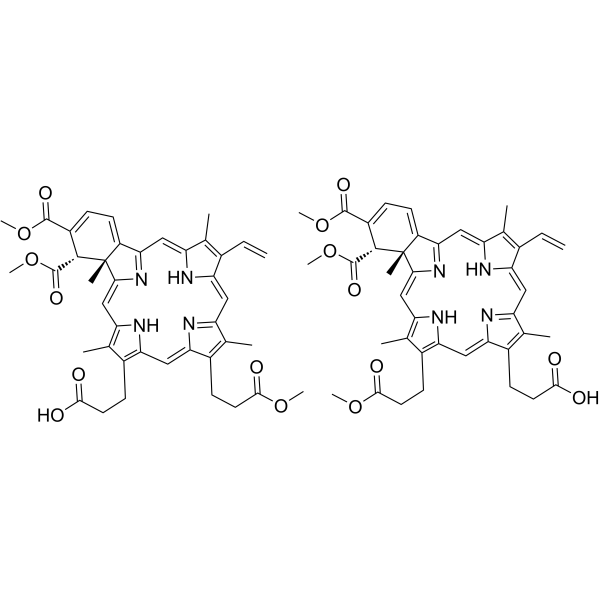
Verteporfin (CL 318952) is a photosensitizer for photodynamic therapy to eliminate the abnormal blood vessels in the eye associated with conditions such as age-related macular degeneration. Verteporfin is a YAP inhibitor which disrupts YAP-TEAD interactions. Verteporfin induces cell apoptosis . Verteporfinis an autophagy inhibitor that blocks autophagy at an early stage by inhibiting autophagosome formation .
|
-
-
- HY-128868A
-
|
|
Fluorescent Dye
|
Others
|
|
FITC-Dextran (MW 4000) is a fluorescent probe for fluorescein isothiocyanate (FITC) dextran (Ex=495 nm; Em=525 nm). FITC-Dextran (MW 4000) can be used as a marker to reveal heat shock-induced cell damage and to study the early and late stages of apoptosis. FITC-Dextran (MW 4000) can also be used for cell permeability studies, such as blood-brain barrier permeability and determination of the extent of blood-brain barrier disruption .
|
-
-
- HY-128868
-
|
|
Fluorescent Dye
|
Others
|
|
FITC-Dextran (MW 10000) is a fluorescent probe for fluorescein isothiocyanate (FITC) dextran (Ex=495 nm; Em=525 nm). FITC-Dextran (MW 10000) can be used as a marker to reveal heat shock-induced cell damage and to study the early and late stages of apoptosis. FITC-Dextran (MW 10000) can also be used for cell permeability studies, such as blood-brain barrier permeability and determination of the extent of blood-brain barrier disruption .
|
-
-
- HY-128868D
-
|
|
Fluorescent Dye
|
Others
|
|
FITC-Dextran (MW 40000) is a fluorescent probe for fluorescein isothiocyanate (FITC) dextran (Ex=495 nm; Em=525 nm). FITC-Dextran (MW 40000) can be used as a marker to reveal heat shock-induced cell damage and to study the early and late stages of apoptosis. FITC-Dextran (MW 40000) can also be used for cell permeability studies, such as blood-brain barrier permeability and determination of the extent of blood-brain barrier disruption .
|
-
-
- HY-128868B
-
|
|
Biochemical Assay Reagents
|
Others
|
|
FITC-Dextran (MW 3000-5000) is a fluorescent probe for fluorescein isothiocyanate (FITC) dextran (Ex=495 nm; Em=525 nm). FITC-Dextran (MW 3000-5000) can be used as a marker to reveal heat shock-induced cell damage and to study the early and late stages of apoptosis. FITC-Dextran (MW 3000-5000) can also be used for cell permeability studies, such as blood-brain barrier permeability and determination of the extent of blood-brain barrier disruption . Storage: protect from light.
|
-
-
- HY-W016420
-
|
MK-0955 sodium
|
Bacterial
Antibiotic
|
Infection
Cancer
|
|
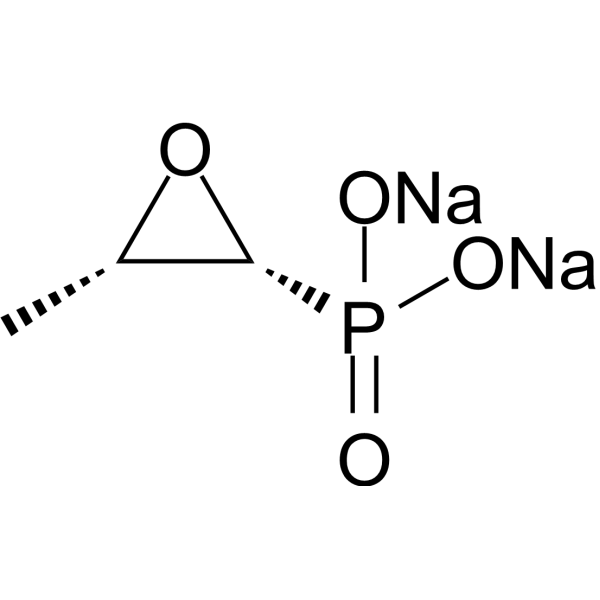
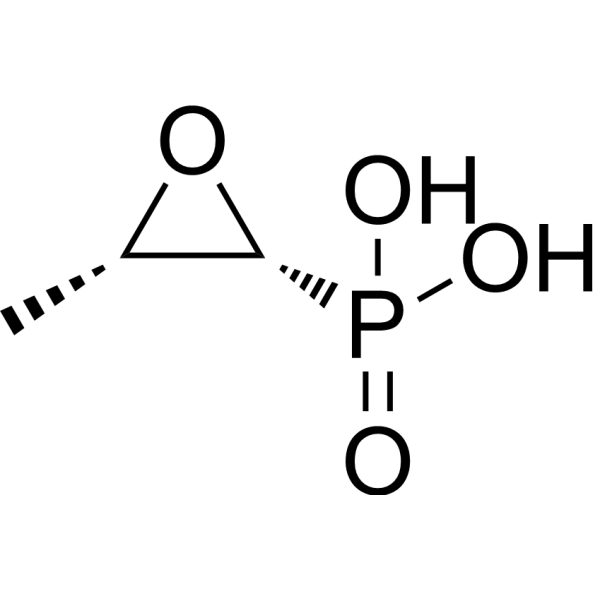
Fosfomycin (MK-0955) sodium is a blood-brain barrier penetrating, broad-spectrum antibiotic by irreversibly inhibiting an early stage in cell wall synthesis. Fosfomycin sodium shows both in vivo and in vitro activity against a wide range of bacteria, including multidrug-resistant (MDR), extensively drug-resistant (XDR), and pan-drug-resistant (PDR) bacteria .
|
-
-
- HY-128868G
-
|
|
Fluorescent Dye
|
Others
|
|
FITC-Dextran (MW 150000) is a fluorescent probe for fluorescein isothiocyanate (FITC) dextran (Ex=491 nm; Em=518 nm). FITC-Dextran (MW 150000) can be used as a marker to reveal heat shock-induced cell damage and to study the early and late stages of apoptosis. FITC-Dextran (MW 150000) can be used in perfusion studies in animals or in fluorescence microlymphography, to study processes that affect the permeability of the blood brain barrier (BBB) . FITC-Dextran (MW 150000) can be used as fluorescent probe to study cell permeability .
|
-
-
- HY-B0148
-
|
Risedronate
|
Parasite
Apoptosis
|
Infection
Metabolic Disease
Cancer
|
|
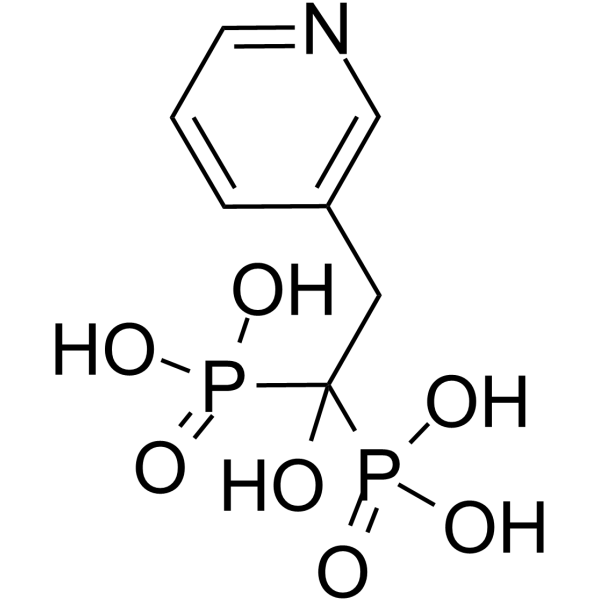
Risedronic acid (Risedronate) is a bisphosphonate and potent antiresorptive agent. Risedronic acid induces Apoptosis. Risedronic acid inhibits the transfer of farnesyl pyrophosphate groups to parasite proteins. Risedronic acid inhibits osteoclast-mediated bone resorption and alters bone metabolism. Risedronic acid inhibits blood-stage Plasmodium falciparum (IC50 of 20.3 μM) .
|
-
-
- HY-B1075
-
|
MK-0955 calcium
|
Bacterial
Antibiotic
|
Infection
Cancer
|
|
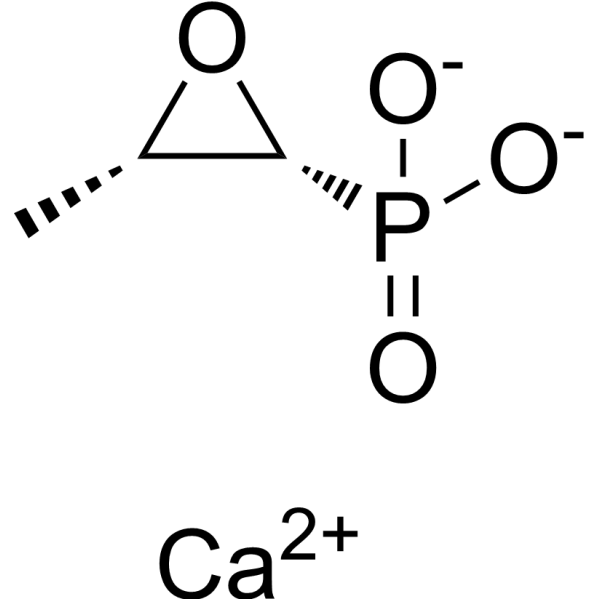
Fosfomycin (MK-0955) calcium is a blood-brain barrier penetrating, broad-spectrum antibiotic by irreversibly inhibiting an early stage in cell wall synthesis. Fosfomycin calcium shows both in vivo and in vitro activity against a wide range of bacteria, including multidrug-resistant (MDR), extensively drug-resistant (XDR), and pan-drug-resistant (PDR) bacteria .
|
-
-
- HY-110155
-
|
|
Neurotensin Receptor
|
Neurological Disease
|
|
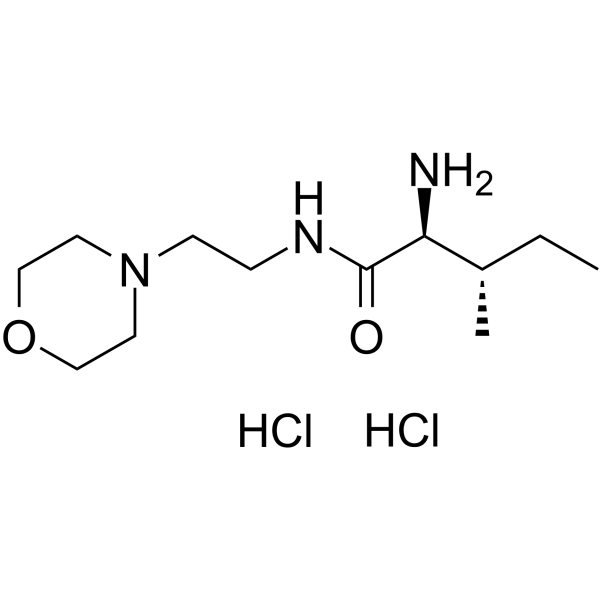
LM11A-31 dihydrochloride, a non-peptide p75 NTR (neurotrophin receptor p75) modulator, is an orally active and potent proNGF (nerve growth factor) antagonist. LM11A-31 dihydrochloride is an amino acid derivative with high blood-brain barrier permeability and blocks p75-mediated cell death. LM11A-31 dihydrochloride reverses cholinergic neurite dystrophy in Alzheimer's disease mouse models with mid- to late-stage disease progression .
|
-
-
- HY-117088
-
|
|
Neurokinin Receptor
|
Neurological Disease
|
|
LM11A-31, a non-peptide p75 NTR (neurotrophin receptor p75) modulator, is an orally active and potent proNGF (nerve growth factor) antagonist. LM11A-31 is an amino acid derivative with high blood-brain barrier permeability and blocks p75-mediated cell death. LM11A-31 reverses cholinergic neurite dystrophy in Alzheimer's disease mouse models with mid- to late-stage disease progression .
|
-
-
- HY-B1075A
-
|
MK-0955
|
Bacterial
Antibiotic
|
Infection
Cancer
|
|
Fosfomycin (MK-0955) is a broad-spectrum antibiotic. Fosfomycin can cross blood-brain barrier penetrating, and irreversibly inhibits an early stage in cell wall synthesis. Fosfomycin shows anti-bacteria activity for a range of bacteria, including multidrug-resistant (MDR), extensively drug-resistant (XDR), and pan-drug-resistant (PDR) bacteria .
|
-
-
- HY-DY1016
-
|
|
Fluorescent Dye
|
Others
|
FITC-Dextran (MW 10000) (solution) is a fluorescent probe for fluorescein isothiocyanate (FITC) dextran (Ex=495 nm; Em=525 nm). FITC-Dextran (MW 10000) can be used as a marker to reveal heat shock-induced cell damage and to study the early and late stages of apoptosis. FITC-Dextran (MW 10000) can also be used for cell permeability studies, such as blood-brain barrier permeability and determination of the extent of blood-brain barrier disruption . Solvent and Concentration: Sterile water: 2 mM
|
-
-
- HY-B0119
-
|
Risedronate sodium
|
Parasite
Apoptosis
|
Infection
Metabolic Disease
Cancer
|
|
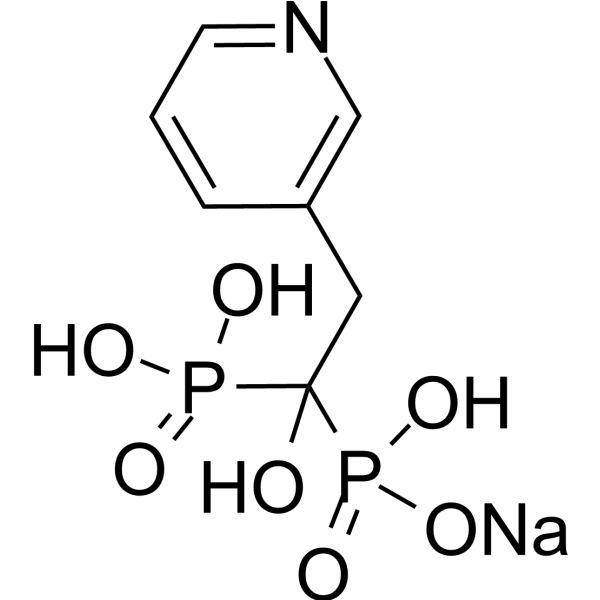
Risedronic acid (Risedronate) sodium, a bisphosphonate, is a potent anti-resorption agent that inhibits osteoclast-mediated bone resorption and changes the bone metabolism. Risedronic acid sodium suppresses osteoblast differentiation and induced caspase- and isoprenoid depletion-dependent apoptosis. Risedronic acid sodium inhibits blood stages of Plasmodium falciparum (IC50 of 20.3 μM). Risedronic acid sodium inhibits the transfer of the farnesyl pyrophosphate group to parasite proteins .
|
-
-
- HY-B1589A
-
|
|
Histamine Receptor
Influenza Virus
|
Infection
Inflammation/Immunology
|
|
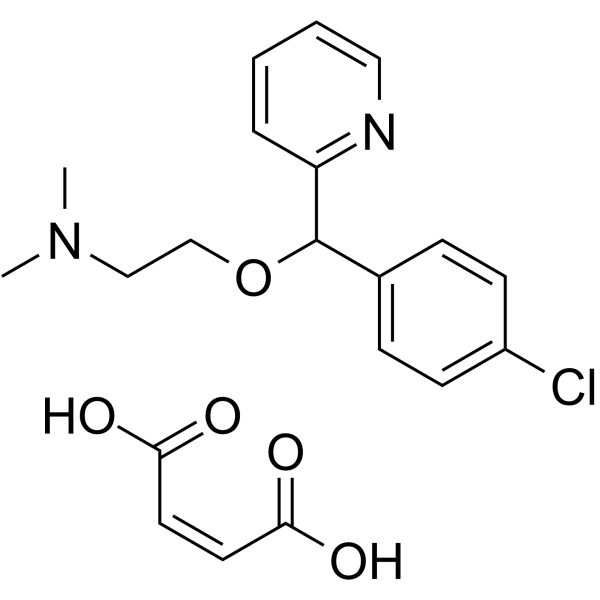
Carbinoxamine maleate salt is a blood-brain barrier-permeable histamine H1 receptor antagonist. Carbinoxamine maleate salt blocks the action of histamine on H1 receptors, reducing symptoms such as sneezing, rhinitis, rhinorrhea, erythema, pruritus and urticaria. Carbinoxamine maleate salt inhibits influenza virus entry into cells via endocytosis, targets the early stage of the viral life cycle, and simultaneously reduces viral replication levels in the lungs, alleviating pathological damage and inflammatory responses in lung tissues. Carbinoxamine maleate salt can be used in research on allergic rhinitis, influenza, etc.
|
-
-
- HY-12912
-
|
|
PI4K
Parasite
|
Infection
|
|
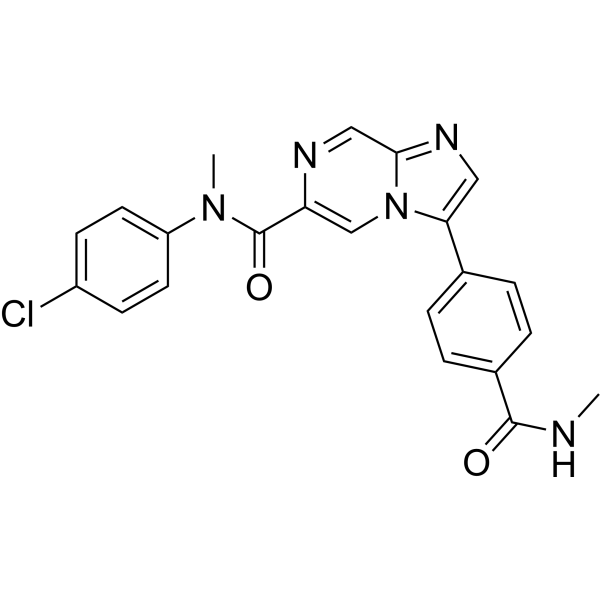
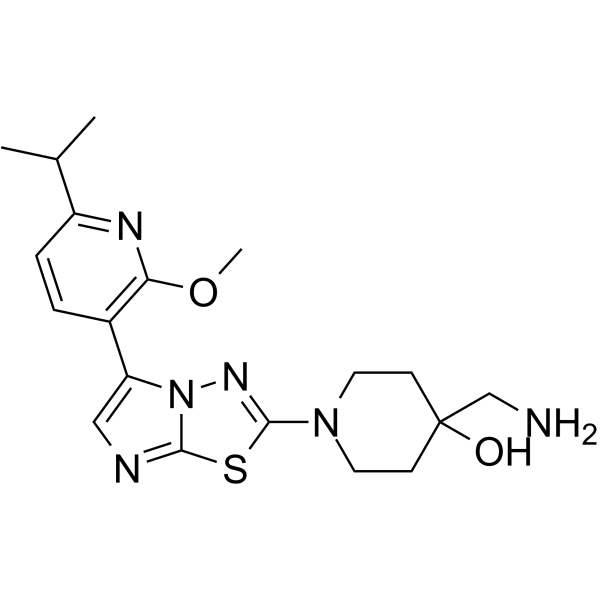
KDU691, an imidazopyrazine with potent anti-parasitic activity against blood stage schizonts, gametocytes and liver stages, is a Plasmodium PI4K inhibitor. KDU691 selectively inhibits dihydroartemisinin-pretreated Plasmodium falciparum ring-stage parasites .
|
-
-
- HY-145964
-
|
|
Parasite
Haspin Kinase
FLT3
|
Infection
|
|
INE963 is a potent and fast-acting blood-stage antimalarial agent, with an EC50s of 3-6 nM. INE963 is potential for single-dose cures in uncomplicated malaria .
|
-
-
- HY-B0609
-
|
MK-0955 tromethamine
|
Bacterial
Antibiotic
|
Infection
Cancer
|
|
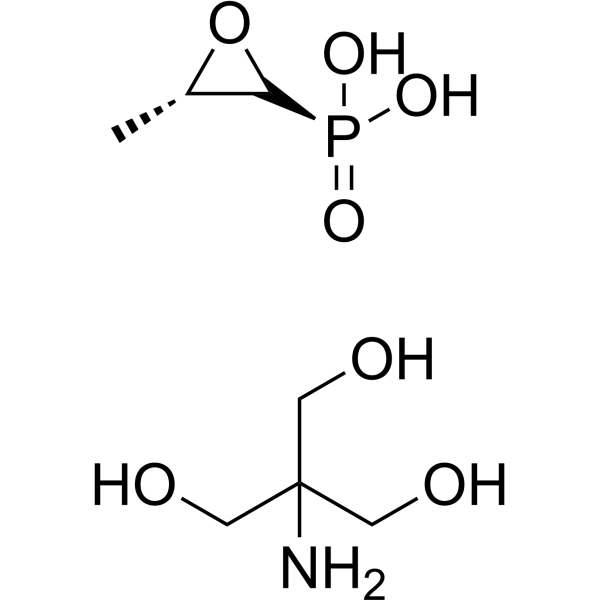
Fosfomycin (MK-0955) tromethamine is a blood-brain barrier penetrating, broad-spectrum antibiotic by irreversibly inhibiting an early stage in cell wall synthesis. Fosfomycin tromethamine shows both in vivo and in vitro activity against a wide range of bacteria, including multidrug-resistant (MDR), extensively drug-resistant (XDR), and pan-drug-resistant (PDR) bacteria .
|
-
-
- HY-108024A
-
|
KAF156 hydrochloride; GNF156 hydrochloride
|
Parasite
|
Infection
|
|
Ganaplacide (KAF156) hydrochloride is a first-in-class, orally active imidazolopiperazine antimalarial agent. Ganaplacide hydrochloride is active against a broad range of Plasmodium species, including drug-resistant parasites. Ganaplacide hydrochloride is parasiticidal against both asexual and sexual blood stages as well as the liver stages of the parasite .
|
-
-
- HY-B1036
-
|
|
Parasite
|
Infection
|
|
Decoquinate is an orally active, selective inhibitor of the mitochondrial bc1 complex, targeting Eimeria spp. sporozoites and first generation schizonts, and Plasmodium spp. Decoquinate inhibits electron transfer by competitively binding to the mitochondrial cytochrome b system, blocking the parasite's energy metabolism, thereby inhibiting its development and reproduction. Decoquinate has significant anticoccidial activity, preventing intestinal damage and improving host growth performance, and also has inhibitory effects on the liver and blood stages of Plasmodium. Decoquinate is mainly used in veterinary research to prevent and treat coccidiosis in ruminants and poultry .
|
-
-
- HY-131708A
-
|
|
HDAC
Parasite
|
Infection
|
|
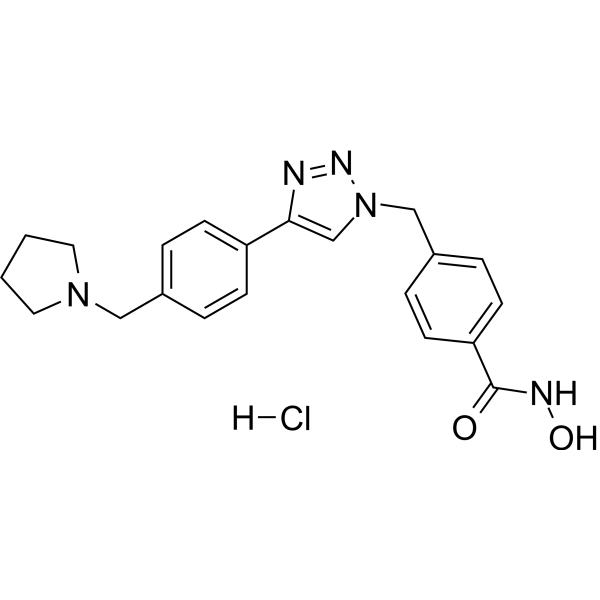
FNDR-20123 is a safe, first-in-class, and orally active anti-malarial HDAC inhibitor with IC50s of 31 nM and 3 nM for Plasmodium and human HDAC, respectively. FNDR-20123 exerts anti-malarial activity against Plasmodium falciparum asexual stage (IC50=41 nM) and sexual blood stage (IC50=190 nM for male gametocytes). FNDR-20123 inhibits HDAC1, HDAC2, HDAC3, HDAC6, and HDAC8 (IC50=25/29/2/11/282 nM, respectively.) and inhibits Class III HDAC isoforms at nanomolar concentrations .
|
-
-
- HY-125287
-
|
(Rac)-UCB0599; NPT200-11
|
α-synuclein
|
Neurological Disease
|
|
(Rac)-Minzasolmin ((Rac)-UCB0599; NPT200-11) is a blood-brain barrier penetrated alpha-synuclein (ASYN) misfolding inhibitor. (Rac)-Minzasolmin acts on the early stage of ASYN aggregation process, by replacing the membrane-bound oligomers ASYN, allowing them to revert to the monomeric form, while preventing pathological aggregation. (Rac)-Minzasolmin effectively improves the ASYN deposition in the retina and the neuro-pathological indicators in two α-synuclein transgenic mouse models. (Rac)-Minzasolmin can be used for the studies of Parkinson's disease (PD) and dementia with Lewy bodies (DLB) .
|
-
-
- HY-151574
-
|
|
Ser/Thr Kinase
Parasite
GSK-3
|
Infection
|
|
PfGSK3/PfPK6-IN-1 is a dual Plasmodium serine/threonine kinase inhibitor, with an IC50 of 97 nM against PfGSK3 and 8 nM against PfPK6 of Plasmodium falciparum. PfGSK3/PfPK6-IN-1 inhibits the proliferation of blood-stage parasites of Plasmodium falciparum 3D7. PfGSK3/PfPK6-IN-1 shows low cytotoxicity to hepatocytes at a concentration of 200 nM, and reduces cell viability at a concentration of 2 μM. PfGSK3/PfPK6-IN-1 is applicable to malaria-related research .
|
-
-
- HY-DY1018
-
|
|
Fluorescent Dye
|
Others
|
FITC-Dextran (MW 4000) (solution) is a fluorescent probe for fluorescein isothiocyanate (FITC) dextran (Ex=495 nm; Em=525 nm). FITC-Dextran (MW 4000) can be used as a marker to reveal heat shock-induced cell damage and to study the early and late stages of apoptosis. FITC-Dextran (MW 4000) can also be used for cell permeability studies, such as blood-brain barrier permeability and determination of the extent of blood-brain barrier disruption . Solvent and Concentration: Sterile water: 2 mM
|
-
-
- HY-111817
-
|
|
Parasite
|
Infection
|
|
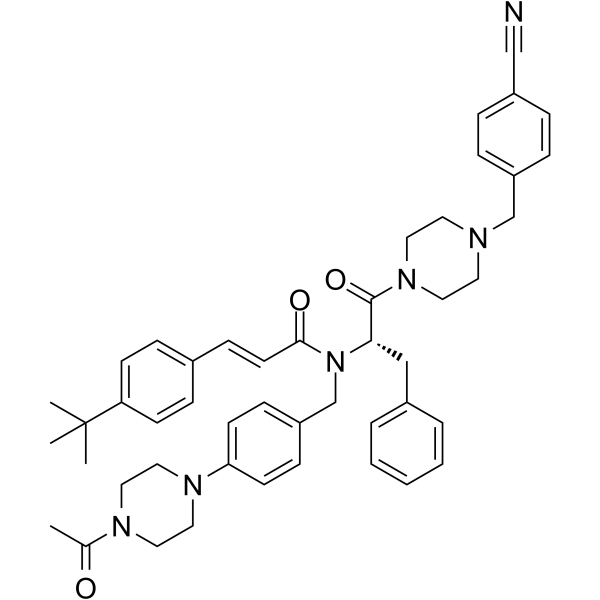
ACT-451840 is an orally active, potent and low-toxicity compound, showing activity against sensitive and resistant plasmodium falciparum strains. ACT-451840 targets all asexual blood stages of the parasite, has a rapid onset of action. ACT-451840 behaves in a way similar to artemisinin derivatives, with very rapid onset of action and elimination of parasite. ACT-451840 can be used for the research of malarial .
|
-
-
- HY-162238
-
|
|
Parasite
|
Infection
|
|
OSM-S-106 is a pro-inhibitor and that inhibition of PfAsnRS occurs via enzyme-mediated production of an Asn-OSM-S-106 adduct. OSM-S-106 inhibits protein translation and activates the amino acid starvation response. OSM-S-106 exhibits selective activity against Plasmodium blood and liver stages and low intrinsic clearance by human microsomes .
|
-
-
- HY-N15159
-
|
|
Cyclic GMP-AMP Synthase
STING
Parasite
|
Infection
Inflammation/Immunology
|
|
Cladophorol A is a cyclic GMP-AMP synthase (cGAS) inhibitor. Cladophorol A binds to the conserved adenosine nucleobase binding site within the cGAS active site to inhibit its catalytic activity. Cladophorol A effectively inhibits the overactivation of the cGAS-STING pathway with an IC50 of 370 nM. Cladophorol A inhibits asexual blood-stage Plasmodium falciparum with an EC50 of 0.7 μg/mL. Cladophorol A can be used for the researches of inflammatory disease and malaria .
|
-
-
- HY-17656
-
|
|
Parasite
|
Infection
|
|
C3361 is a moderate specific Plasmodium falciparum hexose transporter 1 (PfHT1) and Plasmodium berghei hexose transporter 1 (PbHT1) inhibitor with Ki values of 8.6 and 9.4 μM. C3361 inhibits TgGT1 with a Ki of 82 μM. C3361 attenuates hepatic (IC50 = 15 μM) and ookinete development of P. berghei. C3361 can suppress the growth of blood-stage parasites. C3361 can be used for the research of infection, such as malaria .
|
-
-
- HY-W338446
-
|
|
Tau Protein
|
Neurological Disease
|
|
BF-170 is a selective tau fibril binding agent with an EC50 of 221 nM. It exhibits good blood-brain barrier permeability, and after intravenous injection in mice, the concentration in brain tissue reaches 9.1% ID/g within 2 minutes (with a brain clearance rate of 0.25% ID/g after 30 minutes). BF-170 can be used as a probe for tau protein pathology imaging in Alzheimer's disease (AD). It plays an important role in early-stage AD research and holds potential for imaging studies of tau-related neurodegenerative diseases .
|
-
-
- HY-169728
-
|
|
Hexokinase
Parasite
|
Infection
|
|
SID 24785302 is a hexokinase inhibitor with antiparasitic activity. SID 24785302 exhibits activity against T. brucei and Leishmania. SID 24785302 can be used for the research of mitochondrial DNA disorders and parasitic infection .
|
-
-
- HY-159637
-
|
NVP-IWY357
|
Parasite
|
Infection
|
|
IWY357 is a long-acting, blood-stage inhibitor of Plasmodium falciparum .
|
-
-
- HY-108024
-
|
KAF156; GNF156
|
Parasite
|
Infection
|
|
Ganaplacide (KAF156) is a first-in-class,
orally active imidazolopiperazine antimalarial agent.
Ganaplacide is active against a broad range of Plasmodium
species, including drug-resistant parasites. Ganaplacide is parasiticidal
against both asexual and sexual blood stages as well as the liver stages of the
parasite .
|
-
-
- HY-B0146R
-
|
CL 318952 (Standard)
|
Reference Standards
YAP
Apoptosis
Autophagy
|
Cancer
|
|
Verteporfin (Standard) is the analytical standard of Verteporfin. This product is intended for research and analytical applications. Verteporfin (CL 318952) is a photosensitizer for photodynamic therapy to eliminate the abnormal blood vessels in the eye associated with conditions such as age-related macular degeneration. Verteporfin is a YAP inhibitor which disrupts YAP-TEAD interactions. Verteporfin induces cell apoptosis . Verteporfinis an autophagy inhibitor that blocks autophagy at an early stage by inhibiting autophagosome formation .
|
-
-
- HY-B0148R
-
|
Risedronate (Standard)
|
Parasite
Reference Standards
Apoptosis
|
Infection
Metabolic Disease
Cancer
|
|
Risedronic acid (Standard) (Risedronate (Standard)) is the analytical standard of Risedronic acid (HY-B0148). This product is intended for research and analytical applications. Risedronic acid (Risedronate) is a bisphosphonate and potent antiresorptive agent. Risedronic acid induces Apoptosis. Risedronic acid inhibits the transfer of farnesyl pyrophosphate groups to parasite proteins. Risedronic acid inhibits osteoclast-mediated bone resorption and alters bone metabolism. Risedronic acid inhibits blood-stage Plasmodium falciparum (IC50 of 20.3 μM).
|
-
-
- HY-B0148S
-
|
Risedronate-d4
|
Isotope-Labeled Compounds
Parasite
Apoptosis
|
Infection
Metabolic Disease
Cancer
|
|
Risedronic acid-d4 (Risedronate-d4) is the deuterium labeled Risedronic acid (HY-B0148). Risedronic acid (Risedronate) is a bisphosphonate and potent antiresorptive agent. Risedronic acid induces Apoptosis. Risedronic acid inhibits the transfer of farnesyl pyrophosphate groups to parasite proteins. Risedronic acid inhibits osteoclast-mediated bone resorption and alters bone metabolism. Risedronic acid inhibits blood-stage Plasmodium falciparum (IC50 of 20.3 μM) .
|
-
-
- HY-120924
-
-
-
- HY-121647
-
|
|
Parasite
|
Others
|
|
Nopol is a quinoline derivative based on nopol that has inhibitory activity against the asexual blood stage of Plasmodium falciparum. Derivatives with different structures have different activities against different Plasmodium strains, and some derivatives have submicromolar EC50 values in specific strains.
|
-
-
- HY-170219
-
|
|
Parasite
Epigenetic Reader Domain
|
Infection
|
|
RMM23 is an inhibitor targeting PfBDP1 with a Kd value of 1.24 μM. RMM23 against the wild-type strains 3D7 and NF54, and the multidrug-resistant K1 strain in vitro blood stage, with EC50 values of 18 μM, 14 μM, 20 μM, respectively .
|
-
-
- HY-175732
-
|
|
PI4K
Parasite
|
Infection
|
|
PI4Kβ-IN-1 is an orally active and selective PI4Kβ inhibitor, with an IC50 of 0.9 nM. PI4Kβ-IN-1 exhibits inhibitory activity against all stages of the P. falciparum life cycle, including blood, liver, and transmission stages. PI4Kβ-IN-1 demonstrates potent antimalarial efficacy in the mouse model infected with Plasmodium falciparum. PI4Kβ-IN-1 can be used for the study of malaria caused by Plasmodium falciparum .
|
-
-
- HY-B1075AS
-
|
MK-0955 (benzylamine)-13C3
|
Bacterial
Antibiotic
|
Infection
|
|
(Rac)-Fosfomycin (benzylamine)- 13C3 is the 13C labeled Fosfomycin . Fosfomycin (MK-0955) is a broad-spectrum antibiotic. Fosfomycin can cross blood-brain barrier penetrating, and irreversibly inhibits an early stage in cell wall synthesis. Fosfomycin shows anti-bacteria activity for a range of bacteria, including multidrug-resistant (MDR), extensively drug-resistant (XDR), and pan-drug-resistant (PDR) bacteria .
|
-
-
- HY-B1075R
-
|
MK-0955 calcium (Standard)
|
Reference Standards
Bacterial
Antibiotic
|
Infection
Cancer
|
|
Fosfomycin (calcium) (Standard) is the analytical standard of Fosfomycin (calcium). This product is intended for research and analytical applications. Fosfomycin (MK-0955) calcium is a blood-brain barrier penetrating, broad-spectrum antibiotic by irreversibly inhibiting an early stage in cell wall synthesis. Fosfomycin calcium shows both in vivo and in vitro activity against a wide range of bacteria, including multidrug-resistant (MDR), extensively drug-resistant (XDR), and pan-drug-resistant (PDR) bacteria .
|
-
-
- HY-150598
-
|
|
PI4K
PI3K
|
Infection
|
|
CHMFL-PI4K-127 (compound 15g) is an orally active, potent and high selective PfPI4K (Plasmodium falciparum PI4K kinase) inhibitor, with an IC50 of 0.9 nM. CHMFL-PI4K-127 exhibits potent activity against 3D7 Plasmodium falciparum, with an EC50 of 25.1 nM. CHMFL-PI4K-127 shows antimalaria efficacy .
|
-
-
- HY-116736
-
|
|
Dihydroorotate Dehydrogenase
Parasite
|
Infection
|
|
BRD7539 is a PfDHODH inhibitor (IC50 = 0.033 μM). BRD7539 has potent activity against both multidrug-resistant asexual blood-stage (P. falciparum, Dd2 strain, EC50 = 0.010 μM) and liver-stage (P. berghei, EC50 = 0.015 μM) parasites .
|
-
-
- HY-145912
-
-
-
- HY-163997
-
|
|
Parasite
|
Infection
|
|
Antimalarial agent 42 (Compound 2) is an antimalarial agent, that inhibits Plasmodium falciparum in the phase of asexual blood stages (IC50 <0.5μM) and gametocytes (IC50 is 0.14 μM) .
|
-
-
- HY-148178
-
|
|
Parasite
|
Infection
|
|
MMV688533 is an antimalarial agent. MMV688533 interferes with intracellular trafficking, lipid utilization, and endocytosis pathways in Plasmodium falciparum. MMV688533 rapidly kills asexual blood-stage Plasmodium falciparum and Plasmodium vivax parasites in vitro and reduces parasitemia in a Plasmodium falciparum NSG mouse model. MMV688533 can be used for the research of malaria .
|
-
-
- HY-152614
-
|
|
Parasite
|
Infection
|
|
Antimalarial agent 19 (compound 6e) is an antimalarial active agent. Antimalarial agent 19 has antimalarial activity for the blood stage of P. falciparum K1 and P. berghei with EC50 values of 0.3 µM, 15.3 µM, respectively. Antimalarial agent 19 has good aqueous solubility, intestinal permeability and microsomal stability compared to gamhepathiopine .
|
-
-
- HY-131708
-
|
|
HDAC
Parasite
|
Infection
|
|
FNDR-20123 free base is a safe, first-in-class, and orally active anti-malarial HDAC inhibitor with IC50s of 31 nM and 3 nM for Plasmodium and human HDAC, respectively. FNDR-20123 free base exerts anti-malarial activity against Plasmodium falciparum asexual stage (IC50=41 nM) and sexual blood stage (IC50=190 nM for male gametocytes). FNDR-20123 free base inhibits HDAC1, HDAC2, HDAC3, HDAC6, and HDAC8 (IC50=25, 29, 2, 11, and 282 nM, respectively) and inhibits Class III HDAC isoforms at nanomolar concentrations .
|
-
-
- HY-B1589
-
|
|
Histamine Receptor
|
Infection
Inflammation/Immunology
|
|
(±)-Carbinoxamine is a blood-brain barrier-permeable histamine H1 receptor antagonist. (±)-Carbinoxamine blocks the action of histamine on H1 receptors, reducing symptoms such as sneezing, rhinitis, rhinorrhea, erythema, pruritus and urticaria. (±)-Carbinoxamine inhibits influenza virus entry into cells via endocytosis, targets the early stage of the viral life cycle, and simultaneously reduces viral replication levels in the lungs, alleviating pathological damage and inflammatory responses in lung tissues. (±)-Carbinoxamine can be used in research on allergic rhinitis, influenza, etc.
|
-
-
- HY-B1589AS
-
|
|
Isotope-Labeled Compounds
Histamine Receptor
Influenza Virus
|
Neurological Disease
Endocrinology
|
|
Carbinoxamine-d6 (maleate) is the deuterium labeled Carbinoxamine maleate salt. Carbinoxamine maleate salt is a blood-brain barrier-permeable histamine H1 receptor antagonist. Carbinoxamine maleate salt blocks the action of histamine on H1 receptors, reducing symptoms such as sneezing, rhinitis, rhinorrhea, erythema, pruritus and urticaria. Carbinoxamine maleate salt inhibits influenza virus entry into cells via endocytosis, targets the early stage of the viral life cycle, and simultaneously reduces viral replication levels in the lungs, alleviating pathological damage and inflammatory responses in lung tissues. Carbinoxamine maleate salt can be used in research on allergic rhinitis, influenza, etc.
|
-
- HY-161984
-
|
|
HDAC
|
Infection
Others
|
|
HDAC-IN-76 (compound 6i) is a histone deacetylase (HDAC) inhibitor. HDAC-IN-76 IC50 values of 30 nM and 98 nM for Pf3D7 (chloroquine (HY-17589A) drug-susceptible strain) and PfDd2 (chloroquine (HY-17589A) drug-resistant strain), has a highly potent antimalarial activity against asexual blood-stage Plasmodium, respectively, and exhibits selective inhibition against parasites, with IC50 values of 7 nM and 9 nM for human HDAC1 and HDAC6, respectively, while inhibiting PfHDAC1 .
|
-
- HY-B1589AR
-
|
|
Reference Standards
Histamine Receptor
Influenza Virus
|
Infection
Inflammation/Immunology
|
|
Carbinoxamine maleate salt (Standard) is the analytical standard of Carbinoxamine maleate salt (HY-B1589A). This product is intended for research and analytical applications. Carbinoxamine maleate salt is a blood-brain barrier-permeable histamine H1 receptor antagonist. Carbinoxamine maleate salt blocks the action of histamine on H1 receptors, reducing symptoms such as sneezing, rhinitis, rhinorrhea, erythema, pruritus and urticaria. Carbinoxamine maleate salt inhibits influenza virus entry into cells via endocytosis, targets the early stage of the viral life cycle, and simultaneously reduces viral replication levels in the lungs, alleviating pathological damage and inflammatory responses in lung tissues. Carbinoxamine maleate salt can be used in research on allergic rhinitis, influenza, etc.
|
-
- HY-131455A
-
|
|
Biochemical Assay Reagents
|
Others
|
|
Biotin-C1-PEG3-C3-amido-C5-Gly-Arg-Gly-N3 TFA is used for detection of modification site for N-myristoylated and GPI-anchored proteins in blood-stage P. falciparum . Biotin-C1-PEG3-C3-amido-C5-Gly-Arg-Gly-N3 (TFA) is a click chemistry reagent, it contains an Azide group and can undergo copper-catalyzed azide-alkyne cycloaddition reaction (CuAAc) with molecules containing Alkyne groups. It can also undergo strain-promoted alkyne-azide cycloaddition (SPAAC) reactions with molecules containing DBCO or BCN groups.
|
-
- HY-183238
-
|
|
Parasite
|
Infection
|
|
Antimalarial agent 61 is an antimalarial agent. Antimalarial agent 61 disrupts hemoglobin breakdown in Plasmodium falciparum asexual blood stage trophozoites. Antimalarial agent 61 exerts antiplasmodial activity against Chloroquine (HY-17589A)-sensitive Plasmodium falciparum parasites. Antimalarial agent 61 can be used for the research of malaria .
|
-
- HY-182309
-
|
|
DNA Methyltransferase
Parasite
|
Infection
|
|
SC83288 is a Plasmodium falciparum PfDNMT2 inhibitor with an IC50 of 7 μM. SC83288 disrupts the epigenetic regulation of malaria parasites, blocks DNA replication and nuclear division, arrests the development of the asexual blood stage, induces the formation of pyknotic morphology in malaria parasites, and does not affect cytokinesis after nuclear division or parasite egress. SC83288 is applicable to malaria-related research .
|
-
- HY-108024AR
-
|
KAF156 hydrochloride (Standard); GNF156 hydrochloride (Standard)
|
Reference Standards
Parasite
|
Infection
|
|
Ganaplacide hydrochloride (Standard) is the analytical standard of Ganaplacide (hydrochloride) (HY-108024A). This product is intended for research and analytical applications. Ganaplacide (KAF156) hydrochloride is a first-in-class, orally active imidazolopiperazine antimalarial agent. Ganaplacide hydrochloride is active against a broad range of Plasmodium species, including drug-resistant parasites. Ganaplacide hydrochloride is parasiticidal against both asexual and sexual blood stages as well as the liver stages of the parasite .
|
-
- HY-182683
-
|
|
Parasite
TrxR
Reactive Oxygen Species (ROS)
|
Infection
|
|
MMV085203 is a potent Plasmodium falciparum inhibitor, with a PfTrxR EC50 of 900 nM. MMV085203 exerts potent antimalarial activity against both blood‑stage and sexual‑stage Plasmodium falciparum parasites, with superior efficacy toward clinical isolates of high clonal diversity. MMV085203 modulates parasite redox homeostasis, induces ROS production, and elevates mitochondrial TCA cycle intermediates. MMV085203 can be used for the research of malaria .
|
-
- HY-18746
-
|
|
Parasite
PI4K
|
Infection
|
|
KAI-407 is an orally active inhibitor of Plasmodium PI4K kinase, which can broadly inhibit multiple stages of the parasite lifecycle. KAI-407 exhibits EC50s of for the blood stage of malignant Plasmodium of 81 nM; for the liver schizonts of P. yoelii of 88 nM; and IC50s for the liver schizonts and dormant bodies of P. cynomolgi of 0.64 μM and 0.69 μM respectively. KAI-407 can prevent Plasmodium berghei infection 100%. KAI-407 can be used for the study of vivax malaria .
|
-
- HY-183986
-
|
|
RAR/RXR
|
Endocrinology
|
|
SR210831C is a highly selective, orally active retinoic acid receptor α (RARα) inhibitor with an IC50 of 0.051 nM. SR210831C suppresses spermatogenesis by reducing sperm count in house mice via acting on the early stages of spermatogenesis, and it does not cross the blood-testis barrier. SR210831C can be used in male contraception research .
|
-
- HY-19066
-
|
|
Potassium Channel
|
Cardiovascular Disease
|
|
KW-3407 is an antiarrhythmic agent. KW-3407 can inhibit two-stage (24 and 48 h) coronary ligation-, digitalis- and adrenaline-induced spontaneously occurring arrhythmias with IC50 values of 18.1, 14.4, 18.3 and 21.4 μg/mL. KW-3407 can decrease the sinoatrial rate and contractile force, and increase the coronary blood flow and AV conduction times .
|
-
- HY-181821
-
|
|
Parasite
Na+/K+ ATPase
|
Infection
|
|
MMV1581361 is a PfATP4 inhibitor and an orally active, transmission-blocking agent with nanomolar activity against Plasmodium falciparum blood-stage isolates. MMV1581361 disrupts sodium ion (Na +) homeostasis in Plasmodium falciparum. MMV1581361 inhibits male gamete exflagellation, reduces oocyst intensity, and blocks transmission of Plasmodium falciparum. MMV1581361 demonstrates efficacy in the humanized Plasmodium falciparum NOD scid IL2Rγ null mouse model. MMV1581361 can be used for the research of malaria .
|
-
- HY-B1589S
-
|
|
Isotope-Labeled Compounds
Histamine Receptor
Influenza Virus
|
Infection
Inflammation/Immunology
|
|
(±)-Carbinoxamine-d6 is the deuterium labeled (±)-Carbinoxamine (HY-B1589) . (±)-Carbinoxamine is a blood-brain barrier-permeable histamine H1 receptor antagonist. (±)-Carbinoxamine blocks the action of histamine on H1 receptors, reducing symptoms such as sneezing, rhinitis, rhinorrhea, erythema, pruritus and urticaria. (±)-Carbinoxamine inhibits influenza virus entry into cells via endocytosis, targets the early stage of the viral life cycle, and simultaneously reduces viral replication levels in the lungs, alleviating pathological damage and inflammatory responses in lung tissues. (±)-Carbinoxamine can be used in research on allergic rhinitis, influenza, etc.
|
-
- HY-182685
-
|
|
Acetyl-CoA synthetase
Parasite
|
Infection
|
|
MMV693183 is an orally active inhibitor of Plasmodium falciparum acetyl-CoA synthetase (AcAS), with an IC50 of 300 nM against Plasmodium falciparum. MMV693183 exhibits potent inhibitory activity against clinical isolates of malaria parasites, including Artemisinin (HY-B0094)-resistant strains. MMV693183 is metabolized in vivo into the active antimetabolite CoA-MMV693183, which exerts effects of killing asexual blood-stage parasites and blocking transmission to Anopheles mosquitoes by binding to and inhibiting the function of acetyl-CoA synthetase, thereby reducing the levels of acetyl-CoA and 4'-phosphopantetheine. In humanized mouse models, MMV693183 shows favorable in vivo efficacy, drug-like properties, and no significant cytotoxicity or off-target activity against human cells. MMV693183 is widely used in malaria-related research as a parasiticide and metabolic disruptor .
|
-
| Cat. No. |
Product Name |
Type |
-
- HY-128868A
-
|
|
Fluorescent Dyes
|
|
FITC-Dextran (MW 4000) is a fluorescent probe for fluorescein isothiocyanate (FITC) dextran (Ex=495 nm; Em=525 nm). FITC-Dextran (MW 4000) can be used as a marker to reveal heat shock-induced cell damage and to study the early and late stages of apoptosis. FITC-Dextran (MW 4000) can also be used for cell permeability studies, such as blood-brain barrier permeability and determination of the extent of blood-brain barrier disruption .
|
-
- HY-128868
-
|
|
Fluorescent Dyes
|
|
FITC-Dextran (MW 10000) is a fluorescent probe for fluorescein isothiocyanate (FITC) dextran (Ex=495 nm; Em=525 nm). FITC-Dextran (MW 10000) can be used as a marker to reveal heat shock-induced cell damage and to study the early and late stages of apoptosis. FITC-Dextran (MW 10000) can also be used for cell permeability studies, such as blood-brain barrier permeability and determination of the extent of blood-brain barrier disruption .
|
-
- HY-128868D
-
|
|
Fluorescent Dyes
|
|
FITC-Dextran (MW 40000) is a fluorescent probe for fluorescein isothiocyanate (FITC) dextran (Ex=495 nm; Em=525 nm). FITC-Dextran (MW 40000) can be used as a marker to reveal heat shock-induced cell damage and to study the early and late stages of apoptosis. FITC-Dextran (MW 40000) can also be used for cell permeability studies, such as blood-brain barrier permeability and determination of the extent of blood-brain barrier disruption .
|
-
- HY-128868B
-
|
|
Fluorescent Dyes
|
|
FITC-Dextran (MW 3000-5000) is a fluorescent probe for fluorescein isothiocyanate (FITC) dextran (Ex=495 nm; Em=525 nm). FITC-Dextran (MW 3000-5000) can be used as a marker to reveal heat shock-induced cell damage and to study the early and late stages of apoptosis. FITC-Dextran (MW 3000-5000) can also be used for cell permeability studies, such as blood-brain barrier permeability and determination of the extent of blood-brain barrier disruption . Storage: protect from light.
|
-
- HY-128868G
-
|
|
Fluorescent Dyes
|
|
FITC-Dextran (MW 150000) is a fluorescent probe for fluorescein isothiocyanate (FITC) dextran (Ex=491 nm; Em=518 nm). FITC-Dextran (MW 150000) can be used as a marker to reveal heat shock-induced cell damage and to study the early and late stages of apoptosis. FITC-Dextran (MW 150000) can be used in perfusion studies in animals or in fluorescence microlymphography, to study processes that affect the permeability of the blood brain barrier (BBB) . FITC-Dextran (MW 150000) can be used as fluorescent probe to study cell permeability .
|
-
- HY-DY1016
-
|
|
Fluorescent Dyes
|
FITC-Dextran (MW 10000) (solution) is a fluorescent probe for fluorescein isothiocyanate (FITC) dextran (Ex=495 nm; Em=525 nm). FITC-Dextran (MW 10000) can be used as a marker to reveal heat shock-induced cell damage and to study the early and late stages of apoptosis. FITC-Dextran (MW 10000) can also be used for cell permeability studies, such as blood-brain barrier permeability and determination of the extent of blood-brain barrier disruption . Solvent and Concentration: Sterile water: 2 mM
|
-
- HY-DY1018
-
|
|
Fluorescent Dyes
|
FITC-Dextran (MW 4000) (solution) is a fluorescent probe for fluorescein isothiocyanate (FITC) dextran (Ex=495 nm; Em=525 nm). FITC-Dextran (MW 4000) can be used as a marker to reveal heat shock-induced cell damage and to study the early and late stages of apoptosis. FITC-Dextran (MW 4000) can also be used for cell permeability studies, such as blood-brain barrier permeability and determination of the extent of blood-brain barrier disruption . Solvent and Concentration: Sterile water: 2 mM
|
| Cat. No. |
Product Name |
Type |
-
- HY-131455A
-
|
|
Biochemical Assay Reagents
|
|
Biotin-C1-PEG3-C3-amido-C5-Gly-Arg-Gly-N3 TFA is used for detection of modification site for N-myristoylated and GPI-anchored proteins in blood-stage P. falciparum . Biotin-C1-PEG3-C3-amido-C5-Gly-Arg-Gly-N3 (TFA) is a click chemistry reagent, it contains an Azide group and can undergo copper-catalyzed azide-alkyne cycloaddition reaction (CuAAc) with molecules containing Alkyne groups. It can also undergo strain-promoted alkyne-azide cycloaddition (SPAAC) reactions with molecules containing DBCO or BCN groups.
|
| Cat. No. |
Product Name |
Category |
Target |
Chemical Structure |
| Cat. No. |
Product Name |
Chemical Structure |
-
- HY-B0148S
-
|
|
|
Risedronic acid-d4 (Risedronate-d4) is the deuterium labeled Risedronic acid (HY-B0148). Risedronic acid (Risedronate) is a bisphosphonate and potent antiresorptive agent. Risedronic acid induces Apoptosis. Risedronic acid inhibits the transfer of farnesyl pyrophosphate groups to parasite proteins. Risedronic acid inhibits osteoclast-mediated bone resorption and alters bone metabolism. Risedronic acid inhibits blood-stage Plasmodium falciparum (IC50 of 20.3 μM) .
|
-
-
- HY-B1075AS
-
|
|
|
(Rac)-Fosfomycin (benzylamine)- 13C3 is the 13C labeled Fosfomycin . Fosfomycin (MK-0955) is a broad-spectrum antibiotic. Fosfomycin can cross blood-brain barrier penetrating, and irreversibly inhibits an early stage in cell wall synthesis. Fosfomycin shows anti-bacteria activity for a range of bacteria, including multidrug-resistant (MDR), extensively drug-resistant (XDR), and pan-drug-resistant (PDR) bacteria .
|
-
-
- HY-B1589AS
-
|
|
|
Carbinoxamine-d6 (maleate) is the deuterium labeled Carbinoxamine maleate salt. Carbinoxamine maleate salt is a blood-brain barrier-permeable histamine H1 receptor antagonist. Carbinoxamine maleate salt blocks the action of histamine on H1 receptors, reducing symptoms such as sneezing, rhinitis, rhinorrhea, erythema, pruritus and urticaria. Carbinoxamine maleate salt inhibits influenza virus entry into cells via endocytosis, targets the early stage of the viral life cycle, and simultaneously reduces viral replication levels in the lungs, alleviating pathological damage and inflammatory responses in lung tissues. Carbinoxamine maleate salt can be used in research on allergic rhinitis, influenza, etc.
|
-
-
- HY-B1589S
-
|
|
|
(±)-Carbinoxamine-d6 is the deuterium labeled (±)-Carbinoxamine (HY-B1589) . (±)-Carbinoxamine is a blood-brain barrier-permeable histamine H1 receptor antagonist. (±)-Carbinoxamine blocks the action of histamine on H1 receptors, reducing symptoms such as sneezing, rhinitis, rhinorrhea, erythema, pruritus and urticaria. (±)-Carbinoxamine inhibits influenza virus entry into cells via endocytosis, targets the early stage of the viral life cycle, and simultaneously reduces viral replication levels in the lungs, alleviating pathological damage and inflammatory responses in lung tissues. (±)-Carbinoxamine can be used in research on allergic rhinitis, influenza, etc.
|
-
| Cat. No. |
Product Name |
|
Classification |
-
- HY-131455A
-
|
|
|
Azide
|
|
Biotin-C1-PEG3-C3-amido-C5-Gly-Arg-Gly-N3 TFA is used for detection of modification site for N-myristoylated and GPI-anchored proteins in blood-stage P. falciparum . Biotin-C1-PEG3-C3-amido-C5-Gly-Arg-Gly-N3 (TFA) is a click chemistry reagent, it contains an Azide group and can undergo copper-catalyzed azide-alkyne cycloaddition reaction (CuAAc) with molecules containing Alkyne groups. It can also undergo strain-promoted alkyne-azide cycloaddition (SPAAC) reactions with molecules containing DBCO or BCN groups.
|
Your information is safe with us. * Required Fields.
Inquiry Information
- Product Name:
- Cat. No.:
- Quantity:
- MCE Japan Authorized Agent:

