Search Result
Results for "
Bronchospasm
" in MedChemExpress (MCE) Product Catalog:
5
Isotope-Labeled Compounds
| Cat. No. |
Product Name |
Target |
Research Areas |
Chemical Structure |
-
- HY-B1037
-
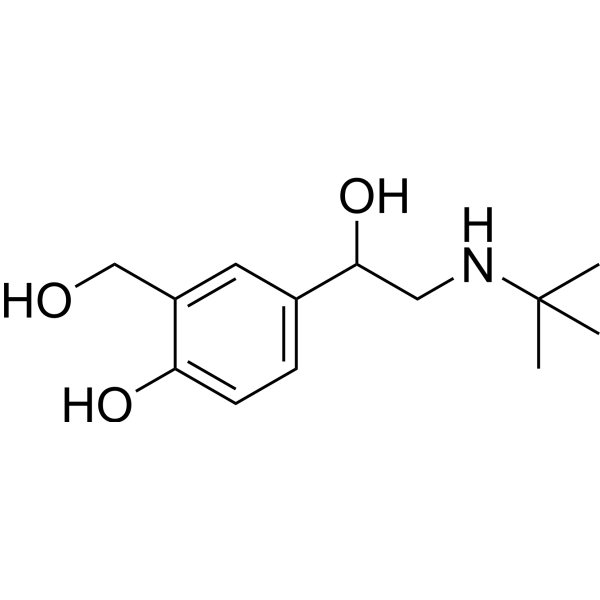
Salbutamol
Maximum Cited Publications
7 Publications Verification
Albuterol; AH-3365
|
Adrenergic Receptor
ERK
|
Inflammation/Immunology
Cancer
|
|
Salbutamol (Albuterol) is an orally active short-acting β2-adrenergic receptor agonist. Salbutamol promotes tumorigenesis in gastric cancer cells through the β2-AR/ERK/EMT pathway. Salbutamol can relax bronchial smooth muscle and is used to study bronchospasm induced by asthma and chronic obstructive pulmonary disease .
|
-
-
- HY-N0283
-
|
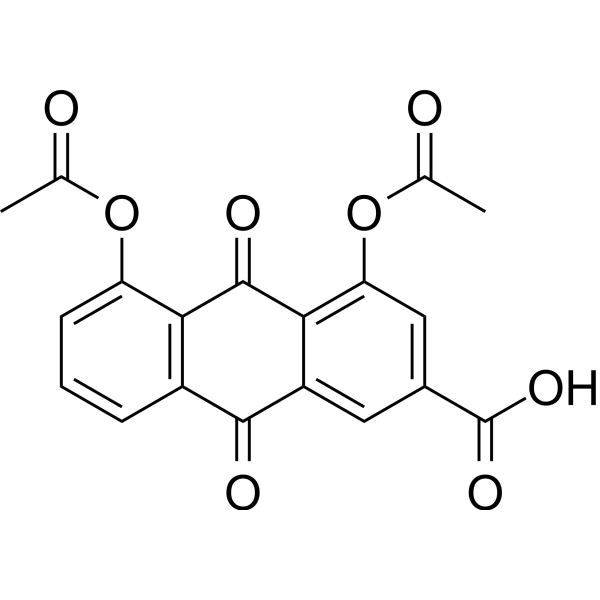
Diacerhein; Diacetylrhein
|
Interleukin Related
Calcium Channel
|
Inflammation/Immunology
|
|
Diacerein (Diacerhein), an orally active anthraquinone, reduces production of IL-1 converting enzyme then inhibits the activation of IL-1β by related downstream signaling. Diacerein is an anti-inflammatory and anti-rheumatic drug. Diacerein can relieve bronchospasm and control airway inflammation in asthmatic mice. Diacerein has the potential for slow acting drug in osteoarthritis (SYSADOA) research .
|
-
-
- HY-P0012
-
|
Vasoactive Intestinal Peptide (human, rat, mouse, rabbit, canine, porcine)
|
SARS-CoV
|
Infection
Inflammation/Immunology
|
|
Aviptadil is an analog vasoactive intestinal polypeptide (VIP) with potent vasodilatory effects. Aviptadil induces pulmonary vasodilation and inhibits vascular SMCs proliferation, platelet aggregation. Aviptadil can be used for the research of pulmonary fibrosis, pulmonary arterial hypertension (PAH) and SARS-CoV-2 caused respiratory failure, et al .
|
-
-
- HY-B0976
-
|
Th-1165; Phenoterol
|
Adrenergic Receptor
|
Inflammation/Immunology
Endocrinology
|
|
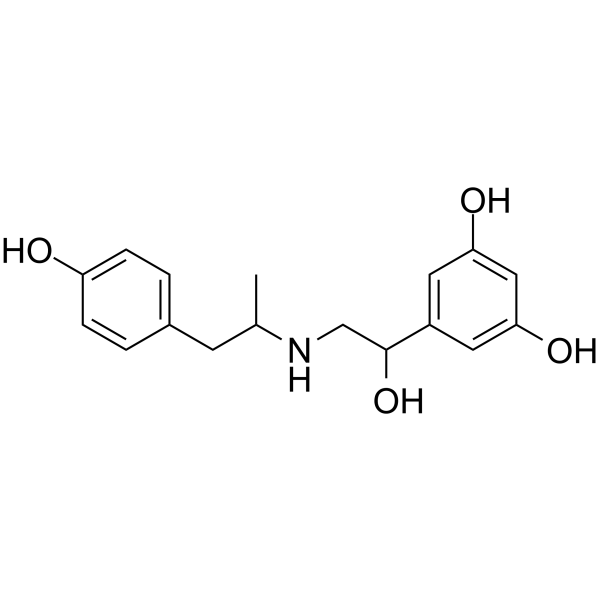
Fenoterol (Th-1165), a sympathomimetic agent, is a selective and orally active β2-adrenoceptor agonist. Fenoterol is an effective bronchodilator and can be used for bronchospasm associated with asthma, bronchitis and other obstructive airway diseases research .
|
-
-
- HY-B0976A
-
|
Th-1165a; Phenoterol hydrobromide
|
Adrenergic Receptor
|
Inflammation/Immunology
Endocrinology
|
|
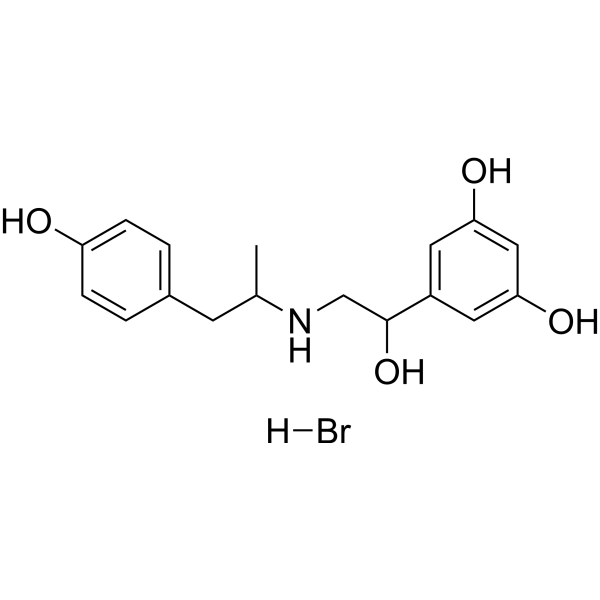
Fenoterol hydrobromide (Th-1165a), a sympathomimetic agent, is a selective and orally active β2-adrenoceptor agonist. Fenoterol hydrobromide is an effective bronchodilator and can be used for bronchospasm associated with asthma, bronchitis and other obstructive airway diseases research .
|
-
-
- HY-B0436
-
|
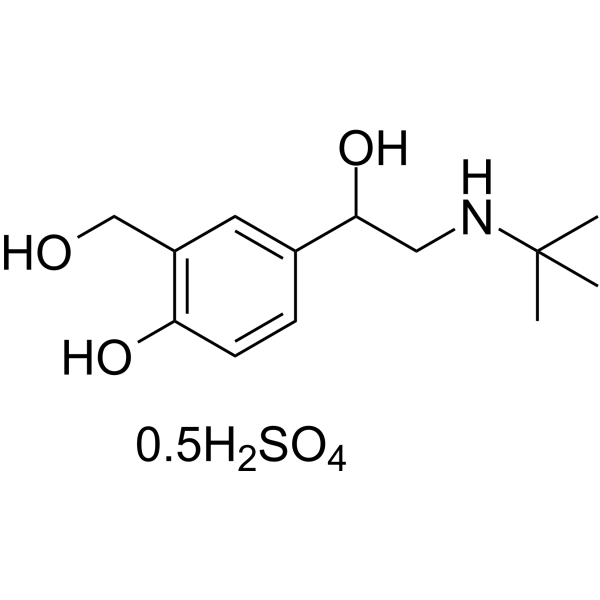
Albuterol hemisulfate; AH-3365 hemisulfate
|
Adrenergic Receptor
ERK
|
Inflammation/Immunology
Cancer
|
|
Salbutamol (Albuterol) hemisulfate is an orally active short-acting β2-adrenergic receptor agonist. Salbutamol hemisulfate promotes tumorigenesis in gastric cancer cells through the β2-AR/ERK/EMT pathway. Salbutamol hemisulfate can relax bronchial smooth muscle and is used to study bronchospasm induced by asthma and chronic obstructive pulmonary disease .
|
-
-
- HY-B0004
-
-
-
- HY-19393
-
|
|
Phosphodiesterase (PDE)
|
Cardiovascular Disease
Inflammation/Immunology
Cancer
|
|
SCH 351591 is a highly selective, orally active PDE4 inhibitor, with IC50 values of 58 nM and 153 nM in humans and rats, respectively. SCH 351591 effectively inhibits pathological processes such as cytokine production, eosinophilia, airway hyperresponsiveness and bronchospasm. SCH 351591 also induces microvascular injury, activates mast cells and endothelial cells, and causes increases in serum histamine and various inflammatory factors, leading to early vascular damage. SCH 351591 has been widely used in studies related to asthma, chronic obstructive pulmonary disease and drug-induced vascular injury .
|
-
-
- HY-100634
-
|
(±)-4-hydroxy Propranolol hydrochloride
|
Adrenergic Receptor
|
Cardiovascular Disease
|
|
4-Hydroxypropranolol hydrochloride is a non-cardiac selective β-adrenergic receptor antagonist and a metabolite produced after oral administration of Propranolol (HY-B0573B). 4-Hydroxypropranolol hydrochloride also acts as a membrane stabilizer and possesses intrinsic sympathomimetic inhibitory activity. 4-Hydroxypropranolol hydrochloride blocks β-adrenergic receptors to antagonize the effects of catecholamines, acts as a partial β-adrenergic receptor agonist, and induces membrane stabilization. 4-Hydroxypropranolol hydrochloride alters heart rate, left ventricular contractility, and atrioventricular conduction time. 4-Hydroxypropranolol hydrochloride can be used in research related to cardiovascular and cerebrovascular diseases .
|
-
-
- HY-118545
-
|
|
STAT
|
Inflammation/Immunology
Cancer
|
|
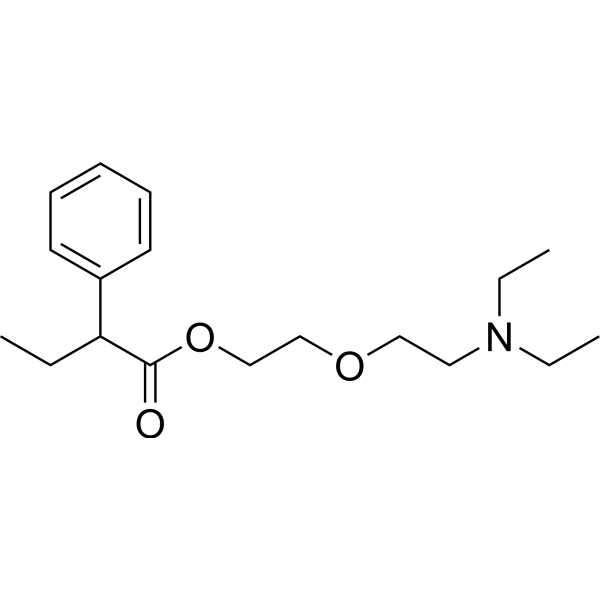
Butamirate is an orally active antitussive agent that acts centrally through the receptors in the brainstem. Butamirate also reduces the resistance in the airways by inhibiting bronchospasm and anti-inflammatory effect. Butamirate inhibits glioblastoma (GBM) growth and STAT3 activity. Butamirate can be used for the study of glioblastoma .
|
-
-
- HY-P0012A
-
|
Vasoactive Intestinal Peptide acetate salt (human, rat, mouse, rabbit, canine, porcine)
|
SARS-CoV
|
Infection
Inflammation/Immunology
|
|
Aviptadil acetate is an analog vasoactive intestinal polypeptide (VIP) with potent vasodilatory effects. Aviptadil acetate induces pulmonary vasodilation and inhibits vascular SMCs proliferation, platelet aggregation. Aviptadil acetate can be used for the research of pulmonary fibrosis, pulmonary arterial hypertension (PAH) and SARS-CoV-2 caused respiratory failure, et al .
|
-
-
- HY-118545A
-
|
|
STAT
|
Inflammation/Immunology
Cancer
|
|
Butamirate citrate is an orally active antitussive agent that acts centrally through the receptors in the brainstem. Butamirate citrate also reduces the resistance in the airways by inhibiting bronchospasm and anti-inflammatory effect. Butamirate citrate inhibits glioblastoma (GBM) growth and STAT3 activity. Butamirate citrate can be used for the study of glioblastoma .
|
-
-
- HY-B1037S
-
|
Albuterol-d3; AH-3365-d3
|
Isotope-Labeled Compounds
ERK
Adrenergic Receptor
|
Inflammation/Immunology
Cancer
|
|
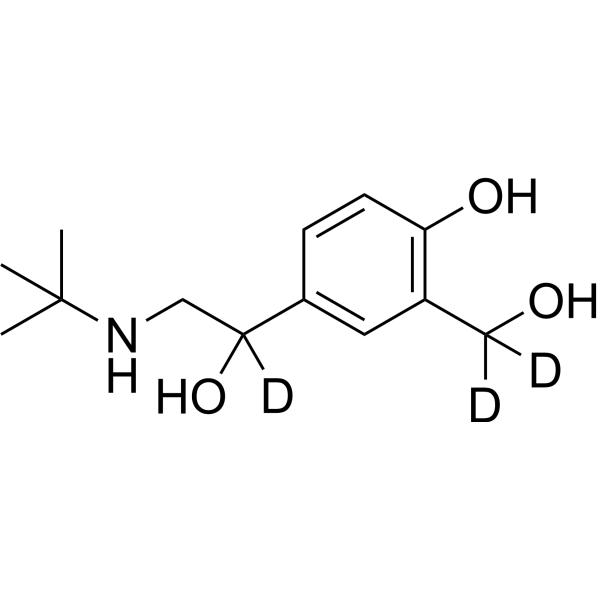
Salbutamol-d3 (Albuterol-d3) is the deuterium labeled Salbutamol (HY-B1037). Salbutamol (Albuterol) is an orally active short-acting β2-adrenergic receptor agonist. Salbutamol promotes tumorigenesis in gastric cancer cells through the β2-AR/ERK/EMT pathway. Salbutamol can relax bronchial smooth muscle and is used to study bronchospasm induced by asthma and chronic obstructive pulmonary disease .
|
-
-
- HY-B1037S2
-
|
Albuterol-d9; AH-3365-d9
|
Isotope-Labeled Compounds
ERK
Adrenergic Receptor
|
Inflammation/Immunology
Cancer
|
|
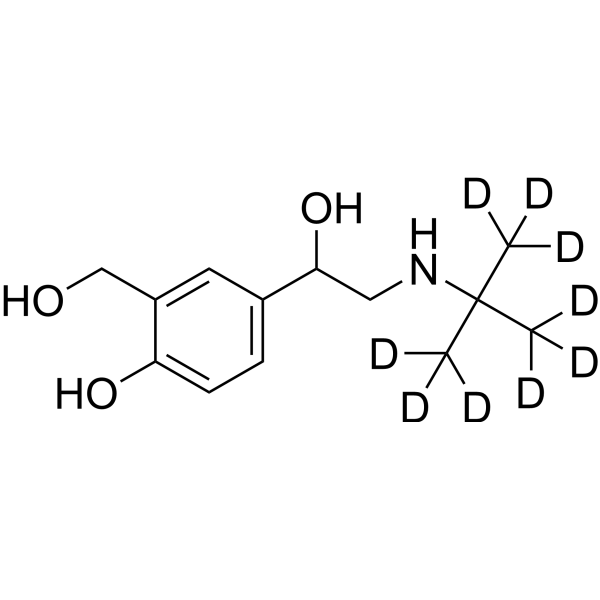
Salbutamol-d9 (Albuterol-d9) is the deuterium labeled Salbutamol (HY-B1037). Salbutamol (Albuterol) is an orally active short-acting β2-adrenergic receptor agonist. Salbutamol promotes tumorigenesis in gastric cancer cells through the β2-AR/ERK/EMT pathway. Salbutamol can relax bronchial smooth muscle and is used to study bronchospasm induced by asthma and chronic obstructive pulmonary disease .
|
-
-
- HY-101445R
-
|
|
Reference Standards
Reactive Oxygen Species (ROS)
Ferroptosis
Apoptosis
|
Cancer
|
|
Butamirate (citrate) (Standard) is the analytical standard of Butamirate (citrate). This product is intended for research and analytical applications. Butamirate citrate is an orally active cough suppressant that acts centrally through the receptors in the brainstem. Butamirate citrate also reduces the resistance in the airways by inhibiting bronchospasm and anti-inflammatory effect .
|
-
-
- HY-B1037R
-
|
Albuterol (Standard); AH-3365 (Standard)
|
Reference Standards
Adrenergic Receptor
ERK
|
Inflammation/Immunology
Cancer
|
|
Salbutamol (Standard) is the analytical standard of Salbutamol. This product is intended for research and analytical applications. Salbutamol (Albuterol) is a short-acting beta-2 adrenergic receptor agonist with oral activity. Salbutamol promotes tumorigenesis of gastric cancer cells through the β2-AR/ERK/EMT pathway. Salbutamol is used to study bronchospasms caused by asthma and chronic obstructive pulmonary disease (COPD) .
|
-
-
- HY-118545AR
-
|
|
Reference Standards
STAT
|
Inflammation/Immunology
Cancer
|
|
Butamirate citrate (Standard) is the analytical standard of Butamirate citrate (HY-118545A). This product is intended for research and analytical applications. Butamirate citrate is an orally active antitussive agent that acts centrally through the receptors in the brainstem. Butamirate citrate also reduces the resistance in the airways by inhibiting bronchospasm and anti-inflammatory effect. Butamirate citrate inhibits glioblastoma (GBM) growth and STAT3 activity. Butamirate citrate can be used for the study of glioblastoma .
|
-
-
- HY-B0436R
-
|
Albuterol hemisulfate (Standard); AH-3365 hemisulfate (Standard)
|
Reference Standards
Adrenergic Receptor
ERK
|
Inflammation/Immunology
Cancer
|
|
Salbutamol (Albuterol) hemisulfate (Standard) is the analytical standard of Salbutamol hemisulfate (HY-B0436). This product is intended for research and analytical applications. Salbutamol (Albuterol) hemisulfate is an orally active short-acting β2-adrenergic receptor agonist. Salbutamol hemisulfate promotes tumorigenesis in gastric cancer cells through the β2-AR/ERK/EMT pathway. Salbutamol hemisulfate can relax bronchial smooth muscle and is used to study bronchospasm induced by asthma and chronic obstructive pulmonary disease.
|
-
-
- HY-B1037S3
-
|
Albuterol-d9 acetate; AH-3365-d9 acetate
|
Isotope-Labeled Compounds
ERK
Adrenergic Receptor
|
Inflammation/Immunology
Cancer
|
|
Salbutamol-d9 (Albuterol-d9) acetate is the deuterium labeled Salbutamol (HY-B1037). Salbutamol (Albuterol) is an orally active short-acting β2-adrenergic receptor agonist. Salbutamol promotes tumorigenesis in gastric cancer cells through the β2-AR/ERK/EMT pathway. Salbutamol can relax bronchial smooth muscle and is used to study bronchospasm induced by asthma and chronic obstructive pulmonary disease .
|
-
-
- HY-101235
-
|
|
Prostaglandin Receptor
|
Cardiovascular Disease
Inflammation/Immunology
|
|
ICI 185282 is a potent, selective, orally active thromboxane A2 (TXA₂) receptor antagonist. ICI 185282 causes dose-dependent inhibition of U-46619 (HY-108566)-induced platelet aggregation ex-vivo in guinea-pig. ICI 185,282 inhibits bronchospasm induced by U-46619, PGD2 (HY-101988), PGF2α (HY-12956), arachidonic acid (HY-109590), LTD4 and PAF (HY-108635) in vivo. ICI 185282 can be used for bronchial asthma research .
|
-
-
- HY-B0976AR
-
|
Th-1165a (Standard); Phenoterol hydrobromide (Standard)
|
Reference Standards
Adrenergic Receptor
|
Inflammation/Immunology
Endocrinology
|
|
Fenoterol (hydrobromide) (Standard) is the analytical standard of Fenoterol (hydrobromide). This product is intended for research and analytical applications. Fenoterol hydrobromide (Th-1165a), a sympathomimetic agent, is a selective and orally active β2-adrenoceptor agonist. Fenoterol hydrobromide is an effective bronchodilator and can be used for bronchospasm associated with asthma, bronchitis and other obstructive airway diseases research .
|
-
-
- HY-120755
-
|
|
Leukotriene Receptor
|
Inflammation/Immunology
|
|
LY290324 is a potent and orally active leukotriene D4 (LTD4) antagonist. LY290324 reduces LTC4, LTD4 and LTE4 (HY-113465)-induced bronchospasm. LY290324 has the potential for the research of antigen-induced bronchospasm .
|
-
-
- HY-109006
-
|
|
mAChR
|
Neurological Disease
|
|
Ilmetropium iodide is an anticholinergic agent. Ilmetropium iodide selectively blocks M-cholinergic receptors of bronchial muscle, reduces or prevents bronchoconstrictor response associated with both cholinergic stimulation, as well as the impact of the factors that provoke bronchospasm. Strength and selectivity of ilmetropium iodide action substantially exceeds Atropine sulfate (HY-B1205A) and Ipratropium bromide (HY-B0241) .
|
-
-
- HY-B0004R
-
|
|
Reference Standards
Adenosine Receptor
Phosphodiesterase (PDE)
Reactive Oxygen Species (ROS)
|
Inflammation/Immunology
|
|
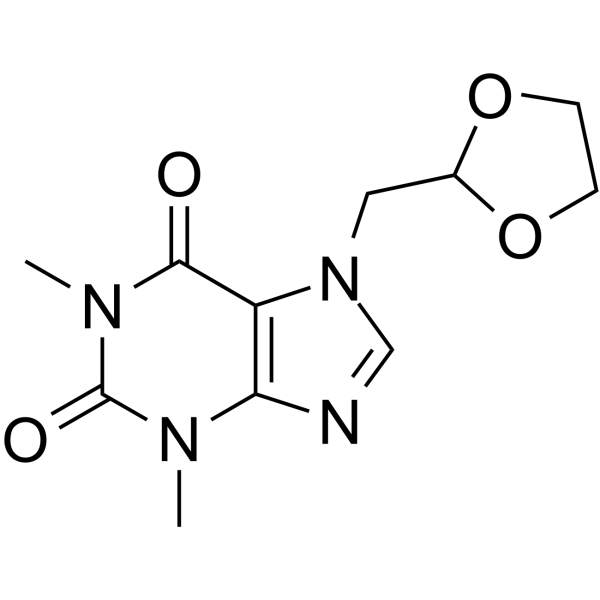
Doxofylline (Standard) is the analytical standard of Doxofylline. This product is intended for research and analytical applications. Doxofylline is an orally active PDE IV inhibitor and A1AR antagonist. Doxofylline reduces inflammation in epithelial cells via inhibiting mitochondrial ROS production and amelioration of multiple cellular pathways (NLRP3-TXNIP inflammasome activation). Doxophylline can be used in studies of asthma, chronic obstructive pulmonary disease, and bronchospasm .
|
-
-
- HY-118376
-
-
-
- HY-121185A
-
|
|
Adrenergic Receptor
|
Infection
Neurological Disease
Inflammation/Immunology
Endocrinology
|
|
Hexoprenaline sulfate is an orally active and selective β-adrenergic receptor agonist. Hexoprenaline sulfate can dilate the bronchi. Hexoprenaline sulfate can activate adenylate cyclase and increases 14C-Aminopyrine uptake. Hexoprenaline sulfate exhibits anti-infection and anti-inflammmation effect. Hexoprenaline sulfate can increase placental weight and blood flow. Hexoprenaline sulfate can be used for the researches of inflammation, immunology, infection, endocrinology and neurological disease, such as asthma, chronic bronchitis, sepsis and intoxication of organophosphorus compounds .
|
-
-
- HY-164650
-
|
Sch 37224
|
Leukotriene Receptor
|
Inflammation/Immunology
|
|
Pirodomast (Sch 37224) is a leukotriene formation inhibitor. Pirodomast inhibits LTD4 andthromboxane B2 release by anaphylactic guinea pig lung with the IC50 values of 3.9 and 1.9 μM, respectively. Pirodomast can be used for study of asthma .
|
-
-
- HY-116051A
-
|
16,16-Dimethyl-PGF2β
|
Prostaglandin Receptor
|
Cardiovascular Disease
|
|
16,16-Dimethylprostaglandin F2β (16,16-Dimethyl-PGF2β) is an analog of PGF2β (HY-12956B), which is an irratant, but prevents the aspecifically induced bronchospasm .
|
-
-
- HY-B0976AS
-
|
|
Isotope-Labeled Compounds
Adrenergic Receptor
|
Inflammation/Immunology
Endocrinology
|
|
Fenoterol-d6 (hydrobromide) (Th-1165a-d6) is the deuterium labeled Fenoterol hydrobromide. Fenoterol hydrobromide (Th-1165a), a sympathomimetic agent, is a selective and orally active β2-adrenoceptor agonist. Fenoterol hydrobromide is an effective bronchodilator and can be used for bronchospasm associated with asthma, bronchitis and other obstructive airway diseases research .
|
-
-
- HY-B1037B
-
|
Albuterol adipate; AH-3365 adipate
|
Adrenergic Receptor
ERK
|
Inflammation/Immunology
Cancer
|
|
Salbutamol (Albuterol) adipate is an orally active short-acting β2-adrenergic receptor agonist. Salbutamol adipate promotes tumorigenesis in gastric cancer cells through the β2-AR/ERK/EMT pathway. Salbutamol adipate can relax bronchial smooth muscle and is used to study bronchospasm induced by asthma and chronic obstructive pulmonary disease .
|
-
-
- HY-W707640
-
|
Albuterol-d4; AH-3365-d4
|
Isotope-Labeled Compounds
ERK
Adrenergic Receptor
|
Cancer
|
|
Salbutamol-d4 (Albuterol-d4; AH-3365-d4) is the deuterium labeled Salbutamol (HY-B1037). Salbutamol (Albuterol) is a short-acting beta-2 adrenergic receptor agonist with oral activity. Salbutamol promotes tumorigenesis of gastric cancer cells through the β2-AR/ERK/EMT pathway. Salbutamol is used to study bronchospasms caused by asthma and chronic obstructive pulmonary disease (COPD) .
|
-
-
- HY-117811
-
|
L-680574
|
Platelet-activating Factor Receptor (PAFR)
|
Cardiovascular Disease
|
|
(R,R)-MK 287 (L-680574) is a tetrahydrofuran derivative that potently inhibits the binding of [3H]C18-PAF to human platelets, polymorphonuclear leukocytes (PMNs), and lung membranes with Ki values of 6.1, 3.2, and 5.49 nM, respectively. (R,R)-MK 287 potently and selectively inhibits PAF-induced platelet aggregation (ED50=56 nM) and elastase release from PMNs (ED50=4.4 nM). (R,R)-MK 287 inhibits PAF-induced lethality in mice (ED50=0.8 mg/kg, po) and PAF-induced bronchospasm in guinea pigs (ED50=0.18 mg/kg) .
|
-
-
- HY-118392
-
|
Xanthaline
|
Histamine Receptor
|
Inflammation/Immunology
|
|
Papaveraldine (Xanthaline) is a benzylisoquinoline alkaloid that shows antispasmodic and protective activity against histamine-induced bronchospasm in rats. Papaveraldine is an active ingredient of a hair tonic preparation that promotes melanin formation for grey hair .
|
-
-
- HY-129546
-
-
-
- HY-W721659
-
|
SQ 13,847
|
Drug Intermediate
|
Others
|
|
Pirquinozol (SQ 13,847) is an orally active anti-allergy agent. Pirquinozol is converted to the oxidation metabolite SQ 12,903, which can exert the maximum activity. Pirquinozol inhibits bronchospasm in rats .
|
-
-
- HY-W988549
-
|
MDL-257
|
Phosphodiesterase (PDE)
|
Inflammation/Immunology
|
|
Zindotrine (MDL-257) is an orally active bronchodilator. Zindotrine is a cGMP phosphodiesterase (PDE) inhibitor. Zindotrine can counteract bronchospasm caused by histamine. Zindotrine can be used to study reversible airflow obstruction, such as asthma .
|
-
-
- HY-B0976R
-
|
Th-1165 (Standard); Phenoterol (Standard)
|
Adrenergic Receptor
Reference Standards
|
Inflammation/Immunology
Endocrinology
|
|
Fenoterol (Standard) is the analytical standard of Fenoterol. This product is intended for research and analytical applications. Fenoterol (Th-1165), a sympathomimetic agent, is a selective and orally active β2-adrenoceptor agonist. Fenoterol is an effective bronchodilator and can be used for bronchospasm associated with asthma, bronchitis and other obstructive airway diseases research .
|
-
-
- HY-180363
-
|
|
Lipoxygenase
Leukotriene Receptor
|
Inflammation/Immunology
|
|
E 6080 is an orally active and selective 5-lipoxygenase (5-LOX) inhibitor with an IC50 of 0.2 μM in rat basophilic leukemia cell. E 6080 shows potent inhibitory effects on the release of leukotrienes. E 6080 inhibits the bronchospasm induced by antigen (ovalbumin) inhalation in sensitized conscious guinea pigs. E 6080 can be used for the study of asthma .
|
-
-
- HY-181770
-
|
|
Phosphodiesterase (PDE)
Bacterial
|
Infection
Inflammation/Immunology
|
|
PDE4B-IN-7 is a PDE-4B inhibitor with an IC50 of 160 nM. PDE4B-IN-7 can form a firm and stable binding with the active site of PDE-4B. PDE4B-IN-7 inhibits acetylcholine-induced bronchospasm in guinea pigs. PDE4B-IN-7 exerts activity against susceptible Gram-positive and Gram-negative bacterial strains. PDE4B-IN-7 can be used for the researches of asthma and bacterial agent .
|
-
-
- HY-182557
-
|
|
Lipoxygenase
|
Cardiovascular Disease
Inflammation/Immunology
|
|
KC-11404 is an orally active antihistamine and 5-lipoxygenase inhibitor, with an IC50 of 0.9 μM against guinea pig 5-lipoxygenase. KC-11404 inhibits histamine-induced contraction of isolated guinea pig ileum with an IC50 of 0.26 μM. KC-11404 inhibits PAF-induced rabbit platelet aggregation with an IC50 of 2.0 μM. It inhibits the histamine phase of antigen-induced bronchoconstriction and PAF-induced bronchoconstriction in guinea pigs. KC-11404 can be used for the research of asthma .
|
-
| Cat. No. |
Product Name |
Target |
Research Area |
-
- HY-P0012
-
|
Vasoactive Intestinal Peptide (human, rat, mouse, rabbit, canine, porcine)
|
SARS-CoV
|
Infection
Inflammation/Immunology
|
|
Aviptadil is an analog vasoactive intestinal polypeptide (VIP) with potent vasodilatory effects. Aviptadil induces pulmonary vasodilation and inhibits vascular SMCs proliferation, platelet aggregation. Aviptadil can be used for the research of pulmonary fibrosis, pulmonary arterial hypertension (PAH) and SARS-CoV-2 caused respiratory failure, et al .
|
-
- HY-P0012A
-
|
Vasoactive Intestinal Peptide acetate salt (human, rat, mouse, rabbit, canine, porcine)
|
SARS-CoV
|
Infection
Inflammation/Immunology
|
|
Aviptadil acetate is an analog vasoactive intestinal polypeptide (VIP) with potent vasodilatory effects. Aviptadil acetate induces pulmonary vasodilation and inhibits vascular SMCs proliferation, platelet aggregation. Aviptadil acetate can be used for the research of pulmonary fibrosis, pulmonary arterial hypertension (PAH) and SARS-CoV-2 caused respiratory failure, et al .
|
| Cat. No. |
Product Name |
Category |
Target |
Chemical Structure |
| Cat. No. |
Product Name |
Chemical Structure |
-
- HY-B1037S
-
|
|
|
Salbutamol-d3 (Albuterol-d3) is the deuterium labeled Salbutamol (HY-B1037). Salbutamol (Albuterol) is an orally active short-acting β2-adrenergic receptor agonist. Salbutamol promotes tumorigenesis in gastric cancer cells through the β2-AR/ERK/EMT pathway. Salbutamol can relax bronchial smooth muscle and is used to study bronchospasm induced by asthma and chronic obstructive pulmonary disease .
|
-
-
- HY-B1037S2
-
|
|
|
Salbutamol-d9 (Albuterol-d9) is the deuterium labeled Salbutamol (HY-B1037). Salbutamol (Albuterol) is an orally active short-acting β2-adrenergic receptor agonist. Salbutamol promotes tumorigenesis in gastric cancer cells through the β2-AR/ERK/EMT pathway. Salbutamol can relax bronchial smooth muscle and is used to study bronchospasm induced by asthma and chronic obstructive pulmonary disease .
|
-
-
- HY-B1037S3
-
|
|
|
Salbutamol-d9 (Albuterol-d9) acetate is the deuterium labeled Salbutamol (HY-B1037). Salbutamol (Albuterol) is an orally active short-acting β2-adrenergic receptor agonist. Salbutamol promotes tumorigenesis in gastric cancer cells through the β2-AR/ERK/EMT pathway. Salbutamol can relax bronchial smooth muscle and is used to study bronchospasm induced by asthma and chronic obstructive pulmonary disease .
|
-
-
- HY-B0976AS
-
|
|
|
Fenoterol-d6 (hydrobromide) (Th-1165a-d6) is the deuterium labeled Fenoterol hydrobromide. Fenoterol hydrobromide (Th-1165a), a sympathomimetic agent, is a selective and orally active β2-adrenoceptor agonist. Fenoterol hydrobromide is an effective bronchodilator and can be used for bronchospasm associated with asthma, bronchitis and other obstructive airway diseases research .
|
-
-
- HY-W707640
-
|
|
|
Salbutamol-d4 (Albuterol-d4; AH-3365-d4) is the deuterium labeled Salbutamol (HY-B1037). Salbutamol (Albuterol) is a short-acting beta-2 adrenergic receptor agonist with oral activity. Salbutamol promotes tumorigenesis of gastric cancer cells through the β2-AR/ERK/EMT pathway. Salbutamol is used to study bronchospasms caused by asthma and chronic obstructive pulmonary disease (COPD) .
|
-
Your information is safe with us. * Required Fields.
Inquiry Information
- Product Name:
- Cat. No.:
- Quantity:
- MCE Japan Authorized Agent:

