1. Search Result
Search Result
Results for "

CDK2-IN-4

" in MedChemExpress (MCE) Product Catalog:

31

Inhibitors & Agonists

2

Natural
Products

1

Isotope-Labeled Compounds

1

Click Chemistry

Cat. No. Product Name Target Research Areas Chemical Structure
  • HY-10005
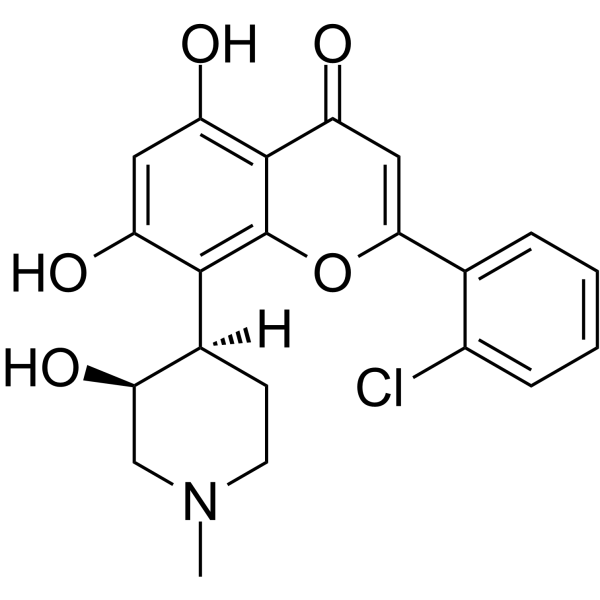
    Flavopiridol
    Maximum Cited Publications
    52 Publications Verification

    HMR-1275; Alvocidib; L86-8275

    CDK Autophagy HIV Apoptosis Cancer
    Flavopiridol (Alvocidib) is a broad spectrum and competitive inhibitor of CDKs, inhibiting CDK1, CDK2, CDK4 with IC50s of 30, 170, 100 nM, respectively.
    Flavopiridol
  • HY-10006
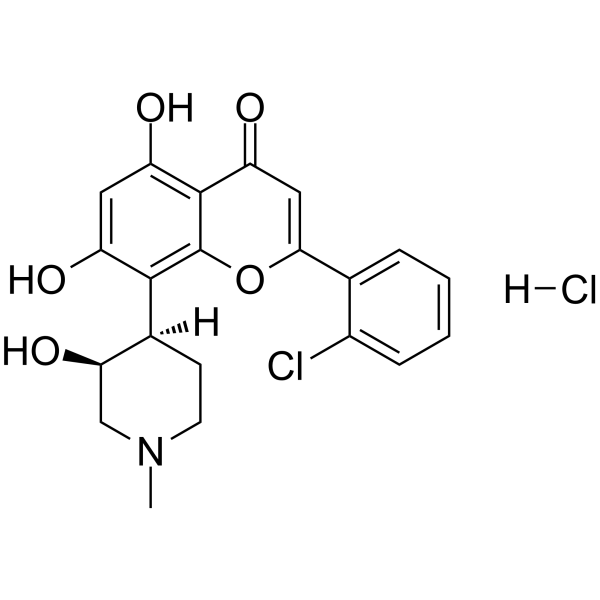
    Flavopiridol Hydrochloride
    Maximum Cited Publications
    52 Publications Verification

    Alvocidib Hydrochloride; L86-8275 Hydrochloride; HMR-1275 Hydrochloride

    CDK Autophagy HIV Cancer
    Flavopiridol Hydrochloride (Alvocidib Hydrochloride) is a broad inhibitor of CDK, competing with ATP to inhibit CDKs including CDK1, CDK2, CDK4 with IC50s of 30, 170, 100 nM, respectively.
    Flavopiridol Hydrochloride
  • HY-114177
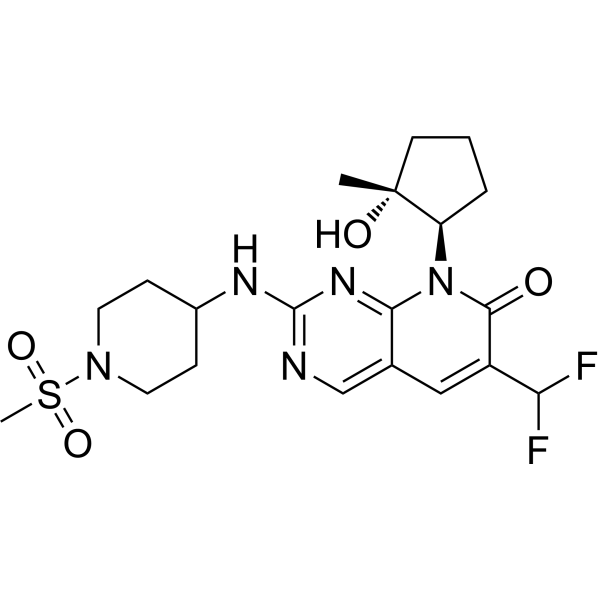
    Ebvaciclib
    4 Publications Verification

    PF-06873600

    CDK Cancer
    PF-06873600 is a selective and orally bioavailable inhibitor of cyclin-dependent kinase (CDK), with Ki values of 0.09 nM, 0.13 nM and 0.16 nM for CDK2, CDK4 and CDK6, respectively. PF-06873600 has potential antineoplastic activity .
    Ebvaciclib
  • HY-117535
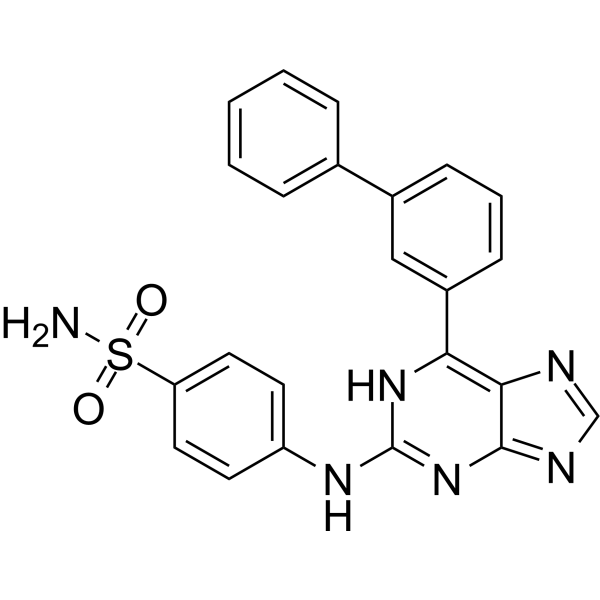
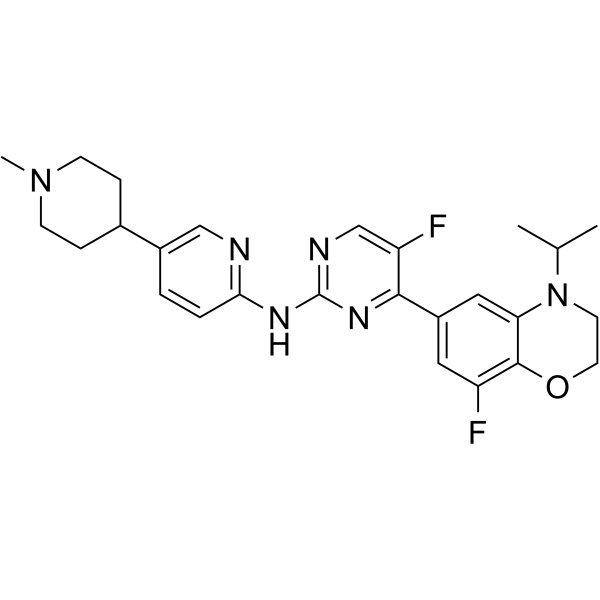
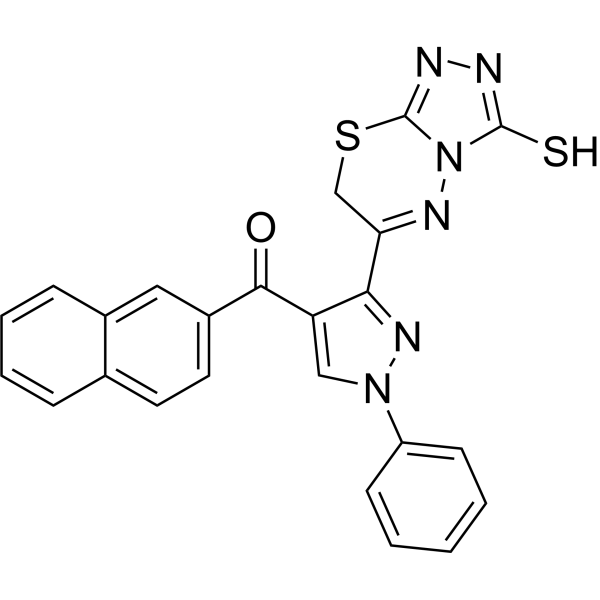
    CDK2-IN-4
    3 Publications Verification

    CDK Cancer
    CDK2-IN-4 (compound 73) is a potent and selective CDK2 inhibitor with an IC50 of 44 nM for CDK2/cyclin A, shows 2,000-fold selectivity over CDK1/cyclin B (IC50=86 uM) .
    CDK2-IN-4
  • HY-50940
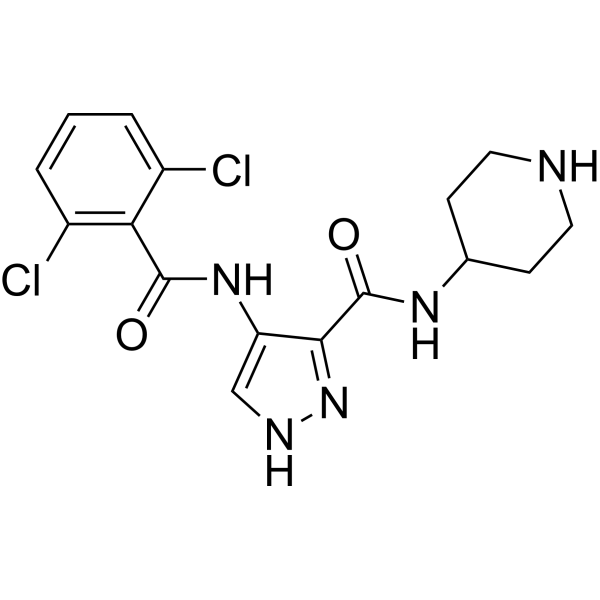
    AT7519
    10+ Cited Publications

    AT7519M

    CDK Apoptosis Cancer
    AT7519 (AT7519M) as a potent inhibitor of CDKs, with IC50s of 210, 47, 100, 13, 170, and <10 nM for CDK1, CDK2, CDK4 to CDK6, and CDK9, respectively.
    AT7519
  • HY-18981
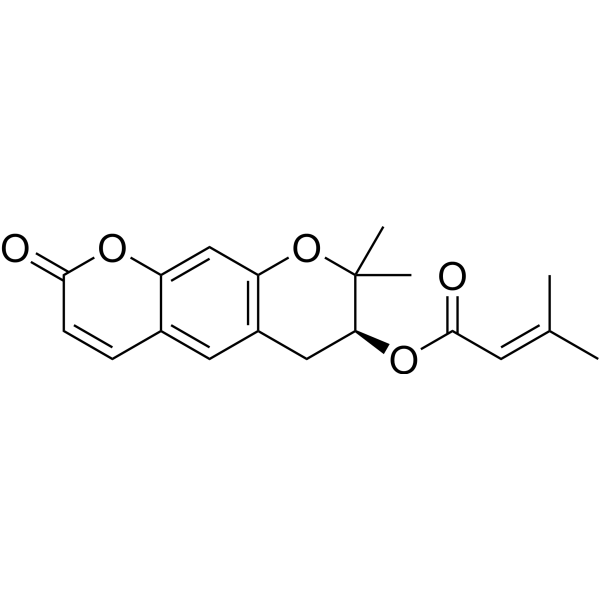
    Decursin
    2 Publications Verification

    (+)-DecursIN

    PKC Apoptosis CXCR Neurological Disease Inflammation/Immunology Cancer
    Decursin ((+)-Decursin) is a potent anti-tumor agent. Decursin also is a cytotoxic agent and a potent protein kinase C activator. Decursin induces apoptosis and cell cycle arrest at G1 phase. Decursin decreases the expression of CDK2, CDK4, CDK6, cyclin D1 protein at 48 h. Decursin inhibits cell proliferation and migration. Decursin shows anti-tumor, anti-inflammatory and analgesic activities .
    Decursin
  • HY-148065

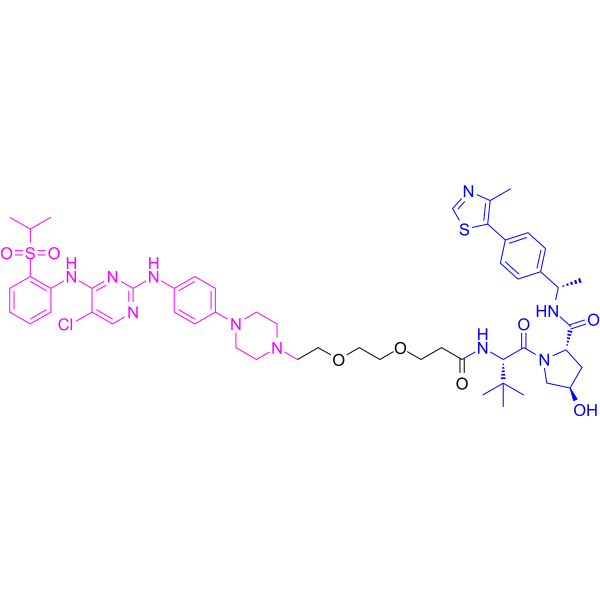
    PROTACs Wee1 CDK AAK1 ULK MELK Itk IRAK Ephrin Receptor FGFR MAP4K p38 MAPK Neurological Disease Metabolic Disease Inflammation/Immunology Cancer
    FMF-06-098-1 is a multi-target kinase PROTAC degrader. FMF-06-098-1 can be used to target degradation kinases which degrades AAK1, AΒL2, AURKA, AURKB, BUBIB, CDC7, CDK1, CDK12, CDK13, CDK2, CDK4, CDk6, CDK7, CDK9, CHEK1, CSNKID, EPHA1, PER, FGFR1, GAK, IRAK4, ITK, LIMK2, MAP4K2, MAP4K3, MAPK6, MAPK7, MARK4, MELK, PKN3, PLK4, PRKAA1, PTK2, PTK6, RPS6KA4, S1K2, STK35, TNK2, UHMK1, ULK1, and WEE1 .
    FMF-06-098-1
  • HY-50943
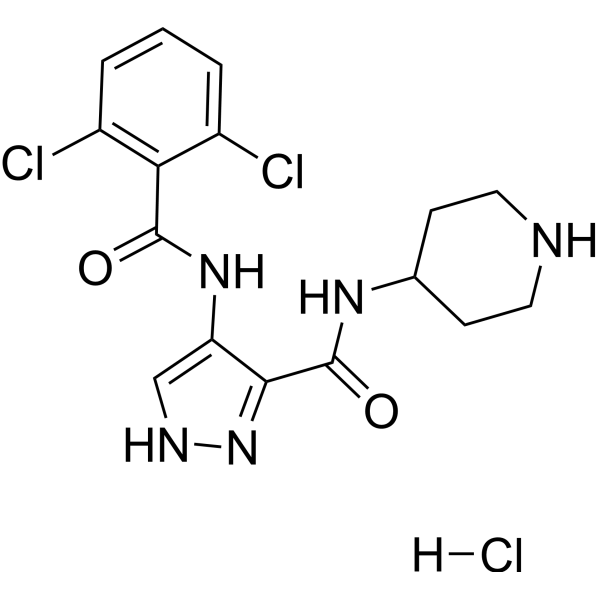
    AT7519 Hydrochloride
    10+ Cited Publications

    CDK Apoptosis Cancer
    AT7519 Hydrochloride is a potent inhibitor of CDKs, with IC50s of 210, 47, 100, 13, 170, and <10 nM for CDK1, CDK2, CDK4 to CDK6, and CDK9, respectively.
    AT7519 Hydrochloride
  • HY-45661

    NUV-422

    CDK Neurological Disease Cancer
    Inixaciclib (NUV-422) is a blood-brain barrier-penetrant inhibitor of CDK2, CDK4 and CDK6. Inixaciclib inhibits cancer cell growth. Inixaciclib induces anti-tumor activity in xenograft models of glioblastoma, CDK4/CDK6 inhibitor-resistant HR + HER2 - metastatic breast cancer, and anti-androgen-resistant prostate cancer. Inixaciclib can be used for the research of relapsed or metastatic castration-resistant prostate cancer .
    Inixaciclib
  • HY-151071

    Ligands for Target Protein for PROTAC CDK Cancer
    TMX-3013 is a CDK inhibitor capable of inhibiting the activity of CDK1, CDK2, CDK4, CDK5, and CDK6, with IC50 values of 0.9 nM, <0.5 nM, 24.5 nM, 0.5 nM, and 15.6 nM, respectively. TMX-3013 can be used as a target protein ligand, conjugated with the PROTAC linker and the CRBN ligand Thalidomide (HY-14658) for the synthesis of PROTAC TMX-2138 (HY-164906). TMX-3013 can also act as an effector ligand, binding to target proteins HaloTag or FKBP, and can be used in the synthesis of regulated induced proximity targeting chimeras (RIPTACs) .
    TMX-3013
  • HY-50940A
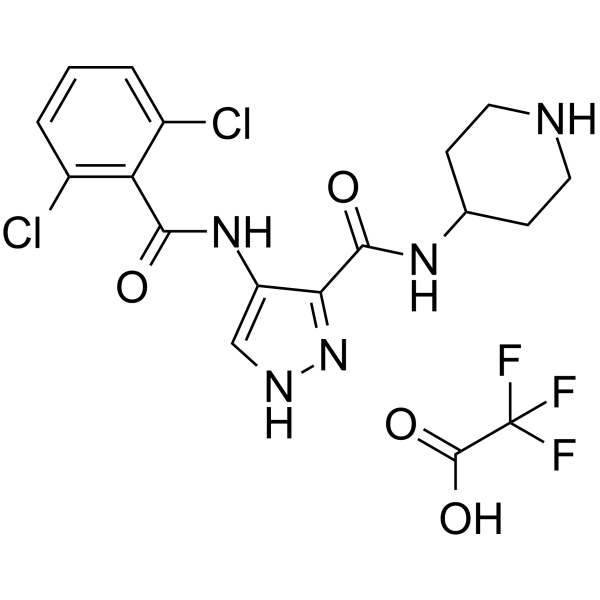
    AT7519 TFA
    10+ Cited Publications

    AT7519M TFA

    CDK Cancer
    AT7519 (AT7519M) TFA as a potent inhibitor of CDKs, with IC50s of 210, 47, 100, 13, 170, and <10 nM for CDK1, CDK2, CDK4 to CDK6, and CDK9, respectively.
    AT7519 TFA
  • HY-148062

    PROTACs CDK AAK1 Cyclin G-associated Kinase (GAK) Salt-inducible Kinase (SIK) LIM Kinase (LIMK) Wee1 SnRK Others
    RSS0680 is a small noncoding RNA (sRNA) targeting the mRNA ribosome binding site (RBS) and a PROTAC with protein kinase degradation activity (Pink: FLT3-IN-17 (HY-148070); Black: Linker (HY-W041970); Blue: E3 ligase Ligand (HY-112078)). RSS0680 competitively binds to RBS through the conserved CCUCCUCCC anti-Shine-Dalgarno (aSD) sequence and inhibits the translation initiation of target genes. RSS0680 can interact with the DUF1127 protein CcaF1, regulate its own stability and participate in bacterial oxidative stress defense, enhancing the host's resistance to heat shock and oxidative damage by affecting pathways such as C1 metabolism and pyruvate dehydrogenase complex. RSS0680 degrades AAK1, CDK1, CDK16, CDK2, CDK4, CDK6, EIF2AK4, GAK, LATSl, LIMK2, MAPK6, MAPKAPK5, MARK2, MARK4, MKNK2, NEK9, RPS6KB1, SIK2, SNRK, STK17A, STK17B, STK35, and WEEl. RSS0680 can be used to study diseases or disorders mediated by aberrant kinase activity and regulatory mechanisms of noncoding RNAs in α-proteobacteria[1][2].
    RSS0680
  • HY-169910

    CDK Cancer
    CDK2 degrader 4 (compound 104) is a potent CDK2 degrader. CDK2 degrader 4 has the potential for the research of cancer .
    CDK2 degrader 4
  • HY-151069

    Ligands for Target Protein for PROTAC CDK Cancer
    TMX-2039 is a pan-CDK inhibitor for both cell cycle CDKs (CDK1, CDK2, CDK4, CDK5 and CDK6) and transcriptional CDKs (CDK7 and CDK9), with IC50s of 2.6, 1.0, 52.1, 0.5, 35.0, 32.5 and 25 nM, respectively. TMX-2039 acts as a Ligands for Target Protein for PROTACs .
    TMX-2039
  • HY-148213

    CDK Cancer
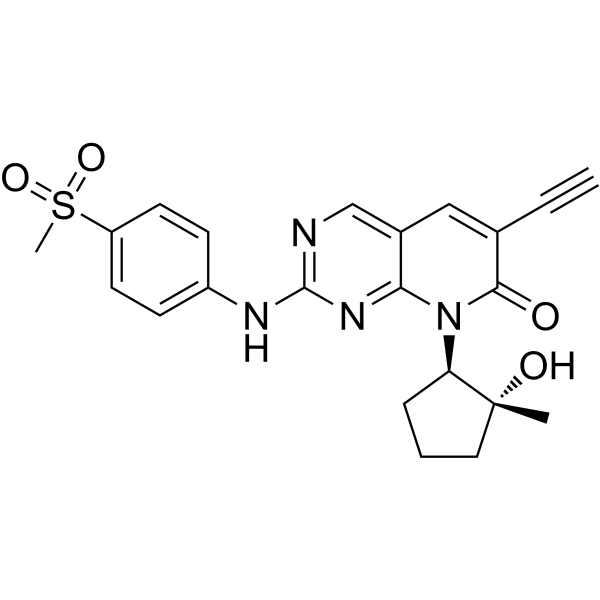
    CDK2/4/6-IN-1(example 29) is a CDK2/4/6 inhibitor with IC50 values of 2.5, 23.7 and 44.3 nM for CDK2, CDK4 and CDK6, respectively. CDK2/4/6-IN-1 can be used in cancer research . CDK2/4/6-IN-1 is a click chemistry reagent, it contains an Alkyne group and can undergo copper-catalyzed azide-alkyne cycloaddition (CuAAc) with molecules containing Azide groups.
    CDK2/4/6-IN-1
  • HY-173124

    CDK VEGFR PDGFR Apoptosis Cancer
    CDK2/FLT4/PDGFRA-IN-1 (Compound 4a) is a potent inhibitor of CDK2/cyclin A, FLT4 (VEGFR3) and PDGFRA, with IC50s of 1.672, 0.554, and 0.629 μM, respectively. CDK2/FLT4/PDGFRA-IN-1 exhibits potent antiproliferative effects against cancer cells (lung EBC-1, pancreatic ductal adenocarcinoma AsPC-1, colorectal HT-29 cells). CDK2/FLT4/PDGFRA-IN-1 can also induce apoptosis in cancer cells .
    CDK2/FLT4/PDGFRA-IN-1
  • HY-50940R

    AT7519M (Standard)

    CDK Apoptosis Reference Standards Cancer
    AT7519 (Standard) is the analytical standard of AT7519. This product is intended for research and analytical applications. AT7519 (AT7519M) as a potent inhibitor of CDKs, with IC50s of 210, 47, 100, 13, 170, and <10 nM for CDK1, CDK2, CDK4 to CDK6, and CDK9, respectively.
    AT7519 (Standard)
  • HY-178171

    AMPK CDK Neurological Disease
    ARUK2010489 (Compound 23) is a potent, selective and brain-penetrant NUAK1 inhibitor with a pIC50 of 8.7. ARUK2010489 also inhibits CDK2, CDK4 and CDK6 activity, with inhibitory rate of 7%, 39% and 26% at 1 μM. ARUK2010489 can be used for the research of neurological disease, such as Alzheimer’s disease (AD) .
    ARUK2010489
  • HY-156116

    EGFR CDK Cancer
    EGFR/CDK2-IN-4 (compound 4c) is a dual inhibitor of EGFR and CDK-2 with IC50s of 89.6 and 165.4 nM, respectively. EGFR/CDK2-IN-4 induces apoptosis in MCF-7 cells and arrests the cell cycle in the S phase. EGFR/CDK2-IN-4 has significant anti-cancer cell toxicity and inhibits MCF-7 with an IC50 of 2.74 μM .
    EGFR/CDK2-IN-4
  • HY-176736

    CDK Apoptosis Cancer
    CDK9-IN-40 is a potent and orally active CDK9 inhibitor with an IC50 of 5.5 nM. CDK9-IN-40 shows high selectivity for CDK9 versus CDK1, CDK2, CDK4, and CDK6, respectively. CDK9-IN-40 can arrest cell cycle, induce cell apoptosis and inhibit tumor growth. CDK9-IN-40 exhibits strong anti-cancer activity .
    CDK9-IN-40
  • HY-50943R

    CDK Apoptosis Reference Standards Cancer
    AT7519 (Hydrochloride) (Standard) is the analytical standard of AT7519 (Hydrochloride). This product is intended for research and analytical applications. AT7519 Hydrochloride is a potent inhibitor of CDKs, with IC50s of 210, 47, 100, 13, 170, and <10 nM for CDK1, CDK2, CDK4 to CDK6, and CDK9, respectively.
    AT7519 Hydrochloride (Standard)
  • HY-178168

    AMPK CDK Neurological Disease
    ARUK2010694 (Compound 20) is a potent and selective NUAK1 inhibitor with a pIC50 of 8.7. ARUK2010694 also inhibits CDK2, CDK4 and CDK6 activity, with inhibitory rate of 13%, 63% and 32% at 1 μM. ARUK2010694 can be used for the research of neurological disease, such as Alzheimer’s disease (AD) .
    ARUK2010694
  • HY-116204

    Caspase CDK Apoptosis Bcl-2 Family PARP Others
    SKLB70326 is a small molecule inhibitor of cell cycle progression that induces cell cycle arrest and apoptosis in human hepatocellular carcinoma cells. SKLB70326 is involved in downregulating cyclin-dependent kinase (CDK) 2, CDK4, and CDK6, while also activating PARP, caspase-3, caspase-9, and Bax, and downregulating Bcl-2.
    SKLB70326
  • HY-176718

    Caspase CDK Telomerase VEGFR Cancer
    VEGFR-2-IN-69 (Compound 5A) is a dual inhibitor of VEGFR-2 and Telomerase, which upregulates the expression of caspase 3, caspase 8 and caspase 9, while downregulating CDK-2, CDK-4 and CDK-6. VEGFR-2-IN-69 exhibits an IC50 of 15.46 µM against HCT116 cells .
    VEGFR-2-IN-69
  • HY-18981R

    (+)-DecursIN (Standard)

    Reference Standards PKC Apoptosis CXCR Neurological Disease Inflammation/Immunology Cancer
    Decursin (Standard) is the analytical standard of Decursin. This product is intended for research and analytical applications. Decursin ((+)-Decursin) is a potent anti-tumor agent. Decursin also is a cytotoxic agent and a potent protein kinase C activator. Decursin induces apoptosis and cell cycle arrest at G1 phase. Decursin decreases the expression of CDK2, CDK4, CDK6, cyclin D1 protein at 48 h. Decursin inhibits cell proliferation and migration. Decursin shows anti-tumor, anti-inflammatory and analgesic activities [4].
    Decursin (Standard)
  • HY-162619

    Apoptosis CDK Cancer
    CDK9-IN-33 (compound C35) is a potent, selective and orally active CDK9 inhibitor with IC50 values of 17.44, 160, 316.30, 1771.00, >10000 nM for CDK9, CDK7, CDK2, CDK4, CDK6 respectively. CDK9-IN-33 induces apoptosis. CDK9-IN-33 decreases the protein expression of RPB1 CTD Ser2, RPB1, MCL1. CDK9-IN-33 shows anti-tumor activity .
    CDK9-IN-33
  • HY-171826

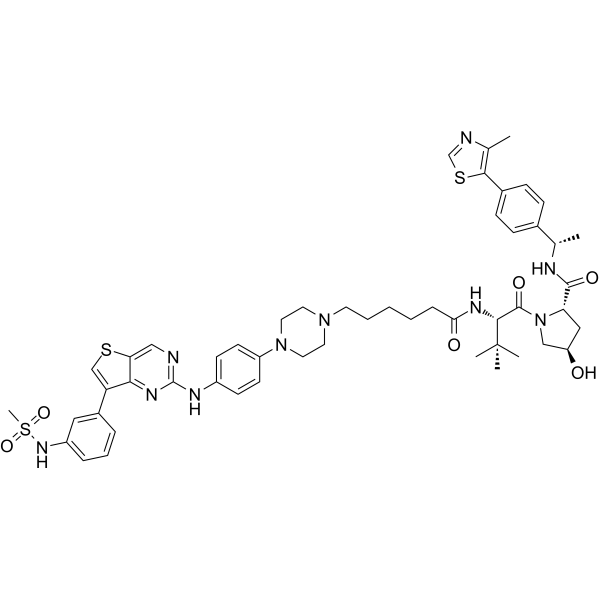
    CDK PROTACs Cancer
    PROTAC CDK2/4/6 Degrader-1 is an orally active CDK2/CDK4/CDK6 PROTAC degrader. PROTAC CDK2/4/6 Degrader-1 is a prodrug derived from PROTAC CDK2/4/6 Degrader-2 via one-step reaction with chloromethyl pivalate. PROTAC CDK2/4/6 Degrader-1 can be used for malignant melanoma research .
    PROTAC CDK2/4/6 Degrader-1
  • HY-10005R

    HMR-1275 (Standard); Alvocidib (Standard); L86-8275 (Standard)

    CDK Reference Standards Autophagy HIV Apoptosis Cancer
    Flavopiridol (Standard) is the analytical standard of Flavopiridol (HY-10005). This product is intended for research and analytical applications. Flavopiridol (Alvocidib) is a broad spectrum and competitive inhibitor of CDKs, inhibiting CDK1, CDK2, CDK4 with IC50s of 30, 170, 100 nM, respectively.
    Flavopiridol (Standard)
  • HY-18981S

    (+)-DecursIN-d6

    Isotope-Labeled Compounds PKC Apoptosis CXCR Neurological Disease Inflammation/Immunology Cancer
    Decursin-d6 ((+)-Decursin-d6) is the deuterium labeled Decursin (HY-18981). Decursin ((+)-Decursin) is a potent anti-tumor agent. Decursin also is a cytotoxic agent and a potent protein kinase C activator. Decursin induces apoptosis and cell cycle arrest at G1 phase. Decursin decreases the expression of CDK2, CDK4, CDK6, cyclin D1 protein at 48 h. Decursin inhibits cell proliferation and migration. Decursin shows anti-tumor, anti-inflammatory and analgesic activities .
    Decursin-d6
  • HY-181490

    PROTACs CDK Apoptosis Cancer
    WWZ-11-098 is a selective CDK6 PROTAC degrader with DC50 of 2.6 nM. WWZ-11-098 induces degradation of CDK6 in a CRBN-dependent manner, while sparing CDK1, CDK2, CDK4, and CDK9. WWZ-11-098 induces apoptosis, G1-S cell cycle arrest and shows anti-proliferative activity in cancer cells. WWZ-11-098 exhibits antitumor efficacy in a xenograft model without signs of toxicity. WWZ-11-098 can be used for the research of leukemia .
    WWZ-11-098
  • HY-183273

    Epigenetic Reader Domain Akt CDK Autophagy Apoptosis Cancer
    BRD4/AKT-IN-1 is a BRD4/AKT inhibitor with BRD4 IC50 66.12 nM and AKT1 IC50 143.81 nM. BRD4/AKT-IN-1 blocks BRD4-mediated c-Myc transcriptional regulation, modulates AKT1 signaling, decouples AKT phosphorylation from pro-survival effectors. BRD4/AKT-IN-1 induces G0/G1 cell cycle arrest via downregulated phosphorylated RB, cyclin E1, CDK2. BRD4/AKT-IN-1 elevates LC3B levels to promote autophagy. BRD4/AKT-IN-1 promotes apoptosis in cancer cells. BRD4/AKT-IN-1 can be used for the research of metastatic castration-resistant prostate cancer .
    BRD4/AKT-IN-1

Inquiry Online

Your information is safe with us. * Required Fields.

Salutation


Country or Region *

Applicant Name *


Organization Name *

Department *


Email Address *


Product Name *

Cat. No.


Requested quantity *

Phone Number *


Remarks

Inquiry Online

Inquiry Information

Product Name:
Cat. No.:
Quantity:
MCE Japan Authorized Agent:

