








Search Result
Results for "
CGRP Receptor
" in MedChemExpress (MCE) Product Catalog:
3
Isotope-Labeled Compounds
| Cat. No. |
Product Name |
Target |
Research Areas |
Chemical Structure |
-
- HY-10095
-
Olcegepant
Maximum Cited Publications
42 Publications Verification
BIBN-4096; BIBN 4096BS
|
CGRP Receptor
|
Neurological Disease
|
|
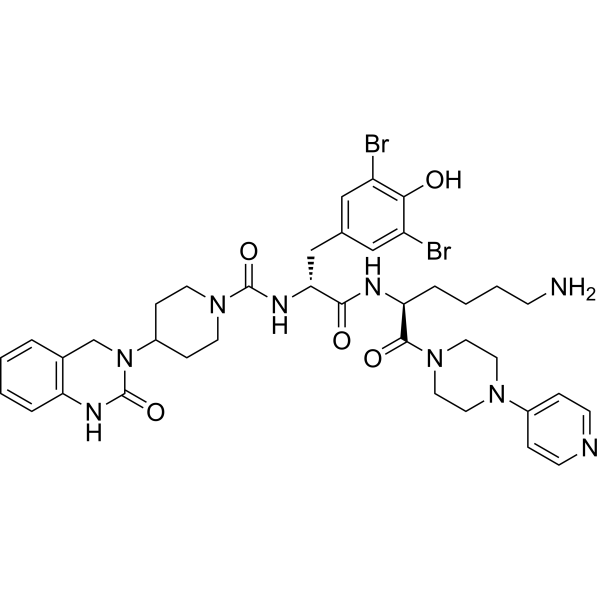
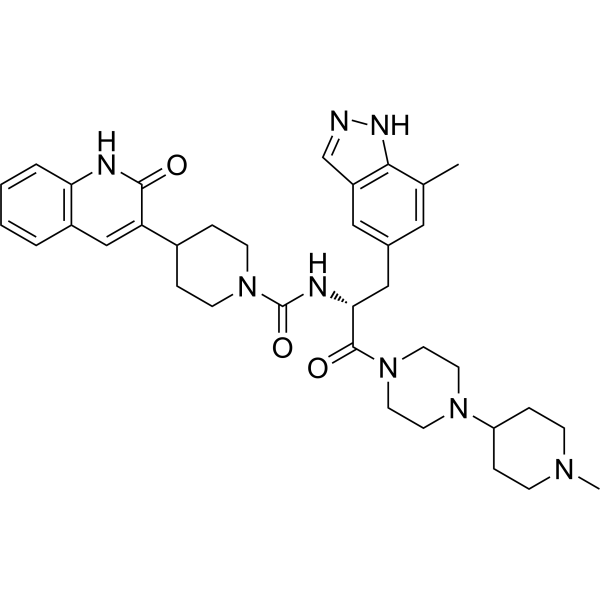
Olcegepant (BIBN-4096) is a potent and selective non-peptide antagonist of the calcitonin gene-related peptide 1 (CGRP1) receptor with IC50 of 0.03 nM and Ki of 14.4 pM for human CGRP .
|
-
-
- HY-15498
-
|
BMS-927711; BHV-3000
|
CGRP Receptor
|
Neurological Disease
|
|
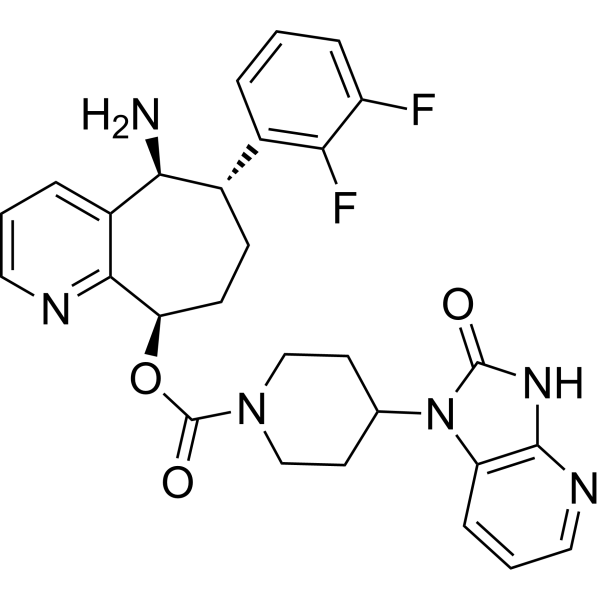
Rimegepant (BMS-927711) is an orally bioavailable and blood-brain barrier permeable antagonist of CGRP and AMY1 receptors, with a pIC50 of 8.01 and a Ki of 0.027 nM for human CGRP receptors. Rimegepant antagonizes cAMP production induced by αCGRP, βCGRP and amylin at CGRP and AMY1 receptors in humans, rats and mice, as well as at rat AMY3 receptors. Rimegepant can be used in research related to migraine .
|
-
-
- HY-12366
-
|
MK-1602
|
CGRP Receptor
|
Cardiovascular Disease
Neurological Disease
|
|
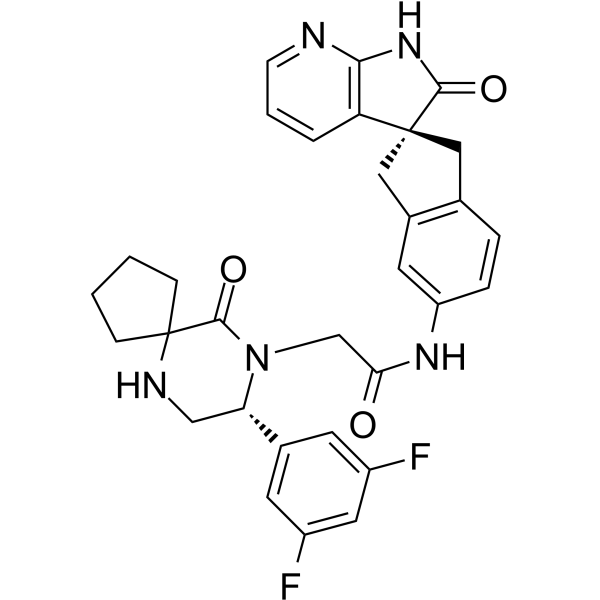
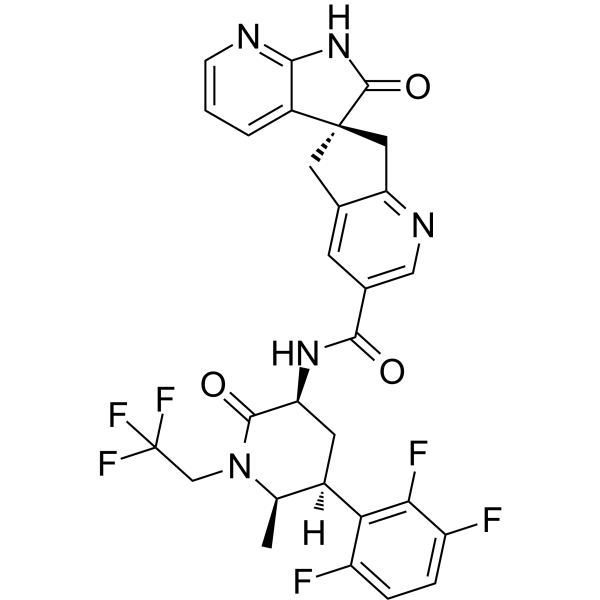
Ubrogepant (MK-1602) is an orally active and selective antagonist of calcitonin gene-related peptide receptor (CGRP). Ubrogepant has high affinity for CGRP receptors in human and rhesus monkeys, and can effectively block the cAMP response stimulated by α-CGRP. Ubrogepant can be used in the study of acute migraine .
|
-
-
- HY-109022
-
|
MK-8031; AGN-241689
|
CGRP Receptor
|
Neurological Disease
|
|
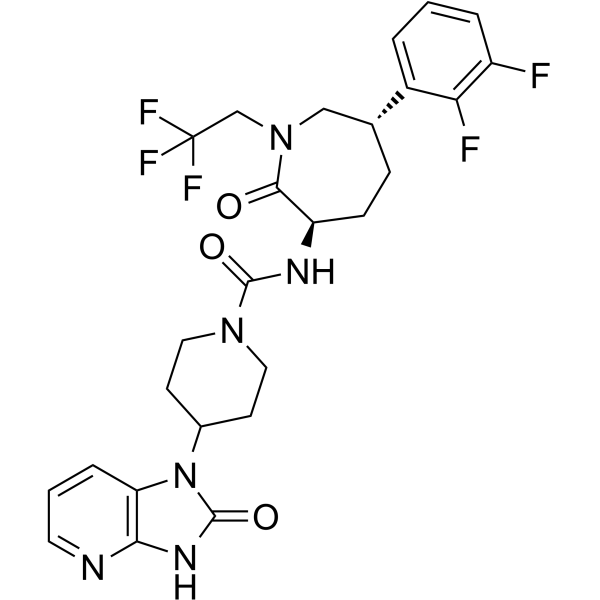
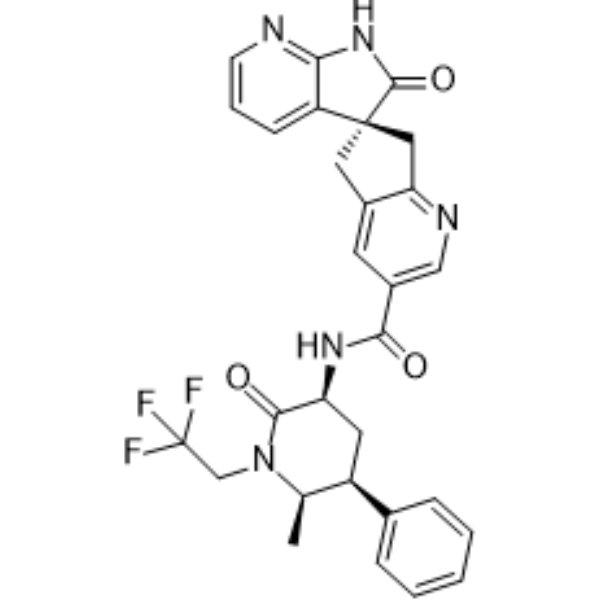
Atogepant (MK-8031) is an orally active and selective calcitonin gene-related peptide receptor (CGRP) antagonist. Atogepant can be used for researching migraine .
|
-
-
- HY-10301
-
MK-3207
5 Publications Verification
|
CGRP Receptor
|
Neurological Disease
|
|
MK-3207 is an orally active, highly selective and species-specific CGRP receptor antagonist (for human CGRP receptor: IC50=0.12 nM; Ki=0.024 nM). MK-3207 can be used for migraine studies .
|
-
-
- HY-P1548
-
|
Human β-CGRP; CGRP-II (Human)
|
CGRP Receptor
|
Cardiovascular Disease
Inflammation/Immunology
|
|
β-CGRP, human (Human β-CGRP) is one of calcitonin peptides, acts via the complex of calcitonin-receptor-like receptor (CRLR) and receptor-activity-modifying protein (RAMP), with IC50s of 1 nM and 300 nM for CRLR/RAMP1 and CRLR/RAMP2 in cells .
|
-
-
- HY-P1393
-
|
|
Amylin Receptor
|
Endocrinology
|
|
AC 187 is a potent and orally active amylin receptor antagonist with an IC50 of 0.48 nM and a Ki of 0.275 nM. AC 187 shows more selective for amylin receptor than calcitonin and CGRP receptors. AC 187 has neuroprotective effects .
|
-
-
- HY-P1471
-
|
22-52-Adrenomedullin (human)
|
CGRP Receptor
|
Cardiovascular Disease
|
|
Adrenomedullin (AM) (22-52), human, an NH2 terminal truncated adrenomedullin analogue, is an adrenomedullin receptor antagonist, and also antagonizes the calcitonin generelated peptide (CGRP) receptor in the hindlimb vascular bed of the cat .
|
-
-
- HY-P0209
-
-
-
- HY-32709
-
|
MK-0974
|
CGRP Receptor
|
Neurological Disease
|
|
Telcagepant (MK-0974) is an orally active calcitonin gene-related peptide (CGRP) receptor antagonist with Kis of 0.77 nM and 1.2 nM for human and rhesus CGRP receptors, respectively.
|
-
-
- HY-10095A
-
|
BIBN-4096 hydrochloride; BIBN4096BS hydrochloride
|
CGRP Receptor
|
Neurological Disease
|
|
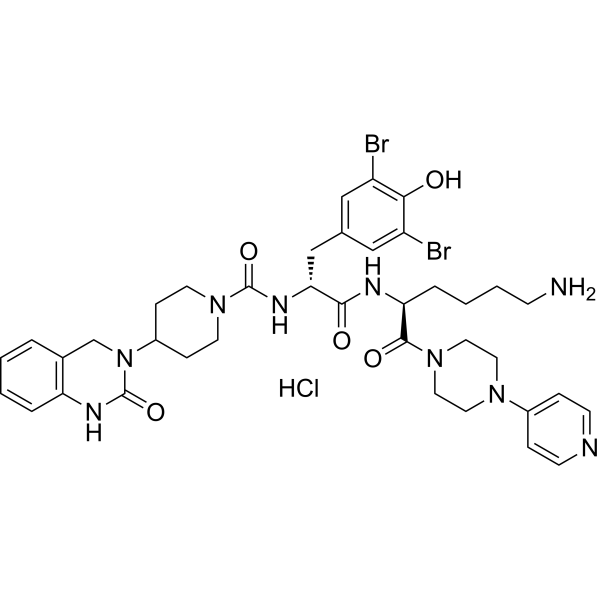
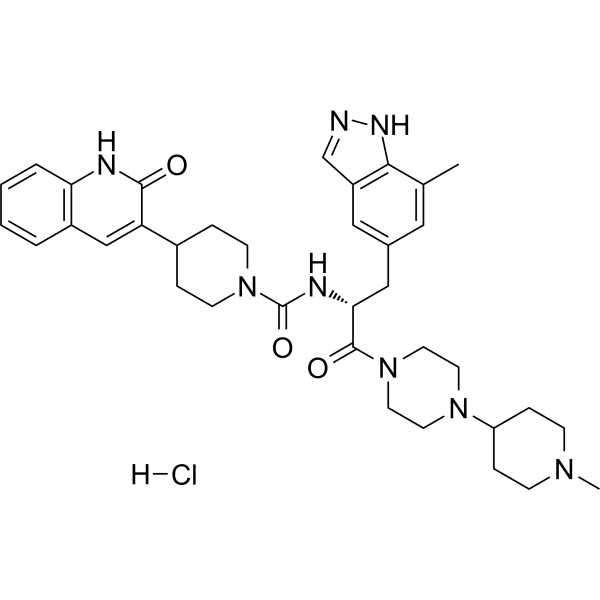
Olcegepant hydrochloride (BIBN-4096 hydrochloride) is a potent and selective non-peptide antagonist of the calcitonin gene-related peptide 1 (CGRP1) receptor with IC50 of 0.03 nM and with a Ki of 14.4 pM for human CGRP .
|
-
-
- HY-134992
-
|
Zavegepant; BHV-3500
|
CGRP Receptor
|
Neurological Disease
|
|
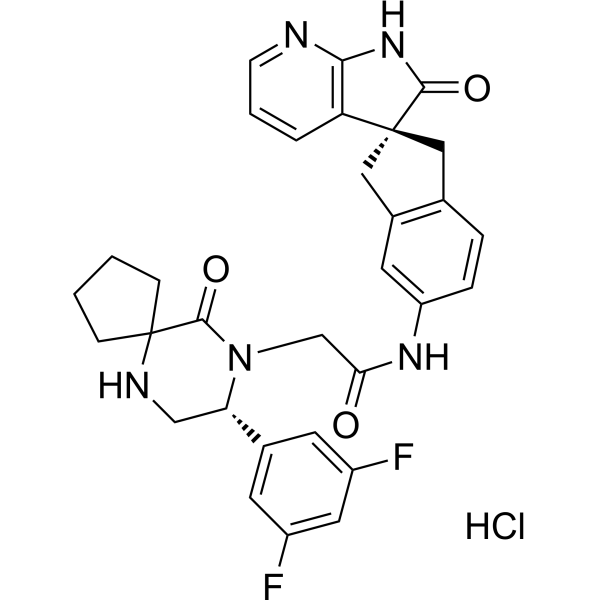
Vazegepant (Zavegepant) is an orally active calcitonin gene-related peptide (CGRP) receptor antagonist. Vazegepant can be used in the study of migraine .
|
-
-
- HY-P9938
-
|
AMG-334
|
CGRP Receptor
|
Neurological Disease
|
|
Erenumab (AMG-334) is a fully human monoclonal antibody. Erenumab inhibits the calcitonin gene-related peptide (CGRP) receptor. Erenumab prevents the increase in dermal blood flow in cynomolgus monkeys. Erenumab can be used in the research of episodic migraine .
|
-
-
- HY-P99017
-
|
ALD-403
|
CGRP Receptor
|
Neurological Disease
|
|
Eptinezumab (ALD-403) is a human monoclonal antibody targeting the α and β subtypes of human calcitonin gene-related peptide (CGRP). Eptinezumab binds to the CGRP ligand and blocks its binding to endogenous CGRP receptors, thereby inhibiting receptor activation. Eptinezumab can be used in research related to migraine .
|
-
-
- HY-P1014
-
|
Human α-CGRP (8-37)
|
CGRP Receptor
|
Cardiovascular Disease
|
|
HCGRP-(8-37) (Human α-CGRP (8-37)) is a fragment of human calcitonin gene-related peptide (hCGRP) and an antagonist of the CGRP receptor, with an IC50 of 32.1 pM against the CGRP receptor. HCGRP-(8-37) blocks adenylate cyclase activation induced by CGRP receptor ligands and attenuates vascular responses triggered by CGRP. HCGRP-(8-37) reduces capsaicin-induced vasodilation in porcine nasal mucosa and superficial skin. HCGRP-(8-37) serves as a research tool to distinguish effects mediated by CGRP or calcitonin receptors, and to investigate CGRP-induced vascular effects .
|
-
-
- HY-15498A
-
|
BMS-927711 sulfate hydrate; BHV-3000 sulfate hydrate
|
CGRP Receptor
|
Neurological Disease
|
|
Rimegepant (BMS-927711) sulfate hydrate is a potent, orally active, selective and competitive calcitonin gene-related peptide (CGRP) receptor antagonist with a Ki of 0.027 nM and an IC50 of 0.14 nM for hCGRP receptor. Rimegepant sulfate hydrate can be used for migraine research .
|
-
-
- HY-P1782
-
|
|
Amylin Receptor
|
Metabolic Disease
|
|
Calcitonin (8-32), salmon is a highly selective Amylin receptor antagonist. Calcitonin (8-32), salmon reverses the Amylin-mediated inhibition of glucose-induced insulin release, but has no effect on either glucagon release or somatostatin release. Calcitonin (8-32), salmon can be used for studies related to β-cell amylin .
|
-
-
- HY-P1770
-
|
|
CGRP Receptor
|
Cardiovascular Disease
|
|
Adrenomedullin (16-31), human is amino acid residues 16-31 fragment of human adrenomedullin (hADM). Adrenomedullin has appreciable affinity for the CGRP1 receptor. Adrenomedullin (16-31), human possesses pressor activity in the systemic vascular bed of the rat, but not the cat .
|
-
-
- HY-112262
-
-
-
- HY-P1548A
-
|
Human β-CGRP TFA; CGRP-II (Human) TFA
|
CGRP Receptor
|
Cardiovascular Disease
Inflammation/Immunology
|
|
β-CGRP, human TFA (Human β-CGRP TFA) is one of calcitonin peptides, acts via the complex of calcitonin-receptor-like receptor (CRLR) and receptor-activity-modifying protein (RAMP), with IC50s of 1 nM and 300 nM for CRLR/RAMP1 and CRLR/RAMP2 in cells .
|
-
-
- HY-P1393A
-
|
|
Amylin Receptor
|
Endocrinology
|
|
AC 187 TFA is a potent and orally active amylin receptor antagonist with an IC50 of 0.48 nM and a Ki of 0.275 nM. AC 187 TFA shows more selective for amylin receptor than calcitonin and CGRP receptors. AC 187 TFA has neuroprotective effects .
|
-
-
- HY-10302
-
|
|
CGRP Receptor
|
Neurological Disease
|
|
MK-3207 (Hydrochloride) is a potent and orally bioavailable CGRP receptor antagonist with IC50 of 0.12 nM and Ki of 0.024 nM, and is highly selective versus human AM1, AM2, CTR, and AMY3.
|
-
-
- HY-P1913A
-
|
CGRP II (rat) TFA
|
CGRP Receptor
|
Cardiovascular Disease
|
|
Calcitonin Gene Related Peptide II rat TFA, a CGRP receptor activator, is a potent and long-lasting vasodilator. Calcitonin Gene Related Peptide II rat TFA can be used in the research of cardiovascular diseases .
|
-
-
- HY-117694
-
|
|
CGRP Receptor
|
Neurological Disease
Inflammation/Immunology
|
|
MK-8825 is an orally active, selective CGRP receptor antagonist with a Ki value of 47 pM for human CGRP receptors and 17 nM for rat CGRP receptors. MK-8825 blocks CGRP-stimulated cAMP responses and exhibits competitive-like antagonism. MK-8825 can be used in the research of migraine and temporomandibular joint disorders .
|
-
-
- HY-P1534
-
|
Adrenomedullin (rat)
|
CGRP Receptor
|
Cardiovascular Disease
|
|
Adrenomedullin (1-50), rat is a 50 amino acid peptide, which induces a selective arterial vasodilation via activation of CGRP1 receptor.
|
-
-
- HY-P11320
-
|
|
Amylin Receptor
CGRP Receptor
|
Metabolic Disease
|
|
Davalintide is an Amylin (HY-P1464)-mimetic peptide with greater potency and longer-lasting effects. Davalintide is a potent agonist of amylin receptor (IC50 = 0.04 nM), calcitonin receptor (IC50 = 0.06 nM) and calcitonin related peptide receptor (CGRP receptor) (IC50 = 3.1 nM). Davalintide shows stronger potency to Amylin to activate cyclic AMP production through the calcitonin receptor (EC50 = 1.4 nM). Davalintide regulates blood sugar and weight through various mechanisms such as delaying gastric emptying, inhibiting glucagon secretion, and reducing food intake. Davalintide can be used for the studies of anti-obesity and anti-diabetes .
|
-
-
- HY-103304
-
|
|
Others
|
Neurological Disease
|
|
CGRP antagonist 4 is an antagonist of calcitonin gene-related peptide (CGRP) receptor. CGRP antagonist 4 shows the highest affinity for CGRP receptors in the human brain. CGRP antagonist 4 can be used to study the binding properties of non-peptide calcitonin gene-related peptide (CGRP) receptor antagonist (gepants) in rat, pig and human menes .
|
-
-
- HY-P3689
-
|
|
CGRP Receptor
Adenylate Cyclase
|
Others
|
|
[Tyr22] Calcitonin Gene Related Peptide, (22-37), rat is a fragments 22-37 of rat calcitonin gene related peptide (CGRP), targeting CGRP receptor and adenylate cyclase. Calcitonin is mainly produced by thyroid C cells while CGRP is secreted and stored in the nervous system .
|
-
-
- HY-P1913
-
|
CGRP II (rat)
|
CGRP Receptor
|
Cardiovascular Disease
|
|
Calcitonin Gene Related Peptide II rat, a CGRP receptor activator, is a potent and long-lasting vasodilator. Calcitonin Gene Related Peptide II rat can be used in the research of cardiovascular diseases .
|
-
-
- HY-124277
-
|
|
TRP Channel
|
Neurological Disease
|
|
ADM 12 is a highly selective transient receptor potential ankyrin 1 (TRPA1) channel antagonist. ADM 12 blocks nitroglycerin (NTG)-induced trigeminal hyperalgesia in animal models, reducing expression of pain-related genes (c-Fos, TRPA1) and neuropeptides (CGRP, SP). ADM_12 is promising for research of migraine and neuropathic pain .
|
-
-
- HY-114945
-
-
-
- HY-174986
-
|
|
CGRP Receptor
|
Cardiovascular Disease
|
|
CGRP antagonist 7 is a potent calcitonin gene-related peptide receptor (CGRP) antagonist with a Ki of 0.029 nM. CGRP antagonist 7 Inhibit the production of cyclic adenosine monophosphate (cAMP) with an IC50 of 1.5 nM. CGRP antagonist 7 can be used for the study of migraine .
|
-
-
- HY-12366R
-
|
MK-1602 (Standard)
|
CGRP Receptor
Reference Standards
|
Cardiovascular Disease
Neurological Disease
|
|
Ubrogepant (Standard) is the analytical standard of Ubrogepant. This product is intended for research and analytical applications. Ubrogepant (MK-1602) is an orally active and selective antagonist of calcitonin gene-related peptide receptor (CGRP). Ubrogepant has high affinity for CGRP receptors in human and rhesus monkeys, and can effectively block the cAMP response stimulated by α-CGRP. Ubrogepant can be used in the study of acute migraine .
|
-
-
- HY-145353
-
-
-
- HY-P1766
-
|
|
CGRP Receptor
|
Cardiovascular Disease
|
|
Adrenomedullin (11-50), rat is the C-terminal fragment (11-50) of rat adrenomedullin. Rat adrenomedullin induces a selective arterial vasodilation via CGRP1 receptors .
|
-
-
- HY-109022A
-
|
(3R,5R,6S)-MK-8031; (3R,5R,6S)-AGN-241689
|
CGRP Receptor
|
Neurological Disease
|
|
(3R,5R,6S)-Atogepant ((3R,5R,6S)-MK-8031) is the enantiomer of Atogepant (HY-109022). Atogepant is a calcitonin gene-related peptide receptor (CGRP) antagonist. Atogepant can be used for researching migraine.
|
-
-
- HY-114574
-
|
|
CGRP Receptor
|
Neurological Disease
|
|
BMS-694153 is a potent antagonist of the human calcitonin gene-related peptide receptor (CGRP Receptor). BMS-694153 can be used for migraine with rapid and efficient intranasal exposure .
|
-
-
- HY-P1471A
-
|
22-52-Adrenomedullin (human) TFA
|
CGRP Receptor
|
Cardiovascular Disease
|
|
Adrenomedullin (AM) (22-52), human (22-52-Adrenomedullin human) TFA, an NH2 terminal truncated adrenomedullin analogue, is an adrenomedullin receptor antagonist. Adrenomedullin (AM) (22-52), human also antagonizes the calcitonin generelated peptide (CGRP) receptor in the hindlimb vascular bed of the cat .
|
-
-
- HY-162925
-
|
|
CGRP Receptor
|
Neurological Disease
|
|
CGRP antagonist 6 (Compound 23) is a CGRP receptor antagonist (Ki: 0.84 nM). CGRP antagonist 6 can be used for research of migraine .
|
-
-
- HY-P1548B
-
|
Human β-CGRP acetate; CGRP-II (Human) acetate
|
CGRP Receptor
|
Cardiovascular Disease
Inflammation/Immunology
|
|
β-CGRP, human acetate (Human β-CGRP acetate) is one of calcitonin peptides, acts via the complex of calcitonin-receptor-like receptor (CRLR) and receptor-activity-modifying protein (RAMP), with IC50s of 1 nM and 300 nM for CRLR/RAMP1 and CRLR/RAMP2 in cells .
|
-
-
- HY-12366S
-
|
MK-1602-d5
|
Isotope-Labeled Compounds
CGRP Receptor
|
Cardiovascular Disease
Neurological Disease
|
|
Ubrogepant-d5 (MK-1602-d5) is deuterium labeled Ubrogepant. Ubrogepant (MK-1602) is an orally active and selective antagonist of calcitonin gene-related peptide receptor (CGRP). Ubrogepant has high affinity for CGRP receptors in human and rhesus monkeys, and can effectively block the cAMP response stimulated by α-CGRP. Ubrogepant can be used in the study of acute migraine .
|
-
-
- HY-32709S
-
|
MK-0974-d8
|
Isotope-Labeled Compounds
CGRP Receptor
|
Neurological Disease
|
|
Telcagepant-d8 (MK-0974-d8) is deuterium labeled Telcagepant. Telcagepant (MK-0974) is an orally active calcitonin gene-related peptide (CGRP) receptor antagonist with Kis of 0.77 nM and 1.2 nM for human and rhesus CGRP receptors, respectively.
|
-
-
- HY-134992S
-
|
|
Isotope-Labeled Compounds
|
Others
|
|
(Rac)-Vazegepant- 13C,d3 is the C13 and deuterium labeled (Rac)-Vazegepant. Vazegepant (HY-134992) is the first intranasal CGRP receptor antagonist for the study the acute research of migraine .
|
-
-
- HY-P1770A
-
|
|
CGRP Receptor
|
Cardiovascular Disease
|
|
Adrenomedullin (16-31), human TFA is amino acid residues 16-31 fragment of human adrenomedullin (hADM). Adrenomedullin has appreciable affinity for the CGRP1 receptor. Adrenomedullin (16-31), human TFA possesses pressor activity in the systemic vascular bed of the rat, but not the cat .
|
-
-
- HY-183181
-
|
|
CGRP Receptor
|
Neurological Disease
|
|
CGRP antagonist-9 is a CGRP receptor antagonist with an IC50 of 25 nM. It regulates the cAMP signaling pathway and can be used in migraine-related studies .
|
-
-
- HY-183180
-
|
|
CGRP Receptor
|
Neurological Disease
|
|
CGRP antagonist-8 is a CGRP receptor antagonist with an IC50 of 2.7 nM. CGRP antagonist-8 can be used for the research of migraine .
|
-
-
- HY-132131
-
|
Zavegepant hydrochloride; BHV-3500 hydrochloride
|
CGRP Receptor
|
Infection
Inflammation/Immunology
|
|
Vazegepant (BHV-3500) hydrochloride is a highly affinity CGRP receptor antagonist (hCGRP Ki= 0.023 nM). Vazegepant hydrochloride is the first intranasal gepant for migraine. Vazegepant hydrochloride may be helpful in effective management of COVID-19 associated pulmonary inflammation .
|
-
-
- HY-183142
-
|
|
CGRP Receptor
|
Cancer
|
|
CLR/RAMP3-receptor antagonist-1 is a selective antagonist of the CLR/RAMP3 receptor (CLR/RAMP3, AM2 receptor), with pIC50 values of 5.86, 9.21 and 9.07 against AM1 (CLR/RAMP2), AM2 (CLR/RAMP3) and CGRP (CLR/RAMP1) receptors, respectively. CLR/RAMP3-receptor antagonist-1 reduces the levels of pancreatic cancer progression markers, induces apoptosis in vitro, and prolongs survival in mouse models of pancreatic cancer. CLR/RAMP3-receptor antagonist-1 can be used in pancreatic cancer-related research .
|
-
-
- HY-180955
-
|
|
CGRP Receptor
Cytochrome P450
|
Neurological Disease
|
|
Desfluoro-BMS-694153 (Compound 3) is a calcitonin gene-related peptide receptor (CGRP receptor) antagonist, with a Ki value of 0.01 nM. Desfluoro-BMS-694153 has a significantly reduced risk of CYP3A4 inhibition, and its IC50 values for CYP3A4-BFC and CYP3A4-BZR are 36 and 6 μM respectively. Desfluoro-BMS-694153 can be used for research on migraines .
|
-
-
- HY-10095R
-
|
BIBN-4096 (Standard); BIBN 4096BS (Standard)
|
CGRP Receptor
Reference Standards
|
Neurological Disease
|
|
Olcegepant (Standard) is the analytical standard of Olcegepant (HY-10095). This product is intended for research and analytical applications. Olcegepant (BIBN-4096) is a potent and selective non-peptide antagonist of the calcitonin gene-related peptide 1 (CGRP1) receptor with IC50 of 0.03 nM and Ki of 14.4 pM for human CGRP .
|
-
- HY-179684
-
|
|
CGRP Receptor
5-HT Receptor
ERK
Epigenetic Reader Domain
|
Neurological Disease
|
|
PCC0105005 is a dual-target CGRP Receptor antagonist (IC50 = 1.01 nM) and a partial agonist of 5-HT1F Receptor (EC50 = 77.91 nM). PCC0105005 shows significant efficacy in the rat model of migraine. PCC0105005 significantly reduces the expression of CGRP and c-Fos proteins, and inhibits the phosphorylation levels of ERK and CREB. PCC0105005 can be used for research on migraine .
|
-
- HY-15498B
-
|
BMS-927711 hemisulfate; BHV-3000 hemisulfate
|
CGRP Receptor
|
Neurological Disease
|
|
Rimegepant (BMS-927711) hemisulfate is a potent, orally active, selective and competitive calcitonin gene-related peptide (CGRP) receptor antagonist with a Ki of 0.027 nM and an IC50 of 0.14 nM for hCGRP receptor. Rimegepant hemisulfate can be used for migraine research .
|
-
- HY-109022R
-
|
MK-8031 (Standard); AGN-241689 (Standard)
|
Reference Standards
CGRP Receptor
|
Neurological Disease
|
|
Atogepant (Standard) is the analytical standard of Atogepant (HY-109022). This product is intended for research and analytical applications. Atogepant (MK-8031) is an orally active and selective calcitonin gene-related peptide receptor (CGRP) antagonist. Atogepant can be used for researching migraine .
|
-
- HY-10302R
-
|
|
Reference Standards
CGRP Receptor
|
Neurological Disease
|
|
MK-3207 hydrochloride (Standard) is the analytical standard of MK-3207 hydrochloride (HY-10302). This product is intended for research and analytical applications. MK-3207 hydrochloride is a potent and orally bioavailable CGRP receptor antagonist with IC50 of 0.12 nM and Ki of 0.024 nM, and is highly selective versus human AM1, AM2, CTR, and AMY3.
|
-
- HY-P11587
-
|
|
Amylin Receptor
CGRP Receptor
|
Metabolic Disease
|
|
BGM1812 is a dual agonist of amylin (hAMY3R) (EC50 = 0.627 nM) and CGRP Receptor (hCTR) (EC50 = 2.27 nM). BGM1812 achieves weight loss, increases the proportion of lean body mass, and reduces fat mass in diet-induced obese (DIO) rats. BGM1812 is applicable to research related to obesity .
|
-
| Cat. No. |
Product Name |
Target |
Research Area |
-
- HY-P1548
-
|
Human β-CGRP; CGRP-II (Human)
|
CGRP Receptor
|
Cardiovascular Disease
Inflammation/Immunology
|
|
β-CGRP, human (Human β-CGRP) is one of calcitonin peptides, acts via the complex of calcitonin-receptor-like receptor (CRLR) and receptor-activity-modifying protein (RAMP), with IC50s of 1 nM and 300 nM for CRLR/RAMP1 and CRLR/RAMP2 in cells .
|
-
- HY-P1393
-
|
|
Amylin Receptor
|
Endocrinology
|
|
AC 187 is a potent and orally active amylin receptor antagonist with an IC50 of 0.48 nM and a Ki of 0.275 nM. AC 187 shows more selective for amylin receptor than calcitonin and CGRP receptors. AC 187 has neuroprotective effects .
|
-
- HY-P1471
-
|
22-52-Adrenomedullin (human)
|
CGRP Receptor
|
Cardiovascular Disease
|
|
Adrenomedullin (AM) (22-52), human, an NH2 terminal truncated adrenomedullin analogue, is an adrenomedullin receptor antagonist, and also antagonizes the calcitonin generelated peptide (CGRP) receptor in the hindlimb vascular bed of the cat .
|
-
- HY-P0209
-
-
- HY-P1014
-
|
Human α-CGRP (8-37)
|
CGRP Receptor
|
Cardiovascular Disease
|
|
HCGRP-(8-37) (Human α-CGRP (8-37)) is a fragment of human calcitonin gene-related peptide (hCGRP) and an antagonist of the CGRP receptor, with an IC50 of 32.1 pM against the CGRP receptor. HCGRP-(8-37) blocks adenylate cyclase activation induced by CGRP receptor ligands and attenuates vascular responses triggered by CGRP. HCGRP-(8-37) reduces capsaicin-induced vasodilation in porcine nasal mucosa and superficial skin. HCGRP-(8-37) serves as a research tool to distinguish effects mediated by CGRP or calcitonin receptors, and to investigate CGRP-induced vascular effects .
|
-
- HY-P1782
-
|
|
Amylin Receptor
|
Metabolic Disease
|
|
Calcitonin (8-32), salmon is a highly selective Amylin receptor antagonist. Calcitonin (8-32), salmon reverses the Amylin-mediated inhibition of glucose-induced insulin release, but has no effect on either glucagon release or somatostatin release. Calcitonin (8-32), salmon can be used for studies related to β-cell amylin .
|
-
- HY-P1770
-
|
|
CGRP Receptor
|
Cardiovascular Disease
|
|
Adrenomedullin (16-31), human is amino acid residues 16-31 fragment of human adrenomedullin (hADM). Adrenomedullin has appreciable affinity for the CGRP1 receptor. Adrenomedullin (16-31), human possesses pressor activity in the systemic vascular bed of the rat, but not the cat .
|
-
- HY-P1548A
-
|
Human β-CGRP TFA; CGRP-II (Human) TFA
|
CGRP Receptor
|
Cardiovascular Disease
Inflammation/Immunology
|
|
β-CGRP, human TFA (Human β-CGRP TFA) is one of calcitonin peptides, acts via the complex of calcitonin-receptor-like receptor (CRLR) and receptor-activity-modifying protein (RAMP), with IC50s of 1 nM and 300 nM for CRLR/RAMP1 and CRLR/RAMP2 in cells .
|
-
- HY-P1393A
-
|
|
Amylin Receptor
|
Endocrinology
|
|
AC 187 TFA is a potent and orally active amylin receptor antagonist with an IC50 of 0.48 nM and a Ki of 0.275 nM. AC 187 TFA shows more selective for amylin receptor than calcitonin and CGRP receptors. AC 187 TFA has neuroprotective effects .
|
-
- HY-P1913A
-
|
CGRP II (rat) TFA
|
CGRP Receptor
|
Cardiovascular Disease
|
|
Calcitonin Gene Related Peptide II rat TFA, a CGRP receptor activator, is a potent and long-lasting vasodilator. Calcitonin Gene Related Peptide II rat TFA can be used in the research of cardiovascular diseases .
|
-
- HY-P1534
-
|
Adrenomedullin (rat)
|
CGRP Receptor
|
Cardiovascular Disease
|
|
Adrenomedullin (1-50), rat is a 50 amino acid peptide, which induces a selective arterial vasodilation via activation of CGRP1 receptor.
|
-
- HY-P11320
-
|
|
Amylin Receptor
CGRP Receptor
|
Metabolic Disease
|
|
Davalintide is an Amylin (HY-P1464)-mimetic peptide with greater potency and longer-lasting effects. Davalintide is a potent agonist of amylin receptor (IC50 = 0.04 nM), calcitonin receptor (IC50 = 0.06 nM) and calcitonin related peptide receptor (CGRP receptor) (IC50 = 3.1 nM). Davalintide shows stronger potency to Amylin to activate cyclic AMP production through the calcitonin receptor (EC50 = 1.4 nM). Davalintide regulates blood sugar and weight through various mechanisms such as delaying gastric emptying, inhibiting glucagon secretion, and reducing food intake. Davalintide can be used for the studies of anti-obesity and anti-diabetes .
|
-
- HY-P3689
-
|
|
CGRP Receptor
Adenylate Cyclase
|
Others
|
|
[Tyr22] Calcitonin Gene Related Peptide, (22-37), rat is a fragments 22-37 of rat calcitonin gene related peptide (CGRP), targeting CGRP receptor and adenylate cyclase. Calcitonin is mainly produced by thyroid C cells while CGRP is secreted and stored in the nervous system .
|
-
- HY-P1913
-
|
CGRP II (rat)
|
CGRP Receptor
|
Cardiovascular Disease
|
|
Calcitonin Gene Related Peptide II rat, a CGRP receptor activator, is a potent and long-lasting vasodilator. Calcitonin Gene Related Peptide II rat can be used in the research of cardiovascular diseases .
|
-
- HY-P1766
-
|
|
CGRP Receptor
|
Cardiovascular Disease
|
|
Adrenomedullin (11-50), rat is the C-terminal fragment (11-50) of rat adrenomedullin. Rat adrenomedullin induces a selective arterial vasodilation via CGRP1 receptors .
|
-
- HY-P1471A
-
|
22-52-Adrenomedullin (human) TFA
|
CGRP Receptor
|
Cardiovascular Disease
|
|
Adrenomedullin (AM) (22-52), human (22-52-Adrenomedullin human) TFA, an NH2 terminal truncated adrenomedullin analogue, is an adrenomedullin receptor antagonist. Adrenomedullin (AM) (22-52), human also antagonizes the calcitonin generelated peptide (CGRP) receptor in the hindlimb vascular bed of the cat .
|
-
- HY-P1548B
-
|
Human β-CGRP acetate; CGRP-II (Human) acetate
|
CGRP Receptor
|
Cardiovascular Disease
Inflammation/Immunology
|
|
β-CGRP, human acetate (Human β-CGRP acetate) is one of calcitonin peptides, acts via the complex of calcitonin-receptor-like receptor (CRLR) and receptor-activity-modifying protein (RAMP), with IC50s of 1 nM and 300 nM for CRLR/RAMP1 and CRLR/RAMP2 in cells .
|
-
- HY-P1770A
-
|
|
CGRP Receptor
|
Cardiovascular Disease
|
|
Adrenomedullin (16-31), human TFA is amino acid residues 16-31 fragment of human adrenomedullin (hADM). Adrenomedullin has appreciable affinity for the CGRP1 receptor. Adrenomedullin (16-31), human TFA possesses pressor activity in the systemic vascular bed of the rat, but not the cat .
|
-
- HY-P11587
-
|
|
Amylin Receptor
CGRP Receptor
|
Metabolic Disease
|
|
BGM1812 is a dual agonist of amylin (hAMY3R) (EC50 = 0.627 nM) and CGRP Receptor (hCTR) (EC50 = 2.27 nM). BGM1812 achieves weight loss, increases the proportion of lean body mass, and reduces fat mass in diet-induced obese (DIO) rats. BGM1812 is applicable to research related to obesity .
|
| Cat. No. |
Product Name |
Target |
Research Area |
Image |
-
- HY-P9938
-
|
AMG-334
|
CGRP Receptor
|
Neurological Disease
|
|
Erenumab (AMG-334) is a fully human monoclonal antibody. Erenumab inhibits the calcitonin gene-related peptide (CGRP) receptor. Erenumab prevents the increase in dermal blood flow in cynomolgus monkeys. Erenumab can be used in the research of episodic migraine .
|
-
(5)
-
- HY-P99017
-
|
ALD-403
|
CGRP Receptor
|
Neurological Disease
|
|
Eptinezumab (ALD-403) is a human monoclonal antibody targeting the α and β subtypes of human calcitonin gene-related peptide (CGRP). Eptinezumab binds to the CGRP ligand and blocks its binding to endogenous CGRP receptors, thereby inhibiting receptor activation. Eptinezumab can be used in research related to migraine .
|
-
(5)
| Cat. No. |
Product Name |
Chemical Structure |
-
- HY-12366S
-
|
|
|
Ubrogepant-d5 (MK-1602-d5) is deuterium labeled Ubrogepant. Ubrogepant (MK-1602) is an orally active and selective antagonist of calcitonin gene-related peptide receptor (CGRP). Ubrogepant has high affinity for CGRP receptors in human and rhesus monkeys, and can effectively block the cAMP response stimulated by α-CGRP. Ubrogepant can be used in the study of acute migraine .
|
-
-
- HY-32709S
-
|
|
|
Telcagepant-d8 (MK-0974-d8) is deuterium labeled Telcagepant. Telcagepant (MK-0974) is an orally active calcitonin gene-related peptide (CGRP) receptor antagonist with Kis of 0.77 nM and 1.2 nM for human and rhesus CGRP receptors, respectively.
|
-
-
- HY-134992S
-
|
|
|
(Rac)-Vazegepant- 13C,d3 is the C13 and deuterium labeled (Rac)-Vazegepant. Vazegepant (HY-134992) is the first intranasal CGRP receptor antagonist for the study the acute research of migraine .
|
-
Your information is safe with us. * Required Fields.
Inquiry Information
- Product Name:
- Cat. No.:
- Quantity:
- MCE Japan Authorized Agent:

