
1. Search Result
Search Result
Pathways Recommended: Stem Cell/Wnt Cell Cycle/DNA Damage
Results for "

Cell viability assay

" in MedChemExpress (MCE) Product Catalog:

14

Inhibitors & Agonists

2

Fluorescent Dyes

3

Biochemical Assay Reagents

5

MCE Kits

3

Oligonucleotides

Cat. No. Product Name Target Research Areas Chemical Structure
  • HY-D2908

    Fluorescent Dye Others
    SYTO9 is a green fluorescent nucleic acid dye (Ex = 485 nm, Em = 498 nm (DNA)/501 nm (RNA)). SYTO9 can penetrate the intact cell membrane of viable bacteria. When the cell membrane is damaged (cell death), its rate of entry into cells increases, and it competes with propidium iodide (PI) (HY-D0815), another membrane-impermeable dye, for nucleic acid binding sites. SYTO9 is widely used in fluorescence microscopy, flow cytometry, and fluorometric assays in microbiology for bacterial counting, viability assessment, and cell imaging .
    SYTO9
  • HY-W004520
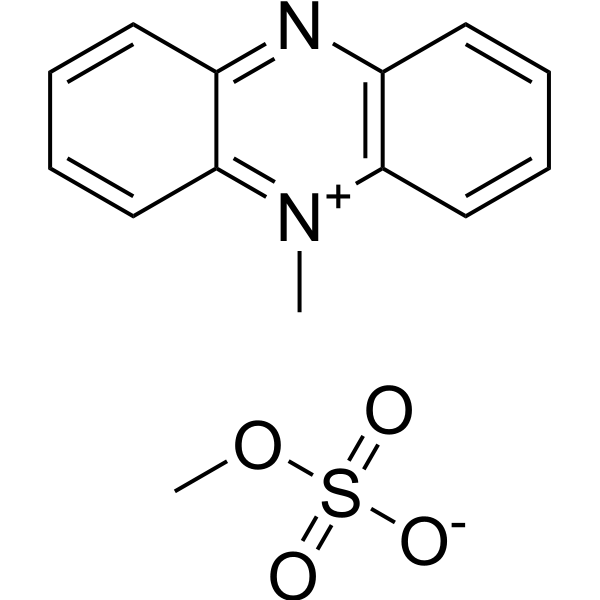
    Phenazine methylsulfate
    1 Publications Verification

    5-Methylphenazinium methylsulfate

    Bacterial Antibiotic Apoptosis Cancer
    Phenazine methylsulfate is a free radical generator that can act as an electron transfer reactant in cell viability assays. It also has insecticidal properties. Furthermore, Phenazine methylsulfate induces oxidative DNA damage and cell apoptosis, showing antitumor activity .
    Phenazine methylsulfate
  • HY-137006

    Fluorescent Dye Others
    MTT Formazan is a purple water-insoluble product formed by the reduction of yellow soluble MTT by succinate dehydrogenase in the mitochondria of viable cells. The amount of MTT Formazan produced is proportional to cellular metabolic activity, and it can serve as an indicator for evaluating cell viability and proliferation. MTT Formazan exhibits solvent-dependent solubility properties, and its absorbance value can be measured by spectrophotometry to reflect cellular status. MTT Formazan also supports the assessment of cell viability in bacterial MTT assays. MTT Formazan can be used in photoacoustic microscopy to enhance the imaging effect of viable cells, especially in applications in the fields of three-dimensional cell culture and tissue engineering .
    MTT Formazan
  • HY-118540

    Diazoresorcinol

    Fluorescent Dye Bacterial Infection
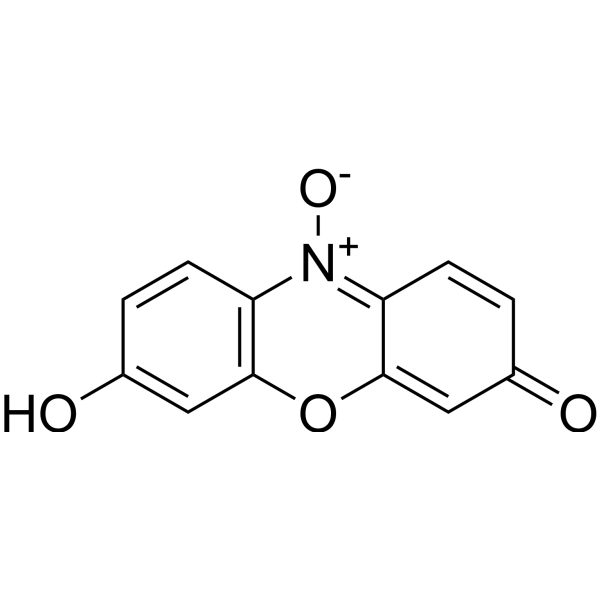
    Resazurin (Diazoresorcinol) is a water-soluble, non-toxic, stable, membrane-permeable blue non-fluorescent dye (faintly fluorescent). Resazurin is used as a redox indicator, can be reduced to pink, highly fluorescent Resorufin (Ex=530-560 nm, Em=590 nm) in living cells. Resazurin can be used for the detection of cell viability, toxicity, proliferation, migration and invasion in cells (human, plant and animal, bacterial and fungal) .
    Resazurin
  • HY-153232

    Fluorescent Dye Liposome Others
    eGFP circRNA-LNP is a lipid nanoparticle (LNP) containing eGFP circRNA, suitable for assays of RNA delivery, translation efficiency, cell viability, etc. eGFP circRNA carries Enhanced Green Fluorescent Protein (Enhanced Green Fluorescent Protein) eGFP, which will express green fluorescent protein after entering the cell. eGFP is commonly used as a reporter gene detectable by fluorescence microscopy or flow cytometry .
    eGFP circRNA-LNP
  • HY-171493

    Biochemical Assay Reagents Others
    mCherry mRNA(N1-Me-Pseudo UTP) is a reporter mRNA encoding a red fluorescent protein, suitable for gene expression analysis, cell viability assays, and in vivo imaging. mCherry, derived from mushroom coral, is a widely used red fluorescent protein tracer in biotechnology applications.
    mCherry mRNA(N1-Me-Pseudo UTP)
  • HY-131490

    Violet tetrazolium

    Biochemical Assay Reagents Others
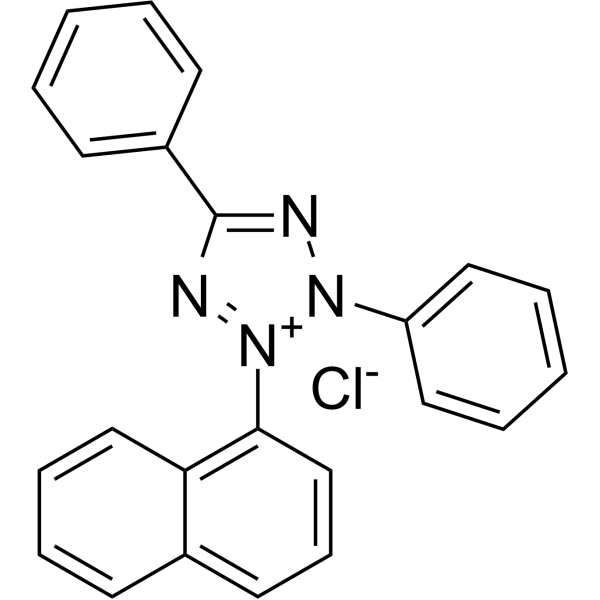
    Tetrazolium violet is a redox indicator commonly used in various biochemical assays to measure cell viability and metabolic activity. Tetrazolium Violet has unique chemical properties that allow it to be reduced by cellular enzymes such as dehydrogenases to form a purple formazan product that can be detected spectrophotometrically. This makes it a useful tool for assessing cell health and growth in culture or tissue samples.
    Tetrazolium violet
  • HY-120766

    Histone Demethylase Cancer
    NCDM-32B is a potent and selective KDM4 inhibitor, with IC50 values of 3.0 μM for KDM4A and 1.0 μM for KDM4C in in vitro enzyme assays. NCDM-32B specifically increases global H3K9me3/me2 levels in basal breast cancer cells. NCDM-32B impairs the viability of KDM4C-amplified basal breast cancer cell lines (HCC1954 and Colo824). NCDM-32B can be used for the study of breast cancer .
    NCDM-32B
  • HY-133015

    Bcl-2 Family Cancer
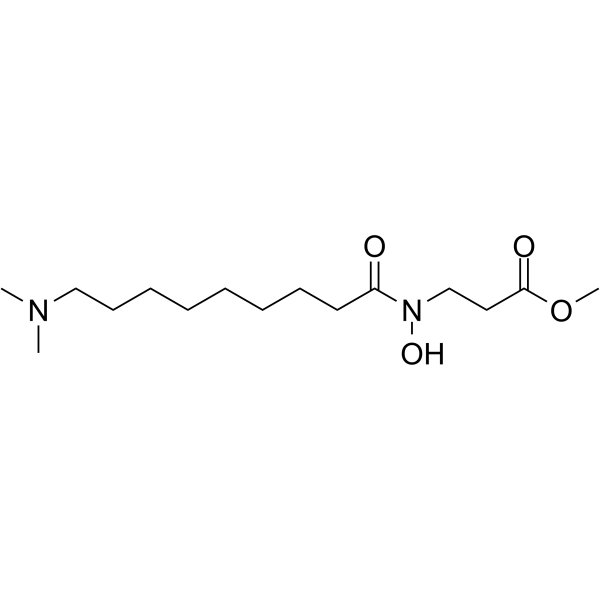
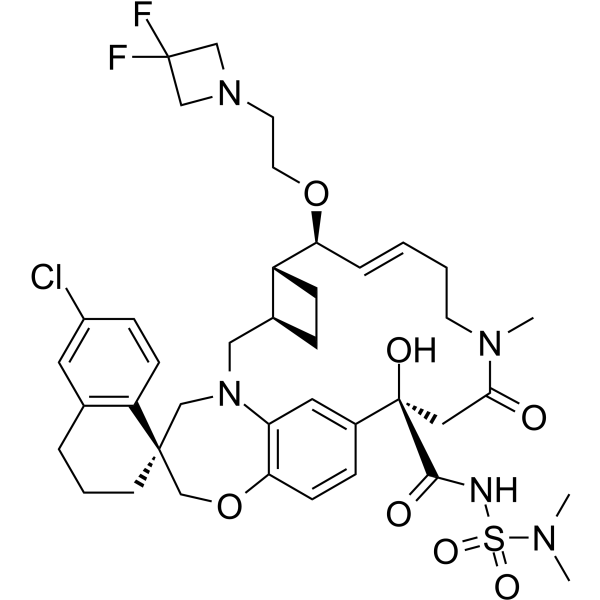
    Mcl-1 inhibitor 3 (compound 1) is a highly potent and orally activate macrocyclic Mcl-1 inhibitor (Ki= 0.061 nM; IC50=19 nM in an OPM-2 cell viability assay). Mcl-1 inhibitor 3 shows good pharmacokinetic properties and excellent in vivo efficacy without toxicity .
    .
    Mcl-1 inhibitor 3
  • HY-W004520R

    5-Methylphenazinium methylsulfate (Standard)

    Reference Standards Bacterial Antibiotic Apoptosis Cancer
    Phenazine (methylsulfate) (Standard) is the analytical standard of Phenazine (methylsulfate). This product is intended for research and analytical applications. Phenazine methylsulfate is a free radical generator that can act as an electron transfer reactant in cell viability assays. It also has insecticidal properties. Furthermore, Phenazine methylsulfate induces oxidative DNA damage and cell apoptosis, showing antitumor activity[1][2][3].
    Phenazine methylsulfate (Standard)
  • HY-153230

    Liposome Biochemical Assay Reagents Others
    Firefly luciferase circRNA-LNP is a lipid nanoparticle (LNP) containing Firefly luciferase circRNA, suitable for assays of RNA delivery, translation efficiency, cell viability, etc. Luciferase is commonly used as a bioluminescent reporter gene for gene regulation and function studies. Firefly Luciferase circRNA will express firefly luciferase protein after entering the cells, which is often used for promoter activity detection or dual fluorescent molecular complementation experiments. Common luciferase are firefly luciferase and sea kidney luciferase .
    Firefly luciferase circRNA-LNP
  • HY-157996

    c-Fms Neurological Disease
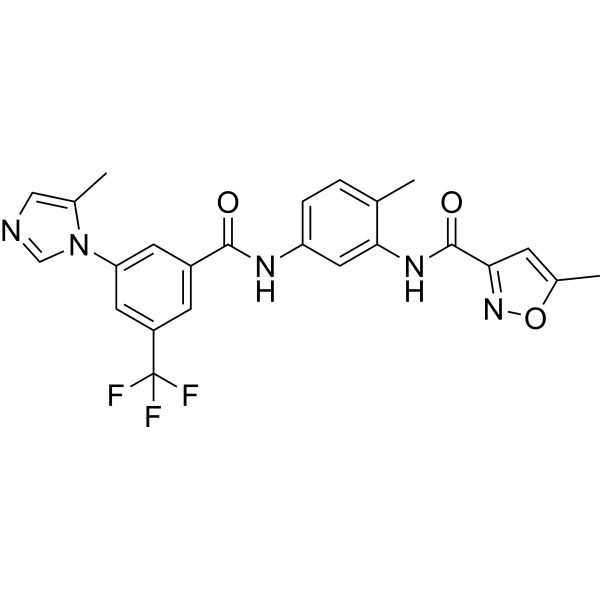
    CSF1R-IN-21 (compound 7e) is a CSF-1R Inhibitor with an IC50 value of 31 nM. CSF1R-IN-21 inhibits CSF-1R auto-phosphorylation and can be used for the research of neurodegenerative diseases .
    CSF1R-IN-21
  • HY-100424

    PI3K Cancer
    PI3K-IN-63 (compound 9) is a PI3Kα inhibitor with a Ki of 0.35 nM against human targets. PI3K-IN-63 inhibits the phosphorylation of AKT at the S473 site in cellular assays. PI3K-IN-63 reduces the viability of non-small cell lung cancer cell lines carrying PIK3CA mutations. PI3K-IN-63 can be used in studies related to non-small cell lung cancer .
    PI3K-IN-63
  • HY-182372

    Epoxide Hydrolase Neurological Disease
    SH-11037 is a potent inhibitor of soluble epoxide hydrolase (sEH) and docks to the substrate binding cleft in the sEH hydrolase domain. SH-11037 dose-dependently suppresses angiogenesis in the choroidal sprouting assay ex vivo and inhibited ocular developmental angiogenesis in zebrafish larvae. SH-11037 reduces choroidal neovascularisation lesion volume in the laser-induced CNV mouse model. SH-11037 synergises with anti-VEGF treatments in vitro and in vivo. SH-11037 induces G2/M phase blockade and retains retinal endothelial cell viability at active concentrations without overt toxicity. SH-11037 can be used for the research of retinal neovascularization and ocular neovascularization .
    SH-11037

Inquiry Online

Your information is safe with us. * Required Fields.

Salutation


Country or Region *

Applicant Name *


Organization Name *

Department *


Email Address *


Product Name *

Cat. No.


Requested quantity *

Phone Number *


Remarks

Inquiry Online

Inquiry Information

Product Name:
Cat. No.:
Quantity:
MCE Japan Authorized Agent:

