1. Search Result
Search Result
Results for "

Copper(II)

" in MedChemExpress (MCE) Product Catalog:

37

Inhibitors & Agonists

3

Fluorescent Dyes

6

Biochemical Assay Reagents

6

Peptides

2

Natural
Products

Cat. No. Product Name Target Research Areas Chemical Structure
  • HY-W115718
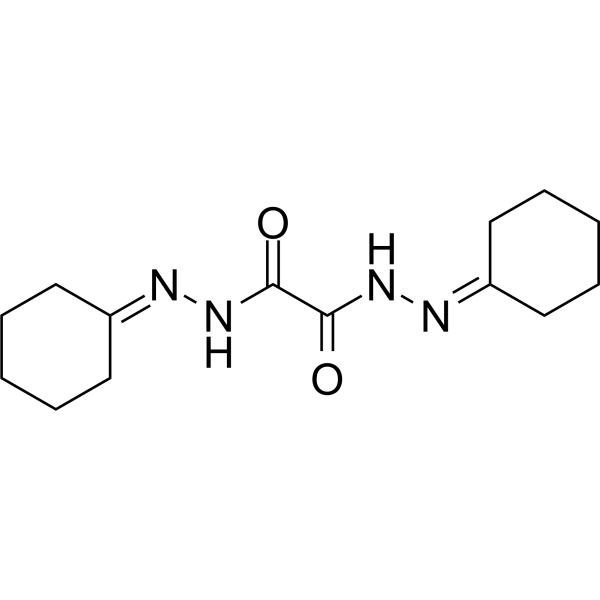
    Cuprizone
    3 Publications Verification

    Dopamine β-hydroxylase Neurological Disease
    Cuprizone is a copper chelating agent that forms a deep blue copper ketone complex with copper (II). The copper ketone reaction can be used in colorimetric tests for the presence of trace copper. Cuprizone can be used to induce some schizophrenia-like behavior in mice. Cuprizone acts on copper enzymes, including SOD1, cytochrome oxidase, and DβH, thereby causing oxidative stress and increasing DA levels in certain brain regions such as the medial prefrontal cortex (PFC) .
    Cuprizone
  • HY-W010860
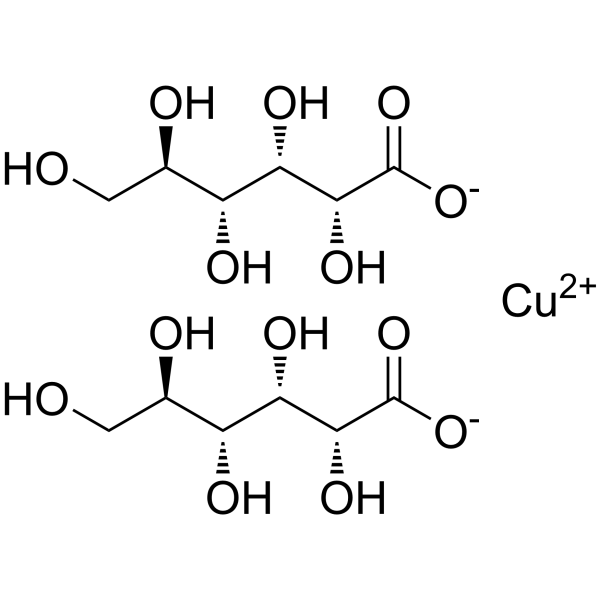
    Copper(II) Gluconate
    2 Publications Verification

    Environmental Pollutants Biochemical Assay Reagents Others
    Copper(II) Gluconate is a non-toxic copper supplement aid. Copper(II) Gluconate is the copper salt of D-gluconic acid. Copper(II) Gluconate as a precursor catalyst that can be used in the photo-induced polymerisation of acrylates .
    Copper(II) Gluconate
  • HY-W111581
    Copper(II) diethyldithiocarbamate
    1 Publications Verification

    Diethyldithiocarbamic acid copper salt

    Apoptosis Caspase Cancer
    Copper(II) diethyldithiocarbamate (Diethyldithiocarbamic acid copper salt) is a Copper(II) and diethyldithiocarbamate coordination polymer. Copper(II) diethyldithiocarbamate binds tightly to NPL4 and induces its aggregation, disrupting the p97-NPL4-UFD1 pathway. Copper(II) diethyldithiocarbamate causes ubiquitinated proteins accumulation and impairs waste proteins degradation, thus resulting in cell apoptosis. Copper(II) diethyldithiocarbamate inhibits tumor growth in MDA-MB-231 xenograft mice models. Copper(II) diethyldithiocarbamate can be used for the research of cancer, such as breast cancer .
    Copper(II) diethyldithiocarbamate
  • HY-W015302

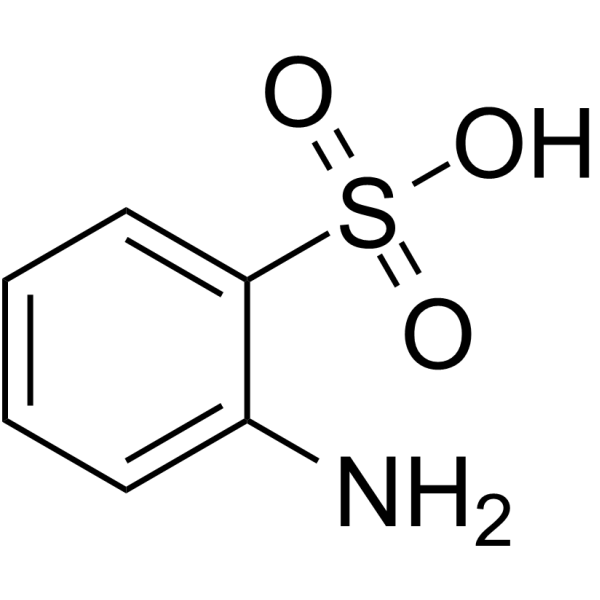
    Orthanilic acid; 2-Aminobenzenesulphonic acid

    Drug Intermediate Others
    2-Aminobenzenesulfonic acid is an anilinesulfonic acid and also the ortho-isomer of aminobenzenesulfonic acid. 2-Aminobenzenesulfonic acid can be used in the synthesis of other active compounds. 2-Aminobenzenesulfonic acid can coordinate via its -NH2 and -SO3 groups to form polymeric copper (II) complexes .
    2-Aminobenzenesulfonic acid
  • HY-W011060

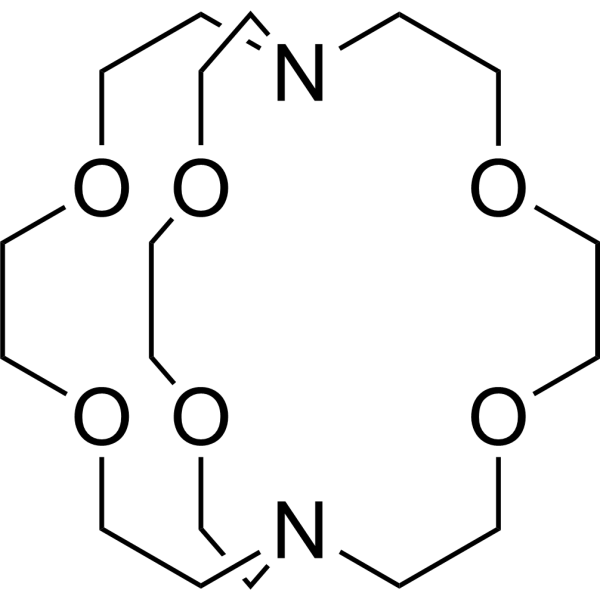
    4,7,13,16,21,24-Hexaoxa-1,10-diazabicyclo[8.8.8]hexacosane

    Biochemical Assay Reagents Others
    Cryptand 2.2.2 (4,7,13,16,21,24-Hexaoxa-1,10-diazabicyclo[8.8.8]hexacosane) is a metal ion chelator. Cryptand 2.2.2 forms stable mononuclear, protonated and dinuclear complexes with copper (II) ions; forms protonated complexes with hydrogen ions; and also forms stable complexes with Zn 2+, Co 2+, Ni 2+, Cd 2+, Hg 2+ and Pb 2+ ions. Cryptand 2.2.2 can be used for the preparation of nanoparticles, transition metal compounds, etc.
    Cryptand 2.2.2
  • HY-Y1102A

    Environmental Pollutants Biochemical Assay Reagents Others
    Copper(II) acetate, 99.99% trace metals basis is a dinuclear metal complex that can be used a source of copper and oxidizing agent in inorganic synthesis, and as a catalyst in organic synthesis .
    Copper(II) acetate, 99.99% trace metals basis
  • HY-W243460

    Biochemical Assay Reagents Others
    EDTA copper (II) disodium salt, 97% is a negatively charged copper (II)-ethylenediaminetetraacetic acid chelate and also an adsorption substrate. EDTA copper (II) disodium salt, 97% forms amide bonds with chitosan amino groups in weakly acidic (pH 3-5) solutions, while it forms the CuEDTA (OH) 3− hydroxyl complex in strongly alkaline (pH > 12) solutions. EDTA copper (II) disodium salt, 97% can be adsorbed onto granular activated carbon, with electrostatic interactions dominating its pH-dependent adsorption behavior. EDTA copper (II) disodium salt, 97% can be used to eliminate the inhibition of enzyme-catalyzed reactions caused by trace heavy metals .
    EDTA copper(II) disodium salt, 97%
  • HY-P4666

    Biochemical Assay Reagents Others
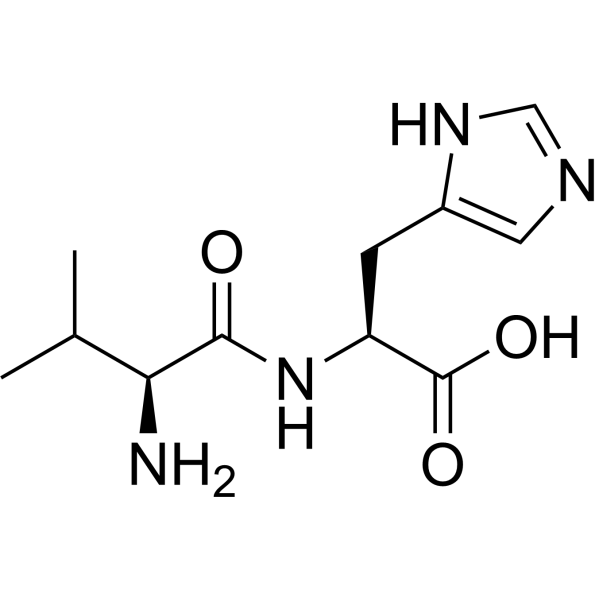
    Valylhistidine is a dipeptide composed of valine and histidine (Val-His). Valylhistidine can form a dipeptide complex with Cu (II) that mimics superoxide dismutase but lacks activity .
    Valylhistidine
  • HY-D1895A

    Biochemical Assay Reagents Others
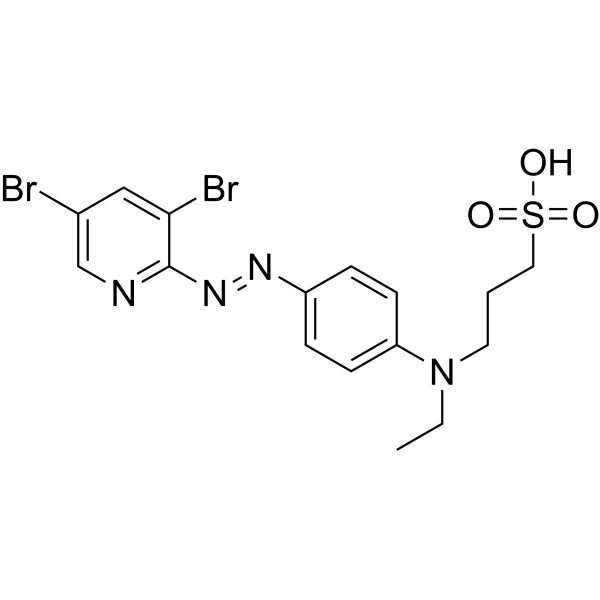
    3,5-DiBr-PAESA sodium is a water-soluble pyridylazo-based highly sensitive chromogenic reagent. With the assistance of EDTA for masking copper and bromide ions for dissociating silver chelates, 3,5-DiBr-PAESA sodium enables accurate determination of sub-milligram level silver ions in strongly acidic high-copper systems via flow injection spectrophotometry .
    3,5-DiBr-PAESA sodium
  • HY-W722277A

    Interleukin Related NADH Dehydrogenase TNF Receptor JAK STAT IRAK Inflammation/Immunology
    LCC-12 (formate) is a copper (II) chelator and a derivative of the biguanide metformin (HY-B0627). LCC-12 (formate) reduces its hydrogen peroxide-dependent oxidation of NADH to NAD+. LCC-12 (formate) reduces IL-1β, IL-2, IL-6, IL-8, and TNF-α levels, as well as JAK2, STAT2, and IL-1 receptor-associated kinase 4 (IRAK4) levels in primary human cytokine-activated monocyte-derived macrophages (MDMs). LCC-12 (formate) reduces the number of CD80+ and CD86+ cytokine-activated MDMs. LCC-12 LCC-12 (formate) improves survival in a mouse model of sepsis induced by LPS or cecal ligation and puncture .
    LCC-12 formate
  • HY-P4531

    Amino Acid Derivatives Neurological Disease
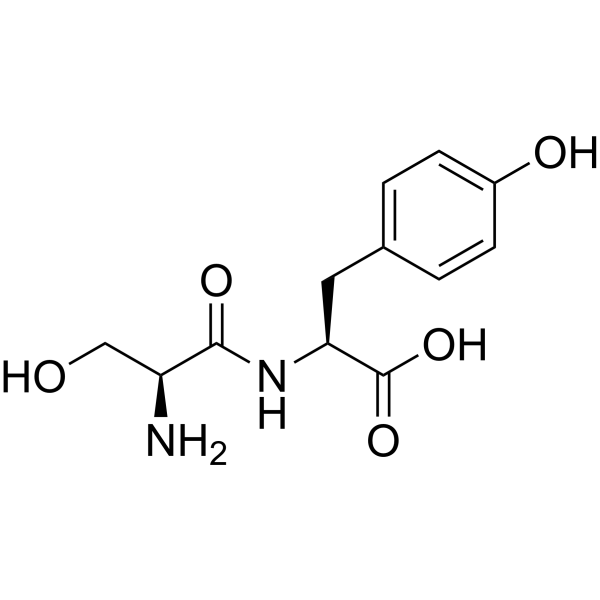
    H-Ser-Tyr-OH is a dipeptide. H-Ser-Tyr-OH can form a copper(II) complex .
    H-Ser-Tyr-OH
  • HY-W007479

    Biochemical Assay Reagents Others
    2,3-Dihydroxybenzaldehyde can be used to synthesize copper(II) complexes of Schiff bases. 2,3-Dihydroxybenzaldehyde can also be used in the synthesis of 2-ethoxy-3-hydroxy-4-nitrobenzoic acid .
    2,3-Dihydroxybenzaldehyde
  • HY-W034801

    Cupric Acetylacetonate

    Biochemical Assay Reagents Others
    Copper(II) acetylacetonate (Cupric Acetylacetonate) is the homoleptic acetylacetonate complex of copper(II). Copper(II) acetylacetonate is used as a catalyst in various organic reactions, including oxidation, cross-coupling, and polymerization reactions. Copper(II) acetylacetonate is also a precursor for making metal-organic frameworks (MOF) and nanomaterials .
    Copper(II) acetylacetonate
  • HY-D1895

    Biochemical Assay Reagents Others
    3,5-DiBr-PAESA is a water-soluble pyridylazo-based highly sensitive chromogenic reagent. With the assistance of EDTA for masking copper and bromide ions for dissociating silver chelates, 3,5-DiBr-PAESA enables accurate determination of sub-milligram level silver ions in strongly acidic high-copper systems via flow injection spectrophotometry .
    3,5-DiBr-PAESA
  • HY-167935

    Bacterial Metabolic Disease Inflammation/Immunology
    LCC-12 formic is a dimer of metformin that targets mitochondrial copper(II), leading to a decrease in the NAD(H) pool and modulation of inflammatory responses. LCC-12 formic reduces inflammation in mouse models of bacterial and viral infections. LCC-12 formic also serves as a tool for investigating metabolic diseases through its effects on cell plasticity and epigenetic programming.
    LCC-12 formic
  • HY-W034952

    Copper(II) TPP

    MOFs Others
    5,10,15,20-Tetraphenyl-21H,23H-porphine copper(II) (Copper(II) TPP) is a metal-organic framework (MOF).
    5,10,15,20-Tetraphenyl-21H,23H-porphine copper(II)
  • HY-W075791

    Biochemical Assay Reagents Others
    Copper(II) perchlorate hexahydrate is an inorganic compound with the chemical formula Cu(ClO4) 2 (H2O) 6 and can be used as a catalyst in certain reaction .
    Copper(II) perchlorate hexahydrate
  • HY-49457

    Drug Derivative Others
    Copper(II) ionophore I is a neutral Cu + ionophore.
    Copper(II) ionophore I
  • HY-W073206

    Biochemical Assay Reagents Others
    Copper(II) tartrate hydrate is a kind of biological materials or organic compounds that are widely used in life science research .
    Copper(II) tartrate hydrate
  • HY-W140731

    Copper(II) oxalate

    Environmental Pollutants Biochemical Assay Reagents Others
    Copperoxalate (Copper(II) oxalate) is a kind of biological materials or organic compounds that are widely used in life science research .
    Copperoxalate
  • HY-P4788

    Amyloid-β Neurological Disease
    Acetyl-Amyloid β-Protein (1-6) amide is a hexapeptide that contains a potential copper(II) binding site. Acetyl-Amyloid β-Protein (1-6) amide can be used for research of Alzheimer's disease and related disorders .
    Acetyl-Amyloid β-Protein (1-6) amide
  • HY-W008919

    N-Alpha,N-epsilon-di-Boc-L-lysine 4-nitrophenyl ester

    Amino Acid Derivatives Others
    Boc-Lys(Boc)-Onp (N-Alpha,N-epsilon-di-Boc-L-lysine 4-nitrophenyl ester) is a lysine with a Boc protecting group. Boc-Lys(Boc)-Onp was used as a substrate for a catalyst model to study its enzymatic hydrolysis reaction catalyzed by a copper(II) complex .
    Boc-Lys(Boc)-Onp
  • HY-W115718R

    Reference Standards Dopamine β-hydroxylase Neurological Disease
    Cuprizone is a copper chelating agent that forms a deep blue copper ketone complex with copper (II). The copper ketone reaction can be used in colorimetric tests for the presence of trace copper. Cuprizone can be used to induce some schizophrenia-like behavior in mice. Cuprizone acts on copper enzymes, including SOD1, cytochrome oxidase, and DβH, thereby causing oxidative stress and increasing DA levels in certain brain regions such as the medial prefrontal cortex (PFC) .
    Cuprizone (Standard)
  • HY-W004650A

    Biochemical Assay Reagents Others
    TETA (tetraTFA) is an effective selective chelating agent for copper (II). TETA (tetraTFA) can be used for drug coupling .
    TETA tetraTFA
  • HY-20559

    Drug Intermediate Cancer
    4-Chloro-3-nitrobenzoic acid is a benzoic acid derivative and an important intermediate for the synthesis of anticancer agents. 4-Chloro-3-nitrobenzoic acid shows low cytotoxicity against HepG2, A549 and HeLa cancer cells in vitro (>10,000 μM). 4-Chloro-3-nitrobenzoic acid can block thymidine uptake and inhibit lymphocyte growth. 4-Chloro-3-nitrobenzoic acid serves as a ligand for Cu (II) complexes and is used in the preparation of 10H-pyrazino[2,3-b][1,4]benzothiazine derivatives .
    4-Chloro-3-nitrobenzoic acid
  • HY-W140346

    Environmental Pollutants Beta-lactamase Infection Cancer
    Copper (II) pyrithione is a New Delhi metallo-β-lactamase 1 inhibitor. Copper (II) pyrithione inhibits New Delhi metallo-β-lactamase 1 via transmetallation of its zinc (II) cofactor with copper (II). Copper (II) pyrithione exerts cytotoxic effects on pancreatic cancer cells and osteosarcoma cells. Copper (II) pyrithione exhibits antibacterial activity against Gram-positive bacteria and some Gram-negative bacteria. Copper (II) pyrithione can synergistically enhance the activity of β-lactam antibiotics against β-lactam-resistant bacteria. Copper (II) pyrithione can be used in studies related to pancreatic cancer, osteosarcoma and bacterial infections .
    Copper(II) pyrithione
  • HY-W073017

    Pigment Blue 15 (purified by sublimation)

    MOFs Others
    Copper(II) Phthalocyanine (purified by sublimation) is a metal-organic framework (MOF).
    Copper(II) Phthalocyanine (purified by sublimation)
  • HY-P11642A

    Enteropeptidase Aminopeptidase Opioid Receptor ERK mTOR Androgen Receptor Inflammation/Immunology
    Sialorphin TFA is a neutral endopeptidase (NEP) and aminopeptidase N (APN) inhibitor that responds to androgen signals. Sialorphin TFA blocks the degradation of endogenous opioid peptides and interacts with μ-, δ-, κ-opioid receptors. Sialorphin TFA regulates the ERK/mTOR signaling pathway by inducing cell cycle arrest, enhancing ERK1/2 activity, and reducing the phosphorylation levels of mTOR, 4E-BP1, p70S6K; accordingly, Sialorphin TFA exhibits antiproliferative activity against colorectal cancer, glioma and prostate cancer cells without cytotoxicity. In addition, Sialorphin TFA also produces antinociceptive responses, regulates sexual behavior, relaxes corpus cavernosum smooth muscle, and alleviates experimental colitis. Sialorphin TFA is also a copper (II) ion-binding ligand. Sialorphin TFA has been used in mechanistic studies related to cancer, pain management and inflammatory bowel disease .
    Sialorphin TFA
  • HY-W113007

    meso-Tetrakis(4-chlorophenyl)porphyrin-Cu(II)

    MOFs Others
    5,?10,?15,?20-?Tetrakis(4-?chlorophenyl)?porphyrin copper(II) (meso-Tetrakis(4-chlorophenyl)porphyrin-Cu(II)) is a metal-organic framework (MOF).
    5,​10,​15,​20-​Tetrakis(4-​chlorophenyl)​porphyrin copper(II)
  • HY-W112974

    MOFs Others
    Copper(II)?-?4,?4,?4,?4-?phthalocyanine tetracarboxylic acid is a metal-organic framework (MOF).
    Copper(II)​-​4,​4,​4,​4-​phthalocyanine tetracarboxylic acid
  • HY-W075783R

    Acetic acid, copper(2+) salt, monohydrate (Standard)

    Reference Standards
    Copper(II)acetatemono hydrate (Standard) is the analytical standard of Copper(II)acetatemono hydrate. This product is intended for research and analytical applications.
    Copper diacetate monohydrate (Standard)
  • HY-163664

    Microtubule/Tubulin Cancer
    Tubulin polymerization-IN-63 (compound 6) is a tubulin polymerization inhibitor. The IC50 value of Tubulin polymerization-IN-63 for MES-SA cells is 0.29 μM. Tubulin polymerization-IN-63 can be used in cancer research .
    Tubulin polymerization-IN-63
  • HY-164055

    Fluorescent Dye Cancer
    HL1 is a Schiff base ligand. HL1 exhibits chelation-enhanced fluorescence effect when forming complexes and can be used as a fluorescent probe for metal ions. HL1 can be used for the research of cancer .
    HL1
  • HY-W543255

    MOFs Others
    5,10,15,20-(Tetra(4-pyridyl)porphinato)copper(II) is a metal-organic framework (MOF).
    5,10,15,20-(Tetra(4-pyridyl)porphinato)copper(II)
  • HY-W027881

    Biochemical Assay Reagents Others
    3,4,5-Trimethyl-1H-pyrazole is a ligand that can coordinate to nickel(II) or copper(II) ions to form distinct complexes .
    3,4,5-Trimethyl-1H-pyrazole
  • HY-D3205

    Fluorescent Dye Others
    Bis (picolinoyl) fluorescein is a Cu 2+ esterase activity probe with both fluorogenic and chromogenic properties. Bis (picolinoyl) fluorescein enables quantitative analysis of free Cu 2+, as well as detection of esterolytic activity of Cu bound to organic ligands or biomolecules .
    Bis(picolinoyl)fluorescein
  • HY-P11642

    ERK Androgen Receptor Opioid Receptor Enteropeptidase mTOR Aminopeptidase Neurological Disease Inflammation/Immunology Cancer
    Sialorphin is a neutral endopeptidase (NEP) and aminopeptidase N (APN) inhibitor that responds to androgen signals. Sialorphin blocks the degradation of endogenous opioid peptides and interacts with μ-, δ-, κ-opioid receptors. Sialorphin regulates the ERK/mTOR signaling pathway by inducing cell cycle arrest, enhancing ERK1/2 activity, and reducing the phosphorylation levels of mTOR, 4E-BP1, p70S6K; accordingly, Sialorphin exhibits antiproliferative activity against colorectal cancer, glioma and prostate cancer cells without cytotoxicity. In addition, Sialorphin also produces antinociceptive responses, regulates sexual behavior, relaxes corpus cavernosum smooth muscle, and alleviates experimental colitis. Sialorphin is also a copper (II) ion-binding ligand. Sialorphin has been used in mechanistic studies related to cancer, pain management and inflammatory bowel disease .
    Sialorphin

Inquiry Online

Your information is safe with us. * Required Fields.

Salutation


Country or Region *

Applicant Name *


Organization Name *

Department *


Email Address *


Product Name *

Cat. No.


Requested quantity *

Phone Number *


Remarks

Inquiry Online

Inquiry Information

Product Name:
Cat. No.:
Quantity:
MCE Japan Authorized Agent:

