Search Result
Results for "
Cyanobacteria
" in MedChemExpress (MCE) Product Catalog:
1
Biochemical Assay Reagents
13
Isotope-Labeled Compounds
| Cat. No. |
Product Name |
Target |
Research Areas |
Chemical Structure |
-
- HY-N0717
-
|
(S)-Valine
|
Bacterial
Arginase
Akt
|
Infection
|
|
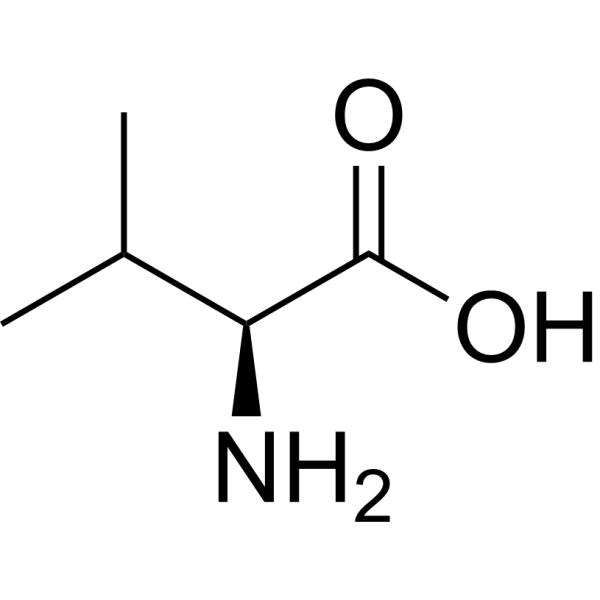
L-Valine ((S)-Valine) is a nonlinear semiorganic material. L-Valine causes lipid peroxidation and accumulation of malondialdehyde (MDA), exhibits inhibitory activity against cyanobacteria. L-Valine inhibits multidrug-resistant bacteria through activation of PI3K/Akt signaling pathway and inhibition of arginase .
|
-
-
- HY-B1692
-
|
MSX; MSO
|
Glutaminase
|
Neurological Disease
|
|
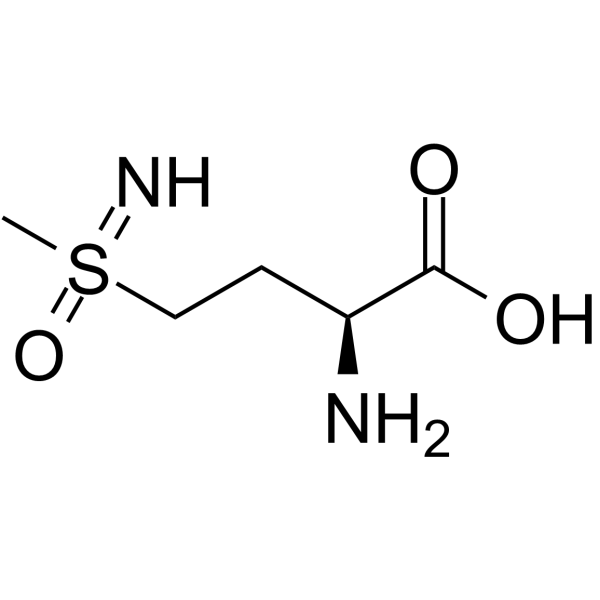
L-Methionine-DL-sulfoximine (MSX; MSO), a highly specific and irreversible inhibitor of Glutamine synthetase (GS), is also a potent convulsant which metabolically and morphologically primarily affects astroglia. L-Methionine-DL-sulfoximine has been employed to inhibit the Gln-dependent ammonia-stimulated neuronal toxicity in vitro, potentiating Gln deficit-dependent depression. L-Methionine-DL-sulfoximine tremendously increases the rate of release of fixed nitrogen in cyanobacteria. L-Methionine-DL-sulfoximine is a promising candidate for research in biofertilizers and convulsive seizures (CS) .
|
-
-
- HY-I1124
-
|
L-VALINE-2,3,4,4,4,5,5,5-d8
|
Isotope-Labeled Compounds
Arginase
Akt
Bacterial
|
Infection
|
|
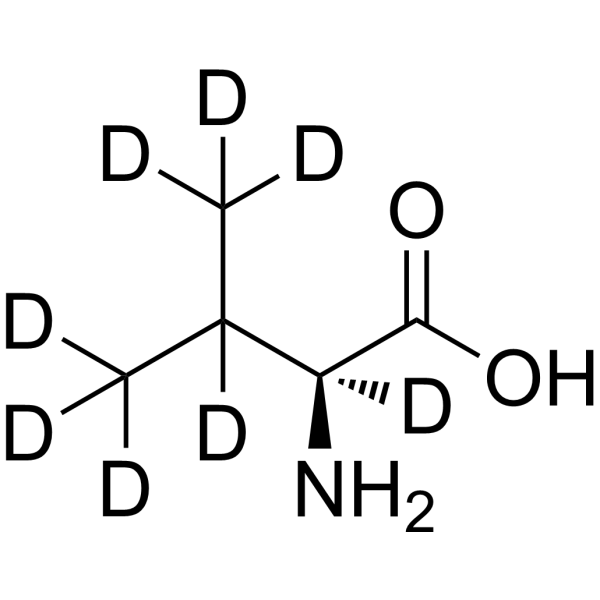
L-Valine-d8 is a deuterated form of L-Valine (HY-N0717). L-Valine ((S)-Valine) is a nonlinear semiorganic material. L-Valine causes lipid peroxidation and accumulation of malondialdehyde (MDA), exhibits inhibitory activity against cyanobacteria. L-Valine inhibits multidrug-resistant bacteria through activation of PI3K/Akt signaling pathway and inhibition of arginase .
|
-
-
- HY-W015546
-
|
BMAA hydrochloride
|
Bacterial
mGluR
PKC
|
Infection
Neurological Disease
Inflammation/Immunology
Cancer
|
|
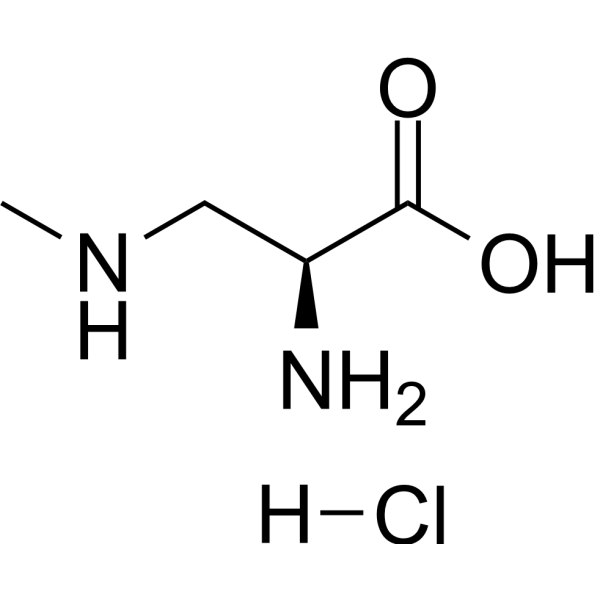
β-N-methylamino-L-alanine hydrochloride (BMAA hydrochloride) is a neurotoxin produced by cyanobacteria. β-N-methylamino-L-alanine hydrochloride activates mGluR3 and inhibits PKC. β-N-methylamino-L-alanine hydrochloride can be used in the research of neurodegenerative diseases and immune diseases .
|
-
-
- HY-112356
-
|
|
Apoptosis
Reactive Oxygen Species (ROS)
Polo-like Kinase (PLK)
|
Inflammation/Immunology
Cancer
|
|
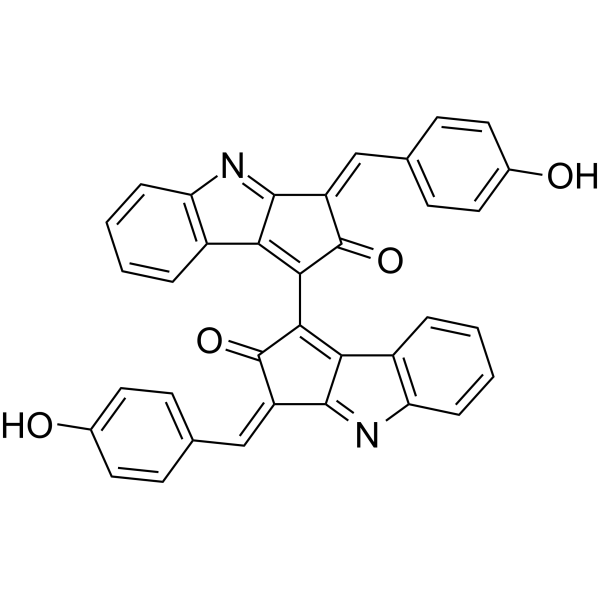
Scytonemin is a hydrophobic alkaloid pigment that can be isolated from the outer sheath of cyanobacteria. Scytonemin has protective function against short-wave solar ultraviolet (UV) radiation, which can reduce the generation of reactive oxygen species (ROS) and the formation of DNA damage. Scytonemin also has anti-inflammatory and anti-proliferative activities, produces concentration-dependent inhibition (IC50=2.0 μM) of polo-like kinase 1 (PLK1)-mediated cdc25C phosphorylation, and plays an important role in regulating the G2/M transition in the cell cycle. It can be used in the research of cancer, acute inflammation and sunscreen cosmetics .
|
-
-
- HY-N0717S6
-
|
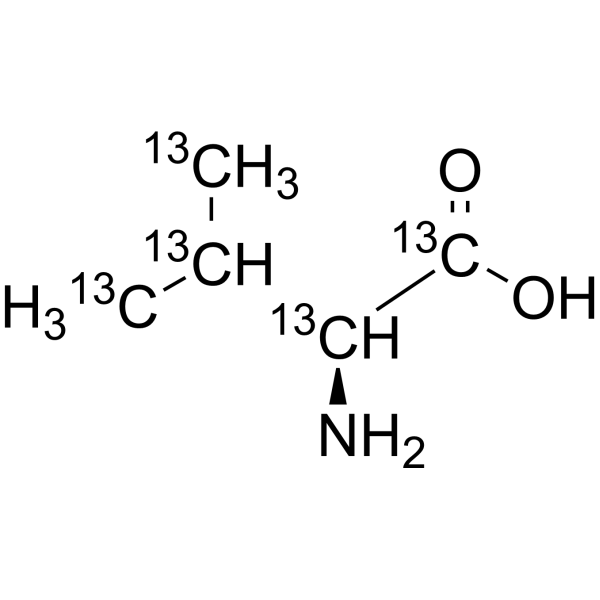
(S)-Valine-13C5
|
Isotope-Labeled Compounds
Arginase
Akt
Bacterial
|
Infection
|
|
L-Valine- 13C5 ((S)-Valine- 13C5) is the 13C-labeled L-Valine (HY-N0717). L-Valine ((S)-Valine) is a nonlinear semiorganic material. L-Valine causes lipid peroxidation and accumulation of malondialdehyde (MDA), exhibits inhibitory activity against cyanobacteria. L-Valine inhibits multidrug-resistant bacteria through activation of PI3K/Akt signaling pathway and inhibition of arginase .
|
-
-
- HY-N0717R
-
|
(S)-Valine (Standard)
|
Reference Standards
Arginase
Akt
Bacterial
|
Infection
|
|
L-Valine (Standard) ((S)-Valine (Standard)) is the analytical standard of L-Valine (HY-N0717). This product is intended for research and analytical applications. L-Valine ((S)-Valine) is a nonlinear semiorganic material. L-Valine causes lipid peroxidation and accumulation of malondialdehyde (MDA), exhibits inhibitory activity against cyanobacteria. L-Valine inhibits multidrug-resistant bacteria through activation of PI3K/Akt signaling pathway and inhibition of arginase .
|
-
-
- HY-N0717S4
-
|
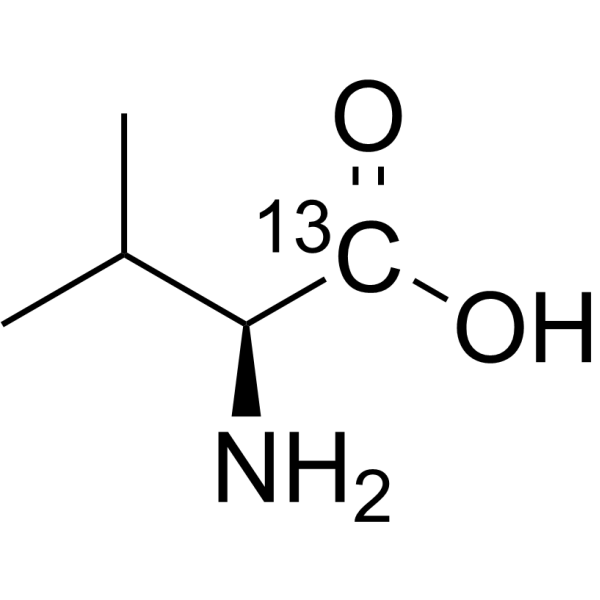
(S)-Valine-1-13C
|
Isotope-Labeled Compounds
Arginase
Akt
Bacterial
|
Infection
|
|
L-Valine-1- 13C ((S)-Valine-1- 13C) is the 13C-labeled L-Valine (HY-N0717). L-Valine ((S)-Valine) is a nonlinear semiorganic material. L-Valine causes lipid peroxidation and accumulation of malondialdehyde (MDA), exhibits inhibitory activity against cyanobacteria. L-Valine inhibits multidrug-resistant bacteria through activation of PI3K/Akt signaling pathway and inhibition of arginase .
|
-
-
- HY-136830
-
|
Adenosine-5'-diphosphoglucose disodium
|
Biochemical Assay Reagents
|
Others
|
|
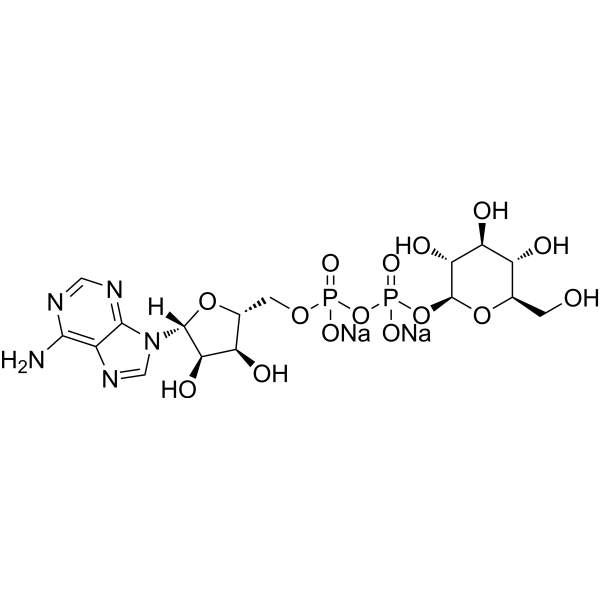
ADP-Glucose disodiumIs an immediate precursor for the biosynthesis of storage polysaccharides in plants, green algae and cyanobacteria, and structural polysaccharides in some bacteria, by the addition of glucose. It is used to produce amylose, amylopectin, starch and other polysaccharides by amylose synthase or starch synthase in plastids. ADPGUsually produced in plastids, although it can be biosynthesized in the cytoplasm of some grasses and imported into plastids by membrane-bound transporters .
|
-
-
- HY-N0717S
-
|
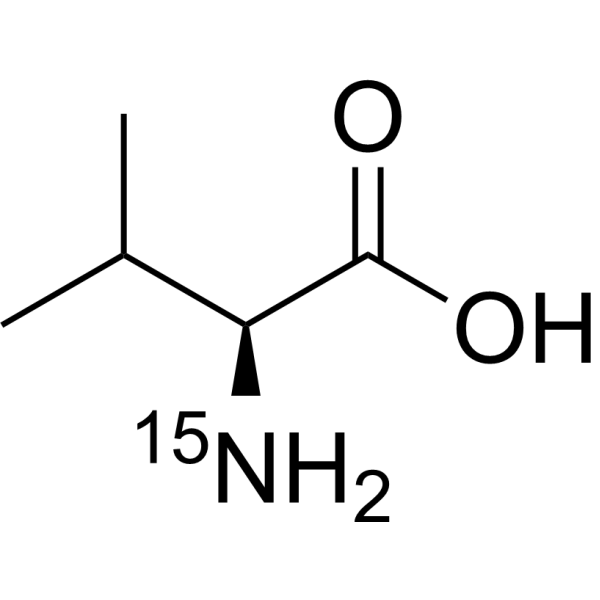
(S)-Valine-15N
|
Isotope-Labeled Compounds
Arginase
Akt
Bacterial
|
Infection
|
|
L-Valine- 15N ((S)-Valine- 15N) is the 15N-labeled L-Valine (HY-N0717). L-Valine ((S)-Valine) is a nonlinear semiorganic material. L-Valine causes lipid peroxidation and accumulation of malondialdehyde (MDA), exhibits inhibitory activity against cyanobacteria. L-Valine inhibits multidrug-resistant bacteria through activation of PI3K/Akt signaling pathway and inhibition of arginase .
|
-
-
- HY-N0717S1
-
|
(S)-Valine-13C5,15N
|
Isotope-Labeled Compounds
Arginase
Akt
Bacterial
|
Infection
|
|
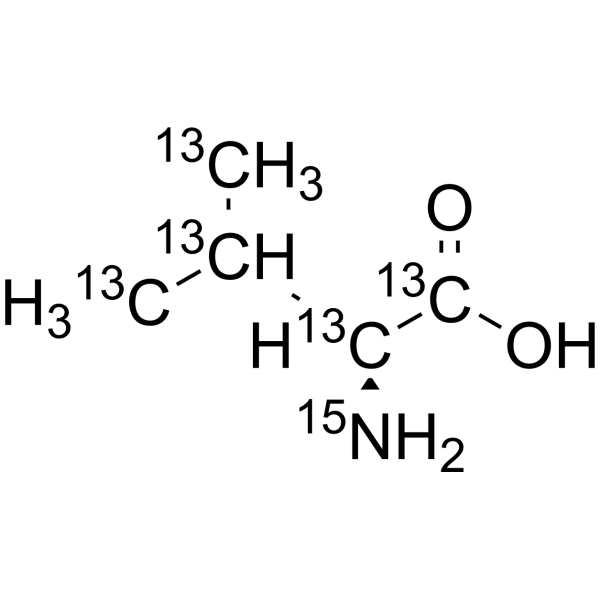
L-Valine- 13C5, 15N ((S)-Valine- 13C5, 15) is the 13C- and 15N-labeled L-Valine (HY-N0717). L-Valine ((S)-Valine) is a nonlinear semiorganic material. L-Valine causes lipid peroxidation and accumulation of malondialdehyde (MDA), exhibits inhibitory activity against cyanobacteria. L-Valine inhibits multidrug-resistant bacteria through activation of PI3K/Akt signaling pathway and inhibition of arginase .
|
-
-
- HY-157618
-
|
|
Bacterial
|
Others
|
|
18:0-18:1 PG sodium is a hydrogenated phospholipid that contributes to the stability of photosystem I and II protein complexes and plays a role in bacterial defense mechanisms, featuring two extra methylene groups in its saturated sn-1 chain, and is present in the thylakoid membranes of higher plants and cyanobacteria.
|
-
-
- HY-N15154
-
|
|
Cathepsin
HSP
|
Cancer
|
|
Tasiamide B is a Cathepsin D inhibitor, which is a linear peptide found in the marine cyanobacteria Symploca sp.. Tasiamide B is proved as a good template for the development of aspartic proteases inhibitors. Tasiamide B is effective against skin cancer by strongly interacting with the target protein HSP90 .
|
-
-
- HY-13906
-
|
(+)-Largazole
|
HDAC
|
Neurological Disease
Cancer
|
|
Largazole ((+)-Largazole) is a potent, selective, orally active and brain-penetrant class I HDAC inhibitor found in marine cyanobacteria. Largazole shows an IC50 of 0.07 nM for HDAC2. Largazole releases its active form Largazole thiol (HY-170890) after hydrolysis. Largazole has a strong inhibitory effect on SF-268, SF-295 and SH-SY5Y cells, with IC50 values of 62, 68 and 102 nM respectively Largazole can upregulate the tumor suppressor gene Pax6 to inhibit the proliferation, invasion and colony formation of glioblastoma cells. Largazole can significantly upregulated brain-derived neurotrophic factor BDNF, neuronal transcription factor Pax6, and μ-opioid receptor gene Oprm1. Largazole exerts antitumor and neuroprotective effects. Largazole can be used for researches of Glioblastoma and Alzheimer’s disease .
|
-
-
- HY-N15683
-
|
|
Biochemical Assay Reagents
|
Others
|
|
3-Hydroxyechinenone is a chromophore of the orange carotenoid protein (OCP). 3-Hydroxyechinenone is involved in the photoprotective mechanism of the photosynthetic apparatus of cyanobacteria .
|
-
-
- HY-P11336
-
|
|
Phosphatase
|
Cancer
|
|
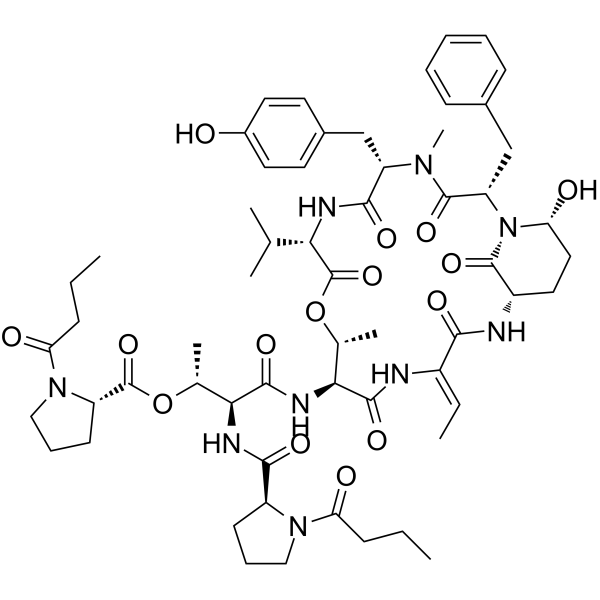
Oscillamide C (Compound 2), a ureido-containing cyclic peptide, is a Protein phosphatase 1 (PP1) and Protein phosphatase 2A (PP2A) inhibitor with IC50s of 0.90 and 1.33 μM for PP1 and PP2A, respectively. Oscillamide C can be isolated from the cyanobacteria Planktothrix agardhii and P. rubescens. Oscillamide C can be used for cancers research .
|
-
-
- HY-118274
-
|
GC 300
|
Endogenous Metabolite
|
Others
|
|
ADDA (GC 300) is a unique C20 amino acid that is a key component of hepatotoxins produced by cyanobacteria. ADDA is essential for the toxicity of nodularin and microcystin, toxins that can cause liver damage. ADDA can be used for research in toxicology .
|
-
-
- HY-N15571
-
|
|
NO Synthase
|
Inflammation/Immunology
|
|
Hedopeptolide can be found in the marine cyanobacteria Okeania sp. Hedopeptolide inhibits LSP-induced NO production in RAW264.7 cells (IC50: 4 μM). Hedopeptolide exhibits anti-inflammatory activity .
|
-
-
- HY-119982
-
|
Cicloral
|
Bacterial
|
Metabolic Disease
|
|
Cyclamide (Cicloral), an oligopeptide, can be produced by cyanobacteria algae strains. Cyclamide can be used for the research of diabetes mellitus .
|
-
-
- HY-N4330
-
|
|
Ser/Thr Protease
|
Metabolic Disease
|
|
Rivulariapeptolides 1155 is a potent serine protease inhibitor with IC50s of 41.84, 4.94, 56.54 nM for chymotrypsin, elastase, prpteinase K, respectively .
|
-
-
- HY-N5168
-
|
|
Antibiotic
Bacterial
|
Infection
|
|
Argimicin B is an antibiotic that can be isolated from Sphingomonas sp.. Argimicin B exhibits algicidal activity against a variety of toxic cyanobacteria with MIC of low micromolar levels .
|
-
-
- HY-N5169
-
|
|
Antibiotic
Bacterial
|
Infection
|
|
Argimicin C is an antibiotic that can be isolated from Sphingomonas sp.. Argimicin C exhibits algicidal activity against a variety of toxic cyanobacteria with MIC of low micromolar levels .
|
-
-
- HY-N5167
-
|
|
Antibiotic
Bacterial
|
Infection
|
|
Argimicin A is an antibiotic that can be isolated from Sphingomonas sp.. Argimicin A exhibits algicidal activity against toxic cyanobacteria, inhibits M. viridis and M. aeruginosa with IC50s of 12 ng/mL and 100 ng/mL .
|
-
-
- HY-W015546R
-
|
BMAA hydrochloride (Standard)
|
Bacterial
Reference Standards
mGluR
PKC
|
Neurological Disease
Inflammation/Immunology
|
|
Clenbuterol (Standard) is the analytical standard of Clenbuterol. This product is intended for research and analytical applications. Clenbuterol (NAB-365) is a β2-adrenergic receptor agonist with an EC50 of 31.9 nM . Clenbuterol is a very potent inhibitor of the lipopolysaccharide (LPS)-induced release of TNF-α and IL-1β. Clenbuterol can inhibit the inflammatory process. Clenbuterol is a bronchodilator .
|
-
-
- HY-P11336A
-
|
|
Phosphatase
|
Cancer
|
|
Oscillamide C TFA (Compound 2), a ureido-containing cyclic peptide, is a Protein phosphatase 1 (PP1) and Protein phosphatase 2A (PP2A) inhibitor with IC50s of 0.90 and 1.33 μM for PP1 and PP2A, respectively. Oscillamide C TFA can be isolated from the cyanobacteria Planktothrix agardhii and P. rubescens. Oscillamide C TFA can be used for cancers research .
|
-
-
- HY-178305S
-
|
|
Isotope-Labeled Compounds
Bacterial
Arginase
Akt
|
Infection
|
|
L-Valine-d is the deuterium labeled L-Valine (HY-N0717). L-Valine ((S)-Valine) is a nonlinear semiorganic material. L-Valine causes lipid peroxidation and accumulation of malondialdehyde (MDA), exhibits inhibitory activity against cyanobacteria. L-Valine inhibits multidrug-resistant bacteria through activation of PI3K/Akt signaling pathway and inhibition of arginase .
|
-
-
- HY-N0717S8
-
|
(S)-Valine-d1
|
Isotope-Labeled Compounds
Arginase
Akt
Bacterial
|
Infection
|
|
L-Valine-d1 ((S)-Valine-d1) is the deuterium labeled L-Valine (HY-N0717). L-Valine ((S)-Valine) is a nonlinear semiorganic material. L-Valine causes lipid peroxidation and accumulation of malondialdehyde (MDA), exhibits inhibitory activity against cyanobacteria. L-Valine inhibits multidrug-resistant bacteria through activation of PI3K/Akt signaling pathway and inhibition of arginase .
|
-
-
- HY-N0717S5
-
|
(S)-Valine-13C
|
Isotope-Labeled Compounds
Arginase
Akt
Bacterial
|
Infection
|
|
L-Valine-2- 13C ((S)-Valine-2- 13C) is the 13C-labeled L-Valine (HY-N0717). L-Valine ((S)-Valine) is a nonlinear semiorganic material. L-Valine causes lipid peroxidation and accumulation of malondialdehyde (MDA), exhibits inhibitory activity against cyanobacteria. L-Valine inhibits multidrug-resistant bacteria through activation of PI3K/Akt signaling pathway and inhibition of arginase .
|
-
-
- HY-N0717S9
-
|
(S)-Valine-15N,d8
|
Isotope-Labeled Compounds
Arginase
Akt
Bacterial
|
Infection
|
|
L-Valine- 15N,d8 ((S)-Valine- 15N,d8) is the deuterium and 15N labeled L-Valine (HY-N0717). L-Valine ((S)-Valine) is a nonlinear semiorganic material. L-Valine causes lipid peroxidation and accumulation of malondialdehyde (MDA), exhibits inhibitory activity against cyanobacteria. L-Valine inhibits multidrug-resistant bacteria through activation of PI3K/Akt signaling pathway and inhibition of arginase .
|
-
-
- HY-N0717S7
-
|
(S)-Valine-1-13C,15N
|
Isotope-Labeled Compounds
Arginase
Akt
Bacterial
|
Infection
|
|
L-Valine-1- 13C, 15N ((S)-Valine-1- 13C, 15N) is the 13C- and 15N-labeled L-Valine (HY-N0717). L-Valine ((S)-Valine) is a nonlinear semiorganic material. L-Valine causes lipid peroxidation and accumulation of malondialdehyde (MDA), exhibits inhibitory activity against cyanobacteria. L-Valine inhibits multidrug-resistant bacteria through activation of PI3K/Akt signaling pathway and inhibition of arginase .
|
-
-
- HY-N0717S3
-
|
(S)-Valine-13C5,15N,d2
|
Isotope-Labeled Compounds
Arginase
Akt
Bacterial
|
Infection
|
|
L-Valine- 13C5, 15N,d2 ((S)-Valine- 13C5, 15N,d2) is the deuterium, 13C-, and 15N-labeled L-Valine (HY-N0717). L-Valine ((S)-Valine) is a nonlinear semiorganic material. L-Valine causes lipid peroxidation and accumulation of malondialdehyde (MDA), exhibits inhibitory activity against cyanobacteria. L-Valine inhibits multidrug-resistant bacteria through activation of PI3K/Akt signaling pathway and inhibition of arginase .
|
-
-
- HY-N0717S2
-
|
(S)-Valine-13C5,15N,d8
|
Isotope-Labeled Compounds
Arginase
Akt
Bacterial
|
Infection
|
|
L-Valine- 13C5, 15N,d8 ((S)-Valine- 13C5, 15N,d8) is the deuterium, 13C-, and 15N-labeled L-Valine (HY-N0717). L-Valine ((S)-Valine) is a nonlinear semiorganic material. L-Valine causes lipid peroxidation and accumulation of malondialdehyde (MDA), exhibits inhibitory activity against cyanobacteria. L-Valine inhibits multidrug-resistant bacteria through activation of PI3K/Akt signaling pathway and inhibition of arginase .
|
-
-
- HY-E71192
-
-
-
- HY-N14610
-
|
|
Bacterial
|
Infection
|
|
Grahamimycin B has weak activity against Gram-positive bacteria, negative bacteria, cyanobacteria and green algae .
|
-
-
- HY-N17679
-
|
|
Amino Acid Derivatives
Endogenous Metabolite
|
Metabolic Disease
|
|
Euhalothece-362 is a red-shifted mycosporine-like amino acid that can be found in halophilic cyanobacterium (Euhalothece sp.). Euhalothece-362 can be utilized for studying the secondary metabolism of microorganisms in high-salt environments .
|
-
-
- HY-178304S
-
|
|
Isotope-Labeled Compounds
Bacterial
Arginase
Akt
|
Infection
|
|
L-Valine-d7 is the deuterium labeled L-Valine (HY-N0717). L-Valine ((S)-Valine) is a nonlinear semiorganic material. L-Valine causes lipid peroxidation and accumulation of malondialdehyde (MDA), exhibits inhibitory activity against cyanobacteria. L-Valine inhibits multidrug-resistant bacteria through activation of PI3K/Akt signaling pathway and inhibition of arginase .
|
-
-
- HY-155726
-
|
|
Others
|
Others
|
|
Cy-FBP/SBPase-IN-1 (compound S5) is a Cy-FBP/SBPase inhibitor, which is an important regulatory enzyme in cyanobacterial photosynthesis. Thus Cy-FBP/SBPase-IN-1 inhibits Calvin cycle and photosystem, and decreases photosynthetic efficiency in cyanobacterial photosynthesis. Cy-FBP/SBPase-IN-1 potently inhibits the growth of cyanobacteria, as well as Synechocystis sp.PCC6803. Cy-FBP/SBPase-IN-1 shows safety profile in human-derived cells and zebrafish models .
|
-
| Cat. No. |
Product Name |
Type |
-
- HY-136830
-
|
Adenosine-5'-diphosphoglucose disodium
|
Biochemical Assay Reagents
|
|
ADP-Glucose disodiumIs an immediate precursor for the biosynthesis of storage polysaccharides in plants, green algae and cyanobacteria, and structural polysaccharides in some bacteria, by the addition of glucose. It is used to produce amylose, amylopectin, starch and other polysaccharides by amylose synthase or starch synthase in plastids. ADPGUsually produced in plastids, although it can be biosynthesized in the cytoplasm of some grasses and imported into plastids by membrane-bound transporters .
|
| Cat. No. |
Product Name |
Target |
Research Area |
-
- HY-P11336
-
|
|
Phosphatase
|
Cancer
|
|
Oscillamide C (Compound 2), a ureido-containing cyclic peptide, is a Protein phosphatase 1 (PP1) and Protein phosphatase 2A (PP2A) inhibitor with IC50s of 0.90 and 1.33 μM for PP1 and PP2A, respectively. Oscillamide C can be isolated from the cyanobacteria Planktothrix agardhii and P. rubescens. Oscillamide C can be used for cancers research .
|
-
- HY-P11336A
-
|
|
Phosphatase
|
Cancer
|
|
Oscillamide C TFA (Compound 2), a ureido-containing cyclic peptide, is a Protein phosphatase 1 (PP1) and Protein phosphatase 2A (PP2A) inhibitor with IC50s of 0.90 and 1.33 μM for PP1 and PP2A, respectively. Oscillamide C TFA can be isolated from the cyanobacteria Planktothrix agardhii and P. rubescens. Oscillamide C TFA can be used for cancers research .
|
| Cat. No. |
Product Name |
Category |
Target |
Chemical Structure |
| Cat. No. |
Product Name |
Chemical Structure |
-
- HY-I1124
-
1 Publications Verification
|
|
L-Valine-d8 is a deuterated form of L-Valine (HY-N0717). L-Valine ((S)-Valine) is a nonlinear semiorganic material. L-Valine causes lipid peroxidation and accumulation of malondialdehyde (MDA), exhibits inhibitory activity against cyanobacteria. L-Valine inhibits multidrug-resistant bacteria through activation of PI3K/Akt signaling pathway and inhibition of arginase .
|
-
-
- HY-N0717S6
-
|
|
|
L-Valine- 13C5 ((S)-Valine- 13C5) is the 13C-labeled L-Valine (HY-N0717). L-Valine ((S)-Valine) is a nonlinear semiorganic material. L-Valine causes lipid peroxidation and accumulation of malondialdehyde (MDA), exhibits inhibitory activity against cyanobacteria. L-Valine inhibits multidrug-resistant bacteria through activation of PI3K/Akt signaling pathway and inhibition of arginase .
|
-
-
- HY-N0717S4
-
|
|
|
L-Valine-1- 13C ((S)-Valine-1- 13C) is the 13C-labeled L-Valine (HY-N0717). L-Valine ((S)-Valine) is a nonlinear semiorganic material. L-Valine causes lipid peroxidation and accumulation of malondialdehyde (MDA), exhibits inhibitory activity against cyanobacteria. L-Valine inhibits multidrug-resistant bacteria through activation of PI3K/Akt signaling pathway and inhibition of arginase .
|
-
-
- HY-N0717S
-
|
|
|
L-Valine- 15N ((S)-Valine- 15N) is the 15N-labeled L-Valine (HY-N0717). L-Valine ((S)-Valine) is a nonlinear semiorganic material. L-Valine causes lipid peroxidation and accumulation of malondialdehyde (MDA), exhibits inhibitory activity against cyanobacteria. L-Valine inhibits multidrug-resistant bacteria through activation of PI3K/Akt signaling pathway and inhibition of arginase .
|
-
-
- HY-N0717S1
-
|
|
|
L-Valine- 13C5, 15N ((S)-Valine- 13C5, 15) is the 13C- and 15N-labeled L-Valine (HY-N0717). L-Valine ((S)-Valine) is a nonlinear semiorganic material. L-Valine causes lipid peroxidation and accumulation of malondialdehyde (MDA), exhibits inhibitory activity against cyanobacteria. L-Valine inhibits multidrug-resistant bacteria through activation of PI3K/Akt signaling pathway and inhibition of arginase .
|
-
-
- HY-178305S
-
|
|
|
L-Valine-d is the deuterium labeled L-Valine (HY-N0717). L-Valine ((S)-Valine) is a nonlinear semiorganic material. L-Valine causes lipid peroxidation and accumulation of malondialdehyde (MDA), exhibits inhibitory activity against cyanobacteria. L-Valine inhibits multidrug-resistant bacteria through activation of PI3K/Akt signaling pathway and inhibition of arginase .
|
-
-
- HY-N0717S8
-
|
|
|
L-Valine-d1 ((S)-Valine-d1) is the deuterium labeled L-Valine (HY-N0717). L-Valine ((S)-Valine) is a nonlinear semiorganic material. L-Valine causes lipid peroxidation and accumulation of malondialdehyde (MDA), exhibits inhibitory activity against cyanobacteria. L-Valine inhibits multidrug-resistant bacteria through activation of PI3K/Akt signaling pathway and inhibition of arginase .
|
-
-
- HY-N0717S5
-
|
|
|
L-Valine-2- 13C ((S)-Valine-2- 13C) is the 13C-labeled L-Valine (HY-N0717). L-Valine ((S)-Valine) is a nonlinear semiorganic material. L-Valine causes lipid peroxidation and accumulation of malondialdehyde (MDA), exhibits inhibitory activity against cyanobacteria. L-Valine inhibits multidrug-resistant bacteria through activation of PI3K/Akt signaling pathway and inhibition of arginase .
|
-
-
- HY-N0717S9
-
|
|
|
L-Valine- 15N,d8 ((S)-Valine- 15N,d8) is the deuterium and 15N labeled L-Valine (HY-N0717). L-Valine ((S)-Valine) is a nonlinear semiorganic material. L-Valine causes lipid peroxidation and accumulation of malondialdehyde (MDA), exhibits inhibitory activity against cyanobacteria. L-Valine inhibits multidrug-resistant bacteria through activation of PI3K/Akt signaling pathway and inhibition of arginase .
|
-
-
- HY-N0717S7
-
|
|
|
L-Valine-1- 13C, 15N ((S)-Valine-1- 13C, 15N) is the 13C- and 15N-labeled L-Valine (HY-N0717). L-Valine ((S)-Valine) is a nonlinear semiorganic material. L-Valine causes lipid peroxidation and accumulation of malondialdehyde (MDA), exhibits inhibitory activity against cyanobacteria. L-Valine inhibits multidrug-resistant bacteria through activation of PI3K/Akt signaling pathway and inhibition of arginase .
|
-
-
- HY-N0717S3
-
|
|
|
L-Valine- 13C5, 15N,d2 ((S)-Valine- 13C5, 15N,d2) is the deuterium, 13C-, and 15N-labeled L-Valine (HY-N0717). L-Valine ((S)-Valine) is a nonlinear semiorganic material. L-Valine causes lipid peroxidation and accumulation of malondialdehyde (MDA), exhibits inhibitory activity against cyanobacteria. L-Valine inhibits multidrug-resistant bacteria through activation of PI3K/Akt signaling pathway and inhibition of arginase .
|
-
-
- HY-N0717S2
-
|
|
|
L-Valine- 13C5, 15N,d8 ((S)-Valine- 13C5, 15N,d8) is the deuterium, 13C-, and 15N-labeled L-Valine (HY-N0717). L-Valine ((S)-Valine) is a nonlinear semiorganic material. L-Valine causes lipid peroxidation and accumulation of malondialdehyde (MDA), exhibits inhibitory activity against cyanobacteria. L-Valine inhibits multidrug-resistant bacteria through activation of PI3K/Akt signaling pathway and inhibition of arginase .
|
-
-
- HY-178304S
-
|
|
|
L-Valine-d7 is the deuterium labeled L-Valine (HY-N0717). L-Valine ((S)-Valine) is a nonlinear semiorganic material. L-Valine causes lipid peroxidation and accumulation of malondialdehyde (MDA), exhibits inhibitory activity against cyanobacteria. L-Valine inhibits multidrug-resistant bacteria through activation of PI3K/Akt signaling pathway and inhibition of arginase .
|
-
| Cat. No. |
Product Name |
|
Classification |
-
- HY-N0717
-
|
(S)-Valine
|
|
Freeze-drying Protective Agents
Solubilizing Agents
|
|
L-Valine ((S)-Valine) is a nonlinear semiorganic material. L-Valine causes lipid peroxidation and accumulation of malondialdehyde (MDA), exhibits inhibitory activity against cyanobacteria. L-Valine inhibits multidrug-resistant bacteria through activation of PI3K/Akt signaling pathway and inhibition of arginase .
|
-
- HY-157618
-
|
|
|
Phospholipids
|
|
18:0-18:1 PG sodium is a hydrogenated phospholipid that contributes to the stability of photosystem I and II protein complexes and plays a role in bacterial defense mechanisms, featuring two extra methylene groups in its saturated sn-1 chain, and is present in the thylakoid membranes of higher plants and cyanobacteria.
|
Your information is safe with us. * Required Fields.
Inquiry Information
- Product Name:
- Cat. No.:
- Quantity:
- MCE Japan Authorized Agent:

