1. Search Result
Search Result
Results for "

Degron

" in MedChemExpress (MCE) Product Catalog:

13

Inhibitors & Agonists

1

Fluorescent Dye

2

Peptides

Cat. No. Product Name Target Research Areas Chemical Structure
  • HY-134653
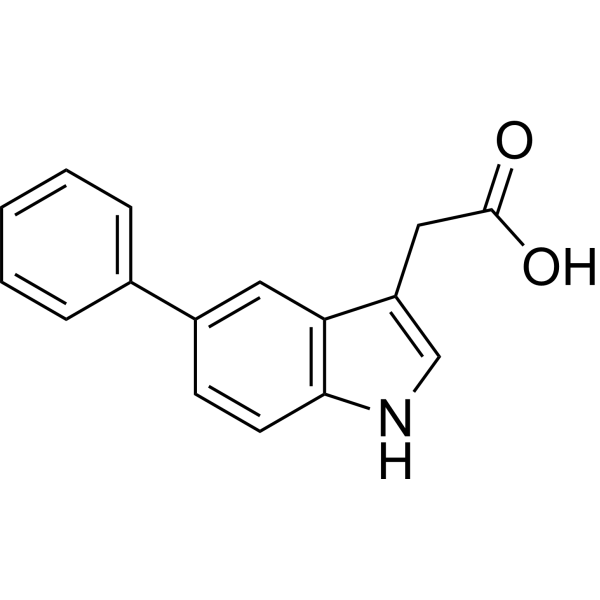
    5-Ph-IAA
    50+ Cited Publications

    Epigenetic Reader Domain Cancer
    5-Ph-IAA is a derivative of IAA. 5-Ph-IAA, a ligand, establishes the auxin-inducible degron 2 (AID2) system together with an OsTIR1 (F74G) mutant. AID2 induces rapid and efficient depletion of mAID-fused proteins to study protein function in living cells, causing tumor suppression .
    5-Ph-IAA
  • HY-153356

    Molecular Glues Apoptosis Inflammation/Immunology Cancer
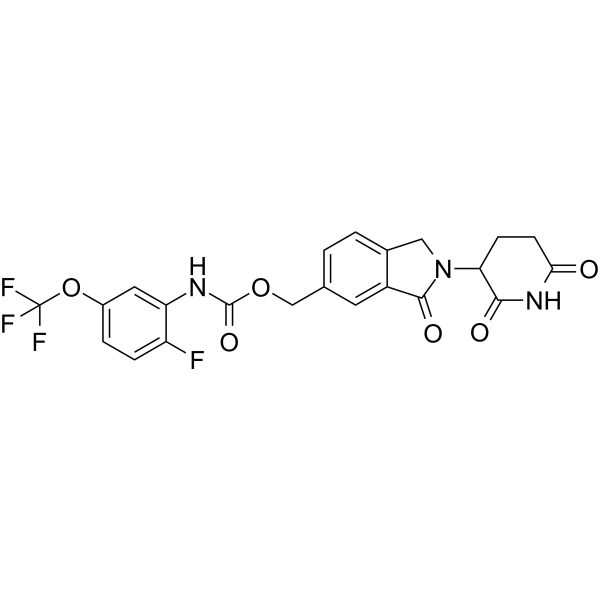
    MRT-2359 is an orally active and selective GSPT1 molecular glue degrader, with a DC50 of 5 nM. MRT-2359 induces CRBN/GSPT1 ternary complex formation to drive CRBN- and degron-dependent proteasomal GSPT1 degradation, with selectivity for wild-type GSPT1 over the GSPT1G575N mutant. MRT-2359 disrupts protein translation, induces ribosome stalling, downregulates MYC family proteins and their transcriptional output, reduces proliferation, and induces apoptosis in cancer cells. MRT-2359 can be used for the research of non-small cell lung cancer (NSCLC), small cell lung cancer (SCLC), neuroendocrine lung cancer, high grade neuroendocrine cancers, diffuse large B-cell lymphoma, prostate cancer, and MYC-driven solid tumors .
    MRT-2359
  • HY-160695

    Ligands for E3 Ligase Molecular Glues Cancer
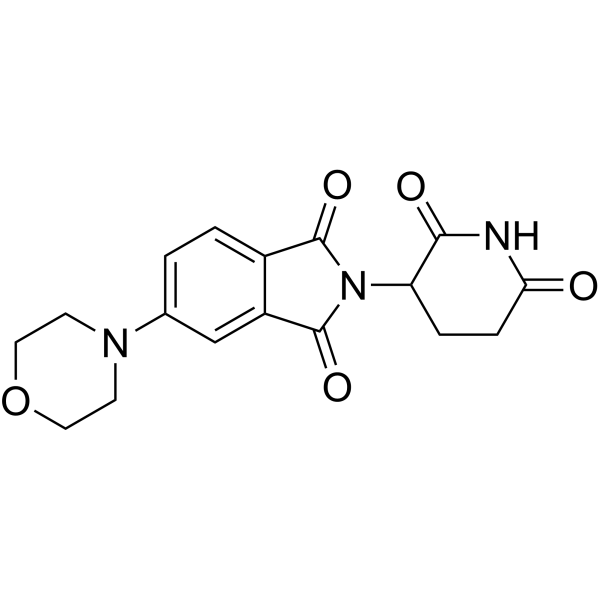
    PT-179 is an orthogonal Thalidomide (HY-14658) derivative that targets cereblon without causing off-target degradation effects. PT-179 is able to specifically bind CRBN, form a ternary complex with a target protein fused to a zinc finger (ZF) degron, and mediate the degradation of the tagged protein. For example, PT-179 binds to the ubiquitin ligase substrate receptor cereblon by forming a complex with SD40 and efficiently degrades proteins N- or C-terminally fused to SD40 or SD36 (DC50 for eGFP: 4.5 nM and 14.3 nM). PT-179 can be used to develop compact protein degradation tagging platforms .
    PT-179
  • HY-172162

    Molecular Glues NEKs Interleukin Related Inflammation/Immunology Cancer
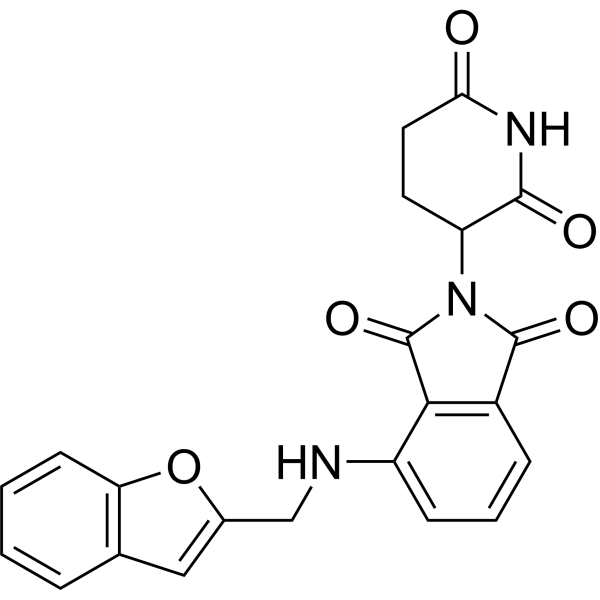
    LC-04-045 is a selective NIMA-related kinase 7 (NEK7) molecular glue degrader. LC-04-045 induces NEK7 degradation via the CRBN-based ubiquitin-proteasome system, dependent on the glycine 57-containing degron motif. LC-04-045 inhibits secretion of downstream cytokines IL-1β and IL-18. LC-04-045 can be used for the research of lymphoblastic leukemia .
    LC-04-045
  • HY-153698

    Molecular Glues Ligands for E3 Ligase Cancer
    CC-3060 is a molecular glue modulator targeting Cereblon (CRBN) E3 ubiquitin ligase and ZBTB16 degrader with a DC50 of 0.47 nM in HT-1080 cells. CC-3060 engages structural degrons on ZBTB16’s ZnF1 or ZnF3 domains for fusion protein substrates. CC-3060 can be used for the research of acute promyelocytic leukemia .
    CC-3060
  • HY-168535

    Ligands for E3 Ligase Cancer
    SJ6145 is a potent ligand for KLHDC2 SBD, with the Kd of 16.9 μM in SPR test, IC50 value of 42 μM in inhibiting KLHDC2 SBD binding to a di-Gly degron peptide test .
    SJ6145
  • HY-P10360

    α-synuclein Neurological Disease
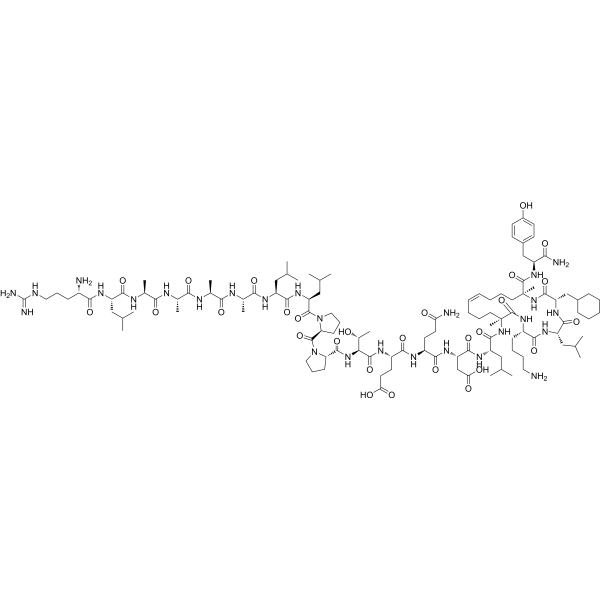
    Tat-βsyn-degron is an α-synuclein knockdown peptide that effectively degrades α-synuclein protein via the proteasome pathway. Tat-βsyn-degron effectively reduces α-synuclein protein levels in primary rat cortical neuron cultures. In a Parkinson's mouse toxicity model, Tat-βsyn-degron can alleviate parkinsonian toxin-induced neuronal damage and movement disorders .
    Tat-βsyn-degron
  • HY-D2259

    E1/E2/E3 Enzyme Ligands for E3 Ligase Others
    PFI-7 is a probe, which binds to human GID4 (KD is 79 nM), and antagonizes the binding of Pro/N-degrons. PFI-7 can be utilized in C-terminal to LisH (CTLH) complex research and development of targeted protein degradation .
    PFI-7
  • HY-P5559

    PROTACs Cancer
    ND1-YL2 is a PROTAC that selectively degrades SRC-1 via the N-degron pathway. ND1-YL2 significantly inhibits cancer invasion and migration in vitro and in vivo. ND1-YL2 can be used in cancer research .
    ND1-YL2
  • HY-180961

    PROTACs Estrogen Receptor/ERR Cancer
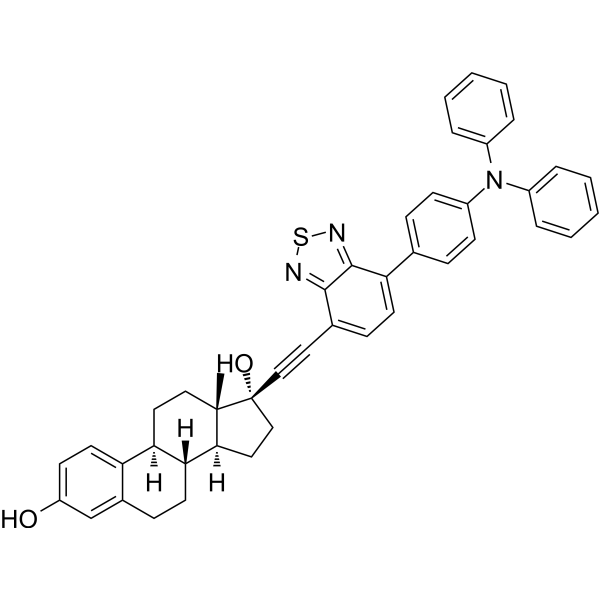
    His-TERRα is a ERRα PROTAC degrader. His-TERRα uses a single amino acid (His) as the E3 ligand and employs the N-end rule pathway to induce the degradation of the target protein, significantly reducing the molecular size, and thus is called a mini-PROTAC. His-TERRα significantly inhibits the proliferation and migration of MCF7 breast cancer cells. His-TERRα can be used for the study of breast cancer .
    His-TERRα
  • HY-180962

    PROTACs Bcr-Abl Cancer
    Phe-PEG1-Dasa is a BCR-ABL PROTAC degrader, with its DC50 being 1.56 nM. Phe-PEG1-Dasa uses a single amino acid (Phe) as the E3 ligand and employs the N-end rule pathway to induce the degradation of the target protein, significantly reducing the molecular size, thus being called a mini-PROTAC. Phe-PEG1-Dasa significantly inhibits the proliferation of K562 cells. Phe-PEG1-Dasa can be used for the study of leukemia .
    Phe-PEG1-Dasa
  • HY-183116

    Molecular Glues Anaplastic lymphoma kinase (ALK) Cancer
    TRI-611 is a brain-penetrant, orally active molecular glue degrader targeting ALK. TRI-611 engages ALK via a distal degron, forms a ternary complex with CRBN, triggers ALK polyubiquitination and degradation, including TKI-resistant ALK fusion proteins. TRI-611 inhibits ALK downstream signaling pathways, induces anti-proliferative effects in ALK-positive cancer cells. TRI-611 induces regression of ALK-positive non-small cell lung cancer tumors in preclinical xenograft models. TRI-611 can be used for the research of ALK-positive non-small cell lung cancer, including TKI-refractory tumors and central nervous system metastases .
    TRI-611
  • HY-180538

    Molecular Glues E1/E2/E3 Enzyme Others
    MRT-31619 is a molecular gel degrader (MGD) targeting CRBN. MRT-31619 drives the self-dimerization of the E3 ligase by mimicking the degradation subunit, and promotes its rapid, effective and selective degradation through the ubiquitin-proteasome system .
    MRT-31619

Inquiry Online

Your information is safe with us. * Required Fields.

Salutation


Country or Region *

Applicant Name *


Organization Name *

Department *


Email Address *


Product Name *

Cat. No.


Requested quantity *

Phone Number *


Remarks

Inquiry Online

Inquiry Information

Product Name:
Cat. No.:
Quantity:
MCE Japan Authorized Agent:

