1. Search Result
Search Result
Results for "

ESR1

" in MedChemExpress (MCE) Product Catalog:

16

Inhibitors & Agonists

4

Natural
Products

1

Recombinant Proteins

6

Antibodies

3

Oligonucleotides

Cat. No. Product Name Target Research Areas Chemical Structure
  • HY-136255
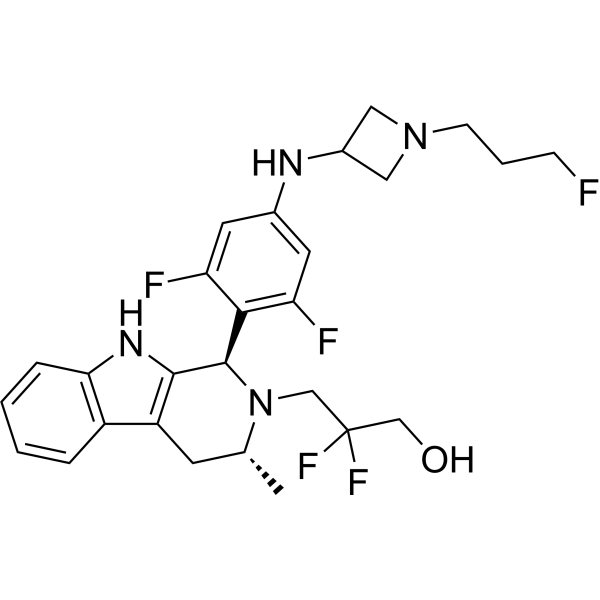
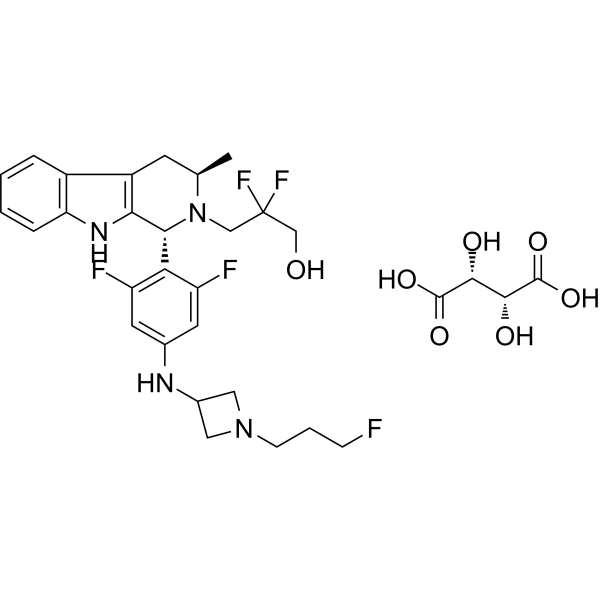
    Camizestrant
    Maximum Cited Publications
    7 Publications Verification

    AZD-9833

    Estrogen Receptor/ERR Cancer
    Camizestrant (AZD-9833) is a potent and orally active estrogen receptor (ER) antagonist. Camizestrant is used for the study of ER + HER2-advanced breast cancer [1].
    Camizestrant
  • HY-147165
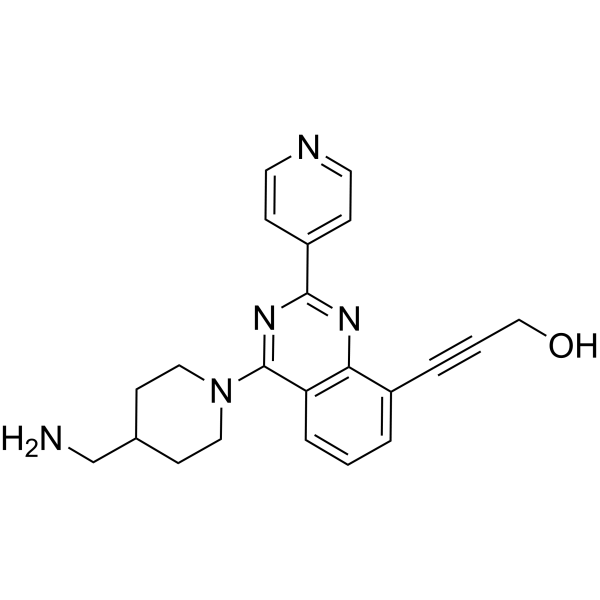
    VT02956
    1 Publications Verification

    Ser/Thr Kinase Large Tumor Suppressor (LATS) Cancer
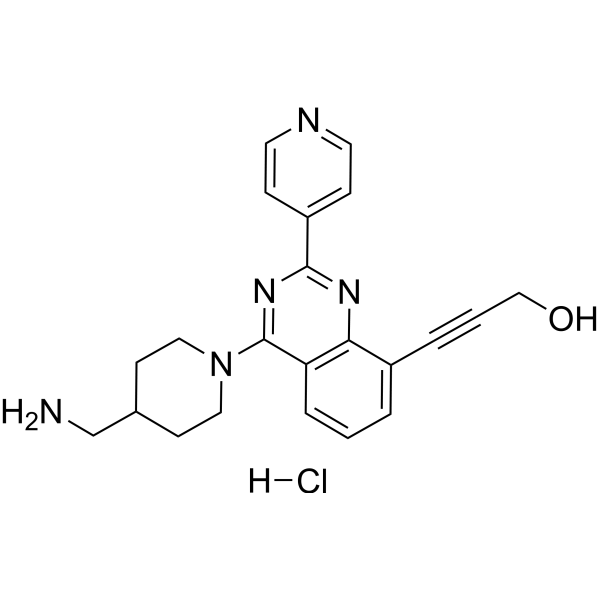
    VT02956 is a LATS inhibitor (IC50: 0.76 nM for LATS1, 0.52 nM for LATS2). VT02956 targets the Hippo pathway. VT02956 inhibits ESR1 expression and growth of ER+ breast cancer cell lines and patient-derived tumor organoids [1]. VT02956 is a click chemistry reagent, it contains an Alkyne group and can undergo copper-catalyzed azide-alkyne cycloaddition (CuAAc) with molecules containing Azide groups.
    VT02956
  • HY-RS04529

    Small Interfering RNA (siRNA) Others

    ESR1 Human Pre-designed siRNA Set A contains three designed siRNAs for ESR1 gene (Human), as well as a negative control, a positive control, and a FAM-labeled negative control.

    ESR1 Human Pre-designed siRNA Set A
    ESR1 Human Pre-designed siRNA Set A
  • HY-RS04530

    Small Interfering RNA (siRNA) Others

    Esr1 Mouse Pre-designed siRNA Set A contains three designed siRNAs for Esr1 gene (Mouse), as well as a negative control, a positive control, and a FAM-labeled negative control.

    Esr1 Mouse Pre-designed siRNA Set A
    Esr1 Mouse Pre-designed siRNA Set A
  • HY-149480

    PROTACs Estrogen Receptor/ERR Cancer
    ERD-3111 (Compound 44) is an orally active PROTAC ERα degrader (DC50: 0.5 nM). ERD-3111 inhibits tumor growth in the parental MCF-7 xenograft model with wild-type ER and two clinically relevant ESR1 mutated mice model. ERD-3111 can be used in the research of ER+ breast cancer [1].
    ERD-3111
  • HY-163650

    Akt Endocrinology
    DTPD-Q is an antioxidant and an oxidative derivative of methylbenzenesulfonyl-p-phenylenediamine DTPD. DTPD-Q is a molecule that binds to AKT1 and ESR1, with high binding affinity to core targets associated with male infertility and its subtypes. DTPD-Q can be used in studies related to male infertility [1] .
    DTPD-Q
  • HY-N1508

    MMP Apoptosis Autophagy NF-κB TNF Receptor COX Toll-like Receptor (TLR) SOD ASK1 JNK Cardiovascular Disease Inflammation/Immunology Endocrinology Cancer
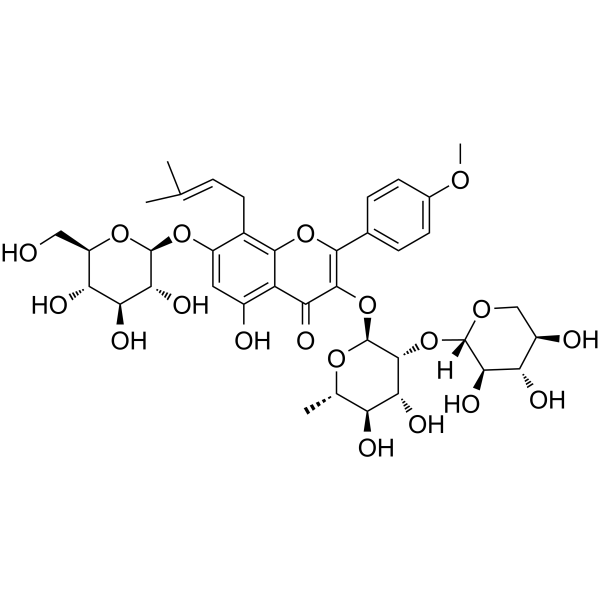
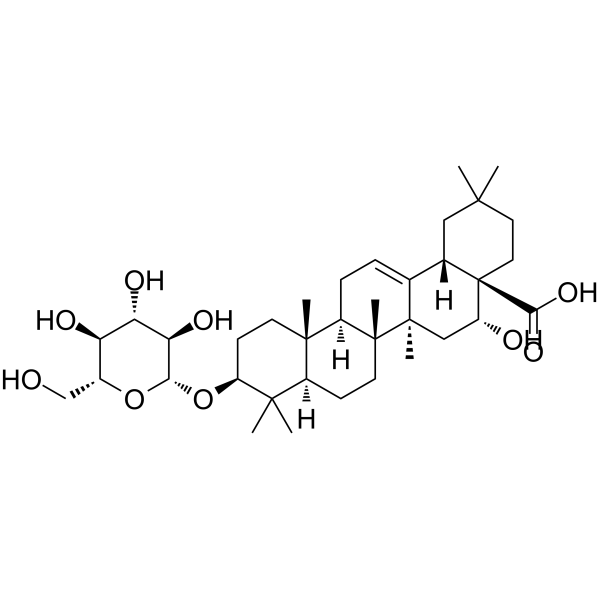
    Ecliptasaponin A is an orally active pentacyclic triterpenoid saponin. Ecliptasaponin A exerts anti-tumor activity by activating ASK1/JNK pathway, inducing apoptosis and autophagy in lung cancer cells. Ecliptasaponin A exerts anti-inflammatory/anti-fibrotic effects and protects the cardiovascular system by inhibiting the HMGB1/TLR4/NF-κB pathway, and the expression of COX-2 and MMP-9. Ecliptasaponin A can enhance SOD activity, reduce MDA levels, and alleviate oxidative stress damage. Ecliptasaponin A exerts chondroprotective effects by inhibiting the expression of MMP13 and regulating inflammatory factors. Ecliptasaponin A improves ovarian function and regulates sex hormones by upregulating the expression of ESR1 receptors [1] .
    Ecliptasaponin A
  • HY-21191

    PFBS

    Biochemical Assay Reagents PPAR Reactive Oxygen Species (ROS) Metabolic Disease
    Perfluorobutanesulfonic acid (PFBS) is a short-chain perfluoroalkyl substance and the main replacement for perfluorooctanesulfonic acid. Perfluorobutanesulfonic acid induces fat accumulation in human HepG2 hepatoma cells. Perfluorobutanesulfonic acid promotes lipid accumulation by activating PPARγ pathway and triggering oxidative stress, endoplasmic reticulum stress and calcium dyshomeostasis. Perfluorobutanesulfonic acid impairs reproduction and causes developmental disorders in offspring of Caenorhabditis elegans. Perfluorobutanesulfonic acid disrupts pancreatic organogenesis and lipid homeostasis in zebrafish embryos. Perfluorobutanesulfonic acid can be used in environmental toxicology, lipid metabolism and developmental toxicity studies [1] .
    Perfluorobutanesulfonic acid
  • HY-RS04531

    Small Interfering RNA (siRNA) Others

    Esr1 Rat Pre-designed siRNA Set A contains three designed siRNAs for Esr1 gene (Rat), as well as a negative control, a positive control, and a FAM-labeled negative control.

    Esr1 Rat Pre-designed siRNA Set A
    Esr1 Rat Pre-designed siRNA Set A
  • HY-147165A

    YAP Large Tumor Suppressor (LATS) Cancer
    VT02956 is a LATS inhibitor (IC50: 0.76 nM for LATS1, 0.52 nM for LATS2). VT02956 targets the Hippo pathway. VT02956 inhibits ESR1 expression and growth of ER+ breast cancer cell lines and patient-derived tumor organoids [1]. VT02956 is a click chemistry reagent, it contains an Alkyne group and can undergo copper-catalyzed azide-alkyne cycloaddition (CuAAc) with molecules containing Azide groups.
    VT02956 hydrochloride
  • HY-N1508R

    Reference Standards MMP Apoptosis Autophagy NF-κB TNF Receptor COX Toll-like Receptor (TLR) SOD ASK1 JNK Cardiovascular Disease Inflammation/Immunology Endocrinology Cancer
    Ecliptasaponin A (Standard) is the analytical standard for Ecliptasaponin A (HY-N1508). Ecliptasaponin A is an orally active pentacyclic triterpenoid saponin. Ecliptasaponin A exerts anti-tumor activity by activating ASK1/JNK pathway, inducing apoptosis and autophagy in lung cancer cells. Ecliptasaponin A exerts anti-inflammatory/anti-fibrotic effects and protects the cardiovascular system by inhibiting the HMGB1/TLR4/NF-κB pathway, and the expression of COX-2 and MMP-9. Ecliptasaponin A can enhance SOD activity, reduce MDA levels, and alleviate oxidative stress damage. Ecliptasaponin A exerts chondroprotective effects by inhibiting the expression of MMP13 and regulating inflammatory factors. Ecliptasaponin A improves ovarian function and regulates sex hormones by upregulating the expression of ESR1 receptors.
    Ecliptasaponin A (Standard)
  • HY-101119

    Estrogen Receptor/ERR Cancer
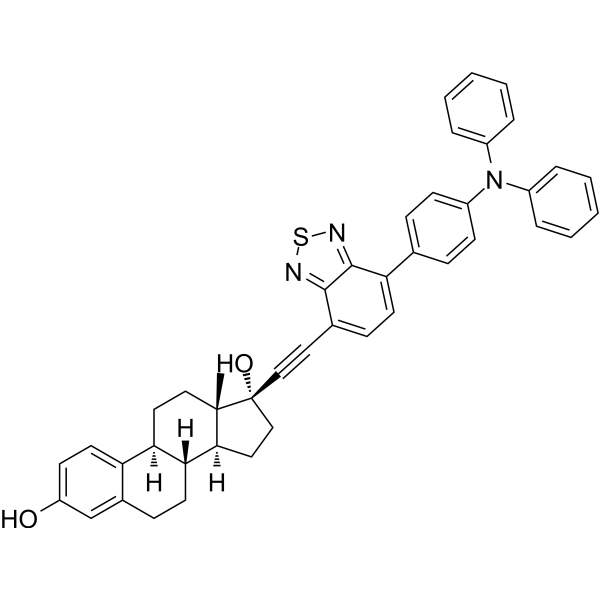
    GLL398 is a potent, orally bioavailable selective estrogen receptor degrader (SERD) with an IC50 value of 1.14 nM. GLL398 shows a strong dose-dependent binding to ER with a mutation at Y537S (IC50=29.5 nM). GLL398 blocks tumor growth in xenograft models of breast cancer.
    GLL398
  • HY-183319

    Apoptosis Mitochondrial Metabolism Cancer
    Anticancer agent 320 is a potent broad-spectrum anticancer agent, with low toxicity toward noncancerous cells. Anticancer agent 320 induces cell cycle arrest, DNA double-strand breaks, and early apoptosis. Anticancer agent 320 disrupts mitochondrial function in cancer cells. Anticancer agent 320 inhibits proliferation of lung, colon, and breast cancer cells. Anticancer agent 320 can be used for the research of lung carcinoma, colon carcinoma, breast carcinoma [1].
    Anticancer agent 320
  • HY-N18209

    p38 MAPK Cancer
    4-Hydroxy-3-butylphthalide is a Phthalide (HY-W015820) derivative found in the rhizome of Ligusticum ChuanXiong Hort. 4-Hydroxy-3-butylphthalide binds core targets linked to lung cancer brain metastasis, such as BDNF, FOS, and MAPK14. 4-Hydroxy-3-butylphthalide can be used for the research of lung cancer brain metastasis [1].
    4-Hydroxy-3-butylphthalide
  • HY-N17632

    Estrogen Receptor/ERR Akt MELK COX Apoptosis Inflammation/Immunology Cancer
    Moracin G is a plant-derived kinase modulator and receptor ligand that forms stable bindings with multiple key proteins (AKT1, COX2 and Estrogen receptor 1) and competitively inhibits the activity of specific kinases. By binding to MELK to disrupt cell cycle regulation, Moracin G impairs the survival and proliferation of cancer cells, induces cancer cell apoptosis, and thereby exerts anti-tumor potential. Moracin G can be used in research related to periodontitis and breast cancer [1] .
    Moracin G
  • HY-183804

    PROTACs Estrogen Receptor/ERR Cancer
    PROTAC ER Degrader-16 is an orally active ERα PROTAC degrader with a DC50 of 1.4 nM and an IC50 of 1.9 nM. PROTAC ER Degrader-16 inhibits ER-dependent breast cancer cell proliferation and exerts anti-tumor effects in mouse models. PROTAC ER Degrader-16 can be used for breast cancer research [1].
    PROTAC ER Degrader-16

Inquiry Online

Your information is safe with us. * Required Fields.

Salutation


Country or Region *

Applicant Name *


Organization Name *

Department *


Email Address *


Product Name *

Cat. No.


Requested quantity *

Phone Number *


Remarks

Inquiry Online

Inquiry Information

Product Name:
Cat. No.:
Quantity:
MCE Japan Authorized Agent:

