21 Results for "

GSH/GPX4

" in MedChemExpress (MCE) Product Catalog:
Products (21)

21 Results for "GSH/GPX4" in MCE Product Catalog:

4
4 Cited Publications
Cat. No.: HY-B0774
CAS No.: 112665-43-7
Synonyms: AA 2414
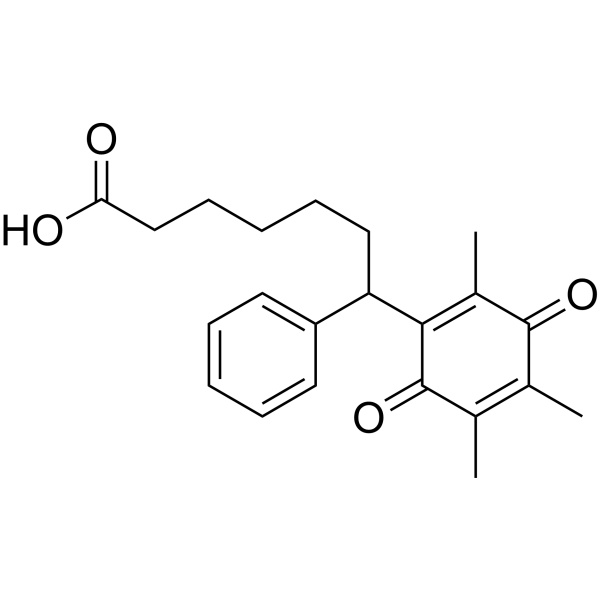
Seratrodast (AA 2414), an orally active antiasthmatic agent, is a thromboxane A2 receptor (TP) antagonist and ferroptosis inhibitor. Seratrodast reduces lipid ROS production, modulates the systemic xc-/GSH/GPX4 axis, and inhibits JNK phosphorylation and p53 expression. Seratrodast exhibits anti-asthmatic and anti-epileptic activity .
loading...
    loading...
Cat. No.: HY-W012352
CAS No.: 605-32-3
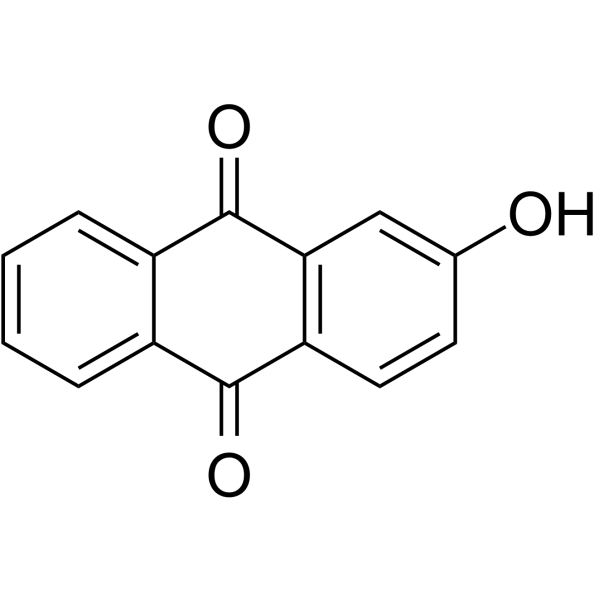
2-Hydroxyanthraquinone is a product generated by the photochemical oxidation of Anthracene (ANT) (HY-Y0299). 2-Hydroxyanthraquinone induces ferroptosis in cardiomyocytes by depleting GSH and inhibiting GPX4, leading to cardiac developmental malformations. 2-Hydroxyanthraquinone causes damage to the cerebrovascular system and blood-brain barrier in zebrafish by downregulating the Wnt/β-catenin signaling pathway, as well as inducing inflammation and neuronal apoptosis. 2-Hydroxyanthraquinone can be used in studies related to cerebrovascular diseases and cardiotoxicity .
loading...
    loading...
Cat. No.: HY-17655
Research Areas:  

Inflammation/Immunology

TBE56, a molecular glue, is a BACH1 degrader, with an EC50 of 44 nM. TBE56 is a weak NRF2 inducer and the biotinylated TBE31. TBE56 interacts and promotes the degradation of BACH1 via a mechanism involving the E3 ligase FBX022. TBE56 reduces intracellular Fe 2+ accumulation, ROS generation, and malondialdehyde (MDA) content, while increasing GSH/GSSG ratio and upregulating GPX4 in Prominin-2-overexpressed BMSCs. TBE56 significantly ameliorates intervertebral disc degeneration (IVDD) in puncture-induced SD rat IVDD model. TBE56 can be used for the study of intervertebral disc degeneration (IVDD) .
loading...
    loading...
Cat. No.: HY-178389
GPX4-IN-20, a Arctigenin (HY-N0035) derived, is a GPX4& molecular gluedegrader. GPX4-IN-20 induces ferroptosis by increasing lipid ROS levels and suppressing GSH levels. GPX4-IN-20 reduces the protein expression and enzyme activity of GPX4 in a dose-dependent manner without affecting other ferroptosis-related proteins. GPX4-IN-20 induces ubiquitination-dependent proteasomal degradation of GPX4. GPX4-IN-20 also increases the level of malondialdehyde (MDA) in HCT-116 cells. GPX4-IN-20 can be used for the research of colorectal cancer .
loading...
    loading...
Cat. No.: HY-B0774R
CAS No.: 112665-43-7
Synonyms: AA 2414 (Standard)
Seratrodast (Standard) is the analytical standard of Seratrodast. This product is intended for research and analytical applications. Seratrodast (AA 2414), an orally active antiasthmatic agent, is a thromboxane A2 receptor (TP) antagonist and ferroptosis inhibitor. Seratrodast reduces lipid ROS production, modulates the systemic xc-/GSH/GPX4 axis, and inhibits JNK phosphorylation and p53 expression. Seratrodast exhibits anti-asthmatic and anti-epileptic activity .
loading...
    loading...
Cat. No.: HY-161460
CAS No.: 3063813-06-6
Ferroptosis-IN-7(Compound 26) is a ferroptosis inhibitor which can restore cell viability, reduce iron accumulation and scavenge reactive oxygen species. Ferroptosis-IN-7 can be used for vascular diseases research .
loading...
    loading...
Cat. No.: HY-170509
Ferroptosis-IN-17 (Compound 18) is a ferroptosis (Ferroptosis) inhibitor with an EC50 value of 0.57 μM. Ferroptosis-IN-17 reduces intracellular ferrous ion accumulation, lipid peroxidation, and effectively restores the levels of glutathione (GSH) and glutathione peroxidase 4 (GPX4). Ferroptosis-IN-17 shows good solubility and significant metabolic stability in rat plasma. Ferroptosis-IN-17 is promising for research in tumor suppression, neurodegenerative diseases, and cardiovascular diseases .
loading...
    loading...
Cat. No.: HY-176271
CAS No.: 3069915-36-9
MAO-B-IN-45 is a dual inhibitor of ferroptosis and MAO-B. MAO-B-IN-45 shows selectivity towards MAO-B with an IC50 of 87.47 nM and selectivity exceeding 229-fold for MAO-B over MAO-A. MAO-B-IN-45 has excellent antiferroptosis activity through modulation of the iron metabolic pathway and GSH-GPX4 axis in vitro. MAO-B-IN-45 improves cognitive and behavioral impairments in 3×Tg (APP/Tau/Ps1) AD mouse and significantly reduced the levels of ferritin heavy chain 1 (FTH1), APP, and Tau phosphorylation (p-Tau) proteins in the brain.
loading...
    loading...
Cat. No.: HY-174345
CAS No.: 3097194-74-3
Ferroptosis inducer-8 is a ferroptosis inducer with high selectivity for other cell death mechanism. Ferroptosis inducer-8 induces ferroptosis by affecting ACSL4, GPX4, and FTH1, thereby disrupting intracellular iron homeostasis and the GSH/GPX4 antioxidant defense system, ultimately leading to the accumulation of lipid peroxidation. Ferroptosis inducer-8 also induces ROS production. Ferroptosis inducer-8 inhibits tumor growth and can be used for research of triple-negative breast cancer (TNBC) .
loading...
    loading...
Cat. No.: HY-155852
CAS No.: 412328-25-7
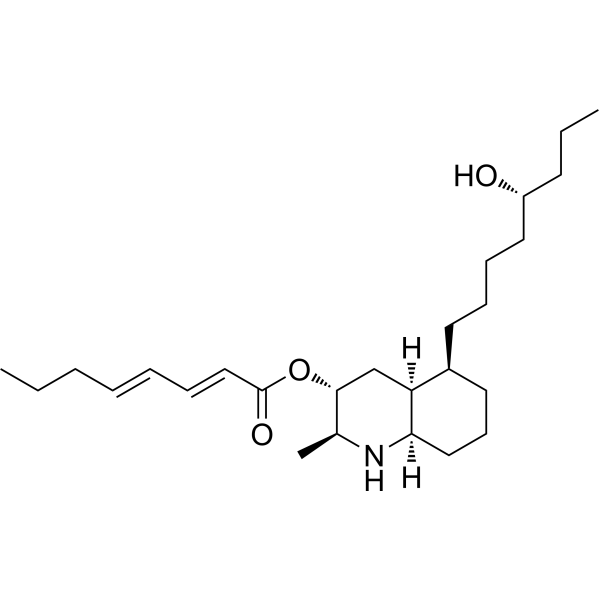
Lepadin H is a ferroptosis inducer and apoptosis inducer with in vitro cytotoxicity and in vivo antitumor efficacy against cancer cells. Lepadin H reduces GPX4 and SLC7A11 levels, increases p53 and ACSL4 expression, drives lipid hydroperoxide production, elevates reactive oxygen species (ROS) levels, reduces cellular glutathione (GSH) levels, induces lipid peroxidation and G2/M phase cell cycle arrest, and suppresses clonogenic growth and migration of cancer cells.Lepadin H can be used for the research of melanoma .
loading...
    loading...
Cat. No.: HY-175698
Ferroptosis inducer-9 is a ferroptosis inducer and colchicine site tubulin polymerization inhibitor. Ferroptosis inducer-9 inhibits MCF-7 cell growth with an IC50 of 14 nM and inhibits [ 3H]colchicine binding. Ferroptosis inducer-9 reduces expression of GPX4 and FTH, increases COX2 and ACSL4, lowers GSH, NADP+, and NADPH levels, increases LPO, MDA, and Fe(II) levels, and decreases SOD concentrations. Ferroptosis inducer-9 demonstrates significant anti-tumor efficacy in HCT116 CRC xenograft model. Ferroptosis inducer-9 can be used for the study of triple negative breast cancer (TNBC) and colorectal cancer (CRC) .
loading...
    loading...
Cat. No.: HY-175811
Research Areas:  

Cancer

Ferroptosis inducer-10 is a ferroptosis inducer. Ferroptosis inducer-10 can inhibit A549 cells growth with an IC50 of 0.76 μM. Ferroptosis inducer-10 can deplete GSH, elevate ROS and MDA, and downregulate GPX4 expression. Ferroptosis inducer-10 can induce cell G2/M phase and inhibit migration. Ferroptosis inducer-10 can be used for the research of cancer, such as non-small lung cancer .
loading...
    loading...
Cat. No.: HY-155203
Research Areas:  

Cancer

Anticancer agent 154 (Compound 8h) increases the levels of reactive oxygen species and leads to mitochondrial damage. Anticancer agent 154 induces cell apoptosis and DNA damage. Anticancer agent 154 also induces ferroptosis by reducing the GSH level and GPX4 expression and increasing the lipid peroxidation level. Anticancer agent 154 inhibits cancer cell (HT29, H1975, A549, and MCF-7) proliferation with IC50s of 1.0-1.9 μM .
loading...
    loading...
Cat. No.: HY-162944
CAS No.: 3031762-97-4
Research Areas:  

Cancer

NA-Ir is a Ferroptosis inducer. NA-Ir targets mitochondrial DNA (mtDNA) and activates the cGAS-STING pathway to induce ferritinophagy (Autophagy), while also generating reactive oxygen species (ROS) through photodynamic therapy (PDT), depleting glutathione (GSH), and downregulating glutathione peroxidase 4 (GPX4), thereby triggering lipid peroxidation and Ferroptosis. NA-Ir exhibits higher anticancer activity under light exposure and selectively inhibits cancer cells with high H2S levels .
loading...
    loading...
Cat. No.: HY-182072
GPX4-IN-23 (Compound 3e) is a GPX4 inhibitor with an IC50 of 0.27 μM. GPX4-IN-23 induces Ferroptosis by enhancing lipid peroxidation, ROS production, and intracellular GSH depletion. GPX4-IN-23 exhibits antiproliferative activity against central nervous system cancer cells. GPX4-IN-23 can be used in studies related to central nervous system cancers .
loading...
    loading...
Cat. No.: HY-175852
Ferroptosis inducer-11 is a ferroptosis inducer. Ferroptosis inducer-11 exhibits potent cytotoxicity against HCT-116, NCM-60 and HT-29 cells with IC50 values of 0.43 μM, 3.14 μM and 0.48 μM, respectively. Ferroptosis inducer-11 strongly suppresses GPX4 enzymatic activity with an IC50 of 1.86 μM. Ferroptosis inducer-11 induces ferroptosis, as well as increases intracellular lipid ROS, malondialdehyde (MDA), and Fe 2+ levels, while decreasing glutathione (GSH) levels in colon cancer cells. Ferroptosis inducer-11 can be used for the study of colon cancer .
loading...
    loading...
Cat. No.: HY-182052
CAS No.: 3063042-21-4
Synonyms: anti-NSCLC agent-2
Ferroptosis inducer-16 (anti-NSCLC agent-2) is a nitric oxide (NO) donor and a ferroptosis inducer. Ferroptosis inducer-16 inhibits DNA synthesis and colony formation. Ferroptosis inducer-16 disrupts lysosomal integrity by releasing NO, triggers iron overload and oxidative stress, downregulates the SLC7A11-GPX4 axis, depletes GSH, and accumulates lipid peroxides. Ferroptosis inducer-16 inhibits tumor growth in an OVCAR8/ADR xenograft mouse model without obvious toxicity, and can be used in the study of non-small cell lung cancer and drug-resistant ovarian cancer .
loading...
    loading...
Cat. No.: HY-184583
CAS No.: 3121876-09-0
S27-1047 is a brain-penetrant, potent and selective BChE (eqBChE IC50 = 7.16 nM; hBChE IC50 = 296.10 nM) inhibitor and Nrf2 activator. S27-1047 can directly bind Keap1, disrupt Keap1-Nrf2 interaction (FP IC50 = 36.87 nM), enhance antioxidant enzyme expression and activate the GSH-GPX4 axis to inhibit Aβ-induced ferroptosis. S27-1047 can protect against oxidative stress and neuroinflammation. S27-1047 can be used in Alzheimer's disease research .
loading...
    loading...
Cat. No.: HY-W012352R
CAS No.: 605-32-3
2-Hydroxyanthraquinone (Standard) is the analytical standard of 2-Hydroxyanthraquinone (HY-W012352). This product is intended for research and analytical applications. 2-Hydroxyanthraquinone is a product generated by the photochemical oxidation of Anthracene (ANT) (HY-Y0299). 2-Hydroxyanthraquinone induces ferroptosis in cardiomyocytes by depleting GSH and inhibiting GPX4, leading to cardiac developmental malformations. 2-Hydroxyanthraquinone causes damage to the cerebrovascular system and blood-brain barrier in zebrafish by downregulating the Wnt/β-catenin signaling pathway, as well as inducing inflammation and neuronal apoptosis. 2-Hydroxyanthraquinone can be used in studies related to cerebrovascular diseases and cardiotoxicity .
loading...
    loading...
Cat. No.: HY-182066
Target:  

PANoptosis

Research Areas:  

Cancer

Photosensitizer-9 is an iridium (III)-based photosensitizer with anti-melanoma activity. Photosensitizer-9 exhibits significant phototoxicity (IC50=0.98 μM) and an ideal phototoxicity index (PI=3.05). Under light irradiation, Photosensitizer-9 generates large amounts of intracellular •OH in an oxygen-independent manner. Photosensitizer-9 mediates photodynamic therapy under hypoxic conditions and synergistically activates PANoptosis (by upregulating cleaved Caspase-3, GSDMD-N, p-MLKL), ferroptosis (by disrupting the GSH-GPX4-LPO axis), apoptosis, pyroptosis and necroptosis in melanoma cells. Photosensitizer-9 induces immunogenic cell death by promoting the release of damage-associated molecular patterns under hypoxic conditions and increases the maturation rate of dendritic cells. Photosensitizer-9 reduces tumor volume in melanoma-bearing mice. Photosensitizer-9 is applicable to relevant studies on melanoma .
loading...
    loading...

