





Search Result
Results for "
Gelatins
" in MedChemExpress (MCE) Product Catalog:
25
Biochemical Assay Reagents
4
Isotope-Labeled Compounds
| Cat. No. |
Product Name |
Target |
Research Areas |
Chemical Structure |
-
- HY-E70005B
-
|
|
MMP
|
Others
|
Collagenase, Type II is a microbially derived matrix metalloproteinases (MMPs) and zinc peptidase. Collagenase, Type II breaksdown collagens1, 3, 5, 7, 8, 10, fibronectin, gelatin, aggrecann .
|
-
-
- HY-44076
-
LAP
4 Publications Verification
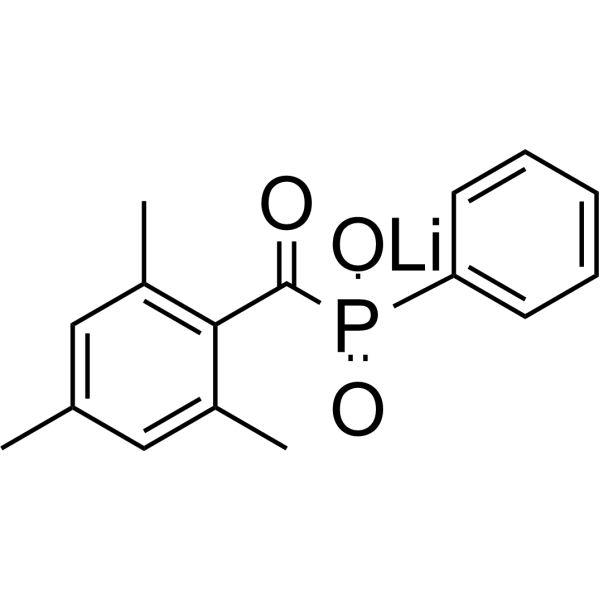
Lithium phenyl-2,4,6-trimethylbenzoylphosphinate
|
Biochemical Assay Reagents
|
Others
Cancer
|
|
LAP (Lithium phenyl-2,4,6-trimethylbenzoylphosphinate) is a free radical initiator. The free radicals produced by LAP under bioprinting conditions are potentially cytotoxic and mutagenic. In addition, the concentration of LAP affects the mechanical strength of 3D printed scaffolds. Generally, the concentration range of LAP used for curing is 0.05%-1%. The elastic modulus produced at a concentration of 0.1% is the highest, with enhanced mechanical properties and excellent biocompatibility .
|
-
-
- HY-E70005A
-
|
EC 3.4.24.3
|
MMP
|
Others
|
Collagenase, Type I is a microbially derived matrix metalloproteinases (MMPs) and zinc peptidase. Collagenase, Type I breaks down collagens 1, 3, 7, 8, 10, gelatin, proteoglycans, aggrecan .
|
-
-
- HY-Y1365
-
|
|
Environmental Pollutants
Biochemical Assay Reagents
|
Metabolic Disease
Cancer
|
|
Gelatins is a non-toxic, non carcinogenic, biodegradable, and non irritating natural polymer derived from partial hydrolysis of collagen. Due to its strong liquid absorption and swelling ability, Gelatins has excellent hemostatic properties and can be used as a matrix material for the reduction, growth, and stability of metal nanoparticles. Gelatins can also be used for tumor cell culture and tumor therapy .
|
-
-
- HY-E70005C
-
|
|
MMP
|
Others
|
Collagenase, Type III is a microbially derived matrix metalloproteinases (MMPs) and zinc peptidase. Collagenase, Type III breaksdown collagens1, 4, 9, 10, 14, fibronectin, MMP-9, gelatin, plasminogen, aggrecan,perlecan osteonectin
|
-
-
- HY-A0103
-
|
|
Environmental Pollutants
Biochemical Assay Reagents
|
Inflammation/Immunology
|
|
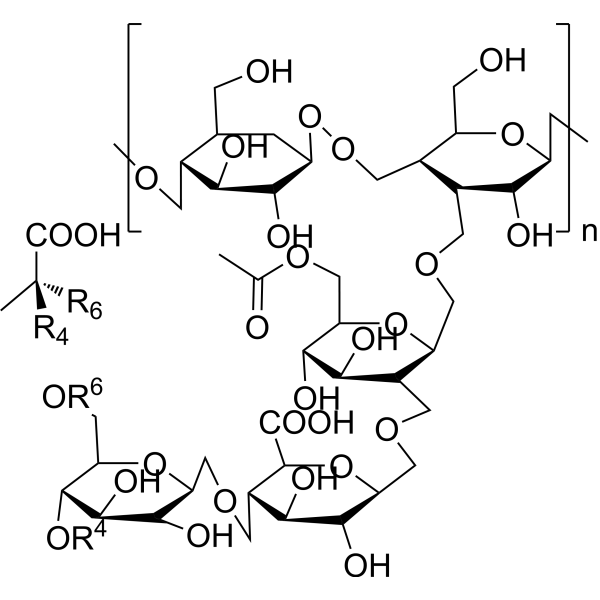
Xanthan gum interacts with gelatin (HY-Y1365) via hydrogen bonds, thereby increasing the viscosity and stability of the hydrogel while promoting cell growth and creating a microenvironment conducive to cell differentiation [1][2]. Xanthan gum induces pro-inflammatory responses by increasing the levels of TNF-α, IL-6, and IL-10. Xanthan gum can be used for inflammation and immunology research .
|
-
-
- HY-W763582B
-
|
Gelatin Methacryloyl, 90% methacrylation
|
Biochemical Assay Reagents
|
Others
|
|
GelMA (Gelatin Methacryloyl), 90% methacrylation, is a derivative obtained by the reaction of Methacrylic anhydride (MA) (HY-W017330) and gelatin. GelMA exhibits excellent biocompatibility, biodegradability, and moldability. GelMA can be photocrosslinked into hydrogels and can be used for research in regeneration of tissues, such as skin, tendon, bone, cartilage, blood vessel, and cardiovascular system. GelMA hydrogel also can be used for research on drug delivery, organ-on-a-chip, and biosensing .
|
-
-
- HY-W763582
-
|
Gelatin Methacryloyl, 30% methacrylation
|
Biochemical Assay Reagents
|
Others
|
|
GelMA (Gelatin Methacryloyl), 30% methacrylation, is a derivative obtained by the reaction of Methacrylic anhydride (MA) (HY-W017330) and gelatin. GelMA exhibits excellent biocompatibility, biodegradability, and moldability. GelMA can be photocrosslinked into hydrogels and can be used for research in regeneration of tissues, such as skin, tendon, bone, cartilage, blood vessel, and cardiovascular system. GelMA hydrogel also can be used for research on drug delivery, organ-on-a-chip, and biosensing .
|
-
-
- HY-E70005E
-
|
|
MMP
|
Others
|
Collagenase, Type V is a microbially derived matrix metalloproteinases (MMPs) and zinc peptidase. Collagenase, Type V breaksdown collagens1, 3, 5, 7, 8, 10, fibronectin, gelatin, aggrecann .
|
-
-
- HY-Y1365D
-
-
-
- HY-Y1365L
-
-
-
- HY-100897
-
|
|
Thrombin
|
Cardiovascular Disease
|
|
Sulodexide is a mixture of glycosaminoglycans available in soft capsule form for oral administration. It is composed of low molecular weight heparin (80%) and dermatan sulfate (20%). Sulodexide exhibits antithrombotic activity through interaction with antithrombin III (AT III) and heparin cofactor II (HC II), and inhibition of thrombin formation. Sulodexide exhibits profibrinolytic activity through release of tissue plasminogen activator (tPA). Sulodexide exhibits endothelial protective and anti-inflammatory effect, ameliorates chronic venous disease .
Sulodexide is a glycosaminoglycan mixture available in soft gelatin capsule form for oral administration.
|
-
-
- HY-W763582A
-
|
Gelatin Methacryloyl, 60% methacrylation
|
Biochemical Assay Reagents
|
Others
|
|
GelMA (Gelatin Methacryloyl), 60% methacrylation, is a derivative obtained by the reaction of Methacrylic anhydride (MA) (HY-W017330) and gelatin. GelMA exhibits excellent biocompatibility, biodegradability, and moldability. GelMA can be photocrosslinked into hydrogels and can be used for research in regeneration of tissues, such as skin, tendon, bone, cartilage, blood vessel, and cardiovascular system. GelMA hydrogel also can be used for research on drug delivery, organ-on-a-chip, and biosensing .
|
-
-
- HY-Y1365C
-
|
|
Biochemical Assay Reagents
|
Others
|
|
Fish Gelatin,suitable for cell culture is an essential natural biopolymer. Fish Gelatin,suitable for cell culture can be isolated from fish processing by-products, such as fish skin, scales, bones and fish maw. Fish Gelatin,suitable for cell culture has been considered as a feasible substitute for mammalian gelatin. Modified Fish gelatin shows significant promise across various industries, including nanomaterials, 3D printing, thin films, coatings, and biopharmaceuticals. Fish Gelatin,suitable for cell culture can be used for cell culture .
|
-
-
- HY-A0104B
-
|
Hypromellose (Type I,Viscosity:100mPa.s); (Hydroxypropyl)methyl cellulose (Type I,Viscosity:100mPa.s); Celacol HPM 5000 (Type I,Viscosity:100mPa.s)
|
Environmental Pollutants
Biochemical Assay Reagents
|
Others
|
|
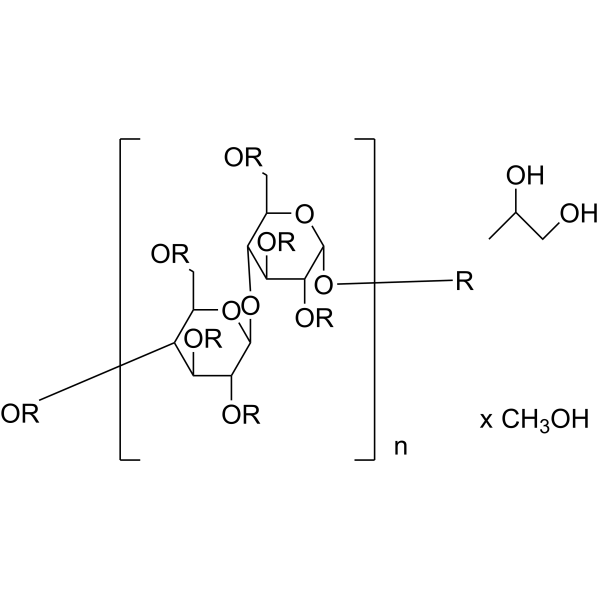
HPMC (Type I, Viscosity: 100 mPa·s) is a nonionic polymer obtained via synthetic modification of cellulose. As a hydrophilic matrix material, HPMC prolongs drug release through non-Fickian diffusion, including the diffusion of drugs within the hydrated matrix and the polymer relaxation process .
|
-
-
- HY-Y1365E
-
-
-
- HY-W012998
-
|
|
Drug Intermediate
|
Neurological Disease
Inflammation/Immunology
|
|
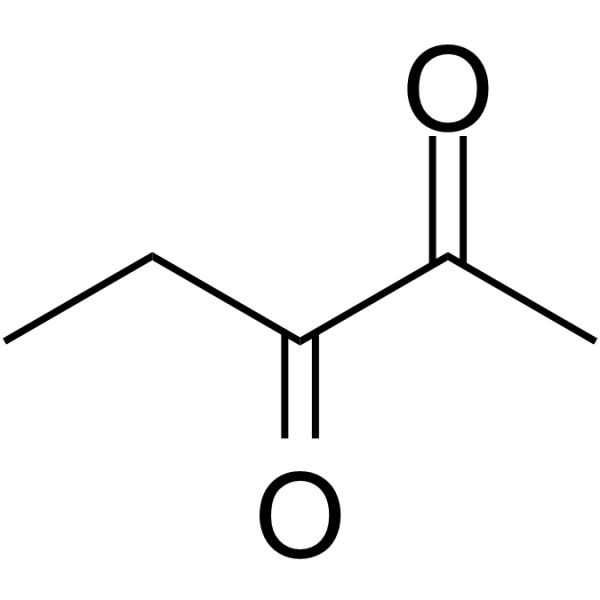
2,3-Pentanedione is a common constituent of synthetic flavorings and is used to impart a butter, strawberry, caramel, fruit, rum, or cheese flavor in beverages, ice cream, candy, baked goods, gelatins, and puddings. 2,3-Pentanedione also occurs naturally as a fermentation product in beer, wine, and yogurt and is releasedduring roasting of coffee beans .
|
-
-
- HY-W156324
-
|
|
PROTAC Linkers
Liposome
|
Others
|
|
Biotin-PEGn-NHS ester is a biotin-labeled PROTAC linker, which belongs to the PEG class and can be used to synthesize PROTAC molecules. Biotin-PEGn-NHS ester can interact with free neutral avidin in solution and successfully target malignant glioma cells. Biotin-PEGn-NHS ester can also be grafted onto the amino group of GelMA to prepare biotin-modified functionalized hydrogel, gelatin methacryloyl (Bio-GelMA) .
|
-
-
- HY-158218
-
|
Gelatin Methacryloyl, 30% methacrylation, Red Fluorescent
|
Biochemical Assay Reagents
|
Others
|
Red Fluorescent Gelatin Methacryloyl (Red Fluorescent GelMA) is methacryloyl gelatin (GelMA) with red fluorescence, which is obtained by "grafting" fluorescent molecules on GelMA. Red Fluorescent Gelatin Methacryloyl acts as a scaffold and can be used to engineer tissue analogs from the vasculature to cartilage and bone, allowing cells to proliferate and spread . GelMA, 30% methacrylation, Red Fluorescent needs to self-assemble into fibrous hydrogel under the action of photoinitiator LAP (HY-44076), and target bioactive adhesion sites, play an inherent supporting role for tissue cells and biodegradable activity. Application: cell culture, biological 3D printing, tissue engineering, etc.
|
-
-
- HY-Y0425
-
|
|
Drug Intermediate
Biochemical Assay Reagents
|
Others
|
|
Terephthalaldehyde is a crosslinking agent. Terephthalaldehyde forms a crosslinked structure inside the gelatin matrix by forming Schiff base imines with the amino groups of gelatin, thereby constructing a three-dimensional network. Terephthalaldehyde improves the hydrophobicity of the gelatin matrix, delays water vapor penetration and enhances the liquid water resistance of gelatin films. Terephthalaldehyde can be used as a crosslinking agent to prepare crosslinked chitosan hydrogel (CAAT) via ultrasound-induced synthesis. Terephthalaldehyde helps CAAT hydrogels selectively adsorb anionic dyes from aqueous media, including multi-component systems containing cationic dyes. Terephthalaldehyde serves as a starting material for the synthesis of bis-heterocyclic compounds (including bis-thiazole and bis-triazolopyrimidine compounds) .
|
-
-
- HY-158217A
-
|
Gelatin Methacryloyl, 60% methacrylation, Green Fluorescent
|
Biochemical Assay Reagents
|
Others
|
Green Fluorescent Gelatin Methacryloyl (Green Fluorescent GelMA) is methacryloyl gelatin (GelMA) with green fluorescence, which is obtained by "grafting" fluorescent molecules on GelMA. Green Fluorescent Gelatin Methacryloyl acts as a scaffold and can be used to engineer tissue analogs from the vasculature to cartilage and bone, allowing cells to proliferate and spread . GelMA, 60% methacrylation, Green Fluorescent needs to self-assemble into fibrous hydrogel under the action of photoinitiator LAP (HY-44076), and target bioactive adhesion sites, play an inherent supporting role for tissue cells and biodegradable activity. Application: cell culture, biological 3D printing, tissue engineering, etc.
|
-
-
- HY-158217
-
|
Gelatin Methacryloyl, 30% methacrylation, Green Fluorescent
|
Biochemical Assay Reagents
|
Others
|
Green Fluorescent Gelatin Methacryloyl (Green Fluorescent GelMA) is methacryloyl gelatin (GelMA) with green fluorescence, which is obtained by "grafting" fluorescent molecules on GelMA. Green Fluorescent Gelatin Methacryloyl acts as a scaffold and can be used to engineer tissue analogs from the vasculature to cartilage and bone, allowing cells to proliferate and spread . GelMA, 30% methacrylation, Green Fluorescent needs to self-assemble into fibrous hydrogel under the action of photoinitiator LAP (HY-44076), and target bioactive adhesion sites, play an inherent supporting role for tissue cells and biodegradable activity. Application: cell culture, biological 3D printing, tissue engineering, etc.
|
-
-
- HY-178078
-
|
|
Drug Intermediate
|
Cancer
|
|
PTX-SS-COOH is the proform that can be grafted to the sulfhydryl modified gelatin to form the redox sensitive amphiphilic polymer. The nanoparticle (BSA/Gel-SS-PTX/PTX-SS-COOH NPs) demonstrates an excellent anticancer efficiency. PTX-SS-COOH can be applied in the research of targeted delivery for solid tumors (such as breast cancer and melanoma) by utilizing the unique characteristics of the tumor microenvironment (high GSH level) .
|
-
-
- HY-W012998R
-
|
|
Reference Standards
Biochemical Assay Reagents
|
Neurological Disease
Inflammation/Immunology
|
|
2,3-Pentanedione (Standard) is the analytical standard of 2,3-Pentanedione. This product is intended for research and analytical applications. 2,3-Pentanedione is a common constituent of synthetic flavorings and is used to impart a butter, strawberry, caramel, fruit, rum, or cheese flavor in beverages, ice cream, candy, baked goods, gelatins, and puddings. 2,3-Pentanedione also occurs naturally as a fermentation product in beer, wine, and yogurt and is releasedduring roasting of coffee beans .
|
-
-
- HY-158218A
-
|
Gelatin Methacryloyl, 60% methacrylation, red fluorescent
|
Biochemical Assay Reagents
|
Others
|
Red Fluorescent Gelatin Methacryloyl (Red Fluorescent GelMA) is methacryloyl gelatin (GelMA) with red fluorescence, which is obtained by "grafting" fluorescent molecules on GelMA. Red Fluorescent Gelatin Methacryloyl acts as a scaffold and can be used to engineer tissue analogs from the vasculature to cartilage and bone, allowing cells to proliferate and spread . GelMA, 60% methacrylation, Red Fluorescent needs to self-assemble into fibrous hydrogel under the action of photoinitiator LAP (HY-44076), and target bioactive adhesion sites, play an inherent supporting role for tissue cells and biodegradable activity. Application: cell culture, biological 3D printing, tissue engineering, etc.
|
-
-
- HY-158218B
-
|
Gelatin Methacryloyl, 90% methacrylation, red fluorescent
|
Biochemical Assay Reagents
|
Others
|
Red Fluorescent Gelatin Methacryloyl (Red Fluorescent GelMA) is methacryloyl gelatin (GelMA) with red fluorescence, which is obtained by "grafting" fluorescent molecules on GelMA. Red Fluorescent Gelatin Methacryloyl acts as a scaffold and can be used to engineer tissue analogs from the vasculature to cartilage and bone, allowing cells to proliferate and spread . GelMA, 90% methacrylation, Red Fluorescent needs to self-assemble into fibrous hydrogel under the action of photoinitiator LAP (HY-44076), and target bioactive adhesion sites, play an inherent supporting role for tissue cells and biodegradable activity. Application: cell culture, biological 3D printing, tissue engineering, etc.
|
-
-
- HY-W277900
-
|
|
MMP
|
Inflammation/Immunology
Cancer
|
|
2-Methoxy-2,4-diphenylfuran-3-one is a fluorescent compound which can be used to label gelatin as a substrate for detection of the gelatin degrading MMP-2 and MMP-9 by zymography .
|
-
-
- HY-158219A
-
|
GelMA, 60% methacrylation, blue fluorescent
|
Biochemical Assay Reagents
|
Others
|
Gelatin Methacryloyl (GelMA), 60% methacrylation, blue fluorescent is methacrylated gelatin (GelMA) with blue fluorescence, which is obtained by "grafting" fluorescent molecules on GelMA. Gelatin Methacryloyl, 60% methacrylation, blue fluorescent has a scaffolding effect and can be used to design tissue analogs from vasculature to cartilage and bone, allowing cell proliferation and spreading. Gelatin Methacryloyl, 30% methacrylation, blue fluorescent needs to be self-assembled into fibrous hydrogels under the action of the photoinitiator LAP (HY-44076), and target bioactive adhesion sites, exert inherent support for tissue cells and biodegradation activity. Application direction: cell culture, biological 3D printing, tissue engineering, etc.
|
-
-
- HY-158219
-
|
GelMA, 30% methacrylation, blue fluorescent
|
Biochemical Assay Reagents
|
Others
|
Gelatin Methacryloyl (GelMA), 30% methacrylation, blue fluorescent is methacrylated gelatin (GelMA) with blue fluorescence, which is obtained by "grafting" fluorescent molecules on GelMA. Gelatin Methacryloyl, 30% methacrylation, blue fluorescent has a scaffolding effect and can be used to design tissue analogs from vasculature to cartilage and bone, allowing cell proliferation and spreading. Gelatin Methacryloyl, 30% methacrylation, blue fluorescent needs to be self-assembled into fibrous hydrogels under the action of the photoinitiator LAP (HY-44076), and target bioactive adhesion sites, exert inherent support for tissue cells and biodegradation activity. Application direction: cell culture, biological 3D printing, tissue engineering, etc.
|
-
-
- HY-158219B
-
|
GelMA, 90% methacrylation, blue fluorescent
|
Biochemical Assay Reagents
|
Others
|
Gelatin Methacryloyl (GelMA), 90% methacrylation, blue fluorescent is methacrylated gelatin (GelMA) with blue fluorescence, which is obtained by "grafting" fluorescent molecules on GelMA. Gelatin Methacryloyl, 90% methacrylation, blue fluorescent has a scaffolding effect and can be used to design tissue analogs from vasculature to cartilage and bone, allowing cell proliferation and spreading. Gelatin Methacryloyl, 30% methacrylation, blue fluorescent needs to be self-assembled into fibrous hydrogels under the action of the photoinitiator LAP (HY-44076), and target bioactive adhesion sites, exert inherent support for tissue cells and biodegradation activity. Application direction: cell culture, biological 3D printing, tissue engineering, etc.
|
-
-
- HY-W012998S2
-
|
|
Isotope-Labeled Compounds
Biochemical Assay Reagents
|
Neurological Disease
Inflammation/Immunology
|
|
2,3-Pentanedione-d3 is deuterated labeled 2,3-Pentanedione (HY-W012998). 2,3-Pentanedione is a common constituent of synthetic flavorings and is used to impart a butter, strawberry, caramel, fruit, rum, or cheese flavor in beverages, ice cream, candy, baked goods, gelatins, and puddings. 2,3-Pentanedione also occurs naturally as a fermentation product in beer, wine, and yogurt and is releasedduring roasting of coffee beans .
|
-
-
- HY-N6745S
-
|
|
Na+/K+ ATPase
Apoptosis
Isotope-Labeled Compounds
|
Infection
|
|
Citreoviridin- 13C23 is 13C labeled 2,3-Pentanedione (HY-W012998). 2,3-Pentanedione is a common constituent of synthetic flavorings and is used to impart a butter, strawberry, caramel, fruit, rum, or cheese flavor in beverages, ice cream, candy, baked goods, gelatins, and puddings. 2,3-Pentanedione also occurs naturally as a fermentation product in beer, wine, and yogurt and is releasedduring roasting of coffee beans .
|
-
-
- HY-157356
-
|
|
Bacterial
|
Others
|
|
Violet Red Bile Glucose Agar can be used for counting intestinal bacteria and identification of enterobacteriaceae. The composition of 1 liter of Violet Red Bile Glucose Agar contains: 7.0 g gelatin pancreatic enzyme hydrolysate, 3.0 g yeast extract powder, 1.5 g sodium deoxycholate, 10.0 g glucose, 5.0 g sodium chloride, 0.03 g neutral red, 0.002 g crystal violet, and 15.0 g agar in per liter .
|
-
-
- HY-W012998S1
-
|
|
Isotope-Labeled Compounds
Biochemical Assay Reagents
|
Neurological Disease
Inflammation/Immunology
|
|
2,3-Pentanedione- 13C2 is 13C labeled 2,3-Pentanedione (HY-W012998). 2,3-Pentanedione is a common constituent of synthetic flavorings and is used to impart a butter, strawberry, caramel, fruit, rum, or cheese flavor in beverages, ice cream, candy, baked goods, gelatins, and puddings. 2,3-Pentanedione also occurs naturally as a fermentation product in beer, wine, and yogurt and is releasedduring roasting of coffee beans .
|
-
-
- HY-182730
-
|
|
Biochemical Assay Reagents
|
Others
|
|
1% Gelatin solution for cell culture. Used for coating surfaces of cell culture plates, dishes, etc., to promote the adhesion and proliferation of mammalian cells. The gelatin solution may precipitate at lower temperatures; therefore, it can be incubated at 25°C-55°C until completely dissolved before use. Dilute with sterile ultrapure water before coating.
|
-
-
- HY-158217B
-
|
Gelatin Methacryloyl, 90% methacrylation, Green Fluorescent
|
Biochemical Assay Reagents
|
Others
|
Green Fluorescent Gelatin Methacryloyl (Green Fluorescent GelMA) is methacryloyl gelatin (GelMA) with green fluorescence, which is obtained by "grafting" fluorescent molecules on GelMA. Green Fluorescent Gelatin Methacryloyl acts as a scaffold and can be used to engineer tissue analogs from the vasculature to cartilage and bone, allowing cells to proliferate and spread . GelMA, 90% methacrylation, Green Fluorescent needs to self-assemble into fibrous hydrogel under the action of photoinitiator LAP (HY-44076), and target bioactive adhesion sites, play an inherent supporting role for tissue cells and biodegradable activity. Application: cell culture, biological 3D printing, tissue engineering, etc.
|
-
-
- HY-182609
-
|
|
Biochemical Assay Reagents
|
Others
|
|
0.5% Gelatin solution for cell culture. Used for coating surfaces of cell culture plates, dishes, etc., to promote the adhesion and proliferation of mammalian cells. The gelatin solution may precipitate at lower temperatures; therefore, it can be incubated at 25°C-55°C until completely dissolved before use. Dilute with sterile ultrapure water before coating.
|
-
-
- HY-182608
-
|
|
Biochemical Assay Reagents
|
Others
|
|
0.1% Gelatin solution for cell culture. Used for coating surfaces of cell culture plates, dishes, etc., to promote the adhesion and proliferation of mammalian cells. The gelatin solution may precipitate at lower temperatures; therefore, it can be incubated at 25°C-55°C until completely dissolved before use. Dilute with sterile ultrapure water before coating.
|
-
-
- HY-W012998S
-
|
|
Isotope-Labeled Compounds
Biochemical Assay Reagents
|
Neurological Disease
Inflammation/Immunology
|
|
2,3-Pentanedione-d5 is the deuterium labeled 2,3-Pentanedione (HY-W012998). 2,3-Pentanedione is a common constituent of synthetic flavorings and is used to impart a butter, strawberry, caramel, fruit, rum, or cheese flavor in beverages, ice cream, candy, baked goods, gelatins, and puddings. 2,3-Pentanedione also occurs naturally as a fermentation product in beer, wine, and yogurt and is releasedduring roasting of coffee beans .
|
-
| Cat. No. |
Product Name |
Type |
-
- HY-W277900
-
|
|
Fluorescent Dyes
|
|
2-Methoxy-2,4-diphenylfuran-3-one is a fluorescent compound which can be used to label gelatin as a substrate for detection of the gelatin degrading MMP-2 and MMP-9 by zymography .
|
| Cat. No. |
Product Name |
Type |
-
- HY-44076
-
LAP
4 Publications Verification
Lithium phenyl-2,4,6-trimethylbenzoylphosphinate
|
Biochemical Assay Reagents
|
|
LAP (Lithium phenyl-2,4,6-trimethylbenzoylphosphinate) is a free radical initiator. The free radicals produced by LAP under bioprinting conditions are potentially cytotoxic and mutagenic. In addition, the concentration of LAP affects the mechanical strength of 3D printed scaffolds. Generally, the concentration range of LAP used for curing is 0.05%-1%. The elastic modulus produced at a concentration of 0.1% is the highest, with enhanced mechanical properties and excellent biocompatibility .
|
-
- HY-Y1365
-
|
|
Biochemical Assay Reagents
|
|
Gelatins is a non-toxic, non carcinogenic, biodegradable, and non irritating natural polymer derived from partial hydrolysis of collagen. Due to its strong liquid absorption and swelling ability, Gelatins has excellent hemostatic properties and can be used as a matrix material for the reduction, growth, and stability of metal nanoparticles. Gelatins can also be used for tumor cell culture and tumor therapy .
|
-
- HY-A0103
-
|
|
Biochemical Assay Reagents
|
|
Xanthan gum interacts with gelatin (HY-Y1365) via hydrogen bonds, thereby increasing the viscosity and stability of the hydrogel while promoting cell growth and creating a microenvironment conducive to cell differentiation [1][2]. Xanthan gum induces pro-inflammatory responses by increasing the levels of TNF-α, IL-6, and IL-10. Xanthan gum can be used for inflammation and immunology research .
|
-
- HY-W763582B
-
|
Gelatin Methacryloyl, 90% methacrylation
|
Biochemical Assay Reagents
|
|
GelMA (Gelatin Methacryloyl), 90% methacrylation, is a derivative obtained by the reaction of Methacrylic anhydride (MA) (HY-W017330) and gelatin. GelMA exhibits excellent biocompatibility, biodegradability, and moldability. GelMA can be photocrosslinked into hydrogels and can be used for research in regeneration of tissues, such as skin, tendon, bone, cartilage, blood vessel, and cardiovascular system. GelMA hydrogel also can be used for research on drug delivery, organ-on-a-chip, and biosensing .
|
-
- HY-W763582
-
|
Gelatin Methacryloyl, 30% methacrylation
|
Biochemical Assay Reagents
|
|
GelMA (Gelatin Methacryloyl), 30% methacrylation, is a derivative obtained by the reaction of Methacrylic anhydride (MA) (HY-W017330) and gelatin. GelMA exhibits excellent biocompatibility, biodegradability, and moldability. GelMA can be photocrosslinked into hydrogels and can be used for research in regeneration of tissues, such as skin, tendon, bone, cartilage, blood vessel, and cardiovascular system. GelMA hydrogel also can be used for research on drug delivery, organ-on-a-chip, and biosensing .
|
-
- HY-Y1365D
-
-
- HY-Y1365L
-
|
|
Biochemical Assay Reagents
|
|
Porcine skin Gelatin,suitable for cell culture(high gel strength) can be used to coat cells to improve cell attachment .
|
-
- HY-W763582A
-
|
Gelatin Methacryloyl, 60% methacrylation
|
Biochemical Assay Reagents
|
|
GelMA (Gelatin Methacryloyl), 60% methacrylation, is a derivative obtained by the reaction of Methacrylic anhydride (MA) (HY-W017330) and gelatin. GelMA exhibits excellent biocompatibility, biodegradability, and moldability. GelMA can be photocrosslinked into hydrogels and can be used for research in regeneration of tissues, such as skin, tendon, bone, cartilage, blood vessel, and cardiovascular system. GelMA hydrogel also can be used for research on drug delivery, organ-on-a-chip, and biosensing .
|
-
- HY-Y1365C
-
|
|
Biochemical Assay Reagents
|
|
Fish Gelatin,suitable for cell culture is an essential natural biopolymer. Fish Gelatin,suitable for cell culture can be isolated from fish processing by-products, such as fish skin, scales, bones and fish maw. Fish Gelatin,suitable for cell culture has been considered as a feasible substitute for mammalian gelatin. Modified Fish gelatin shows significant promise across various industries, including nanomaterials, 3D printing, thin films, coatings, and biopharmaceuticals. Fish Gelatin,suitable for cell culture can be used for cell culture .
|
-
- HY-A0104B
-
|
Hypromellose (Type I,Viscosity:100mPa.s); (Hydroxypropyl)methyl cellulose (Type I,Viscosity:100mPa.s); Celacol HPM 5000 (Type I,Viscosity:100mPa.s)
|
Biochemical Assay Reagents
|
|
HPMC (Type I, Viscosity: 100 mPa·s) is a nonionic polymer obtained via synthetic modification of cellulose. As a hydrophilic matrix material, HPMC prolongs drug release through non-Fickian diffusion, including the diffusion of drugs within the hydrated matrix and the polymer relaxation process .
|
-
- HY-Y1365E
-
|
|
Biochemical Assay Reagents
|
|
Porcine skin Gelatin, suitable for cell culture (medium gel strength) can be used to coat cells to improve cell attachment .
|
-
- HY-158218
-
|
Gelatin Methacryloyl, 30% methacrylation, Red Fluorescent
|
Biochemical Assay Reagents
|
Red Fluorescent Gelatin Methacryloyl (Red Fluorescent GelMA) is methacryloyl gelatin (GelMA) with red fluorescence, which is obtained by "grafting" fluorescent molecules on GelMA. Red Fluorescent Gelatin Methacryloyl acts as a scaffold and can be used to engineer tissue analogs from the vasculature to cartilage and bone, allowing cells to proliferate and spread . GelMA, 30% methacrylation, Red Fluorescent needs to self-assemble into fibrous hydrogel under the action of photoinitiator LAP (HY-44076), and target bioactive adhesion sites, play an inherent supporting role for tissue cells and biodegradable activity. Application: cell culture, biological 3D printing, tissue engineering, etc.
|
-
- HY-Y0425
-
|
|
Biochemical Assay Reagents
|
|
Terephthalaldehyde is a crosslinking agent. Terephthalaldehyde forms a crosslinked structure inside the gelatin matrix by forming Schiff base imines with the amino groups of gelatin, thereby constructing a three-dimensional network. Terephthalaldehyde improves the hydrophobicity of the gelatin matrix, delays water vapor penetration and enhances the liquid water resistance of gelatin films. Terephthalaldehyde can be used as a crosslinking agent to prepare crosslinked chitosan hydrogel (CAAT) via ultrasound-induced synthesis. Terephthalaldehyde helps CAAT hydrogels selectively adsorb anionic dyes from aqueous media, including multi-component systems containing cationic dyes. Terephthalaldehyde serves as a starting material for the synthesis of bis-heterocyclic compounds (including bis-thiazole and bis-triazolopyrimidine compounds) .
|
-
- HY-158217A
-
|
Gelatin Methacryloyl, 60% methacrylation, Green Fluorescent
|
Biochemical Assay Reagents
|
Green Fluorescent Gelatin Methacryloyl (Green Fluorescent GelMA) is methacryloyl gelatin (GelMA) with green fluorescence, which is obtained by "grafting" fluorescent molecules on GelMA. Green Fluorescent Gelatin Methacryloyl acts as a scaffold and can be used to engineer tissue analogs from the vasculature to cartilage and bone, allowing cells to proliferate and spread . GelMA, 60% methacrylation, Green Fluorescent needs to self-assemble into fibrous hydrogel under the action of photoinitiator LAP (HY-44076), and target bioactive adhesion sites, play an inherent supporting role for tissue cells and biodegradable activity. Application: cell culture, biological 3D printing, tissue engineering, etc.
|
-
- HY-158217
-
|
Gelatin Methacryloyl, 30% methacrylation, Green Fluorescent
|
Biochemical Assay Reagents
|
Green Fluorescent Gelatin Methacryloyl (Green Fluorescent GelMA) is methacryloyl gelatin (GelMA) with green fluorescence, which is obtained by "grafting" fluorescent molecules on GelMA. Green Fluorescent Gelatin Methacryloyl acts as a scaffold and can be used to engineer tissue analogs from the vasculature to cartilage and bone, allowing cells to proliferate and spread . GelMA, 30% methacrylation, Green Fluorescent needs to self-assemble into fibrous hydrogel under the action of photoinitiator LAP (HY-44076), and target bioactive adhesion sites, play an inherent supporting role for tissue cells and biodegradable activity. Application: cell culture, biological 3D printing, tissue engineering, etc.
|
-
- HY-158218A
-
|
Gelatin Methacryloyl, 60% methacrylation, red fluorescent
|
Biochemical Assay Reagents
|
Red Fluorescent Gelatin Methacryloyl (Red Fluorescent GelMA) is methacryloyl gelatin (GelMA) with red fluorescence, which is obtained by "grafting" fluorescent molecules on GelMA. Red Fluorescent Gelatin Methacryloyl acts as a scaffold and can be used to engineer tissue analogs from the vasculature to cartilage and bone, allowing cells to proliferate and spread . GelMA, 60% methacrylation, Red Fluorescent needs to self-assemble into fibrous hydrogel under the action of photoinitiator LAP (HY-44076), and target bioactive adhesion sites, play an inherent supporting role for tissue cells and biodegradable activity. Application: cell culture, biological 3D printing, tissue engineering, etc.
|
-
- HY-158218B
-
|
Gelatin Methacryloyl, 90% methacrylation, red fluorescent
|
Biochemical Assay Reagents
|
Red Fluorescent Gelatin Methacryloyl (Red Fluorescent GelMA) is methacryloyl gelatin (GelMA) with red fluorescence, which is obtained by "grafting" fluorescent molecules on GelMA. Red Fluorescent Gelatin Methacryloyl acts as a scaffold and can be used to engineer tissue analogs from the vasculature to cartilage and bone, allowing cells to proliferate and spread . GelMA, 90% methacrylation, Red Fluorescent needs to self-assemble into fibrous hydrogel under the action of photoinitiator LAP (HY-44076), and target bioactive adhesion sites, play an inherent supporting role for tissue cells and biodegradable activity. Application: cell culture, biological 3D printing, tissue engineering, etc.
|
-
- HY-158219A
-
|
GelMA, 60% methacrylation, blue fluorescent
|
Biochemical Assay Reagents
|
Gelatin Methacryloyl (GelMA), 60% methacrylation, blue fluorescent is methacrylated gelatin (GelMA) with blue fluorescence, which is obtained by "grafting" fluorescent molecules on GelMA. Gelatin Methacryloyl, 60% methacrylation, blue fluorescent has a scaffolding effect and can be used to design tissue analogs from vasculature to cartilage and bone, allowing cell proliferation and spreading. Gelatin Methacryloyl, 30% methacrylation, blue fluorescent needs to be self-assembled into fibrous hydrogels under the action of the photoinitiator LAP (HY-44076), and target bioactive adhesion sites, exert inherent support for tissue cells and biodegradation activity. Application direction: cell culture, biological 3D printing, tissue engineering, etc.
|
-
- HY-158219
-
|
GelMA, 30% methacrylation, blue fluorescent
|
Biochemical Assay Reagents
|
Gelatin Methacryloyl (GelMA), 30% methacrylation, blue fluorescent is methacrylated gelatin (GelMA) with blue fluorescence, which is obtained by "grafting" fluorescent molecules on GelMA. Gelatin Methacryloyl, 30% methacrylation, blue fluorescent has a scaffolding effect and can be used to design tissue analogs from vasculature to cartilage and bone, allowing cell proliferation and spreading. Gelatin Methacryloyl, 30% methacrylation, blue fluorescent needs to be self-assembled into fibrous hydrogels under the action of the photoinitiator LAP (HY-44076), and target bioactive adhesion sites, exert inherent support for tissue cells and biodegradation activity. Application direction: cell culture, biological 3D printing, tissue engineering, etc.
|
-
- HY-158219B
-
|
GelMA, 90% methacrylation, blue fluorescent
|
Biochemical Assay Reagents
|
Gelatin Methacryloyl (GelMA), 90% methacrylation, blue fluorescent is methacrylated gelatin (GelMA) with blue fluorescence, which is obtained by "grafting" fluorescent molecules on GelMA. Gelatin Methacryloyl, 90% methacrylation, blue fluorescent has a scaffolding effect and can be used to design tissue analogs from vasculature to cartilage and bone, allowing cell proliferation and spreading. Gelatin Methacryloyl, 30% methacrylation, blue fluorescent needs to be self-assembled into fibrous hydrogels under the action of the photoinitiator LAP (HY-44076), and target bioactive adhesion sites, exert inherent support for tissue cells and biodegradation activity. Application direction: cell culture, biological 3D printing, tissue engineering, etc.
|
-
- HY-157356
-
|
|
Biochemical Assay Reagents
|
|
Violet Red Bile Glucose Agar can be used for counting intestinal bacteria and identification of enterobacteriaceae. The composition of 1 liter of Violet Red Bile Glucose Agar contains: 7.0 g gelatin pancreatic enzyme hydrolysate, 3.0 g yeast extract powder, 1.5 g sodium deoxycholate, 10.0 g glucose, 5.0 g sodium chloride, 0.03 g neutral red, 0.002 g crystal violet, and 15.0 g agar in per liter .
|
-
- HY-182730
-
|
|
Biochemical Assay Reagents
|
|
1% Gelatin solution for cell culture. Used for coating surfaces of cell culture plates, dishes, etc., to promote the adhesion and proliferation of mammalian cells. The gelatin solution may precipitate at lower temperatures; therefore, it can be incubated at 25°C-55°C until completely dissolved before use. Dilute with sterile ultrapure water before coating.
|
-
- HY-158217B
-
|
Gelatin Methacryloyl, 90% methacrylation, Green Fluorescent
|
Biochemical Assay Reagents
|
Green Fluorescent Gelatin Methacryloyl (Green Fluorescent GelMA) is methacryloyl gelatin (GelMA) with green fluorescence, which is obtained by "grafting" fluorescent molecules on GelMA. Green Fluorescent Gelatin Methacryloyl acts as a scaffold and can be used to engineer tissue analogs from the vasculature to cartilage and bone, allowing cells to proliferate and spread . GelMA, 90% methacrylation, Green Fluorescent needs to self-assemble into fibrous hydrogel under the action of photoinitiator LAP (HY-44076), and target bioactive adhesion sites, play an inherent supporting role for tissue cells and biodegradable activity. Application: cell culture, biological 3D printing, tissue engineering, etc.
|
-
- HY-182609
-
|
|
Biochemical Assay Reagents
|
|
0.5% Gelatin solution for cell culture. Used for coating surfaces of cell culture plates, dishes, etc., to promote the adhesion and proliferation of mammalian cells. The gelatin solution may precipitate at lower temperatures; therefore, it can be incubated at 25°C-55°C until completely dissolved before use. Dilute with sterile ultrapure water before coating.
|
-
- HY-182608
-
|
|
Biochemical Assay Reagents
|
|
0.1% Gelatin solution for cell culture. Used for coating surfaces of cell culture plates, dishes, etc., to promote the adhesion and proliferation of mammalian cells. The gelatin solution may precipitate at lower temperatures; therefore, it can be incubated at 25°C-55°C until completely dissolved before use. Dilute with sterile ultrapure water before coating.
|
-
- HY-K1027
-
|
|
|
MCE Rapid Blocking Buffer (TBS-T) Powder (100 mL of 1×) mainly consists of fish gelatin protein, and is widely used for the antibody blocking step in Western Blot or ELISA within 15 minutes.
|
| Cat. No. |
Product Name |
Category |
Target |
Chemical Structure |
-
- HY-W012998
-
|
|
Structural Classification
other families
Classification of Application Fields
Ketones, Aldehydes, Acids
Other Diseases
Plants
Disease Research Fields
Source Classification
|
Drug Intermediate
|
|
2,3-Pentanedione is a common constituent of synthetic flavorings and is used to impart a butter, strawberry, caramel, fruit, rum, or cheese flavor in beverages, ice cream, candy, baked goods, gelatins, and puddings. 2,3-Pentanedione also occurs naturally as a fermentation product in beer, wine, and yogurt and is releasedduring roasting of coffee beans .
|
-
-
- HY-W012998R
-
|
|
Structural Classification
Microorganisms
other families
Ketones, Aldehydes, Acids
Plants
Source Classification
|
Reference Standards
Biochemical Assay Reagents
|
|
2,3-Pentanedione (Standard) is the analytical standard of 2,3-Pentanedione. This product is intended for research and analytical applications. 2,3-Pentanedione is a common constituent of synthetic flavorings and is used to impart a butter, strawberry, caramel, fruit, rum, or cheese flavor in beverages, ice cream, candy, baked goods, gelatins, and puddings. 2,3-Pentanedione also occurs naturally as a fermentation product in beer, wine, and yogurt and is releasedduring roasting of coffee beans .
|
-
| Cat. No. |
Product Name |
Chemical Structure |
-
- HY-W012998S2
-
|
|
|
2,3-Pentanedione-d3 is deuterated labeled 2,3-Pentanedione (HY-W012998). 2,3-Pentanedione is a common constituent of synthetic flavorings and is used to impart a butter, strawberry, caramel, fruit, rum, or cheese flavor in beverages, ice cream, candy, baked goods, gelatins, and puddings. 2,3-Pentanedione also occurs naturally as a fermentation product in beer, wine, and yogurt and is releasedduring roasting of coffee beans .
|
-
-
- HY-N6745S
-
|
|
|
Citreoviridin- 13C23 is 13C labeled 2,3-Pentanedione (HY-W012998). 2,3-Pentanedione is a common constituent of synthetic flavorings and is used to impart a butter, strawberry, caramel, fruit, rum, or cheese flavor in beverages, ice cream, candy, baked goods, gelatins, and puddings. 2,3-Pentanedione also occurs naturally as a fermentation product in beer, wine, and yogurt and is releasedduring roasting of coffee beans .
|
-
-
- HY-W012998S1
-
|
|
|
2,3-Pentanedione- 13C2 is 13C labeled 2,3-Pentanedione (HY-W012998). 2,3-Pentanedione is a common constituent of synthetic flavorings and is used to impart a butter, strawberry, caramel, fruit, rum, or cheese flavor in beverages, ice cream, candy, baked goods, gelatins, and puddings. 2,3-Pentanedione also occurs naturally as a fermentation product in beer, wine, and yogurt and is releasedduring roasting of coffee beans .
|
-
-
- HY-W012998S
-
|
|
|
2,3-Pentanedione-d5 is the deuterium labeled 2,3-Pentanedione (HY-W012998). 2,3-Pentanedione is a common constituent of synthetic flavorings and is used to impart a butter, strawberry, caramel, fruit, rum, or cheese flavor in beverages, ice cream, candy, baked goods, gelatins, and puddings. 2,3-Pentanedione also occurs naturally as a fermentation product in beer, wine, and yogurt and is releasedduring roasting of coffee beans .
|
-
| Cat. No. |
Product Name |
|
Classification |
-
- HY-Y1365
-
|
|
|
Emulsifiers
Disintegrants
|
|
Gelatins is a non-toxic, non carcinogenic, biodegradable, and non irritating natural polymer derived from partial hydrolysis of collagen. Due to its strong liquid absorption and swelling ability, Gelatins has excellent hemostatic properties and can be used as a matrix material for the reduction, growth, and stability of metal nanoparticles. Gelatins can also be used for tumor cell culture and tumor therapy .
|
-
- HY-A0103
-
|
|
|
Emulsifiers
Thickeners
|
|
Xanthan gum interacts with gelatin (HY-Y1365) via hydrogen bonds, thereby increasing the viscosity and stability of the hydrogel while promoting cell growth and creating a microenvironment conducive to cell differentiation [1][2]. Xanthan gum induces pro-inflammatory responses by increasing the levels of TNF-α, IL-6, and IL-10. Xanthan gum can be used for inflammation and immunology research .
|
Your information is safe with us. * Required Fields.
Inquiry Information
- Product Name:
- Cat. No.:
- Quantity:
- MCE Japan Authorized Agent:

