



LAP
Based on 7 publication(s) in Google Scholar
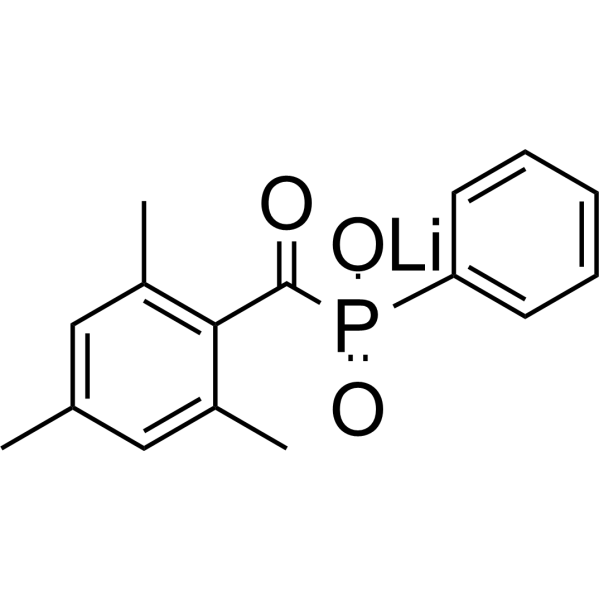
LAP (Lithium phenyl-2,4,6-trimethylbenzoylphosphinate) is a free radical initiator. The free radicals produced by LAP under bioprinting conditions are potentially cytotoxic and mutagenic. In addition, the concentration of LAP affects the mechanical strength of 3D printed scaffolds. Generally, the concentration range of LAP used for curing is 0.05%-1%. The elastic modulus produced at a concentration of 0.1% is the highest, with enhanced mechanical properties and excellent biocompatibility.
For research use only. We do not sell to patients.
- Purity : 99.84%
- CAS No.: 85073-19-4
- Formula: C16H16LiO3P
- Molecular Weight:294.22
-
Storage:
4°C, sealed storage, away from moisture
* In solvent : -80°C, 6 months; -20°C, 1 month (sealed storage, away from moisture)

To place orders, for customer services and technical support, please contact: MedChemExpress USA
Tel: 609-228-6898 E-mail: [email protected] [email protected]


-
 Biological Activity
-
Chemical Information
-
Solvent & Solubility
- Protocols
- Purity & Documentation
- References
-
 Help & FAQs


-
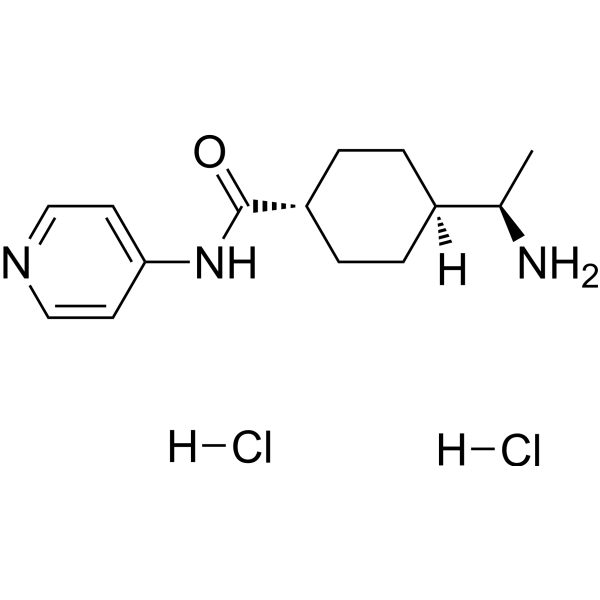
HY-10583
Y-27632 dihydrochlorideROCK Inhibitor -
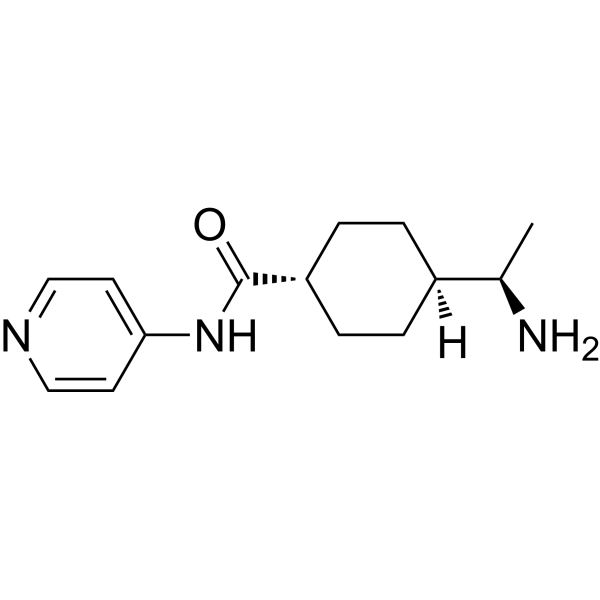
HY-10071
Y-27632ROCK Inhibitor -

HY-K0301
Cell Counting Kit-8 -

HY-W013508
I2959Photoinitiator -
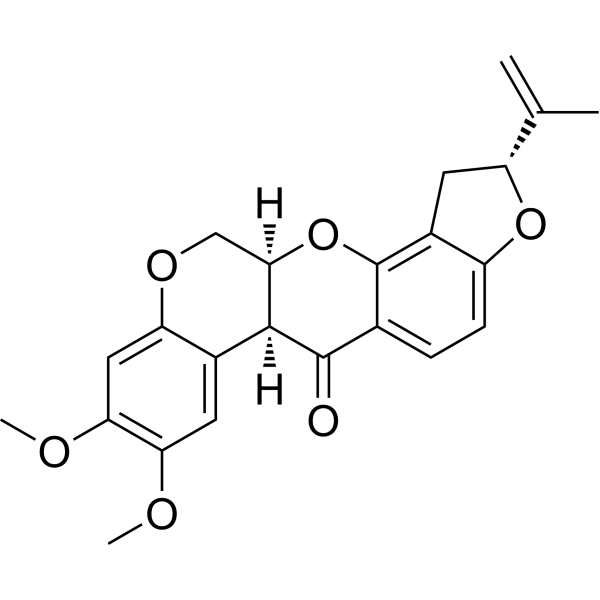
HY-B1756
RotenoneMitochondrial Complex I Inhibitor -
HY-10431
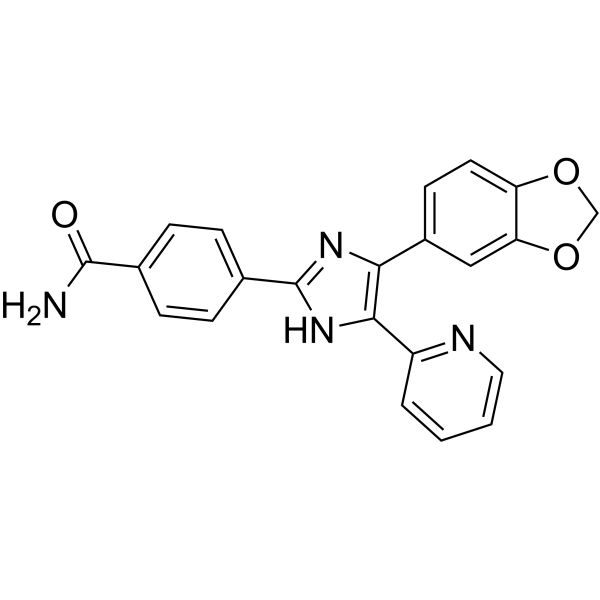
SB-431542TGF-β Receptor Kinase Inhibitor -
HY-116215
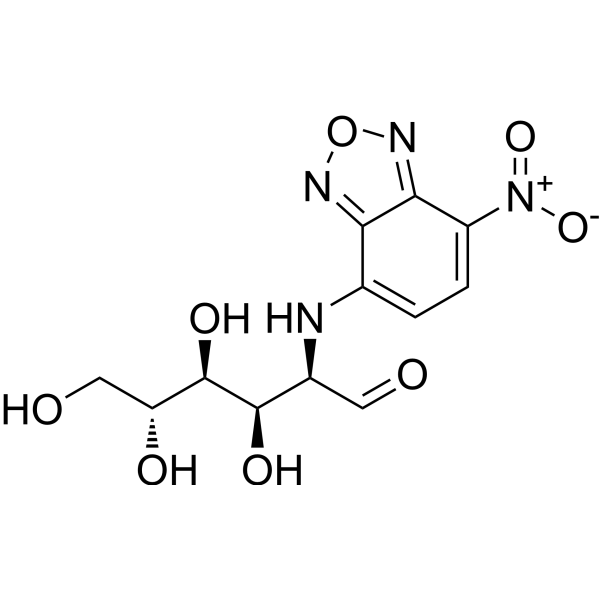
2-NBDGFluorescent Indicator -
HY-D0178
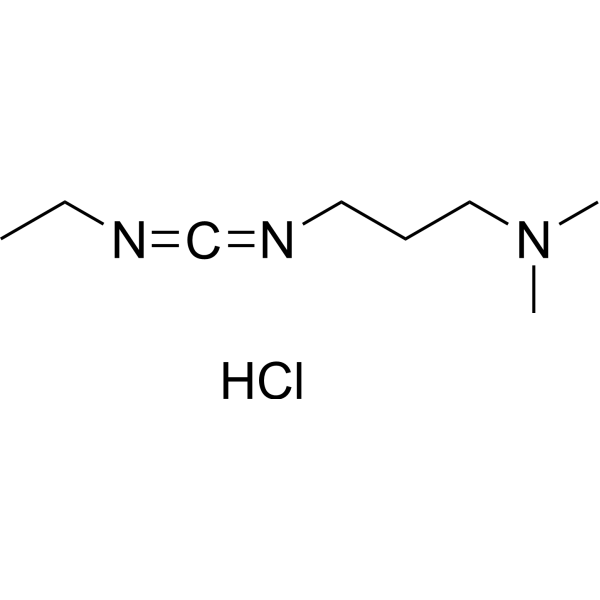
1-Ethyl-(3-dimethylaminopropyl)carbodiimide hydrochlorideCarbodiimide Reagent -

HY-W013205
Bis(4-nitrophenyl) phosphateEsterase Inhibitor -

HY-Y0091
XantphosBiochemical Reagent -

HY-112624P
Dextran T500 (MW 500,000)Biochemical Assay Reagent -
HY-K0208
Streptavidin Magnetic Beads
Publications Citing Use of MedChemExpress (MCE) LAP
More- Nat Methods. 2026 Sep;23(9):1882-1894.
- J Extracell Vesicles. 2025 Jan;14(1):e70041. [Abstract]
- Adv Sci (Weinh). 2026 Jan 27:e21174. [Abstract]
- Adv Healthc Mater. 2026 Jun;15(24):e05389. [Abstract]
- Regen Biomater. 2025 Sep 1:12:rbaf092. [Abstract]
- Drug Des Devel Ther. 2026 Jul 27:20:621268.
- Res Sq. 2026 Jan 28.


Biological Activity
Description
In Vitro
Preparation of LAP:
1. LAP synthesis[1]
(1) Dimethyl phenylphosphonite was reacted with 2,4,6-trimethylbenzoyl chloride via a Michaelis-Arbuzov reaction. At room temperature and under argon, 3.2 g (0.018 moL) of 2,4,6-trimethylbenzoyl chloride was added dropwise to an equimolar amount of continuously stirred dimethyl phenylphosphonite (3.0 g).
(2) The reaction mixture was stirred for 18 hours whereupon a four fold excess of lithium bromide (6.1 g) in 100 mL of 2-butanone was added to the reaction mixture from the previous step which was then heated to 50°C. After 10 minutes, a solid precipitate formed. The mixture was cooled to ambient temperature, allowed to rest for four hours and then filtered. The filtrate was washed and filtered 3 times with 2-butanone to remove unreacted lithium bromide. The LAP powder was dried in a vacuum oven and stored in a brown bottle to protect from light.
2. Preparing the Storage Solution[3]
LAP was weighed on a six-point balance, the appropriate mass of 10% GelMA added to form a 1% w/w LAP concentration. Solutions (0.1% w/w) of LAP was serially diluted to produce 1, 0.2, 0.04, and 0.008 mg/mL solutions in ultrapure water. The mixture sonicated for 30 min at 40°C. 10% GelMA containing 1% LAP was sterile-filtered through a 0.2 μm PES membrane.
The effects of LAP on the cell viability during and after 3D bioprinting, and the swelling ratio, degradation rate, and pore size of the GelMA hydrogels:[4]
(1) The bioink for the swelling contains the 5% (w/v) pure GelMA and 0.5% (w/v) LAP and the cell-laden bioink was crosslinked to form one layer using the dynamic optical projection stereolithography. The UV intensity was 10 mW/cm2 and the exposure time was 45 seconds. The layer thickness is around 500 μm. The cell concentration of 1×10⁶ cells/mL. LAP concentrations was selected as 0.3% and 0.9% (w/v) representing the low and high photoinitiator concentrations. The printing times selected was 0 and 15 minutes. The printed samples were incubated for 0, 12, and 24 hours. The cell viability is assessed using the fluorescence assay.
(2) The bioink was crosslinked by the UV light with an intensity of 10 mW/cm2 for 45 seconds to prepare the samples. The dry weight of the sample immediately after preparation is W0, and the dry weight of the sample after a specific time of incubation is Wt. The degradation percentage is calculated as (W0-Wt)/W0. The microstructures of the formed GelMA samples cured with either LAP were captured by the scanning electron microscope.
MedChemExpress (MCE) has not independently confirmed the accuracy of these methods. They are for reference only. Further protocols information, click here.
Clinical Trial
| NCT Number | Sponsor | Condition | Start Date |
Phase

|
|---|---|---|---|---|
| NCT01329991 | Plexxikon| | 2011-05 | PHASE1 |


Chemical Information
-
CAS No. 85073-19-4
-
Appearance Solid
-
Molecular Weight 294.22
-
Formula C16H16LiO3P
-
Color White to off-white
-
SMILES
O=P(C(C1=C(C)C=C(C)C=C1C)=O)(C2=CC=CC=C2)O[Li]
-
Synonyms
Lithium phenyl-2,4,6-trimethylbenzoylphosphinate
-
Shipping
Room temperature in continental US; may vary elsewhere.
-
Storage
4°C, sealed storage, away from moisture
* In solvent : -80°C, 6 months; -20°C, 1 month (sealed storage, away from moisture)


Publications (7)
-
Journal Impact Factor
-
Most Recent
-
-
J Extracell Vesicles
Extracellular Vesicles From Bone Marrow-Derived Macrophages Enriched in ARG1 Enhance Microglial Phagocytosis and Haematoma Clearance Following Intracerebral Haemorrhage. [Abstract]2025 Jan;14(1):e70041. PMID: 39868438 -
Adv Sci (Weinh)
Cascade-Responsive MXene@Cu-MOF Heterostructure Integrates Antioxidant Activity, Infection Control, and Vascularization for Tracheal Repair. [Abstract]2026 Jan 27:e21174. PMID: 41589663 -
Adv Healthc Mater
Enhanced Auricular Cartilage Regeneration via 3D-Printed Hydrogel With miR-92a-3p-Enriched Platelet-Rich Plasma-Derived Extracellular Vesicles. [Abstract]2026 Jun;15(24):e05389. PMID: 42106949 -
Regen Biomater
L-arginine-loaded microneedle patch enhances diabetic wound healing by regulating macrophage polarisation and mitochondrial homeostasis. [Abstract]2025 Sep 1:12:rbaf092. PMID: 41048975 -
-


Solvent & Solubility
In Vitro:
DMSO : 25 mg/mL (84.97 mM; Need ultrasonic; Hygroscopic DMSO has a significant impact on the solubility of product, please use newly opened DMSO)
H2O : 7.58 mg/mL (25.76 mM; Need ultrasonic)
Please refer to the solubility information to select the appropriate solvent. Once prepared, please aliquot and store the solution to prevent product inactivation from repeated freeze-thaw cycles.
Storage method and period of stock solution: -80°C, 6 months; -20°C, 1 month (sealed storage, away from moisture). When stored at -80°C, please use it within 6 months. When stored at -20°C, please use it within 1 month.
* Note: If you choose water as the stock solution, please dilute it to the working solution, then filter and sterilize it with a 0.22 μm filter before use.
Please refer to the solubility information to select the appropriate solvent. Once prepared, please aliquot and store the solution to prevent product inactivation from repeated freeze-thaw cycles.
Storage method and period of stock solution: -80°C, 6 months; -20°C, 1 month (sealed storage, away from moisture). When stored at -80°C, please use it within 6 months. When stored at -20°C, please use it within 1 month.
* Note: If you choose water as the stock solution, please dilute it to the working solution, then filter and sterilize it with a 0.22 μm filter before use.
Concentration (start) × Volume (start) = Concentration (final) × Volume (final)
In Vivo:
Select the appropriate dissolution method based on your experimental animal and administration route.
- For the following dissolution methods, please ensure to first prepare a clear stock solution using an In Vitro approach and then sequentially add co-solvents:
- To ensure reliable experimental results, the clarified stock solution can be appropriately stored based on storage conditions. As for the working solution for In Vivo experiments, it is recommended to prepare freshly and use it on the same day.
- The percentages shown for the solvents indicate their volumetric ratio in the final prepared solution. If precipitation or phase separation occurs during preparation, heat and/or sonication can be used to aid dissolution.
Add each solvent one by one: 10% DMSO 40% PEG300 5% Tween-80 45% Saline
Solubility: ≥ 2.5 mg/mL (8.50 mM); Clear solution
This protocol yields a clear solution of ≥ 2.5 mg/mL (saturation unknown).
Taking 1 mL working solution as an example, add 100 μL DMSO stock solution (25.0 mg/mL) to 400 μL PEG300, and mix evenly; then add 50 μL Tween-80 and mix evenly; then add 450 μL Saline to adjust the volume to 1 mL.
Preparation of Saline: Dissolve 0.9 g sodium chloride in ddH₂O and dilute to 100 mL to obtain a clear Saline solution.
Add each solvent one by one: 10% DMSO 90% (20% SBE-β-CD in Saline)
Solubility: ≥ 2.5 mg/mL (8.50 mM); Clear solution
This protocol yields a clear solution of ≥ 2.5 mg/mL (saturation unknown).
Taking 1 mL working solution as an example, add 100 μL DMSO stock solution (25.0 mg/mL) to 900 μL 20% SBE-β-CD in Saline, and mix evenly.
Preparation of 20% SBE-β-CD in Saline (4°C, storage for one week): 2 g SBE-β-CD powder is dissolved in 10 mL Saline, completely dissolve until clear.
In Vivo Dissolution Calculator
Please enter the basic information of animal experiments:
-
-
-
-
Recommended: Prepare an additional quantity of animals to account for potential losses during experiments.
Please enter your animal formula composition:
-
%DMSO +
Recommended: Keep the proportion of DMSO in working solution below 2% if your animal is weak.
-
%+
-
+%Tween-80 + +
-
%Saline +
The co-solvents required include: DMSO, . All of co-solvents are available by MedChemExpress (MCE). , Tween 80. All of co-solvents are available by MedChemExpress (MCE).
Working solution concentration: 0.22 mg/mL
Method for preparing stock solution: mg drug dissolved in μL DMSO. Stock solution concentration: mg/mL. * In solvent : -80°C, 6 months; -20°C, 1 month (sealed storage, away from moisture)
1. Take μL DMSO stock solution;
2. Add μL .
μL , mix evenly;
3. Then add μL Tween 80, mix evenly;
4. Then add μL
Please ensure that the stock solution in the first step is dissolved to a clear state, and add co-solvents in sequence. You can use ultrasonic heating (ultrasonic cleaner, recommended frequency 20-40 kHz), vortexing, etc. to assist dissolution.

Protocols
-
Genotoxicity/Mutagenicity Study
The bacterial reverse mutation assay detects point mutations that restore amino-acid prototrophy in auxotrophic Salmonella typhimurium or Escherichia coli tester strains; after exposure to a test article, mutagenic activity is read out as an increased number of revertant colonies on minimal agar compared with the vehicle control. The assay uses tester strains with different mutation targets so that base-substitution and frameshift mutagens can be detected, and testing is performed with and without exogenous mammalian metabolic activation because some chemicals require biotransformation to become mutagenic.
-
Cell Viability Determination by MTT Colorimetric Assay
The following protocol uses the MTT colorimetric assay as a classic literature-established method for assessing cell viability/metabolic activity in cultured mammalian cells. MTT[3-(4,5-dimethylthiazol-2-yl)-2,5-diphenyltetrazolium bromide] is reduced by metabolically active cells to a colored formazan product; the amount of formazan is quantified spectrophotometrically and provides an indirect measure of metabolically active viable cells. Importantly, MTT reduction reflects cellular oxidoreductase/metabolic activity rather than an absolute direct count of living cells, so changes in cellular metabolism can alter the signal independently of cell number.


Purity & Documentation
-
Data Sheet (281 KB)
-
SDS (396 KB)
- English - EN (396 KB)
- Français - FR (396 KB)
- Deutsch - DE (396 KB)
- Norwegian - NO (396 KB)
- Español - ES (396 KB)
- Swedish - SV (396 KB)
- Italian - IT (396 KB)
- Korean - KR (396 KB)
- Portuguese - PT (396 KB)
-
Handling Instructions (2659 KB)
References
[1]. Nguyen AK, et al. The Photoinitiator Lithium Phenyl (2,4,6-Trimethylbenzoyl) Phosphinate with Exposure to 405 nm Light Is Cytotoxic to Mammalian Cells but Not Mutagenic in Bacterial Reverse Mutation Assays. Polymers (Basel). 2020 Jul 3;12(7):1489. [Content Brief]
[2]. Qian Feng, et al. "Multi-modal imaging for dynamic visualization of osteogenesis and implant degradation in 3D bioprinted scaffolds." Bioactive Materials 37 (2024): 119-131. [Content Brief]
[3]. Nguyen, et al. Toxicity and photosensitizing assessment of gelatin methacryloyl-based hydrogels photoinitiated with lithium phenyl-2, 4, 6-trimethylbenzoylphosphinate in human primary renal proximal tubule epithelial cells. Biointerphases 14.2 (2019). [Content Brief]
[4]. Xu H, et al. Effects of Irgacure 2959 and lithium phenyl-2,4,6-trimethylbenzoylphosphinate on cell viability, physical properties, and microstructure in 3D bioprinting of vascular-like constructs. Biomed Mater. 2020 Aug 7;15(5):055021. [Content Brief]


Complete Stock Solution Preparation Table
Please refer to the solubility information to select the appropriate solvent. Once prepared, please aliquot and store the solution to prevent product inactivation from repeated freeze-thaw cycles.
Storage method and period of stock solution: -80°C, 6 months; -20°C, 1 month (sealed storage, away from moisture). When stored at -80°C, please use it within 6 months. When stored at -20°C, please use it within 1 month.
| Optional Solvent | Concentration Solvent Mass | 1 mg | 5 mg | 10 mg | 25 mg |
|---|---|---|---|---|---|
| H2O / DMSO | 1 mM | 3.3988 mL | 16.9941 mL | 33.9882 mL | 84.9704 mL |
| 5 mM | 0.6798 mL | 3.3988 mL | 6.7976 mL | 16.9941 mL | |
| 10 mM | 0.3399 mL | 1.6994 mL | 3.3988 mL | 8.4970 mL | |
| 15 mM | 0.2266 mL | 1.1329 mL | 2.2659 mL | 5.6647 mL | |
| 20 mM | 0.1699 mL | 0.8497 mL | 1.6994 mL | 4.2485 mL | |
| 25 mM | 0.1360 mL | 0.6798 mL | 1.3595 mL | 3.3988 mL | |
| DMSO | 30 mM | 0.1133 mL | 0.5665 mL | 1.1329 mL | 2.8323 mL |
| 40 mM | 0.0850 mL | 0.4249 mL | 0.8497 mL | 2.1243 mL | |
| 50 mM | 0.0680 mL | 0.3399 mL | 0.6798 mL | 1.6994 mL | |
| 60 mM | 0.0566 mL | 0.2832 mL | 0.5665 mL | 1.4162 mL | |
| 80 mM | 0.0425 mL | 0.2124 mL | 0.4249 mL | 1.0621 mL |
* Note: If you choose water as the stock solution, please dilute it to the working solution, then filter and sterilize it with a 0.22 μm filter before use.


LAP Related Classifications
HY-44076 Related Classifications
 Powered by Bioz