From 11:00 pm to 12:00 pm EST ( 8:00 pm to 9:00 pm PST ) on January 6th, the website will be under maintenance. We are sorry for the inconvenience. Please arrange your schedule properly.
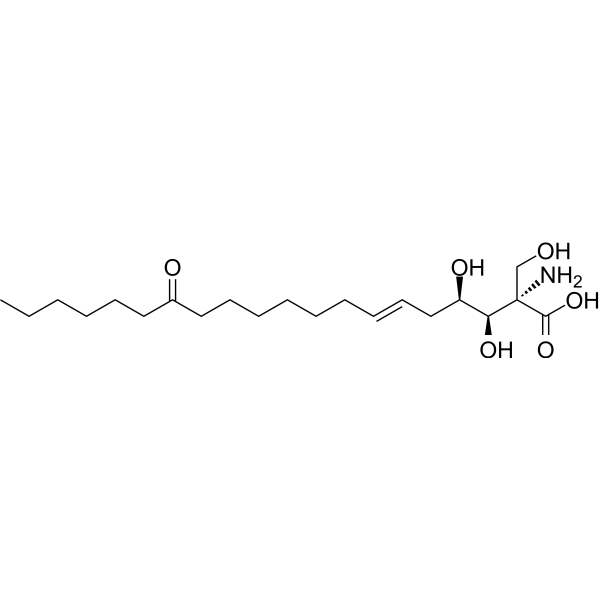
Myriocin (Thermozymocidin), a fungal metabolite could be isolated from Myriococcum albomyces, Isaria sinclairi and Mycelia sterilia, is a potent inhibitor of serine-palmitoyl-transferase (SPT) and a key enzyme in de novo synthesis of sphingolipids. Myriocin suppresses replication of both the subgenomic HCV-1b replicon and the JFH-1 strain of genotype 2a infectious HCV, with an IC50 of 3.5 μg/mL for inhibiting HCV infection .
Paritaprevir (ABT-450) is a potent, orally active and antiviral non-structural protein 3/4A (NS3/4A) protease inhibitor with EC50s of 1 and 0.21 nM against HCV 1a and 1b, respectively. Paritaprevir is also a SARS-CoV 3CL pro inhibitor with an IC50 of 1.31 μM. Paritaprevir is metabolized primarily by cytochrome P450 (CYP) 3A. The plasma concentration and half-life of Paritaprevir can be enhanced by Ritonavir (a CYP450 inhibitor) .
Elbasvir (MK-8742) is a hepatitis C virus nonstructural protein 5A (HCV NS5A) inhibitor with EC50s of 4, 3 and 3 nM against genotype 1a, 1b, and 2a, respectively.
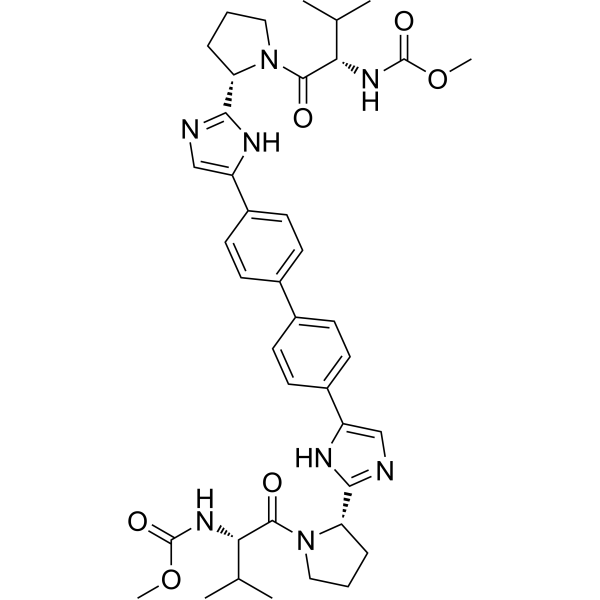
Daclatasvir (BMS-790052) is a potent and orally active HCV NS5A protein inhibitor with EC50s range of 9-146 pM for multiple HCV replicon genotypes. Daclatasvir is also a organic anion transporting polypeptide 1B(OATP1B) and OATP1B3 inhibitor with IC50s of 1.5 µM and 3.27 µM, respectively .
Voxilaprevir (GS-9857) is a noncovalent, reversible inhibitor of HCV NS3/4A protease inhibitor (PI) with pangenotypic antiviral activity . Voxilaprevir inhibits genotype 1b and 3a wild-type NS3 proteases with Ki values of 0.038 nM and 0.066 nM, respectively . Voxilaprevir is an orally active direct-acting antiviral agent (DAA) and can be used for HCV infection research .
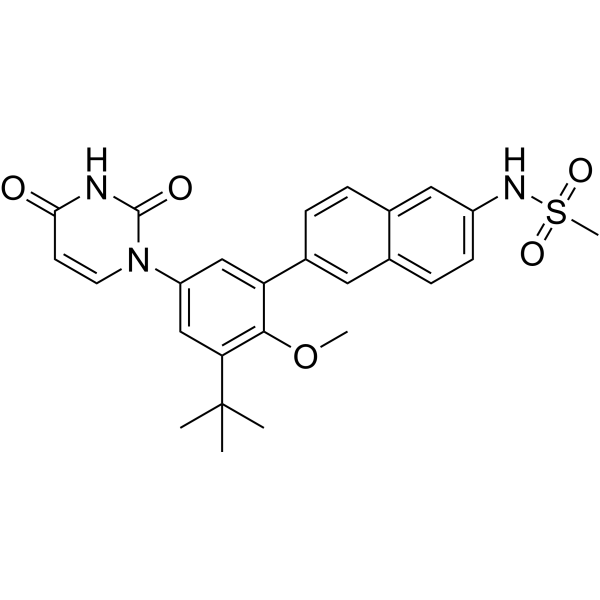
Dasabuvir (ABT-333) is a nonnucleoside hepatitis C virus (HCV) polymerase inhibitor. Dasabuvir inhibits RNA-dependent RNA polymerase encoded by the HCV NS5B gene. Dasabuvir inhibits genotype 1a (strain H77) and 1b (strain Con1) replicons, with EC50 values of 7.7 and 1.8 nM, respectively .
Danoprevir (ITMN-191) is an orally active NS3/4A protease inhibitor for hepatitis C virus (HCV) with an IC50 of 0.29 nM and is selective for NS3/4A over a panel of 53 proteases (IC50 higher than 10 μM). Danoprevir (ITMN-191) inhibits HCV genotypes 1a, 1b, 4, 5, and 6 (IC50s=0.2-0.4 nM) as well as 2b and 3a (IC50s=1.6, 3.5 nM) . Danoprevir is also a SARS-CoV 3CL pro inhibitor with an IC50 of 0.05 μM .
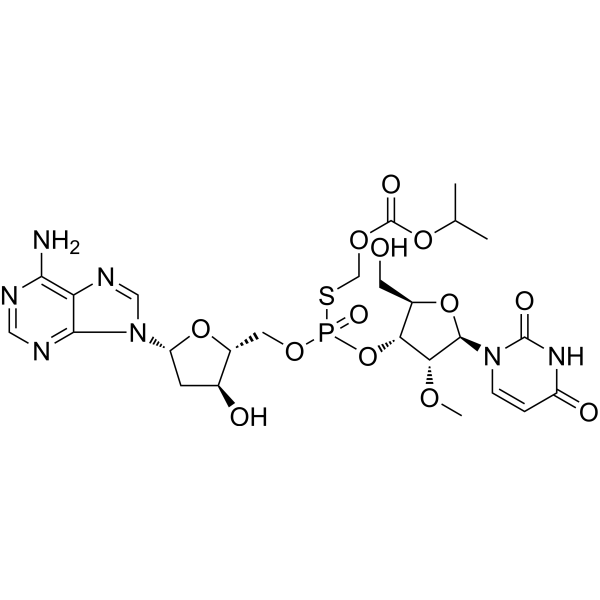
Inarigivir soproxil (SB9200) is an agonist of innate immunity and shows potent antiviral activity against resistant HCV variants, with EC50s of 2.2 and 1.0 μM for HCV1a/1b in cells of genotype 1 HCV replicon systems. Inarigivir soproxil, an orally bioavailable proagent of SB 9000, has broad-spectrum antiviral activity against RNA viruses including HCV, norovirus, respiratory syncytial virus and influenza and HBV .
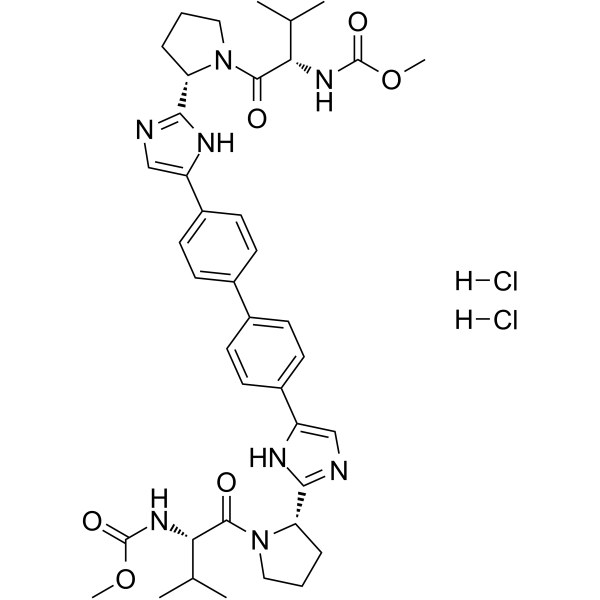
Daclatasvir dihydrochloride (BMS-790052 dihydrochloride) is a potent and orally active HCV NS5A protein inhibitor with EC50s range of 9-146 pM for multiple HCV replicon genotypes. Daclatasvir dihydrochloride is also an organic anion transporting polypeptide 1B(OATP1B) and OATP1B3 inhibitor with IC50s of 1.5 μM and 3.27 μM, respectively .
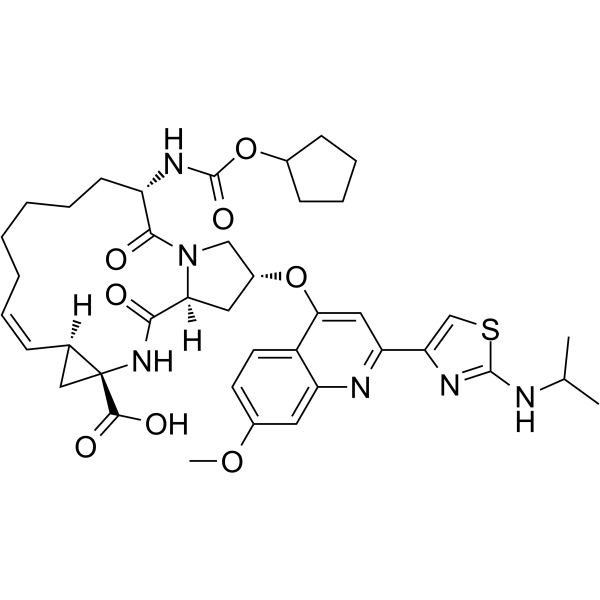
Ciluprevir (BILN 2061; BILN 2061ZW) is an orally active macrocyclic peptide inhibitor of hepatitis C virus (HCV)NS3 protease, with an IC50 of 3 nM. Ciluprevir has Kᵢ values of 0.66 nM and 0.30 nM against genotypes 1b and 1a, respectively. Ciluprevir inhibits HCV RNA replication with an EC50 of 1.2 nM, and its EC50 values against genotypes 1b and 1a are 3 nM and 4 nM, respectively. Ciluprevir shows no significant inhibition against human leukocyte elastase and hepatic cathepsin B. Ciluprevir can be used for genotype 1 HCV infection .
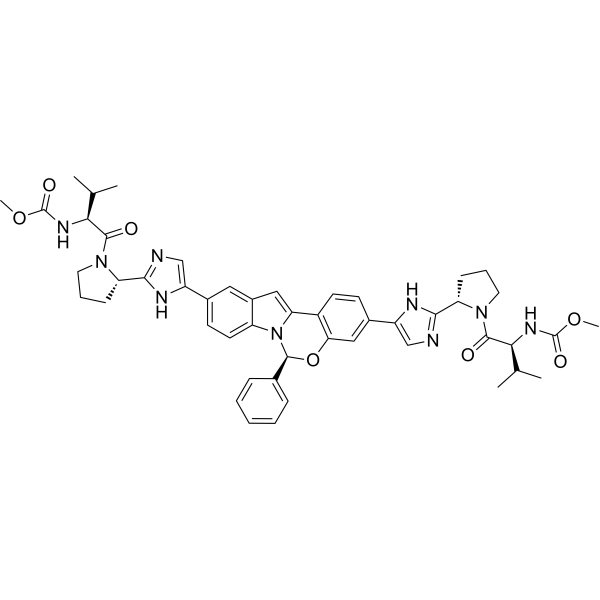
Ravidasvir hydrochloride (PPI-668 hydrochloride) is a pan-genotypic inhibitor for hepatitis C virus (HCV) NS5A protein. Ravidasvir hydrochloride inhibits the replication of HCV, with EC50 of 0.12, 0.01 and 1.14 nM, for HCV gt-1a, gt-1b, and gt-3a replicons, respectively. Ravidasvir hydrochloride exhibits good pharmacokinetic characters in rats .
Lomibuvir (VX-222), a selective, non-nucleoside polymerase inhibitor, targets thumb pocket 2 of the HCV NS5B polymerase (RdRp) with a Kd of 17 nM. Lomibuvir inhibits the 1b/Con1 HCV subgenomic replicon with an EC50 of 5.2 nM. Lomibuvir preferentially inhibits elongative RNA synthesis rather than de novo-initiated RNA synthesis .
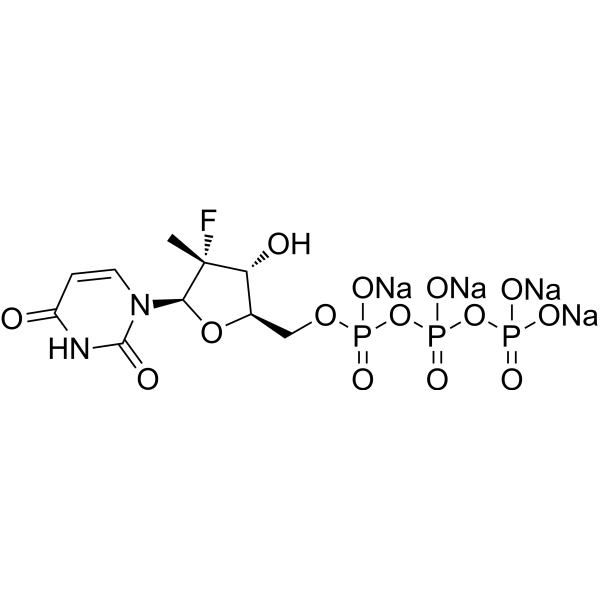
PSI-7409 tetrasodium is an active 5'-triphosphate metabolite of sofosbuvir (PSI-7977), inhibiting HCV NS5B polymerases, with IC50s of 1.6, 2.8, 0.7 and 2.6 μM for GT 1b_Con1, GT 2a_JFH1, GT 3a, and GT 4a NS5B polymerases, respectively.
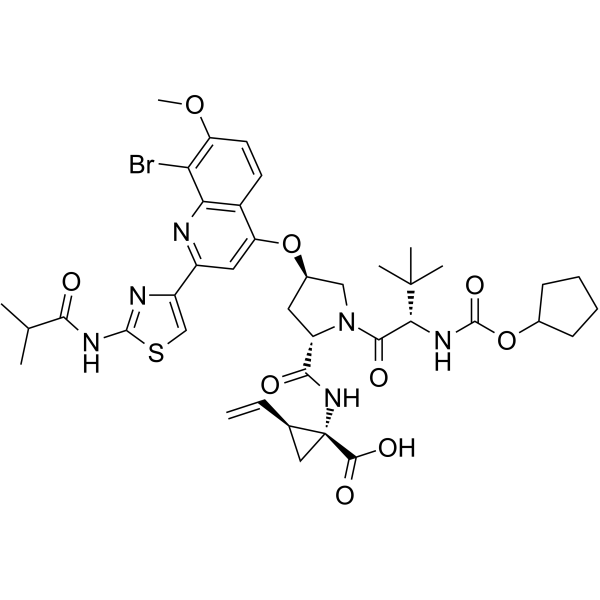
Faldaprevir (BI 201335) is a potent, orally active and selective noncovalent inhibitor of NS3/4A protease of HCV (hepatitis C virus) genotypes 1a and 1b, with Ki values of 2.6 and 2.0 nM, respectively. Faldaprevir inhibits HCV RNA replication, with EC50 values of 6.5 and 3.1 nM, respectively. Faldaprevir has potent antiviral activity against chronic HCV infection .
Filibuvir is an orally active, selective non-nucleoside inhibitor of the HCV nonstructural 5B protein (NS5B) RNA-dependent RNA polymerase (RdRp). Filibuvir binds noncovalently in the thumb II allosteric pocket of NS5B. Filibuvir inhibits genotype 1a and 1b replicons with EC50s of 59 nM for both isoforms, respectively . Filibuvir preferentially inhibits elongative RNA synthesis and potently decreases viral RNA accumulation .
MI 14 is a selective PI4KIIIβ inhibitor with IC50s of 54 nM, >100 μM, >100 μM for PI4KIIIβ, PI4KIIIα, PI4KIIα, respectively. MI 14 has antiviral activity against HCV1b, CVB3, HRVM, HVC 2a .
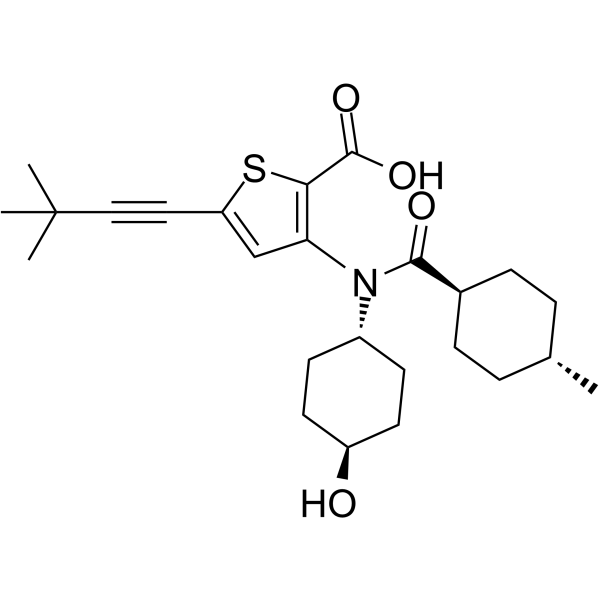
VCH-916 is a thiophene derivative and non-nucleoside inhibitor of HCVNS5B polymerase with sub-micromolar IC50 values versus genotype 1a and 1b replicons. VCH-916 binds to Thumb Site II. VCH-916 can be used for the research of hepatitis c virus (hcv) infection .
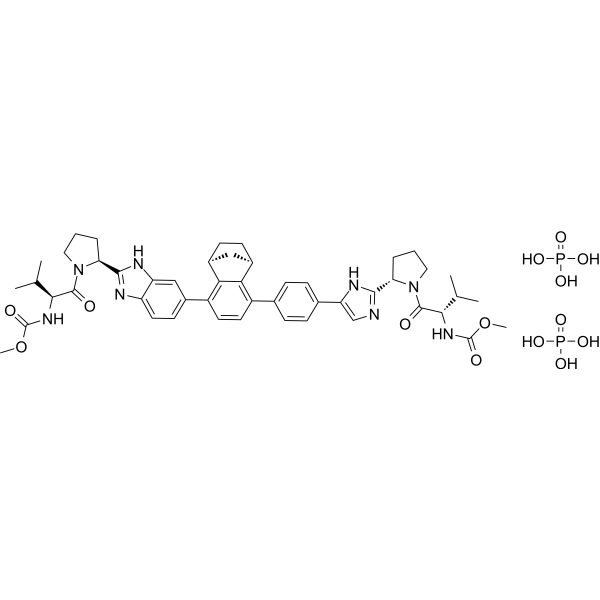
Yimitasvir diphosphate (Emitasvir diphosphate; DAG-181 diphosphate) is an orally active inhibitor of hepatitis C virus (HCV) nonstructural protein 5A (NS5A). Yimitasvir diphosphate is applicable to research related to HCV infection .
Daclatasvir (dihydrochloride) (Standard) is the analytical standard of Daclatasvir (dihydrochloride). This product is intended for research and analytical applications. Daclatasvir dihydrochloride (BMS-790052 dihydrochloride) is a potent and orally active HCV NS5A protein inhibitor with EC50s range of 9-146 pM for multiple HCV replicon genotypes. Daclatasvir dihydrochloride is also an organic anion transporting polypeptide 1B(OATP1B) and OATP1B3 inhibitor with IC50s of 1.5 µM and 3.27 µM, respectively .
Anti-PD-L1/B7-H1 Antibody (29E.2A3) is a kind of mouse IgG2b κ chimeric antibody inhibitor, targeting to human PD-L1/B7-H1. Anti-PD-L1/B7-H1 Antibody (29E.2A3) can block the binding of PD-1 to PD-L1. Anti-PD-L1/B7-H1 Antibody (29E.2A3) can be used for the research of infection, such as hepatitis C virus (HCV) .
Yimitasvir (Emitasvir; DAG-181) is an orally active inhibitor of hepatitis C virus (HCV) nonstructural protein 5A (NS5A). Yimitasvir is applicable to research related to HCV infection .
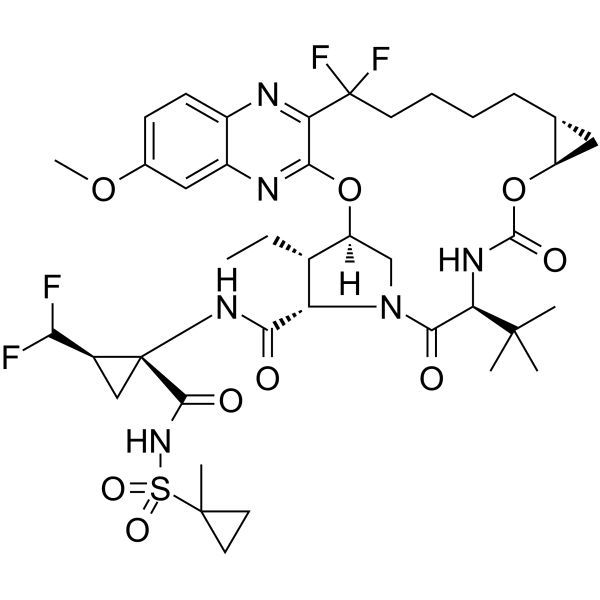
BMS-986144 is a third-generation, pan-genotype (GT) NS3/4A protease inhibitor. BMS-986144 inhibits HCV replicon with EC50s of 2.3, 0.7, 1.0, 12, 8.0, and 5.8 nM for GT-1a, GT-1b, GT-2a, GT-3a, 1a R155X, and 1b D168V, respectively. BMS-986144 has the potential for the research of HCV infection .
BMS-961955 is an orally active inhibitor of HCV NS5B polymerase. BMS-961955 exhibits potent inhibitory activity against HCV genotype 1 (GT-1a/1b) replicons with EC50s of 4.3 nM and 7.9 nM, respectively. BMS-961955 can be used for the study of HCV infection .
Furaprofen (R803) is an effective HCV replication inhibitor. Furaprofen (R803) is substantially more potent against genotype 1a and 1b replicons (EC50, ~30 nM) than against the genotype 2a replicon (EC50, ~1,000 nM).
Elbasvir (Standard) is the analytical standard of Elbasvir. This product is intended for research and analytical applications. Elbasvir (MK-8742) is a hepatitis C virus nonstructural protein 5A (HCV NS5A) inhibitor with EC50s of 4, 3 and 3 nM against genotype 1a, 1b, and 2a, respectively.
IDX-320 is a Pipecolic acid (HY-Y0669) derivative. IDX-320 inhibits NS3/4a proteases across genotypes 1a, 1b, 2a, and 4a with an IC50 0.8-1.9 nM. IDX-320 can be used in the research of HCV infection .
cis-Lomibuvir (cis-VX-222) is the cis-isomer of Lomibuvir. Lomibuvir (VX-222), a selective, non-nucleoside polymerase inhibitor, targets thumb pocket 2 of the HCV NS5B polymerase (RdRp) with a Kd of 17 nM. Lomibuvir inhibits the 1b/Con1 HCV subgenomic replicon with an EC50 of 5.2 nM. Lomibuvir preferentially inhibits elongative RNA synthesis rather than de novo-initiated RNA synthesis . cis-Lomibuvir is a click chemistry reagent, it contains an Alkyne group and can undergo copper-catalyzed azide-alkyne cycloaddition (CuAAc) with molecules containing Azide groups.
NS5A-IN-3 (Compound 15) is a potent inhibitor of NS5A. NS5A-IN-3 has extremely high potency against HCV genotype 1b, improved activity against genotype 3a (GT 3a) and good metabolic stability. NS5A-IN-3 exhibits a higher resistance barrier than daclatasvir against genotype 1b . NS5A-IN-3 is a click chemistry reagent, it contains an Alkyne group and can undergo copper-catalyzed azide-alkyne cycloaddition (CuAAc) with molecules containing Azide groups.
HCV-IN-45 (Compound EI-1) is an inhibitor for hepatitis C virus (HCV), that inhibits 1a and 1bHCV pseudoparticles with EC50 of 0.134 and 0.027 μM. HCV-IN-45 inhibits 1a/2a and 1b/2a cell culture-adapted HCV (HCVcc), with EC50 of 0.024 and 0.012μM. HCV-IN-45 inhibits the entry of the virus into hepatocyte, and blocks the cell-cell spread .
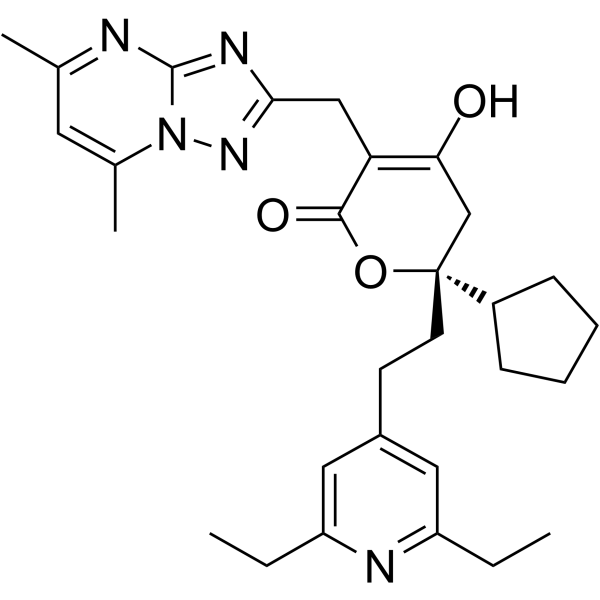
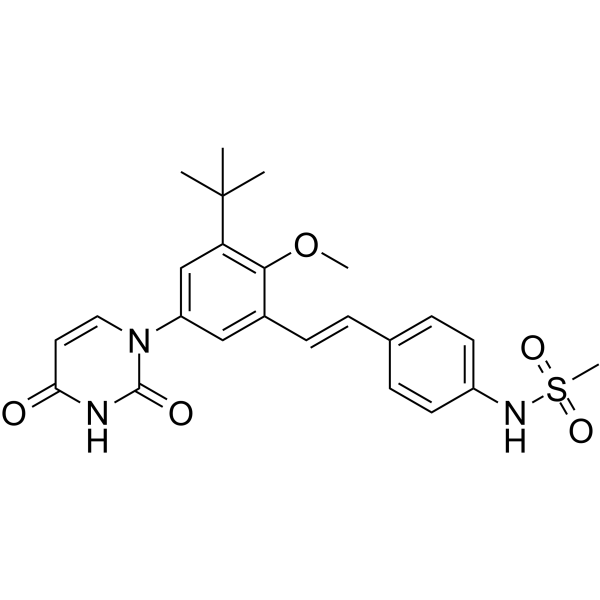
GSK5852 (GSK2485852) is an HCV NS5B polymerase inhibitor, with an IC50 value of 50 nM. GSK5852 displays antiviral activity and inhibits HCV with EC50s of 3.0 nM (genotype 1a, GT1a) and 1.7 nM (GT1b), respectively .
HCV-IN-41 (compound 4) is a highly potent hepatitis C virus (HCV) inhibitor with an EC50 value of 0.006762 nM, 5.183 nM, 1.365 nM and 142.2 nM for HCV genotype 1b, 2a, 3a and 4a, respectively. HCV-IN-41 reduces HCV RNA replication .
RG7109 is an inhibitor of HCV NS5B polymerase. RG7109 has EC50 values of 1.1 nM and 1.0 nM for HCV GT-1a H77 and GT-1b Con1, respectively. RG7109 exhibits favorable pharmacokinetic properties and can be used in anti-HCV research .
JTK-853 is a novel, non-nucleoside Hepatitis C Virus(HCV)polymerase inhibitor which shows effective antiviral activity in HCV replicon cells with EC50s of 0.38 and 0.035 µM in genotype 1a H77 and 1b Con1 strains, respectively.
MK-2748 is a hepatitis C virus (HCV)NS3/4a protease inhibitor. MK-2748 exhibits broad-spectrum and potent antiviral activity, with nanomolar-level activity against all genotypes (gt1a-gt6) (IC₅₀ < 0.115 nM), showing only slightly weaker activity against gt3a (1.212 nM), and maintaining high inhibitory activity against drug-resistant mutant strains such as gt1b R155K (IC₅₀ = 0.032 nM) and D168Y (IC₅₀ = 0.057 nM). MK-2748 can be used in the research of HCV infection .
Faldaprevir sodium is a potent, orally active and selective noncovalent inhibitor of NS3/4A protease of HCV (hepatitis C virus) genotypes 1a and 1b, with Ki values of 2.6 and 2.0 nM, respectively. Faldaprevir sodium inhibits HCV RNA replication, with EC50 values of 6.5 and 3.1 nM, respectively. Faldaprevir sodium has potent antiviral activity against chronic HCV infection .
Myriocin (Standard) is the analytical standard of Myriocin. This product is intended for research and analytical applications. Myriocin (Thermozymocidin), a fungal metabolite could be isolated from Myriococcum albomyces, Isaria sinclairi and Mycelia sterilia, is a potent inhibitor of serine-palmitoyl-transferase (SPT) and a key enzyme in de novo synthesis of sphingolipids. Myriocin suppresses replication of both the subgenomic HCV-1b replicon and the JFH-1 strain of genotype 2a infectious HCV, with an IC50 of 3.5 μg/mL for inhibiting HCV infection[1][2][3].
IDX375 is a novel non-nucleoside inhibitor with selective inhibitory activity against HCV NS5B. IDX375 has good selectivity for genotypes 1a and 1b. The structure and binding site of IDX375 were confirmed by X-ray cocrystal studies .
Daclatasvir-d6 is deuterium labeled Daclatasvir. Daclatasvir (BMS-790052) is a potent and orally active HCV NS5A protein inhibitor with EC50s range of 9-146 pM for multiple HCV replicon genotypes. Daclatasvir is also a organic anion transporting polypeptide 1B (OATP1B) and OATP1B3 inhibitor with IC50s of 1.5 μM and 3.27 μM, respectively .
Daclatasvir-d16 is deuterium labeled Daclatasvir. Daclatasvir (BMS-790052) is a potent and orally active HCV NS5A protein inhibitor with EC50s range of 9-146 pM for multiple HCV replicon genotypes. Daclatasvir is also a organic anion transporting polypeptide 1B (OATP1B) and OATP1B3 inhibitor with IC50s of 1.5 μM and 3.27 μM, respectively .
Lomibuvir (Standard) is the analytical standard of Lomibuvir. This product is intended for research and analytical applications. Lomibuvir (VX-222), a selective, non-nucleoside polymerase inhibitor, targets thumb pocket 2 of the HCV NS5B polymerase (RdRp) with a Kd of 17 nM. Lomibuvir inhibits the 1b/Con1 HCV subgenomic replicon with an EC50 of 5.2 nM. Lomibuvir preferentially inhibits elongative RNA synthesis rather than de novo-initiated RNA synthesis .
Daclatasvir (Standard) is the analytical standard of Daclatasvir. This product is intended for research and analytical applications. Daclatasvir (BMS-790052) is a potent and orally active HCV NS5A protein inhibitor with EC50s range of 9-146 pM for multiple HCV replicon genotypes. Daclatasvir is also a organic anion transporting polypeptide 1B (OATP1B) and OATP1B3 inhibitor with IC50s of 1.5 µM and 3.27 µM, respectively .
Dasabuvir (Standard) is the analytical standard of Dasabuvir. This product is intended for research and analytical applications. Dasabuvir (ABT-333) is a nonnucleoside hepatitis C virus (HCV) polymerase inhibitor. Dasabuvir inhibits RNA-dependent RNA polymerase encoded by the HCV NS5B gene. Dasabuvir inhibits genotype 1a (strain H77) and 1b (strain Con1) replicons, with EC50 values of 7.7 and 1.8 nM, respectively .
Daclatasvir- 13C2,d6 (BMS-790052- 13C2,d6) is 13C and deuterium labeled Daclatasvir. Daclatasvir (BMS-790052) is a potent and orally active HCV NS5A protein inhibitor with EC50s range of 9-146 pM for multiple HCV replicon genotypes. Daclatasvir is also a organic anion transporting polypeptide 1B(OATP1B) and OATP1B3 inhibitor with IC50s of 1.5 μM and 3.27 μM, respectively .
NS5A-IN-2 (Compound 33) is a potent inhibitor of NS5A. NS5A-IN-2 has extremely high potency against HCV genotype 1b, improved activity against genotype 3a (GT 3a) and good metabolic stability . NS5A-IN-2 is a click chemistry reagent, it contains an Alkyne group and can undergo copper-catalyzed azide-alkyne cycloaddition (CuAAc) with molecules containing Azide groups.
Paritaprevir (ABT-450) dihydrate is a potent, orally active and antiviral non-structural protein 3/4A (NS3/4A) protease inhibitor with EC50s of 1 and 0.21 nM against HCV 1a and 1b, respectively. Paritaprevir dihydrate is also a SARS-CoV 3CL pro inhibitor with an IC50 of 1.31 μM. Paritaprevir dihydrate is metabolized primarily by cytochrome P450 (CYP) 3A. The plasma concentration and half-life of Paritaprevir dihydrate can be enhanced by Ritonavir (a CYP450 inhibitor) .
Paritaprevir (Standard) is the analytical standard of Paritaprevir. This product is intended for research and analytical applications. Paritaprevir (ABT-450) is a potent, orally active and antiviral non-structural protein 3/4A (NS3/4A) protease inhibitor with EC50s of 1 and 0.21 nM against HCV 1a and 1b, respectively. Paritaprevir is also a SARS-CoV 3CLpro inhibitor with an IC50 of 1.31 μM. Paritaprevir is metabolized primarily by cytochrome P450 (CYP) 3A. The plasma concentration and half-life of Paritaprevir can be enhanced by Ritonavir (a CYP450 inhibitor) .
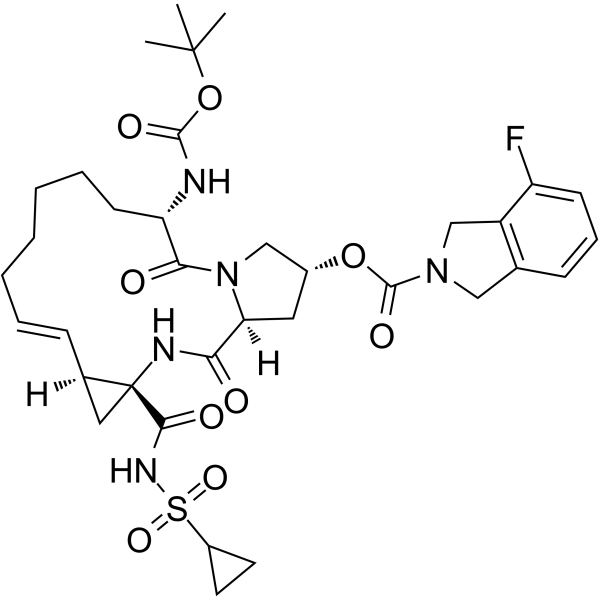
BI-1388 is a macrocyclic acylsulfonamide-based HCVNS3-4A protease inhibitor. BI-1388 inhibits clinically relevant drug-resistant mutant strains (KRAS D168V gt 1b and KRAS R155K gt 1a) and exhibits high liver distribution. BI-1388 is applicable for the research of HCV infection .
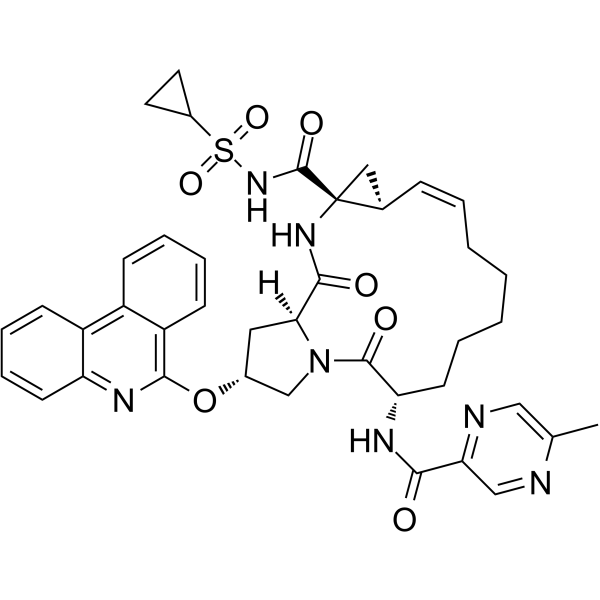
Deldeprevir (ACH-2684; Neceprevir) sodium is a HCV NS3/4A protease inhibitor and resistance inhibitor. Deldeprevir sodium exhibits activity against wild-type genotype 1a and 1bHCV, including mutant strains resistant to other NS3 protease inhibitors. Deldeprevir sodium blocks the emergence of HCV mutant strains resistant to ACH-3422 in vitro, with enhanced efficacy when used in triple combination with ACH-3422 and ACH-3102 (HY-124182). Deldeprevir sodium shows additive antiviral potency when combined with ACH-3422, and exerts antiviral activity against HCV replicons carrying ACH-3102. Deldeprevir sodium is applicable to research related to hepatitis C .
HCV-IN-39 (Compound 18a) is a potent hepatitis C virus (HCV) nucleoside inhibitor with EC50 values of 0.644, 0.952 and 0.154 μM against GT1a, GT1b and GT1b CES1 replicons .
HCV-IN-40 (Compound 18c) is a potent, orally active hepatitis C virus (HCV) nucleoside inhibitor with EC50 values of 0.259, 0.434 and 0.069 μM against GT1a, GT1b and GT1b CES1 replicons .
Encofosbuvir is the inhibitor for HCV NS5B polymerase that inhibits GT1b, GT2a and GT3a with EC50 of 102.4, 82.51 and 46.91 nM. Encofosbuvir inhibits HCV replication and can be used for reseearchs of hepatitis C in mammals .
Amphihevir is an orally active HCV NS4B inhibitor. Amphihevir exhibits activity against HCV genotype 1a and 1b replicons and reduces HCV RNA levels. Amphihevir can be used in the research of chronic hepatitis C .
AV-4025 hydrochloride (Compound 13a) is an orally active NS5A inhibitor. AV-4025 hydrochloride is active against the HCV replicon GT1b (EC50 = 0.003 nM). AV-4025 hydrochloride can be used for research on hepatitis C infection .
A-837093 sodium is a potent and orally active inhibitor of the hepatitis C virus (HCV)nonstructural protein 5B (NS5B) polymerase. A-837093 sodium shows potencies against polymerases derived from both HCV genotypes 1a (IC50 = 1.25 nM) and 1b (IC50 = 0.33 nM). A-837093 sodium exhibits antiviral efficacy in HCV-infected chimpanzees. A-837093 sodium can be used for HCV infection research .
NS5A-IN-4 (Compound 1.12) is an orally active pan-genotypic hepatitis C virus (HCV) NS5A inhibitor with IC50 values of 1.2, 2296, 4.6, 362, 10.3 and 693 pM against gT1b, gT1a, gT2a, gT3a, gT4a and gT5a . NS5A-IN-4 is a click chemistry reagent, it contains an Alkyne group and can undergo copper-catalyzed azide-alkyne cycloaddition (CuAAc) with molecules containing Azide groups.
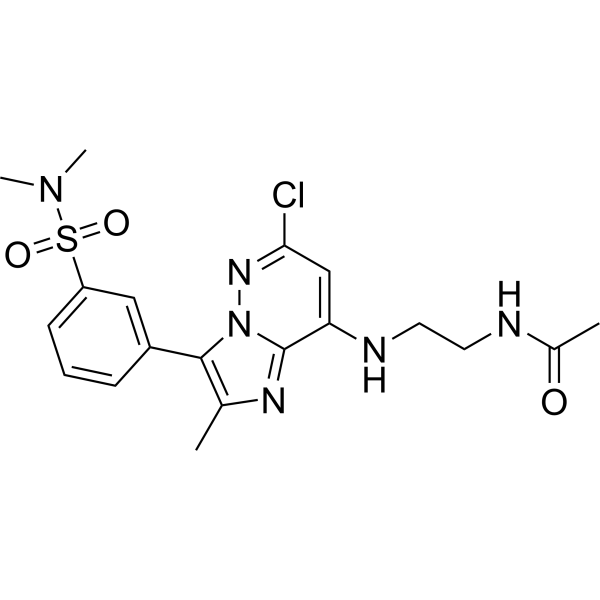
AZD2836 (A-831) is a 4-aminopyrazolone compound with anti-HCV activity. AZD2836 inhibits the activity of the host cell kinase PI4KIIIα, causing metabolic disorder of the cell membrane component PI4P that is necessary for viral replication. In the HCV subgenomic replicon cell model, the EC50 values of AZD2836 for genotype 1b (Con1 strain) and genotype 1a (Lemon strain) are 270 nM and 550 nM, respectively .
Danoprevir (Standard) is the analytical standard of Danoprevir (HY-10238). This product is intended for research and analytical applications. Danoprevir (ITMN-191) is an orally active NS3/4A protease inhibitor for hepatitis C virus (HCV) with an IC50 of 0.29 nM and is selective for NS3/4A over a panel of 53 proteases (IC50 higher than 10 μM). Danoprevir (ITMN-191) inhibits HCV genotypes 1a, 1b, 4, 5, and 6 (IC50s=0.2-0.4 nM) as well as 2b and 3a (IC50s=1.6, 3.5 nM) . Danoprevir is also a SARS-CoV 3CLpro inhibitor with an IC50 of 0.05 μM .
ABT-072 (Standard) is the analytical standard of ABT-072 (HY-101634). This product is intended for research and analytical applications. ABT-072 is an orally active and potent non-nucleoside HCV NS5B polymerase inhibitor (HCV GT1a EC50=1 nM; HCV GT1b EC50=0.3 nM) .
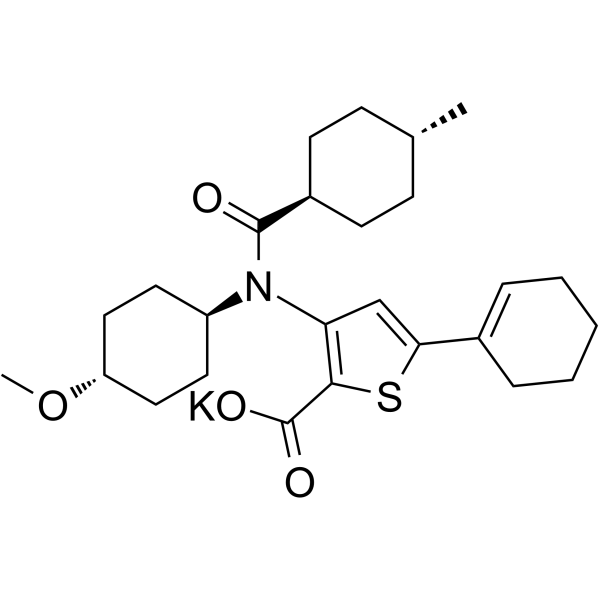
ABT-072 (potassium trihydrate) (Standard) is the analytical standard of ABT-072 (potassium trihydrate) (HY-101634A). This product is intended for research and analytical applications. ABT-072 (potassium trihydrate) is an orally active and potent non-nucleoside HCV NS5B polymerase inhibitor (HCV GT1a EC50=1 nM; HCV GT1b EC50=0.3 nM) .
CID-50930756 is an HCV NS3 helicase inhibitor with an IC50 of 22 μM.CID-50930756 inhibits HCV NS3 helicase-catalyzed nucleic acid unwinding.CID-50930756 inhibits HCV replication in hepatoma cells harboring a stably transfected subgenomic HCV replicon.CID-50930756 does not exhibit toxicity to hepatoma cells at 10 μM.CID-50930756 shows weak DNA-binding activity, displacing less than 20% of SYBR Green I from DNA at 100 μM.CID-50930756 can be used for the research of hepatitis c .
L0909 is an HCV inhibitor with an EC50 of 0.022 μM. L0909 blocks HCV replication by inhibiting E1-mediated viral entry. L0909 exhibits sensitivity to clinical resistant HCV mutants. L0909 displays synergistic effects with clinical HCV drugs. L0909 can be used for the research of hepatitis c virus (HCV) infection .
DBPR110 is a nonstructural protein 5A (NS5A) inhibitor with inhibitory activity against hepatitis C virus (HCV). DBPR110 exhibited a 50% effective concentration (EC50) of 3.9 ± 0.9 pM and a selectivity index value of over 12,800,000 by reducing HCV1b replicon reporter expression. DBPR110 also effectively reduced the activity of HCV2a replicon with an EC50 of 228.8 pM and a selectivity index value of over 173,130. DBPR110 showed synergy with interferon alpha (IFN-α), NS3 protease inhibitors, and NS5B polymerase inhibitors. The results of DBPR110 suggest that it may be an effective small molecule inhibitor against HCV NS5A .
Anti-PD-L1/B7-H1 Antibody (29E.2A3) is a kind of mouse IgG2b κ chimeric antibody inhibitor, targeting to human PD-L1/B7-H1. Anti-PD-L1/B7-H1 Antibody (29E.2A3) can block the binding of PD-1 to PD-L1. Anti-PD-L1/B7-H1 Antibody (29E.2A3) can be used for the research of infection, such as hepatitis C virus (HCV) .
Myriocin (Thermozymocidin), a fungal metabolite could be isolated from Myriococcum albomyces, Isaria sinclairi and Mycelia sterilia, is a potent inhibitor of serine-palmitoyl-transferase (SPT) and a key enzyme in de novo synthesis of sphingolipids. Myriocin suppresses replication of both the subgenomic HCV-1b replicon and the JFH-1 strain of genotype 2a infectious HCV, with an IC50 of 3.5 μg/mL for inhibiting HCV infection .
Myriocin (Standard) is the analytical standard of Myriocin. This product is intended for research and analytical applications. Myriocin (Thermozymocidin), a fungal metabolite could be isolated from Myriococcum albomyces, Isaria sinclairi and Mycelia sterilia, is a potent inhibitor of serine-palmitoyl-transferase (SPT) and a key enzyme in de novo synthesis of sphingolipids. Myriocin suppresses replication of both the subgenomic HCV-1b replicon and the JFH-1 strain of genotype 2a infectious HCV, with an IC50 of 3.5 μg/mL for inhibiting HCV infection[1][2][3].
Envelope Glycoprotein E1 Protein, one of two subunits of the envelope glycoprotein found in the hepatitis C virus, is a type 1 transmembrane protein.It associates with envelope glycoprotein E2 as a noncovalent heterodimer, which mediates virus attachment to the host cell, virion internalization through clathrin-dependent endocytosis and fusion with host membrane.E1/E2 heterodimer binds host apolipoproteins.And it also binds to CD81 and activates the epithelial growth factor receptor (EGFR) signaling pathway.Envelope Glycoprotein E1 Protein, HCV (HEK293, His) is the recombinant Virus-derived Envelope Glycoprotein E1 protein, expressed by HEK293 , with N-His labeled tag.
POLG proteins play multiple roles in the viral life cycle, contributing to viral RNA packaging, budding, and particle production. It exhibits RNA-binding and RNA chaperone activities, affecting translation initiation through interactions with viral IRES and ribosomal subunits. HCVNS5B Protein, HCV is the recombinant HCVNS5B, expressed by E. coli, with tag-free.
E2/Envelope Protein, Hepatitis C virus (AAC15723, HEK293, His) is the recombinant Virus-derived E2/Envelope protein, expressed by HEK293, with C-His labeled tag.
BMS-986144 is a third-generation, pan-genotype (GT) NS3/4A protease inhibitor. BMS-986144 inhibits HCV replicon with EC50s of 2.3, 0.7, 1.0, 12, 8.0, and 5.8 nM for GT-1a, GT-1b, GT-2a, GT-3a, 1a R155X, and 1b D168V, respectively. BMS-986144 has the potential for the research of HCV infection .
Daclatasvir-d6 is deuterium labeled Daclatasvir. Daclatasvir (BMS-790052) is a potent and orally active HCV NS5A protein inhibitor with EC50s range of 9-146 pM for multiple HCV replicon genotypes. Daclatasvir is also a organic anion transporting polypeptide 1B (OATP1B) and OATP1B3 inhibitor with IC50s of 1.5 μM and 3.27 μM, respectively .
Daclatasvir-d16 is deuterium labeled Daclatasvir. Daclatasvir (BMS-790052) is a potent and orally active HCV NS5A protein inhibitor with EC50s range of 9-146 pM for multiple HCV replicon genotypes. Daclatasvir is also a organic anion transporting polypeptide 1B (OATP1B) and OATP1B3 inhibitor with IC50s of 1.5 μM and 3.27 μM, respectively .
Daclatasvir- 13C2,d6 (BMS-790052- 13C2,d6) is 13C and deuterium labeled Daclatasvir. Daclatasvir (BMS-790052) is a potent and orally active HCV NS5A protein inhibitor with EC50s range of 9-146 pM for multiple HCV replicon genotypes. Daclatasvir is also a organic anion transporting polypeptide 1B(OATP1B) and OATP1B3 inhibitor with IC50s of 1.5 μM and 3.27 μM, respectively .
Inquiry Online
Your information is safe with us. * Required Fields.
Western blot analysis of extracts from THP-1(lane 2(20μg), Jurkat (lane 3(20μg) and NIH3T3(lane 4(20μg) using FOXO1A (HY-P80132) Rabbit mAb. Proteins were transferred
to a PVDF membrane and blocked with 5% non-fat milk in TBST for 2 hour at room temperature. The primary antibody (1/1000) and Loading control antibody (Beta Actin, HY-P80438, 1/10000) was
used in 5% non-fat milk in TBST at 4°C overnight. Goat Anti-Mouse/Rabbit IgG-HRP Secondary Antibody (1/10000) was used for 1 hour at room temperature.
Western blot analysis of extracts from THP-1(lane 2(20μg), Jurkat (lane 3(20μg) and NIH3T3(lane 4(20μg) using FOXO1A (HY-P80132) Rabbit mAb. Proteins were transferred
to a PVDF membrane and blocked with 5% non-fat milk in TBST for 2 hour at room temperature. The primary antibody (1/1000) and Loading control antibody (Beta Actin, HY-P80438, 1/10000) was
used in 5% non-fat milk in TBST at 4°C overnight. Goat Anti-Mouse/Rabbit IgG-HRP Secondary Antibody (1/10000) was used for 1 hour at room temperature.
Western blot analysis of extracts from THP-1(lane 2(20μg), Jurkat (lane 3(20μg) and NIH3T3(lane 4(20μg) using FOXO1A (HY-P80132) Rabbit mAb. Proteins were transferred
to a PVDF membrane and blocked with 5% non-fat milk in TBST for 2 hour at room temperature. The primary antibody (1/1000) and Loading control antibody (Beta Actin, HY-P80438, 1/10000) was
used in 5% non-fat milk in TBST at 4°C overnight. Goat Anti-Mouse/Rabbit IgG-HRP Secondary Antibody (1/10000) was used for 1 hour at room temperature.
Western blot analysis of extracts from THP-1(lane 2(20μg), Jurkat (lane 3(20μg) and NIH3T3(lane 4(20μg) using FOXO1A (HY-P80132) Rabbit mAb. Proteins were transferred
to a PVDF membrane and blocked with 5% non-fat milk in TBST for 2 hour at room temperature. The primary antibody (1/1000) and Loading control antibody (Beta Actin, HY-P80438, 1/10000) was
MedchemExpress Validation 03
Western blot analysis of extracts from THP-1(lane 2(20μg), Jurkat (lane 3(20μg) and NIH3T3(lane 4(20μg) using FOXO1A (HY-P80132) Rabbit mAb. Proteins were transferred
MedchemExpress Validation 04
Western blot analysis of extracts from THP-1(lane 2(20μg), Jurkat (lane 3(20μg) and NIH3T3(lane 4(20μg) using FOXO1A (HY-P80132) Rabbit mAb. Proteins were transferred
to a PVDF membrane and blocked with 5% non-fat milk in TBST for 2 hour at room temperature. The primary antibody (1/1000) and Loading control antibody (Beta Actin, HY-P80438, 1/10000) was
used in 5% non-fat milk in TBST at 4°C overnight. Goat Anti-Mouse/Rabbit IgG-HRP Secondary Antibody (1/10000) was used for 1 hour at room temperature.
MedchemExpress Validation
Western blot analysis of extracts from THP-1(lane 2(20μg), Jurkat (lane 3(20μg) and NIH3T3(lane 4(20μg) using FOXO1A (HY-P80132) Rabbit mAb. Proteins were transferred
to a PVDF membrane and blocked with 5% non-fat milk in TBST for 2 hour at room temperature. The primary antibody (1/1000) and Loading control antibody (Beta Actin, HY-P80438, 1/10000) was
used in 5% non-fat milk in TBST at 4°C overnight. Goat Anti-Mouse/Rabbit IgG-HRP Secondary Antibody (1/10000) was used for 1 hour at room temperature.
Western blot analysis of extracts from THP-1(lane 2(20μg), Jurkat (lane 3(20μg) and NIH3T3(lane 4(20μg) using FOXO1A (HY-P80132) Rabbit mAb. Proteins were transferred
to a PVDF membrane and blocked with 5% non-fat milk in TBST for 2 hour at room temperature. The primary antibody (1/1000) and Loading control antibody (Beta Actin, HY-P80438, 1/10000) was
used in 5% non-fat milk in TBST at 4°C overnight. Goat Anti-Mouse/Rabbit IgG-HRP Secondary Antibody (1/10000) was used for 1 hour at room temperature.
MedchemExpress Validation
Western blot analysis of extracts from THP-1(lane 2(20μg), Jurkat (lane 3(20μg) and NIH3T3(lane 4(20μg) using FOXO1A (HY-P80132) Rabbit mAb. Proteins were transferred
to a PVDF membrane and blocked with 5% non-fat milk in TBST for 2 hour at room temperature. The primary antibody (1/1000) and Loading control antibody (Beta Actin, HY-P80438, 1/10000) was
used in 5% non-fat milk in TBST at 4°C overnight. Goat Anti-Mouse/Rabbit IgG-HRP Secondary Antibody (1/10000) was used for 1 hour at room temperature.
MedchemExpress Validation
Western blot analysis of extracts from THP-1(lane 2(20μg), Jurkat (lane 3(20μg) and NIH3T3(lane 4(20μg) using FOXO1A (HY-P80132) Rabbit mAb. Proteins were transferred
to a PVDF membrane and blocked with 5% non-fat milk in TBST for 2 hour at room temperature. The primary antibody (1/1000) and Loading control antibody (Beta Actin, HY-P80438, 1/10000) was
used in 5% non-fat milk in TBST at 4°C overnight. Goat Anti-Mouse/Rabbit IgG-HRP Secondary Antibody (1/10000) was used for 1 hour at room temperature.
MedchemExpress Validation
Western blot analysis of extracts from THP-1(lane 2(20μg), Jurkat (lane 3(20μg) and NIH3T3(lane 4(20μg) using FOXO1A (HY-P80132) Rabbit mAb. Proteins were transferred
to a PVDF membrane and blocked with 5% non-fat milk in TBST for 2 hour at room temperature. The primary antibody (1/1000) and Loading control antibody (Beta Actin, HY-P80438, 1/10000) was
used in 5% non-fat milk in TBST at 4°C overnight. Goat Anti-Mouse/Rabbit IgG-HRP Secondary Antibody (1/10000) was used for 1 hour at room temperature.
MedchemExpress Validation
Western blot analysis of extracts from THP-1(lane 2(20μg), Jurkat (lane 3(20μg) and NIH3T3(lane 4(20μg) using FOXO1A (HY-P80132) Rabbit mAb. Proteins were transferred
to a PVDF membrane and blocked with 5% non-fat milk in TBST for 2 hour at room temperature. The primary antibody (1/1000) and Loading control antibody (Beta Actin, HY-P80438, 1/10000) was
used in 5% non-fat milk in TBST at 4°C overnight. Goat Anti-Mouse/Rabbit IgG-HRP Secondary Antibody (1/10000) was used for 1 hour at room temperature.
MedchemExpress Validation
Western blot analysis of extracts from THP-1(lane 2(20μg), Jurkat (lane 3(20μg) and NIH3T3(lane 4(20μg) using FOXO1A (HY-P80132) Rabbit mAb. Proteins were transferred
to a PVDF membrane and blocked with 5% non-fat milk in TBST for 2 hour at room temperature. The primary antibody (1/1000) and Loading control antibody (Beta Actin, HY-P80438, 1/10000) was
used in 5% non-fat milk in TBST at 4°C overnight. Goat Anti-Mouse/Rabbit IgG-HRP Secondary Antibody (1/10000) was used for 1 hour at room temperature.
MedchemExpress Validation
Western blot analysis of extracts from THP-1(lane 2(20μg), Jurkat (lane 3(20μg) and NIH3T3(lane 4(20μg) using FOXO1A (HY-P80132) Rabbit mAb. Proteins were transferred
to a PVDF membrane and blocked with 5% non-fat milk in TBST for 2 hour at room temperature. The primary antibody (1/1000) and Loading control antibody (Beta Actin, HY-P80438, 1/10000) was
used in 5% non-fat milk in TBST at 4°C overnight. Goat Anti-Mouse/Rabbit IgG-HRP Secondary Antibody (1/10000) was used for 1 hour at room temperature.
MedChemExpress values your privacy and your trust is important to us. We use cookies to enhance your website experience. Some cookies are necessary to run the website.
Privacy and Cookie Policy

