



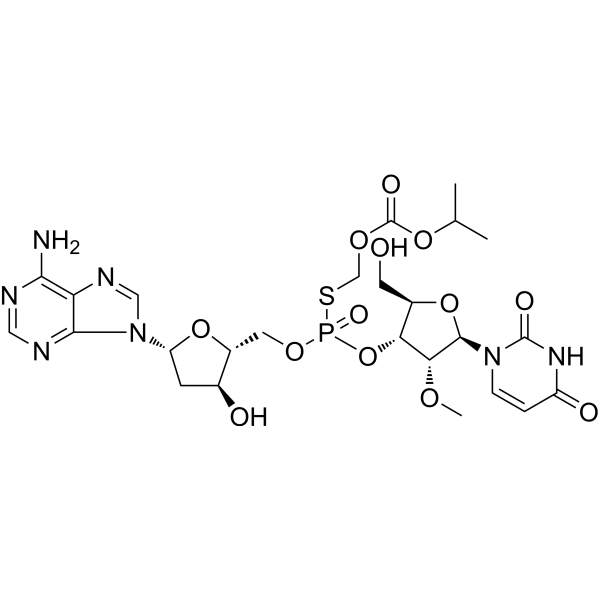
Inarigivir soproxil
Based on 1 publication(s) in Google Scholar
Inarigivir soproxil (SB9200) is an agonist of innate immunity and shows potent antiviral activity against resistant HCV variants, with EC50s of 2.2 and 1.0 μM for HCV 1a/1b in cells of genotype 1 HCV replicon systems. Inarigivir soproxil, an orally bioavailable proagent of SB 9000, has broad-spectrum antiviral activity against RNA viruses including HCV, norovirus, respiratory syncytial virus and influenza and HBV.
For research use only. We do not sell to patients.
- Purity : 99.66%
- CAS No.: 942123-43-5
- Formula: C25H34N7O13PS
- Molecular Weight:703.62
-
Storage:
-20°C, protect from light, stored under nitrogen
* In solvent : -80°C, 6 months; -20°C, 1 month (protect from light, stored under nitrogen)

To place orders, for customer services and technical support, please contact: MedChemExpress USA
Tel: 609-228-6898 E-mail: [email protected] [email protected]


-
 Biological Activity
-
Chemical Information
-
Solvent & Solubility
- Protocols
- Purity & Documentation
- References
-
 Help & FAQs


-
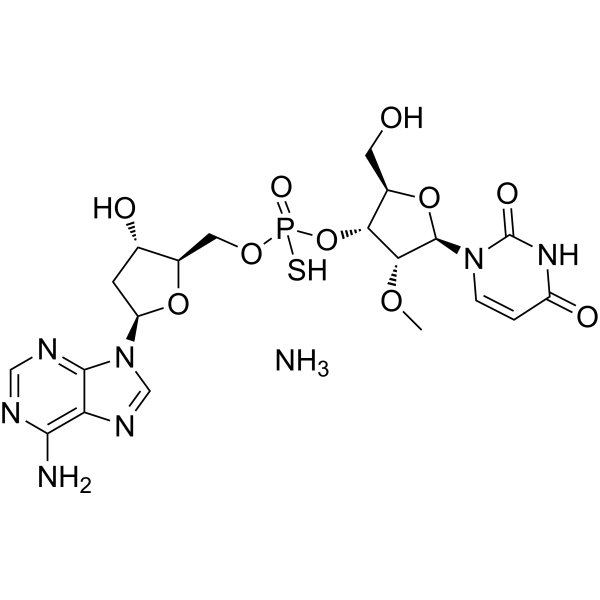
HY-101954A
Inarigivir ammoniumHBV Inhibitor -
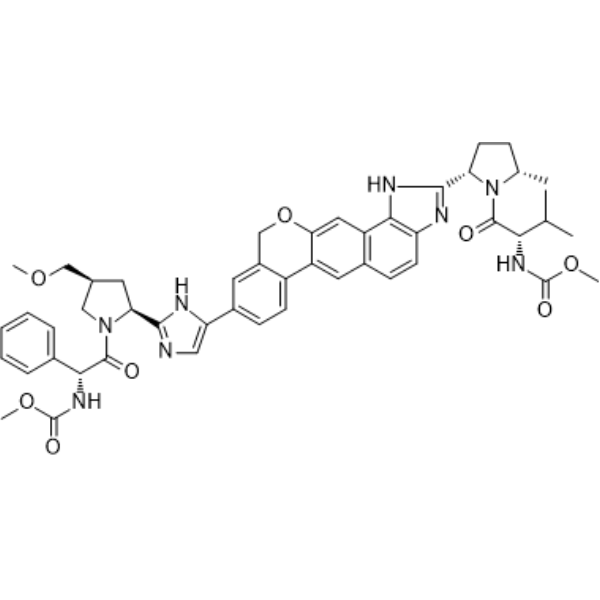
HY-12530
VelpatasvirHCV NS5A Inhibitor -

HY-12530R
Velpatasvir (Standard)HCV NS5A Inhibitor -
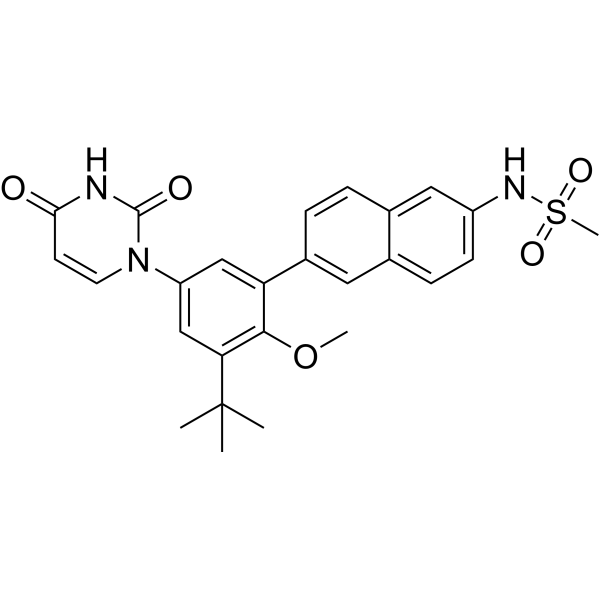
HY-13998
DasabuvirHCV Polymerase Inhibitor -
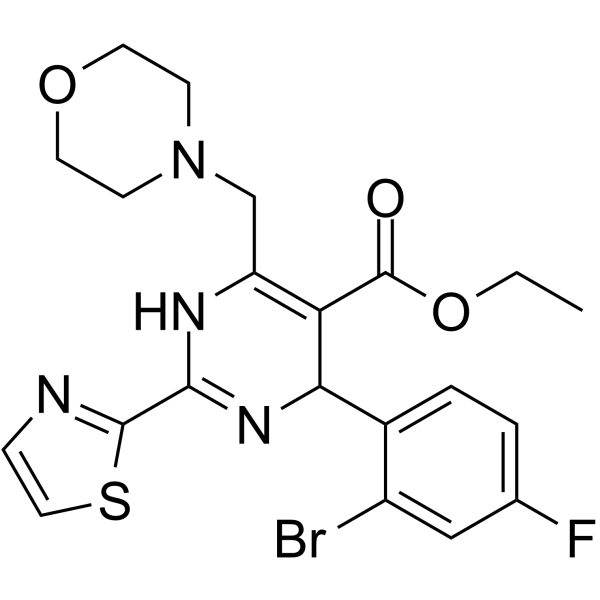
HY-108917
MorphothiadinHBV Inhibitor -
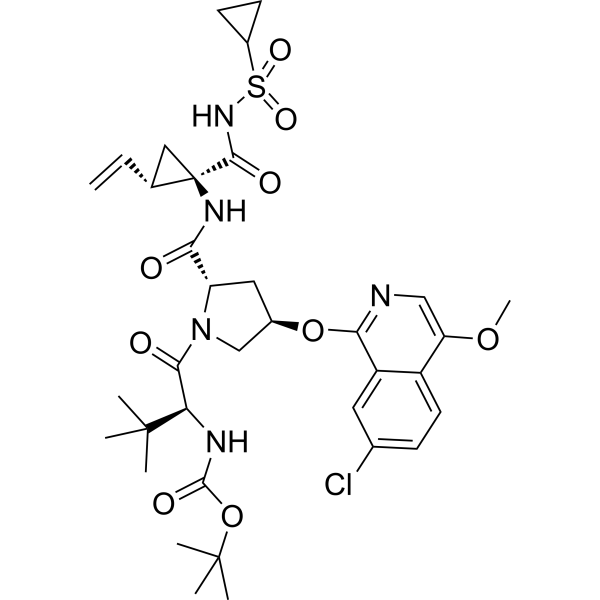
HY-14434
AsunaprevirHCV Protease Inhibitor -
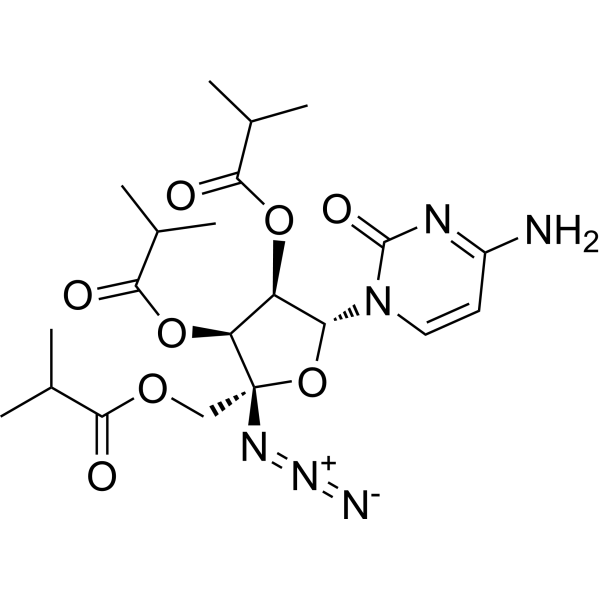
HY-10443
BalapiravirAnti-HCV Agent -
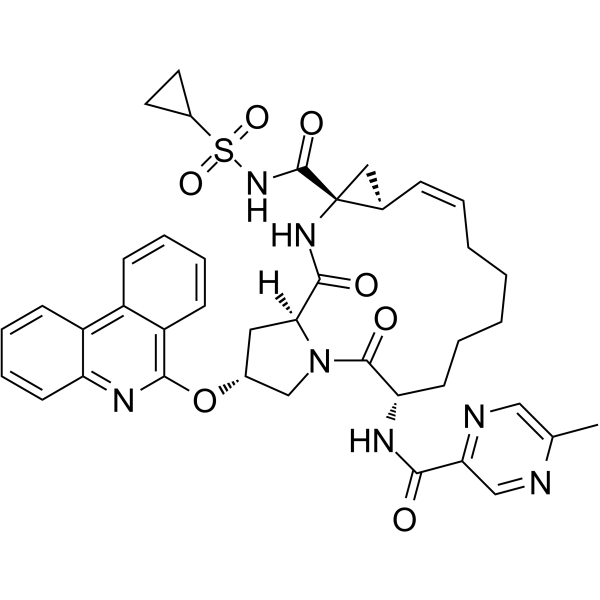
HY-12594
ParitaprevirNS3/4A Protease Inhibitor -
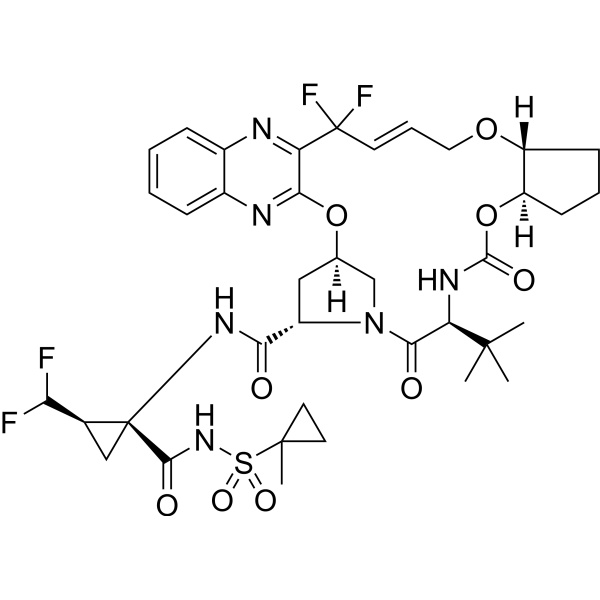
HY-17634
GlecaprevirHCV NS3/4A Protease Inhibitor -
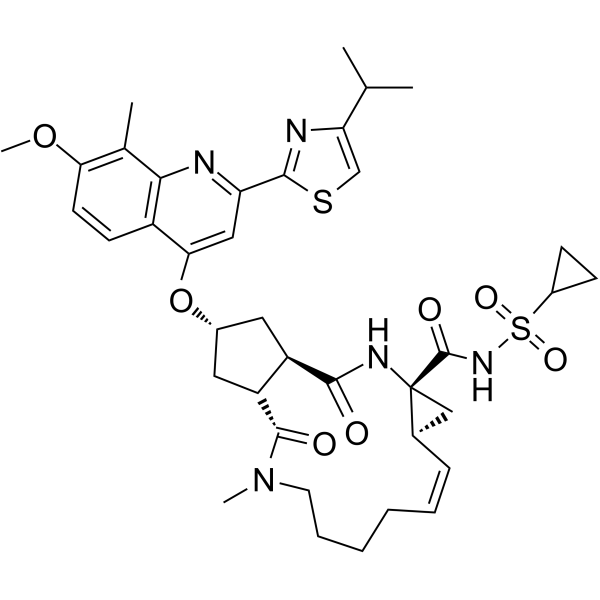
HY-10241
SimeprevirHCV NS3/4A Inhibitor -
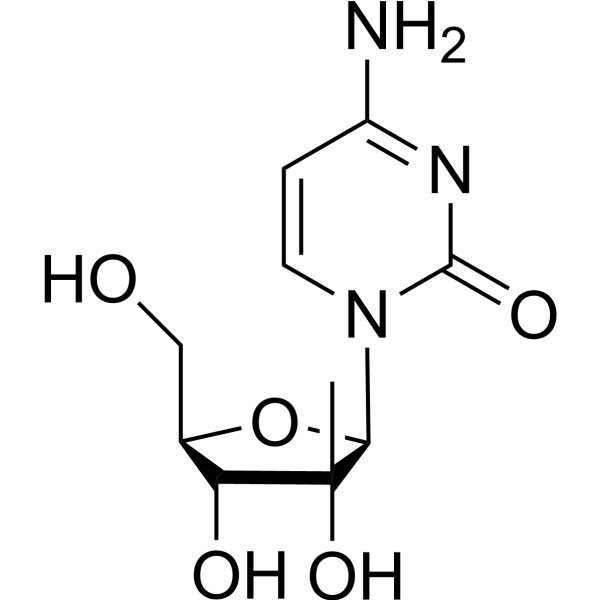
HY-10468
NM107HCV NS5B Polymerase Inhibitor -
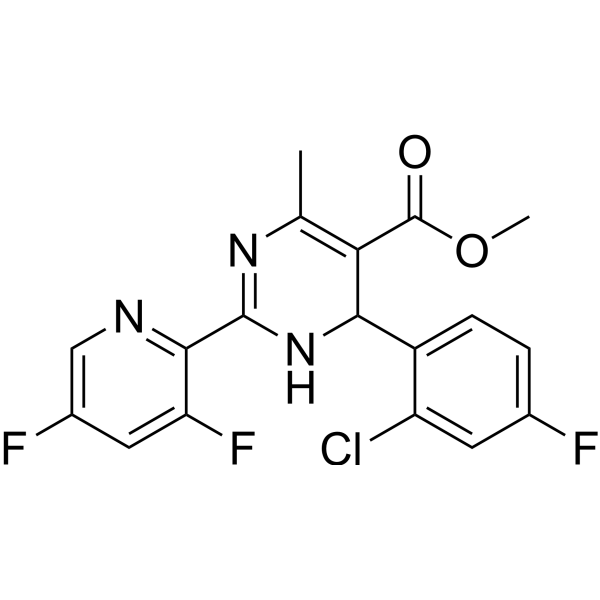
HY-100029A
Bay 41-4109 racemateHBV Inhibitor
Publications Citing Use of MedChemExpress (MCE) Inarigivir soproxil
More

Biological Activity
Description
IC50 & Target
EC50: 2.2/1.0 μM (HCV 1a/1b)[1].
Cellular Effect
|
Cell Line

|
Type | Value | Description | References |
|---|---|---|---|---|
| HepG2 2.2.15 | EC50 |
2.1 μM
Compound: 3
|
Antiviral activity against 3TC-resistant HBV with polymerase L180M mutation infected in HepG2.2.15 cells assessed as nucleic acid and protein levels dosed daily for 9 days and measured 24 hrs after last treatment by Southern blot hybridization
Antiviral activity against 3TC-resistant HBV with polymerase L180M mutation infected in HepG2.2.15 cells assessed as nucleic acid and protein levels dosed daily for 9 days and measured 24 hrs after last treatment by Southern blot hybridization
|
[PMID: 20117930] |
| HepG2 2.2.15 | EC50 |
2.4 μM
Compound: 3
|
Antiviral activity against 3TC-resistant HBV with polymerase M204V mutation infected in HepG2.2.15 cells assessed as nucleic acid and protein levels dosed daily for 9 days and measured 24 hrs after last treatment by Southern blot hybridization
Antiviral activity against 3TC-resistant HBV with polymerase M204V mutation infected in HepG2.2.15 cells assessed as nucleic acid and protein levels dosed daily for 9 days and measured 24 hrs after last treatment by Southern blot hybridization
|
[PMID: 20117930] |
| HepG2 2.2.15 | EC50 |
2.5 μM
Compound: 3
|
Antiviral activity against wild type HBV infected in HepG2.2.15 cells assessed as nucleic acid and protein levels dosed daily for 9 days and measured 24 hrs after last treatment by Southern blot hybridization
Antiviral activity against wild type HBV infected in HepG2.2.15 cells assessed as nucleic acid and protein levels dosed daily for 9 days and measured 24 hrs after last treatment by Southern blot hybridization
|
[PMID: 20117930] |
| HepG2 2.2.15 | EC50 |
2.8 μM
Compound: 3
|
Antiviral activity against ADV-resistant HBV N236T mutation infected in HepG2.2.15 cells assessed as nucleic acid and protein levels dosed daily for 9 days and measured 24 hrs after last treatment by Southern blot hybridization
Antiviral activity against ADV-resistant HBV N236T mutation infected in HepG2.2.15 cells assessed as nucleic acid and protein levels dosed daily for 9 days and measured 24 hrs after last treatment by Southern blot hybridization
|
[PMID: 20117930] |
| HepG2 2.2.15 | EC50 |
3 μM
Compound: 3
|
Antiviral activity against 3TC-resistant HBV with polymerase M204I mutation infected in HepG2.2.15 cells assessed as nucleic acid and protein levels dosed daily for 9 days and measured 24 hrs after last treatment by Southern blot hybridization
Antiviral activity against 3TC-resistant HBV with polymerase M204I mutation infected in HepG2.2.15 cells assessed as nucleic acid and protein levels dosed daily for 9 days and measured 24 hrs after last treatment by Southern blot hybridization
|
[PMID: 20117930] |
| HepG2 2.2.15 | EC50 |
3.1 μM
Compound: 3
|
Antiviral activity against 3TC-resistant HBV with polymerase LMMV mutation infected in HepG2.2.15 cells assessed as nucleic acid and protein levels dosed daily for 9 days and measured 24 hrs after last treatment by Southern blot hybridization
Antiviral activity against 3TC-resistant HBV with polymerase LMMV mutation infected in HepG2.2.15 cells assessed as nucleic acid and protein levels dosed daily for 9 days and measured 24 hrs after last treatment by Southern blot hybridization
|
[PMID: 20117930] |
| HFF | CC50 |
>1000 μM
Compound: 3
|
Cytotoxicity against human HFF cells after 24 hrs by MTT assay
Cytotoxicity against human HFF cells after 24 hrs by MTT assay
|
[PMID: 20117930] |
| Vero | CC50 |
>1000 μM
Compound: 3
|
Cytotoxicity against african green monkey Vero cells after 24 hrs by MTT assay
Cytotoxicity against african green monkey Vero cells after 24 hrs by MTT assay
|
[PMID: 20117930] |
In Vitro
Inarigivir soproxil (SB 9200) is a first-in-class oral modulator of innate immunity that acts via the activation of the RIG-I and NOD2 pathways[1].
Inarigivir soproxil is an effective inhibitor of HCV replication in cell culture. The antiviral activity of Inarigivir soproxil against HCV was assessed using genotype 1 HCV replicon systems in duplicate experiments using 4 drug concentrations. Inarigivir soproxil inhibits HCV replication with EC50s of 2.2 and 1.0 µM, and EC90s of 8.0 and 6.0 µM for genotype 1A and 1B, respectively[1].
Inarigivir soproxil (SB 9200), an orally bioavailable dinucleotide, activates the viral sensor proteins, retinoic acid-inducible gene 1 (RIG-I) and nucleotide-binding oligomerization domain-containing protein 2 (NOD2) causing the induction of the interferon (IFN) signaling cascade for antiviral defense[2].
MedChemExpress (MCE) has not independently confirmed the accuracy of these methods. They are for reference only.
In Vivo
Sequential treatment of chronic WHV carrier woodchucks with Inarigivir soproxil (30 mg/kg)followed by ETV induced marked suppression of serum viremia and antigenemia and delayed recrudescence of viral replication compared to sequential treatment with ETV followed by Inarigivir soproxil[2].
MedChemExpress (MCE) has not independently confirmed the accuracy of these methods. They are for reference only.
-
Animal Model:Woodchucks chronically infected with woodchuck hepatitis virus (WHV)[2]
-
Dosage:30 mg/kg
-
Administration:Orally treated once daily; group 1 received ETV for 4 weeks followed by Inarigivir soproxil for 12 weeks. Group 2 received Inarigivir soproxil for 12 weeks followed by ETV for 4 weeks
-
Result:Both groups demonstrated marked reductions in hepatic WHV nucleic acid levels which were more pronounced in Group 2.
Clinical Trial
| NCT Number | Sponsor | Condition | Start Date |
Phase
|
|---|---|---|---|---|
| NCT01329991 | 2011-05 | PHASE1 |


Chemical Information
-
CAS No. 942123-43-5
-
Appearance Solid
-
Molecular Weight 703.62
-
Formula C25H34N7O13PS
-
Color White to off-white
-
SMILES
CO[C@H]1[C@H](N(C=CC2=O)C(N2)=O)O[C@H](CO)[C@H]1OP(OC[C@H]3O[C@@H](N4C5=NC=NC(N)=C5N=C4)C[C@@H]3O)(SCOC(OC(C)C)=O)=O
-
Synonyms
SB9200; GS-9992
-
Shipping
Room temperature in continental US; may vary elsewhere.
-
Storage
-20°C, protect from light, stored under nitrogen
* In solvent : -80°C, 6 months; -20°C, 1 month (protect from light, stored under nitrogen)


Publications (1)
-
Journal Impact Factor
-
Most Recent
-
Int J Oncol
Activation of DDX58/RIG‑I suppresses the growth of tumor cells by inhibiting STAT3/CSE signaling in colon cancer. [Abstract]2022 Oct;61(4):120. PMID: 36004488


Solvent & Solubility
In Vitro:
DMSO : 100 mg/mL (142.12 mM; Need ultrasonic; Hygroscopic DMSO has a significant impact on the solubility of product, please use newly opened DMSO)
Please refer to the solubility information to select the appropriate solvent. Once prepared, please aliquot and store the solution to prevent product inactivation from repeated freeze-thaw cycles.
Storage method and period of stock solution: -80°C, 6 months; -20°C, 1 month (protect from light, stored under nitrogen). When stored at -80°C, please use it within 6 months. When stored at -20°C, please use it within 1 month.
Please refer to the solubility information to select the appropriate solvent. Once prepared, please aliquot and store the solution to prevent product inactivation from repeated freeze-thaw cycles.
Storage method and period of stock solution: -80°C, 6 months; -20°C, 1 month (protect from light, stored under nitrogen). When stored at -80°C, please use it within 6 months. When stored at -20°C, please use it within 1 month.
Concentration (start) × Volume (start) = Concentration (final) × Volume (final)
In Vivo:
Select the appropriate dissolution method based on your experimental animal and administration route.
- For the following dissolution methods, please ensure to first prepare a clear stock solution using an In Vitro approach and then sequentially add co-solvents:
- To ensure reliable experimental results, the clarified stock solution can be appropriately stored based on storage conditions. As for the working solution for In Vivo experiments, it is recommended to prepare freshly and use it on the same day.
- The percentages shown for the solvents indicate their volumetric ratio in the final prepared solution. If precipitation or phase separation occurs during preparation, heat and/or sonication can be used to aid dissolution.
Add each solvent one by one: 10% DMSO 40% PEG300 5% Tween-80 45% Saline
Solubility: ≥ 4 mg/mL (5.68 mM); Clear solution
This protocol yields a clear solution of ≥ 4 mg/mL (saturation unknown).
Taking 1 mL working solution as an example, add 100 μL DMSO stock solution (40.0 mg/mL) to 400 μL PEG300, and mix evenly; then add 50 μL Tween-80 and mix evenly; then add 450 μL Saline to adjust the volume to 1 mL.
Preparation of Saline: Dissolve 0.9 g sodium chloride in ddH₂O and dilute to 100 mL to obtain a clear Saline solution.
Add each solvent one by one: 10% DMSO 90% (20% SBE-β-CD in Saline)
Solubility: ≥ 4 mg/mL (5.68 mM); Clear solution
This protocol yields a clear solution of ≥ 4 mg/mL (saturation unknown).
Taking 1 mL working solution as an example, add 100 μL DMSO stock solution (40.0 mg/mL) to 900 μL 20% SBE-β-CD in Saline, and mix evenly.
Preparation of 20% SBE-β-CD in Saline (4°C, storage for one week): 2 g SBE-β-CD powder is dissolved in 10 mL Saline, completely dissolve until clear.
In Vivo Dissolution Calculator
Please enter the basic information of animal experiments:
-
-
-
-
Recommended: Prepare an additional quantity of animals to account for potential losses during experiments.
Please enter your animal formula composition:
-
%DMSO +
Recommended: Keep the proportion of DMSO in working solution below 2% if your animal is weak.
-
%+
-
+%Tween-80 + +
-
%Saline +
The co-solvents required include: DMSO, . All of co-solvents are available by MedChemExpress (MCE). , Tween 80. All of co-solvents are available by MedChemExpress (MCE).
Working solution concentration: 0.22 mg/mL
Method for preparing stock solution: mg drug dissolved in μL DMSO. Stock solution concentration: mg/mL. * In solvent : -80°C, 6 months; -20°C, 1 month (protect from light, stored under nitrogen)
1. Take μL DMSO stock solution;
2. Add μL .
μL , mix evenly;
3. Then add μL Tween 80, mix evenly;
4. Then add μL
Please ensure that the stock solution in the first step is dissolved to a clear state, and add co-solvents in sequence. You can use ultrasonic heating (ultrasonic cleaner, recommended frequency 20-40 kHz), vortexing, etc. to assist dissolution.


Purity & Documentation
-
Data Sheet (277 KB)
-
SDS (396 KB)
- English - EN (396 KB)
- Français - FR (396 KB)
- Deutsch - DE (396 KB)
- Norwegian - NO (396 KB)
- Español - ES (396 KB)
- Swedish - SV (396 KB)
- Italian - IT (396 KB)
- Korean - KR (396 KB)
- Portuguese - PT (396 KB)
-
Handling Instructions (2659 KB)
References
[1]. Meleri Jones, et al. SB 9200, a novel agonist of innate immunity, shows potent antiviral activity against resistant HCV variants. J Med Virol. 2017 Sep;89(9):1620-1628. [Content Brief]
[2]. Manasa Suresh, et al. Antiviral Efficacy and Host Immune Response Induction during Sequential Treatment with SB 9200 Followed by Entecavir in Woodchucks. PLoS One. 2017 Jan 5;12(1):e0169631. [Content Brief]


Complete Stock Solution Preparation Table
Please refer to the solubility information to select the appropriate solvent. Once prepared, please aliquot and store the solution to prevent product inactivation from repeated freeze-thaw cycles.
Storage method and period of stock solution: -80°C, 6 months; -20°C, 1 month (protect from light, stored under nitrogen). When stored at -80°C, please use it within 6 months. When stored at -20°C, please use it within 1 month.
| Optional Solvent | Concentration Solvent Mass | 1 mg | 5 mg | 10 mg | 25 mg |
|---|---|---|---|---|---|
| DMSO | 1 mM | 1.4212 mL | 7.1061 mL | 14.2122 mL | 35.5305 mL |
| 5 mM | 0.2842 mL | 1.4212 mL | 2.8424 mL | 7.1061 mL | |
| 10 mM | 0.1421 mL | 0.7106 mL | 1.4212 mL | 3.5531 mL | |
| 15 mM | 0.0947 mL | 0.4737 mL | 0.9475 mL | 2.3687 mL | |
| 20 mM | 0.0711 mL | 0.3553 mL | 0.7106 mL | 1.7765 mL | |
| 25 mM | 0.0568 mL | 0.2842 mL | 0.5685 mL | 1.4212 mL | |
| 30 mM | 0.0474 mL | 0.2369 mL | 0.4737 mL | 1.1844 mL | |
| 40 mM | 0.0355 mL | 0.1777 mL | 0.3553 mL | 0.8883 mL | |
| 50 mM | 0.0284 mL | 0.1421 mL | 0.2842 mL | 0.7106 mL | |
| 60 mM | 0.0237 mL | 0.1184 mL | 0.2369 mL | 0.5922 mL | |
| 80 mM | 0.0178 mL | 0.0888 mL | 0.1777 mL | 0.4441 mL | |
| 100 mM | 0.0142 mL | 0.0711 mL | 0.1421 mL | 0.3553 mL |


Inarigivir soproxil Related Classifications
HY-109035 Related Classifications
 Powered by Bioz