1. Search Result
Search Result
Results for "

High density lipoprotein (human)

" in MedChemExpress (MCE) Product Catalog:

3

Inhibitors & Agonists

1

Biochemical Assay Reagents

1

Natural
Products

1

Recombinant Proteins

Targets Recommended:
Cat. No. Product Name Target Research Areas Chemical Structure
  • HY-NP203

    HDL (human)

    Apolipoprotein NO Synthase LPL Receptor Akt PI3K p38 MAPK Neurological Disease Metabolic Disease Inflammation/Immunology Cancer
    High density lipoprotein (human) (HDL (human)) is a human-derived high-density lipoprotein. High density lipoprotein can cross the blood-brain barrier, and partially acts on endothelial nitric oxide synthase (eNOS) by activating surface receptors such as SR-B1 and S1P3R, as well as intracellular signaling cascades involving Akt, PI3K and MAPK, thereby inducing the production of NO in endothelial cells. High density lipoprotein (human) can be used in research related to type 2 diabetes, Alzheimer's disease, cancer and atherosclerosis .
    High density lipoprotein (human)
  • HY-126359

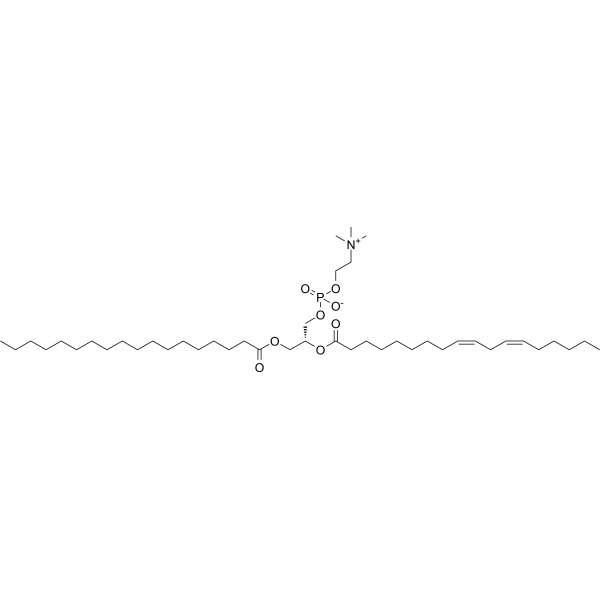
    SLPC; 18:0-18:2 PC

    Endogenous Metabolite Cardiovascular Disease Metabolic Disease
    1-Stearoyl-2-linoleoyl-sn-glycero-3-phosphocholine (SLPC; 18:0-18:2 PC) is an endogenous phospholipid marker molecule in the glycerophospholipid metabolic pathway. 1-Stearoyl-2-linoleoyl-sn-glycero-3-phosphocholine is a core component of the phospholipid bilayer of biological membranes and a key responsive lipid for radiation injury and cardiometabolic diseases. 1-Stearoyl-2-linoleoyl-sn-glycero-3-phosphocholine constitutes the phospholipid bilayers of cell membranes and high-density lipoprotein (HDL), and regulates the core activity of lipoprotein functional homeostasis. The content of 1-Stearoyl-2-linoleoyl-sn-glycero-3-phosphocholine in mouse serum shows a significant dose-dependent decrease with increasing ionizing radiation dose, and its level in human HDL also decreases significantly in metabolic syndrome. 1-Stearoyl-2-linoleoyl-sn-glycero-3-phosphocholine can serve as a biological dosimeter marker for ionizing radiation injury, and is used for rapid and accurate assessment of radiation absorbed dose in exposed individuals. 1-Stearoyl-2-linoleoyl-sn-glycero-3-phosphocholine can also act as a lipidomics research target for cardiometabolic diseases such as lipid metabolic syndrome and early-onset coronary heart disease .
    1-Stearoyl-2-linoleoyl-sn-glycero-3-phosphocholine
  • HY-165061

    Sciadonic acid

    Apolipoprotein Inflammation/Immunology
    5(Z),11(Z),14(Z)-Eicosatrienoic acid (Sciadonic acid), a polyunsaturated fatty acid sourced from maritime pine seed oil, gymnospermae leaves and seeds, and freshwater gastropods, has been shown to reduce high-density lipoprotein and ApoA1 levels in transgenic mice expressing human ApoA1 when included in their diet. In vitro studies indicate that it diminishes cholesterol efflux, and when applied topically in its methyl ester form, it alleviates inflammatory processes, likely by displacing arachidonic acid from phospholipid pools and lowering concentrations of downstream inflammatory mediators such as prostaglandin E2 and leukotrienes.
    5(Z),11(Z),14(Z)-Eicosatrienoic acid

Inquiry Online

Your information is safe with us. * Required Fields.

Salutation


Country or Region *

Applicant Name *


Organization Name *

Department *


Email Address *


Product Name *

Cat. No.


Requested quantity *

Phone Number *


Remarks

Inquiry Online

Inquiry Information

Product Name:
Cat. No.:
Quantity:
MCE Japan Authorized Agent:

