1. Search Result
Search Result
Results for "

KCNQ2

" in MedChemExpress (MCE) Product Catalog:

28

Inhibitors & Agonists

3

Click Chemistry

3

Oligonucleotides

Cat. No. Product Name Target Research Areas Chemical Structure
  • HY-122114
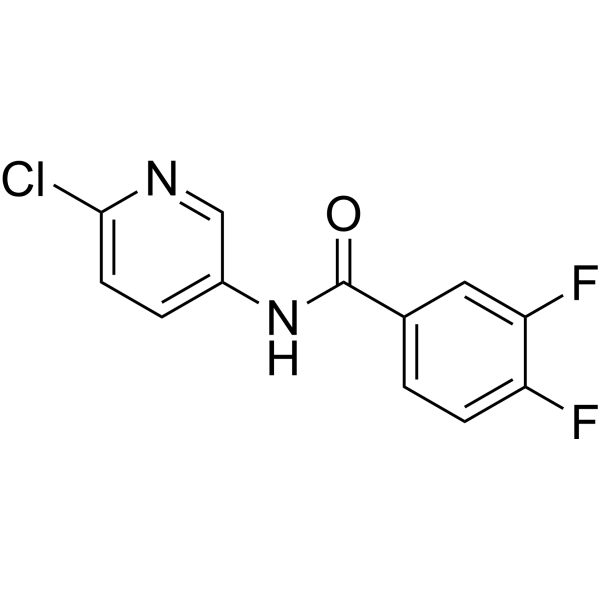
    ICA-27243
    1 Publications Verification

    Potassium Channel Neurological Disease
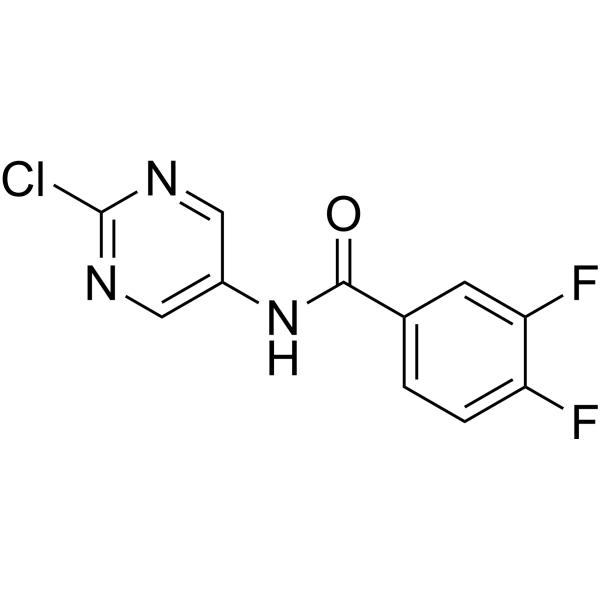
    ICA-27243 is a selective, potent and orally active KCNQ2/Q3 potassium channel opener with an EC50 of 0.38 μM. ICA-27243 is less effective at activating KCNQ4 and KCNQ3/Q5. ICA-27243 has antiepileptic and anticonvulsant effects [2].
    ICA-27243
  • HY-108577
    XE991 dihydrochloride
    3 Publications Verification

    Potassium Channel Neurological Disease
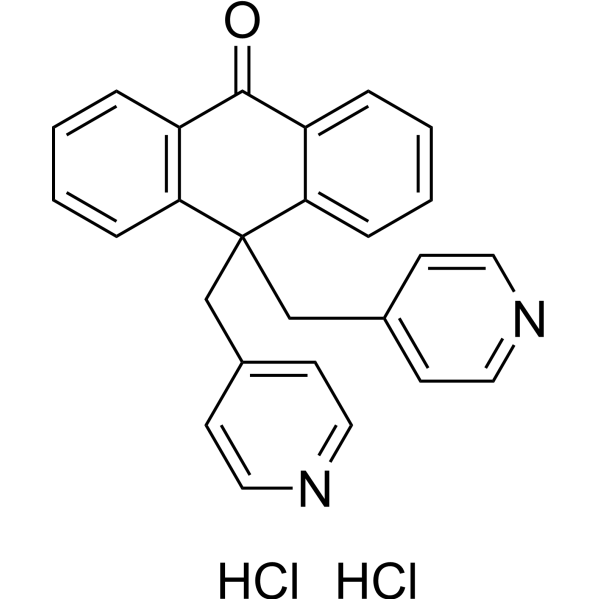
    XE991 dihydrochloride, a Kv7 (KCNQ) channels blocker, potently inhibits Kv7.1 (KCNQ1), Kv7.2 (KCNQ2), Kv7.2 + Kv7.3 (KCNQ3) channel, and M-current with IC50s of 0.75 μM, 0.71 μM, 0.6 μM, and 0.98 μM, respectively .
    XE991 dihydrochloride
  • HY-108577A
    XE991
    3 Publications Verification

    Potassium Channel Neurological Disease
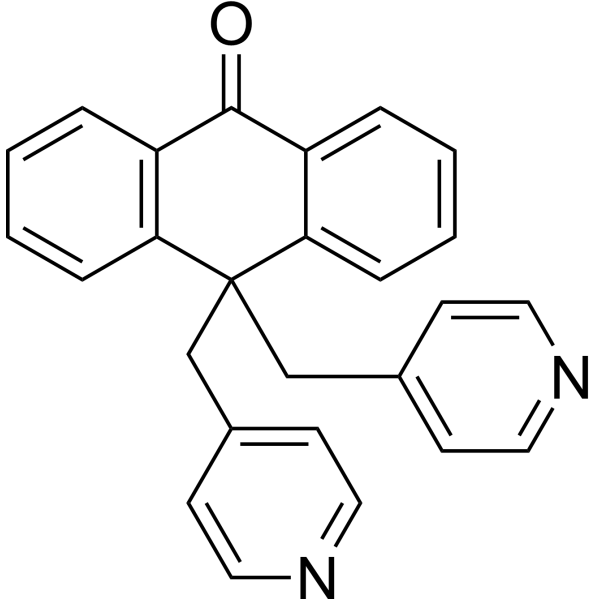
    XE 991 dihydrochloride, a Kv7 (KCNQ) channels blocker, potently inhibits Kv7.1 (KCNQ1), Kv7.2 (KCNQ2), Kv7.2 + Kv7.3 (KCNQ3) channel, and M-current with IC50s of 0.75 μM, 0.71 μM, 0.6 μM, and 0.98 μM, respectively .
    XE991
  • HY-18063

    Potassium Channel Cytochrome P450 Neurological Disease
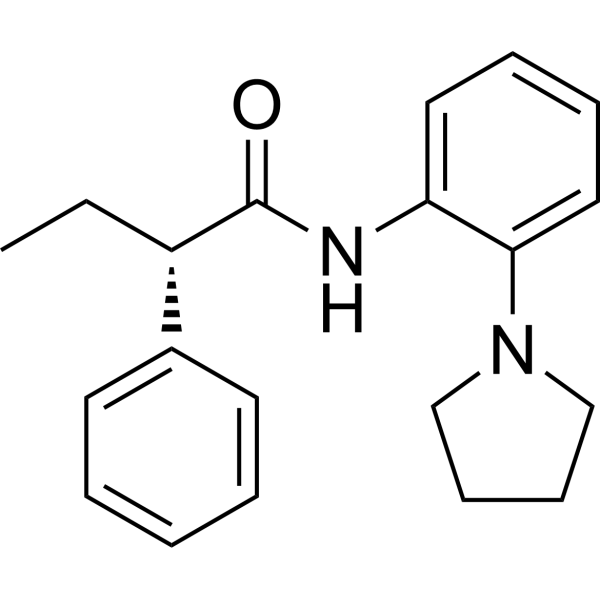
    ML252 is a selective inhibitor of KCNQ2 (Kv7.2) channel with an IC50s of 69 nM, 2.92 μM, 0.12 μM and 0.20 μM for KCNQ2, KCNQ1 (Kv7.1), KCNQ2/Q3 and KCNQ4, respectively. ML252 also inhibits Cytochrome P450 with IC50s of 6.1 nM (CYP1A2), 18.9 nM (CYP2C9), 3.9 nM (CYP3A4), 19.9 nM (CYP2D6), respectively. ML252 shows highly brain penetrant [2].
    ML252
  • HY-101396
    ICA-069673
    3 Publications Verification

    Potassium Channel Neurological Disease
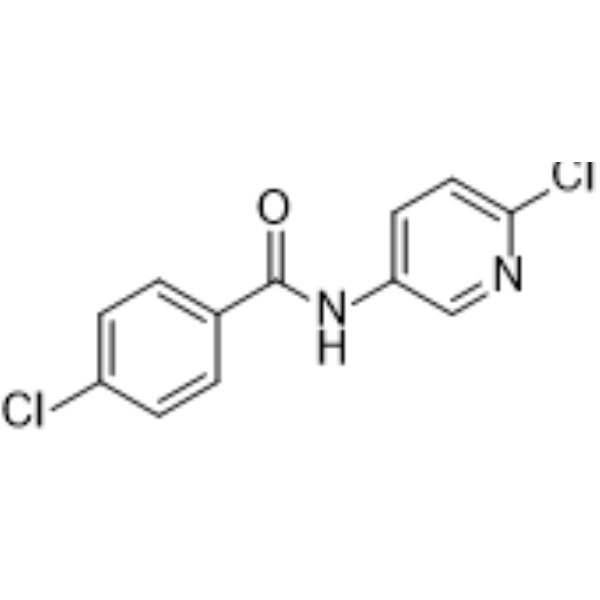
    ICA-069673 is a KCNQ2/Q3 potassium channel activator. ICA-069673 demonstrates greater selectivity for KV7.2/7.3 over KV7.3/KV7.5, with EC50s of 0.69 μM and 14.3 μM, respectively. ICA-069673 inhibits spontaneous phasic and nerve-evoked contractions in guinea pig detrusor smooth muscle (DSM). ICA-069673 also decreases the global intracellular Ca(2+) concentration in DSM cells [2].
    ICA-069673
  • HY-108587

    Potassium Channel Neurological Disease
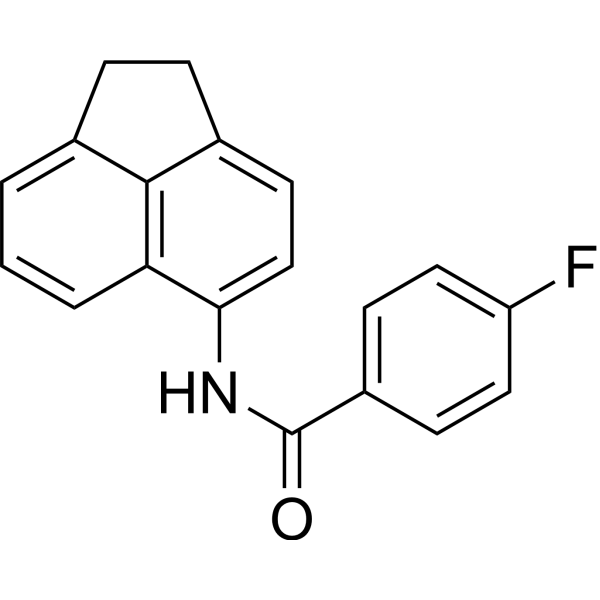
    ICA 110381 is an orally active Kv7.2/Kv7.3 (KCNQ2/3) potassium channel activator with anticonvulsive properties. ICA 110381 is a KCNQ2/Q3 activator (EC50=0.38 μM) as well as KCNQ1 antagonist (IC50=15 μM) .
    ICA 110381
  • HY-157485

    Potassium Channel Others
    Ebio1 is a selective voltage-gated potassium channel KCNQ2 activator. Ebio1 activates KCNQ2 by generating an extended channel gate with greater conductance at a saturation voltage (+50 mV) .
    Ebio1
  • HY-145016

    Potassium Channel Neurological Disease
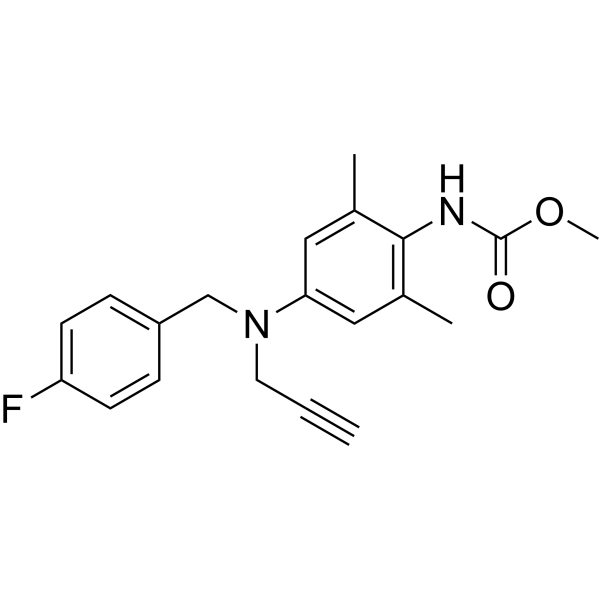
    HN37 as a potent and chemically stable antiepileptic agent candidate, with an EC50 of 37 nM for KCNQ2 . HN37 is a click chemistry reagent, it contains an Alkyne group and can undergo copper-catalyzed azide-alkyne cycloaddition (CuAAc) with molecules containing Azide groups.
    HN37
  • HY-123264

    Potassium Channel Neurological Disease
    RL648_81 is a specific KQT-like subfamily 2/3 (KCNQ2/3) activator with an EC50 of 190 nM. RL648_81 robustly shifts the V1/2 of KCNQ2/3 channels towards hyperpolarized potentials.RL648_81 does not shift the V1/2 of either KCNQ4 or KCNQ5.RL648_81 has?the?potential?for?neurologic disorders associated with neuronal hyperexcitability research .
    RL648_81
  • HY-108592

    Potassium Channel Cardiovascular Disease Neurological Disease
    UCL 2077 is a potassium channel and slow afterhyperpolarization (sAHP) inhibitor. UCL 2077 selectively blocks sAHP channels without affecting L-type Ca 2+ currents. UCL 2077 blocks KCNQ1- and KCNQ2-containing K + channels, decreases erg current amplitude, increases erg deactivation rate. UCL 2077 can be used for the research of hippocampus-dependent memory retrieval deficit and cardiac arrhythmias [2] .
    UCL 2077
  • HY-113616A

    MARCKS mAChR Neurological Disease
    VU0364572 TFA is an orally active and selective allosteric agonist of the M1 muscarinic receptor with an EC50 of 0.11 μM. VU0364572 TFA has neuroprotective potential for preventing memory impairments and reducing neuropathology in Alzheimer’s Disease. VU0364572 TFA is CNS penetrant .
    VU0364572 TFA
  • HY-RS07174

    Small Interfering RNA (siRNA) Others

    KCNQ2 Human Pre-designed siRNA Set A contains three designed siRNAs for KCNQ2 gene (Human), as well as a negative control, a positive control, and a FAM-labeled negative control.

    KCNQ2 Human Pre-designed siRNA Set A
    KCNQ2 Human Pre-designed siRNA Set A
  • HY-180873

    Potassium Channel Neurological Disease
    KCNQ2 modulator-1 is a KCNQ2 modulator.
    KCNQ2 modulator-1
  • HY-RS17110

    Small Interfering RNA (siRNA) Others

    Kcnq2 Mouse Pre-designed siRNA Set A contains three designed siRNAs for Kcnq2 gene (Mouse), as well as a negative control, a positive control, and a FAM-labeled negative control.

    Kcnq2 Mouse Pre-designed siRNA Set A
    Kcnq2 Mouse Pre-designed siRNA Set A
  • HY-RS23555

    Small Interfering RNA (siRNA) Others

    Kcnq2 Rat Pre-designed siRNA Set A contains three designed siRNAs for Kcnq2 gene (Rat), as well as a negative control, a positive control, and a FAM-labeled negative control.

    Kcnq2 Rat Pre-designed siRNA Set A
    Kcnq2 Rat Pre-designed siRNA Set A
  • HY-172140

    Potassium Channel Neurological Disease
    Ebio3 is a selective potassium channel (KCNQ2) inhibitor with an IC50 of 1.2 nM. Ebio3 binds to the KCNQ2 channel through its hydrophobic tail, causing the S6 helix to move inward, which leads to the closure of the inner gate. The inhibitory effect of Ebio3 is also effective in pathogenic mutants of KCNQ2 (such as R75C and I238L), where it can inhibit outward currents by more than 80%. Ebio3 is expected to be used in the research of neurological diseases such as epilepsy .
    Ebio3
  • HY-115823

    Potassium Channel Neurological Disease
    ztz240 is a chemical modulator of voltage-gated potassium channel Kv7 (KCNQ) (KCNQ2 and 3: EC50=6.1 μM; KCNQ4: EC50=12.2 μM). ztz240 can be used in analgesia and anti-epileptic research .
    ztz240
  • HY-18063A

    Potassium Channel Cytochrome P450 Neurological Disease
    ML252 hydrochloride is a selective inhibitor of KCNQ2 (Kv7.2) channel with IC50s of 69 nM, 2.92 μM, 0.12 μM and 0.20 μM for KCNQ2, KCNQ1 (Kv7.1), KCNQ2/Q3 and KCNQ4, respectively. ML252 hydrochloride also inhibits Cytochrome P450 with IC50s of 6.1 nM (CYP1A2), 18.9 nM (CYP2C9), 3.9 nM (CYP3A4), 19.9 nM (CYP2D6), respectively. ML252 hydrochloride shows highly brain penetrant [2].
    ML252 hydrochloride
  • HY-172141

    Potassium Channel Cardiovascular Disease
    Ebio2 is a potent KCNQ2 activator .
    Ebio2
  • HY-181128

    Potassium Channel Neurological Disease
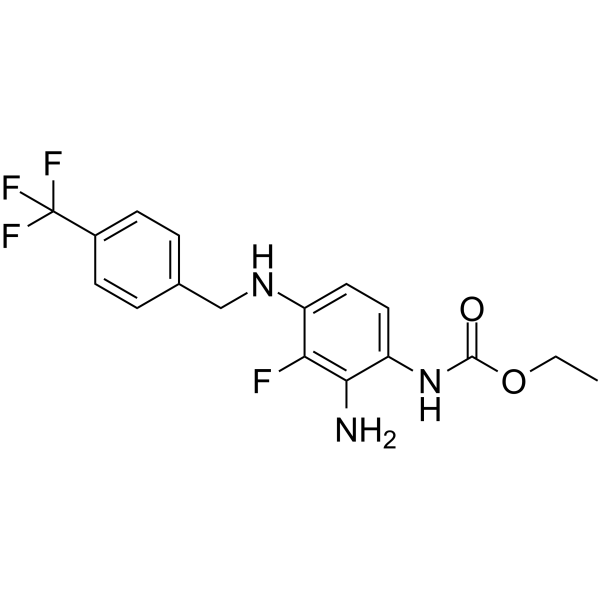
    QO-83, Retigabine analogue, is a voltage-gated potassium channel KCNQ2 (Kv7.2) activator with an EC50 of 0.56 μM. QO-83 binds to a single hydrophobic pocket of KCNQ2-CaM complex in closed conformation. QO-83 induces a negative shift in the voltage-dependent activation curve of KCNQ2 channels, increasing the channel's voltage sensitivity. QO-83 can be used for the research of epilepsies .
    QO-83
  • HY-130070

    Potassium Channel Neurological Disease
    QO-40, a pyrazolo[1,5-a]pyrimidine-7(4H)-one (PPO) derivative, is a KCNQ2/KCNQ3 K + channels activator with an EC50 of 6.94 μM. QO-40 stimulated Ca 2+-activated K + current (IK(Ca)) with an EC50 value of 2.3 μM in pituitary GH3 lactotrophs [2].
    QO-40
  • HY-113616

    mAChR MARCKS Neurological Disease
    VU0364572 is a selective allosteric agonist of the M1 muscarinic receptor with an EC50 of 0.11 μM. VU0364572 has neuroprotective potential for preventing memory impairments and reducing neuropathology in Alzheimer’s Disease. VU0364572 is orally active and is CNS penetrant .
    VU0364572
  • HY-108577R

    Potassium Channel Neurological Disease
    XE991 dihydrochloride (Standard) is the analytical standard of XE991 dihydrochloride. This product is intended for research and analytical applications. XE991 dihydrochloride, a Kv7 (KCNQ) channels blocker, potently inhibits Kv7.1 (KCNQ1), Kv7.2 (KCNQ2), Kv7.2 + Kv7.3 (KCNQ3) channel, and M-current with IC50s of 0.75 μM, 0.71 μM, 0.6 μM, and 0.98 μM, respectively .
    XE991 dihydrochloride (Standard)
  • HY-168214

    Potassium Channel Neurological Disease
    Kv7.2/Kv7.3 agonist 1 (Compound 16) is an orally active agonist for KV7.2/7.3 channel (KCNQ2/3) with an EC50 of 1.03 μM. Kv7.2/Kv7.3 agonist 1 exhibits analgesic efficacy in mice chronic constriction injury (CCI) model and mice Streptozotocin (HY-13753)-induced diabetic peripheral neuropathic pain (DPNP) model, with ED50 of 12.02 and 9.63 mg/kg .
    Kv7.2/Kv7.3 agonist 1
  • HY-182435

    Potassium Channel Neurological Disease
    CLE-030 is a KCNQ2 agonist with non-gating-dependent current-modulating activity . CLE-030 modulates neuronal network activity. CLE-030 can be used in studies related to pain, epilepsy and benign familial neonatal convulsions [2].
    CLE-030
  • HY-118807A

    Pyrilamine hydrochloride

    Histamine Receptor Potassium Channel Neurological Disease Inflammation/Immunology
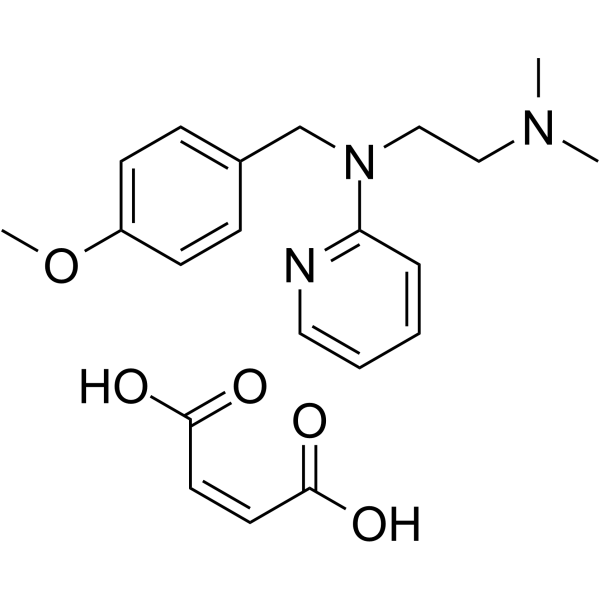
    Mepyramine hydrochloride (Pyrilamine hydrochloride) is a selective histamine H1 receptor antagonist and KCNQ channel inhibitor, with an IC50 of 12.5 μM against KCNQ2/Q3. Mepyramine hydrochloride shows no activity against allergic asthma in mice when used alone, but modulates the effect of JNJ 7777120 (HY-13508) on allergic asthma in mice; it inhibits the development of morphine physical dependence and increases histamine levels in mouse brains. Mepyramine hydrochloride can be used in studies related to seizures, convulsions, allergic asthma and morphine physical dependence [2] .
    Mepyramine hydrochloride
  • HY-108577AR

    Potassium Channel Reference Standards Neurological Disease
    XE991 (Standard) is the analytical standard of XE991 (HY-108577A). This product is intended for research and analytical applications. XE 991, a Kv7 (KCNQ) channels blocker, potently inhibits Kv7.1 (KCNQ1), Kv7.2 (KCNQ2), Kv7.2 + Kv7.3 (KCNQ3) channel, and M-current with IC50s of 0.75 μM, 0.71 μM, 0.6 μM, and 0.98 μM, respectively .
    XE991 (Standard)
  • HY-101396R

    Potassium Channel Reference Standards Neurological Disease
    ICA-069673 (Standard) is the analytical standard of ICA-069673 (HY-101396). This product is intended for research and analytical applications. ICA-069673 is a KCNQ2/Q3 potassium channel activator. ICA-069673 demonstrates greater selectivity for KV7.2/7.3 over KV7.3/KV7.5, with EC50s of 0.69 μM and 14.3 μM, respectively. ICA-069673 inhibits spontaneous phasic and nerve-evoked contractions in guinea pig detrusor smooth muscle (DSM). ICA-069673 also decreases the global intracellular Ca(2+) concentration in DSM cells [2].
    ICA-069673 (Standard)

Inquiry Online

Your information is safe with us. * Required Fields.

Salutation


Country or Region *

Applicant Name *


Organization Name *

Department *


Email Address *


Product Name *

Cat. No.


Requested quantity *

Phone Number *


Remarks

Inquiry Online

Inquiry Information

Product Name:
Cat. No.:
Quantity:
MCE Japan Authorized Agent:

