1. Search Result
Search Result
Results for "

L-type calcium currents

" in MedChemExpress (MCE) Product Catalog:

27

Inhibitors & Agonists

1

Fluorescent Dyes

1

Peptides

5

Natural
Products

3

Isotope-Labeled Compounds

Cat. No. Product Name Target Research Areas Chemical Structure
  • HY-103311
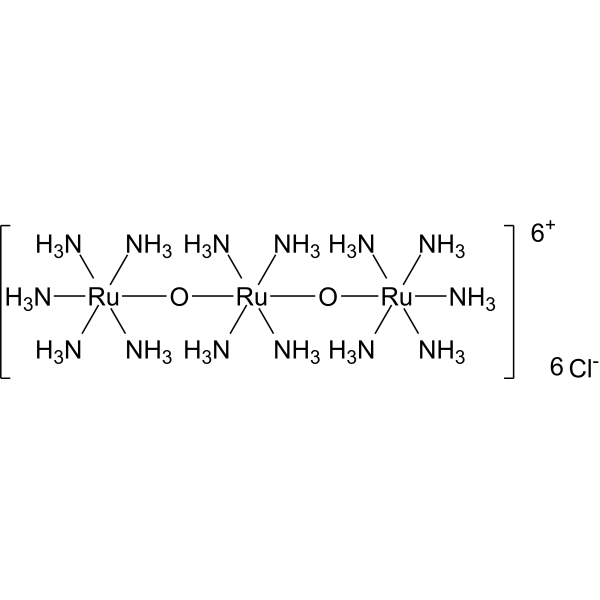
    Ruthenium red
    10+ Cited Publications

    Ammoniated ruthenium oxychloride

    Calcium Channel Cardiovascular Disease
    Ruthenium red (Ammoniated ruthenium oxychloride) is a polycationic dye widely used for electron microscopy (EM) of cells, tissues and vegetative bacteria. Ruthenium red strongly reacts with phospholipids and fatty acids and binds to acidic mucopolysaccharides. Ruthenium red is a L-type calcium current (ICa) blocker .
    Ruthenium red
  • HY-A0016
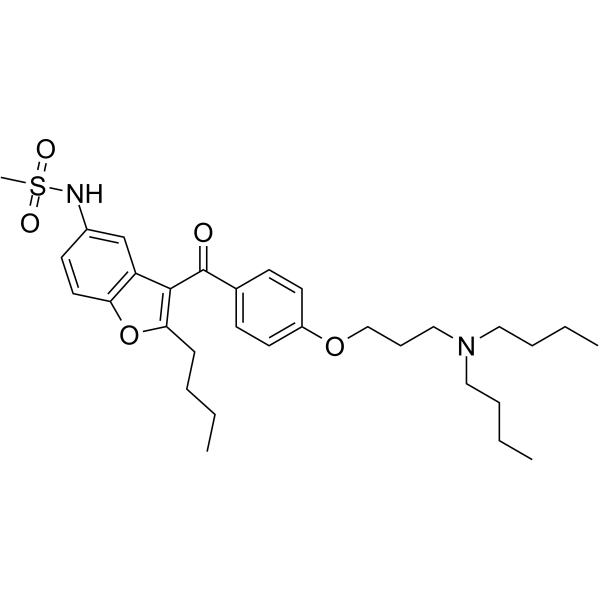
    Dronedarone
    4 Publications Verification

    SR 33589

    mAChR Sodium Channel Calcium Channel Adrenergic Receptor Cytochrome P450 Autophagy Cardiovascular Disease
    Dronedarone (SR 33589), a derivative of amiodarone (HY-14187), is a class III antiarrhythmic agent for the study of atrial fibrillation (AF) and atrial flutter. Dronedarone is a potent blocker of multiple ion currents, including potassium current, sodium current, and L-type calcium current, and exhibits antiadrenergic effects by noncompetitive binding to β-adrenergic receptors. Dronedarone is a substrate for and a moderate inhibitor of CYP3A4 .
    Dronedarone
  • HY-15553A
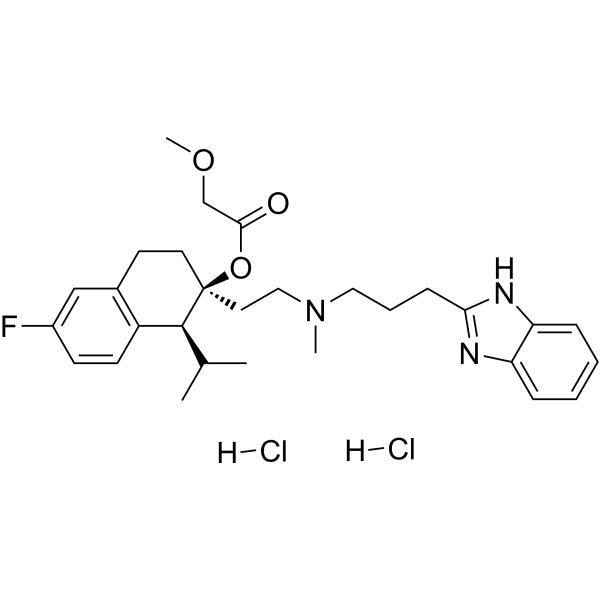
    Mibefradil dihydrochloride
    10+ Cited Publications

    Ro 40-5967 dihydrochloride

    Calcium Channel Cardiovascular Disease Cancer
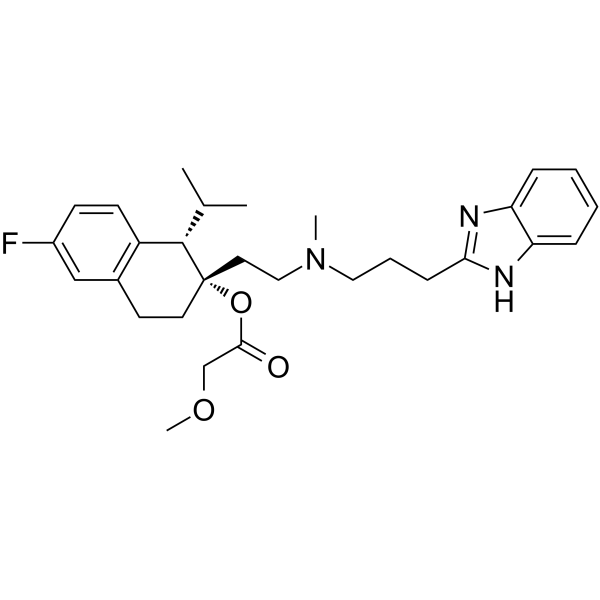
    Mibefradil dihydrochloride (Ro 40-5967 dihydrochloride) is a calcium channel blocker with moderate selectivity for T-type Ca 2+ channels (IC50s of 2.7 μM and 18.6 μM for T-type and L-type currents, respectively) .
    Mibefradil dihydrochloride
  • HY-W001160

    Endogenous Metabolite Calcium Channel nAChR Neurological Disease Endocrinology Cancer
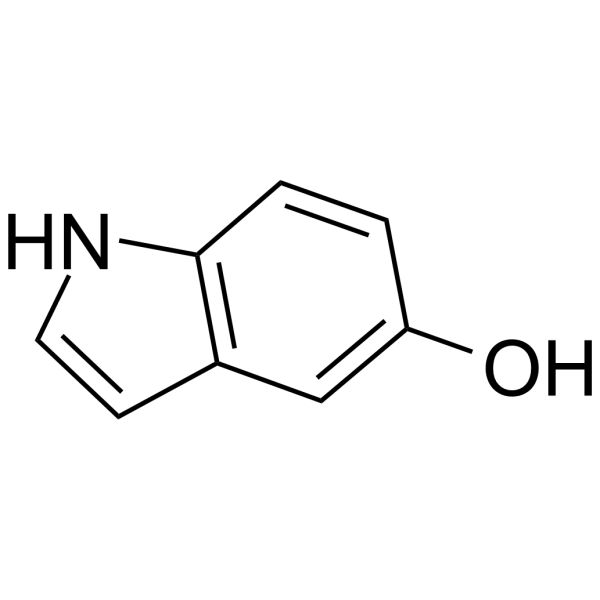
    5-Hydroxyindole is an orally active hydroxylated indole and tryptophan metabolite. 5-Hydroxyindole activates α7 nicotinic acetylcholine receptors and acts on intestinal L-type calcium channels. 5-Hydroxyindole slows down the desensitization of 5-HT3 receptor-mediated ion currents in cells. 5-Hydroxyindole causes convulsions and loss of consciousness. 5-Hydroxyindole is used in the study of neuroblastoma, schizophrenia, and diseases related to intestinal motility disorders .
    5-Hydroxyindole
  • HY-100607A

    ONO1101 hydrochloride

    Adrenergic Receptor Calcium Channel Potassium Channel Reactive Oxygen Species (ROS) Cardiovascular Disease Inflammation/Immunology Endocrinology
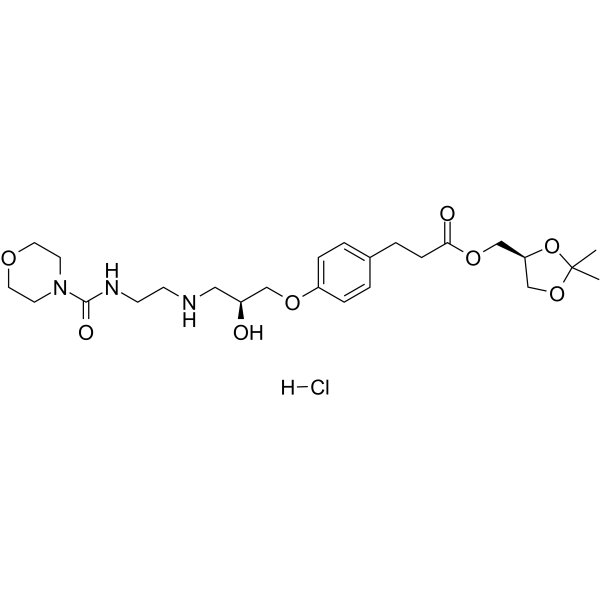
    Landiolol (ONO1101) hydrochloride is a highly selective, ultra-short-acting competitive inhibitor of β1 adrenergic receptors. Landiolol hydrochloride specifically blocks cardiac β1 receptors, reducing heart rate and myocardial oxygen consumption. Landiolol hydrochloride inhibits TNF-α-induced excessive mitochondrial oxygen consumption and reactive oxygen species production in a sepsis model, alleviating renal injury. Landiolol hydrochloride has little effect on cardiac ion channels (such as L-type calcium current and inward rectifier potassium current) and has a weak negative inotropic effect. Landiolol hydrochloride can be used for perioperative tachycardia control and protection studies of sepsis-related acute kidney injury .
    Landiolol hydrochloride
  • HY-15553

    Ro 40-5967

    Calcium Channel Cardiovascular Disease Cancer
    Mibefradil (Ro 40-5967) is a calcium channel blocker with moderate selectivity for T-type Ca 2+ channels displaying IC50s of 2.7 μM and 18.6 μM for T-type and L-type currents, respectively .
    Mibefradil
  • HY-18600A
    Azimilide dihydrochloride
    2 Publications Verification

    NE-10064 dihydrochloride

    Potassium Channel Calcium Channel Sodium Channel Cardiovascular Disease
    Azimilide (NE-10064) dihydrochloride is a class III antiarrhythmic agent, which works by blocking potassium channels in the heart. Azimilide dihydrochloride is a dual blocker of IKs (IC50 = 2.6 μM (2mM [K⁺]ₑ)) and IKr (IC50 = 1 μM (4 mM [K⁺])). Azimilide dihydrochloride blocked HERG channel at 0.1 and 1 Hz with IC50s of 1.4 μM and 5.2 μM respectively. Azimilide dihydrochloride also inhibits L-type calcium current (ICa) (IC50 = 17.8 μM) and sodium current (INa) (IC50 = 19 μM). Azimilide dihydrochloride can be used for the study of atrial fibrillation and ventricular fibrillation .
    Azimilide dihydrochloride
  • HY-W100287

    NF-κB p38 MAPK Interleukin Related IKK JNK β-catenin Wnt Neurological Disease Inflammation/Immunology Cancer
    Murrayafoline A is a carbazole alkaloid that can be extracted from Murraya tetramera. Murrayafoline A directly targets Specificity protein 1 (Sp1), thereby inhibiting NF-κB and MAPK signaling pathways. Murrayafoline a induces a G0/G1-phase arrest in platelet-derived growth factor (PDGF)-stimulated vascular smooth muscle cells. Murrayafoline A attenuates the Wnt/β-catenin pathway by promoting the degradation of intracellular β-catenin proteins. Murrayafoline A enhances the contraction of rat ventricular myocytes and L-type calcium current by activating protein kinase C. Murrayafoline A inhibits LPS (HY-D1056)-induced neuroinflammation in vivo. Murrayafoline A can be used for the study of inflammation, vascular complications and colon cancer .
    Murrayafoline A
  • HY-B0265A

    (R)-BAY-e 9736

    Calcium Channel Cardiovascular Disease Neurological Disease
    (R)-Nimodipine ((R)-BAY-e 9736) is an orally active, blood-brain barrier-permeable L-type calcium channel blocker with an IC50 of 5 nM. (R)-Nimodipine inhibits corticosterone release by blocking calcium channels on the hypothalamic-pituitary-adrenal axis, thereby reversing immobilization stress-induced memory impairment and behavioral abnormalities. (R)-Nimodipine is widely used in studies related to aneurysmal subarachnoid hemorrhage, cerebral ischemia, epilepsy, age-related degenerative neurological diseases, and alcohol intoxication .
    (R)-Nimodipine
  • HY-N3741

    Didrovaltratum

    Calcium Channel Reactive Oxygen Species (ROS) Autophagy Inflammation/Immunology Cancer
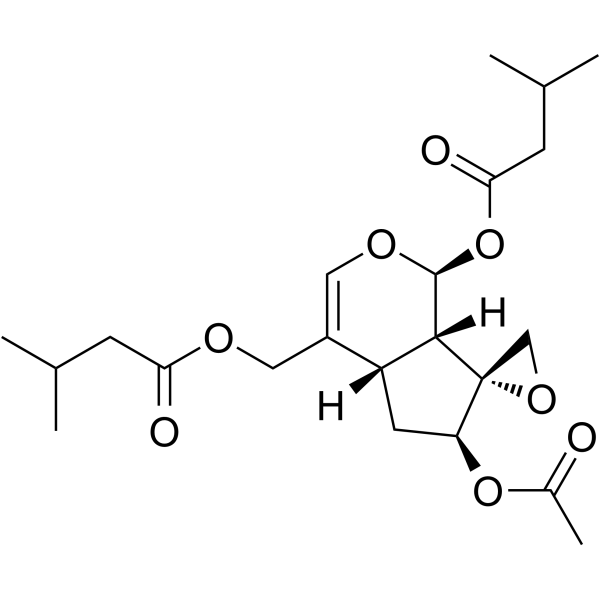
    Didrovaltrate (Didrovaltratum) is an L-type calcium channel blocker, ROS scavenger, autophagy enhancer, and lipid accumulation inhibitor. Didrovaltrate blocks L-type calcium currents in a concentration-dependent manner, shifts the current-voltage curve upward, modulates steady-state inactivation kinetics, and inhibits the nuclear translocation of glucocorticoid receptors. Didrovaltrate reduces ROS levels, downregulates the expression of muscle atrophy-related genes, enhances autophagy via lipophagy, and decreases Oleic acid-induced lipid accumulation. Didrovaltrate exhibits cytotoxic activity against cancer cells. Didrovaltrate can be used in research related to skeletal muscle atrophy, non-alcoholic fatty liver disease, breast cancer, lung cancer, gastric cancer, and prostate cancer .
    Didrovaltrate
  • HY-18600
    Azimilide
    2 Publications Verification

    NE-10064

    Potassium Channel Calcium Channel Sodium Channel Cardiovascular Disease
    Azimilide (NE-10064) is a class III antiarrhythmic agent, which works by blocking potassium channels in the heart. Azimilide is a dual blocker of IKs (IC50 = 2.6 μM (2mM [K⁺]ₑ)) and IKr (IC50 = 1 μM (4 mM [K⁺])). Azimilide blocked HERG channel at 0.1 and 1 Hz with IC50s of 1.4 μM and 5.2 μM respectively. Azimilide also inhibits L-type calcium current (ICa) (IC50 = 17.8 μM) and sodium current (INa) (IC50 = 19 μM). Azimilide can be used for the study of atrial fibrillation and ventricular fibrillation .
    Azimilide
  • HY-A0016S

    Isotope-Labeled Compounds mAChR Sodium Channel Calcium Channel Adrenergic Receptor Cytochrome P450 Autophagy Cardiovascular Disease
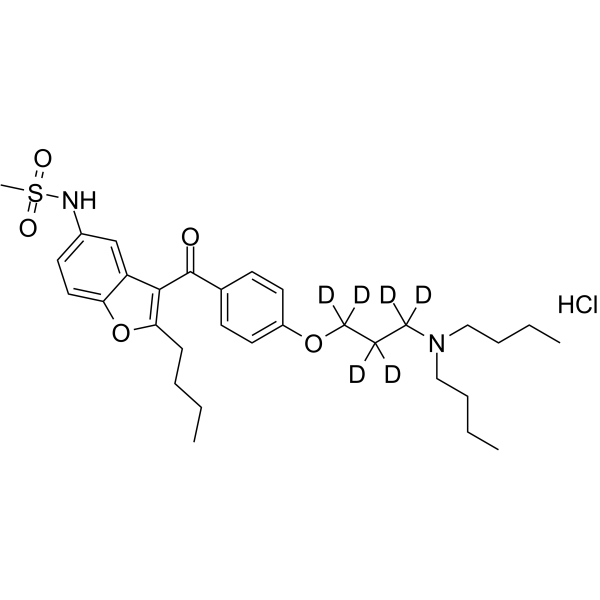
    Dronedarone-d6 (hydrochloride) is the deuterium labeled Dronedarone. Dronedarone hydrochloride, a derivative of Amiodarone (HY-14187), is a class III antiarrhythmic agent for the study of atrial fibrillation (AF) and atrial flutter. Dronedarone hydrochloride is a potent blocker of multiple ion currents, including potassium current, sodium current, and L-type calcium current, and exhibits antiadrenergic effects by noncompetitive binding to β-adrenergic receptors. Dronedarone hydrochloride is a substrate for and a moderate inhibitor of CYP3A4 .
    Dronedarone-d6 hydrochloride
  • HY-108163A

    Calcium Channel Potassium Channel Neurological Disease
    SB-237376 is a blocker of potassium and calcium channels. SB-237376 inhibits the rapidly activating delayed rectifier potassium current I(Kr) (IC50: 0.42 μM) and blocks the L-type calcium current I(Ca,L) at high concentrations .
    SB-237376
  • HY-124381

    5-HT Receptor Others
    ML10375 is a compound that modulates 5-HT4 and 5-HT2 receptors, affects gap junction coupling in rat atrial myocytes, and regulates intracellular cAMP concentration and L-type calcium current.
    ML10375
  • HY-A0016R

    SR 33589 (Standard)

    Reference Standards mAChR Sodium Channel Calcium Channel Adrenergic Receptor Cytochrome P450 Autophagy Cardiovascular Disease
    Dronedarone (Standard) is the analytical standard of Dronedarone. This product is intended for research and analytical applications. Dronedarone (SR 33589), a derivative of amiodarone (HY-14187), is a class III antiarrhythmic agent for the study of atrial fibrillation (AF) and atrial flutter. Dronedarone is a potent blocker of multiple ion currents, including potassium current, sodium current, and L-type calcium current, and exhibits antiadrenergic effects by noncompetitive binding to β-adrenergic receptors. Dronedarone is a substrate for and a moderate inhibitor of CYP3A4 .
    Dronedarone (Standard)
  • HY-P1384

    Somatostatin Receptor Neurological Disease
    L803 is a selective Somatostatin Receptor Subtype 4 (SST4) agonist. L803 inhibits L-type calcium channel currents (ICa). L803 is promising for research of retinal ganglion cell (RGC) degenerative diseases (e.g., glaucoma) .
    L803
  • HY-A0016S3

    SR 33589-d6

    Isotope-Labeled Compounds Sodium Channel Autophagy Cytochrome P450 Adrenergic Receptor mAChR Calcium Channel Cardiovascular Disease
    Dronedarone-d6 (SR 33589-d6) is deuterium labeled Dronedarone. Dronedarone (SR 33589), a derivative of amiodarone (HY-14187), is a class III antiarrhythmic agent for the study of atrial fibrillation (AF) and atrial flutter. Dronedarone is a potent blocker of multiple ion currents, including potassium current, sodium current, and L-type calcium current, and exhibits antiadrenergic effects by noncompetitive binding to β-adrenergic receptors. Dronedarone is a substrate for and a moderate inhibitor of CYP3A4 .
    Dronedarone-d6
  • HY-106761

    Calcium Channel Cardiovascular Disease Others
    Oxodipine, a dihydropyridine-type calcium antagonist, inhibits KCl-induced aortic contraction in rabbits and reduces cardiac force in less potent rat ventricular test-paper contractions. In rat cultured neonatal ventricular myocytes, Oxodipine reduces L-type Ca currents (I) with an IC50 of 0.24 μM, and against T-type Ca currents (I) with an IC50 of 0.41 μM. Oxodipine causes constipation in mice and gingival hyperplasia in dogs .
    Oxodipine
  • HY-108163

    Calcium Channel Potassium Channel Cardiovascular Disease
    SB-237376 (free base) is a potassium and calcium channel blocker. SB-237376 (free base) can inhibit the rapidly activating delayed rectifier potassium current I(Kr) (IC50 is 0.42 μM), and at high concentrations, it blocks the L-type calcium current I(Ca,L). In the rabbit ventricular model, SB-237376 (free base) can induce early afterdepolarizations (EADs) at a concentration of 3 µM. Compared to other IKr inhibitors such as dl-sotalol, SB-237376 has a lower proarrhythmic risk. SB-237376 (free base) holds potential for research in the field of arrhythmia-related diseases .
    SB-237376 free base
  • HY-116500A

    Calcium Channel Cardiovascular Disease
    AH-1058 is a newly synthesized antiarrhythmic agent that exhibits significant antiarrhythmic activity by delaying premature ventricular complexes and ventricular fibrillation in experimental arrhythmia models. AH-1058 effectively inhibits both ventricular tachycardia and ventricular fibrillation in the reperfusion-induced arrhythmia model in rats. AH-1058 demonstrates potent calcium channel-blocking effects, suppressing L-type Ca2+ currents in isolated cardiomyocytes.
    AH-1058
  • HY-100607

    ONO1101

    Adrenergic Receptor Calcium Channel Potassium Channel Reactive Oxygen Species (ROS) Cardiovascular Disease Inflammation/Immunology Endocrinology
    Landiolol (ONO1101) is a highly selective, ultra-short-acting competitive inhibitor of β1 adrenergic receptors. Landiolol specifically blocks cardiac β1 receptors, reducing heart rate and myocardial oxygen consumption. Landiolol inhibits TNF-α-induced excessive mitochondrial oxygen consumption and reactive oxygen species production in a sepsis model, alleviating renal injury. Landiolol has little effect on cardiac ion channels (such as L-type calcium current and inward rectifier potassium current) and has a weak negative inotropic effect. Landiolol can be used for perioperative tachycardia control and protection studies of sepsis-related acute kidney injury .
    Landiolol
  • HY-18600AS

    NE-10064-d8 dihydrochloride

    Isotope-Labeled Compounds Potassium Channel Calcium Channel Sodium Channel Cardiovascular Disease
    Azimilide-d8 (NE-10064-d8) dihydrochloride is the deuterium labeled Azimilide dihydrochloride (HY-18600A). Azimilide dihydrochloride is a class III antiarrhythmic agent, which works by blocking potassium channels in the heart. Azimilide dihydrochloride is a dual blocker of IKs (IC50 = 2.6 μM (2mM [K⁺]ₑ)) and IKr (IC50 = 1 μM (4 mM [K⁺])). Azimilide dihydrochloride blocked HERG channel at 0.1 and 1 Hz with IC50s of 1.4 μM and 5.2 μM respectively. Azimilide dihydrochloride also inhibits L-type calcium current (ICa) (IC50 = 17.8 μM) and sodium current (INa) (IC50 = 19 μM). Azimilide dihydrochloride can be used for the study of atrial fibrillation and ventricular fibrillation .
    Azimilide-d8 dihydrochloride
  • HY-182599

    Calcium Channel mAChR Neurological Disease
    RCC-36 hydrochloride is an L-type calcium channel inhibitor and competitive muscarinic receptor antagonist. RCC-36 hydrochloride inhibits L-type calcium currents in voltage- and concentration-dependent fashion with no effect on cardiac K + currents. RCC-36 hydrochloride suppresses maximum acetylcholine-induced contractile responses, inhibits detrusor muscle contractions induced by potassium chloride, calcium chloride, and electric field stimulation, including atropine-resistant contractions. RCC-36 hydrochloride can be used for the research of urinary frequency, urinary incontinence, and bladder overactivity .
    RCC-36 hydrochloride
  • HY-100607AR

    ONO1101 hydrochloride (Standard)

    Reference Standards Adrenergic Receptor Calcium Channel Potassium Channel Reactive Oxygen Species (ROS) Cardiovascular Disease Inflammation/Immunology Endocrinology
    Landiolol (ONO1101) hydrochloride (Standard) is the analytical standard of Landiolol hydrochloride (HY-100607A). This product is intended for research and analytical applications. Landiolol (ONO1101) hydrochloride is a highly selective, ultra-short-acting competitive inhibitor of β1 adrenergic receptors. Landiolol hydrochloride specifically blocks cardiac β1 receptors, reducing heart rate and myocardial oxygen consumption. Landiolol hydrochloride inhibits TNF-α-induced excessive mitochondrial oxygen consumption and reactive oxygen species production in a sepsis model, alleviating renal injury. Landiolol hydrochloride has little effect on cardiac ion channels (such as L-type calcium current and inward rectifier potassium current) and has a weak negative inotropic effect. Landiolol hydrochloride can be used for perioperative tachycardia control and protection studies of sepsis-related acute kidney injury .
    Landiolol hydrochloride (Standard)
  • HY-W001160R

    Reference Standards Endogenous Metabolite nAChR Calcium Channel Neurological Disease Endocrinology Cancer
    5-Hydroxyindole (Standard) is the analytical standard of 5-Hydroxyindole (HY-W001160). This product is intended for research and analytical applications. 5-Hydroxyindole is an orally active hydroxylated indole and tryptophan metabolite. 5-Hydroxyindole activates α7 nicotinic acetylcholine receptors and acts on intestinal L-type calcium channels. 5-Hydroxyindole slows down the desensitization of 5-HT3 receptor-mediated ion currents in cells. 5-Hydroxyindole causes convulsions and loss of consciousness. 5-Hydroxyindole is used in the study of neuroblastoma, schizophrenia, and diseases related to intestinal motility disorders .
    5-Hydroxyindole (Standard)
  • HY-124940

    Calcium Channel Potassium Channel Cardiovascular Disease
    CPU-228 is a complex class III antiarrhythmic agent. CPU-228 concentration-dependently blocks the activities of the rapid component 50 of the delayed rectifier potassium channel (IKr) and the L-type calcium channel (ICa,L), with an IC50 value of 0.909 μM for ICa,L current. CPU-228 produces negative inotropic effects and induces mild, non-frequency-dependent prolongation of the effective refractory period (ERP) in isolated left atria. CPU-228 reduces the incidence of torsades de pointes (TDP) in anesthetized rabbits and inhibits ischemia/reperfusion-induced arrhythmias in rats. CPU-228 can be used in studies related to torsades de pointes .
    CPU-228
  • HY-W100287R

    NF-κB Reference Standards p38 MAPK Interleukin Related IKK JNK β-catenin Wnt Neurological Disease Inflammation/Immunology Cancer
    Murrayafoline A (Standard) is the analytical standard of Murrayafoline A (HY-W100287). This product is intended for research and analytical applications. Murrayafoline A is a carbazole alkaloid that can be extracted from Murraya tetramera. Murrayafoline A directly targets Specificity protein 1 (Sp1), thereby inhibiting NF-κB and MAPK signaling pathways. Murrayafoline a induces a G0/G1-phase arrest in platelet-derived growth factor (PDGF)-stimulated vascular smooth muscle cells. Murrayafoline A attenuates the Wnt/β-catenin pathway by promoting the degradation of intracellular β-catenin proteins. Murrayafoline A enhances the contraction of rat ventricular myocytes and L-type calcium current by activating protein kinase C. Murrayafoline A inhibits LPS (HY-D1056)-induced neuroinflammation in vivo. Murrayafoline A can be used for the study of inflammation, vascular complications and colon cancer .
    Murrayafoline A (Standard)

Inquiry Online

Your information is safe with us. * Required Fields.

Salutation


Country or Region *

Applicant Name *


Organization Name *

Department *


Email Address *


Product Name *

Cat. No.


Requested quantity *

Phone Number *


Remarks

Inquiry Online

Inquiry Information

Product Name:
Cat. No.:
Quantity:
MCE Japan Authorized Agent:

