Search Result
Results for "
M1 mAChR
" in MedChemExpress (MCE) Product Catalog:
1
Biochemical Assay Reagents
13
Isotope-Labeled Compounds
| Cat. No. |
Product Name |
Target |
Research Areas |
Chemical Structure |
-
- HY-B0298A
-
|
HS-592 fumarate; Meclastine fumarate
|
Histamine Receptor
Apoptosis
mAChR
Pyroptosis
Keap1-Nrf2
p62
Autophagy
mTOR
IKK
|
Neurological Disease
Metabolic Disease
|
|
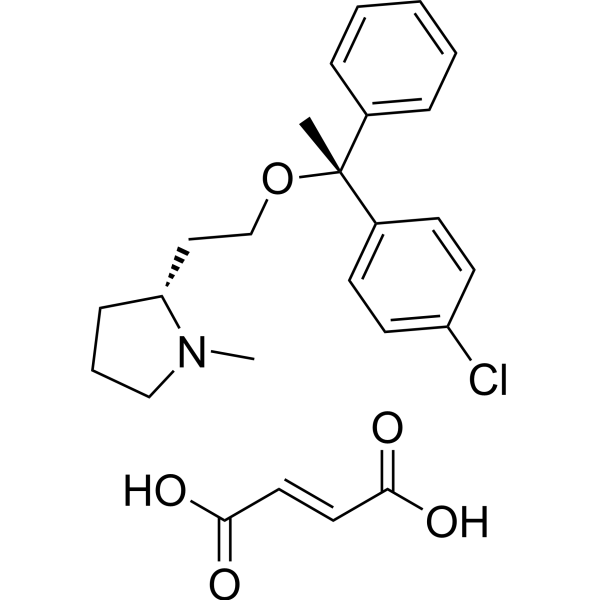
Clemastine (HS-592; Meclastine) fumarate is an orally active, blood-brain barrier-permeable H1 histamine receptor (H1 histamine receptor) antagonist with potent antiallergic effects. Clemastine fumarate also antagonizes muscarinic acetylcholine receptors (mAChR), particularly the M1 and M4 subtypes. In addition to antihistamine effects, Clemastine fumarate exhibits multiple pharmacological activities, especially in promoting central nervous system remyelination, activating autophagy and pyroptosis, exerting anti-apoptotic and neuroprotective effects, and suppressing inflammation .
|
-
-
- HY-12100
-
|
GSK573719A
|
mAChR
|
Inflammation/Immunology
Cancer
|
|
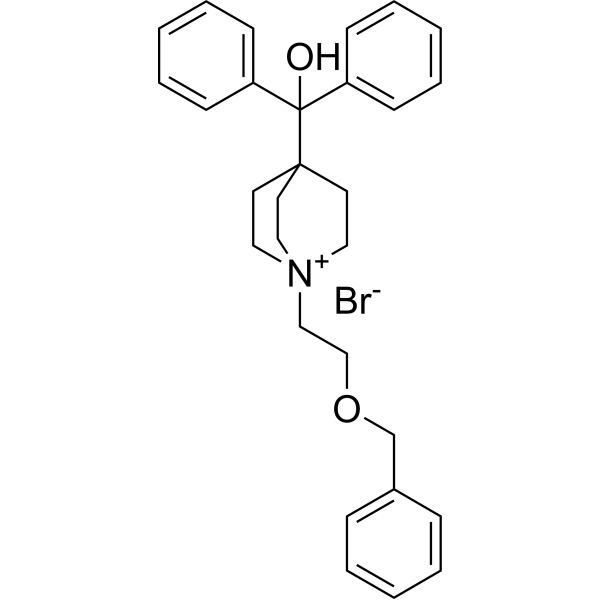
Umeclidinium bromide is a novel mAChR antagonist. The affinity (Ki) of Umeclidinium bromide for the cloned human M1-M5 mAChRs ranges from 0.05 to 0.16 nM.
|
-
-
- HY-B0406A
-
|
Carbamyl-β-methylcholine chloride
|
mAChR
|
Neurological Disease
Cancer
|
|
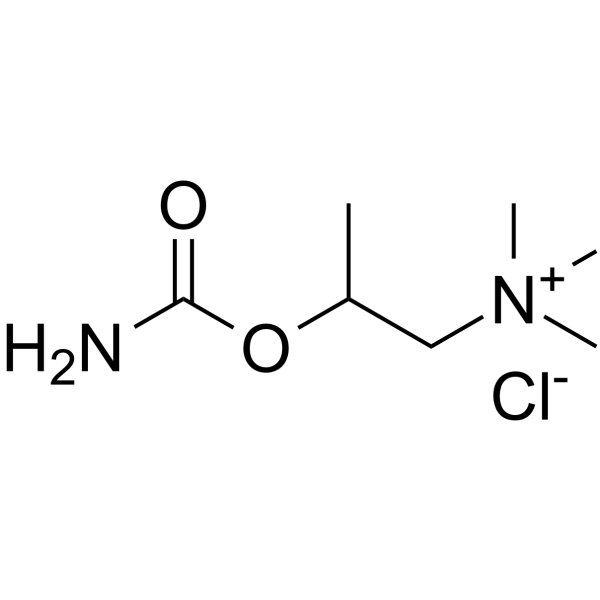
Bethanechol chloride (Carbamyl-β-methylcholine chloride), a parasympathomimetic agent, is a mAChR agonist that exerts its effects via directly stimulating the mAChR (M1, M2, M3, M4, and M5) of the parasympathetic nervous system .
|
-
-
- HY-B0461
-
|
|
mAChR
|
Neurological Disease
|
|
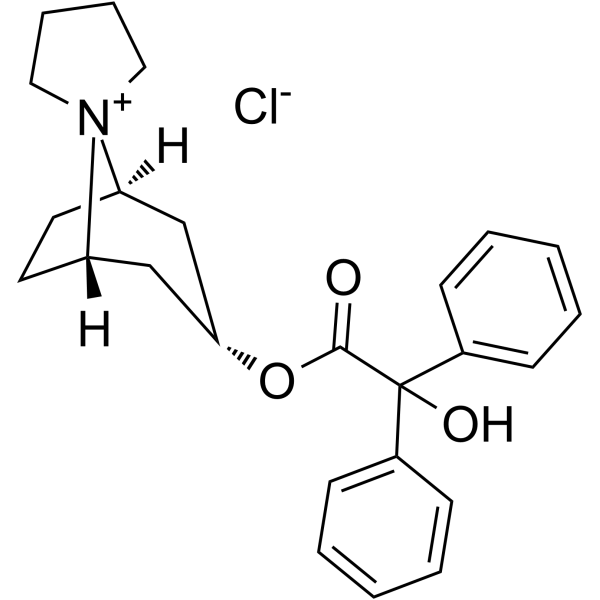
Trospium chloride is an orally active, specific and competitive antagonist of muscarinic cholinergic receptors (mAChRs), with antimuscarinic activity. Trospium chloride binds to muscarinic receptors M1, M2 and M3 with high affinity, but not nicotinic, cholinergic receptors .
|
-
-
- HY-A0030
-
|
|
mAChR
|
Neurological Disease
Metabolic Disease
Cancer
|
|
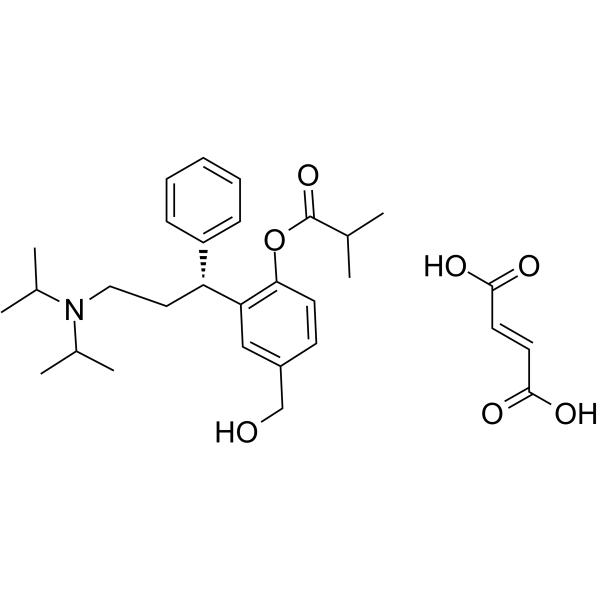
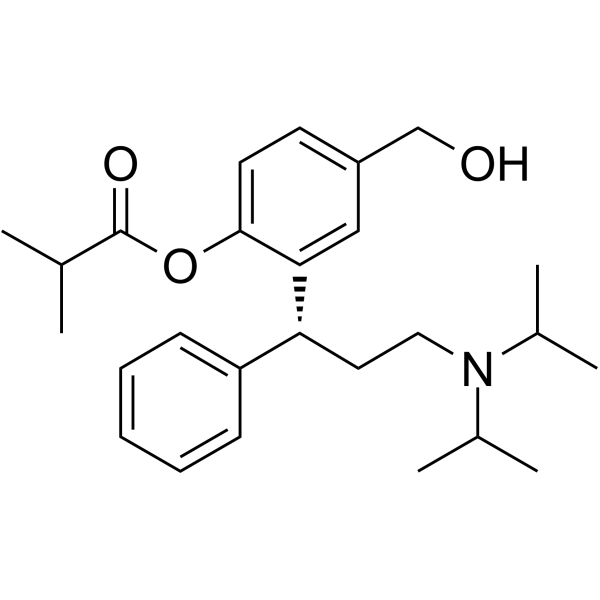
Fesoterodine Fumarate is an orally active, nonsubtype selective, competitive muscarinic receptor (mAChR) antagonist with pKi values of 8.0, 7.7, 7.4, 7.3, 7.5 for M1, M2, M3, M4, M5 receptors, respectively. Fesoterodine Fumarate is used for the overactive bladder (OAB) .
|
-
-
- HY-17037
-
|
LS 519; Pirenzepin dihydrochloride; Gastrozepin dihydrochloride
|
mAChR
|
Metabolic Disease
Cancer
|
|
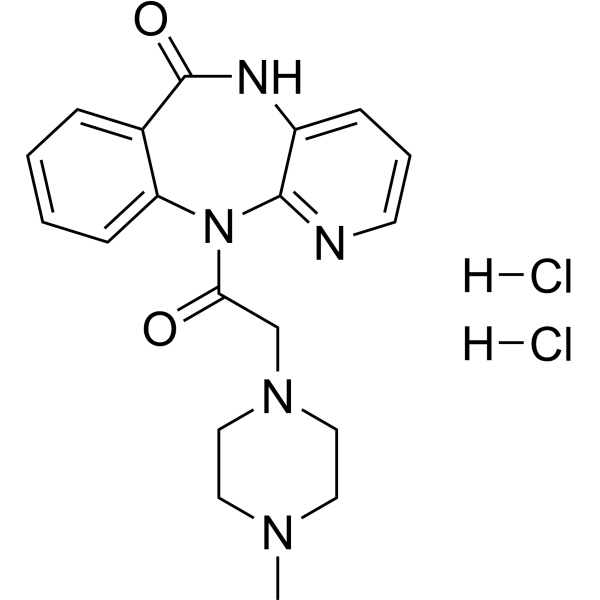
Pirenzepine (LS 519) dihydrochloride is a selective M1 mAChR (muscarinic acetylcholine receptor) antagonist, with poor penetration of the blood-brain barrier. Pirenzepine dihydrochloride reduces gastric acid secretion and reduces muscle spasm, can be used in peptic ulcers research. Pirenzepine dihydrochloride shows anti-proliferative activity to cancer cells .
|
-
-
- HY-B0298
-
Clemastine
Maximum Cited Publications
11 Publications Verification
HS-592; Meclastine
|
Histamine Receptor
mAChR
Autophagy
Apoptosis
Keap1-Nrf2
p62
mTOR
Pyroptosis
IKK
|
Cardiovascular Disease
Neurological Disease
Inflammation/Immunology
|
|
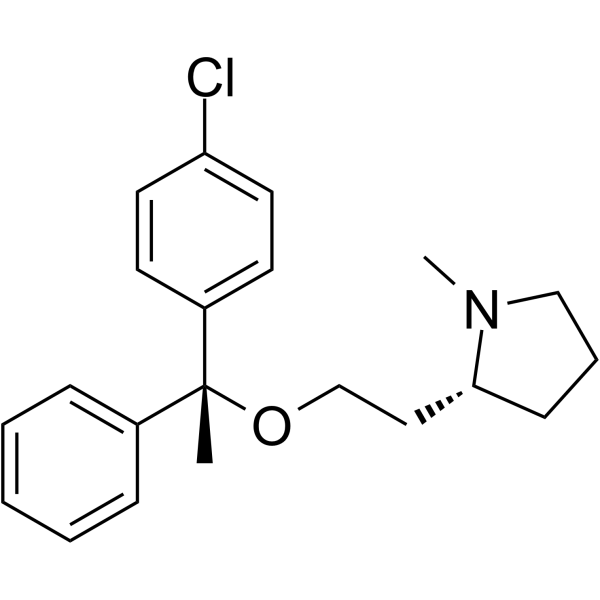
Clemastine (HS-592; Meclastine) is an orally active, blood-brain barrier-permeable H1 histamine receptor (H1 histamine receptor) antagonist with potent antiallergic effects. Clemastine also antagonizes muscarinic acetylcholine receptors (mAChR), particularly the M1 and M4 subtypes. In addition to antihistamine effects, Clemastine exhibits multiple pharmacological activities, especially in promoting central nervous system remyelination, activating autophagy and pyroptosis, exerting anti-apoptotic and neuroprotective effects, and suppressing inflammation .
|
-
-
- HY-108234
-
|
VU 255035
|
mAChR
|
Neurological Disease
|
|
VU0255035 is a highly selective and competitive M1 mAChR antagonist. VU0255035 blocks M1 mAChR signals to reduce epileptic seizures and regulate neuronal membrane potential. VU0255035 can be used in research related to central nervous system diseases, such as epilepsy, Parkinson's disease, and dystonia .
|
-
-
- HY-17037A
-
|
LS 519 free base; Pirenzepin; Gastrozepin
|
mAChR
|
Metabolic Disease
Cancer
|
|
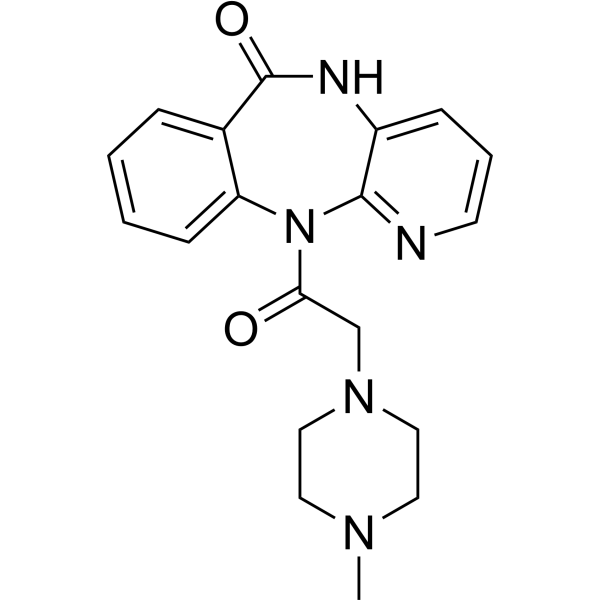
Pirenzepine (LS 519 free base) is a selective M1 mAChR (muscarinic acetylcholine receptor) antagonist, with poor penetration of the blood-brain barrier. Pirenzepine reduces gastric acid secretion and reduces muscle spasm, can be used in peptic ulcers research. Pirenzepine shows anti-proliferative activity to cancer cells .
|
-
-
- HY-101858
-
-
-
- HY-15618
-
|
M1 receptor modulator
|
mAChR
Calcium Channel
|
Neurological Disease
|
|
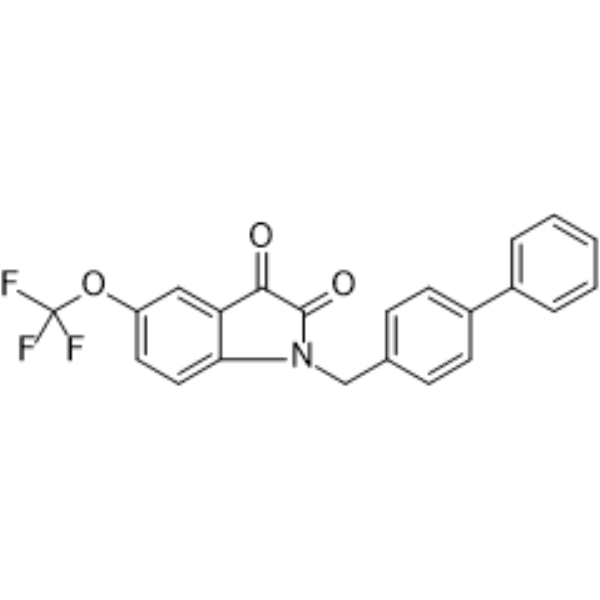
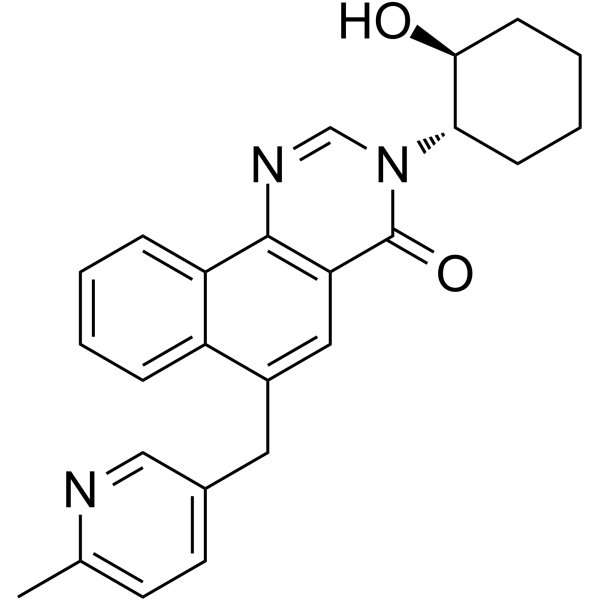
MK-7622 (M1 receptor modulator) is an orally active positive allosteric modulator of muscarinic M1 acetylcholine receptors (mAChRs). MK-7622 enhances ACh-induced calcium flux in CHO cells expressing human M1 receptors (EC50 = 21 nM) and shows robust agonist activity in rat M1-expressing CHO cells, increasing intracellular calcium. MK-7622 reverses Scopolamine (HY-N0296)-induced cognitive deficits in rhesus macaques in an object retrieval detour task. MK-7622 can be used for the study of Alzheimer's disease (AD) .
|
-
-
- HY-122743
-
Iperoxo
2 Publications Verification
|
mAChR
|
Neurological Disease
|
|
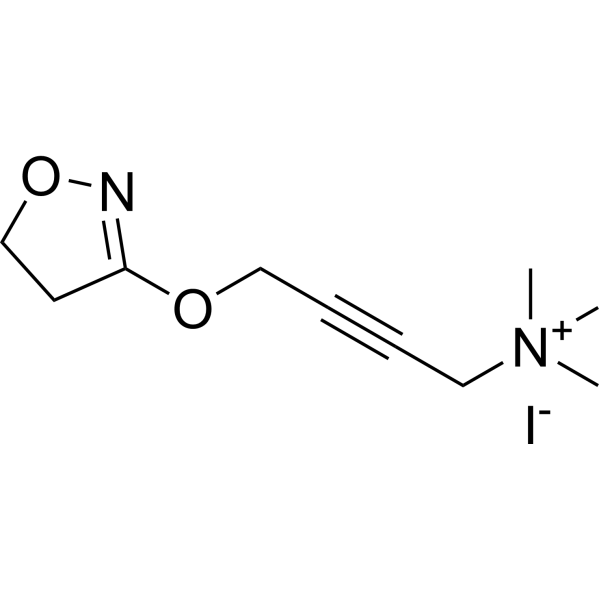
Iperoxo is a potent superagonist of muscarinic acetylcholine receptor (mAChR) that activates M1, M2 and M3 receptors with pEC50 of 9.87, 10.1 and 9.78. Iperoxo can be used for direct probing activation-related conformational transitions of muscarinic receptors when labeled with tritium .
|
-
-
- HY-70053
-
|
|
mAChR
|
Neurological Disease
Metabolic Disease
|
|
Fesoterodine is an orally active, nonsubtype selective, competitive muscarinic receptor (mAChR) antagonist with pKi values of 8.0, 7.7, 7.4, 7.3, 7.5 for M1, M2, M3, M4, M5 receptors, respectively. Fesoterodine is used for the overactive bladder (OAB) .
|
-
-
- HY-107111
-
|
|
mAChR
|
Neurological Disease
|
|
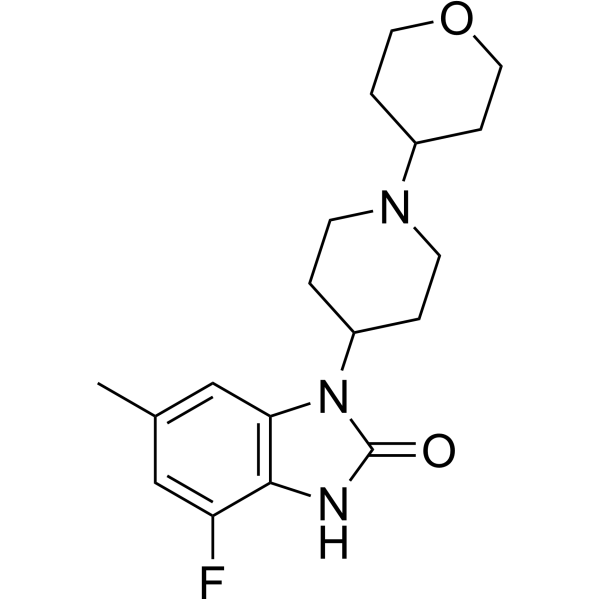
GSK1034702 is an orally active and allosteric agonist of M1 mAChR (pEC50=8.1) that can cross the blood-brain barrier. GSK1034702 activates the Gq/11 protein-mediated signaling pathway, enhancing neuronal firing and long-term potentiation (LTP) in the CA1 region of the hippocampus. GSK1034702 can modulate hippocampal function, improve memory encoding in the nicotine withdrawal cognitive dysfunction model, and show pro-cognitive effects in rodents. GSK1034702 can be used for the study of the mechanisms of cognitive impairment diseases such as Alzheimer's disease, and has certain peripheral M receptor activation-related side effects (such as gastrointestinal reactions) .
|
-
-
- HY-107651
-
|
|
mAChR
|
Metabolic Disease
|
|
VU 0365114 is a selective mAChR M5 positive allosteric modulator, with an EC50 of 2.7 μM, and >30 μM for M1, M2, M3 and M4 receptors. VU 0365114 increases insulin secretion stimulated by ACh in human β-cells .
|
-
-
- HY-B0662
-
|
KRP-197; ONO-8025
|
mAChR
Vasopressin Receptor
|
Neurological Disease
Endocrinology
|
|
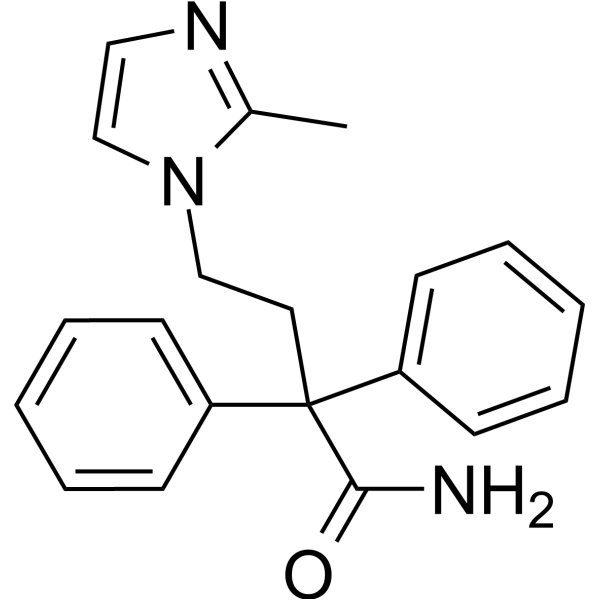
Imidafenacin (KRP-197; ONO-8025) is an orally active inhibitor of muscarinic (mAChR) M1 and M3 receptors. Imidafenacin potently inhibits bladder contraction in vivo and exerts an antidiuretic effect by enhancing the signaling pathway of vasopressin (antidiuretic hormone). Imidafenacin can be used in research related to overactive bladder .
|
-
-
- HY-177498
-
|
|
mAChR
|
Neurological Disease
|
|
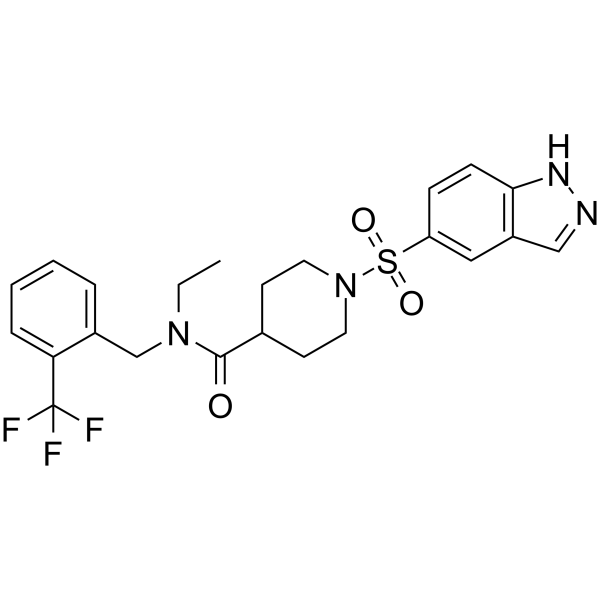
M1 mAChR modulator-1 (Example 66) is a muscarinic M1 receptor (mAChR1) positive allosteric modulator. M1 mAChR modulator-1 effectively promotes gastrointestinal motility and defecation in mouse models with low central permeability. M1 mAChR modulator-1 can be used for constipation research .
|
-
-
- HY-12439
-
ML380
1 Publications Verification
|
mAChR
|
Neurological Disease
|
|
ML380 is a potent, subtype-selective, and brain-penetrant positive allosteric modulator (PAM) of M5 mAChR, with EC50s of 190 and 610 nM for human and rat M5, respectively. ML380 exhibits moderate selectivity versus the M1 and M3 mAChR subtypes. ML380 could increase the affinity of ACh for the M5 mAChR .
|
-
-
- HY-12567
-
|
VU0483253
|
mAChR
|
Neurological Disease
|
|
ML375 (VU0483253) is a potent, highly selective, brain-penetrant and orally active M5 mAChR negative allosteric modulator (NAM) with IC50s of 300 nM and 790 nM for human and rat M5, respectively. ML375 is inactive at human and rat M1-M4 .
|
-
-
- HY-14562
-
|
|
mAChR
Amyloid-β
|
Neurological Disease
Inflammation/Immunology
|
|
TBPB (tert-butyl peroxybenzoate) is a highly selective, blood-brain-permeable M1 mAChR allosteric agonist (EC50=289 nM) with anti-schizophrenia and anti-inflammatory activities. TBPB can enhance the sensitivity of M1 receptors to acetylcholine, activate downstream signaling pathways, and inhibit the release of pro-inflammatory cytokines (TNF-α, IL-6). TBPB can regulate the processing of amyloid and can be used in the study of neurodegenerative diseases (such as Alzheimer's disease) and inflammation-related diseases (such as sepsis) .
|
-
-
- HY-114933
-
|
|
mAChR
|
Neurological Disease
Metabolic Disease
|
|
VU0119498 is a pan Gq mAChR M1, M3, M5 positive allosteric modulator (PAM), with EC50s of 6.04, 6.38, and 4.08 µM, respectively. VU0119498 has antidiabetic activity .
|
-
-
- HY-B0461R
-
|
|
mAChR
Reference Standards
|
Neurological Disease
|
|
Trospium (chloride) (Standard) is the analytical standard of Trospium (chloride). This product is intended for research and analytical applications. Trospium chloride is an orally active, specific and competitive antagonist of muscarinic cholinergic receptors (mAChRs), with antimuscarinic activity. Trospium chloride binds to muscarinic receptors M1, M2 and M3 with high affinity, but not nicotinic, cholinergic receptors .
|
-
-
- HY-76570
-
|
(Rac)-Desfesoterodine; (Rac)-PNU-200577
|
mAChR
|
Neurological Disease
|
|
(Rac)-5-Hydroxymethyl Tolterodine ((Rac)-Desfesoterodine), an active metabolite of Tolterodine, is a mAChR antagonist (Ki values of 2.3 nM, 2 nM, 2.5 nM, 2.8 nM, and 2.9 nM for M1, M2, M3, M4, and M5 receptors, respectively). (Rac)-5-Hydroxymethyl Tolterodine can be used for overactive bladder research .
|
-
-
- HY-B0406
-
|
Carbamyl-β-methylcholine
|
mAChR
|
Neurological Disease
Cancer
|
|
Bethanechol (Carbamyl-β-methylcholine), a parasympathomimetic agent, is a mAChR agonist that exerts its effects via directly stimulating the mAChR (M1, M2, M3, M4, and M5) of the parasympathetic nervous system .
|
-
-
- HY-B0461S
-
|
|
Isotope-Labeled Compounds
mAChR
|
Neurological Disease
|
|
Trospium-d8 (chloride) is the deuterium labeled Trospium chloride. Trospium chloride is an orally active, specific and competitive antagonist of muscarinic cholinergic receptors (mAChRs), with antimuscarinic activity. Trospium chloride binds to muscarinic receptors M1, M2 and M3 with high affinity, but not nicotinic, cholinergic receptors .
|
-
-
- HY-70053A
-
|
|
mAChR
|
Neurological Disease
Metabolic Disease
Cancer
|
|
Fesoterodine L-mandelate is an orally active, nonsubtype selective, competitive muscarinic receptor (mAChR) antagonist with pKi values of 8.0, 7.7, 7.4, 7.3, 7.5 for M1, M2, M3, M4, M5 receptors, respectively. Fesoterodine L-mandelate is used for the overactive bladder (OAB) .
|
-
-
- HY-119918
-
|
|
mAChR
|
Neurological Disease
|
|
Cycrimine is an orally active muscarinic cholinergic receptor (mAChR) M1 antagonist, reduces the acetylcholine levels in parkinson model. Cycrimine shows antispasmodic activity, can be used in studies of behavioral and mental disorder .
|
-
-
- HY-A0030S
-
|
|
mAChR
|
Metabolic Disease
|
|
Fesoterodine-d7 (fumarate) is the deuterium labeled Fesoterodine fumarate . Fesoterodine Fumarate is an orally active, nonsubtype selective, competitive muscarinic receptor (mAChR) antagonist with pKi values of 8.0, 7.7, 7.4, 7.3, 7.5 for M1, M2, M3, M4, M5 receptors, respectively. Fesoterodine Fumarate is used for the overactive bladder (OAB) .
|
-
-
- HY-W037331
-
|
Bis(4-fluorophenyl)methanol
|
mAChR
|
Others
|
|
4,4-Difluorobenzhydrol is a precursor of a mAChR antagonist, and its derivative 4,4-Difluorobenzhydrol Carbamate can selectively target the M1 subtype .
|
-
-
- HY-65036
-
|
4-Bromo-2-pyridone
|
Biochemical Assay Reagents
Drug Intermediate
|
Neurological Disease
|
|
4-Bromo-2-hydroxypyridine is an intermediate. 4-Bromo-2-hydroxypyridine can be used to synthesize M1 muscarinic acetylcholine receptor (M1 mAChR) positive allosteric modulators. 4-Bromo-2-hydroxypyridine can be used in the research of Alzheimer's disease and schizophrenia .
|
-
-
- HY-118356
-
|
|
Neurokinin Receptor
mAChR
|
Neurological Disease
|
|
WIN 62,577 is a rat-specific, but non-human, NK1 receptor antagonist. WIN 62,577 interacts with M1-M4 mAChRs and is an allosteric enhancer of acetylcholine affinity targeting the M3 receptor.
|
-
-
- HY-B0406AS
-
|
Carbamyl-β-methylcholine-d6 chloride
|
Isotope-Labeled Compounds
mAChR
|
Neurological Disease
|
|
Bethanechol-d6 (chloride) is the deuterium labeled Bethanechol chloride. Bethanechol chloride (Carbamyl-β-methylcholine chloride), a parasympathomimetic agent, is a mAChR agonist that exerts its effects via directly stimulating the mAChR (M1, M2, M3, M4, and M5) of the parasympathetic nervous system .
|
-
-
- HY-108171A
-
|
|
mAChR
|
Inflammation/Immunology
|
|
Hexocyclium methylsulfate is a potent mAChR antagonist with pKi values of 8.9, 7.7, 8.4, 8.8 for M1, M2, M3, and M4 subtype, respectively. Hexocyclium methylsulfate has the potential for the research of duodenal ulcer and irritable bowel syndrome .
|
-
-
- HY-159578S
-
|
|
mAChR
|
Neurological Disease
|
|
VU6036864 (compound 45) is an orally active, selective mAChR M5 antagonist with IC50=20 nM for human M5. VU6036864 is >500-fold selective for human M1-4, with BBB characteristic and high oral bioavailability (%F>100%) .
|
-
-
- HY-12158
-
|
|
mAChR
|
Neurological Disease
|
|
VU0238441 is a pan muscarinic acetylcholine receptor (mAChR) positive allosteric modulator (PAM) with EC50s of 3.2 μM, 2.8 μM, 2.2 μM, 2.1 μM, >10 μM for M1, M2, M3, M5 and M4, respectively .
|
-
-
- HY-101679A
-
|
|
mAChR
|
Neurological Disease
|
|
YM-58790 free base is a potent antagonist of mAChR. YM-58790 free base binds M1, M2, M3 with Ki values of 28 nM, 260 nM, and 15 nM. YM-58790 free base exhibits potent inhibitory activity on bladder pressuer in reflexly-evoked rhythmic contraction in rats .
|
-
-
- HY-116569
-
-
-
- HY-175532
-
|
|
mAChR
|
Neurological Disease
|
|
M4 mAChR Modulator-2 is an orally active, selective, brain-penetrant positive allosteric modulator (PAM) of the M4 muscarinic acetylcholine receptor (M4 mAChR) (EC50 = 513 nM). M4 mAChR Modulator-2 exhibits high target selectivity, showing negligible affinity and low inhibition rates for non-target receptors (D1R/D2R/D3R, 5-HT subtypes, κ/δ/μ opioid receptors, H1, M1/M2) while specifically binding to M4 mAChR with a Ki of 377 nM and an inhibition rate of 62.8%. M4 mAChR Modulator-2 reverses Dizocilpine (MK-801) (HY-15084B)-induced hyperlocomotion in mice. M4 mAChR Modulator-2 can be used for the study of schizophrenia
|
-
-
- HY-120576
-
|
VU0405652
|
mAChR
|
Neurological Disease
|
|
ML169 (VU0405652) is a potent, selective and brain penetrant positive allosteric modulator (PAM) of M1 mAChR, with an EC50 of 1.38 µM. ML169 is a MLPCN probe and can be used for Alzheimer’s disease .
|
-
-
- HY-148961
-
|
|
mAChR
|
Neurological Disease
|
|
HTL-9936 is a selective M1 muscarinic acetylcholine receptor (M1-mAChR) agonist. HTL-9936 is promising for research of neurodegenerative disorders (e.g., Alzheimer’s) .
|
-
-
- HY-149732
-
|
|
mAChR
|
Neurological Disease
|
|
M1/M4 muscarinic agonist 3 (compound 44) is a muscarinic mAChR M1/M4 agonist with EC50s of 31 nM and 9.3 nM, respectively .
|
-
-
- HY-149731
-
|
|
mAChR
|
Neurological Disease
|
|
M1/M2/M4 muscarinic agonist 2 (compound 43) is a muscarinic mAChR M1/M2/M4 agonist with EC50s of 30 nM, 200 nM and 6.2 nM, respectively .
|
-
-
- HY-155367
-
|
|
mAChR
|
Neurological Disease
|
|
mAChR antagonist 1 (compound 4a) is a mAChR antagonist with Ki values of 255 nM, 121 nM, 158 nM, and 255 nM for M1, M3, M4, and M5 subtype, respectively .
|
-
-
- HY-149733
-
|
|
mAChR
|
Neurological Disease
|
|
M1/M2/M4 muscarinic agonist 3 (compound 45) is a muscarinic mAChR M1/M2/M4 agonist with EC50s of 3.2 nM, 32 nM and 1.7 nM, respectively .
|
-
-
- HY-B1789
-
|
|
mAChR
|
Neurological Disease
|
|
Telenzepine is an antimuscarinic agent with Kis of 0.94 nM (M1 mAChR) and 17.8 nM (M2 mAChR) binding to muscarinic receptors. Telenzepine effectively blocks synaptic transmission promoted by muscarinic or M1 receptor agonists. Thus, Telenzepine can reduce the amplitude of extracellular slow excitatory postsynaptic potentials (EC50=38 nM) and slow inhibitory postsynaptic potentials (EC50=253 nM) .
|
-
-
- HY-12100S1
-
|
GSK573719A-d10
|
mAChR
|
Inflammation/Immunology
|
|
Umeclidinium-d10 (bromide) is the deuterium labeled Umeclidinium bromide. Umeclidinium bromide is a novel mAChR antagonist. The affinity (Ki) of Umeclidinium bromide for the cloned human M1-M5 mAChRs ranges from 0.05 to 0.16 nM.
|
-
-
- HY-12100S
-
|
GSK573719A-d5
|
Isotope-Labeled Compounds
mAChR
|
Inflammation/Immunology
|
|
Umeclidinium-d5 (bromide) is the deuterium labeled Umeclidinium bromide. Umeclidinium bromide is a novel mAChR antagonist. The affinity (Ki) of Umeclidinium bromide for the cloned human M1-M5 mAChRs ranges from 0.05 to 0.16 nM.
|
-
-
- HY-16489A
-
|
|
mAChR
Calcium Channel
|
Neurological Disease
|
|
Terodiline hydrochloride is an M1-selective muscarinic receptor (mAChR) antagonist with Kbs of 15, 160, 280, and 198 nM in rabbit vas deferens (M1), atria (M2), bladder (M3) and ileal muscle (M3), respectively. Terodiline hydrochloride also is a Ca 2+ blocker. Terodiline hydrochloride acts as a treatment for urinary frequency and urge incontinence .
|
-
-
- HY-170032
-
|
|
mAChR
|
Neurological Disease
|
|
Oxotremorine is an agonist for mAChR, that activates M1 and M3 acetylcholine receptors. Oxotremorine exhibits nicotine-like effects in drug discrimination experiments in macaques .
|
-
-
- HY-U00104
-
|
|
mAChR
|
Endocrinology
|
|
YM-46303 is an mAChR antagonist which exhibits the highest affinities for M1 and M3 receptors, and selectivity for M3 over M2 receptor.
|
-
- HY-12100R
-
|
GSK573719A (Standard)
|
Reference Standards
mAChR
|
Inflammation/Immunology
Cancer
|
|
Umeclidinium (bromide) (Standard) is the analytical standard of Umeclidinium (bromide). This product is intended for research and analytical applications. Umeclidinium bromide is a novel mAChR antagonist. The affinity (Ki) of Umeclidinium bromide for the cloned human M1-M5 mAChRs ranges from 0.05 to 0.16 nM.
|
-
- HY-117966
-
|
|
mAChR
|
Cardiovascular Disease
|
|
Bibn 140 is a pyridine derivative substituted with a benzene ring, which has high affinity (Ki: 12 nM) and selectivity for M2 mAChR receptors over M1 receptors .
|
-
- HY-119772
-
|
ML137
|
Cholinesterase (ChE)
|
Neurological Disease
|
|
VU0366369 (ML137) is a selective positive allosteric modulator (PAM) for mAChR M1 with an EC50 of 830 nM. VU0366369 can be used in research about central nervous system diseases .
|
-
- HY-B0406AR
-
|
Carbamyl-β-methylcholine chloride (Standard)
|
mAChR
Reference Standards
|
Neurological Disease
Cancer
|
|
Bethanechol (chloride) (Standard) is the analytical standard of Bethanechol (chloride). This product is intended for research and analytical applications. Bethanechol chloride (Carbamyl-β-methylcholine chloride), a parasympathomimetic agent, is a mAChR agonist that exerts its effects via directly stimulating the mAChR (M1, M2, M3, M4, and M5) of the parasympathetic nervous system .
|
-
- HY-128783
-
|
|
mAChR
|
Neurological Disease
|
|
VU0090157 is a positive allosteric modulator (PAM) of the M1 muscarinic acetylcholine receptor (mAChR). VU0090157 increases the affinity of ACh by binding to the allosteric site. VU0090157 can be used in the study of schizophrenia and Alzheimer's disease .
|
-
- HY-119333
-
|
|
mAChR
|
Neurological Disease
|
|
NNC 11-1607 is a selective M1/M4 muscarinic acetylcholine receptor (mAChR) agonist. NNC 11-1607 inhibits Forskolin (HY-15371)-stimulated cAMP accumulation in Chinese hamster ovary cells expressing the human M2 or M4 mAChR. NNC 11-1607 is promising for research of central nervous system disorders, such as Alzheimer’s disease and schizophrenia .
|
-
- HY-101679
-
|
|
mAChR
|
Neurological Disease
|
|
YM-58790 is a potent antagonist of mAChR. YM-58790 binds M1, M2, M3 with Ki values of 28 nM, 260 nM, and 15 nM. YM-58790 exhibits potent inhibitory activity on bladder pressuer in reflexly-evoked rhythmic contraction in rats .
|
-
- HY-B0662R
-
|
KRP-197 (Standard); ONO-8025 (Standard)
|
Reference Standards
mAChR
|
Neurological Disease
Endocrinology
|
|
Imidafenacin (KRP-197; ONO-8025) is an orally active inhibitor of muscarinic (mAChR) M1 and M3 receptors. Imidafenacin potently inhibits bladder contraction in vivo and exerts an antidiuretic effect by enhancing the signaling pathway of vasopressin (antidiuretic hormone). Imidafenacin can be used in research related to overactive bladder .
|
-
- HY-B0662A
-
|
KRP-197 hydrochloride; ONO-8025 hydrochloride
|
mAChR
Vasopressin Receptor
|
Neurological Disease
Endocrinology
|
|
Imidafenacin (KRP-197; ONO-8025) hydrochloride is an orally active inhibitor of muscarinic (mAChR) M1 and M3 receptors. Imidafenacin hydrochloride potently inhibits bladder contraction in vivo and exerts an antidiuretic effect by enhancing the signaling pathway of vasopressin (antidiuretic hormone). Imidafenacin hydrochloride can be used in research related to overactive bladder .
|
-
- HY-17037R
-
|
LS 519 (Standard); Pirenzepin dihydrochloride (Standard); Gastrozepin dihydrochloride (Standard)
|
Reference Standards
mAChR
|
Metabolic Disease
Cancer
|
|
Pirenzepine (dihydrochloride) (Standard) is the analytical standard of Pirenzepine (dihydrochloride). This product is intended for research and analytical applications. Pirenzepine (LS 519) dihydrochloride is a selective M1 mAChR (muscarinic acetylcholine receptor) antagonist. Pirenzepine dihydrochloride reduces gastric acid secretion and reduces muscle spasm, can be used in peptic ulcers research. Pirenzepine dihydrochloride shows anti-proliferative activity to cancer cells .
|
-
- HY-17037AR
-
|
LS 519 free base (Standard); Pirenzepin (Standard); Gastrozepin (Standard)
|
mAChR
Reference Standards
|
Metabolic Disease
Cancer
|
|
Pirenzepine (Standard) is the analytical standard of Pirenzepine. This product is intended for research and analytical applications. Pirenzepine (LS 519 free base) is a selective M1 mAChR (muscarinic acetylcholine receptor) antagonist. Pirenzepine reduces gastric acid secretion and reduces muscle spasm, can be used in peptic ulcers research. Pirenzepine shows anti-proliferative activity to cancer cells .
|
-
- HY-76570A
-
|
(Rac)-Desfesoterodine hydrochloride; (Rac)-PNU-200577 hydrochloride
|
mAChR
|
Neurological Disease
|
|
(Rac)-5-Hydroxymethyl Tolterodine ((Rac)-Desfesoterodine) hydrochloride, an active metabolite of Tolterodine, is a mAChR antagonist (Ki values of 2.3 nM, 2 nM, 2.5 nM, 2.8 nM, and 2.9 nM for M1, M2, M3, M4, and M5 receptors, respectively). (Rac)-5-Hydroxymethyl Tolterodine hydrochloride can be used for overactive bladder research .
|
-
- HY-70053S
-
|
|
Isotope-Labeled Compounds
mAChR
|
Neurological Disease
Metabolic Disease
|
|
(Rac)-Fesoterodine-d14 fumarate is a labelled racemic Fesoterodine. Fesoterodine is an orally active, nonsubtype selective, competitive muscarinic receptor (mAChR) antagonist with pKivalues of 8.0, 7.7, 7.4, 7.3, 7.5 for M1, M2, M3, M4, M5 receptors, respectively. Fesoterodine is used for the overactive bladder (OAB) .
|
-
- HY-A0030R
-
|
|
Reference Standards
mAChR
|
Neurological Disease
Metabolic Disease
Cancer
|
|
Fesoterodine (fumarate) (Standard) is the analytical standard of Fesoterodine (fumarate). This product is intended for research and analytical applications. Fesoterodine Fumarate is an orally active, nonsubtype selective, competitive muscarinic receptor (mAChR) antagonist with pKi values of 8.0, 7.7, 7.4, 7.3, 7.5 for M1, M2, M3, M4, M5 receptors, respectively. Fesoterodine Fumarate is used for the overactive bladder (OAB) .
|
-
- HY-W720879
-
|
|
Isotope-Labeled Compounds
mAChR
|
Metabolic Disease
|
|
Fesoterodine-d3 is the deuterium labeled Fesoterodine (HY-70053). Fesoterodine is an orally active, nonsubtype selective, competitive muscarinic receptor (mAChR) antagonist with pKi values of 8.0, 7.7, 7.4, 7.3, 7.5 for M1, M2, M3, M4, M5 receptors, respectively. Fesoterodine is used for the overactive bladder (OAB) .
|
-
- HY-17037S1
-
|
LS 519-d8 dihydrochloride; Pirenzepin-d8 dihydrochloride; Gastrozepin-d8 dihydrochloride
|
Isotope-Labeled Compounds
mAChR
|
Cancer
|
|
Pirenzepine-d8 (LS 519-d8; Pirenzepin-d8) dihydrochloride is a deuterium labeled Pirenzepine (dihydrochloride) (HY-17037). Pirenzepine (LS 519) dihydrochloride is a selective M1 mAChR (muscarinic acetylcholine receptor) antagonist. Pirenzepine dihydrochloride reduces gastric acid secretion and reduces muscle spasm, can be used in peptic ulcers research. Pirenzepine dihydrochloride shows anti-proliferative activity to cancer cells .
|
-
- HY-17037AS
-
|
LS 519 free base-d11; Pirenzepin-d11; Gastrozepin-d11
|
Isotope-Labeled Compounds
mAChR
|
Cancer
|
|
Pirenzepine-d11 (LS 519 (free base)-d11; Pirenzepin-d11; Gastrozepin-d11) is the deuterium labeled Pirenzepine (HY-17037A). Pirenzepine (LS 519 free base) is a selective M1 mAChR (muscarinic acetylcholine receptor) antagonist. Pirenzepine reduces gastric acid secretion and reduces muscle spasm, can be used in peptic ulcers research. Pirenzepine shows anti-proliferative activity to cancer cells .
|
-
- HY-76570S1
-
|
|
Isotope-Labeled Compounds
mAChR
|
Neurological Disease
|
|
5-Hydroxymethyl Tolterodine-d14 (formate) is deuterium labeled (Rac)-5-Hydroxymethyl Tolterodine. (Rac)-5-Hydroxymethyl Tolterodine ((Rac)-Desfesoterodine), an active metabolite of Tolterodine, is a mAChR antagonist (Ki values of 2.3 nM, 2 nM, 2.5 nM, 2.8 nM, and 2.9 nM for M1, M2, M3, M4, and M5 receptors, respectively). (Rac)-5-Hydroxymethyl Tolterodine can be used for overactive bladder research .
|
-
- HY-76570S
-
|
(Rac)-Desfesoterodine-d14; (Rac)-PNU-200577-d14
|
Isotope-Labeled Compounds
mAChR
|
Neurological Disease
|
|
(Rac)-5-Hydroxymethyl Tolterodine-d14 is the deuterium labeled (Rac)-5-Hydroxymethyl Tolterodine. (Rac)-5-Hydroxymethyl Tolterodine ((Rac)-Desfesoterodine), an active metabolite of Tolterodine, is a mAChR antagonist (Ki values of 2.3 nM, 2 nM, 2.5 nM, 2.8 nM, and 2.9 nM for M1, M2, M3, M4, and M5 receptors, respectively). (Rac)-5-Hydroxymethyl Tolterodine can be used for overactive bladder research .
|
-
- HY-B0298AS
-
|
HS-592-d5 fumarate; Meclastine-d5 fumarate
|
Isotope-Labeled Compounds
Histamine Receptor
Apoptosis
mAChR
Pyroptosis
Keap1-Nrf2
p62
Autophagy
mTOR
IKK
|
Neurological Disease
Metabolic Disease
|
|
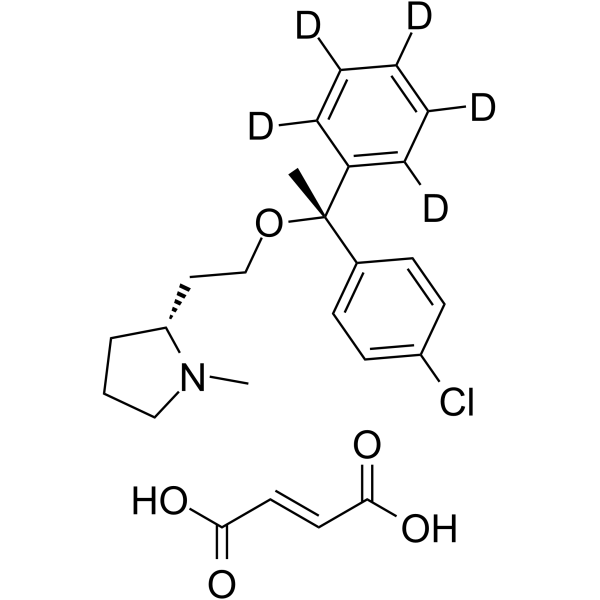
Clemastine (HS-592; Meclastine)-d5 fumarate is the deuterium labeled Clemastine fumarate. Clemastine fumarate is an orally active, blood-brain barrier-permeable H1 histamine receptor (H1 histamine receptor) antagonist with potent antiallergic effects. Clemastine fumarate also antagonizes muscarinic acetylcholine receptors (mAChR), particularly the M1 and M4 subtypes. In addition to antihistamine effects, Clemastine fumarate exhibits multiple pharmacological activities, especially in promoting central nervous system remyelination, activating autophagy and pyroptosis, exerting anti-apoptotic and neuroprotective effects, and suppressing inflammation .
|
-
- HY-P5846
-
|
MT3
|
mAChR
Adrenergic Receptor
|
Neurological Disease
|
|
Muscarinic toxin 3 (MT3) is a potent and non-competitive mAChR and adrenoceptors antagonist with pIC50s of 6.71, 8.79, 8.86, 7.57, 8.13, 8.49, <6.5, 7.29 against M1, M4, α1A, α1B, α1D,α2A,α2B and α2C receptors, respectively. Muscarinic toxin 3 displays prominent adrenoceptor activity .
|
-
- HY-B0298AR
-
|
HS-592 fumarate (Standard); Meclastine fumarate (Standard)
|
Reference Standards
Histamine Receptor
Apoptosis
mAChR
Pyroptosis
Keap1-Nrf2
p62
Autophagy
mTOR
IKK
|
Neurological Disease
Metabolic Disease
|
|
Clemastine (HS-592; Meclastine) fumarate (Standard) is the analytical standard of Clemastine fumarate. This product is intended for research and analytical applications. Clemastine fumarate is an orally active, blood-brain barrier-permeable H1 histamine receptor (H1 histamine receptor) antagonist with potent antiallergic effects. Clemastine fumarate also antagonizes muscarinic acetylcholine receptors (mAChR), particularly the M1 and M4 subtypes. In addition to antihistamine effects, Clemastine fumarate exhibits multiple pharmacological activities, especially in promoting central nervous system remyelination, activating autophagy and pyroptosis, exerting anti-apoptotic and neuroprotective effects, and suppressing inflammation .
|
-
- HY-107111A
-
|
|
Cholinesterase (ChE)
mAChR
|
Neurological Disease
|
|
GSK1034702 hydrochloride is an orally active and allosteric agonist of M1 mAChR (pEC50=8.1) that can cross the blood-brain barrier. GSK1034702 hydrochloride activates the Gq/11 protein-mediated signaling pathway, enhancing neuronal firing and long-term potentiation (LTP) in the CA1 region of the hippocampus. GSK1034702 hydrochloride can modulate hippocampal function, improve memory encoding in the nicotine withdrawal cognitive dysfunction model, and show pro-cognitive effects in rodents. GSK1034702 hydrochloride can be used for the study of the mechanisms of cognitive impairment diseases such as Alzheimer's disease, and has certain peripheral M receptor activation-related side effects (such as gastrointestinal reactions) .
|
-
- HY-108234R
-
|
VU 255035 (Standard)
|
Reference Standards
mAChR
|
Neurological Disease
|
|
VU 0255035 (Standard) is the analytical standard of VU 0255035 (HY-108234). This product is intended for research and analytical applications. VU0255035 is a highly selective and competitive M1 mAChR antagonist. VU0255035 blocks M1 mAChR signals to reduce epileptic seizures and regulate neuronal membrane potential. VU0255035 can be used in research related to central nervous system diseases, such as epilepsy, ParKinson's disease, and dystonia .
|
-
- HY-101858R
-
|
|
Reference Standards
mAChR
|
Neurological Disease
|
|
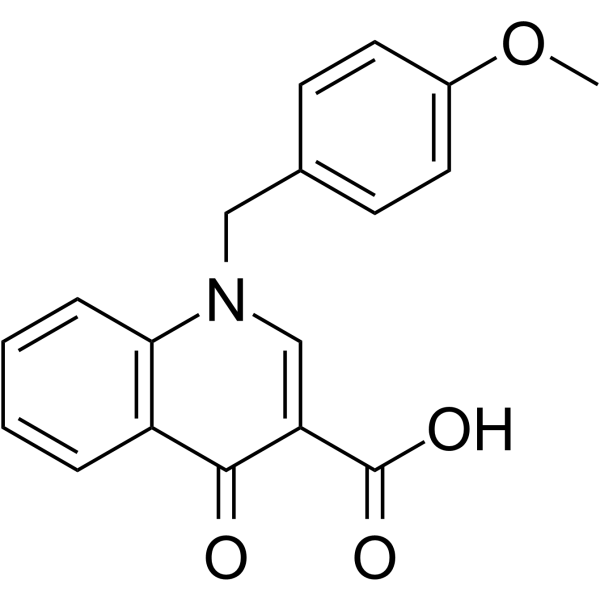
BQCA (Standard) is the analytical standard of BQCA (HY-101858). This product is intended for research and analytical applications. BQCA a highly selective allosteric modulator of the M1 mAChR.
|
-
- HY-123778
-
|
|
mAChR
|
Neurological Disease
|
|
VU6007678 (compound 18g) is a central nervous system-penetrant muscarinic acetylcholine receptor(mAChR) potentiator. VU6007678 potentiates acetylcholine-mediated signaling at human M1, M3, M5 and rat M1, M3, M4, M5 muscarinic acetylcholine receptors. VU6007678 is applicable to research related to Alzheimer's disease, schizophrenia, and ischemic stroke .
|
-
- HY-131196
-
|
|
mAChR
|
Neurological Disease
|
|
M3 mAChR agonist 1 is an M3-preferring M3/M5 mAChR dual positive allosteric modulators (PAM). M3 mAChR agonist 1 shows excellent subtype selectivity over other subtypes of mAChRs including M1, M2, and M4 mAChRs. M3 mAChR agonist 1 increases the contraction of isolated rat bladder strips by modulating the M3 muscarinic acetylcholine receptor, leading to enhanced signaling pathways. M3 mAChR agonist 1 can be used for the research of endocrinology .
|
-
- HY-107651R
-
|
|
Reference Standards
mAChR
|
Metabolic Disease
|
|
VU 0365114 (Standard) is the analytical standard of VU 0365114 (HY-107651). This product is intended for research and analytical applications. VU 0365114 is a selective mAChR M5 positive allosteric modulator, with an EC50 of 2.7 μM, and >30 μM for M1, M2, M3 and M4 receptors. VU 0365114 increases insulin secretion stimulated by ACh in human β-cells .
|
-
- HY-101679R
-
|
|
mAChR
Reference Standards
|
Neurological Disease
|
|
YM-58790 (Standard) is the analytical standard of YM-58790 (HY-101679). This product is intended for research and analytical applications. YM-58790 is a potent antagonist of mAChR. YM-58790 binds M1, M2, M3 with Ki values of 28 nM, 260 nM, and 15 nM. YM-58790 exhibits potent inhibitory activity on bladder pressuer in reflexly-evoked rhythmic contraction in rats .
|
-
- HY-183144
-
|
|
mAChR
|
Neurological Disease
Inflammation/Immunology
|
|
Vedaclidine is an orally active muscarinic acetylcholine receptor (mAChR) modulator with mixed receptor activity, which activates muscarinic M2 and M4 receptors and blocks muscarinic M1, M3 and M5 receptors. Vedaclidine exerts its activity through interaction with spinal M4 muscarinic receptors, and does not induce hypothermia or excessive salivation. Vedaclidine can be used in research related to pain, neuropathic pain and inflammatory pain states .
|
-
- HY-180143
-
|
|
mAChR
Drug Derivative
|
Neurological Disease
|
|
VU6052254, a derivative of VU0467319 (HY-173396), is a selective, potent, orally active and brain-penetrant muscarinic M1 acetylcholine receptor (mAChR1) positive allosteric modulator with an EC50 of 59 nM. VU6052254 has no activity on the M2-5 receptor (EC50 > 30 μM). VU6052254 can improve memory recognition ability and reverse the cognitive impairment induced by Scopolamine (HY-N0296) with minimum effective dose both of 1 mg/kg. VU6052254 can be used for the research of neurological disease, such as Alzheimer's disease .
|
-
- HY-107111R
-
|
|
Reference Standards
mAChR
|
Neurological Disease
|
|
GSK1034702 (Standard) is the analytical standard of GSK1034702 (HY-107111). This product is intended for research and analytical applications. GSK1034702 is an orally active and allosteric agonist of M1 mAChR (pEC50=8.1) that can cross the blood-brain barrier. GSK1034702 activates the Gq/11 protein-mediated signaling pathway, enhancing neuronal firing and long-term potentiation (LTP) in the CA1 region of the hippocampus. GSK1034702 can modulate hippocampal function, improve memory encoding in the nicotine withdrawal cognitive dysfunction model, and show pro-cognitive effects in rodents. GSK1034702 can be used for the study of the mechanisms of cognitive impairment diseases such as Alzheimer's disease, and has certain peripheral M receptor activation-related side effects (such as gastrointestinal reactions) .
|
-
- HY-182010
-
|
|
nAChR
|
Neurological Disease
|
|
nAChR antagonist 3 is a selective α7 nAChR antagonist with an IC50 of 0.86 μM. nAChR antagonist 3 exerts a protective effect against paraoxon-induced toxicity. nAChR antagonist 3 can be used for the research of organophosphate poisoning .
|
-
| Cat. No. |
Product Name |
Type |
-
- HY-65036
-
|
4-Bromo-2-pyridone
|
Biochemical Assay Reagents
|
|
4-Bromo-2-hydroxypyridine is an intermediate. 4-Bromo-2-hydroxypyridine can be used to synthesize M1 muscarinic acetylcholine receptor (M1 mAChR) positive allosteric modulators. 4-Bromo-2-hydroxypyridine can be used in the research of Alzheimer's disease and schizophrenia .
|
| Cat. No. |
Product Name |
Target |
Research Area |
-
- HY-P5846
-
|
MT3
|
mAChR
Adrenergic Receptor
|
Neurological Disease
|
|
Muscarinic toxin 3 (MT3) is a potent and non-competitive mAChR and adrenoceptors antagonist with pIC50s of 6.71, 8.79, 8.86, 7.57, 8.13, 8.49, <6.5, 7.29 against M1, M4, α1A, α1B, α1D,α2A,α2B and α2C receptors, respectively. Muscarinic toxin 3 displays prominent adrenoceptor activity .
|
| Cat. No. |
Product Name |
Chemical Structure |
-
- HY-B0461S
-
|
|
|
Trospium-d8 (chloride) is the deuterium labeled Trospium chloride. Trospium chloride is an orally active, specific and competitive antagonist of muscarinic cholinergic receptors (mAChRs), with antimuscarinic activity. Trospium chloride binds to muscarinic receptors M1, M2 and M3 with high affinity, but not nicotinic, cholinergic receptors .
|
-
-
- HY-A0030S
-
|
|
|
Fesoterodine-d7 (fumarate) is the deuterium labeled Fesoterodine fumarate . Fesoterodine Fumarate is an orally active, nonsubtype selective, competitive muscarinic receptor (mAChR) antagonist with pKi values of 8.0, 7.7, 7.4, 7.3, 7.5 for M1, M2, M3, M4, M5 receptors, respectively. Fesoterodine Fumarate is used for the overactive bladder (OAB) .
|
-
-
- HY-B0406AS
-
|
|
|
Bethanechol-d6 (chloride) is the deuterium labeled Bethanechol chloride. Bethanechol chloride (Carbamyl-β-methylcholine chloride), a parasympathomimetic agent, is a mAChR agonist that exerts its effects via directly stimulating the mAChR (M1, M2, M3, M4, and M5) of the parasympathetic nervous system .
|
-
-
- HY-159578S
-
|
|
|
VU6036864 (compound 45) is an orally active, selective mAChR M5 antagonist with IC50=20 nM for human M5. VU6036864 is >500-fold selective for human M1-4, with BBB characteristic and high oral bioavailability (%F>100%) .
|
-
-
- HY-12100S1
-
|
|
|
Umeclidinium-d10 (bromide) is the deuterium labeled Umeclidinium bromide. Umeclidinium bromide is a novel mAChR antagonist. The affinity (Ki) of Umeclidinium bromide for the cloned human M1-M5 mAChRs ranges from 0.05 to 0.16 nM.
|
-
-
- HY-12100S
-
|
|
|
Umeclidinium-d5 (bromide) is the deuterium labeled Umeclidinium bromide. Umeclidinium bromide is a novel mAChR antagonist. The affinity (Ki) of Umeclidinium bromide for the cloned human M1-M5 mAChRs ranges from 0.05 to 0.16 nM.
|
-
-
- HY-70053S
-
|
|
|
(Rac)-Fesoterodine-d14 fumarate is a labelled racemic Fesoterodine. Fesoterodine is an orally active, nonsubtype selective, competitive muscarinic receptor (mAChR) antagonist with pKivalues of 8.0, 7.7, 7.4, 7.3, 7.5 for M1, M2, M3, M4, M5 receptors, respectively. Fesoterodine is used for the overactive bladder (OAB) .
|
-
-
- HY-W720879
-
|
|
|
Fesoterodine-d3 is the deuterium labeled Fesoterodine (HY-70053). Fesoterodine is an orally active, nonsubtype selective, competitive muscarinic receptor (mAChR) antagonist with pKi values of 8.0, 7.7, 7.4, 7.3, 7.5 for M1, M2, M3, M4, M5 receptors, respectively. Fesoterodine is used for the overactive bladder (OAB) .
|
-
-
- HY-17037S1
-
|
|
|
Pirenzepine-d8 (LS 519-d8; Pirenzepin-d8) dihydrochloride is a deuterium labeled Pirenzepine (dihydrochloride) (HY-17037). Pirenzepine (LS 519) dihydrochloride is a selective M1 mAChR (muscarinic acetylcholine receptor) antagonist. Pirenzepine dihydrochloride reduces gastric acid secretion and reduces muscle spasm, can be used in peptic ulcers research. Pirenzepine dihydrochloride shows anti-proliferative activity to cancer cells .
|
-
-
- HY-17037AS
-
|
|
|
Pirenzepine-d11 (LS 519 (free base)-d11; Pirenzepin-d11; Gastrozepin-d11) is the deuterium labeled Pirenzepine (HY-17037A). Pirenzepine (LS 519 free base) is a selective M1 mAChR (muscarinic acetylcholine receptor) antagonist. Pirenzepine reduces gastric acid secretion and reduces muscle spasm, can be used in peptic ulcers research. Pirenzepine shows anti-proliferative activity to cancer cells .
|
-
-
- HY-76570S1
-
|
|
|
5-Hydroxymethyl Tolterodine-d14 (formate) is deuterium labeled (Rac)-5-Hydroxymethyl Tolterodine. (Rac)-5-Hydroxymethyl Tolterodine ((Rac)-Desfesoterodine), an active metabolite of Tolterodine, is a mAChR antagonist (Ki values of 2.3 nM, 2 nM, 2.5 nM, 2.8 nM, and 2.9 nM for M1, M2, M3, M4, and M5 receptors, respectively). (Rac)-5-Hydroxymethyl Tolterodine can be used for overactive bladder research .
|
-
-
- HY-76570S
-
|
|
|
(Rac)-5-Hydroxymethyl Tolterodine-d14 is the deuterium labeled (Rac)-5-Hydroxymethyl Tolterodine. (Rac)-5-Hydroxymethyl Tolterodine ((Rac)-Desfesoterodine), an active metabolite of Tolterodine, is a mAChR antagonist (Ki values of 2.3 nM, 2 nM, 2.5 nM, 2.8 nM, and 2.9 nM for M1, M2, M3, M4, and M5 receptors, respectively). (Rac)-5-Hydroxymethyl Tolterodine can be used for overactive bladder research .
|
-
-
- HY-B0298AS
-
1 Publications Verification
|
|
Clemastine (HS-592; Meclastine)-d5 fumarate is the deuterium labeled Clemastine fumarate. Clemastine fumarate is an orally active, blood-brain barrier-permeable H1 histamine receptor (H1 histamine receptor) antagonist with potent antiallergic effects. Clemastine fumarate also antagonizes muscarinic acetylcholine receptors (mAChR), particularly the M1 and M4 subtypes. In addition to antihistamine effects, Clemastine fumarate exhibits multiple pharmacological activities, especially in promoting central nervous system remyelination, activating autophagy and pyroptosis, exerting anti-apoptotic and neuroprotective effects, and suppressing inflammation .
|
-
| Cat. No. |
Product Name |
|
Classification |
-
- HY-159578S
-
|
|
|
Azide
|
|
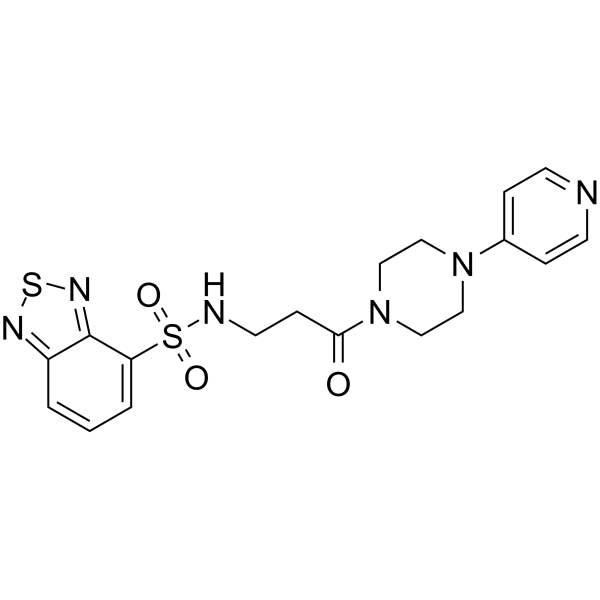
VU6036864 (compound 45) is an orally active, selective mAChR M5 antagonist with IC50=20 nM for human M5. VU6036864 is >500-fold selective for human M1-4, with BBB characteristic and high oral bioavailability (%F>100%) .
|
Your information is safe with us. * Required Fields.
Inquiry Information
- Product Name:
- Cat. No.:
- Quantity:
- MCE Japan Authorized Agent:

