Search Result
Results for "
MV4-11
" in MedChemExpress (MCE) Product Catalog:
| Cat. No. |
상품명 |
Target |
연구분야 |
Chemical Structure |
-
- HY-100388
-
SHP099
Maximum Cited Publications
75 Publications Verification
|
SHP2
Phosphatase
|
Cancer
|
|
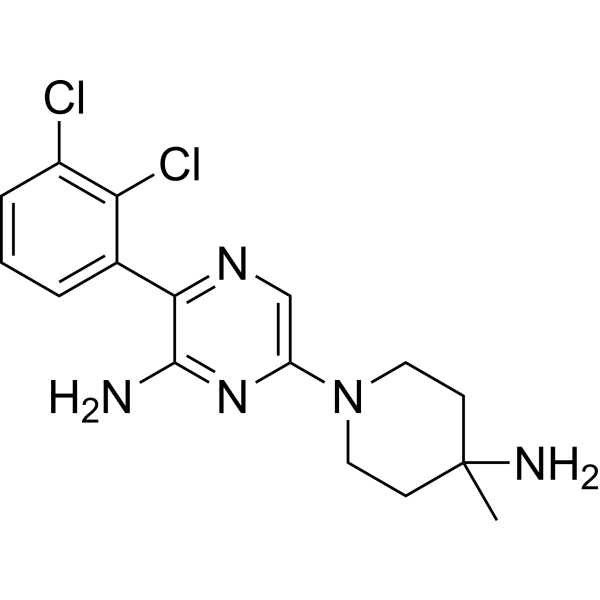
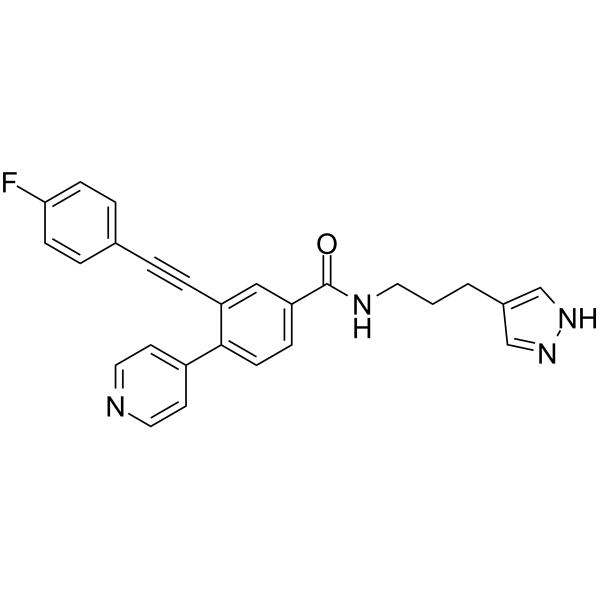
SHP099 is an allosteric SHP2 inhibitor, with IC50s of 0.690, 1.241, 0.416, 1.968, 2.896 μM for SHP2, SHP2 D61Y, SHP2E69K, SHP2 A72V, SHP2 E76K. SHP099 inhibits cancer cell growth, such as MV4-11 and TF-1 cell (IC50: 0.32 and 1.73 μM). SHP099 inhibits RAS-ERK signaling and inhibits tumor growth .
|
-
-
- HY-12461
-
-
-
- HY-120028
-
|
|
Epigenetic Reader Domain
Histone Acetyltransferase
|
Cancer
|
|
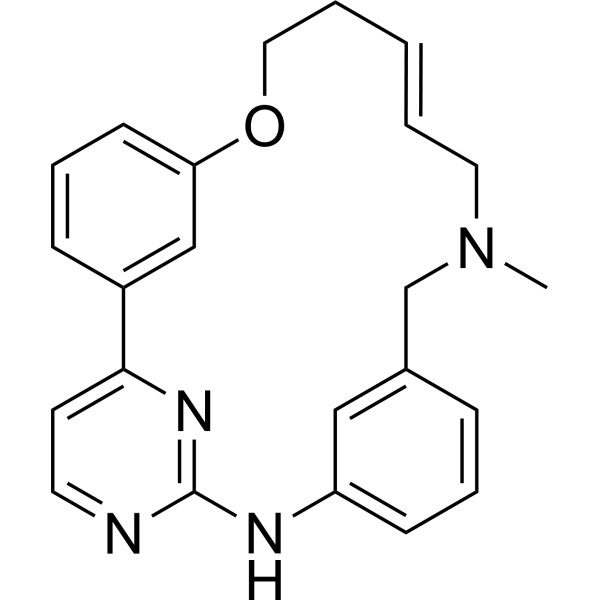
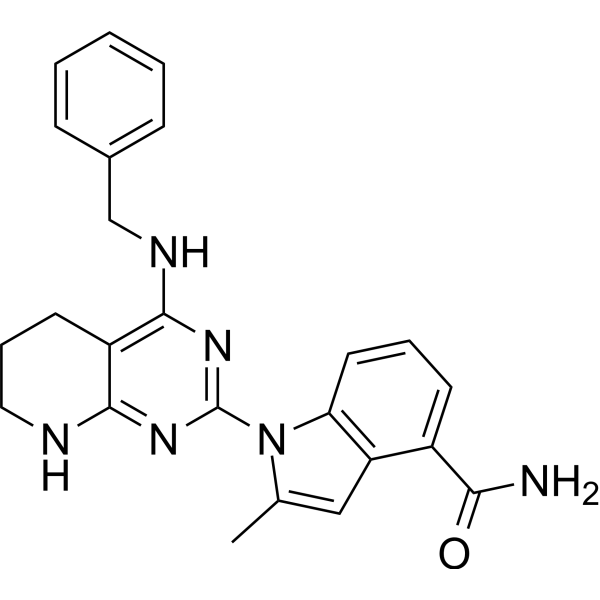
GNE-207 is a potent, selective and orally bioavailable inhibitor of the bromodomain of CBP, with an IC50 of 1 nM, exhibits a selectively index of >2500-fold against BRD4 (1). GNE-207 shows excellent CBP potency, with an EC50 of 18 nM for MYC expression in MV-4-11 cells .
|
-
-
- HY-172581
-
|
|
FLT3
Apoptosis
Ras
p38 MAPK
PI3K
Akt
JAK
STAT
|
Cancer
|
|
Clifutinib is an orally active and selective internal tandem duplication mutation of FMS-like tyrosine kinase 3 (FLT3-ITD) inhibitor with an IC50 value of 15.1 nM. Clifutinib exerts strong antiproliferative effects on FLT3-ITD acute myeloid leukemia (AML) cell lines (MV-4-11: IC50 = 1.5 nM; MOLM-13: IC50 = 1.4 nM). Clifutinib inhibits the activity of FLT3-ITD kinase and blocks the downstream RAS/MAPK, PI3K/AKT, and JAK/STAT5 signaling pathways of FLT3. Clifutinib induces apoptosis of acute myeloid leukemia (AML) cells with FLT3-ITD mutations. Clifutinib demonstrates significant antitumor efficacy in mice bearing MV-4-11 or MOLM-13 xenografts. Clifutinib is promising for research of relapsed/refractory FLT3-ITD-positive acute myeloid leukemia .
|
-
-
- HY-176428
-
|
P11-2
|
PROTACs
MNK
Apoptosis
Eukaryotic Initiation Factor (eIF)
|
Cancer
|
|
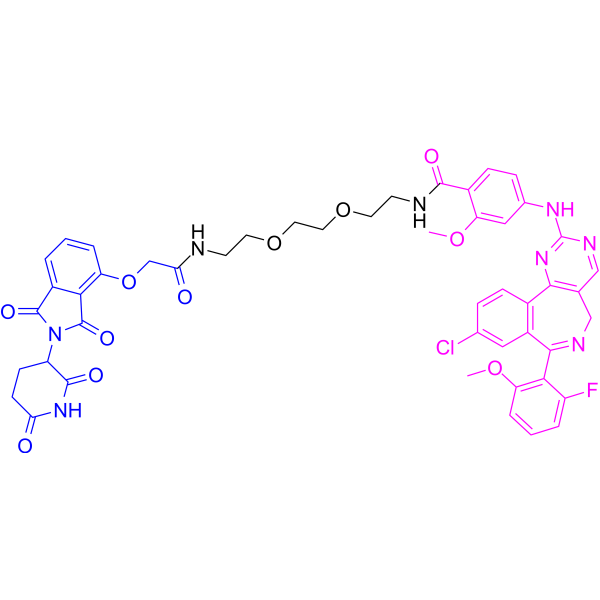
PROTAC MNK1 degrader-1 is a selective MNK1 PROTAC degrader with a DC50 of 11.92 nM, and a Dmax > 96% in MV4-11 cells. PROTAC MNK1 degrader-1 significantly reduces p-eIF4E (IC50: 22.07 nM), induces apoptosis, and arrests the cell cycle at the G1 phase. PROTAC MNK1 degrader-1 has potent antitumor activity. PROTAC MNK1 degrader-1 has robust antileukemic efficacy in MV4-11 xenograft mice model with acceptable drug safety . Pink: MNK1 ligand (HY-176429); Blue: CRBN ligase ligand (HY-A0003); Black: linker (HY-Y1139); CRBN + linker: HY-176430
|
-
-
- HY-143889
-
|
|
CDK
|
Cancer
|
|
Senexin C is a selective and orally active CDK8/19 inhibitor. Senexin C shows a strong tumor-enrichment pharmacokinetic (PK) profile and tumor-pharmacodynamic (PD) marker responses. Senexin C inhibits the growth of MV4-11 leukemia cells with good tolerability .
|
-
-
- HY-148561
-
|
|
CDK
GSK-3
PKC
|
Cancer
|
|
CDK8-IN-12 is an orally active, potent CDK8 inhibitor with a Ki of 14 nM. CDK8-IN-12 has off-target kinase inhibition on GSK-3α, GSK-3β, PCK-θ with Kis of 13 nM, 4 nM, 109 nM, respectively. CDK8-IN-12 shows potent anti-proliferative effects selectively on MV4-11 cell. CDK8-IN-12 is an anti-cancer agent .
|
-
-
- HY-143490
-
|
|
PAK
Apoptosis
|
Cancer
|
|
PAK4-IN-2 is a highly potent PAK4 inhibitor with IC50 value of 2.7 nM. PAK4-IN-2 can arrest MV4-11 cells at G0/G1 phase and induce cell apoptosis. PAK4-IN-2 can be used for researching cancer .
|
-
-
- HY-13907
-
TCS 359
1 Publications Verification
|
FLT3
|
Cancer
|
|
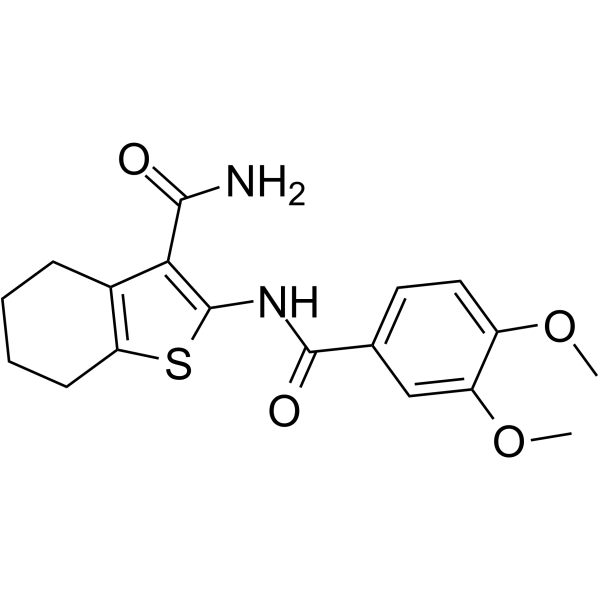
TCS 359, a 2-acylaminothiophene-3-carboxamide, is a potent and selective FLT3 inhibitor with an IC50 of 42 nM. TCS 359 inhibits MV4-11 cell proliferation with an IC50 of 340 nM .
|
-
-
- HY-125236
-
|
|
Epigenetic Reader Domain
|
Cancer
|
|
BET-IN-19 (Compound 146) is a BET inhibitor. BET-IN-19 inhibits hlL-6 mRNA transcription (IC50 ≤0.3 uM), and c-myc activity in human AML MV4-11 cell (IC50 ≤0.3 uM)。BET-IN-19 inhibits tetra-acetylated histone H4 binding to BRD4 bromodomain 1 (IC50 ≤0.3 uM) .
|
-
-
- HY-157516
-
|
|
CDK
|
Cancer
|
|
CDK2-IN-22 (compound 7I) is a potent CDK2 inhibitor with an IC50 of 64.42 nM. CDK2-IN-22 presents a broad antiproliferative efficacy toward diverse cancer cells MV4-11, HT-29, MCF-7, and HeLa with IC50 values of 0.83 μM, 2.12 μM, 3.12 μM, and 8.61 μM, respectively .
|
-
-
- HY-158031
-
|
|
Apoptosis
Polo-like Kinase (PLK)
Epigenetic Reader Domain
|
Cancer
|
|
PLK1/BRD4-IN-5 (Compound SC10) is an orally active PLK1 and BRD4 inhibitor with IC50 values of 0.3 nM and 60.8 nM, respectively. PLK1/BRD4-IN-5 can induce MV4-11 cell block in S phase and apoptosis) in a dose-dependent manner. PLK1/BRD4-IN-5 can be used in cancer research .
|
-
-
- HY-122623A
-
|
|
Apoptosis
|
Cancer
|
|
DB818 dihydrochloride is the dihydrochloride salt form of DB818 (HY-122623). DB818 dihydrochloride is an inhibitor for Homeobox A9 (HOXA9). DB818 dihydrochloride reduces the formation of HOXA9-DNA complexes, inhibits the growth and induces apoptosis in AML cell lines OCI/AML3, MV4-11, and THP-1 .
|
-
-
- HY-155361
-
|
|
PROTACs
Epigenetic Reader Domain
|
Cancer
|
|
PROTAC BRD9 Degrader-7 is an orally active, selective BRD9 PROTAC degrader (DC50 = 1.02 nM). PROTAC BRD9 Degrader-7 mediates BRD9 degradation via the ubiquitin-proteasome system. PROTAC BRD9 Degrader-7 exhibits proliferation inhibitory activity in the MV4-11 cells. PROTAC BRD9 Degrader-7 can be used in the research of acute myeloid leukemia and other related malignancies. (Pink: BI 7271: HY-123616, Blue: 5-Aminothalidomide: HY-W023573, Blue + Black: Thalidomide-5-piperazine: HY-W834174, Black: N,N'-Dimethylpiperazine: HY-W539783) .
|
-
-
- HY-139901
-
|
|
Checkpoint Kinase (Chk)
|
Cancer
|
|
Chk1-IN-6 is a selective and orally active Chk1 inhibitor with an IC50 of 16.1 nM. Chk1-IN-6 shows antiproliferative activity of MV-4-11 cells. Chk1-IN-6 exerts effective response in the MV-4-11 xenograft mouse model. Chk1-IN-6 exhibits synergistic anticancer effect with Gemcitabine (HY-17026). Chk1-IN-6 can be used in the research of cancers such as acute myeloid leukemia and colorectal adenocarcinoma .
|
-
-
- HY-155195
-
|
|
FLT3
|
Cancer
|
|
FLT3/CHK-IN-1 (Compound 18) is a dual inhibitor of FLT3/CHK1. FLT3/CHK-IN-1 is more than 1700 times more selective to c-KI T and greatly reduces hERG affinity with an IC50 value of 58.4 μM. FLT3/CHK-IN-1 inhibits tumor growth in mouse xenotransplantation models inoculated with MV-4-11 cells .
|
-
-
- HY-143328
-
|
|
PROTACs
Epigenetic Reader Domain
Apoptosis
|
Cancer
|
|
PROTAC BRD4 Degrader-17 (compound 13i) is a potent PROTAC BRD4 Degrader, with IC50 values of 29.54 nM (BRD4 (BD1)) and 3.82 nM (BRD4 (BD2)). PROTAC BRD4 Degrader-17 significantly attenuates G2/M progression associated Cyclin B1 expression. PROTAC BRD4 Degrader-17 significantly induces apoptosis in MV-4-11 cells .
|
-
-
- HY-169093
-
|
|
PROTACs
Epigenetic Reader Domain
Apoptosis
|
Cancer
|
|
MS41 is a selective eleven-nineteen leukemia (ENL) PROTAC degrader, with DC50s of 3.50 nM (MV4;11), 2.84 nM (SEMK2), 3.03 nM (Jurkat), and 26.58 nM (KASUMI1), respectively. MS41 effectively inhibits the growth of ENL-dependent leukemia cells, induces G1 cell cycle arrest and increases apoptosis. MS41 reduces the chromatin occupancy of ENL-associated transcription elongation machinery, and suppresses oncogenic gene expression and leukemia progression. Red: ENL ligand (HY-169094). Black: linker (HY-W105744). Blue: VHL ligand (HY-112078) .
|
-
-
- HY-116588
-
|
|
Epigenetic Reader Domain
|
Cancer
|
|
FT001 is an orally active and selective BET inhibitor. FT001 has potent anti-proliferative effects against MV-4-11. FT001 can be used for research of cancer .
|
-
-
- HY-157213
-
|
|
Apoptosis
PROTACs
FLT3
|
Cancer
|
|
LWY713 is a PROTAC-class FLT3 degrader (DC50=0.64 nM), which selectively induces FLT3 degradation via cereblon and proteasome-dependent pathways. LWY713 inhibits cell proliferation and induces G0/G1 phase arrest and apoptosis in MV4-11 cells. LWY713 shows effective in vivo antitumor activity in MV4-11 xenograft models . LWY713 consists of a target protein ligand (red part) Gilteritinib (HY-12432), an E3 ubiquitin ligase ligand (blue part) Lenalidomide-F (HY-W039233), and a PROTAC linker (black part) Glycolic acid (HY-W015967). E3 ubiquitin ligase and linker can form Lenalidomide-Glycolic acid (HY-169373); the active control for the target protein ligand is Naproxen Gilteritinib (HY-169374).
|
-
-
- HY-173631
-
|
|
PROTACs
|
Cancer
|
|
(S)-dHTC1 is a molecular glue degrader targeting the transcriptional co-activator ENL. (S)-dHTC1 binds the ligase with high affinity only after forming the ENL:dHTC1 complex with an IC50 value of 93 nM. (S)-dHTC1 degrades ENL in MV4;11 cells with a DC50 value of 26 nM. (S)-dHTC1 can be used for acute myeloid leukemia study .
|
-
-
- HY-178858
-
|
|
PROTACs
FLT3
Checkpoint Kinase (Chk)
STAT
ERK
c-Myc
Akt
|
Cancer
|
|
PROTAC FLT3/CHK1 Degrader-1 is a PROTAC FLT3/CHK1 degrader, with DC50 values of 5.88 nM (FLT3) and 4.17 nM (CHK1), respectively. PROTAC FLT3/CHK1 Degrader-1 can inhibit the phosphorylation of FLT3 downstream signaling effectors STAT5 (Tyr694), AKT (Ser473), and ERK (Tyr204), downregulate the protein level of c-Myc and maintain the expression of p53 protein. PROTAC FLT3/CHK1 Degrader-1 induces apoptosis in MV-4-11 cells. PROTAC FLT3/CHK1 Degrader-1 shows significant anti-tumor efficacy in mice bearing MV-4-11 subcutaneous xenografts. PROTAC FLT3/CHK1 Degrader-1 can be used for the study of acute myeloid leukemia (AML). (Pink: FLT3/CHK1 ligand (HY-178869 ), Blue: CRBN Ligand (HY-W093272), Black: Linker, E3 ligase ligand-linker conjugate (HY-W998238)) .
|
-
-
- HY-173422
-
|
|
PROTACs
Histone Methyltransferase
|
Cancer
|
|
MS2133 is a DOT1L PROTAC degrader. MS2133 promotes ubiquitination and degradation of DOT1L in THP-1 and MV4-11 cells (DC50: 56 nM and 25 nM, respectively), and reduces H3K79 methylation. MS2133 inhibits the growth of MLL-r leukemia cells and has anticancer activity. (Pink: DOT1L ligand (HY-173423); Blue: E3 ligase VHL ligand (HY-47070); Black: Linker (HY-79577); E3 ligase VHL ligand-linker conjugate (HY-173424)) .
|
-
-
- HY-175036
-
|
|
PROTACs
Histone Demethylase
Apoptosis
Caspase
PARP
|
Cancer
|
|
YTHu78 is a KDM5B PROTAC-type degrader. YTHu78 induces KDM5B degradation via the ubiquitin-proteasome system and triggers apoptosis in MV-4-11 and MM.1S cell lines. YTHu78 exhibits significant antiproliferative activity against a variety of hematological cancer cell lines and can be used to study hematological cancers. (Pink: KDM5B ligand: (HY-116761); Blue: Thalidomide ligand: (HY-14658), Black + Pink: KDM5B ligand + linker: (HY-175145)) .
|
-
-
- HY-171334
-
|
|
PROTACs
PIN1
|
Cancer
|
|
PROTAC PIN1 degrader-2 (1) is a PROTAC-based PIN1 degrader (Pink: PIN1 ligand HY-171442, Blue: cereblon ligand Thalidomide (HY-14658), Black: linker HY-W014883). PROTAC PIN1 degrader-2 (1) possesses anti-cancer activity, with IC50 values of 2248 nM (MV-4-11 cells), 3984 nM (MOLM-13), 3925 nM (HL-60), 3925 nM (HL-60), 3925 nM (HL-60), 3925 nM (HL-60) and 3925 nM (HL-60) respectively .
|
-
-
- HY-159454
-
|
|
PROTACs
|
Cancer
|
|
SMARCA2/4-degrader-3 (compound I-433) is a PROTAC SMARCA2/4-degrader based on VH032-NH2, with a degradation potency (DC50) <100 nM in MV4-11 cells .
|
-
-
- HY-153751
-
|
|
Epigenetic Reader Domain
|
Cancer
|
|
BRD4-IN-4 (Compound 1) is a BRD4 inhibitor (IC50=6.83 μM). BRD4-IN-4 selectively inhibits MV4-11 cell line proliferation and arrests cell at G1 phase. BRD4-IN-4 can be used for research of MLL leukemia .
|
-
-
- HY-174302
-
|
|
Pim
HDAC
PARP
Apoptosis
|
Cancer
|
|
PIM-1/HDAC-IN-2 is a robust PIM/HDAC inhibitor (IC50 = 0.11 μM in MV4-11cells), which exerts a synergistic antiproliferative effect through a dual mechanism of inhibiting PIM1 kinase and selectively inhibiting HDAC6. PIM-1/HDAC-IN-2 induces cell apoptosis. PIM-1/HDAC-IN-2 remarkably induces the cleavage of PARP, thereby initiating the arrest of the cell cycle in G1 phase and a reduction in S phase. PIM-1/HDAC-IN-2 demonstrates significant anticancer efficacyin the MV4-11 xenograft model without notable toxicity[1].
|
-
-
- HY-162769
-
|
|
HDAC
Apoptosis
|
Cancer
|
|
HDAC3-IN-5 (9c) is a HDAC3 selective inhibitor, with IC50 values of 4.2 nM, 1629 nM and 298.2 nM for HDAC3, HDAC2, HDAC1, respectively. HDAC3-IN-5 (9c) can effectively induce apoptosisin MV4-11 cells in vitro and reduce the expression of anti-apoptotic proteins, the development of HDAC3 selective inhibitors may serve as a potential lead compound to reverse Venetoclax resistance .
|
-
-
- HY-179272
-
|
|
Wee1
HDAC
Apoptosis
|
Cancer
|
|
Wee1/HDAC-IN-1 is a dual Wee1/HDAC inhibitor with an IC50 of 1.2 nM for Wee1 and IC50 values of 196 nM for HDAC1, 156 nM for HDAC3, and 55 nM for HDAC6. Wee1/HDAC-IN-1 exhibits strong antiproliferative activity against MV4-11 cells with an IC50 of 0.076 μM. Wee1/HDAC-IN-1 selectively binds to Wee1 and HDACs. Wee1/HDAC-IN-1 interferes with DNA damage repair pathways and induces apoptosis in MV4-11 cells. Wee1/HDAC-IN-1 Wee1/HDAC-IN-1 can be used for the research of acute myeloid leukemia (AML) .
|
-
-
- HY-161883
-
-
-
- HY-174911
-
|
|
FLT3
Apoptosis
|
Cancer
|
|
FLT3-IN-33 (Compound 7r) is a FLT3 inhibitor with an IC50 of 7.82 nM. FLT3-IN-33 has superior anticancer activities against acute myeloid leukemia (AML) cells, such as MV4-11 and MOLM-13 cells. FLT3-IN-33 significantly induces cell apoptosis and inhibits phosphorylation of FLT3 pathways. FLT3-IN-33 can be used for AML and other cancers research .
|
-
-
- HY-174437
-
|
|
FLT3
Apoptosis
|
Cancer
|
|
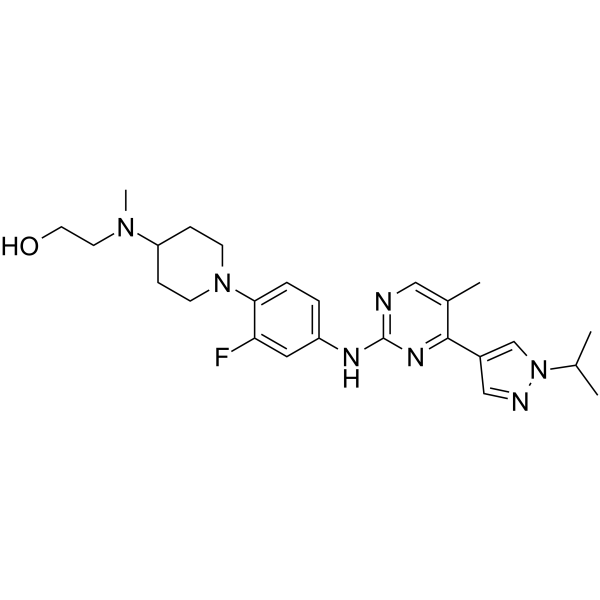
FLT3-IN-32 is a potent and orally active FLT3 inhibitor. FLT3-IN-32 shows high selectivity for FLT3 and efficiently inhibits FLT3-activating mutations and induces apoptosis. FLT3-IN-32 shows good tolerability in non-tumor bearing mice. FLT3-IN-32 demonstrates outstanding anti-tumor efficacy in MV4-11 bearing NOD/SCID mice, prolonging the survival noticeably. FLT3-IN-32 can be used for the research of acute myeloid leukemia .
|
-
-
- HY-143238
-
|
|
Histone Demethylase
|
Cancer
|
|
FY-56 is a highly potent and selective LSD1/KDM1A inhibitor (IC50=42 nM) and exhibits high selectivity over MAO-A/B. FY-56 induces differentiation of MOLM-13 and MV4-11 cell and has the potential for AML research .
|
-
-
- HY-175610
-
|
|
PROTACs
FLT3
JAK
Epigenetic Reader Domain
|
Cancer
|
|
PROTAC FLT3/JAK2/BRD4 Degrader-1 is a PROTAC degrader that target FLT3, JAK2, and BRD4 with DC50 values of 5.23, 0.678, and 1.17 nM, respectively. PROTAC FLT3/JAK2/BRD4 Degrader-1 exhibits potent antiproliferative activity against MV4;11 cells (IC50 = 0.79 nM) and FLT3 mutant-transformed Ba/F3 cells. PROTAC FLT3/JAK2/BRD4 Degrader-1 induces apoptosis in MV4;11 cells. PROTAC FLT3/JAK2/BRD4 Degrader-1 demonstrates significant anti-tumor efficacy in the MV4;11 xenograft model established in NOD SCID mice. PROTAC FLT3/JAK2/BRD4 Degrader-1 can be used for the study of acute myeloid leukemia (AML). (Pink: FLT3/JAK2/BRD4 ligand (HY-175611), Blue: CRBN Ligand (HY-W087383), Black: Linker, E3 ligase ligand-linker conjugate (HY-W897939)) .
|
-
-
- HY-149595
-
|
|
Histone Demethylase
|
Cancer
|
|
LSD1-UM-109 is a ighly potent and reversible LSD1 inhibitor with an IC50 of 3.1 nM. LSD1-UM-109 inhibits cell growth with IC50 values of 0.6 nM in the MV4;11 acute leukemia cell line and 1.1 nM in the H1417 small-cell lung cancer cell line .
|
-
-
- HY-177766
-
|
|
Molecular Glues
Apoptosis
|
Cancer
|
|
GSPT1 degrader-17 (Compound 9q) is a potent and selective cereblon-based molecular glue degrader that targets G1 to S phase transition 1 (GSPT1). GSPT1 degrader-17 degrades GSPT1 in U937 cells with a DC50 of 35 nM and Dmax of 81.65%. GSPT1 degrader-17 has a strong inhibitory effect on U937, MOLT-4 and MV4-11 cells with IC50 values of 0.019, 0.006 and 0.027 μM. GSPT1 degrader-17 can induce cells apoptosis and G0/G1 phase arrest. GSPT1 degrader-17 can be used for the research of cancer, such as acute myeloid leukemia .
|
-
-
- HY-143327
-
|
|
PROTACs
Epigenetic Reader Domain
Apoptosis
|
Cancer
|
|
PROTAC BRD4 Degrader-16 is a potent PROTAC BRD4 Degrader, with IC50 values of 34.58 nM (BRD4 (BD1)) and 40.23 nM (BRD4 (BD2)). PROTAC BRD4 Degrader-16 ignificantly attenuates G2/M progression associated Cyclin B1 expression. PROTAC BRD4 Degrader-16 significantly induces apoptosis in MV-4-11 cells .
|
-
-
- HY-13496
-
|
|
c-Fms
|
Inflammation/Immunology
Cancer
|
|
JNJ-28312141 is an inhibitor for colony-stimulating factor-1 receptor (CSF-1R or FMS), with an IC50 of 0.69 nM. JNJ-28312141 inhibits proliferation of BDBM, MV-4-11, M-o7e, TF-1 with an IC50s of 2.6, 21, 41 and 150 nM, respectively. JNJ-28312141 exhibits anti-inflammatory activity in mouse arthritis model .
|
-
-
- HY-170380
-
|
|
Epigenetic Reader Domain
Apoptosis
AMPK
c-Myc
PAK
Bcl-2 Family
|
Cancer
|
|
XY221 (Compound 16o) selectively inhibits BRD4 BD2, with an IC50 of 5.8 nM. XY221 demonstrates high pan-BD2 selectivity (667-fold over BRD4 BD1) and BRD4 BD2 domain selectivity (9−32-fold over BRD2/3/T BD2). XY221 induce Apoptosis in MV4-11 cells and shows anticancer activity .
|
-
-
- HY-115906
-
|
|
FLT3
MNK
Apoptosis
|
Cancer
|
|
K783-0308 is a potent and selective dual inhibitor of FLT3 and MNK2 with IC50 values of 680 and 406 nM, respectively. K783-0308 inhibits the growth of MOLM-13 (IC50=10.5 µM) and MV-4-11 (IC50=10.4 µM) cells. K783-0308 promotes acute myeloid leukemia (AML) cell apoptosis and cell cycle arrests in the G0/G1 phase .
|
-
-
- HY-155529
-
|
|
Pim
|
Cancer
|
|
FD1024 is PIM inhibitor (IC50s: 1.96, 38.9, 4.17 nM for PIM1, 2, 3). FD1024 can be used for research of acute myeloid leukemia. FD1024 has strong antiproliferative activity against the tested AML cell lines, with 0.16 μM, 0.12 μM, 1.05 μM, 1.39μM for EOL-1, MV-4-11, KG-1, MOLM-16 cells. FD1024 also has antitumor efficacy in mice .
|
-
-
- HY-179382
-
|
|
FLT3
Apoptosis
|
Cancer
|
|
HSB401 is an orally active FLT3 inhibitor (IC50: 28, 5, 72, 51 nM for FLT3-WT, FLT3-D835Y, FLT3-ITD-F691L, FLT3-ITD, respectively). HSB401 downregulates FLT3 signaling and induces cell cycle arrest and apoptosis. HSB401 spares c-KIT inhibition, thereby reducing the risk of myelosuppression. HSB401 significantly suppresses tumor growth in the MV4-11 xenograft mouse model. HSB401 can be used for the research of acute myeloid leukemia .
|
-
-
- HY-149474
-
|
|
FLT3
HDAC
Apoptosis
|
Cancer
|
|
HDAC-IN-63 (Compound 63) is a dual FLT3/HDAC inhibitor (IC50: 0.844 and 30.0 nM for FLT3 and HDAC1 respectively). HDAC-IN-63 inhibits MV4-11 cell proliferation (IC50: 92 nM. HDAC-IN-63 induces apoptosis and arrests cell cycle in MV4-11 cells. HDAC-IN-63 can be used for research of acute myeloid leukemia (AML) .
|
-
-
- HY-163834
-
|
|
HDAC
|
Cancer
|
|
HDAC6-IN-47 (Compound S-29b) is inhibitor for HDAC, which exhibits high affinities to HDAC1, HDAC2, HDAC3, HDAC6, HDAC8, HDAC10 with Ki of 60, 56, 162, 0.44, 362 and 849 nM, respectively. HDAC6-IN-47 causes tubulin hyperacetylation in MV4-11, inhibits the proliferation of MV4-11 with an EC50 of 0.50 µM. HDAC6-IN-47 can be used in research of leukemia .
|
-
-
- HY-161280
-
|
|
PROTACs
FLT3
|
Cancer
|
|
PROTAC FLT-3 degrader 3 (compound 35) is a PROTACs degrader of FLT. PROTAC FLT-3 degrader 3 has antiproliferative activity, with IC50 of 7.55 nM in MV4-11 cells .
|
-
-
- HY-157295
-
|
|
PI3K
HDAC
|
Cancer
|
|
PI3K/HDAC-IN-3 (36) is a PI3K and HDAC dual inhibitor, with IC50 values of 0.23 nM and 172 nM for PI3Kα and HDAC1, respectively. PI3K/HDAC-IN-3 (36) suppresses AKT phosphorylation and increased H3 acetylation in MV4-11 cells. PI3K/HDAC-IN-3 (36) exhibits significant and dose-dependent anticancer efficacy in a MV4-11 xenograft model .
|
-
-
- HY-144755
-
|
|
Histone Demethylase
|
Cancer
|
|
MC2652 (compound 1a) is a potent LSD1 inhibitor. MC2652 displays high inhibiting effects in MV4-11 and NB4 leukaemia cells. MC2652 shows antiproliferative activity against prostate cancer LNCaP cells .
|
-
-
- HY-178020
-
|
|
FLT3
ERK
Akt
Apoptosis
|
Cancer
|
|
FLT3-IN-34 is a FLT3 inhibitor, with an IC50 value of 1.4 nM. FLT3-IN-34 blocks the phosphorylation of FLT3 and its downstream signaling molecules AKT and ERK1/2. FLT3-IN-34 induces concentration-dependent G0/G1 phase arrest and mild apoptosis in FLT3-ITD-positive MV4-11 cells. FLT3-IN-34 shows potent anti-proliferative activity against FLT3-ITD-positive MV4-11 cells (IC50 = 14.95 nM) and MOLM-13 (IC50 = 18.5 nM). FLT3-IN-34 can be used for the study of FLT3-positive acute myeloid leukemia (AML) .
|
-
-
- HY-133754
-
|
|
MDM-2/p53
Ligands for Target Protein for PROTAC
|
Cancer
|
|
MI-1063 is an inhibitor for MDM-2, that blocks the MDM2-p53 interaction, and activates the tumor suppressor function of p53. MI-1063 inhibits the growth of cancer cell RS4-11 and MV4-11 with IC50 of 179 nM and 93 nM. MI-1063 can be used as target protein ligand in synthesis of PROTAC degrader MD-265 (HY-169327) .
|
-
- HY-168962
-
|
|
HDAC
Apoptosis
Autophagy
Reactive Oxygen Species (ROS)
Mitochondrial Metabolism
Parasite
|
Infection
Cancer
|
|
HDAC-IN-88 (Compound HJ-9) is the inhibitor for HDAC that inhibits HDAC6, HDAC1, HDAC2, HDAC8 and HDAC3 with IC50s of 0.226, 1.103, 2.308, 3.255 and 3.864 μM, respectively. HDAC-IN-88 inhibits the proliferation of cancer cell HepG2, HCT116 and MV4-11 with IC50 of 5.47, 9.78 and 0.38 μM, inhibits the migration of HCT116, arrests the cell cycle at G0/G1 phase, and induces apoptosis and autophagy in MV4-11. HDAC-IN-88 reduces ROS level and mitochondrial membrane potential. HDAC-IN-88 exhibits antimalarial activity that inhibits P. falciparum 3D7 with EC50 of 165 nM. HDAC-IN-88 also exhibits anti-angiogenic activity .
|
-
- HY-170558
-
|
|
FLT3
Apoptosis
|
Cancer
|
|
FW-1 is a type I inhibitor for FLT3 with IC50 of ca. 1 μM. FW-1 exhibits cytotoxicity in FLT3 mutated AML cell. FW-1 arrests the cell cycle at G0/G1 phase, and induces apoptosis in cell MV4-11 and MOLM-13 .
|
-
- HY-162642
-
|
|
Bcl-2 Family
|
Cancer
|
|
Bfl-1-IN-3 (Compound 56) is a selective, competitive inhibitor for Bfl-1 on BID binding site with Ki of 105 nM. Bfl-1-IN-3 inhibits the proliferation of cell pfeiffer and MV4-11, with IC50 of 6.92 μM and 12.6 μM. Bfl-1-IN-3 induces apoptosis in pfeiffer cells. Bfl-1-IN-3 overcomes Venetoclax (HY-15531) resistance at the cellular level, and shows synergistically enhanced anti-tumor activity with Venetoclax .
|
-
- HY-169075
-
|
|
HDAC
CDK
Apoptosis
|
Cancer
|
|
CDK/HDAC-IN-4 is a high selective dual cyclin-dependent kinase (CDK)/histone deacetylase (HDAC) inhibitor with IC50 values of 88.4 and 168.9 nM, respectively. CDK/HDAC-IN-4 exhibits antiproliferative capacities against hematological and solid tumor cells. CDK/HDAC-IN-4 also induces MV-4-11 cell Apoptosis and S cell cycle arrests. CDK/HDAC-IN-4 possesses a significant antitumor potency in the MV-4-11 xenograft model .
|
-
- HY-172873
-
|
|
HDAC
Caspase
Apoptosis
|
Cancer
|
|
HDSI-18 is an orally active HDAC6 selective inhibitor (IC50: 1.6 nM). HDSI-18 is cytotoxic to K562, MV4-11, MOLM-13, THP-1, and Jurkat cells (IC50: 0.48, 0.58, 0.91, 1.79, and 4.31 μM, respectively). HDSI-18 activates Caspase-3, induces mitochondrial depolarization and apoptosis, and has antitumor activity .
|
-
- HY-155226
-
|
|
FLT3
Apoptosis
|
Cancer
|
|
FLT3-IN-21 (compound LC-3) is a potent FLT3 inhibitor (IC50: 8.4 nM) and induces apoptosis. FLT3-IN-21 can arrest the cell cycle in the G1 phase and inhibit the proliferation of FLT3-ITD-positive AML cells MV-4-11 (IC50: 5.3 nM). In mice, FLT3-IN-21 (10 mg/kg/d) inhibited tumor growth in the MV-4-11 xenograft model (TGI=92.16%) .
|
-
- HY-147572
-
|
|
Epigenetic Reader Domain
|
Cancer
|
|
BET-IN-10 is a BET inhibitor with anticancer effects. BET-IN-10 inhibits the cell growth of MV4-11 cells with an IC50 of 26.5 nM (WO2022012456A1; example 6) .
|
-
- HY-146615
-
|
|
TAM Receptor
|
Cancer
|
|
Axl-IN-6 (compound 14) is an orally active and potent AXL inhibitor. Axl-IN-6 is well tolerated and significantly inhibits the tumor growth in MV-4-11 subcutaneous xenograft model .
|
-
- HY-170832
-
|
|
Epigenetic Reader Domain
Potassium Channel
|
Cancer
|
|
Menin–KMT2A-IN-1 (Compound 20) is the inhibitor for menin–KMT2A that binds to menin with an IC50 of 8 nM, and inhibits the interaction between menin and lysine methyltransferase 2A (KMT2A). Menin–KMT2A-IN-1 inhibits hERG with an IC50 of 65 μM. Menin–KMT2A-IN-1 inhibits cell MV4-11 with an IC50 of 74 nM. Menin–KMT2A-IN-1 exhibits good pharmacokinetic characteristics in CD-1 mouse with an orally bioavailability of 74% .
|
-
- HY-169389
-
|
|
PROTACs
WDR5
|
Cancer
|
|
OICR41114 is a WDR5 PROTAC degrader with an EC50 of 40 nM. OICR41114 binds both DCAF1 and WDR5, and its binding affinity for DCAF1 is significantly enhanced in the presence of WDR5 (KD increases from 59 nM to 5 nM). OICR41114 exerts antiproliferative effects on MV4-11 cells. OICR41114 can be used for the research of acute myeloid leukemia .
|
-
- HY-155245
-
|
|
CDK
Bcl-2 Family
|
Cancer
|
|
A09-003 is a CDK-9 inhibitor (IC50: 16 nM). A09-003 inhibits leukemia cell proliferation (IC50: 1.90, 0.86, 2.49, 1.84, 0.48 μM for BDCM, Molm-14, THP-1, U937, MV4-11 cells). A09-003 induces apoptosis and decreases Mcl-1 expression through Thr163 dephosphorylation .
|
-
- HY-150562
-
|
|
CDK
|
Cancer
|
|
CDK9-IN-19 is a highly potent and selective CDK9 inhibitor with an IC50 value of 2.0 nM. CDK9-IN-19 has excellent cellular antiproliferative activity, moderate pharmacokinetic property and low hERG inhibition. CDK9-IN-19 significantly induces tumour growth inhibition in an MV4-11 xenograft mice model. CDK9-IN-19 can be used for researching acute myeloid leukaemia (AML) .
|
-
- HY-170403
-
|
|
Histone Demethylase
|
Cancer
|
|
LSD1-IN-38 (Compound 23e) is a reversible, orally active inhibitor for lysine specific demethylase 1 (LSD1) with an IC50 of 1.2 nM. LSD1-IN-38 inhibits the proliferation of cancer cells MV4-11, Kasumi-1 and NCI-H526, with IC50 of 5, 4 and 11 nM, respectively. LSD1-IN-38 activates CD86 expression with an EC50 of 0.034 μM, and induces differentiation in MV4−11 cell. LSD1-IN-38 exhibits antitumor efficacy in mouse models .
|
-
- HY-173123
-
|
|
Histone Demethylase
Apoptosis
|
Cancer
|
|
LSD1-IN-40 (Compound 9e) is a potent LSD1 inhibitor, with an IC50 of 9.85 nM. LSD1-IN-40 exhibits exceptional selectivity for LSD1 over both MAOs and hERG. LSD1-IN-40 exhibits significant inhibitory activity against leukemia cells (MV-4-11, HL-60, and THP-1 cells). LSD1-IN-40 can induce apoptosis in MV-4-11 cells. LSD1-IN-40 has the potential for the research of acute myeloid leukemia .
|
-
- HY-146741
-
|
|
Epigenetic Reader Domain
|
Cancer
|
|
SDR-04 is a BET inhibitor and exhibits strong BRD4-BD1 affinity and inhibition activity. SDR-04 potently suppresses MV4;11 cancer cell line proliferation .
|
-
- HY-175473
-
|
|
FLT3
Apoptosis
|
Cancer
|
|
HI042 is a FMS-like Tyrosine Kinase 3 (FLT3) inhibitor. HI042 shows IC50 values of 0.62 μM for MOLM-13, 0.33 μM for MV4-11, and 0.89 μM for OCI-AML3 cells. HI042 selectively reduces the viability of FLT3-internal tandem duplication
(FLT3-|TD) mutations-positive cell lines, induces apoptosis, disrupts cell cycle progression, and diminishes the clonogenic potential. HI042 can be used for the research of acute myeloid leukemia (AML) .
|
-
- HY-100388R
-
|
|
SHP2
Reference Standards
Phosphatase
|
Cancer
|
|
SHP099 (Standard) is the analytical standard of SHP099. This product is intended for research and analytical applications. SHP099 is an allosteric SHP2 inhibitor, with IC50s of 0.690, 1.241, 0.416, 1.968, 2.896 μM for SHP2, SHP2D61Y, SHP2E69K, SHP2A72V, SHP2E76K. SHP099 inhibits cancer cell growth, such as MV4-11 and TF-1 cell (IC50: 0.32 and 1.73 μM). SHP099 inhibits RAS-ERK signaling and inhibits tumor growth .
|
-
- HY-156016
-
|
|
HDAC
|
Cancer
|
|
HDAC/CD13-IN-1 (Compound 12) is a HDAC/CD13 inhibitor (IC50: 0.34 μM for hCD13, 0.53 μM for porcine CD13, 0.03, 0.06, 0.02 μM for HDAC1/2/3). HDAC/CD13-IN-1 inhibits MV4-11, K562, Jeko-1, and HL60 cell proliferation (IC50: 0.25-2.04 μM). HDAC/CD13-IN-1 induces cancer cell apoptosis. HDAC/CD13-IN-1 has anti-metastasis and anti-invasion efficacy .
|
-
- HY-143585
-
|
|
CDK
|
Cancer
|
|
CDK9-IN-14 is a potent and selective CDK9 inhibitor with IC50 of 6.92 nM. CDK9-IN-14 has a relatively strong inhibitory effect on MV4;11 cells and in vivo tumor models, and has a good selectivity and a low toxicity and few side effects .
|
-
- HY-172399
-
|
|
Fat Mass and Obesity-associated Protein (FTO)
Apoptosis
|
Cancer
|
|
FTO-IN-14 (Compound F97) is the inhibitor for the RNA demethylase Fat mass and obesity-associated protein FTO with IC50 of 0.45 μM. FTO-IN-14 regulates the protein expression of ASB2, RARA and MYC. FTO-IN-14 exhibits antiproliferative activity in AML cancer cells (IC50 for MOLM13, NB4, HEL, OCI-AML3, MV4-11 and MONOMAC6 is 0.7-5.5 μM), induces apoptosis in NB4 cell. FTO-IN-14 exhibits antitumor activity in mouse NB4 xenograft models .
|
-
- HY-144369
-
|
|
Proteasome
|
Cancer
|
|
Proteasome-IN-4 is an excellent and non-covalent proteasome inhibitor (IC50=8.39 nM). Proteasome-IN-4 has potent antiproliferative activities against RPMI-8226, MM-1S and MV-4-11 cell lines. Proteasome-IN-4 can be used for cancer research .
|
-
- HY-173141
-
|
|
mTOR
|
Cancer
|
|
mTOR inhibitor-26 (Compound HPT-11) is an inhibitor of mTOR with an IC50 of 0.7 nM. It effectively inhibits the proliferation of AML cell lines Molm-13 and MV-4-11. mTOR inhibitor-26 exhibits antitumor activity and favorable metabolic stability, making it a promising candidate for cancer research .
|
-
- HY-174322
-
|
|
SHP2
ERK
Fluorescent Dye
|
Cancer
|
|
SHP2-IN-38 is a novel green-fluorescent SHP2 inhibitor with IC50 values of 2.89 μM (SHP2), 8.73 μM (SHP1), 11.08 μM (PTP1B), 33.07 μM (TCPTP). SHP2-IN-38 blocks the SHP2-mediated ERK signaling pathway and inhibits MV4-11 cells proliferation in vitro with IC50 of 7.90 μM. SHP2-IN-38 has an excitation wavelength of 360 nm, with a maximum emission wavelength of 550 nm in DMSO and 540 nm in DMF. SHP2-IN-38 shows green fluorescence imaging in HeLa cells and zebrafish.
|
-
- HY-162293
-
|
|
CDK
|
Cancer
|
|
CDK8-IN-14 (compound 12) inhibits CDK8 with an IC50 value of 39.2 nM and has anti-AML cell proliferation activity (molm-13 GC50 = 0.02±0.01μM, MV4-11 GC50 = 0.03±0.01μM) .
|
-
- HY-168082
-
|
|
Histone Methyltransferase
|
Cancer
|
|
Dot1L-IN-8 (Compound 15) is a potent Dot1L inhibitor. Dot1L-IN-8 inhibits HL-60, K562, MV4-11, HH, and KG-1 cells vitality with IC50s of 0.45, 1.03, 0.68, 1.66, and 1.12 μM, respectively .
|
-
- HY-161733
-
|
|
Bcl-2 Family
|
Cancer
|
|
GQN-B37-Me is a MCL-1 inhibitor. GQN-B37-Me induces caspase-dependent apoptosis. GQN-B37-Me exhibits noteworthy cytotoxicity in H929 (IC50 = 3.71 μM) and MV-4-11 (IC50 = 5.57 μM) cells. GQN-B37-Me can be used for the research of leukemia .
|
-
- HY-13496A
-
|
|
c-Fms
|
Inflammation/Immunology
Cancer
|
|
JNJ-28312141 hydrochloride is an inhibitor for colony-stimulating factor-1 receptor (CSF-1R or FMS), with an IC50 of 0.69 nM. JNJ-28312141 hydrochloride inhibits proliferation of BDBM, MV-4-11, M-o7e, TF-1 with an IC50s of 2.6, 21, 41 and 150 nM, respectively. JNJ-28312141 hydrochloride exhibits anti-inflammatory activity in mouse arthritis model .
|
-
- HY-146660
-
|
|
c-Myc
Epigenetic Reader Domain
Apoptosis
|
Cancer
|
|
BRD4 Inhibitor-18 is a highly potent BRD4 inhibitor with an IC50 value of 110 nM. BRD4 Inhibitor-18 has a hydrophobic acetylcyclopentanyl side chain. BRD4 Inhibitor-18 can significantly suppress the proliferation of MV-4-11 cells with high BRD4 level. BRD4 Inhibitor-18 has apoptosis-promoting and G0/G1 cycle-arresting activity .
|
-
- HY-170237
-
|
|
Salt-inducible Kinase (SIK)
|
Cancer
|
|
SIK2/3-IN-1 (Compound 7S) is a selectively inhibitory agent of SIK2/3 with oral activity. SIK2/3-IN-1 can significantly inhibit tumor growth (without any body weight loss) in the MV4-11 AML mice CDX model. SIK2/3-IN-1 can be used in the research of MEF2C-dependent acute myeloid leukemia .
|
-
- HY-161710
-
|
|
PROTACs
Epigenetic Reader Domain
Histone Acetyltransferase
|
Cancer
|
|
XYD129 is an effective CBP/p300 PROTAC degrader. XYD129 has antiproliferative activity on MV4-11 cell line (IC 50=0.044 μM). XYD129 can be used for the study of acute myeloid leukemia (AML). (Structure Note: Pink, CBP/p300 ligand 5 (HY-161711); Blue, E3 ligase ligand (HY-41547); Black, Linker (HY-40178)) .
|
-
- HY-144777
-
|
|
FLT3
Apoptosis
|
Cancer
|
|
FLT3-IN-14 is a potent FLT3 inhibitor with IC50s of 5.6 nM and 1.4 nM for FLT3-WT and FLT3-ITD. FLT3-IN-14 reduces the phosphorylation of FLT3 (Y591), induces cell cycle arrest at G1 phase and apoptosis. FLT3-IN-14 significantly reduces the tumor growth in an MV4-11 xenograft mouse model .
|
-
- HY-147716
-
|
|
CDK
|
Cancer
|
|
CDK8-IN-6 (compound 9) is a potent cyclin-dependent kinase 8 (CDK8) inhibitor with an Kd of 13 nM. CDK8-IN-6 shows cytotoxicity for MOLM-13, OCI-AML3, MV4-11, NRK and H9c2 cells with IC50s of 11.2, 7.5, 8.6, 20.5, 12.5-25 µM, respectively. CDK8-IN-6 has the potential for the research of AML-cancer .
|
-
- HY-174437A
-
|
|
FLT3
|
Cancer
|
|
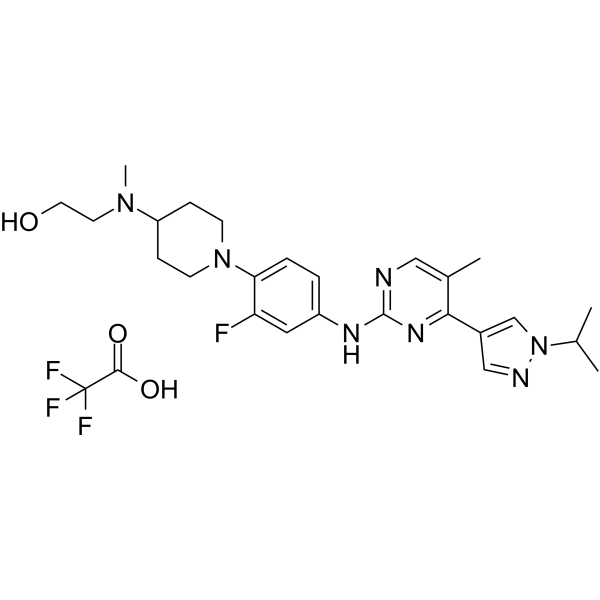
FLT3-IN-32 TFA is a potent FLT3 inhibitor with an IC50s of 2.40 nM and 3.83 nM against FLT3-ITD and FLT3-D835Y. FLT3-IN-32 TFA inhibits proliferation/survival of human MV4-11 cells with an IC50 of 0.07 nM. FLT3-IN-32 TFA can be used for the study of acute myeloid leukemia (AML) .
|
-
- HY-149539
-
|
|
FLT3
RET
|
Cancer
|
|
PLM-101 is an orally available anticancer agent targeting FLT3 and RET with inhibitory activity against acute myeloid leukemia cells. PLM-101 inhibits RET, thereby inducing autophagic degradation of FLT3; and it inhibits the PI3K and Ras/ERK pathways, resulting in anti-leukemia activity. PLM-101 has anti-tumor efficacy in a mouse MV4-11 flank xenograft model (dose: 3, 10 mg/kg; po) and an allogeneic xenograft mouse model (dose: 40 mg/kg; po) .
|
-
- HY-147717
-
|
|
CDK
|
Cancer
|
|
CDK8-IN-7 (compound 12) is a potent and selective cyclin-dependent kinase 8 (CDK8) inhibitor with an Kd of 3.5 nM. CDK8-IN-7 shows cytotoxicity for MOLM-13, OCI-AML3, MV4-11, NRK and H9c2 cells with IC50s of 5.9, 4.8, 5.4, 16.2, 12.5-25 µM, respectively. CDK8-IN-7 has the potential for the research of AML-cancer .
|
-
- HY-143895
-
|
|
FLT3
|
Cancer
|
|
FLT3-IN-12 is a potent, selective and orally active FLT3 kinase inhibitor with IC50s of 1.48 nM and 2.87 nM for FLT3-WT and FLT3-D835Y, respectively. FLT3-IN-12 possesses high selectivity over c-KIT (>1000-fold). FLT3-IN-12 has an excellent anti-AML (acute myeloid leukemia) activity (MV4-11, IC50 of 0.75 nM) .
|
-
- HY-170576
-
|
|
FLT3
STAT
Apoptosis
|
Cancer
|
|
FLT3-IN-28 (Compound 12y) is an orally active FLT3 inhibitor with antitumor activity. FLT3-IN-28 selectively inhibits cancer cells harboring the FLT3 internal tandem duplication (ITD) mutation, with IC50 values of 85, 290, 130, 65, and 220 nM for BaF3-FLT3-ITD, BaF3-TEL-VEGFR2, MV4-11, MOLM-13, and MOLM-14 cell lines respectively (MV4-11 and MOLM-13/14 are acute myeloid leukemia (AML) cell lines carrying the FLT3-ITD mutation). Additionally, FLT3-IN-28 can downregulate the phosphorylation levels of FLT3 and STAT5 in MOLM-13 cells and induce cell cycle arrest and Apoptosis. FLT3-IN-28 has an oral bioavailability of 19.2% in SD rats and can prolong survival in a dose-dependent manner in NSG mice xenografted with MOLM-13 cells. FLT3-IN-28 holds promise for research in cancer fields related to FLT3-ITD .
|
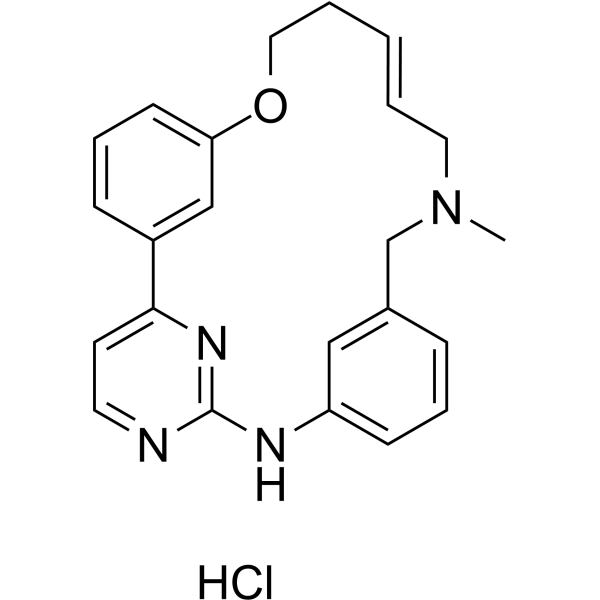
-
- HY-169076
-
|
|
FLT3
HDAC
Apoptosis
|
Cancer
|
FLT3/HDAC-IN-1 is a dual inhibitor of FLT3/HDAC, with IC50 values of 30.4, 52.4, and 14.7 nM for FLT3, HDAC1, and HDAC3, respectively. FLT3/HDAC-IN-1 can induce apoptosis in MV-4-11 cells and has anti-proliferative effects on FLT3 mutant-transformed BaF3 cells. FLT3/HDAC-IN-1 is being researched for its potential in treating hard-to-treat solid tumors and hematological malignancies .
|
-
- HY-155112
-
|
|
Microtubule/Tubulin
FLT3
Bcr-Abl
|
Cancer
|
|
Antiproliferative agent-30 (Compound 8g) inhibits tubulin assembly and inhibits FLT3 and Abl1. Antiproliferative agent-30 has vascular-disrupting activity. Antiproliferative agent-30 has broad antiproliferative activities against cancer cell lines (IC50s: 0.054 nM, 0.008 nM, 0.144 nM for HCT-116, K562, MV-4-11 cells respectively). Antiproliferative agent-30 also has anticancer effect against AML with FLT3-ITD-TKD mutation .
|
-
- HY-143894
-
|
|
FLT3
|
Cancer
|
|
FLT3-IN-11 (compound 30) is a potent, selective and orally active FLT3 kinase inhibitor with IC50s of 7.22 nM and 4.95 nM for wild-type FLT3 and FLT3-D835Y, respectively. FLT3-IN-11 high selectivity for FLT3 over c-KIT (>1000-fold). FLT3-IN-11has excellent anti-acute myeloid leukemia (AML) activity (MV4-11 cells, IC50 of 3.2 nM) .
|
-
- HY-155770
-
|
|
FLT3
|
Cancer
|
|
FLT3-IN-20 (compound 34f) is a potent FLT3 inhibitor with IC50 values of 1 and 4 nM for FLT3-D835Y and FLT3-ITD, respectively. FLT3-IN-20 has anti-proliferation efficacy in FLT3-ITD-positive AML cell lines MV4-11 and MOLM-13 (7 and 9 nM, respectively) and the MOLM-13 variant (4 nM) with the FLT3-ITD-D835Y mutation. FLT3-IN-20 can be used in research of cancer .
|
-
- HY-169917
-
|
|
Drug Derivative
|
Cancer
|
|
THP-1/MV-4-11 against-1 (compound 12k) is an anticancer agent with potency inhibitory against THP-1/MV/4 cells (IC50=29 nM and 98 nM, respectively). THP-1/MV-4-11 against-1 is one of 5-substituted thiazolyl urea derivatives, can be used in leukemic diseases research .
|
-
- HY-181854
-
|
|
PROTACs
Epigenetic Reader Domain
Histone Acetyltransferase
c-Myc
Caspase
Apoptosis
|
Cancer
|
|
ZX079 is a dual BRD4 and CBP PROTAC degrader with a BRD4 DC50 value of 0.035 nM and a CBP DC50 value of < 0.02 nM. ZX079 induces dose- and time-dependent degradation of BRD4 and CBP proteins through recruitment of the cereblon E3 ligase. ZX079 induces apoptosis in MV4-11 and MOLM-13 cells, reduces tumor growth in an acute myeloid leukemia xenograft model. ZX079 can be used for the research of acute myeloid leukemia .
|
-
- HY-182937
-
|
|
FLT3
STAT
Akt
ERK
Caspase
PARP
Bcl-2 Family
Apoptosis
|
Cancer
|
|
FLC-8 is an orally active FLT3 inhibitor with IC50 values of 10.2 nM, 11.6 nM and 24.10 nM against human FLT3-WT, FLT3-G697R and FLT3-N676D, respectively. FLC-8 inhibits FLT3 autophosphorylation and downstream STAT5, AKT and ERK signaling pathways, and induces apoptosis in acute myeloid leukemia (AML) cells. FLC-8 exhibits potent antitumor activity in the MV4-11 xenograft model. FLC-8 can be used for the research of acute myeloid leukemia .
|
-
- HY-181735
-
|
|
Ligands for Target Protein for PROTAC
Epigenetic Reader Domain
|
Cancer
|
|
BET-IN-30 (Compound 11d) is a BTE family protein inhibitor, which can act as a BRD2/BRD3/BRD4 target protein ligand and be used for the synthesis of PROTACs, such as PROTAC BET Degrader-15 (HY-181729). BET-IN-30 exhibits potent anti-proliferative activity against acute myeloid leukemia (AML) cells such as MV4-11. BET-IN-30 can be used for the study of AML .
|
-
- HY-180430
-
|
|
Drug Derivative
|
Cancer
|
|
Antitumor agent-208, a Bufalin (HY-N0877) analogue, is a potent and orally active antitumor agent. Antitumor agent-208 exhibits antiproliferative activity against tumor cell line (IC50 =0.30-1.09 nM). Antitumor agent-208 inhibits tumor growth in a MV-4-11 xenograft mouse model. Antitumor agent-208 can be used for cancer research, such as acute myeloid leukemia (AML) and non-small cell lung cancer (NSCLC) .
|
-
- HY-180912
-
|
|
CDK
Apoptosis
|
Cancer
|
|
HS-36 is a highly selective and orally active dual inhibitor of CDK4 and CDK9 with IC50 values of 18.9 and 4.2 nM respectively. HS-36 exhibits nanomolar-level potent activity against various cancer cells, inducing G0/G1 phase arrest and promoting cell apoptosis. HS-36 efficiently inhibits tumor growth in a mouse model of MV-4-11 tumors. HS-36 can be used for the study of acute myeloid leukemia .
|
-
- HY-180836
-
|
|
Molecular Glues
IKZF Family
Apoptosis
|
Cancer
|
|
DIX-01 is a molecular gel degrader that can simultaneously induce the degradation of IKZF1/3 and GSPT1 mediated by CRBN. Its DC50 values are: IKZF1 (19.80 nM), IKZF3 (45.31 nM), and GSPT1 (120.1 nM). DIX-01 exhibits nanomolar-level potent anti-proliferative activity in various cancer cell lines. DIX-01 induces apoptosis in MV4-11 cells and significantly inhibits the growth of leukemia cells in zebrafish. DIX-01 can be used for the study of malignant hematological tumors .
|
-
- HY-179734
-
|
|
PROTACs
Epigenetic Reader Domain
Apoptosis
c-Myc
|
Cancer
|
|
PROTAC BRD4 Degrader-41 (Compound A5) is a BRD4 PROTAC degrader with a DC50 of 0.97 nM. PROTAC BRD4 Degrader-41 exhibits potent anti-proliferative activity against various types of cancer cells such as AML, lymphoma, breast cancer, ovarian cancer, and non-small cell lung cancer. PROTAC BRD4 Degrader-41 can induce G0/G1 phase arrest and apoptosis in MV4-11 cells. PROTAC BRD4 Degrader-41 downregulates the transcriptional level of c-Myc .
|
-
- HY-182813
-
|
|
Drug-Linker Conjugates for ADC
|
Cancer
|
|
MC-amide-C2-amide-(β-D-GlcUA)-amide-PEG1-CH2-CC-885 is a Drug-Linker Conjugates for ADC composed of CC-885 (HY-101488) and a linker. MC-amide-C2-amide-(β-D-GlcUA)-amide-PEG1-CH2-CC-885 conjugates with GemtUZUmab (HY-P99971) to synthesize an ADC (Compound ADC-2). ADC-2 exhibits anti-tumor activity in a leukemia MV-4-11 xenograft model .
|
-
- HY-172889
-
|
|
PI3K
HDAC
Apoptosis
mTOR
Akt
|
Cancer
|
|
PI3K/HDAC-IN-4 (Compound 31f) is a PI3K/HDAC dual inhibitor (IC50: 0.2μM). PI3K/HDAC-IN-4 shows high selectivity for HDAC1-3 (IC50 values of 75.5 nM, 70.9 nM, and 1.9 nM, respectively). PI3K/HDAC-IN-4 is a potent PIK3 inhibitor with IC50 values of 2.5 nM, 80.5 nM, 10.0 nM, and 57.2 nM for PI3Kα, β, δ, and γ, respectively. PI3K/HDAC-IN-4 significantly induces tumor cell apoptosis by simultaneously inhibiting the PI3K/AKT/mTOR signaling pathway and HDAC1-3. PI3K/HDAC-IN-4 exhibits potent antiproliferative activity in a variety of tumor cell lines (e.g., MV4-11, Jeko-1, HL60, and MCF-7, with IC50 values of 0.2, 0.9, 0.8, and 1.5 μM, respectively). PI3K/HDAC-IN-4 can be used in the study of lymphoma and leukemia .
|
-
- HY-161615
-
|
|
PROTACs
ATM/ATR
Apoptosis
|
Inflammation/Immunology
Cancer
|
|
PROTAC ATR degrader-2 is a selective ATR PROTAC degrader. PROTAC ATR degrader-2 degrades ATR in acute myeloid leukemia (AML) cells MV-4-11 and MOLM-13, with DC50 values of 22.9 nM and 34.5 nM, respectively. PROTAC ATR degrader-2 has an IC50 of 29.6 nM against ATR, and its IC50 values against ATM and PI3K are both greater than 2000 nM. PROTAC ATR degrader-2 induces apoptosis, DNA damage, and upregulates p53 expression. PROTAC ATR degrader-2 inhibits cancer cell proliferation through the kinase-independent function of ATR protein. PROTAC ATR degrader-2 is applicable to research related to acute myeloid leukemia .
|
-
- HY-174437B
-
|
|
FLT3
Apoptosis
STAT
p38 MAPK
Akt
|
Cancer
|
|
FLT3-IN-32 hydrochloride is a potent and orally active FLT3 inhibitor with an IC50s of 0.29 nM, 0.77 nM and 2.07 nM against FLT3-ITD, FLT3-D835Y and FLT-N676K. FLT3-IN-32 hydrochloride reduces the phosphorylation of FLT3 and its downstream signaling molecules (STAT5, MAPK, AKT) to induce FLT3-mutated Ba/F3 cells apoptosis. FLT3-IN-32 hydrochloride shows significant anti-tumor efficacy in n the MV4-11 xenograft model. FLT3-IN-32 hydrochloride can be used for the study of acute myeloid leukemia (AML) .
|
-
- HY-169270
-
|
|
Epigenetic Reader Domain
PROTACs
|
Cancer
|
|
PROTAC SMARCA2 degrader-19 (Compound 46) is a PROTAC degrader for SMARCA2, that degrades SMARCA2 in cell A549 and MV411 with a DC50 < 100 nM. PROTAC SMARCA2 degrader-19 degrades SMARCA4 in cell MV411 with a DC50 > 1000 nM .
|
-
- HY-163877
-
|
|
PROTACs
Epigenetic Reader Domain
|
Cancer
|
|
PROTAC SMARCA2/4-degrader-19 (Compound I-412) is a PROTAC degrader for catalytic subunit of the SWI/SNF complex SMARCA2 and SMARCA4. PROTAC SMARCA2/4-degrader-19 degrades SMARCA2 in MV411 and in A549 with DC50 <100 nM, degrades SMARCA4 in MV411 with DC50 <100 nM. (Pink: Ligand for Target Protein (HY-163949); Black: Linker (HY-W006635); Blue: Ligand for E3 Ligase (HY-125845))
|
-
- HY-163873
-
|
|
PROTACs
Epigenetic Reader Domain
|
Cancer
|
|
PROTAC SMARCA2/4-degrader-20 (Compound I-405) is a PROTAC degrader for catalytic subunit of the SWI/SNF complex SMARCA2. PROTAC SMARCA2/4-degrader-20 degrades SMARCA2 in A549 and MV411 with DC50 <100 nM, degrades SMARCA4 in MV411 with DC50 of 100-500 nM. (Pink: Ligand for Target Protein (HY-159545); Black: Linker (HY-W006635); Blue: Ligand for E3 Ligase (HY-163932))
|
-
- HY-159461
-
|
|
PROTACs
Epigenetic Reader Domain
|
Cancer
|
|
PROTAC SMARCA2/4-degrader-9 (Compound I-503) is a PROTAC degrader for catalytic subunit of the SWI/SNF complex SMARCA2 and SMARCA4. PROTAC SMARCA2 degrader-9 degrades SMARCA2 in MV411 and in A549 with DC50 <100 nM, degrades SMARCA4 in MV411 with DC50 <100 nM . (Pink: Ligand for target protein (HY-159545); Black: Linker (HY-W006635); Blue: Ligand for E3 ligase (S,R,S)-AHPC (HY-125845))
|
-
- HY-162748
-
|
|
PROTACs
Epigenetic Reader Domain
|
Cancer
|
|
PROTAC SMARCA2/4-degrader-30 (Compound I-291) is a PROTAC degrader for catalytic subunit of the SWI/SNF complex SMARCA2 and SMARCA4. PROTAC SMARCA2/4-degrader-30 degrades SMARCA2 in A549 and in MV411 with DC50 <100 nM, degrades SMARCA4 in MV411 with DC50 <100 nM. (Pink: ligand for target protein (HY-163926); Black: linker (HY-159684); Blue: ligand for E3 ligase (HY-W382038)) .
|
-
- HY-159455
-
|
|
PROTACs
Epigenetic Reader Domain
|
Cancer
|
|
PROTAC SMARCA2/4-degrader-4 (Compound I-434) is a PROTAC degrader for catalytic subunit of the SWI/SNF complex SMARCA2 and SMARCA4. PROTAC SMARCA2/4-degrader-4 degrades SMARCA2 in MV411 and in A549 with DC50 <100 nM, degrades SMARCA4 in MV411 with DC50 <100 nM. (Pink: Ligand for target protein (HY-159472); Black: Linker (HY-159478); Blue: Ligand for E3 ligase (S,R,S)-AHPC (HY-125845))
|
-
- HY-159456
-
|
|
PROTACs
Epigenetic Reader Domain
|
Cancer
|
|
PROTAC SMARCA2/4-degrader-5 (Compound I-437) is a PROTAC degrader for catalytic subunit of the SWI/SNF complex SMARCA2 and SMARCA4. PROTAC SMARCA2/4-degrader-5 degrades SMARCA2 in MV411 and in A549 with DC50 <100 nM, degrades SMARCA4 in MV411 with DC50 of 100-500 nM. (Pink: Ligand for target protein (HY-159545); Black: Linker (HY-159557); Blue: Ligand for E3 ligase (S,R,S)-AHPC (HY-125845))
|
-
- HY-159460
-
|
|
PROTACs
Epigenetic Reader Domain
|
Cancer
|
|
PROTAC SMARCA2/4-degrader-8 (Compound I-502) is a PROTAC degrader for catalytic subunit of the SWI/SNF complex SMARCA2. PROTAC SMARCA2/4-degrader-8 degrades SMARCA2 with DC50 <100 nM in A549 and in MV411, degrades SMARCA4 with DC50<100 nM in MV411(Pink: Ligand for target protein (HY-159545); Black: Linker (HY-W063924); Blue: Ligand for E3 ligase (S,R,S)-AHPC (HY-125845))
|
-
- HY-155489
-
|
|
Anaplastic lymphoma kinase (ALK)
Apoptosis
|
Cancer
|
|
DDO-2728 (compound 19) is a selective AlkB homologue 5 (ALKBH5) inhibitor with an IC50 of 2.97 μM. DDO-2728 increases the abundance of N 6 methyladenosine (m 6A) modifications, inducing cell apoptosis and cycle arrest. DDO-2728 suppresses tumor growth in the MV4 11 xenograft model with favorable safety profile, shows the potential of targeting ALKBH5 in cancer research .
|
-
- HY-169272
-
|
|
PROTACs
Epigenetic Reader Domain
|
Cancer
|
|
PROTAC SMARCA2 degrader-21 (Compound I-5) is a PROTAC degrader for SMARCA, that degrades SMARCA2 with a DC50 of 10-50 nM in A549 cell, and degrades SMARCA2 and SMARCA4 in MV411 with DC50 of <1 nM and >100 nM, respectively .
|
-
- HY-172911
-
|
|
SHP2
|
Cancer
|
|
SHP2-IN-37 (compound C5) is a potent and selective SHP2 allosteric inhibitor with an IC50 of 0.023 μM. SHP2-IN-37 exhibits antiproliferative effect on KYSE-520 and MV-411 cells with IC50s of 6.97 and 0.67 μM, respectively
|
-
- HY-155302
-
|
|
FLT3
|
Cancer
|
|
FLT3-IN-22 (compound 22f) is a potent FLT3 inhibitor with IC50 values of 0.941 nM and 0.199 nM for FLT3 and FLT3/D835Y, respectively. FLT3-IN-22 exhibits strong antiproliferative activity against MV4-11 cells and the mutant FLT kinase expressed Ba/F3 cell lines, including FLT-D835Y and FLT3-F691L .
|
-
- HY-159449
-
|
|
PROTACs
Epigenetic Reader Domain
|
Cancer
|
|
PROTAC SMARCA2 degrader-5 (Compound I-425) is a PROTAC degrader for catalytic subunit of the SWI/SNF complex SMARCA2. PROTAC SMARCA2 degrader-5 degrades SMARCA2 in MV411 and in A549 with DC50 <100 nM, degrades SMARCA4 with DC50 of 100-500 nM . (Pink: Ligand for target protein (HY-159531); Black: Linker (HY-159538); Blue: Ligand for E3 ligase (S,R,S)-AHPC (HY-125845))
|
-
- HY-163871
-
|
|
PROTACs
Epigenetic Reader Domain
|
Cancer
|
|
PROTAC SMARCA2/4-degrader-18 (Compound I-348) is a PROTAC degrader for catalytic subunit of the SWI/SNF complex SMARCA2 and SMARCA4. PROTAC SMARCA2/4-degrader-18 degrades SMARCA2 in A549 with DC50 <100 nM, degrades SMARCA4 in MV411 with DC50 <100 nM. (Pink: Ligand for Target Protein (HY-159531); Black: Linker (HY-76547); Blue: Ligand for E3 Ligase (HY-125845))
|
-
- HY-163870
-
|
|
PROTACs
Epigenetic Reader Domain
|
Cancer
|
|
PROTAC SMARCA2/4-degrader-17 (Compound I-345) is a PROTAC degrader for catalytic subunit of the SWI/SNF complex SMARCA2 and SMARCA4. PROTAC SMARCA2/4-degrader-17 degrades SMARCA2 in A549 with DC50 <100 nM, degrades SMARCA4 in MV411 with DC50 <100 nM. (Pink: Ligand for Target Protein (HY-159545); Black: Linker (HY-W053507); Blue: Ligand for E3 Ligase (HY-125845))
|
-
- HY-162743
-
|
|
PROTACs
Epigenetic Reader Domain
|
Cancer
|
|
PROTAC SMARCA2/4-degrader-29 (Compound I-279) is a PROTAC degrader for catalytic subunit of the SWI/SNF complex SMARCA2 and SMARCA4. PROTAC SMARCA2/4-degrader-29 degrades SMARCA2 in A549 with DC50 <100 nM, degrades SMARCA4 in MV411 with DC50 <100 nM. (Pink: ligand for target protein (HY-163926); Black: linker (HY-159682); Blue: ligand for E3 ligase (HY-W382038)) .
|
-
- HY-162744
-
|
|
PROTACs
Epigenetic Reader Domain
|
Cancer
|
|
PROTAC SMARCA2/4-degrader-31 (Compound I-280) is a degrader for catalytic subunit of the SWI/SNF complex SMARCA2 and SMARCA4. PROTAC SMARCA2/4-degrader-31 degrades SMARCA2 in A549 with DC50 <100 nM, degrades SMARCA4 in MV411 with DC50 <100 nM. (Pink: Ligand for target protein (HY-163926); Black: Linker (HY-159682); Blue: Ligand for E3 ligase (HY-W382038)) .
|
-
- HY-159451
-
|
|
PROTACs
Epigenetic Reader Domain
|
Cancer
|
|
PROTAC SMARCA2 degrader-7 (Compound I-428) is a PROTAC degrader for SWI/SNF-related matrix-associated actin-dependent regulator of chromatin subfamily A (SMARCA) SMARCA2. PROTAC SMARCA2 degrader-7 degrades SMARCA2 and SMARCA4 in MV411 with DC50 of <100 and 100-500 nM. (Pink: Ligand for target protein (HY-159542); Black: Linker (HY-159538); Blue: Ligand for E3 ligase (S,R,S)-AHPC (HY-125845))
|
-
- HY-163868
-
|
|
PROTACs
Epigenetic Reader Domain
|
Cancer
|
|
PROTAC SMARCA2/4-degrader-15 (Compound I-335) is a PROTAC degrader for catalytic subunit of the SWI/SNF complex SMARCA2 and SMARCA4. PROTAC SMARCA2/4-degrader-15 degrades SMARCA2 in A549 with DC50 <100 nM, degrades SMARCA4 in MV411 with DC50 <100 nM. (Pink: Ligand for Target Protein (HY-159545); Black: Linker (HY-N3024); Blue: Ligand for E3 Ligase (HY-125845))
|
-
- HY-114323
-
|
|
PROTACs
FLT3
Apoptosis
STAT
MEK
ERK
|
Cancer
|
|
PROTAC FLT-3 degrader 1 is an effective and selective FLT-3 PROTAC degrader with an IC50 of 0.6 nM. PROTAC FLT-3 degrader 1 inhibits both FLT-3 and FLT-3 ITD mutants. PROTAC FLT-3 degrader 1 has the activity of anti-proliferation and induction of apoptosis, which can be used in the study of tumor. (Pink: FLT3 ligand (HY-168702); Black: Linker (HY-124380); Blue: VHL ligand (HY-125845)) .
|
-
- HY-162367
-
|
|
FLT3
Checkpoint Kinase (Chk)
|
Cancer
|
|
FLT3/CHK1-IN-2 (Compound 30) is a dual inhibitor of FLT3 and CHK1, with IC50s of 25.63, 16.39, 22.80 nM for CHK1, FLT3-WT, and FLT-D835Y respectively. FLT3/CHK1-IN-2 has favorable oral PK properties and kinase selectivity. FLT3/CHK1-IN-2 can be used for research of acute myeloid leukemia (AML) .
|
-
- HY-181048
-
|
|
Casein Kinase
MDM-2/p53
|
Cancer
|
|
CK1α-IN-1 (Compound 7a) is a selective CK1α inhibitor with an IC50 of 10.96 nM. CK1α-IN-1 dose-dependently stabilizes p53 protein. CK1α-IN-1 has anticancer activity against acute monocytic leukemia .
|
-
- HY-159457
-
|
|
PROTACs
Epigenetic Reader Domain
|
Cancer
|
|
PROTAC SMARCA2/4-degrader-6 (compound I-438) is a SMARCA2/4 degrader. PROTAC SMARCA2/4-degrader-6 has the potential for the research of cancer. (Pink: SMARCA2/4 ligand, (HY-159545); Black: linker (HY-W006635); Blue: VHL ligand (HY-112078)) .
|
-
- HY-W286906
-
|
|
Bcl-2 Family
Apoptosis
|
Cancer
|
|
Mcl1-IN-15 (Compound 7) is the inhibitor for myeloid cell leukemia 1 (Mcl-1) with an IC50 of 8.73 μM. Mcl1-IN-15 inhibits Mcl1-BH3 peptide interaction, activates the Bak/Bax-mediated apoptosis and exhibits antitumor activity .
|
-
- HY-176476
-
|
|
Epigenetic Reader Domain
FKBP
|
Cancer
|
|
BRD4/FKBP12 degrader-1(a1d) is a BRD4/FKBP12 degrader with anti-cancer activity (BRD4 ligand: HY-78695, FKBP12 ligand: HY-176501, linker: HY-140212) .
|
-
- HY-163798
-
|
|
Epigenetic Reader Domain
|
Cancer
|
|
Menin-MLL inhibitor 33 (compound 15-a) is a potent Menin-MLL inhibitor with an IC50 value of 3.6 nM. Menin-MLL inhibitor 33 shows antiproliferative activity .
|
-
- HY-143471
-
|
PLK1/BRD4-IN-1
|
Polo-like Kinase (PLK)
Epigenetic Reader Domain
Apoptosis
Androgen Receptor
c-Myc
|
Cancer
|
|
WNY0824 (PLK1/BRD4-IN-1) is an orally active dual inhibitor of PLK1 and BET protein families, with IC50 values of 22, 402.5, 150.7, 103.9, and 311.9 nmol/L for PLK1, BRD2, BRD3, BRD4, and BRDT, respectively. WNY0824 induces cell cycle arrest and apoptosis by inhibiting AR- and MYC-mediated transcriptional processes. In addition, WNY0824 also inhibits tumor growth in Enzalutamide (HY-70002) resistant CRPC xenograft tumor models .
|
-
- HY-170314
-
-
- HY-176477
-
|
|
Epigenetic Reader Domain
FKBP
|
Cancer
|
|
BRD4/FKBP12 degrader-2 (a1dj) is a BRD4/FKBP12 degrader and shows anticancer activity (BRD4 ligand: HY-78695, FKBP12 ligand: HY-176502, linker: HY-140212) .
|
-
- HY-184211
-
-
- HY-175520
-
|
|
SHP2
Phosphatase
Apoptosis
|
Cancer
|
|
SHP2-IN-42 is a src homology 2 domain-containing phosphatase 2 (SHP2) inhibitor with an IC50 of 15 nM. SHP2-IN-42 inhibits cell proliferation and induces apoptosis and G1 phase cell cycle arrest. SHP2-IN-42 can be used for the research of cancer, such as acute myeloid leukemia (AML) .
|
-
- HY-B1516
-
|
3'-Fluoro-3'-deoxythymidine; 3′-Deoxy-3′-fluorothymidine; FLT
|
DNA/RNA Synthesis
Orthopoxvirus
|
Infection
Cancer
|
|
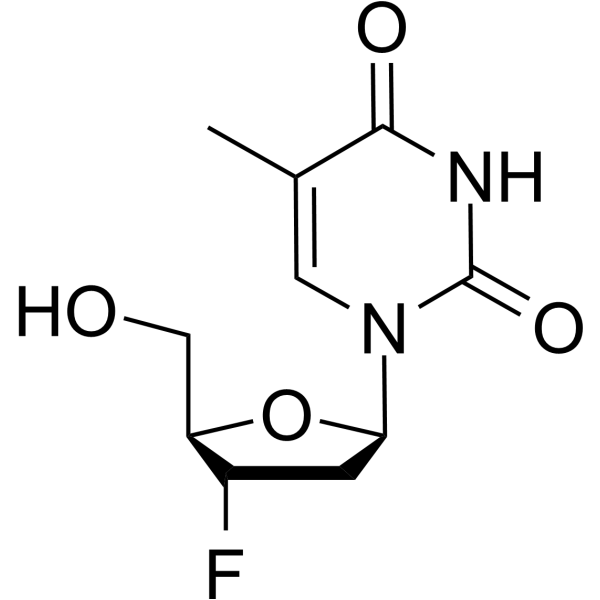
Alovudine (3'-Fluoro-3'-deoxythymidine) is a mtDNA synthesis inhibitor and a marker of DNA synthesis. Alovudine is less susceptible to inflammatory changes than 18F-Fluorodeoxyglucose (FDG) and thus is a better biomarker in pancreatic cancer. Alovudine shows anti-orthopoxvirus and anti-leukemic activity .
|
-
- HY-170640
-
|
|
FLT3
Reactive Oxygen Species (ROS)
Apoptosis
|
Cancer
|
|
FLT3-IN-29 (Compound MY-10) is a FLT3 inhibitor (IC50s: 6.5 and 10.3 nM for FLT3-ITD and FLT3-D835Y mutants). FLT3-IN-29 arrests cell cycle at the G0/G1 phase and efficiently induces Apoptosis. FLT3-IN-29 also reduces reactive oxygen species (ROS) production and mitochondrial membrane potential (MMP). FLT3-IN-29 displays antileukemic activity .
|
-
- HY-138831
-
|
|
HDAC
Apoptosis
|
Cancer
|
|
AES-350 is a potent and orally active HDAC6 inhibitor with an IC50 and a Ki of 0.0244 μM and 0.035 μM, respectively. AES-350 is also against HDAC3, HDAC8 in an enzymatic activity assay with IC50 values of 0.187 μM and 0.245 μM, respectively. AES-350 triggers apoptosis in AML cells through HDAC inhibition and can be used for acute myeloid leukemia (AML) research .
|
-
- HY-152471
-
|
|
Epigenetic Reader Domain
|
Cancer
|
|
Eleven-Nineteen-Leukemia Protein IN-3 is an orally active inhibitor of ENL YEATS domain with an IC50 value of 15.4 nM. Eleven-Nineteen-Leukemia Protein IN-3 down-regulates MYC expression through ENL in cells and can enhances the thermal stability of ENL protein in vitro .
|
-
- HY-130247
-
|
JAK2/FLT3-IN-1
|
JAK
FLT3
Apoptosis
|
Cancer
|
|
Flonoltinib is a potent and orally active dual JAK2/FLT3 inhibitor with IC50 values of 0.7 nM, 4 nM, 26 nM and 39 nM for JAK2, FLT3, JAK1 and JAK3, respectively. Flonoltinib has anti-cancer activity .
|
-
- HY-155533
-
|
|
SHP2
|
Cancer
|
|
YF704 (compound 4w) is a selective allosteric inhibitor of SHP2 (IC50=0.25 μM). YF704 shows antiproliferative activity and induces apoptosis in cancer cells. YF704 also downregulates Erk1/2 and Akt phosphorylation levels in cancer cells .
|
-
- HY-148036
-
|
|
FLT3
|
Cancer
|
|
FLT3-IN-16 is a potent FLT3 inhibitor with an IC50 of 1.1 μM. FLT3-IN-16 can be used for researching acute myeloid leukemia .
|
-
- HY-130247A
-
|
JAK2/FLT3-IN-1 TFA
|
JAK
FLT3
Apoptosis
|
Cancer
|
|
Flonoltinib TFA is a potent and orally active dual JAK2/FLT3 inhibitor with IC50 values of 0.7 nM, 4 nM, 26 nM and 39 nM for JAK2, FLT3, JAK1 and JAK3, respectively. Flonoltinib TFA has anti-cancer activity .
|
-
- HY-161967
-
|
|
FLT3
JAK
Apoptosis
|
Cancer
|
|
JAK2/FLT3-IN-3 (11r) is a dual FLT3 and JAK2 inhibitor, with IC50 values of 2.01 nM, 0.51 nM and 104.40 nM for JAK2, FLT3 and JAK3, respectively. JAK2/FLT3-IN-3 (11r) induces apoptosis and possesses antitumor activity .
|
-
- HY-130247B
-
|
JAK2/FLT3-IN-1 monomaleate
|
JAK
FLT3
Apoptosis
|
Cancer
|
|
Flonoltinib maleate is a potent and orally active dual JAK2/FLT3 inhibitor with IC50 values of 0.7 nM, 4 nM, 26 nM and 39 nM for JAK2, FLT3, JAK1 and JAK3, respectively. JAK2/FLT3-IN-1 has anti-cancer activity .
|
-
- HY-103036
-
|
|
Epigenetic Reader Domain
Apoptosis
|
Cancer
|
|
BET bromodomain-IN-5 is an orally active BET inhibitor with an IC50 of 14 nM against BRD4 (1). BET bromodomain-IN-5 can inhibit the proliferation of tumor cells and induce cell cycle arrest and apoptosis. BET bromodomain-IN-5 can be used in the research of tumors .
|
-
- HY-168213
-
|
|
FLT3
|
Cancer
|
|
FLT3-IN-27 (compound 49) is a FLT3-ITD inhibitor with the IC50 of 174 nM. FLT3-IN-27 inhibits cell growth and increases the number of cells in the G1 phase of the cell cycle and can be used for study of acute myeloid leukemia .
|
-
- HY-152469
-
|
|
Epigenetic Reader Domain
|
Cancer
|
|
Eleven-Nineteen-Leukemia Protein IN-1 is an inhibitor of ENL YEATS domain with an IC50 value of 14.5 nM. Eleven-Nineteen-Leukemia Protein IN-1 interacts with ENL protein and enhances the thermal stability of ENL protein in vitro .
|
-
- HY-130247C
-
|
JAK2/FLT3-IN-1 sulfate
|
JAK
FLT3
Apoptosis
|
Cancer
|
|
Flonoltinib maleate is a potent and orally active dual JAK2/FLT3 inhibitor with IC50 values of 0.7 nM, 4 nM, 26 nM and 39 nM for JAK2, FLT3, JAK1 and JAK3, respectively. Flonoltinib maleate has anti-cancer activity .
|
-
- HY-132307
-
|
|
Bcl-2 Family
Apoptosis
|
Cancer
|
|
Mcl-1 inhibitor 6 is an orally active, selective myeloid cell leukemia 1 (Mcl-1) protein inhibitor with a Kd of 0.23 nM and a Ki of 0.02 μM. Mcl-1 inhibitor 6 possesses superior selectivity over other Bcl-2 family members (Bcl-2, Bcl2A1, Bcl-xL, and Bcl-w, Kd>10 μM). Mcl-1 inhibitor 6 is a potent antitumor agent .
|
-
- HY-148521
-
|
|
CDK
FLT3
PROTACs
Apoptosis
|
Cancer
|
|
PROTAC FLT3/CDK9 degrader-1 is a potent FLT3 and CDK9 dual PROTAC degrader. PROTAC FLT3/CDK9 degrader-1 induces apoptosis and effective degradation of target proteins FLT3 and CDK9. PROTAC FLT3/CDK9 degrader-1 has the potential for the research of FLT3-ITD mutated AML .
|
-
- HY-161050
-
|
|
HDAC
Apoptosis
|
Cancer
|
|
YSR734 (Compound 21) is a covalent HDAC inhibitor with IC50 values of 110 nM, 154 nM, and 143 nM for HDAC1, HDAC2, and HDAC3, respectively. YSR734 can induce apoptosis in leukemia cells. YSR734 can induce myoblast differentiation and is used in the study of Duchenne muscular dystrophy .
|
-
- HY-141512
-
JB170
3 Publications Verification
|
PROTACs
Aurora Kinase
|
Cancer
|
|
JB170 is a potent and highly specific PROTAC-mediated AURORA-A (Aurora Kinase) degrader (DC50=28 nM) by linking Alisertib, to the Cereblon-binding molecule Thalidomide. JB170 preferentially binds AURORA-A (EC50=193 nM) over AURORA-B (EC50=1.4 µM). JB170-mediated S-phase arrest is caused specifically by AURORA-A depletion. JB170 has excellent ability to inhibit non-catalytic function of AURORA-A kinase .
|
-
- HY-178039
-
|
|
CDK
Apoptosis
c-Myc
Caspase
PARP
|
Cancer
|
|
CDK9-IN-42 is a potent and selective CDK9 inhibitor with an IC50of 3.8 nM. CDK9-IN-42 can inhibit the growth of cancer cells and induce apoptosis by downregulating Myc-1 and c-Myc. CDK9-IN-42 can be used for the research of cancer, such as breast and lungcancer .
|
-
- HY-120084
-
BTX161
1 Publications Verification
|
Casein Kinase
|
Cancer
|
|
BTX161, a thalidomide analog, is an effective CKIα degrader. BTX161 mediates human AML cell CKIα degradation more effectively than lenalidomide and activates the DNA damage response (DDR) and p53, while stabilizing p53 antagonist MDM2.
|
-
- HY-125230
-
|
|
Epigenetic Reader Domain
|
Cancer
|
|
CN427 is a quinazoline-based BRD4 inhibitor with a Kd of 66 nM for BRD4. CN427 is applicable to the research of leukemia .
|
-
- HY-170673
-
|
|
E3 Ligase Ligand-Linker Conjugates
|
Cancer
|
|
E3 Ligase Ligand-linker Conjugate 156 is a CRBN E3 ligase ligand-linker conjugate. E3 Ligase Ligand-linker Conjugate 156 can be used to synthesize PROTAC XPO1 degrader-1 (HY-170669) .
|
-
- HY-153886
-
-
- HY-109179
-
-
- HY-148522
-
|
|
FLT3
|
Cancer
|
|
FLT3-IN-18 is a potent and selective FLT3 inhibitor with an IC50 value of 0.003 μM. FLT3-IN-18 induces apoptosis and cell cycle arrest at G1 phase. FLT3-IN-18 inhibits FLT3 and STAT5 phosphorylation. FLT3-IN-18 has the potential for the research of acute myeloid leukemia (AML) .
|
-
- HY-158009
-
|
|
Histone Acetyltransferase
|
Cancer
|
|
SGF29-IN-1 (Compound Cpd_DC60) is a selective inhibitor for Spt-Ada-Gcn5 acetyltransferase (SAGA)–associated factor 29 (SGF29)-Tudor domain. SGF29-IN-1 exhibits activity against leukemia .
|
-
- HY-163442A
-
|
|
Pim
|
Cancer
|
|
PIM3-IN-1 hydrochloride (Compound 19a) is an inhibitor of (PIM2/3), with the highest inhibition level being against PIM3, having an IC50 value in the nanomolar range. PIM3-IN-1 hydrochloride can be used in cancer research .
|
-
- HY-157814
-
|
|
Apoptosis
Epigenetic Reader Domain
|
Cancer
|
|
Menin-MLL inhibitor-25 (compound A6) is a potent Menin-MLL interaction inhibitor with an IC50 value of 0.38 µM. Menin-MLL inhibitor-25 shows anti-proliferative activity. Menin-MLL inhibitor-25 induces apoptosis and cell cycle arrest at G0/G1 phase. Menin-MLL inhibitor-25 reverses the differentiation arrest .
|
-
- HY-158377
-
|
|
CDK
STAT
|
Cancer
|
|
CDK8/19-IN-2 (compound 12) is an orally active and potent cyclin-dependent kinase 8/19 (CDK8 and CDK19) inhibitor, with IC50 values of 2.08 and 2.49 nM, respectively. CDK8/19-IN-2 can be used for acute myeloid leukemia (AML), breast cancer, and lymphoma research .
|
-
- HY-173212
-
|
|
Polo-like Kinase (PLK)
c-Myc
Apoptosis
|
Cancer
|
|
PLK1-IN-13 is a selective and orally active PLK1 inhibitor (IC50: 0.27 nM). PLK1-IN-13 also inhibits PLK2 (IC50: 12.72 nM) and PLK3 (IC50: 4.12 nM). PLK1-IN-13 arrests cell at G2 phase, induces apoptosis and down-regulates the transcription of the proliferation-related oncogene c-MYC. PLK1-IN-13 inhibits tumor growth, and can be used for research of acute myeloid leukemia (AML) .
|
-
- HY-121093
-
|
|
Histone Methyltransferase
|
Cancer
|
DC-S239 is a selective histone methyltransferase SET7 inhibitor with an IC50 value of 4.59 μM. DC-S239 also displays selectivity for DNMT1, DOT1L, EZH2, NSD1, SETD8 and G9a. DC-S239 has anticancer activity .
|
-
- HY-132233A
-
|
|
Histone Methyltransferase
|
Cancer
|
|
DDO-2093 dihydrochloride is a potent MLL1-WDR5 protein-protein interaction inhibitor (IC50=8.6 nM; Kd=11.6 nM) with antitumor activity. DDO-2093 dihydrochloride selectively inhibits the catalytic activity of MLL complex .
|
-
- HY-141701
-
|
|
mTOR
HDAC
|
Cancer
|
|
mTOR/HDAC-IN-1 (Compound 50) is a selective mTOR and HDAC dual inhibitor with IC50 values of 0.49 and 0.91 nM against mTOR and HDAC1, respectively. mTOR/HDAC-IN-1 can be studied as an anti-cancer agent .
|
-
- HY-178996
-
|
|
FLT3
Apoptosis
Akt
ERK
PI3K
STAT
Mitochondrial Metabolism
|
Cancer
|
|
FLT3-IN-36 is a potent FLT3 inhibitor. FLT3-IN-36 exhibits antitumor activity against FLT3-mutated acute myeloid leukemia (AML) cells. FLT3-IN-36 induces cell cycle arrest, reduces mitochondrial membrane potential, and induces apoptosis, downregulating FLT3 and downstream protein expression (including AKT, ERK, PI3K, and STAT5). FLT3-IN-36 can be used for AML research .
|
-
- HY-132233
-
|
|
WDR5
|
Cancer
|
|
DDO-2093 is a potent MLL1-WDR5 protein-protein interaction inhibitor (IC50=8.6 nM; Kd=11.6 nM) with antitumor activity. DDO-2093 selectively inhibits the catalytic activity of MLL complex .
|
-
- HY-147868
-
|
|
Epigenetic Reader Domain
Apoptosis
|
Cancer
|
|
DC-CPin711 is a potent and selective inhibitor of CREB-binding protein (CBP) bromodomain with an IC50 of 0.0626 μM. DC-CPin711 arrests cell cycle at G1 phase and induces apoptosis .
|
-
- HY-146886
-
|
|
FLT3
|
Cancer
|
|
FLT3-IN-15 is a highly potent and orally active FLT3 inhibitor with IC50s of 0.87 nM and 0.32 nM for FLT3 and FLT3/D835Y, respectively. FLT3-IN-15 can be used for researching acute myeloid leukemia .
|
-
- HY-164515
-
|
|
Apoptosis
Mitochondrial Metabolism
Caspase
PARP
|
Cancer
|
|
ONC213 is an orally active αKGDH inhibitor. ONC213 can suppress mitochondrial respiration and elevate α-ketoglutarate levels by inhibiting αKGDH activity. ONC213 can induce cells apoptosis by inducing mitochondrial stress response and inhibiting translation of MCL-1. ONC213 can be used for the research of cancer, such as acute myeloid leukemia research (AML) .
|
-
- HY-114414
-
|
|
HDAC
mTOR
Apoptosis
|
Cancer
|
|
HDACs/mTOR Inhibitor 1 is a dual HDACs and mTOR inhibitor, with IC50s of 0.19 nM, 1.8 nM, 1.2 nM for HDAC1, HDAC6, mTOR, respectively. HDACs/mTOR Inhibitor 1 stimulates cell cycle arrest in G0/G1 phase and induces tumor cell apoptosis with low toxicity in vivo. HDACs/mTOR Inhibitor 1 can be used in the research of hematologic malignancies .
|
-
- HY-115904
-
|
|
CDK
FLT3
|
Cancer
|
|
FLT3/CDK4-IN-1 is a potent, high selective and orally active FLT3/CDK4 dual inhibitor (IC50=11 and 7 nM for FLT3 and CDK4, respectively). FLT3/CDK4-IN-1 has antiproliferative activities against certain cancer cells. FLT3/CDK4-IN-1 has good antitumor effect in vivo .
|
-
- HY-143286
-
|
|
PROTACs
FLT3
|
Cancer
|
|
PF15 is a PROTAC connected by ligands for FLT3 kinase and CRBN. PF15 is a high selective FLT3-ITD degrader, with a DC50 of 76.7 nM. PF15 significantly inhibits the proliferation of FLT3-ITD-positive cells, can down-regulate the phosphorylation of FLT3 and STAT5. PF15 also inhibits tumor growth in mouse models and can be used in study of leukemia .
|
-
- HY-151464
-
|
|
SHP2
Phosphatase
HDAC
|
Inflammation/Immunology
Cancer
|
|
SHP2/HDAC-IN-1 is a dual allosteric SHP2/HDAC inhibitor with IC50 values of 20.4 nM (SHP2) and 25.3 nM (HDAC1) respectively. SHP2/HDAC-IN-1 triggers efficient antitumor immunity by activating T cells, enhancing the antigen presentation function and promoting cytokine secretion. SHP2/HDAC-IN-1 can be used in the research of cancer immunoresearch .
|
-
- HY-N2037AR
-
|
Norcoclaurine hydrochloride (Standard)
|
MAP3K
Reference Standards
MDM-2/p53
ROS Kinase
Apoptosis
|
Infection
Cardiovascular Disease
Endocrinology
Cancer
|
|
Higenamine (hydrochloride) (Standard) is the analytical standard of Higenamine (hydrochloride). This product is intended for research and analytical applications. Higenamine hydrochloride is a selective LSD1 inhibitor (IC50=1.47 μM) that can be isolated from aconite. Higenamine hydrochloride has anti-inflammatory and antibacterial activity. Higenamine (Norcoclaurine) can attenuate IL-1β-induced Apoptosis through ROS-mediated PI3K/Akt signaling pathway. Higenamine hydrochloride protects brain cells from oxygen deprivation. Higenamine can promote bone formation in osteoporosis through the SMAD2/3 pathway. Higenamine hydrochloride can be used to study cancer, inflammation, cardiorenal syndrome and other diseases .
|
-
- HY-15166A
-
|
(E/Z)-TG02 hydrochloride; (E/Z)-SB1317 hydrochloride
|
CDK
JAK
FLT3
|
Cancer
|
|
(E/Z)-Zotiraciclib ((E/Z)-TG02) is an orally active inhibitor of CDK2, JAK2 and FLT3 with IC50s of 13, 73 and 56 nM, respectively. (E/Z)-Zotiraciclib effectively inhibits the proliferation of cancer cells, it can be used for the research of cancer .
|
-
- HY-153331
-
|
|
WDR5
|
Cancer
|
|
DDO-2213 is an orally active and potent WDR5-MLL1 inhibitor, with an IC50 of 29 nM and a Kd value of 72.9 nM for the WDR5 protein. DDO-2213 selectively inhibits MLL (mixed lineage leukemia) histone methyltransferase activity and the proliferation of MLL translocation-harboring cells. DDO-2213 can be used for MLL fusion leukemia research .
|
-
- HY-162037
-
|
|
CDK
FLT3
|
Cancer
|
|
CDDD11-8 is an orally active, potent and selective inhibitor of CDK9 and FLT3-ITD, with Ki values of 8 and 13 nM, respectively. CDDD11-8 reduces the proliferation of leukemia cell lines and was particularly effective against those harboring FLT3-ITD mutation .
|
-
- HY-157385
-
|
|
HDAC
Apoptosis
|
Cancer
|
|
HDAC-IN-67 (compound 27f) is an HDAC inhibitor against HDAC1 and HDAC6, with IC50 values of 22 nM and 8 nM, respectively. HDAC-IN-67 inhibits cell proliferation and induces cell apoptosis. HDAC-IN-67 exhibits antitumor activity .
|
-
- HY-168493
-
|
|
FLT3
VEGFR
HDAC
STAT
PERK
|
Cancer
|
|
FLT3/VEGFR2-IN-1 (Compound 26) is a FLT3/VEGFR2/HDAC inhibitor with IC50 values of 14.5 nM, 3.9 nM, and 30.8 nM for FLT3, VEGFR2, and HDAC1, respectively. FLT3/VEGFR2-IN-1 can inhibit the phosphorylation of STAT3 and ERK1/2 and the proliferation of leukemia cells. FLT3/VEGFR2-IN-1 has anti-tumor activity and can be used for the research of acute myeloid leukemia .
|
-
- HY-N2037A
-
|
Norcoclaurine hydrochloride
|
MAP3K
MDM-2/p53
ROS Kinase
Apoptosis
|
Infection
Cardiovascular Disease
Endocrinology
Cancer
|
|
Higenamine hydrochloride is a selective LSD1 inhibitor (IC50=1.47 μM) that can be isolated from aconite. Higenamine hydrochloride has anti-inflammatory and antibacterial activity. Higenamine (Norcoclaurine) can attenuate IL-1β-induced Apoptosis through ROS-mediated PI3K/Akt signaling pathway. Higenamine hydrochloride protects brain cells from oxygen deprivation. Higenamine can promote bone formation in osteoporosis through the SMAD2/3 pathway. Higenamine hydrochloride can be used to study cancer, inflammation, cardiorenal syndrome and other diseases .
|
-
- HY-15166
-
|
(E/Z)-TG02; (E/Z)-SB1317
|
CDK
JAK
FLT3
|
Cancer
|
|
(E/Z)-Zotiraciclib ((E/Z)-TG02) is a potent inhibitor of CDK2, JAK2 and FLT3 with IC50s of 13, 73 and 56 nM, respectively. (E/Z)-Zotiraciclib effectively inhibits the proliferation of cancer cells, it can be used for the research of cancer .
|
-
- HY-128724
-
CB-5339
2 Publications Verification
|
p97
|
Cancer
|
|
CB-5339 is an oral activity potent p97 inhibitor with an IC50 <30 nM. CB-5339 can be used for leukemia research . CB-5339 extracted from WO2015109285A1 compound FF07.
|
-
- HY-155552
-
|
|
Apoptosis
CDK
Caspase
|
Cancer
|
|
GSPT1 degrader-1 is a highly selective degrader targeting GSPT1. GSPT1 degrader-1 induces degradation via the ubiquitin-proteasome system. GSPT1 degrader-1 induces G0/G1 phase arrest, apoptosis (apoptosis) and inhibits proliferation in leukemia cells. GSPT1 degrader-1 reduces the levels of CDK6 and Cyclin B1, while increases the levels of activated caspase-3 and caspase-9 in leukemia cells. GSPT1 degrader-1 can be used in leukemia research .
|
-
- HY-161709
-
|
|
Ligands for Target Protein for PROTAC
FLT3
CDK
|
Cancer
|
|
FLT3/CDKs ligand-1 (Compound 14) is a ligand for target protein, which promotes the degradation of cyclin-dependent kinase (CDK) and the FMS-like tyrosine kinase 3 (FLT3), inhibits FLT3/CDK related proliferations and survivals of leukemia cells. LT3/CDKs ligand-1 can be used for synthesis of PROTAC FLT3/CDKs degrader-1 (HY-161708) .
|
-
- HY-174137
-
|
|
Apoptosis
FLT3
|
Cancer
|
|
FLT3-IN-31 (compound 10q) is a potent FLT3 inhibitor with IC50 values of 0.16, 2.4 nM for FLT3, FLT3-D835Y, resprctively. FLT3-IN-31 shows antiproliferation activity. FLT3-IN-31 decreases the protein expression of p-FLT3, P-STAT5, P-ERK. FLT3-IN-31 induces apoptosis and cell cycle arrest at G1 phase. FLT3-IN-31 shows antitumor activity .
|
-
- HY-150797
-
|
QA-68-ZU81
|
PROTACs
Epigenetic Reader Domain
|
Inflammation/Immunology
Cancer
|
|
QA-68 (QA-68-ZU81) is an effective PROTAC-class BRD9 degrader. QA-68 can inhibit cell cycle progression and cell colony formation. QA-68 has antiproliferative activity against acute myeloid leukemia (AML) cell lines . QA-68 can be formed by a target protein ligand (red part) EA-89 (HY-170314), an E3 ubiquitin ligase ligand (blue part) Lenalidomide-I (HY-131318), and a PROTAC linker (black part) Ethyne-C2-Pip-CO-Pip-Boc (HY-170315). E3 ubiquitin ligase and linker can form Lenalidomide-ethyne-C2-Pip-CO-Pip (HY-170319).
|
-
- HY-143317
-
|
|
Epigenetic Reader Domain
|
Cancer
|
|
XY153 (compound 8l) is a BD2-selective BET inhibitor and selectively binds to BRD4 BD2. XY153 binds to BRD4 BD2, BRD3 BD2 and BRD2 BD2 with IC50s of 0.79, 5.31 and 5.09 nM, respectively. XY153 shows potent antiproliferative activity against multiple tumor cell lines. XY153 can be used for the research of acute myeloid leukemia (AML) and cancer .
|
-
- HY-161708
-
|
|
PROTACs
CDK
FLT3
|
Cancer
|
|
PROTAC FLT3/CDKs degrader-1 (Compound C3) is a degrader for cyclin-dependent kinases (DC50 is 18.73 nM for CDK2) and the FMS-like tyrosine kinase 3 (FLT3). PROTAC FLT3/CDKs degrader-1 induces differentation of HL-60 (72.77% differentation at 6.25 nM), inhibits proliferation of AML cells, with IC50s of 2.9-37 nM. PROTAC FLT3/CDKs degrader-1 is potential for ameliorating acute myeloid leukemia. (Pink: ligand for target protein FLT3/CDKs ligand-1 (HY-161709); Black: linker (HY-W012935); Black: ligand for E3 ligase Thalidomide 5-fluoride (HY-W087383))
|
-
- HY-145394
-
|
|
CDK
|
Cancer
|
|
CDK7-IN-6 is a potent and selective cyclin-dependent kinase (CDK7) inhibitor (IC50≤100 nM), extracted from patent WO2019197549 A1, compound 210. CDK7-IN-6 is > 200-fold selective for CDK7 over CDK1, CDK2, and CDK5. CDK7-IN-6 can be used for the research of cancer .
|
-
- HY-179267
-
|
|
Fat Mass and Obesity-associated Protein (FTO)
c-Myc
RAR/RXR
Apoptosis
|
Cancer
|
|
FTO-IN-16 (Compound 8a-1), a FTO-IN-15 (HY-179266) prodrug, is a potent FTO inhibitor. FTO-IN-16 suppresses acute myeloid leukemia (AML) cell viability, increases m 6A levels, downregulates c-Myc and CEBPA, and upregulates ASB2 and RARA. FTO-IN-16 induces apoptosis. FTO-IN-16 demonstrates strong in vivo efficacy in AML mouse xenografts. FTO-IN-16 can be used for the research of AML .
|
-
- HY-178155
-
|
|
DNA/RNA Synthesis
Autophagy
|
Cancer
|
|
AP232 is a selective U2AF1-UHM Inhibitor with an IC50 of 7.96 μM. AP232 exhibits 2.8-24-fold selectivity against other UHM-containing proteins. AP232 exerts anti-leukemia activity and shows higher activities in cell lines carrying splicing factor mutations. AP232 can induce leukemia cells G2/M and G1 arrest, impair lysosome acidification, and inhibit autophagy. AP232 can be used for the research of cancer, such as Leukemia .
|
-
- HY-178155A
-
|
|
DNA/RNA Synthesis
Autophagy
|
Cancer
|
|
AP232 dihydrochloride is a selective U2AF1-UHM Inhibitor with an IC50 of 7.96 μM. AP232 dihydrochloride exhibits 2.8-24-fold selectivity against other UHM-containing proteins. AP232 dihydrochloride exerts anti-leukemia activity and shows higher activities in cell lines carrying splicing factor mutations. AP232 dihydrochloride can induce leukemia cells G2/M and G1 arrest, impair lysosome acidification, and inhibit autophagy. AP232 dihydrochloride can be used for the research of cancer, such as Leukemia .
|
-
- HY-163803
-
|
|
HDAC
DNA Methyltransferase
|
Cancer
|
|
CM-444 is inhibitor for HDAC (IC50 is 6 nM-0.6 μM) and DNA methyltransferases (DNMT, IC50 is 1.8-2.3 μM). CM-444 is an inducer for the differentiation of acute myeloid leukemia cells. CM-444 exhibits anti-leukemic activity and improves the survival rate in mouse models .
|
-
- HY-163856
-
|
|
Apoptosis
DNA/RNA Synthesis
CDK
|
Cancer
|
|
CDK7-IN-30 (Compound 22) is a CDK7 inhibitor (IC50 = 7.21 nM) that effectively inhibits the phosphorylation of RNA Polymerase II and CDK2. CDK7-IN-30 CDK7-IN-30 can induce cell apoptosis and has anti-cancer activity and can be used in cancer research .
|
-
- HY-177273
-
|
|
Bcr-Abl
|
Cancer
|
|
Kinase modulator-1 (P142, MS: m/z445) is a kinase modulator. Kinase modulator-1 can inhibit Bcr-Abl activity, especially against drug-resistant mutant kinases (such as T315I Bcr-Abl). Kinase modulator-1 can be used for cancers like chronic myelogenous leukemia (CML) research .
|
-
- HY-148105
-
|
|
MNK
Eukaryotic Initiation Factor (eIF)
Apoptosis
FLT3
DYRK
|
Cancer
|
|
DS12881479 is a selective non-ATP-competitive MNK1 inhibitor with an IC50 value of 387 nM. DS12881479 stabilizes MNK1 in its autoinhibited DFD-out conformation, blocks eIF4E phosphorylation, suppresses tumor cell proliferation and induces weak apoptosis. DS12881479 also inhibits FLT3 and DYRK1a kinase activity at high concentrations. DS12881479 can be used for the research of cancer, such as leukemia .
|
-
- HY-111249
-
|
|
FLT3
|
Cancer
|
|
TTT 3002 is a potent and orally active FLT3 inhibitor. TTT 3002 potently inhibits FLT3 phosphorylation by activating mutations at residue D835, with an IC50 of 0.2 nM. TTT 3002 can be used for AML (acute myeloid leukemia) research .
|
-
- HY-X0009
-
|
GFH009; JSH-009; SLS009
|
CDK
DYRK
Apoptosis
Bcl-2 Family
c-Myc
Caspase
PARP
DNA/RNA Synthesis
|
Metabolic Disease
Inflammation/Immunology
Cancer
|
|
Tambiciclib (GFH009, JSH-009) is an orally active, highly potent and selective CDK9 inhibitor (IC50 = 1 nM), demonstrating >200-fold selectivity over other CDKs, >100-fold selectivity over DYRK1A/B, and excellent selectivity over 468 kinases/mutants. Tambiciclib demonstrates potent in vitro and in vivo antileukemic efficacy in acute myeloid leukemia (AML) mouse models by inhibiting RNA Pol II phosphorylation, downregulating MCL1 and MYC, and inducing apoptosis. Tambiciclib can be used for AML research .
|
-
- HY-146749
-
|
|
FLT3
Trk Receptor
Apoptosis
|
Cancer
|
|
FLT3/TrKA-IN-1 is a potent FLT3/TrKA dual kinase inhibitor with the IC50s of 43.8 nM, 97.2 nM, 92.5 nM and 23.6 nM for FLT3, FLT3-ITD, FLT3-TKD and TrKA, respectively. FLT3/TrKA-IN-1 induces cell cycle arrest at the G0/G1 phase as well as apoptosis and shows antiproliferative activity in vitro. FLT3/TrKA-IN-1 has the potential for the research of Acute myeloid leukemia (AML) .
|
-
- HY-X0009A
-
|
GFH009 dimaleate; JSH-009 dimaleate; SLS009 dimaleate
|
CDK
DYRK
Apoptosis
Bcl-2 Family
c-Myc
Caspase
PARP
DNA/RNA Synthesis
|
Cancer
|
|
Tambiciclib (GFH009, JSH-009) dimaleate is an orally active, highly potent and selective CDK9 inhibitor (IC50 = 1 nM), demonstrating >200-fold selectivity over other CDKs, >100-fold selectivity over DYRK1A/B, and excellent selectivity over 468 kinases/mutants. Tambiciclib dimaleate demonstrates potent in vitro and in vivo antileukemic efficacy in acute myeloid leukemia (AML) mouse models by inhibiting RNA Pol II phosphorylation, downregulating MCL1 and MYC, and inducing apoptosis. Tambiciclib dimaleate can be used for AML research .
|
-
- HY-142690A
-
|
|
Apoptosis
HDAC
|
Cancer
|
|
HDAC-IN-27 dihydrochloride (Compound 11h) is a potent, orally active class I HDAC-selective inhibitor with IC50 values ranging from 0.43 to 3.01 nM against HDAC1-3. HDAC-IN-27 dihydrochloride exhibits both in vivo and in vitro antitumor activity. HDAC-IN-27 dihydrochloride demonstrates significant anti-proliferative activity against acute myeloid leukemia (AML) cell lines by inducing apoptosis and histone acetylation (AcHH3 and AcHH4). HDAC-IN-27 dihydrochloride can be used for research in acute myeloid leukemia (AML) .
|
-
- HY-142690
-
|
|
HDAC
Apoptosis
|
Cancer
|
|
HDAC-IN-27 (Compound 11h) is a potent, orally active class I HDAC-selective inhibitor with IC50 values ranging from 0.43 to 3.01 nM against HDAC1-3. HDAC-IN-27 exhibits both in vivo and in vitro antitumor activity. HDAC-IN-27 demonstrates significant anti-proliferative activity against acute myeloid leukemia (AML) cell lines by inducing apoptosis and histone acetylation (AcHH3 and AcHH4). HDAC-IN-27 can be used for research in acute myeloid leukemia (AML) .
|
-
- HY-170669
-
|
|
PROTACs
CRM1
Apoptosis
NF-κB
|
Cancer
|
|
PROTAC XPO1 degrader-1 (Compound 2c) is an XPO1 degrader. PROTAC XPO1 degrader-1 exhibits anti-proliferative effects, can induce cell apoptosis, inhibit NF-κB activity, and cause cell cycle arrest in the G1 phase. PROTAC XPO1 degrader-1 can be used in research on hematological malignancies (Pink: Target Protein Ligand (HY-170672); Black: Linker (HY-W010525); Blue: E3 Ligase Ligand (HY-170671); E3 Ligase Ligand-Linker Conjugate (HY-170673)) .
|
-
- HY-112417
-
|
|
PDGFR
FLT3
Apoptosis
Akt
PERK
Bcl-2 Family
|
Cardiovascular Disease
Cancer
|
|
Ki11502 is a multi-targeted receptor tyrosine kinase (RTK) inhibitor that selectively inhibits the activity of PDGF β/α receptors with IC50 values less than 10 nM. Ki11502 selectively inhibits PDGF β receptor phosphorylation, proliferation, and proteoglycan synthesis in human vascular smooth muscle cells. Ki11502 can induce Apoptosis) and exhibits profound antiproliferative effects on select subsets of leukemia, including those with Imatinib (HY-15463) resistant mutations. Ki11502 is highly suitable for studying the role of PDGF in vascular diseases, particularly the role of proteoglycans in atherosclerosis .
|
-
- HY-18088
-
|
|
Pim
|
Cancer
|
|
PIM-IN-4 is a Pim kinase inhibitor with Ki values of 2, 3, and 0.5 nM against Pim-1, 2, 3, respectively. PIM-IN-4 blocks the phosphorylation of the pro-apoptotic protein Bad. PIM-IN-4 inhibits the growth of leukemia cells. PIM-IN-4 is applicable for leukemia-related research .
|
-
- HY-172158
-
|
|
Anaplastic lymphoma kinase (ALK)
Caspase
|
Cancer
|
|
ALKBH5-IN-5 is a highly selective ALKBH5 (IC50 = 0.62 μM, Kd = 804 nM). ALKBH5-IN-5 disrupts ALKBH5 binding to m 6A-RNA and 6mA-DNA substrates. ALKBH5-IN-5 promotes differentiation, induces apoptosis, cause G2-M phase arrest and exerts strong antiproliferative effects in cancer cells. ALKBH5-IN-5 reduces TACC3 and MYC protein levels and increases cleaved caspase-3 levels. ALKBH5-IN-5 exerts antitumor activity in tumor xenograft mice models. ALKBH5-IN-5 can be used for the research of acute myeloid leukemia .
|
-
- HY-N2037
-
|
Norcoclaurine; Demethyl-Coclaurine
|
MAP3K
MDM-2/p53
Adrenergic Receptor
ROS Kinase
Apoptosis
|
Cardiovascular Disease
Endocrinology
|
|
Higenamine (Norcoclaurine), a β2-AR agonist with antioxidant capability, is a key component of the Chinese herb aconite root that prescribes for treating symptoms of heart failure in the oriental Asian countries. Higenamine is also a α1-adrenergic receptor antagonist with hypotensive effect. is a selective LSD1 inhibitor (IC50=1.47 μM) that can be isolated from aconite. Higenamine hydrochloride has anti-inflammatory and antibacterial activity. Higenamine protects myocyte Apoptosis and ischemia/reperfusion (I/R) injury through selective activation of beta2-adrenergic receptor (β2-AR). Higenamine also reduces I/R-induced myocardial infarction in mice. Higenamine can attenuate IL-1β-induced Apoptosis through ROS-mediated PI3K/Akt signaling pathway. Higenamine protects brain cells from oxygen deprivation. Higenamine can promote bone formation in osteoporosis through the SMAD2/3 pathway. Higenamine can be used to study cancer, inflammation, cardiorenal syndrome and other diseases .
|
-
- HY-181768
-
|
|
Ligands for Target Protein for PROTAC
HDAC
|
Cancer
|
|
HDAC3-IN-8 is a selective inhibitor targeting HDAC1, HDAC2 and HDAC3, with IC50 values of 3.52 nM for HDAC1, 15.14 nM for HDAC2 and 0.38 nM for HDAC3. HDAC3-IN-8 shows high selectivity for HDAC3 and exerts its effect by inhibiting histone deacetylase activity. HDAC3-IN-8 can be used to construct HDAC3-targeted PROTAC degrader (HY-181767) and is suitable for the research of acute myeloid leukemia (AML) .
|
-
- HY-N2037R
-
|
Norcoclaurine (Standard); Demethyl-Coclaurine (Standard)
|
Reference Standards
MAP3K
MDM-2/p53
Adrenergic Receptor
ROS Kinase
Apoptosis
|
Cardiovascular Disease
Endocrinology
|
|
Higenamine (Norcoclaurine), a β2-AR agonist with antioxidant capability, is a key component of the Chinese herb aconite root that prescribes for treating symptoms of heart failure in the oriental Asian countries. Higenamine is also a α1-adrenergic receptor antagonist with hypotensive effect. is a selective LSD1 inhibitor (IC50=1.47 μM) that can be isolated from aconite. Higenamine hydrochloride has anti-inflammatory and antibacterial activity. Higenamine protects myocyte Apoptosis and ischemia/reperfusion (I/R) injury through selective activation of beta2-adrenergic receptor (β2-AR). Higenamine also reduces I/R-induced myocardial infarction in mice. Higenamine can attenuate IL-1β-induced Apoptosis through ROS-mediated PI3K/Akt signaling pathway. Higenamine protects brain cells from oxygen deprivation. Higenamine can promote bone formation in osteoporosis through the SMAD2/3 pathway. Higenamine can be used to study cancer, inflammation, cardiorenal syndrome and other diseases .
|
-
- HY-143877
-
|
|
HDAC
|
Cancer
|
|
NN-390 is a potent and selective HDAC6 inhibitor, with an IC50 of 9.8 nM. NN-390 penetrates the blood-brain barrier (BBB). NN-390 shows study potential in metastatic Group 3 MB (medulloblastoma) .
|
-
- HY-124500
-
|
|
STAT
Apoptosis
|
Cancer
|
|
AC-4-130 is a potent STAT5 SH2 domain inhibitor. AC-4-130 directly binds to STAT5 and disrupts STAT5 activation, dimerization, nuclear translocation, and STAT5-dependent gene transcription. AC-4-130 induces cell cycle arrest and apoptosis in FLT3-ITD-driven leukemic cells. AC-4-130 has anti-cancer activity and can efficiently block pathological levels of STAT5 activity in acute myeloid leukemia (AML) .
|
-
- HY-163678
-
|
|
E3 Ligase Ligand-Linker Conjugates
|
Cancer
|
|
Pomalidomide-CO-C7-NH-CO-C3-COOH is a conjugate of a ligand for E3 ligase and a linker. Pomalidomide-CO-C7-NH-CO-C3-COOH can be used for synthesis of PROTAC degrader ARM165 (HY-163677) .
|
-
- HY-N8177
-
|
|
NO Synthase
|
Inflammation/Immunology
Cancer
|
|
Bletilloside A is a glycoside. Bletilloside A can be isolated from the tubers of Bletilla striata. Bletilloside A inhibits the expression of the TCL1A protein. When evaluated for its inhibitory activity against LPS-induced NO, Bletilloside A shows an IC50 of >70 μM. Bletilloside A exhibits anticancer activity against acute myeloid leukemia. Bletilloside A can be used in studies related to acute myeloid leukemia .
|
-
- HY-181945
-
|
|
FLT3
Apoptosis
Reactive Oxygen Species (ROS)
|
Cancer
|
|
FLT3-IN-39 (Compound W4) is a selective FLT3 inhibitor, with an IC50 value of 16.0 nM against FLT3-ITD and an IC50 value of 20.4 nM against FLT3-D835Y. FLT3-IN-39 inhibits FLT3-ITD and FLT3-D835Y mutant kinases. FLT3-IN-39 induces G0/G1 cell cycle arrest and Apoptosis in cancer cells, and reduces intracellular ROS levels. FLT3-IN-39 exhibits anti-tumor activity against acute myeloid leukemia .
|
-
- HY-181729
-
|
|
PROTACs
Epigenetic Reader Domain
Apoptosis
c-Myc
CDK
PARP
|
Cancer
|
|
PROTAC BET Degrader-15 is a BET PROTAC degrader with DC50 values of <0.10 nM, <0.01 nM, and <0.01 nM against BRD2, BRD3, and BRD4, respectively. PROTAC BET Degrader-15 induces significant G2/M phase cell cycle arrest and triggers apoptosis. PROTAC BET Degrader-15 causes marked downregulation of c-Myc, accompanied by upregulation of the cell cycle inhibitory protein p21, downregulation of CDK6, and an increase in the apoptosis marker cleaved PARP. PROTAC BET Degrader-15 is applicable to the research of hematologic malignancies and lung cancer .
|
-
- HY-131061
-
|
|
Epigenetic Reader Domain
|
Cancer
|
|
BET bromodomain inhibitor 1 is an orally active, selective bromodomain and extra-terminal (BET) bromodomain inhibitor with an IC50 of 2.6 nM for BRD4. BET bromodomain inhibitor 1 binds to BRD2(2), BRD3(2), BRD4(1), BRD4(2), and BRDT(2) with high affinities (Kd values of 1.3 nM, 1.0 nM, 3.0 nM, 1.6 nM, 2.1 nM, respectively). bromodomain inhibitor 1 has anti-cancer activity .
|
-
- HY-162919
-
|
|
CDK
Apoptosis
c-Myc
|
Cancer
|
|
YK-2168 is a potent and selective CDK9 inhibitor with an IC50 of 5.9 nM. YK-2168 inhibits phosphorylation of the CDK9 substrate pS2-RNA Pol II C-terminal domain. YK-2168 induces apoptosis in tumor cells, suppresses expression of CDK9-regulated genes including MYC and Mcl1, and inhibits tumor growth in CDX mice models. YK-2168 can be used for the research of cancer, such as leukemia .
|
-
- HY-170900
-
|
|
PROTACs
Epigenetic Reader Domain
c-Myc
MDM-2/p53
|
Neurological Disease
Cancer
|
|
SJ44236 is a BET PROTAC degrader with activity against BRD2, BRD3 and BRD4 (DC50 = 127 pM). SJ44236 induces ubiquitination and proteasomal degradation by forming a ternary complex with BET proteins and CRBN-DDB1. SJ44236 downregulates c-Myc, upregulates p53 and reduces cancer cell viability. SJ44236 can be used for the research of leukemia and medulloblastoma .
|
-
- HY-181767
-
|
|
PROTACs
HDAC
Bcl-2 Family
Apoptosis
|
Cancer
|
|
PROTAC HDAC3 degrader-1 is a selective PROTAC degrader targeting HDAC3 with a DC50 of 30.73 nM. PROTAC HDAC3 degrader-1 induces degradation of HDAC3 via the ubiquitin-proteasome system. PROTAC HDAC3 degrader-1 promotes apoptosis, induces DNA damage, and downregulates anti-apoptotic proteins Mcl-1 and Bcl-xL. PROTAC HDAC3 degrader-1 can be used for the research of acute myeloid leukemia .
|
-
- HY-50698A
-
|
|
Drug Isomer
Epigenetic Reader Domain
Polo-like Kinase (PLK)
|
Cancer
|
|
(S)-BI 2536 (Compound 39g) is the enantiomer of BI 2536 (HY-50698). (S)-BI 2536 acts as an inhibitor of the BRD4 bromodomain and PLK1 kinase, with a Ki value of 54 nM against BRD4 and a Ki value of 0.42 nM against PLK1 kinase. (S)-BI 2536 exhibits anticancer activity against acute myeloid leukemia. (S)-BI 2536 can be used for the research of acute myeloid leukemia .
|
-
- HY-15957
-
|
|
Fatty Acid Synthase (FASN)
|
Cancer
|
|
FASN-IN-7 is a potent and orally active inhibitor of human Fatty Acid Synthase (FASN). FASN-IN-7 shows enzyme inhibition on full length FASN and the FASN KR domain with IC50 values of 28 and 54 nM. FASN-IN-7 effectively inhibits proliferation of multiple cancer cell types. FASN-IN-7 increases malonyl-CoA levels and decreases palmitate levels in tumor tissues .
|
-
- HY-183354
-
|
|
Histone Methyltransferase
WDR5
Apoptosis
Caspase
|
Cancer
|
|
HLC40 is a MLL1 histone methyltransferase inhibitor with an IC50 of 0.82 μM by binding to WDR5. HLC40 inhibits proliferation of cancer cells, induces apoptosis and upregulates cleaved caspase-3 levels. HLC40 exhibits antitumor efficacy in a murine AML xenograft model .
|
-
- HY-144782
-
|
|
HDAC
Autophagy
|
Cancer
|
|
HDAC10-IN-2 (compound 10c) is a potent and highly selective HDAC10 inhibitor, with an IC50 of 20 nM. HDAC10-IN-2 modulates autophagy in aggressive FLT3-ITD positive acute myeloid leukemia cells .
|
-
- HY-136241
-
OT-82
1 Publications Verification
|
NAMPT
Caspase
|
Cancer
|
|
OT-82 is a potent, selective and orally active inhibitor of NAMPT. OT-82 is selectively toxic to cells of hematopoietic origin and?induces cell death in a NAD + dependent manner. OT-82 is a promising antineoplastic agent for the study of hematological malignancies .
|
-
- HY-144782A
-
|
|
HDAC
Autophagy
|
Cancer
|
|
HDAC10-IN-2 hydrochloride (compound 10c) is a potent and highly selective HDAC10 inhibitor, with an IC50 of 20 nM. HDAC10-IN-2 hydrochloride modulates autophagy in aggressive FLT3-ITD positive acute myeloid leukemia cells .
|
-
- HY-182004
-
|
|
FLT3
|
Cancer
|
|
FLT3-IN-40 (compound 1) is a type I ATP-competitive FLT3 inhibitor with an IC50 of 16.26 nM. FLT3-IN-40 reduces the autophosphorylation level of FLT3 and the phosphorylation level of downstream ERK. FLT3-IN-40 exhibits antiproliferative, cell cycle regulatory and apoptosis-inducing activities. FLT3-IN-40 can be used in research related to acute myeloid leukemia .
|
-
- HY-182891
-
|
|
Histone Demethylase
|
Cancer
|
|
MC4455 is a LSD1/PRMT5 dual inhibitor. MC4455 inhibits the LSD1/CoREST and PRMT5/MEP50 complex with IC50 values of 0.104 μM and 0.014 μM. MC4455 covalently binds to LSD1’s FAD cofactor, stabilizes the LSD1/CoREST complex. MC4455 induces myeloid differentiation, alters transcriptomic profiles, drives alternative splicing changes, and impairs leukemic cell viability in AML cells. MC4455 can be used for the research of acute myeloid leukemia .
|
-
- HY-159657
-
|
|
Salt-inducible Kinase (SIK)
Interleukin Related
|
Inflammation/Immunology
|
|
PF-07899895 (Compound 34) is a SIK inhibitor, with IC50 values of 1.2 nM, 0.9 nM, and 1.8 nM against SIK1, SIK2, and SIK3, respectively. PF-07899895 modulates the anti-inflammatory cytokine IL-10 in immune cells. PF-07899895 is applicable to research related to inflammatory diseases .
|
-
- HY-144779
-
|
|
HDAC
Autophagy
|
Cancer
|
|
HDAC10-IN-1 (compound 13b) is a potent and highly selective HDAC10 inhibitor, with an IC50 of 58 nM. HDAC10-IN-1 modulates autophagy in aggressive FLT3-ITD positive acute myeloid leukemia cells .
|
-
- HY-146285
-
|
|
Histone Demethylase
Histone Methyltransferase
|
Cancer
|
|
LSD1-IN-20 (compound 1) is a potent dual non-covalent LSD1/G9a inhibitor, with Ki values of 0.44 and 0.68 μM, respectively. LSD1-IN-20 shows antiproliferative activity in THP-1 leukemia cells and MDA-MB-231 breast cancer cells, with IC50 (72 h) of 0.51 and 1.60 μM, respectively .
|
-
- HY-182892
-
|
|
Histone Demethylase
Histone Methyltransferase
|
Cancer
|
|
MC4491 is a selective LSD1/PRMT5 inhibitor, with an IC50 of 0.152 μM against the LSD1/CoREST complex and an IC50 of 0.043 μM against the PRMT5/MEP50 complex. MC4491 induces transcriptomic changes and splicing alterations in AML cells. MC4491 is applicable for the research of acute myeloid leukemia .
|
-
- HY-181867
-
|
|
PROTACs
Epigenetic Reader Domain
Apoptosis
|
Cancer
|
|
PROTAC BET Degrader-16 (Compound A10) is a BET PROTAC degrader with a DC50 of 0.31 nM against BRD4, and it preferentially targets BRD4 over other BET family members. PROTAC BET Degrader-16 degrades BRD2, BRD3 and BRD4 via the ubiquitin-proteasome system, a process that requires target binding and recruitment of the CRBN E3 ligase. PROTAC BET Degrader-16 induces cell cycle arrest and promotes apoptosis. PROTAC BET Degrader-16 exerts anti-tumor activity against acute myeloid leukemia .
|
-
- HY-162651
-
|
|
PROTACs
Epigenetic Reader Domain
Apoptosis
|
Cancer
|
|
PROTAC BRD9 Degrader-8 is a selective, orally active BRD9 PROTAC degrader with a DC50 of 16 pM.\nPROTAC BRD9 Degrader-8 induces cell cycle arrest at the G1 phase and promotes apoptosis. PROTAC BRD9 Degrader-8 can be used for research on acute myeloid leukemia and diffuse large B-cell lymphoma .
|
-
- HY-146283
-
|
|
Histone Demethylase
|
Cancer
|
|
LSD1-IN-18 (compound 7) is a potent, non-covalent and selective LSD1 inhibitor, with Ki of 0.156 μM and KD of 0.075 μM, respectively. LSD1-IN-18 shows antiproliferative activity in THP-1 leukemia cells and MDA-MB-231 breast cancer cells, with IC50 (72 h) of 0.16 and 0.21 μM, respectively .
|
-
- HY-W1115268
-
|
|
E3 Ligase Ligand-Linker Conjugates
|
Cancer
|
|
E3 Ligase Ligand-linker Conjugate 231 is an E3 ligase ligand-linker conjugate. E3 Ligase Ligand-linker Conjugate 231 can be used for the synthesis of the PROTAC BRD9 Degrader-8 (HY-162651) .
|
-
- HY-172615
-
|
|
Molecular Glues
Epigenetic Reader Domain
|
Cancer
|
|
AMPTX-1 is a selective, orally active, covalent reversible BRD9 molecular glue degrader with a DC50 of 0.05 nM. AMPTX-1 selectively recruits BRD9 to the E3 ligase DCAF16. AMPTX-1 forms a ternary complex with BRD9 and a reversible covalent adduct with Cys58 on the surface of DCAF16. AMPTX-1 mediates BRD9 degradation via the proteasome and Cullin RING E3 ligase pathways. AMPTX-1 can be used in the research of solid tumors and hematological malignancies .
|
-
- HY-138632
-
|
|
PROTACs
Epigenetic Reader Domain
PROTAC-Linker Conjugates for PAC
|
Cancer
|
|
PROTAC BRD4 Degrader linker conjugate is a linker-payload conjugate as well as a bifunctional degrader of BRD4 that binds to VHL, consisting of PROTAC and a linker. PROTAC BRD4 Degrader linker conjugate can be conjugated with STEAP1 and CLL1 antibodies to degrade BRD4 protein, with DC50 values of 0.86 nM and 7.6 nM, respectively. PROTAC BRD4 Degrader linker conjugate can be used in research related to prostate cancer and acute myeloid leukemia (BRD4 ligand: (HY-129939); VHL ligand: (HY-125845)) .\n
|
-
- HY-146284
-
|
|
Histone Demethylase
|
Cancer
|
|
LSD1-IN-19 (compound 29) is a potent, non-covalent and selective LSD1 inhibitor, with Ki of 0.108 μM and KD of 0.068 μM, respectively. LSD1-IN-19 shows antiproliferative activity in THP-1 leukemia cells and MDA-MB-231 breast cancer cells, with IC50 (72 h) of 0.17 and 0.40 μM, respectively .
|
-
- HY-132182
-
HPA-12
1 Publications Verification
|
Ceramidase
Autophagy
Apoptosis
ATF6
|
Neurological Disease
Cancer
|
|
HPA-12 is a blood-brain barrier-permeable small-molecule inhibitor of ceramide transfer protein (CERT) with four stereoisomers (the (1R,3R)-stereoisomer exhibits the highest activity). HPA-12 blocks the transport of ceramide from the endoplasmic reticulum to the Golgi apparatus by binding to the START domain of CERT, leading to intracellular ceramide accumulation and inhibition of sphingomyelin (SM) synthesis. HPA-12 induces endoplasmic reticulum stress via the GRP78/ATF6/CHOP axis and activates mitochondrial autophagy, thereby inhibiting cell growth and inducing apoptosis. In in vivo experiments, HPA-12 significantly reduces the leukemia burden and splenomegaly in mouse models of acute myeloid leukemia (AML) and prolongs survival. HPA-12 is applicable for the research of lipid metabolism in acute myeloid leukemia and Alzheimer's disease .
|
-
- HY-181869
-
|
|
PROTACs
Epigenetic Reader Domain
Apoptosis
|
Cancer
|
PROTAC BET Degrader-17 is a potent BET protein PROTAC degrader. By recruiting the VHL E3 ligase, PROTAC BET Degrader-17 specifically degrades BRD2, BRD3 (DC50=0.09 nM) and BRD4 (IC50=4.3 nM). PROTAC BET Degrader-17 exhibits strong anti-tumor activity in acute myeloid leukemia (AML) studies; it not only inhibits cancer cell proliferation, induces cell cycle arrest and apoptosis, but also effectively suppresses tumor growth in xenograft mouse models. PROTAC BET Degrader-17 can be used to explore targeted therapies for acute myeloid leukemia .
|
-
- HY-183755
-
|
|
Molecular Glues
|
Cancer
|
|
YSA64 is an orally active RBM39-targeting molecular glue. YSA64 promotes degradation via formation of a DCAF15/DDB1 ternary complex, dependent on Cullin-RING E3 ligase and proteasome activity. YSA64 can be used for the research of acute myeloid leukemia and Ewing sarcoma .
|
-
- HY-170824
-
|
|
PROTACs
SWI/SNF Complex
Epigenetic Reader Domain
|
Cancer
|
|
SMD-3236 is a SMARCA2 PROTAC degrader with a DC50 of 0.5 nM, a Dmax of 98%, and an IC50 of 42.2 nM against human SMARCA2. SMD-3236 induces proteasome- and ubiquitin-like modification-dependent degradation of SMARCA2 protein by binding to SMARCA2 and VHL-1. SMD-3236 inhibits the growth of SMARCA4-deficient cancer cells. SMD-3236 induces significant and persistent depletion of SMARCA2 in tumor tissues. SMD-3236 suppresses tumor growth in SMARCA4-deficient human cancer xenograft models. SMD-3236 can be used in research related to SMARCA4-deficient cancers such as melanoma, non-small cell lung cancer, and acute myeloid leukemia .
|
-
- HY-181690
-
|
|
Epigenetic Reader Domain
|
Cancer
|
|
Menin-MLL-IN-37 is an orally active Menin-MLL protein complex inhibitor with an IC50 of 820.50 nM. Menin-MLL-IN-37 disrupts the interaction between menin and MLL proteins. Menin-MLL-IN-37 induces differentiation of acute myeloid leukemia cells and selectively inhibits the proliferation of MLL-rearranged and DNMT3A/NPM1-mutant leukemia cells. Menin-MLL-IN-37 can be used for the research of acute myeloid leukemia (AML) .
|
-
- HY-171792
-
|
ORM-6151
|
Transmembrane Glycoprotein
|
Cancer
|
|
BMS-986497 (ORM-6151) is a CD33-targeting antibody-conjugated GSPT1 degrader. BMS-986497 delivers the GSPT1 degrader SMol006 to CD33-expressing cells and induces GSPT1 protein degradation. BMS-986497 shows potential for research on acute myeloid leukemia (AML) .
|
-
- HY-156566
-
|
|
PROTACs
Epigenetic Reader Domain
HSP
|
Cancer
|
|
PROTAC BRD4 Degrader-21 is a BRD4-targeting PROTAC degrader with an IC50 value of 59 nM. PROTAC BRD4 Degrader-21 induces ubiquitination of BRD4, leading to its degradation via the proteasome. PROTAC BRD4 Degrader-21 binds to recombinant HSP90α protein with moderate affinity, having an IC50 of 100-1000 nM. PROTAC BRD4 Degrader-21 induces cancer cell death. PROTAC BRD4 Degrader-21 inhibits tumor growth in xenograft mouse models. PROTAC BRD4 Degrader-21 can be used for the research of acute myeloid leukemia, diffuse large B-cell lymphoma .
|
-
- HY-183070
-
|
|
PROTACs
CDK
Apoptosis
|
Cancer
|
|
CXJ2080 is a selective PROTAC-based CDK7 degrader with a DC50 of 0.88 nM. CXJ2080 recruits VHL E3 ligase to induce ubiquitin-proteasome-dependent CDK7 degradation, disrupts the CDK7-cyclin H-MAT1 complex, suppresses CDK7-dependent phosphorylation of RNA polymerase II CTD Ser5, CDK1 Thr161, and CDK2 Thr160. CXJ2080 activates the p53-p21 axis, suppresses MYC-driven signaling, induces leukemia cell cycle arrest, apoptosis, and differentiation, reduces CD117 expression, spares platelets and normal PBMCs, maintains sustained CDK7 degradation post-washout. CXJ2080 can be used for the research of acute leukemia .
|
-
- HY-P11705
-
|
|
Biochemical Assay Reagents
|
Cancer
|
|
PUMA2A is a PUMA BH3-only peptide. PUMA2A can be used as a negative control in Cytochrome C release assays and BH3 profiling. PUMA2A can be used in the research of chronic myeloid leukemia .
|
-
- HY-185207
-
|
|
Pyroptosis
|
Infection
Cancer
|
|
CQ80 is a PEPD/XPNPEP1 inhibitor and selective CARD8 inflammasome activator. CQ80 has IC50 values of 0.91 μM for PEPD, 43 μM for XPNPEP1. CQ80 promotes the accumulation of Xaa-Pro peptides by inhibiting PEPD and XPNPEP1, releases the fragment of CARD8 for inflammasome formation, and induces pyroptosis via GSDMD cleavage. CQ80 can be used for research on inflammasome, CARD8-expressing cancer cells, HIV-1-infected cell clearance, acute myeloid leukemia (AML) .
|
-
| Cat. No. |
상품명 |
Target |
Research Area |
-
- HY-P11705
-
|
|
Biochemical Assay Reagents
|
Cancer
|
|
PUMA2A is a PUMA BH3-only peptide. PUMA2A can be used as a negative control in Cytochrome C release assays and BH3 profiling. PUMA2A can be used in the research of chronic myeloid leukemia .
|
| Cat. No. |
상품명 |
Category |
Target |
Chemical Structure |
| Cat. No. |
상품명 |
|
Classification |
-
- HY-159454
-
|
|
|
Azide
|
|
SMARCA2/4-degrader-3 (compound I-433) is a PROTAC SMARCA2/4-degrader based on VH032-NH2, with a degradation potency (DC50) <100 nM in MV4-11 cells .
|
-
- HY-159455
-
|
|
|
Azide
|
|
PROTAC SMARCA2/4-degrader-4 (Compound I-434) is a PROTAC degrader for catalytic subunit of the SWI/SNF complex SMARCA2 and SMARCA4. PROTAC SMARCA2/4-degrader-4 degrades SMARCA2 in MV411 and in A549 with DC50 <100 nM, degrades SMARCA4 in MV411 with DC50 <100 nM. (Pink: Ligand for target protein (HY-159472); Black: Linker (HY-159478); Blue: Ligand for E3 ligase (S,R,S)-AHPC (HY-125845))
|
-
- HY-159461
-
|
|
|
Azide
|
|
PROTAC SMARCA2/4-degrader-9 (Compound I-503) is a PROTAC degrader for catalytic subunit of the SWI/SNF complex SMARCA2 and SMARCA4. PROTAC SMARCA2 degrader-9 degrades SMARCA2 in MV411 and in A549 with DC50 <100 nM, degrades SMARCA4 in MV411 with DC50 <100 nM . (Pink: Ligand for target protein (HY-159545); Black: Linker (HY-W006635); Blue: Ligand for E3 ligase (S,R,S)-AHPC (HY-125845))
|
-
- HY-159456
-
|
|
|
Azide
|
|
PROTAC SMARCA2/4-degrader-5 (Compound I-437) is a PROTAC degrader for catalytic subunit of the SWI/SNF complex SMARCA2 and SMARCA4. PROTAC SMARCA2/4-degrader-5 degrades SMARCA2 in MV411 and in A549 with DC50 <100 nM, degrades SMARCA4 in MV411 with DC50 of 100-500 nM. (Pink: Ligand for target protein (HY-159545); Black: Linker (HY-159557); Blue: Ligand for E3 ligase (S,R,S)-AHPC (HY-125845))
|
-
- HY-159460
-
|
|
|
Azide
|
|
PROTAC SMARCA2/4-degrader-8 (Compound I-502) is a PROTAC degrader for catalytic subunit of the SWI/SNF complex SMARCA2. PROTAC SMARCA2/4-degrader-8 degrades SMARCA2 with DC50 <100 nM in A549 and in MV411, degrades SMARCA4 with DC50<100 nM in MV411(Pink: Ligand for target protein (HY-159545); Black: Linker (HY-W063924); Blue: Ligand for E3 ligase (S,R,S)-AHPC (HY-125845))
|
-
- HY-159449
-
|
|
|
Azide
|
|
PROTAC SMARCA2 degrader-5 (Compound I-425) is a PROTAC degrader for catalytic subunit of the SWI/SNF complex SMARCA2. PROTAC SMARCA2 degrader-5 degrades SMARCA2 in MV411 and in A549 with DC50 <100 nM, degrades SMARCA4 with DC50 of 100-500 nM . (Pink: Ligand for target protein (HY-159531); Black: Linker (HY-159538); Blue: Ligand for E3 ligase (S,R,S)-AHPC (HY-125845))
|
-
- HY-159451
-
|
|
|
Azide
|
|
PROTAC SMARCA2 degrader-7 (Compound I-428) is a PROTAC degrader for SWI/SNF-related matrix-associated actin-dependent regulator of chromatin subfamily A (SMARCA) SMARCA2. PROTAC SMARCA2 degrader-7 degrades SMARCA2 and SMARCA4 in MV411 with DC50 of <100 and 100-500 nM. (Pink: Ligand for target protein (HY-159542); Black: Linker (HY-159538); Blue: Ligand for E3 ligase (S,R,S)-AHPC (HY-125845))
|
-
- HY-159457
-
|
|
|
Azide
|
|
PROTAC SMARCA2/4-degrader-6 (compound I-438) is a SMARCA2/4 degrader. PROTAC SMARCA2/4-degrader-6 has the potential for the research of cancer. (Pink: SMARCA2/4 ligand, (HY-159545); Black: linker (HY-W006635); Blue: VHL ligand (HY-112078)) .
|
Your information is safe with us. * Required Fields.
Inquiry Information
- 상품명:
- Cat. No.:
- 수량:
- MCE Japan Authorized Agent:

