Search Result
Results for "
Mutant peptides
" in MedChemExpress (MCE) Product Catalog:
1
Biochemical Assay Reagents
2
Isotope-Labeled Compounds
| Cat. No. |
Product Name |
Target |
Research Areas |
Chemical Structure |
-
- HY-B0282
-
|
ACh chloride
|
nAChR
Calcium Channel
Endogenous Metabolite
|
Infection
Neurological Disease
Cancer
|
|
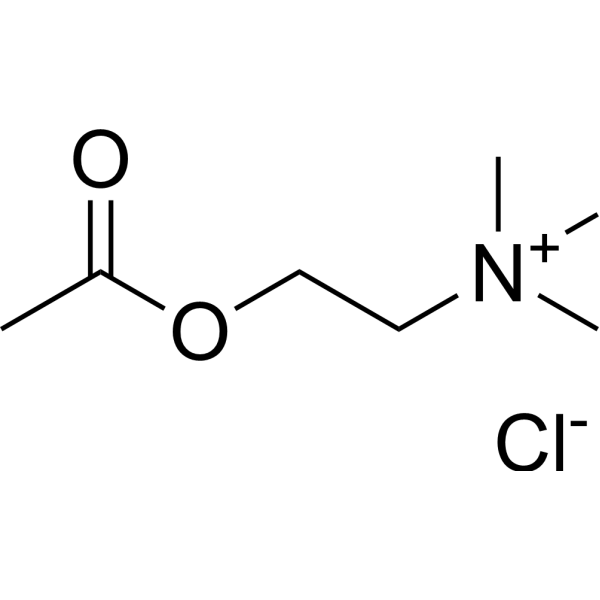
Acetylcholine chloride (ACh chloride), a neurotransmitter, is a potent and BBB-permeable cholinergic agonist. Acetylcholine chloride is a modulator of the activity of dopaminergic (DAergic) neurons through the stimulation of nicotinic acetylcholine receptors (nAChRs) . Acetylcholine chloride inhibits p53 mutant peptide aggregation in vitro .
|
-
-
- HY-D0098
-
|
N-(5-Fluoresceinyl)maleimide
|
Fluorescent Dye
|
Others
|
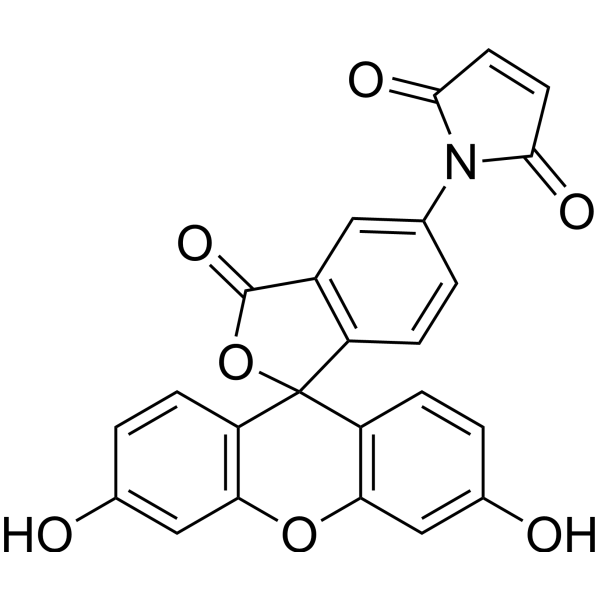
Fluorescein-5-maleimide (N-(5-Fluoresceinyl)maleimide) is a fluorescent dye. Fluorescein-5-maleimide can be used to detect the redox state of thiols in eukaryotic cells. Fluorescein-5-maleimide can label peptides and is used to detect negatively charged nanoparticles. Fluorescein-5-maleimide can also label actin to explore its interaction with cardiac myosin-binding protein C (cMyBP-C), which helps in developing small molecule modulators for heart failure. Fluorescein-5-maleimide can screen mutant proteins that contain cysteine residues. The excitation wavelength of Fluorescein-5-maleimide is 494 nm, and the emission wavelength is 519 nm .
|
-
-
- HY-114365
-
|
UDP-N-acetyl-D-galactosamine disodium
|
Endogenous Metabolite
|
Metabolic Disease
Cancer
|
|
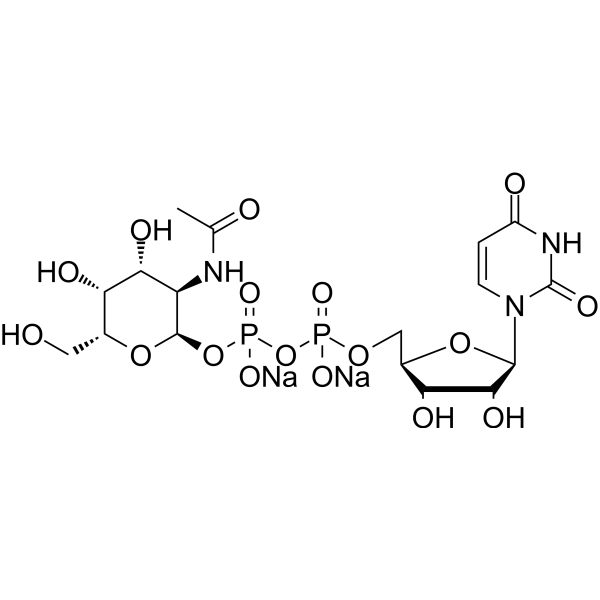
UDP-GalNAc (UDP-N-acetyl-D-galactosamine) disodium is a sugar nucleotide and a substrate for EpsC115. EpsC115 is a mutant with N-terminal residues 1-115 deleted from the exopolymeric substance (EPS). UDP-GalNAc disodium is a donor substrate for many N-acetylgalactosaminyltransferases, which transfer GalNAc from nucleotide sugars to sugar or peptide acceptors. UDP-GalNAc disodium provides a sugar group donor for glycosylation reactions. UDP-GalNAc disodium can be used in cancer research, such as colorectal and breast cancer .
|
-
-
- HY-B0282S
-
|
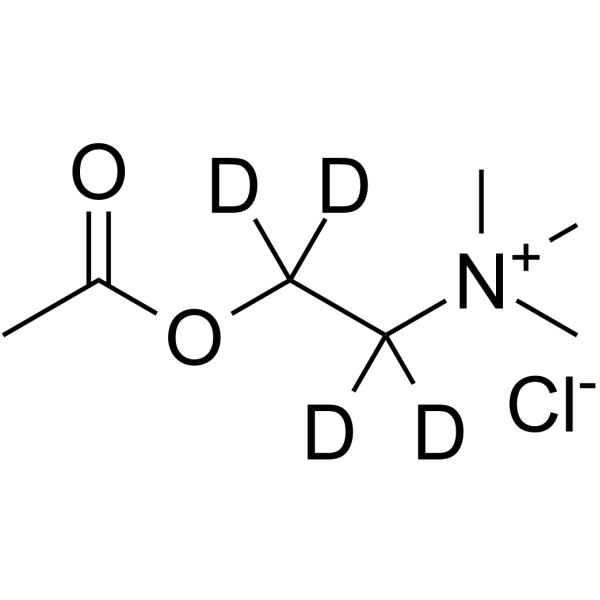
ACh-d4 chloride
|
nAChR
Calcium Channel
Endogenous Metabolite
|
Neurological Disease
Cancer
|
|
Acetylcholine-d4 (chloride) is the deuterium labeled Acetylcholine chloride. Acetylcholine chloride (ACh chloride), a neurotransmitter, is a potent and BBB-permeable cholinergic agonist. Acetylcholine chloride is a modulator of the activity of dopaminergic (DAergic) neurons through the stimulation of nicotinic acetylcholine receptors (nAChRs) . Acetylcholine chloride inhibits p53 mutant peptide aggregation in vitro .
|
-
-
- HY-14174
-
MRK-560
4 Publications Verification
|
γ-secretase
|
Neurological Disease
Cancer
|
|
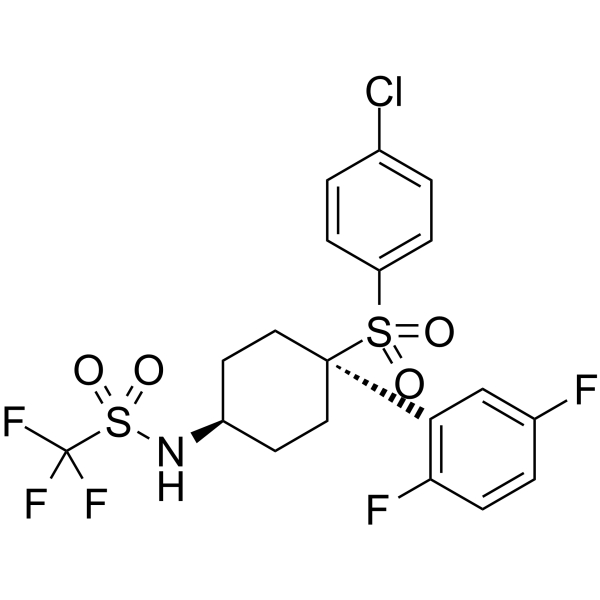
MRK-560, a chemical probe, is an orally active, brain barrier-penetrated γ-Secretase inhibitor, reducing Aβ peptide in rat brain and cerebrospinal fluid. MRK-560 decreases mutant NOTCH1 processing by selectively inhibiting PSEN1. MRK-560 can be used in studies of Alzheimer's disease and T-cell acute lymphoblastic leukaemia (T-ALL) .
|
-
-
- HY-B0282S1
-
|
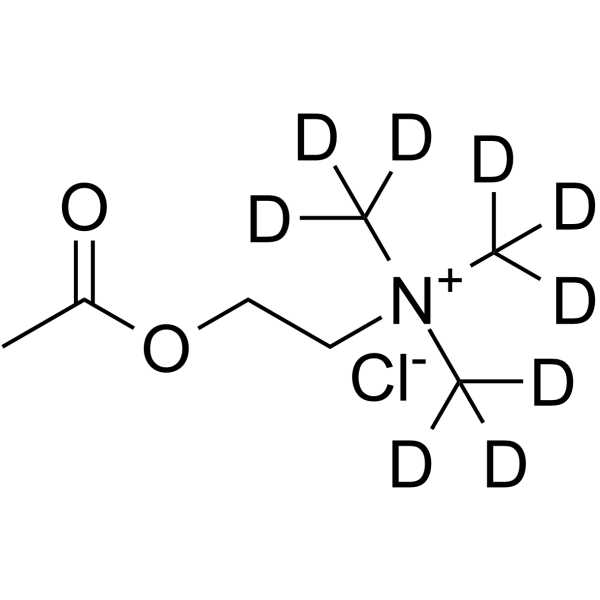
ACh-d9 chloride
|
nAChR
Calcium Channel
Endogenous Metabolite
|
Neurological Disease
Cancer
|
|
Acetylcholine-d9 (chloride) is the deuterium labeled Acetylcholine chloride. Acetylcholine chloride (ACh chloride), a neurotransmitter, is a potent and BBB-permeable cholinergic agonist. Acetylcholine chloride is a modulator of the activity of dopaminergic (DAergic) neurons through the stimulation of nicotinic acetylcholine receptors (nAChRs) . Acetylcholine chloride inhibits p53 mutant peptide aggregation in vitro .
|
-
-
- HY-111836
-
|
|
Molecular Glues
β-catenin
|
Cancer
|
|
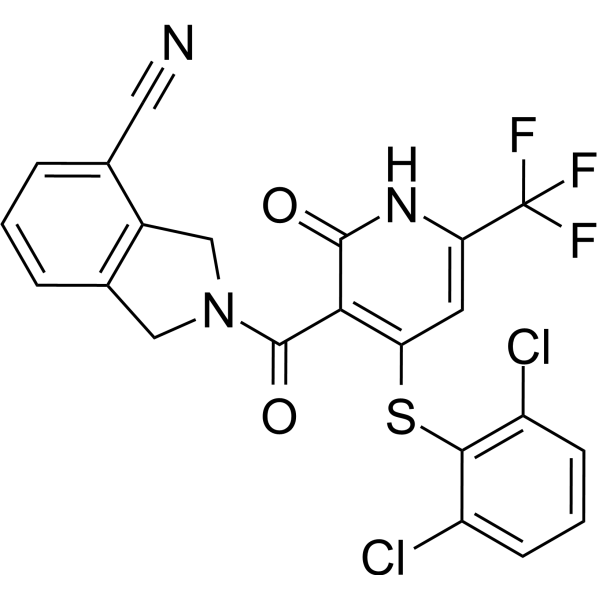
NRX-252114 is a potent enhancer of the interaction between β-catenin, and its cognate E3 ligase, SCF β-TrCP. NRX-252114 enhances the binding of pSer33/S37A β-catenin peptide for β-TrCP with an EC50 of 6.5 nM and a Kd of 0.4 nM. NRX-252114 induces mutant β-catenin degradation .
|
-
-
- HY-120122
-
|
|
MDM-2/p53
|
Cancer
|
|
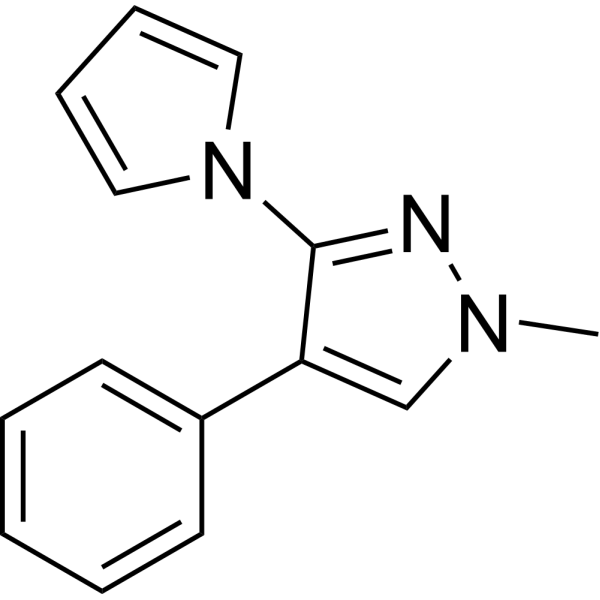
PK7088 is a pyrazole and a specific peptide. PK7088 supports the reactivation of mutant p53 by converting it to a form exhibiting wild-type properties. PK7088 exhibit anticancer activity in cancer research .
|
-
-
- HY-B0282R
-
|
ACh chloride (Standard)
|
Reference Standards
nAChR
Calcium Channel
Endogenous Metabolite
|
Neurological Disease
Cancer
|
|
Acetylcholine (chloride) (Standard) is the analytical standard of Acetylcholine (chloride). This product is intended for research and analytical applications. Acetylcholine chloride (ACh chloride), a neurotransmitter, is a potent and BBB-permeable cholinergic agonist. Acetylcholine chloride is a modulator of the activity of dopaminergic (DAergic) neurons through the stimulation of nicotinic acetylcholine receptors (nAChRs) . Acetylcholine chloride inhibits p53 mutant peptide aggregation in vitro .
|
-
-
- HY-W102456
-
|
L-4-Acetylphenylalanine
|
Biochemical Assay Reagents
Amino Acid Derivatives
|
Others
|
|
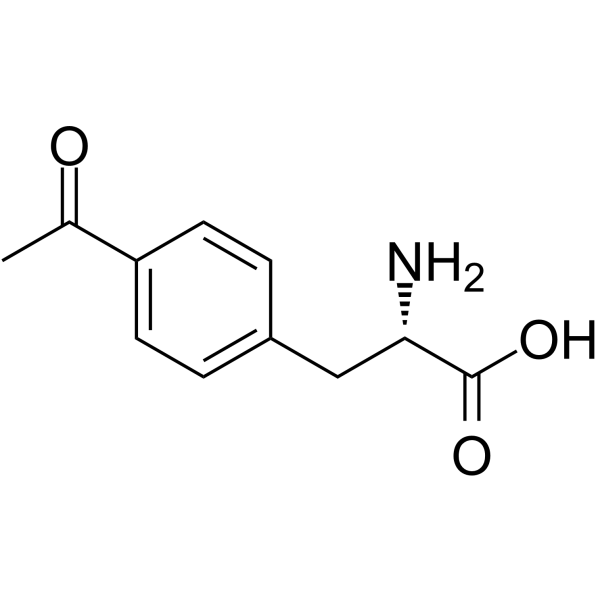
H-Phe(4-Ac)-OH (L-4-Acetylphenylalanine) is a keto-amino acid that can be converted from α-keto acids containing an acetyl group. H-Phe(4-Ac)-OH can be added to the amber position to form mutant Z-domain proteins. H-Phe(4-Ac)-OH is used as a functional amino acid in peptide modification to achieve chemical bonding between peptides and solid surfaces .
|
-
-
- HY-P2265A
-
|
|
SOS1
Ras
|
Cancer
|
|
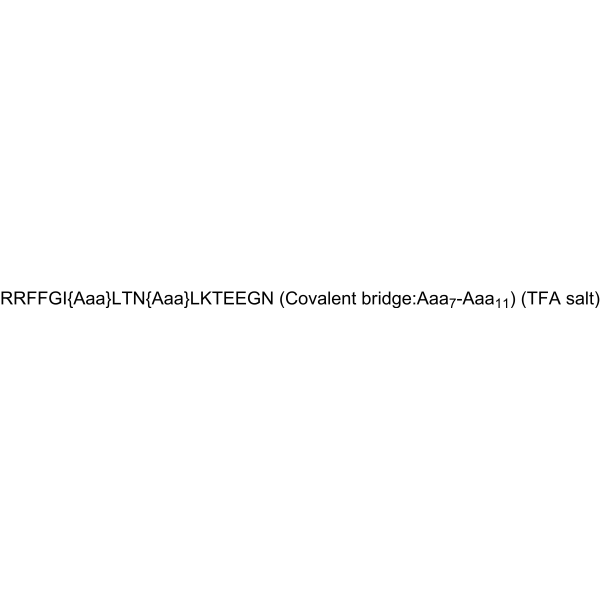
SAH-SOS1A TFA is a peptide-based SOS1/KRAS protein interaction inhibitor. SAH-SOS1A TFA binds to wild-type and mutant KRAS (G12D, G12V, G12C, G12S, and Q61H) with nanomolar affinity (EC50=106-175 nM). SAH-SOS1A TFA directly and independently blocks nucleotide association. SAH-SOS1A TFA impairs KRAS-driven cancer cell viability and exerts its effects by on-mechanism blockade of the ERK-MAPK phosphosignaling cascade downstream of KRAS .
|
-
-
- HY-P2319A
-
|
|
p38 MAPK
JNK
|
Inflammation/Immunology
|
|
OVA-E1 peptide TFA, is an antagonist variant of SIINFEKL [OVA (257-264). OVA-E1 peptide, activates the p38 and JNK cascades similarly in mutant and wild-type thymocytes .
|
-
-
- HY-P10438
-
|
|
Raf
|
Cancer
|
|
TAT-Braftide is a peptide inhibitor designed to block the dimerization of BRAF, thereby inhibiting its kinase activity. The destruction of BRAF dimer by TAT-Braftide makes BRAF protein more susceptible to proteasome degradation, directly inhibits the activity of BRAF kinase, and reduces the activation of MAPK signaling pathway. Tat-braftide can be used for the role of RAF kinase in MAPK signaling pathway and for the study of BRAF mutant cancers .
|
-
-
- HY-B1588
-
|
|
Amyloid-β
Gap Junction Protein
|
Neurological Disease
Metabolic Disease
|
|
Carbenoxolone is a blood-brain barrier-permeable Pannexin1 inhibitor, gap junction (Gap junction) blocker, and β-amyloid 42 inhibitor. Carbenoxolone modulates voltage-gated currents of wild-type and mutant Panx1, and inhibits stimulus-activated Panx1 channel function. Carbenoxolone interacts with stable residues of β-amyloid 42 peptides, fibrils and oligomers, thereby inhibiting their aggregation. Carbenoxolone alleviates liver fibrosis. Carbenoxolone exerts neuroprotective and nootropic effects. Carbenoxolone can be used in studies related to Alzheimer's disease and liver fibrosis .
|
-
-
- HY-P5192
-
|
|
Ras
|
Cancer
|
|
KRAS G12D 8-16 is a mutant KRAS G12D 8-16 peptide .
|
-
-
- HY-E70879
-
|
EndoM N175Q
|
Glycosidase
|
Others
|
|
Endoglycosidase M (N175Q mutant) (EndoM N175Q) can transfer natural N-glycans or oxazoline N-glycans to any peptide or protein with a GlcNAc residue to form a β1-4-glycosidic linkage. Endoglycosidase M (N175Q mutant) is a useful tool in the synthesis of homogeneous glycopeptides and glycoproteins .
|
-
-
- HY-P10610A
-
|
|
MDM-2/p53
|
Cancer
|
|
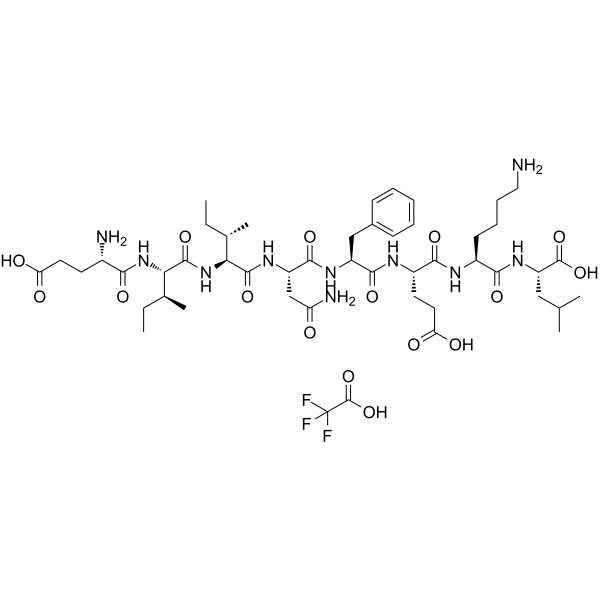
Peptide 234CM TFA is a peptide containing isoleucine at position 3, corresponding to the sequence of a point mutation in p53 codon 234. Peptide 234CM TFA induces potent cytotoxic T cell (CTL) and antitumor immune responses against mutant p53 .
|
-
-
- HY-P11356
-
|
|
IFNAR
|
Cancer
|
|
KRAS G12V Peptide is a specific peptide derived from the Kirsten rat sarcoma virus (KRAS) gene carrying the G12V oncogenic mutation. KRAS G12V Peptide induces responses like IFN-γ secretion and cytotoxicity. KRAS G12V Peptide can be used for the study of immune responses against KRAS G12V-mutant tumors .
|
-
-
- HY-P11357A
-
|
|
IFNAR
|
Cancer
|
|
KRAS G12C Peptide TFA is the trifluoroacetate salt of KRAS G12C Peptide (HY-P11357). KRAS G12C Peptide is a specific peptide derived from the Kirsten rat sarcoma virus (KRAS) gene carrying the G12C oncogenic mutation. KRAS G12C Peptide induces responses like IFN-γ secretion and cytotoxicity. KRAS G12C Peptide can be used for the study of immune responses against KRAS G12C-mutant tumors .
|
-
-
- HY-P11356A
-
|
|
IFNAR
|
Cancer
|
|
KRAS G12V Peptide TFA is the trifluoroacetate salt of KRAS G12V Peptide (HY-P11355). KRAS G12V Peptide is a specific peptide derived from the Kirsten rat sarcoma virus (KRAS) gene carrying the G12V oncogenic mutation. KRAS G12V Peptide induces responses like IFN-γ secretion and cytotoxicity. KRAS G12V Peptide can be used for the study of immune responses against KRAS G12V-mutant tumors .
|
-
-
- HY-P2265
-
|
|
SOS1
Ras
|
Cancer
|
|
SAH-SOS1A is a peptide-based SOS1/KRAS protein interaction inhibitor. SAH-SOS1A binds to wild-type and mutant KRAS (G12D, G12V, G12C, G12S, and Q61H) with nanomolar affinity (EC50=106-175 nM), directly and independently blocks nucleotide association, impairs KRAS-driven cancer cell viability, and exerts its effects by on-mechanism blockade of the ERK-MAPK phosphosignaling cascade downstream of KRAS .
|
-
-
- HY-P2360
-
|
Ras 5-17
|
Ras
|
Others
|
|
G12 (Ras 5-17) is a wild-type Ras peptide consisted of amino acids 5-17 (KLVVVGAGGVGKS). G12 can be used as a control of mutant Ras peptides studies (such V12) .
|
-
-
- HY-P10610
-
|
|
MDM-2/p53
|
Cancer
|
|
Peptide 234CM is a peptide containing isoleucine at position 3, corresponding to the sequence of a point mutation in p53 codon 234. Peptide 234CM induces potent cytotoxic T cell (CTL) and antitumor immune responses against mutant p53 .
|
-
-
- HY-P2319
-
|
|
p38 MAPK
JNK
|
Inflammation/Immunology
|
|
OVA-E1 peptide, is an antagonist variant of SIINFEKL [OVA (257-264). OVA-E1 peptide, activates the p38 and JNK cascades similarly in mutant and wild-type thymocytes .
|
-
-
- HY-P4391
-
-
-
- HY-P11357
-
|
|
IFNAR
|
Cancer
|
|
KRAS G12C Peptide is a specific peptide derived from the Kirsten rat sarcoma virus (KRAS) gene carrying the G12C oncogenic mutation. KRAS G12C Peptide induces responses like IFN-γ secretion and cytotoxicity. KRAS G12C Peptide can be used for the study of immune responses against KRAS G12C-mutant tumors .
|
-
-
- HY-P11089
-
|
|
MHC
|
Cancer
|
|
TP53 neoepitope is a high-affinity antigenic peptide targeting HLA-A. TP53 neoepitope can triggers CD8 + T cell-mediated killing of TP53-mutant tumor cells. TP53 neoepitope is promising for research of solid tumors harboring TP53 hotspot mutations (e.g., R175H, R273H) .
|
-
-
- HY-P5968A
-
|
β(25-35)KA TFA
|
Amyloid-β
|
Neurological Disease
|
|
[Ala28]-β Amyloid(25-35) (β(25-35)KA) TFA is an electrically neutral mutant peptide of Aβ(25-35) that accelerates the aggregation of Firefly Luciferase .
|
-
-
- HY-P2361
-
|
|
Ras
|
Others
|
|
S12 is a mutant RAS peptide containing the Gly (G) to Ser (S12) substitution. The sequence of the peptide is KLVVVGASGVGKS .
|
-
-
- HY-P2670
-
|
|
NF-κB
|
Others
|
|
SN50M, a mutant peptide of SN50 (HY-P0151), is a cell membrane-permeable inactive control peptide .
|
-
-
- HY-P2360A
-
|
Ras 5-17 TFA
|
Ras
|
Others
|
|
G12 (Ras 5-17) TFA is a wild-type Ras peptide consisted of amino acids 5-17 (KLVVVGAGGVGKS). G12 TFA can be used as a control of mutant Ras peptides studies (such V12) .
|
-
-
- HY-P10425
-
|
|
Histone Methyltransferase
|
Cancer
|
|
T2857W is a mutant peptide that has inhibitory effect on KIX-MLL interaction (IC50=5.67 μM). T2857W can be used for protein-protein interaction (PPI) and for the study of diseases related to KIX-MLL interaction, such as leukemia, cancer, etc .
|
-
-
- HY-E70882
-
|
EndoD N322Q
|
Glycosidase
|
Others
|
|
Endoglycosidase D (N322Q mutant) (EndoD N322Q) is a mutant endoglycosidase, which can be highly efficient to transfer Man5GlcNAc oxazoline to a similar cyclic glycopeptide carrying two free GlcNAc moieties to give a doubly glycosylated peptide .
|
-
-
- HY-P2250
-
|
ELA-32 negative control
|
Apelin Receptor (APJ)
|
Others
|
|
ELA RR>GG (ELA-32 negative control), an ELABELA (ELA-32 human) mutant peptide, is inactive. ELA RR>GG is a negative control for ELABELA (HY-P2196) .
|
-
-
- HY-P5395
-
|
|
HIV
|
Others
|
|
TAT-GluR23A Fusion Peptide is a biological active peptide. (This is the GluR23A sequence, a control inactive peptide used as a mutant counterpart to glutamate receptor endocytosis inhibitor (GluR23Y), connected to an 11 amino acid cell permeable HIV Trans-Activator of Transcription (TAT) protein transduction domain (PTD). GluR23A is derived from GluR23Y amino acids 869 to 877, with Ala substituted for Tyr, and thus lacking essential phosphorylation sites.Control peptide of HY-P2259)
|
-
-
- HY-P5968
-
|
β(25-35)KA
|
Amyloid-β
|
Neurological Disease
|
|
[Ala28]-β Amyloid(25-35) (β(25-35)KA) is an electrically neutral mutant peptide of Aβ(25-35) that accelerates the aggregation of Firefly Luciferase .
|
-
-
- HY-P10976
-
|
|
SARS-CoV
|
Infection
|
|
Spike Glycoprotein (1147-1162) is a linear and broadly neutralizing peptide in the S2 protein of SARS-CoV-2. Spike Glycoprotein (1147-1162) is conserved across SARS-CoV, BatCoV RaTG13, SARS-CoV-2, and SARS-CoV-2 variants. Spike Glycoprotein (1147-1162)-targeting mAbs can neutralize both SARS-CoV-2 and SARS-CoV by preventing fusion between the virus and cell membrane. Spike Glycoprotein (1147-1162) can be used for universal vaccines against SARS-CoV-2 mutants research .
|
-
-
- HY-E70893
-
|
|
Endogenous Metabolite
|
Metabolic Disease
|
|
α-Lytic Protease is an alternative specificity protease for proteomics applications, whose wild-type (WT) version cleaves after T, A, S, and V residues. α-Lytic Protease M190A Mutant has different cleavage specificities, and cleaves after M, F, and L residues. Both the WT and M190A forms of aLP geneRate peptides of similar average length as trypsin.
|
-
-
- HY-186122
-
|
|
Cholecystokinin Receptor
|
Neurological Disease
Inflammation/Immunology
|
|
CCK2R agonist-1 (Compound 2S) is a CCK2R agonist, with an IC50 of 48 nM against wild-type CCK-2R and an IC50 of 450 nM against mutant CCK-2R (N353L). CCK2R agonist-1 stimulates the production of inositol phosphate. The changes in pH and HDC induced by CCK2R agonist-1 in mice are comparable to those induced by the full-length peptide agonist Gastrin. CCK2R agonist-1 can be used in studies of gastric diseases and pain .
|
-
-
- HY-DY1088
-
|
N-(5-Fluoresceinyl)maleimide (solution)
|
Fluorescent Dye
|
Others
|
Fluorescein-5-maleimide (solution) (N-(5-Fluoresceinyl)maleimide (solution)) is a fluorescent dye. Fluorescein-5-maleimide can be used to detect the redox state of thiols in eukaryotic cells. Fluorescein-5-maleimide can label peptides and is used to detect negatively charged nanoparticles. Fluorescein-5-maleimide can also label actin to explore its interaction with cardiac myosin-binding protein C (cMyBP-C), which helps in developing small molecule modulators for heart failure. Fluorescein-5-maleimide can screen mutant proteins that contain cysteine residues. The excitation wavelength of Fluorescein-5-maleimide is 494 nm, and the emission wavelength is 519 nm .
Solvent and concentration: DMSO: 10 mM
|
-
| Cat. No. |
Product Name |
Type |
-
- HY-D0098
-
|
N-(5-Fluoresceinyl)maleimide
|
Fluorescent Dye
|
Fluorescein-5-maleimide (N-(5-Fluoresceinyl)maleimide) is a fluorescent dye. Fluorescein-5-maleimide can be used to detect the redox state of thiols in eukaryotic cells. Fluorescein-5-maleimide can label peptides and is used to detect negatively charged nanoparticles. Fluorescein-5-maleimide can also label actin to explore its interaction with cardiac myosin-binding protein C (cMyBP-C), which helps in developing small molecule modulators for heart failure. Fluorescein-5-maleimide can screen mutant proteins that contain cysteine residues. The excitation wavelength of Fluorescein-5-maleimide is 494 nm, and the emission wavelength is 519 nm .
|
-
- HY-DY1088
-
|
N-(5-Fluoresceinyl)maleimide (solution)
|
Fluorescent Dye
|
Fluorescein-5-maleimide (solution) (N-(5-Fluoresceinyl)maleimide (solution)) is a fluorescent dye. Fluorescein-5-maleimide can be used to detect the redox state of thiols in eukaryotic cells. Fluorescein-5-maleimide can label peptides and is used to detect negatively charged nanoparticles. Fluorescein-5-maleimide can also label actin to explore its interaction with cardiac myosin-binding protein C (cMyBP-C), which helps in developing small molecule modulators for heart failure. Fluorescein-5-maleimide can screen mutant proteins that contain cysteine residues. The excitation wavelength of Fluorescein-5-maleimide is 494 nm, and the emission wavelength is 519 nm .
Solvent and concentration: DMSO: 10 mM
|
| Cat. No. |
Product Name |
Type |
-
- HY-114365
-
|
UDP-N-acetyl-D-galactosamine disodium
|
Biochemical Assay Reagents
|
|
UDP-GalNAc (UDP-N-acetyl-D-galactosamine) disodium is a sugar nucleotide and a substrate for EpsC115. EpsC115 is a mutant with N-terminal residues 1-115 deleted from the exopolymeric substance (EPS). UDP-GalNAc disodium is a donor substrate for many N-acetylgalactosaminyltransferases, which transfer GalNAc from nucleotide sugars to sugar or peptide acceptors. UDP-GalNAc disodium provides a sugar group donor for glycosylation reactions. UDP-GalNAc disodium can be used in cancer research, such as colorectal and breast cancer .
|
| Cat. No. |
Product Name |
Target |
Research Area |
-
- HY-P2265A
-
|
|
SOS1
Ras
|
Cancer
|
|
SAH-SOS1A TFA is a peptide-based SOS1/KRAS protein interaction inhibitor. SAH-SOS1A TFA binds to wild-type and mutant KRAS (G12D, G12V, G12C, G12S, and Q61H) with nanomolar affinity (EC50=106-175 nM). SAH-SOS1A TFA directly and independently blocks nucleotide association. SAH-SOS1A TFA impairs KRAS-driven cancer cell viability and exerts its effects by on-mechanism blockade of the ERK-MAPK phosphosignaling cascade downstream of KRAS .
|
-
- HY-P2319A
-
|
|
p38 MAPK
JNK
|
Inflammation/Immunology
|
|
OVA-E1 peptide TFA, is an antagonist variant of SIINFEKL [OVA (257-264). OVA-E1 peptide, activates the p38 and JNK cascades similarly in mutant and wild-type thymocytes .
|
-
- HY-P10438
-
|
|
Raf
|
Cancer
|
|
TAT-Braftide is a peptide inhibitor designed to block the dimerization of BRAF, thereby inhibiting its kinase activity. The destruction of BRAF dimer by TAT-Braftide makes BRAF protein more susceptible to proteasome degradation, directly inhibits the activity of BRAF kinase, and reduces the activation of MAPK signaling pathway. Tat-braftide can be used for the role of RAF kinase in MAPK signaling pathway and for the study of BRAF mutant cancers .
|
-
- HY-P5192
-
|
|
Ras
|
Cancer
|
|
KRAS G12D 8-16 is a mutant KRAS G12D 8-16 peptide .
|
-
- HY-P3488
-
-
- HY-P3486
-
-
- HY-P10610A
-
|
|
MDM-2/p53
|
Cancer
|
|
Peptide 234CM TFA is a peptide containing isoleucine at position 3, corresponding to the sequence of a point mutation in p53 codon 234. Peptide 234CM TFA induces potent cytotoxic T cell (CTL) and antitumor immune responses against mutant p53 .
|
-
- HY-P11356
-
|
|
IFNAR
|
Cancer
|
|
KRAS G12V Peptide is a specific peptide derived from the Kirsten rat sarcoma virus (KRAS) gene carrying the G12V oncogenic mutation. KRAS G12V Peptide induces responses like IFN-γ secretion and cytotoxicity. KRAS G12V Peptide can be used for the study of immune responses against KRAS G12V-mutant tumors .
|
-
- HY-P11357A
-
|
|
IFNAR
|
Cancer
|
|
KRAS G12C Peptide TFA is the trifluoroacetate salt of KRAS G12C Peptide (HY-P11357). KRAS G12C Peptide is a specific peptide derived from the Kirsten rat sarcoma virus (KRAS) gene carrying the G12C oncogenic mutation. KRAS G12C Peptide induces responses like IFN-γ secretion and cytotoxicity. KRAS G12C Peptide can be used for the study of immune responses against KRAS G12C-mutant tumors .
|
-
- HY-P11356A
-
|
|
IFNAR
|
Cancer
|
|
KRAS G12V Peptide TFA is the trifluoroacetate salt of KRAS G12V Peptide (HY-P11355). KRAS G12V Peptide is a specific peptide derived from the Kirsten rat sarcoma virus (KRAS) gene carrying the G12V oncogenic mutation. KRAS G12V Peptide induces responses like IFN-γ secretion and cytotoxicity. KRAS G12V Peptide can be used for the study of immune responses against KRAS G12V-mutant tumors .
|
-
- HY-P2265
-
|
|
SOS1
Ras
|
Cancer
|
|
SAH-SOS1A is a peptide-based SOS1/KRAS protein interaction inhibitor. SAH-SOS1A binds to wild-type and mutant KRAS (G12D, G12V, G12C, G12S, and Q61H) with nanomolar affinity (EC50=106-175 nM), directly and independently blocks nucleotide association, impairs KRAS-driven cancer cell viability, and exerts its effects by on-mechanism blockade of the ERK-MAPK phosphosignaling cascade downstream of KRAS .
|
-
- HY-P2360
-
|
Ras 5-17
|
Ras
|
Others
|
|
G12 (Ras 5-17) is a wild-type Ras peptide consisted of amino acids 5-17 (KLVVVGAGGVGKS). G12 can be used as a control of mutant Ras peptides studies (such V12) .
|
-
- HY-P10610
-
|
|
MDM-2/p53
|
Cancer
|
|
Peptide 234CM is a peptide containing isoleucine at position 3, corresponding to the sequence of a point mutation in p53 codon 234. Peptide 234CM induces potent cytotoxic T cell (CTL) and antitumor immune responses against mutant p53 .
|
-
- HY-P2319
-
|
|
p38 MAPK
JNK
|
Inflammation/Immunology
|
|
OVA-E1 peptide, is an antagonist variant of SIINFEKL [OVA (257-264). OVA-E1 peptide, activates the p38 and JNK cascades similarly in mutant and wild-type thymocytes .
|
-
- HY-P4391
-
-
- HY-P11357
-
|
|
IFNAR
|
Cancer
|
|
KRAS G12C Peptide is a specific peptide derived from the Kirsten rat sarcoma virus (KRAS) gene carrying the G12C oncogenic mutation. KRAS G12C Peptide induces responses like IFN-γ secretion and cytotoxicity. KRAS G12C Peptide can be used for the study of immune responses against KRAS G12C-mutant tumors .
|
-
- HY-P11089
-
|
|
MHC
|
Cancer
|
|
TP53 neoepitope is a high-affinity antigenic peptide targeting HLA-A. TP53 neoepitope can triggers CD8 + T cell-mediated killing of TP53-mutant tumor cells. TP53 neoepitope is promising for research of solid tumors harboring TP53 hotspot mutations (e.g., R175H, R273H) .
|
-
- HY-P5968A
-
|
β(25-35)KA TFA
|
Amyloid-β
|
Neurological Disease
|
|
[Ala28]-β Amyloid(25-35) (β(25-35)KA) TFA is an electrically neutral mutant peptide of Aβ(25-35) that accelerates the aggregation of Firefly Luciferase .
|
-
- HY-P2361
-
|
|
Ras
|
Others
|
|
S12 is a mutant RAS peptide containing the Gly (G) to Ser (S12) substitution. The sequence of the peptide is KLVVVGASGVGKS .
|
-
- HY-P2670
-
|
|
NF-κB
|
Others
|
|
SN50M, a mutant peptide of SN50 (HY-P0151), is a cell membrane-permeable inactive control peptide .
|
-
- HY-P2360A
-
|
Ras 5-17 TFA
|
Ras
|
Others
|
|
G12 (Ras 5-17) TFA is a wild-type Ras peptide consisted of amino acids 5-17 (KLVVVGAGGVGKS). G12 TFA can be used as a control of mutant Ras peptides studies (such V12) .
|
-
- HY-P10425
-
|
|
Histone Methyltransferase
|
Cancer
|
|
T2857W is a mutant peptide that has inhibitory effect on KIX-MLL interaction (IC50=5.67 μM). T2857W can be used for protein-protein interaction (PPI) and for the study of diseases related to KIX-MLL interaction, such as leukemia, cancer, etc .
|
-
- HY-P10456
-
|
|
Peptides
|
Inflammation/Immunology
|
|
[Leu144,Arg147]-PLP (139-151) is a mutant peptide fragment of myelin proteolipid protein (PLP), with the tryptophan and histidine at positions 144 and 147 respectively replaced by leucine and arginine. [Leu144,Arg147]-PLP (139-151) also serves as a T cell receptor (TCR) antagonist for encephalitogenic Th1 clones, blocking their activation in vitro. Furthermore, [Leu144,Arg147]-PLP (139-151) can inhibit the development of experimental autoimmune encephalomyelitis (EAE) .
|
-
- HY-129028
-
-
- HY-129028A
-
|
|
Peptides
|
Others
|
|
H-Ala-Ala-Tyr-OH TFA can be synthesized mutant peptides .
|
-
- HY-P2250
-
|
ELA-32 negative control
|
Apelin Receptor (APJ)
|
Others
|
|
ELA RR>GG (ELA-32 negative control), an ELABELA (ELA-32 human) mutant peptide, is inactive. ELA RR>GG is a negative control for ELABELA (HY-P2196) .
|
-
- HY-P5395
-
|
|
HIV
|
Others
|
|
TAT-GluR23A Fusion Peptide is a biological active peptide. (This is the GluR23A sequence, a control inactive peptide used as a mutant counterpart to glutamate receptor endocytosis inhibitor (GluR23Y), connected to an 11 amino acid cell permeable HIV Trans-Activator of Transcription (TAT) protein transduction domain (PTD). GluR23A is derived from GluR23Y amino acids 869 to 877, with Ala substituted for Tyr, and thus lacking essential phosphorylation sites.Control peptide of HY-P2259)
|
-
- HY-P5968
-
|
β(25-35)KA
|
Amyloid-β
|
Neurological Disease
|
|
[Ala28]-β Amyloid(25-35) (β(25-35)KA) is an electrically neutral mutant peptide of Aβ(25-35) that accelerates the aggregation of Firefly Luciferase .
|
-
- HY-P10976
-
|
|
SARS-CoV
|
Infection
|
|
Spike Glycoprotein (1147-1162) is a linear and broadly neutralizing peptide in the S2 protein of SARS-CoV-2. Spike Glycoprotein (1147-1162) is conserved across SARS-CoV, BatCoV RaTG13, SARS-CoV-2, and SARS-CoV-2 variants. Spike Glycoprotein (1147-1162)-targeting mAbs can neutralize both SARS-CoV-2 and SARS-CoV by preventing fusion between the virus and cell membrane. Spike Glycoprotein (1147-1162) can be used for universal vaccines against SARS-CoV-2 mutants research .
|
| Cat. No. |
Product Name |
Category |
Target |
Chemical Structure |
| Cat. No. |
Product Name |
Chemical Structure |
-
- HY-B0282S
-
|
|
|
Acetylcholine-d4 (chloride) is the deuterium labeled Acetylcholine chloride. Acetylcholine chloride (ACh chloride), a neurotransmitter, is a potent and BBB-permeable cholinergic agonist. Acetylcholine chloride is a modulator of the activity of dopaminergic (DAergic) neurons through the stimulation of nicotinic acetylcholine receptors (nAChRs) . Acetylcholine chloride inhibits p53 mutant peptide aggregation in vitro .
|
-
-
- HY-B0282S1
-
|
|
|
Acetylcholine-d9 (chloride) is the deuterium labeled Acetylcholine chloride. Acetylcholine chloride (ACh chloride), a neurotransmitter, is a potent and BBB-permeable cholinergic agonist. Acetylcholine chloride is a modulator of the activity of dopaminergic (DAergic) neurons through the stimulation of nicotinic acetylcholine receptors (nAChRs) . Acetylcholine chloride inhibits p53 mutant peptide aggregation in vitro .
|
-
Your information is safe with us. * Required Fields.
Inquiry Information
- Product Name:
- Cat. No.:
- Quantity:
- MCE Japan Authorized Agent:

