1. Search Result
Search Result
Pathways Recommended: Stem Cell/Wnt Cell Cycle/DNA Damage
Results for "

PC-3 cell

" in MedChemExpress (MCE) Product Catalog:

193

Inhibitors & Agonists

1

Fluorescent Dye

1

Biochemical Assay Reagents

4

Peptides

2

Inhibitory Antibodies

34

Natural
Products

2

Isotope-Labeled Compounds

2

Click Chemistry

Cat. No. Product Name Target Research Areas Chemical Structure
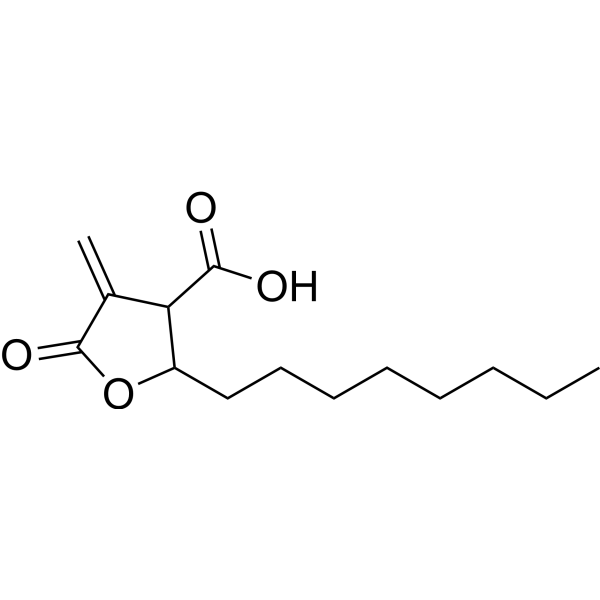
  • HY-12364
    C75
    Maximum Cited Publications
    45 Publications Verification

    Carnitine Palmitoyltransferase (CPT) Fatty Acid Synthase (FASN) Cancer
    C75 is a synthetic fatty-acid synthase (FASN) inhibitor; inhibits prostate cancer cells PC3 with an IC50 of 35 μM . C75 is a potent CPT1A activator .
    C75
  • HY-130709

    PROTACs CDK Cancer
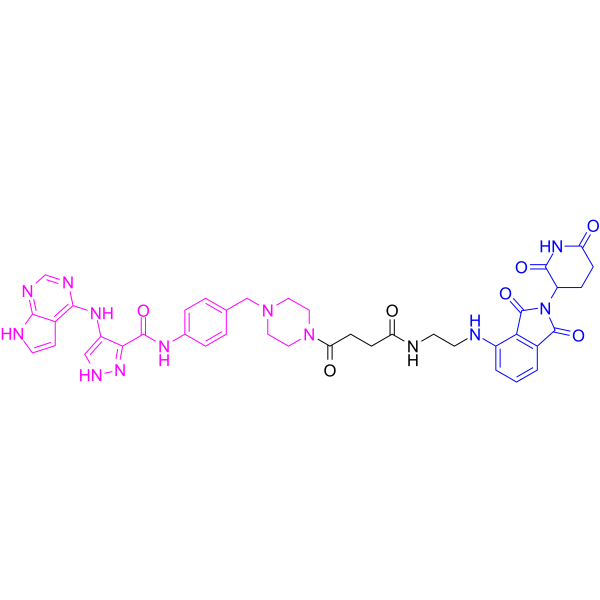
    PROTAC CDK2/9 Degrader-1 (Compound F3) is a potent dual degrader for CDK2 (DC50=62 nM) and CDK9 (DC50=33 nM). PROTAC CDK2/9 Degrader-1 suppresses prostate cancer PC-3 cell proliferation (IC50=0.12 µM) by effectively blocking the cell cycle in S and G2/M phases. PROTAC CDK2/9 Degrader-1 is a PROTAC by tethering CDK inhibitor with Cereblon ligand .
    PROTAC CDK2/9 Degrader-1
  • HY-153910

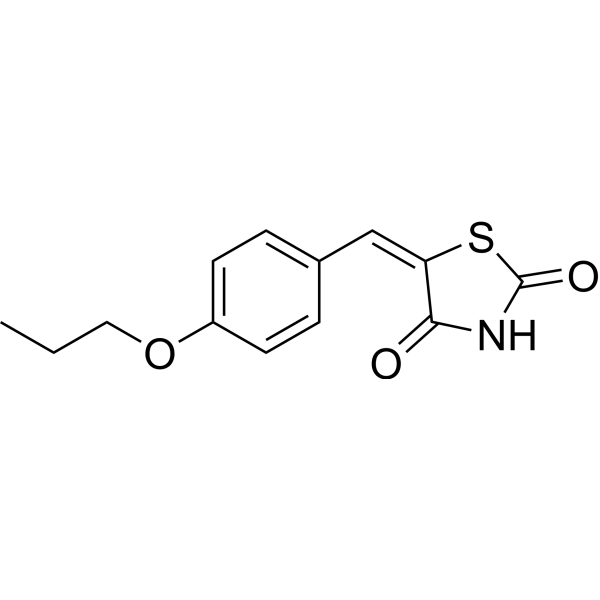
    Others Cancer
    AGPS-IN-1 (Compound 2i) is an effective AGPS binder. AGPS-IN-1 reduces ether lipids levels and cell migration rate. AGPS-IN-1 inhibits epithelial-mesenchymal transition (EMT) in prostate PC-3 and breast MDA-MB-231 cancer cells .
    AGPS-IN-1
  • HY-100186
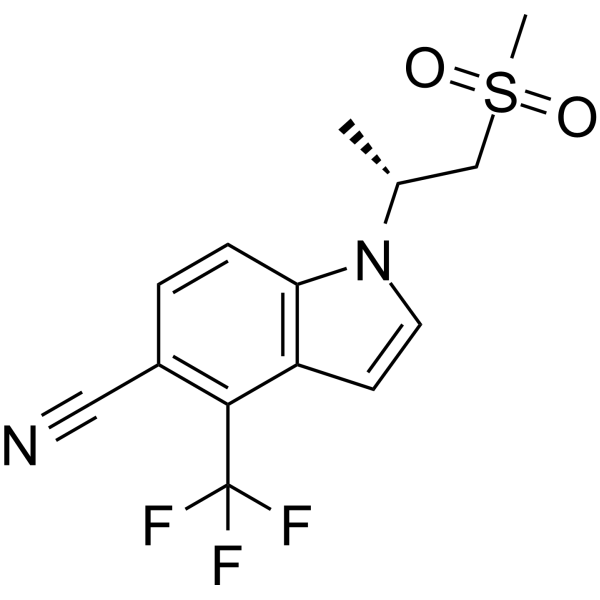
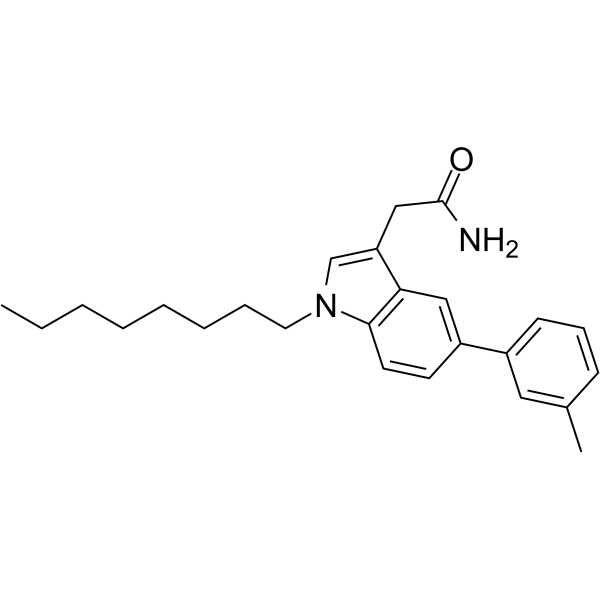
    GSK-2881078
    5 Publications Verification

    Androgen Receptor Cardiovascular Disease Others Metabolic Disease Inflammation/Immunology Endocrinology Cancer
    GSK-2881078 is an orally active and nonsteroidal selective androgen receptor modulator (SARM) which act as partial AR agonists in androgenic tissues while mainly as complete AR agonists in synthetic metabolic tissues,induces AR-mediated transcriptional activation in PC3(AR)2 cells (EC50 = 3.99 nM) and the effect can be inhibited by the non-steroidal AR antagonist Bicalutamide. GSK-2881078 can be used in research of muscle weakness and cachexia associated with both chronic and acute illness .
    GSK-2881078
  • HY-108361
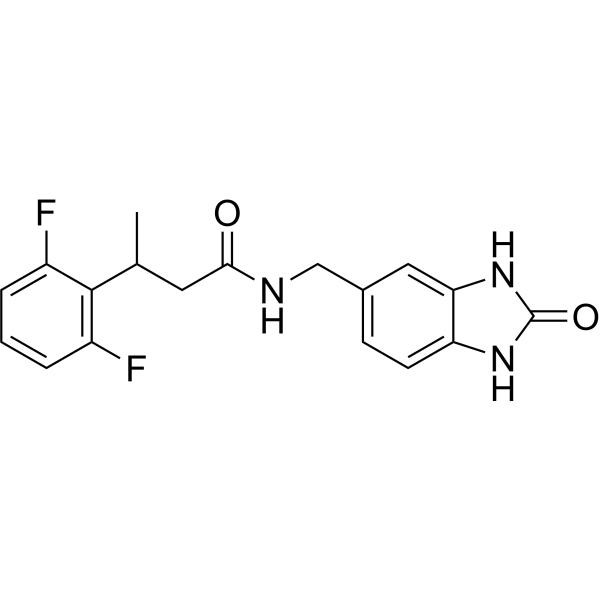
    CCG-203971
    2 Publications Verification

    Ras Inflammation/Immunology Cancer
    CCG-203971 is a second-generation Rho/MRTF/SRF pathway inhibitor. CCG-203971 potently targets RhoA/C-activated SRE-luciferase (IC50 =6.4 μM). CCG-203971 inhibits PC-3 cell migration with an IC50 of 4.2 μM. Potential anti-metastasis Agent .
    CCG-203971
  • HY-N3544

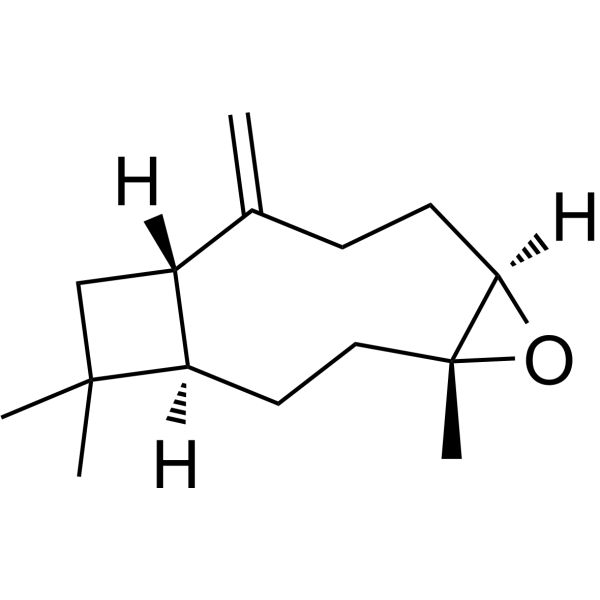
    (-)-Caryophyllene oxide

    Environmental Pollutants Apoptosis Bacterial Fungal Parasite Infection Neurological Disease Inflammation/Immunology Cancer
    Caryophyllene oxide ((-)-Caryophyllene oxide) is a bicyclic sesquiterpene with anticancer effects. Caryophyllene oxide induces apoptosis of PC-3 cells. Caryophyllene oxide shows analgesic and anti-inflammatory activities. Caryophyllene oxide has insecticidal, antioxidant, antimicrobial, antifungal, and antiparasitic properties .
    Caryophyllene oxide
  • HY-101947
    SMI-16a
    5+ Cited Publications

    PIM1/2 Kinase Inhibitor VI

    Pim Cancer
    SMI-16a is a selective Pim kinase inhibitor with IC50 values of 0.15, 0.02 and 48 μM for Pim1, Pim2 and PC3 cells, respectively.
    SMI-16a
  • HY-146985
    Cathepsin X-IN-1
    1 Publications Verification

    Cathepsin Neurological Disease Cancer
    Cathepsin X-IN-1 (compound 25) is a potent Cathepsin X inhibitor with an IC50 of 7.13 µM. Cathepsin X-IN-1 decreases PC-3 cell migration with low cytotoxic .
    Cathepsin X-IN-1
  • HY-171616

    HSP β-catenin Cancer
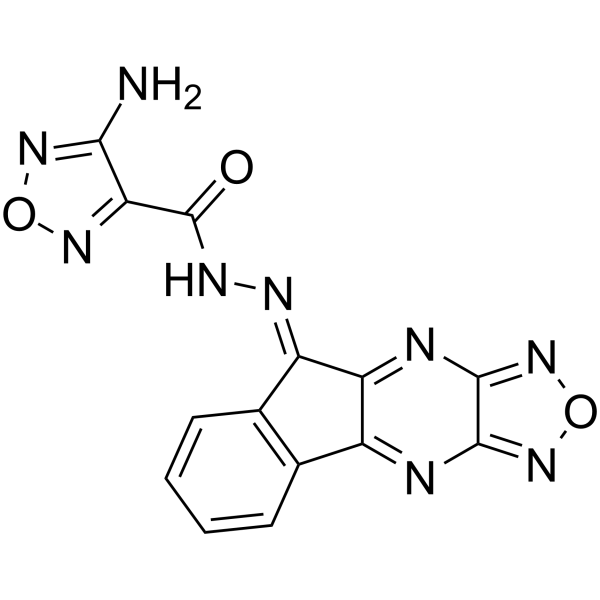
    DCEM1 binds to heat shock protein 60 (HSP60) and inhibits the interaction of HSP60 with ClpP, thereby blocking the mitochondrial unfolded protein response. DCEM1 inhibits β-catenin expression and ATP production in PC-3 and TKO cells. DCEM1 can be used in prostate cancer research .
    DCEM1
  • HY-13626
    Spisulosine
    1 Publications Verification

    ES-285

    PKC Apoptosis Cancer
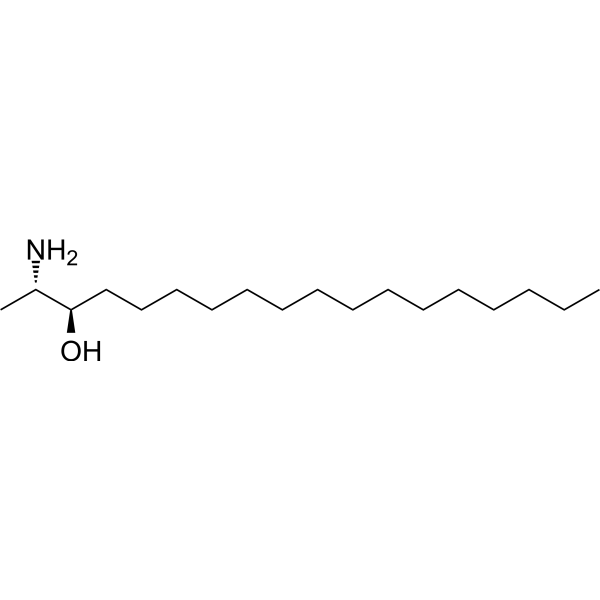
    Spisulosine (ES-285) is an antiproliferative (antitumoral) compound of marine origin. Spisulosine inhibits the growth of the prostate PC-3 and LNCaP cells through intracellular ceramide accumulation and PKCζ activation. Spisulosine induces apoptosis in PC-3 and LNCaP cells .
    Spisulosine
  • HY-138555

    PROTACs Epigenetic Reader Domain Cancer
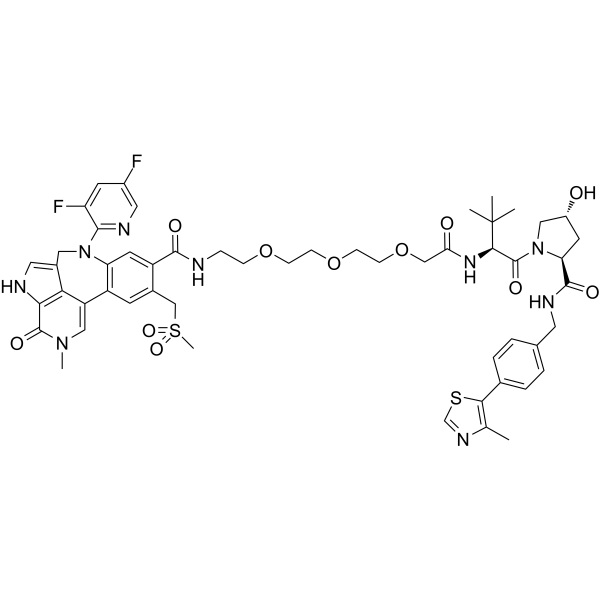
    PROTAC BRD4 Degrader-8 is a PROTAC connected by ligands for von Hippel-Lindau and BRD4, with IC50s of 1.1 nM and 1.4 nM for BRD4 BD1 and BD2, respectively. PROTAC BRD4 Degrader-8 is capable of potently degrading the BRD4 protein in PC3 prostate cancer cells .
    PROTAC BRD4 Degrader-8
  • HY-122678

    Survivin Apoptosis Cancer
    LQZ-7F, a survivin dimerization inhibitor, induces spontaneous apoptosis and synergizes with Docetaxel in prostate cancer cells. LQZ-7F dose-dependently inhibits survival of both PC-3 and C4-2 cells with IC50s of 2.99 and 2.47 µM, respectively .
    LQZ-7F
  • HY-102067

    Wnt Cancer
    3289-8625 is an inhibitor of the PDZ domain of Dishevelled (Dvl) protein (Kd=10.6 μM) and has an inhibitory effect on Wnt signaling. In addition, 3289-8625 can slow the growth of prostate cancer PC-3 cells (IC50=12.5 μM). 3289-8625 can be used in the study of embryonic development and cancer .
    3289-8625
  • HY-149091

    Histone Demethylase Cancer
    KDM5B-IN-4 (compound 11ad) is a lysine demethylase 5B (KDM5B) inhibitor with an IC50 of 0.025 μM KDM5B-IN-4 increases substrate H3K4me1/2/3 level by inhibiting KDM5B in PC-3 cells. KDM5B-IN-4 downregulates PI3K/AKT. KDM5B-IN-4 reduces tumor volume in mice and shows less toxic to organs .
    KDM5B-IN-4
  • HY-N12124

    Monascinol

    Akt mTOR AMPK Androgen Receptor Apoptosis Autophagy Cancer
    Monascuspiloin (Monascinol) exhibits anti-androgenic activity with an IC50 of 7 μM. Monascuspiloin inhibits viability of PC-3 and LNCaP with IC50 of 45 and 47 μM. Monascuspiloin induces apoptosis in LNCaP through inhibition of Akt/mTOR signaling pathway, induces autophagy through activation AMPK signaling pathway and arrest cell cycle at G2/M phase in PC-3. Monascuspiloin exhibits antitumor efficacy in mice .
    Monascuspiloin
  • HY-132197
    CBP/p300-IN-12
    1 Publications Verification

    Epigenetic Reader Domain Histone Acetyltransferase Cancer
    CBP/p300-IN-12 is a potent and selective covalent histone acetyltransferases p300 (IC50 of 166 nM) and CBP inhibitor. CBP/p300-IN-12 decreases the levels of H3K27Ac of PC-3 cells (EC50 of 37 nM). CBP/p300-IN-12 forms a covalent adduct with C1450 .
    CBP/p300-IN-12
  • HY-147100

    PROTACs Adrenergic Receptor Cancer
    α1A-AR Degrader 9c (compound 9c) is a potent, selective and reversible α1A-AR (Adrenergic receptor) PROTAC degrader, with a DC50 of 2.86 μM. α1A-AR Degrader 9c induces α1A-AR degradation can be attributed to proteasomal degradation. α1A-AR Degrader 9c inhibits the proliferation of PC-3 cells, with an IC50 of 6.12 μM. α1A-AR Degrader 9c shows antitumor activity, and can be used for prostate cancer research .
    α1A-AR Degrader 9c
  • HY-121522

    Histone Demethylase Cancer
    SD-70 is an inhibitor for histone demethylase JMJD2C and exhibits antitumor efficacy. SD-70 inhibits viability of cancer cells CWR22Rv1 (9% cell survival at 10 μM), PC3 (14% cell survival at 2 μM) and DU145 (26% cell survival at 2 μM) .
    SD-70
  • HY-N7019

    Others Cancer
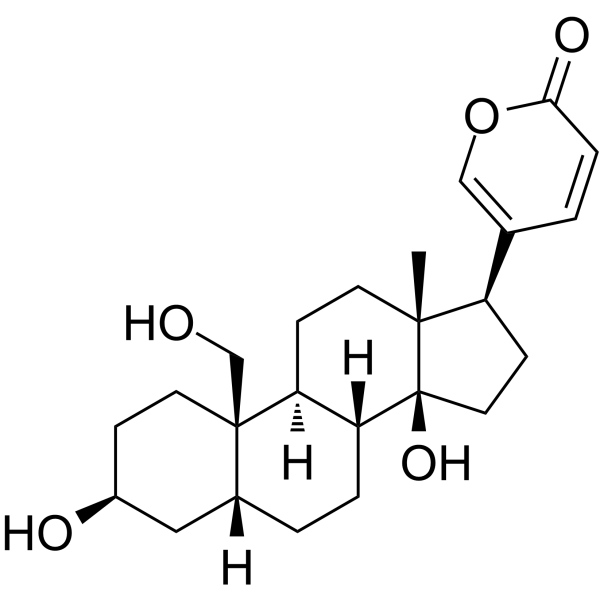
    19-Hydroxybufalin is a bufadienolide, inhibits epithelial-mesenchymal transition and attenuates the migration and invasion of PC3 cells .
    19-Hydroxybufalin
  • HY-149149

    Bacterial Infection Metabolic Disease Cancer
    Incadronic acid inhibits growth of Dictyostelium discoideum with an IC50 of 1.6 μM. Incadronic acid binds the farnesyl diphosphate synthase (FPPS) in Leishmania major with the Ki of 23 nM. Incadronic acid inhibits the bone resorption and reduces bone loss, that can be used in osteoporosis research. Incadronic acid inhibits the proliferation of cells RAW264.7, PC-3 and MCF-7 with IC50 of 48 to 228.6 µM .
    Incadronic acid
  • HY-119257
    ABT-100
    1 Publications Verification

    Farnesyl Transferase Apoptosis Cancer
    ABT-100, a chemical probe, is a potent, highly selective and orally active farnesyltransferase inhibitor. ABT-100 inhibits cell proliferation (IC50s of 2.2 nM, 3.8 nM, 5.9 nM, 6.9 nM, 9.2 nM, 70 nM and 818 nM for EJ-1, DLD-1, MDA-MB-231, HCT-116, MiaPaCa-2, PC-3, and DU-145 cells, respectively), increases apoptosis and decreases angiogenesis. ABT-100 possesses broad-spectrum antitumor activity .
    ABT-100
  • HY-115974

    Bombesin Receptor Cancer
    GRPR antagonist-1 is a potent gastrin releasing peptide receptor (GRPR) antagonist, having the cytotoxicity against certain cancer cells (IC50 of 4.97, 4.36 and 3.40 μM in PC3, Pan02 and HGC-27 cells, respectively). GRPR antagonist-1 inhibits HGC-27 cell viability by decreasing the Bcl-2 level and increasing the Bax level, causing apoptosis, with anticancer activity .
    GRPR antagonist-1
  • HY-N16066

    CHNQD-0803

    AMPK Apoptosis NF-κB TNF Receptor Inflammation/Immunology
    Candidusin A (CHNQD-0803) (Compound 4) is a AMPK activator with a KD of 47.28 nM. Candidusin A can be isolated from marine fungus Aspergillus candidus. Candidusin A has cytotoxic activity and induces apoptosis in human prostate cancer cells (22Rv1, PC-3 and LNCaP cells). Candidusin A reduces adipogenesis genes expression and fat deposition, negatively regulates the NF-κB-TNFα inflammatory axis to suppress inflammation, and ameliorates liver injury and fibrosis. Candidusin A can be used for non-alcoholic steatohepatitis (NASH) research .
    Candidusin A
  • HY-N10687

    NSC 648341

    Others Cancer
    Saprorthoquinone (NSC 648341) is a diterpenoid that can be found in salvia atropatana. Saprorthoquinone shows cytotoxicity for PC3 cells .
    Saprorthoquinone
  • HY-103385

    NO-Aspirin

    Apoptosis Inflammation/Immunology Cancer
    NCX4040 (NO-Aspirin), a non-steroidal anti-inflammatory drug (NSAID), is a nitric oxide (NO) releasing form of Aspirin. NCX4040 induces apoptosis in PC3 metastatic prostate cancer cells. NCX4040 has anti-inflammatory and anti-cancer effects .
    NCX4040
  • HY-N13772

    (+)-Dihydroisorhamnetin

    Apoptosis Cancer
    3'-O-Methyltaxifolin ((+)-Dihydroisorhamnetin) is a dihydroflavanol found in Pulicaria jaubertii. A mixture of these alcohol compounds including 3'-O-Methyltaxifolin found in Pulicaria jaubertii exhibits antitumor activity with IC50 values ​​of 19.1 μg, 20.0 μg, and 24.1 μg against prostate cancer (PC-3), breast cancer (MCF-7), and hepatocellular carcinoma (HepG-2) cell lines, respectively. Furthermore, 3'-O-Methyltaxifolin can induce cell apoptosis, making it a promising candidate for anticancer research. .
    3'-O-Methyltaxifolin
  • HY-179148

    EGFR Apoptosis Cancer
    EGFR-IN-184 (compound 5p) is an EGFR inhibitor (IC50 = 65.6 nM). EGFR-IN-184 has anti proliferative activity against various tumor cells, such as T47D (IC50 = 15 μM), PC3 (IC50 = 55 μM), HCT116 (IC50 = 36 μM) cells. EGFR-IN-184 can significantly induce cell apoptosis and block the cell cycle. EGFR-IN-184 can be used for research on various types of cancer .
    EGFR-IN-184
  • HY-175017

    Survivin Cancer
    Survivin-IN-2 is a survivin inhibitor. Survivin-IN-2 shows cytotoxicity in cells with IC50s of 0.53 μM (C4-2 cells) and 1.06 μM (PC-3 cells). Survivin-IN-2 effectively suppresses xenograft tumor growth without apparent toxicity and eliminates survivin in the tumors. Survivin-IN-2 can be used for the study of prostate cancer .
    Survivin-IN-2
  • HY-107640

    MMP Cancer
    WAY-170523 is a potent and selective MMP-13 (matrix metalloproteinase-13) inhibitor, with an IC50 of 17 nM. WAY-170523 can directly attenuate ERK1/2 phosphorylation. WAY-170523 inhibits the invasion of PC-3 cells, can be used for prostate cancer research .
    WAY-170523
  • HY-N7972

    Others Cancer
    19-Oxocinobufotalin is capable of suppressing EMT (Epithelial-mesenchymal transition) and weakening the migratory and invasive potential of PC3 cells .
    19-Oxocinobufotalin
  • HY-143882

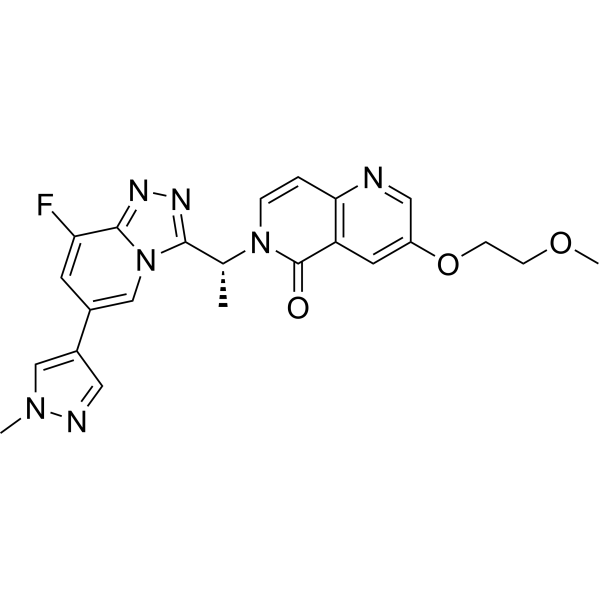
    PROTACs Akt Cancer
    MS5033 is a potent PROTAC-based AKT (protein kinase B) degrader, with a DC50 of 430 nM in PC3 cells .
    MS5033
  • HY-137225

    HTS07944SC

    Caspase Interleukin Related Inflammation/Immunology Cancer
    HTS07944 (HTS07944SC, C3) is a potent modulator of laminin receptor (37 LR). HTS07944 (HTS07944SC, C3) possesses anti-cancer activity in PC-3 cells and activates Caspase 3/7 .
    HTS07944
  • HY-172366

    PSMA Cancer
    BQ0413 exhibits good affinity to PSMA with a KD of 89 pM. BQ0413 exhibits good uptake and internalization property with an internalization rate of 44% in PC3-pip cell. BQ0413 can be used as tumor imaging agent when labeled with 99mTc .
    BQ0413
  • HY-168757

    PSMA Cancer
    PSMA precursor-1 is a precursor in the synthesis of prostate-specific membrane antigen (PSMA) ligands and fluorescent probes that have been used in the detection of PSMA in LNCaP and PC3 cells .
    PSMA  precursor-1
  • HY-118147

    Fatty Acid Synthase (FASN) Cancer
    ML356 (Compound 16) is an inhibitor for fatty acid synthase (FAS), that inhibits the thioesterase domain of FAS (FAS TE) with an IC50 of 0.334 μM, and blocks the de novo palmitate synthesis in PC-3 cell with an IC50 of 20 μM. ML356 exhibits good membrane permeability, and good stability in human and mouse plasma .
    ML356
  • HY-131438

    Topoisomerase Cancer
    GI-149893 is a selective topoisomerase I (TopoI) inhibitor. GI-149893 prevents DNA religation and induces irreversible DNA damage in tumor cells. GI-149893 is promising for research of cancers (e.g., colon carcinoma HT-29/SW-48, breast MX-1, prostate PC-3 xenografts) .
    GI-149893
  • HY-12364B

    Fatty Acid Synthase (FASN) Carnitine Palmitoyltransferase (CPT) Cancer
    ( )-C75 is a isoform of C75 (HY-12364), which is a synthetic fatty-acid synthase (FASN) inhibitor; inhibits prostate cancer cells PC3 with an IC50 of 35 μM . C75 is a potent CPT1A activator .
    (−)-C75
  • HY-178045

    c-Myc Cancer
    MYC-IN-4 is a MYC inhibitor. MYC-IN-4 impairs MYC/MAX protein-protein interaction (IC50 = 3.06 μM). MYC-IN-4 inhibits MYC-aberrant PC-3 prostate cancer cells with an IC50 of 0.440 μM. MYC-IN-4 demonstrates potent antitumor efficacy in FVB mice bearing Myc-CaP prostate tumor allografts. MYC-IN-4 can be used for the study of prostate cancer .
    MYC-IN-4
  • HY-179398

    Keap1-Nrf2 Cancer
    Keap1-Nrf2-IN-29 (Compound 1a), a Curcumin (HY-N0005) analog, is a Keap1 protein inhibitor. Keap1-Nrf2-IN-29 exhibits significant inhibitory activity against A549, PC-3 and MCF-7 cells. Keap1-Nrf2-IN-29 can be used for the study of prostate cancer .
    Keap1-Nrf2-IN-29
  • HY-125010

    DNA/RNA Synthesis Apoptosis Cancer
    Dicycloplatin is a DNA damage inducer. Dicycloplatin induces DNA damage by activating biphosphorylated checkpoint kinase 2 (CHK2), breast cancer 1 (BRCA1) and triphosphorylated p53. Dicycloplatin can induce cell cycle arrest, inhibit proliferation and lead to apoptosis in prostate cancer PC3 cells and lung cancer NCI/H446 cells. Dicycloplatin can be used in cancer researchr .
    Dicycloplatin
  • HY-138635

    PROTACs Epigenetic Reader Domain Cancer
    PROTAC BRD4 Degrader-12 (compound 9c) is a PROTAC connected by ligands for von Hippel-Lindau and BRD4. PROTAC BRD4 Degrader-12 can be conjugated with STEAP1 and CLL1 antibodies to degrade the BRD4 protein in PC3 prostate cancer cells, with a DC50 of 0.39 nM and 0.24 nM, respectively .
    PROTAC BRD4 Degrader-12
  • HY-138633

    PROTACs Epigenetic Reader Domain Cancer
    PROTAC BRD4 Degrader-10 (compound 8b) is a PROTAC connected by ligands for von Hippel-Lindau and BRD4. PROTAC BRD4 Degrader-10 can be conjugated with STEAP1 and CLL1 antibodies to degrade the BRD4 protein in PC3 prostate cancer cells, with a DC50 of 1.3 nM and 18 nM, respectively .
    PROTAC BRD4 Degrader-10
  • HY-139294

    PROTACs Epigenetic Reader Domain Cancer
    PROTAC BRD4 Degrader-15 is a PROTAC connected by ligands for von Hippel-Lindau and BRD4, with IC50s of 7.2 nM and 8.1 nM for BRD4 BD1 and BD2, respectively. PROTAC BRD4 Degrader-15 is capable of potently degrading the BRD4 protein in PC3 prostate cancer cells .
    PROTAC BRD4 Degrader-15
  • HY-138637

    PROTACs Epigenetic Reader Domain Cancer
    PROTAC BRD4 Degrader-14 is a PROTAC connected by ligands for von Hippel-Lindau and BRD4, with IC50s of 1.8 nM and 1.7 nM for BRD4 BD1 and BD2, respectively. PROTAC BRD4 Degrader-14 is capable of potently degrading the BRD4 protein in PC3 prostate cancer cells .
    PROTAC BRD4 Degrader-14
  • HY-157404

    Pim Cancer
    Pim-1/2 kinase inhibitor 2 (compound 5b) is a competitive PIM-1 and PIM-2 kinase inhibitor with IC50s of 1.31 μM and 0.67 μM, respectively. Pim-1/2 kinase inhibitor 2 shows in-vitro low cytotoxicity against normal human lung fibroblast Wi-38 cell line and potent in-vitro anticancer activity against myeloid leukaemia (NFS-60), liver (HepG-2), prostate (PC-3), and colon (Caco-2) cancer cell lines .
    Pim-1/2 kinase inhibitor 2
  • HY-155610

    VEGFR Cancer
    VEGFR-2-IN-32 (Comp 3a) is an inhibitor of VEGFR-2 with an IC50 of 8.93 nM. VEGFR-2-IN-32 has cytotoxic activity against PC-3 cells with an IC50 of 1.22 μM. VEGFR-2-IN-32 can be used for anti-prostate cancer research .
    VEGFR-2-IN-32
  • HY-147854

    Raf Apoptosis Cancer
    B-Raf IN 9 (compound 8b) is a potent B-Raf inhibitor, with an IC50 of 24.79 nM. B-Raf IN 9 induces apoptosis and shows cell cycle arrest at G2/M phase. B-Raf IN 9 exhibits potent antitumor activity against human prostate cancer PC-3 cell line, with an IC50 of 7.83 µM .
    B-Raf IN 9
  • HY-144808

    Microtubule/Tubulin Cancer
    Anticancer agent 40 (compound 3e) is a potent anticancer agent. Anticancer agent 40 shows anticancer activities with IC50s of 0.94, 0.98, 0.96, 0.95, 2.13 nM for SKBR-3, SKOV-3, PC-3, U-87, HDF cells, respectively .
    Anticancer agent 40
  • HY-121619

    Apoptosis Inflammation/Immunology Cancer
    Jacaric acid is a conjugated linolenic acid, which inhibits viability in cells PC-3 (IC50 is 11.8 μM), LNCaP (IC50 is 2.2 μM) and DLD-1, induces apoptosis and necrosis . Jacaric acid exhibits anticaner activity against prostate cancer and adenocarcinoma . Jacaric acid exhibits immunomodulating activity in murine peritoneal macrophages as an immunopotentiator . Jacaric acid is orally active.
    Jacaric acid
  • HY-147853

    Raf Cancer
    B-Raf IN 8 (compound 7g) is a potent B-Raf inhibitor, with an IC50 of 70.65 nM. B-Raf IN 8 exhibits antitumor activity against hepatocellular carcinoma (HEPG-2), colon carcinoma (HCT-116), mammary gland (MCF-7) and human prostate cancer (PC-3) cells, with IC50 values of 9.78, 13.78, 18.52 and 29.85 µM .
    B-Raf IN 8

Inquiry Online

Your information is safe with us. * Required Fields.

Salutation


Country or Region *

Applicant Name *


Organization Name *

Department *


Email Address *


Product Name *

Cat. No.


Requested quantity *

Phone Number *


Remarks

Inquiry Online

Inquiry Information

Product Name:
Cat. No.:
Quantity:
MCE Japan Authorized Agent:

