
35 Results for "

Pepper

" in MedChemExpress (MCE) Product Catalog:
Products (35)

35 Results for "Pepper" in MCE Product Catalog:

81
81 Publications Verification
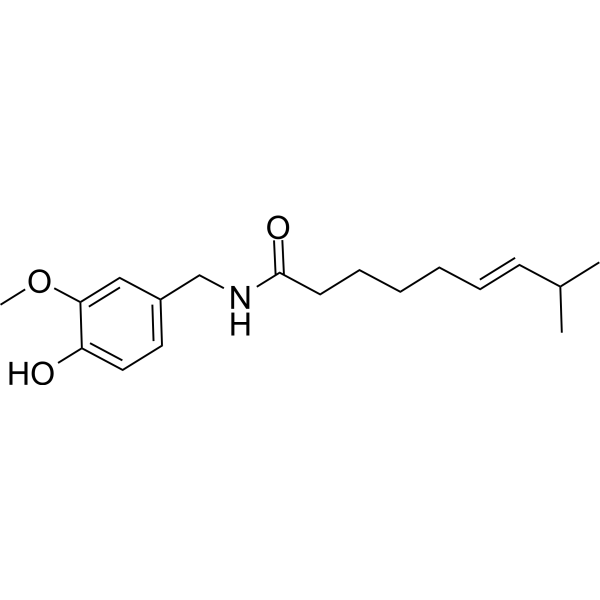
Cat. No.: HY-10448
CAS No.: 404-86-4
Purity:  99.79%
Synonyms: (E)-Capsaicin
Capsaicin ((E)-Capsaicin), an active component of chili peppers, is a TRPV1 agonist. Capsaicin induces a nociceptive response by binding to its receptors. Capsaicin has analgesic effects on neurological disorders. Capsaicin has antioxidant, anti-inflammatory, anti-cancer effects .
81
81 Publications Verification
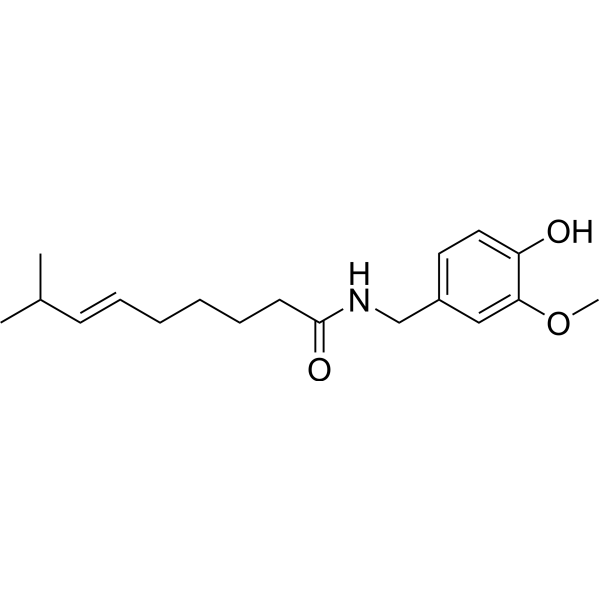
Cat. No.: HY-10448R
CAS No.: 404-86-4
Purity:  99.38%
Synonyms: (E)-Capsaicin (Standard)
Capsaicin (Standard) is the analytical standard of Capsaicin. This product is intended for research and analytical applications. Capsaicin ((E)-Capsaicin), an active component of chili peppers, is a TRPV1 agonist. Capsaicin induces a nociceptive response by binding to its receptors. Capsaicin has analgesic effects on neurological disorders. Capsaicin has antioxidant, anti-inflammatory, anti-cancer effects .
17
17 Cited Publications
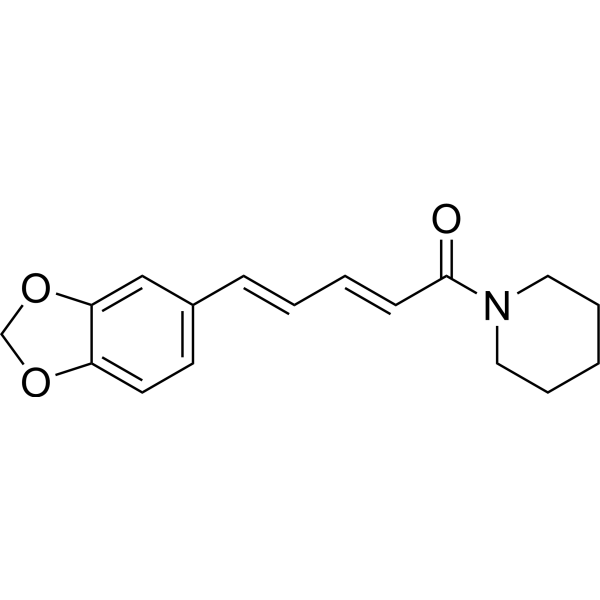
Cat. No.: HY-N0144
CAS No.: 94-62-2
Synonyms: Bioperine; 1-Piperoylpiperidine
Piperine is an alkaloid, can be isolated from pepper. Piperine can inhibit the activity of P-glycoprotein and CYP3A4. Piperine inhibits HeLa cells with an IC50 of 61.94±0.054 μg/mL .
4
4 Cited Publications
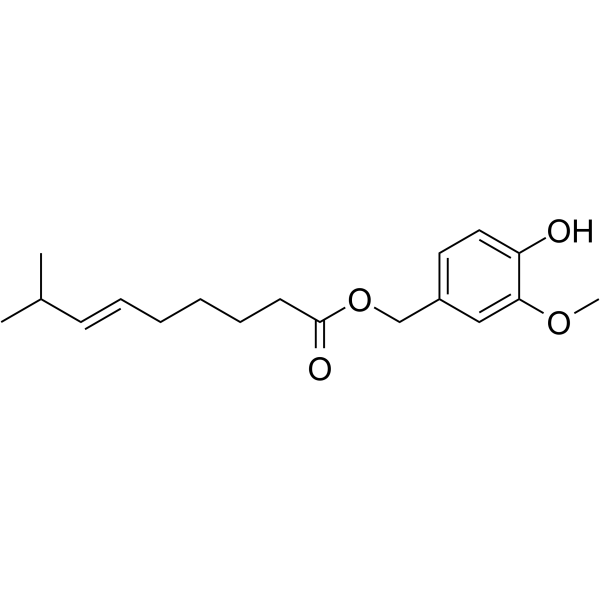
Cat. No.: HY-N8377
CAS No.: 205687-01-0
Capsiate, as a capsaicin analogue extracted from a non-pungent cultivar of CH-19 sweet red pepper, is an orally active agonist of TRPV1 .
3
3 Cited Publications
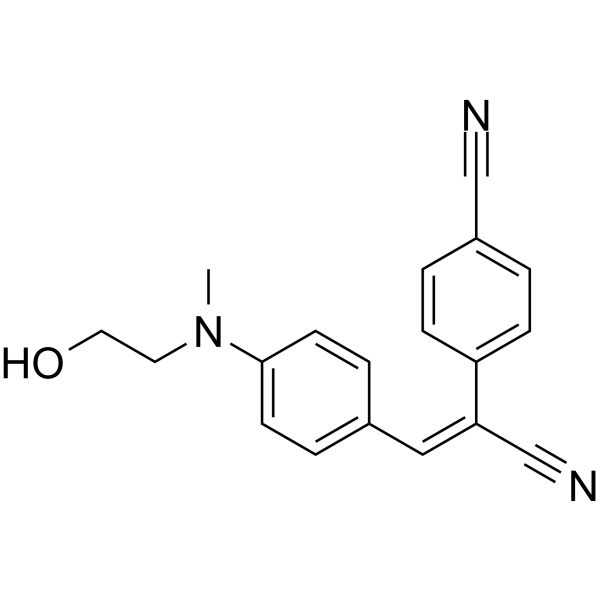
Cat. No.: HY-D1373
CAS No.: 156840-13-0
Synonyms: HBC 530
HBC (HBC 530) is a GFP fluorophore-like synthetic dye, with a structurally rigid electron acceptor and a strong electron donor. HBC has a low fluorescence background, and when combined with Pepper (RNA aptamer), HBC forms a tight complex and activates and emits bright fluorescence (Kd of ~3.5 nM). HBC emission peaks vary in different complexes and covers the spectrum from cyan to red. HBC can be used in the live cell imaging of RNA (Em/Ex = 530/485 nm) .
1
1 Cited Publications
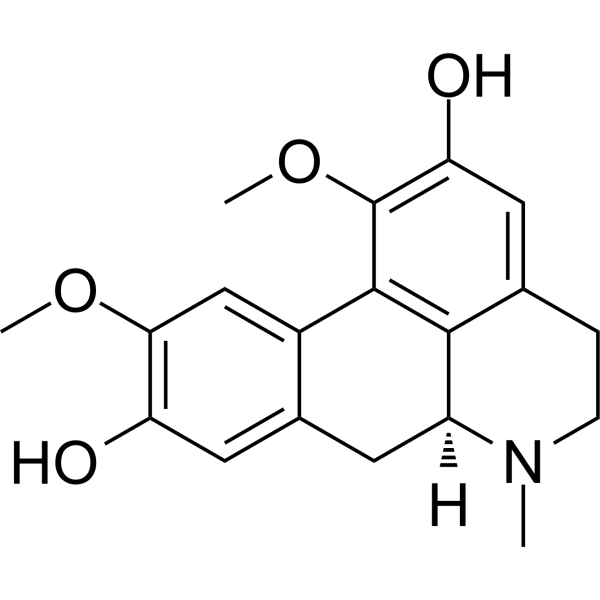
Cat. No.: HY-N6973
CAS No.: 476-70-0
Boldine is an apomorphine isoquinoline alkaloid extracted from the root of the pheasant pepper (Litsea cubeba). Boldine is an oral effective antioxidant, anti-inflammatory, antitumor agent, and can inhibit osteoclast formation. Boldine induces apoptosis of human bladder cancer cells by regulating ERK, AKT and GSK-3β. Boldine ameliorates bone destruction by down-regulating the OPG/RANKL/RANK signaling pathway. It can be used in rheumatoid arthritis research .
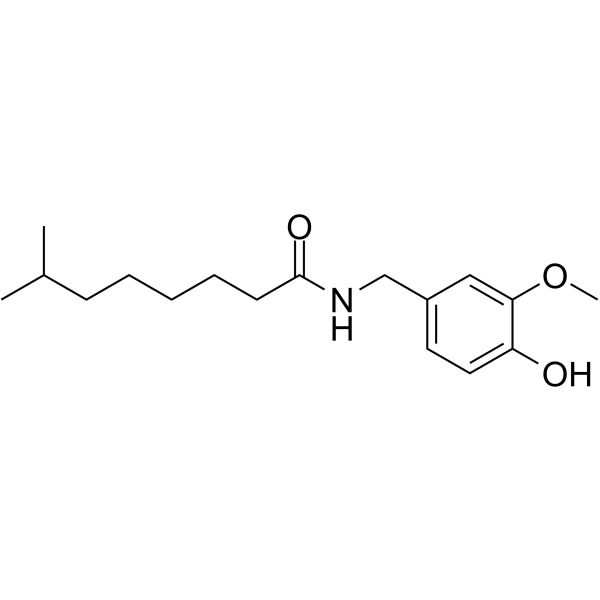
Cat. No.: HY-N0449
CAS No.: 28789-35-7
Nordihydrocapsaicin, an analog of Capsaicin (HY-10448), is an orally active compound with pungent properties and anti-cancer activities, which is found in fresh and processed peppers. Nordihydrocapsaicin can cause a burning sensation when consumed .
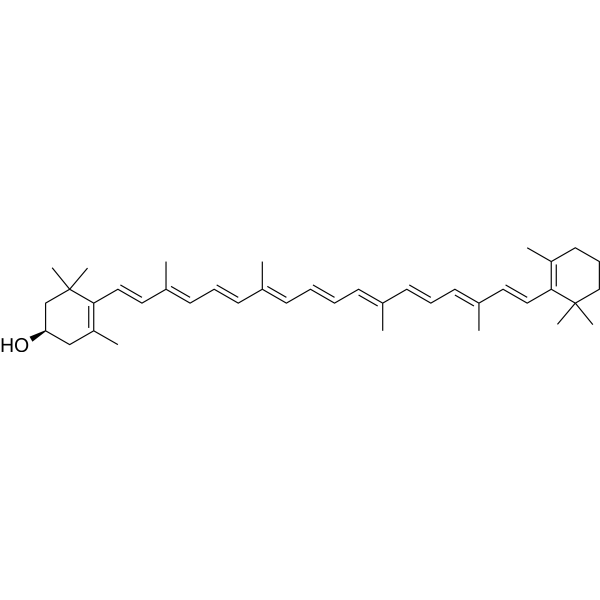
Cat. No.: HY-108059
CAS No.: 472-70-8
Synonyms: (3R)-β-Cryptoxanthin
β-Cryptoxanthin ((3R)-β-Cryptoxanthin) is an orally active carotenoid found in fruits and vegetables such as angerines, red peppers, and pumpkin. β-Cryptoxanthin inhibits prevents osteoclast formation and inhibits bone resorption. β-Cryptoxanthin maintains retinol status in vivo. β-cryptoxanthin shows anti-inflammation and anticancer activity. β-Cryptoxanthin can be used for the researches of osteoporosis and bladder carcer .
Cat. No.: HY-N8574
CAS No.: 2004-39-9
Synonyms: Heptacosan-1-ol
1-Heptacosanol (Heptacosan-1-ol) is a long-chain fatty alcohol with antifungal, antibacterial (against Escherichia coli and Staphylococcus aureus), nematicidal, anticancer and antioxidant activities. 1-Heptacosanol can be isolated from leaf extracts of Ficus septica and Lecaniodiscus cupanioides. 1-Heptacosanol not only effectively resists pathogenic fungal infections, but also shows potential against pepper anthracnose in phytopathology. 1-Heptacosanol can be used in the research of fungal infections, cancer and oxidative stress-related diseases .
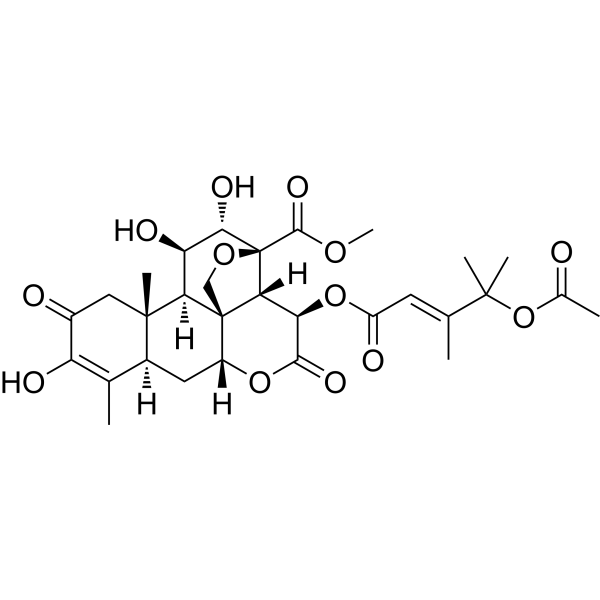
Cat. No.: HY-N8146
CAS No.: 53729-52-5
Bruceantinol is a quassinoid that can be isolated from Brucea javanica, inhibits pepper mottle virus (PepMoV) in pepper. Bruceantinol is a STAT3 inhibitor demonstrating potent antitumor activity in in vitro and in vivo human colorectal cancer (CRC) models. Bruceantinol has potent anti-leukemic activity. Bruceantinol strongly inhibits STAT3 DNA-binding ability (IC50 = 2.4 pM), blocks the constitutive and IL-6-induced STAT3 activation, and suppresses transcription of MCL-1, PTTG1, survivin and c-Myc. Bruceantinol binds with CDK2/4/6 to facilitate protein degradation through proteasome pathway. Bruceantinol can dose- and time-dependently reduces the cell growth, impede cell proliferation, disrupts the cell cycle, and induces necrosis in MCF-7 cells and apoptosis in MDA-MB-231 cells .
Cat. No.: HY-W743654
CAS No.: 470-38-2
Target:  

Apoptosis

Research Areas:  

Cancer

Capsorubin is a carotenoid found in peppers with multiple biological activities. Capsorubin (167 μM) inhibits lipid peroxidation induced by 2,2'-azobis(2,4-dimethylvaleronitrile) (AMVN) in vitro. Capsorubin (1 μM) reduces UVB-induced DNA strand breaks and apoptosis in human dermal fibroblasts. Capsorubin also inhibits Epstein-Barr virus early antigen (EBV-EA) activation induced by phorbol 12-myristate 13-acetate in Raji cells, a marker of tumorigenesis.
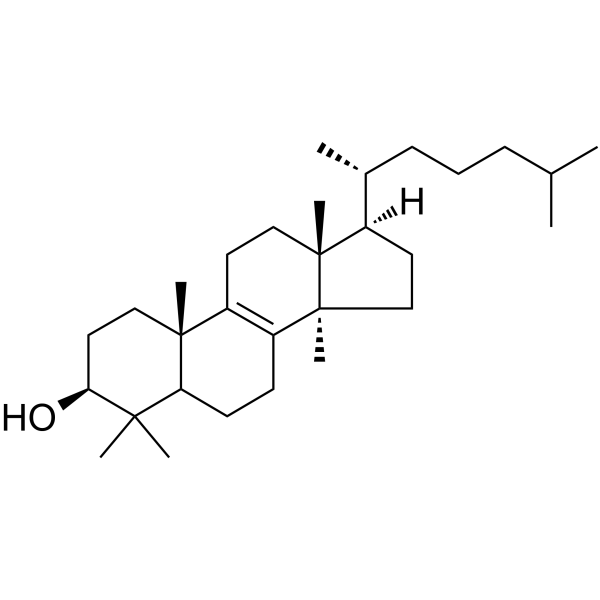
Cat. No.: HY-W040264
CAS No.: 911660-54-3
Synonyms: Lanostenol
24,25-Dihydrolanosterol is a naturally occurring tetracyclic Δ 8-triterpene alcohol that can be found in the seeds of Capsicum annuum. 24,25-Dihydrolanosterol is the initial carbocyclic sterol precursor in animals, fungi, and trypanosomatids, and participates in sterol synthesis .
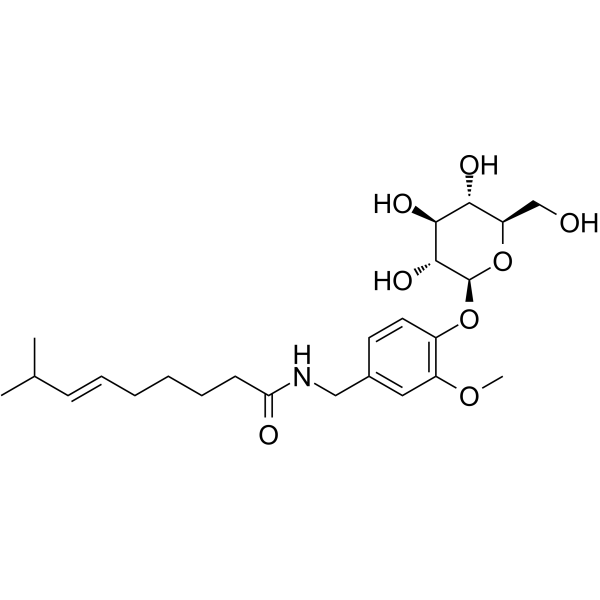
Cat. No.: HY-N9452
CAS No.: 153409-16-6
Capsaicin β-D-glucopyranoside is a glucoside converted by Capsaicin. Capsaicin is the active ingredient of chili peppers and gives them the characteristic pungent flavor .
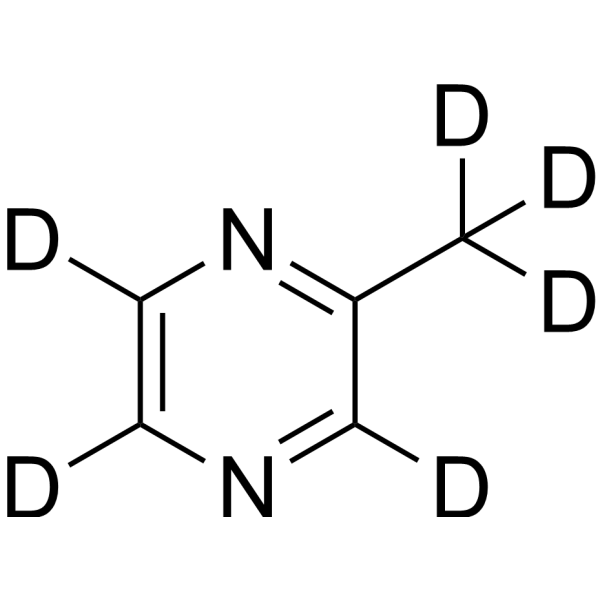
Cat. No.: HY-W067358S
CAS No.: 1219804-84-8
2-Methylpyrazine-d6 is the deuterium labeled 2-Methylpyrazine . 2-Methylpyrazine is a kind of alkylpyrazine that can be identified in roasted red pepper seed oils .
Cat. No.: HY-N0144R
CAS No.: 94-62-2
Synonyms: Bioperine (Standard); 1-Piperoylpiperidine (Standard)
Piperine (Standard) is the analytical standard of Piperine. This product is intended for research and analytical applications. Piperine is an alkaloid, can be isolated from pepper. Piperine can inhibit the activity of P-glycoprotein and CYP3A4. Piperine inhibits HeLa cells with an IC50 of 61.94±0.054 μg/mL .
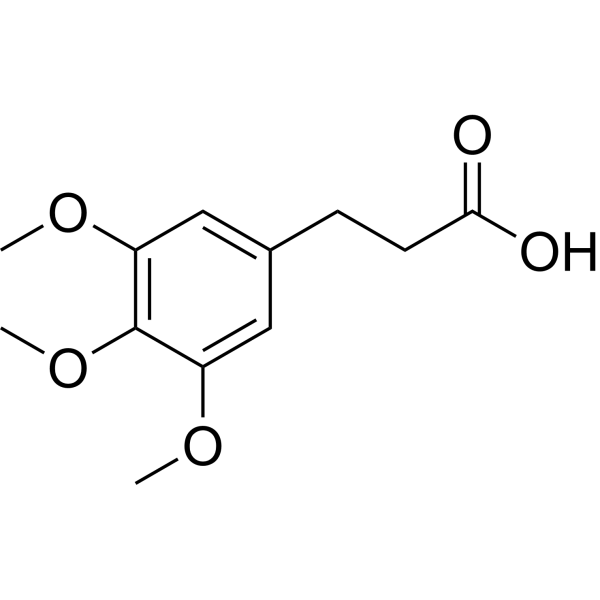
Cat. No.: HY-W022390
CAS No.: 25173-72-2
3-(3,4,5-Trimethoxyphenyl)propanoic acid is found in herbs and spices. 3-(3,4,5-Trimethoxyphenyl)propanoic acid is a constituent of Piper longum (long pepper) and Piper retrofractum (Javanese long pepper).
Cat. No.: HY-204591
CAS No.: 84929-41-9
Target:  

Drug Derivative

Research Areas:  

Others

Black pepper oleoresin is a substance extracted from the pepper plant (Piper nigrum), which has aroma, spiciness, and bioactive components. It is widely used in food, health products, cosmetics, and daily chemical products.
Cat. No.: HY-W743654R
CAS No.: 470-38-2
Research Areas:  

Cancer

Capsorubin (Standard) is the analytical standard of Capsorubin. This product is intended for research and analytical applications. Capsorubin is a carotenoid found in peppers with multiple biological activities. Capsorubin (167 μM) inhibits lipid peroxidation induced by 2,2'-azobis(2,4-dimethylvaleronitrile) (AMVN) in vitro. Capsorubin (1 μM) reduces UVB-induced DNA strand breaks and apoptosis in human dermal fibroblasts. Capsorubin also inhibits Epstein-Barr virus early antigen (EBV-EA) activation induced by phorbol 12-myristate 13-acetate in Raji cells, a marker of tumorigenesis.
Cat. No.: HY-N15265
CAS No.: 583-34-6
Piperettine is the active substance in pepper .
Cat. No.: HY-W654320
Synonyms: Bioperine-d10; 1-Piperoylpiperidine-d10
Piperin-d10 is deuterium labeled Piperine. Piperine is an alkaloid, can be isolated from pepper. Piperine can inhibit the activity of P-glycoprotein and CYP3A4. Piperine inhibits HeLa cells with an IC50 of 61.94±0.054 μg/mL .

