






1. Search Result
Search Result
Results for "

Protein Delivery

" in MedChemExpress (MCE) Product Catalog:

162

Inhibitors & Agonists

2

Screening Libraries

25

Fluorescent Dye

93

Biochemical Assay Reagents

28

Peptides

1

MCE Kits

2

Natural
Products

1

Isotope-Labeled Compounds

2

Click Chemistry

35

Oligonucleotides

Cat. No. Product Name Target Research Areas Chemical Structure
  • HY-B2247A
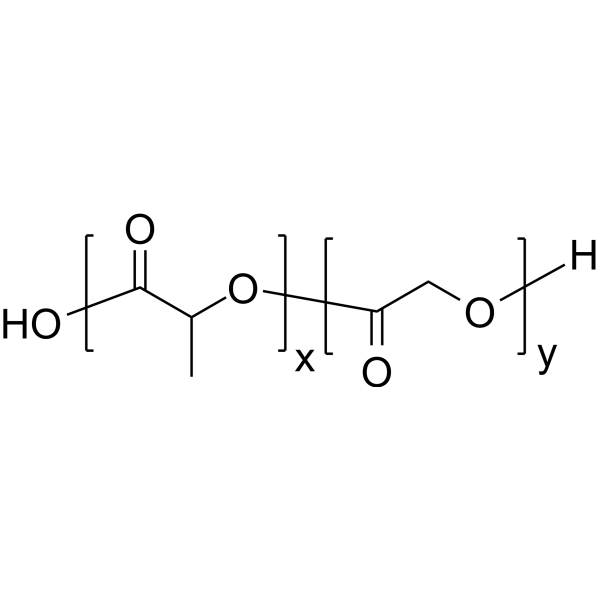
    PLGA (75:25)
    Maximum Cited Publications
    6 Publications Verification

    poly(lactic-co-glycolic acid) (75:25)

    Biochemical Assay Reagents Others
    PLGA (75:25) is a low toxicity, biocompatible and biodegradable controlled drug delivery carrier, can achieve slow release in the organism. PLGA (75:25) is a copolymer of 75% poly lactic acid (PLA) and 25% poly glycolic acid (PGA). PLGA (75:25) has been extensively studied as delivery vehicles for agents, proteins and various other macromolecules such as DNA, RNA and peptides .
    PLGA (75:25)
  • HY-148842

    Liposome Others
    C14-4 is an ionizable lipid utilized for the synthesis of lipid nanoparticles (LNPs). C14-4 enhances mRNA delivery, enabling the effective transport of mRNA to primary human T cells, which in turn induces functional protein expression. C14-4 demonstrates high transfection efficiency while maintaining low cytotoxicity .
    C14-4
  • HY-148033

    N,N,N-Trimethylchitosan

    Drug Derivative Others
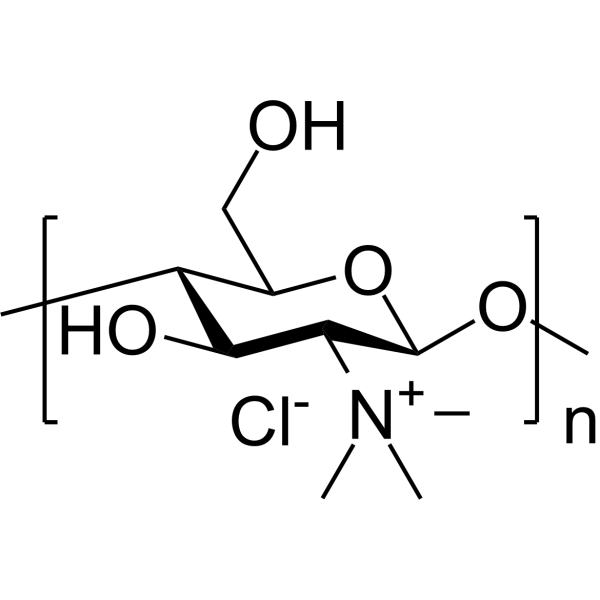
    Trimethyl chitosan (N,N,N-Trimethylchitosan) is a multifunctional polymer and a derivative of Chitosan (HY-B2144A). Trimethyl chitosan targets the absorption enhancing proteins of tight junctions of intestinal and mucosal epithelial cells, induces tight junction protein rearrangement, and increases intercellular permeability. Trimethyl chitosan can stimulate the activity of promoting transmembrane transport of hydrophilic drugs (such as peptides and proteins) and can be used for drug delivery and synthesis of nanoparticles .
    Trimethyl chitosan
  • HY-147081
    AS 1411
    2 Publications Verification

    AGRO-100

    Histone Methyltransferase Bcl-2 Family Cancer
    AS 1411 (AGRO-100) is an oligonucleotide aptamer targeting nucleoproteins. AS 1411 inhibits tumor cell proliferation by affecting the activity of nucleoprotein-containing complexes and can be used as a carrier to precisely deliver nanoparticles, oligonucleotides and small molecules to cancer cells. AS 1411 reduces PRMT5 expression to inhibit tumor growth in DU145 prostate cancer cells. AS 1411 works by blocking the binding of nucleoproteins to bcl-2 mRNA in MCF-7 breast cancer cells. AS 1411-coupled Jin nanospheres can inhibit breast cancer cell proliferation in vitro and in mouse models, has the ability to cross the blood-brain barrier with low tissue toxicity .
    AS 1411
  • HY-160523

    Biochemical Assay Reagents Others
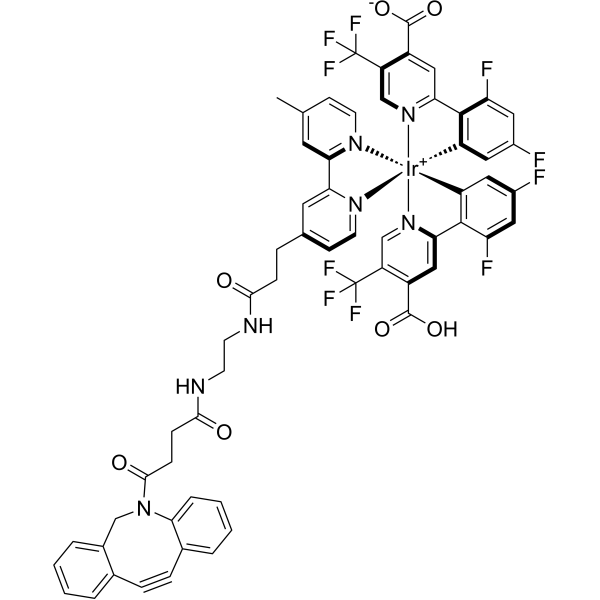
    DBCO Ir catalyst is an iridium catalyst labeled with DBCO. DBCO Ir catalyst can be used for in situ labeling and imaging of biomolecules (e.g., proteins, nucleic acids) in living organisms or for constructing targeted drug delivery systems .
    DBCO Ir catayst
  • HY-P5623A

    RVG29-Cys; RDP-Cys; Rabies Virus GlycoProtein-29-Cys

    RABV Others
    RVG-Cys (RVG29-Cys) is a peptide derived from rabies virus glycoprotein (RVG29) with Cys attached to facilitate subsequent conjugation. RVG-Cys enhances the specific targeted delivery of proteins in brain tissue and neurons .
    RVG-Cys
  • HY-145795

    Liposome Others
    OF-02 is an ionizable lipid for mRNA delivery and a key component of lipid nanoparticles (LNPs). OF-02 is protonated in the acidic endosomal environment to promote endosomal escape of mRNA and efficiently induce protein expression in target cells. OF-02 relies on the pH-responsive membrane fusion properties to form a complex with mRNA and destroy the endosomal membrane structure to achieve mRNA release in the cytoplasm. OF-02 is mainly used in the development of mRNA vaccines, gene editing, and protein replacement therapy[1][2][3].
    OF-02
  • HY-143702

    NBD-DOTAP

    Fluorescent Dye Liposome Inflammation/Immunology Cancer
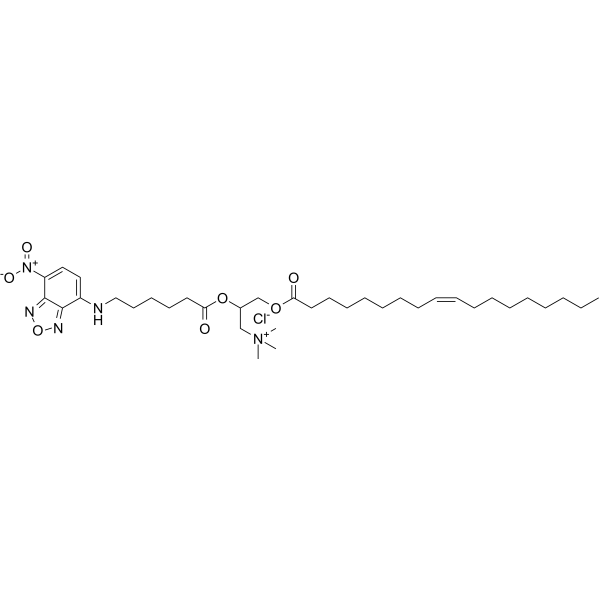
    Fluorescent DOTAP (NBD-DOTAP) is a cationic lipid which can be used for nucleic acid and protein delivery. Fluorescent DOTAP is labeled with a fluorophore NBD (maximum excitation/emission wavelength ∼463/536 nm). Fluorescent DOTAP can be used for gene delivery systems, drug delivery, as well as cell imaging and nanocarrier tracking. Fluorescent DOTAP is an ideal candidate for both biological and pharmaceutical formulation (e.g. co-delivery of vaccines) research .
    Fluorescent DOTAP
  • HY-W763806

    Environmental Pollutants Biochemical Assay Reagents Others
    Zein is a plant protein‐based polymer, can be used to prepare nanofibrous mats through electrospun. Zein has good cell compatibility and easy fabrication ability, and can be used in drug delivery systems .
    Zein
  • HY-P10502

    LDLR Infection
    L57 is a low-density lipoprotein receptor-related protein 1 (LRP1)-binding peptide. L57 exhibits high affinity for LRP1, with an EC50 of 45 nM. L57 possesses blood-brain barrier (BBB) permeability and plasma stability. L57 can serve as a carrier for central nervous system drug delivery .
    L57
  • HY-153232

    Fluorescent Dye Liposome Others
    eGFP circRNA-LNP is a lipid nanoparticle (LNP) containing eGFP circRNA, suitable for assays of RNA delivery, translation efficiency, cell viability, etc. eGFP circRNA carries Enhanced Green Fluorescent Protein (Enhanced Green Fluorescent Protein) eGFP, which will express green fluorescent protein after entering the cell. eGFP is commonly used as a reporter gene detectable by fluorescence microscopy or flow cytometry .
    eGFP circRNA-LNP
  • HY-P5623A1

    RVG29-Cys acetate; RDP-Cys acetate; Rabies Virus GlycoProtein-29-Cys acetate

    RABV Others
    RVG-Cys (RVG29-Cys) acetate is a peptide derived from rabies virus glycoprotein (RVG29) with Cys attached to facilitate subsequent conjugation. RVG-Cys acetate enhances the specific targeted delivery of proteins in brain tissue and neurons .
    RVG-Cys acetate
  • HY-N15871

    Liposome Others
    18:1 DGS-NTA(Ni) is a nickel chelating lipid. 18:1 DGS-NTA(Ni) has high affinity for histidine-tags and can bind histidine tags of recombinant proteins. 18:1 DGS-NTA(Ni) can be used for preparation of liposomes and nanosize multilamellar vesicles (NMVs) which are used in protein and peptide binding studies and antigen delivery .
    18:1 DGS-NTA(Ni)
  • HY-153235

    mRNA SARS-CoV Liposome Infection
    COVID-19 Spike Protein mRNA-LNP is a lipid nanoparticle (LNP) containing mRNA encoding COVID-19 Spike Protein. COVID-19 Spike Protein undertakes the functions of virus binding with host cell receptors, thereby mediating the entry of COVID-19 virus into cells. COVID-19 Spike Protein is an important site of action for host neutralizing antibodies and a key target for vaccine design. COVID-19 Spike Protein mRNA-LNP can be used for RNA delivery, vaccine formulation and design targeting SARS-CoV-2 .
    COVID-19 Spike Protein mRNA-LNP
  • HY-170528

    PROTAC Linkers Others
    DBCO-PEG3-NHS is a biochemical assay reagent, that can be used to chemically modify proteins and antibodies with an alkynyl (DBCO) or N-hydroxysuccinimide (NHS) ester group. DBCO-PEG3-NHS can be used as a linker in PROTAC synthesis or for drug delivery and the development of biosensors and diagnostic reagents .
    DBCO-PEG3-NHS
  • HY-155881

    mPEG550-NH2

    Biochemical Assay Reagents Cancer
    mPEG550-amine (mPEG550-NH2) is a class of functionalized polymers composed of a methoxy-terminated polyethylene glycol backbone and a terminal primary amine group. mPEG550-amine serves as an important intermediate for constructing functionalized nanocarriers, modifying proteins or polypeptides, and developing novel drug delivery systems.
    mPEG550-amine
  • HY-W011134

    Biochemical Assay Reagents Others
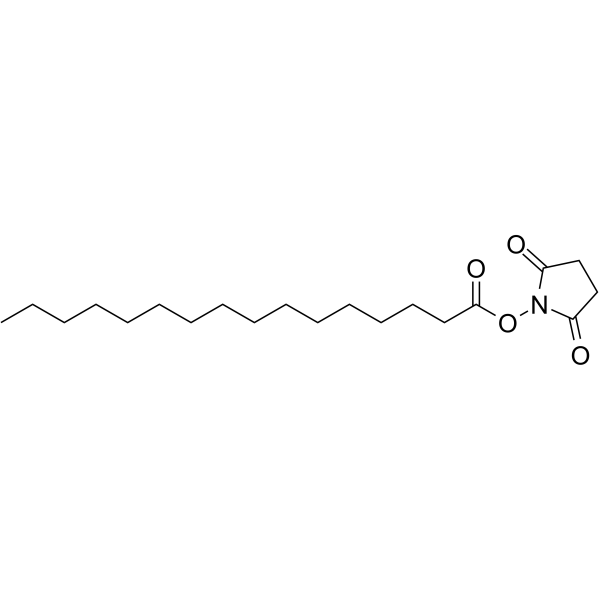
    Palmitic acid N-hydroxysuccinimide is used to conjugate proteins to prepare targeted delivery vectors. Palmitic acid N-hydroxysuccinimide can be used as lipophilic electrophile. Palmitic acid N-hydroxysuccinimide can be used for the covalent connection between palmitic acid and ovalbumin. Palmitic acid N-hydroxysuccinimide can be used to synthesize cetacyl derivatives of amino acids, aminoacyl-trNA, coenzyme A, mercaptoacetic acid and other amino and thiogenic compounds .
    Palmitic acid N-hydroxysuccinimide
  • HY-P10502A

    LDLR Others
    L57 acetate is a Low-density lipoprotein receptor-related protein 1 (LRP1)-binding peptide. L57 acetate exhibits high affinity to LRP1 with Ki of 45 nM. L57 acetate exhibits blood-brain barrier (BBB) permeability and plasma stability. L57 acetate can be utilized as the carrier for CNS drug delivery .
    L57 acetate
  • HY-125036

    PINK1/Parkin Neurological Disease
    MitoBloCK-11 is a new small molecule with a protein-binding target, Seo1. MitoBloCK-11 plays an important role in the delivery of PINK1 pathway. MitoBloCK-11 can be used in the study of autosomal recessive Parkinson's disease .
    MitoBloCK-11
  • HY-W012184

    Biochemical Assay Reagents Inflammation/Immunology
    CDAP is an organic cyanylating reagent that can be used for preparation of solid phase affinity reagents, modification of protein thiols and nucleotide delivery. CDAP also activates polysaccharides with a variety of chemical properties. CDAP can be used to prepare conjugate vaccines and other immune reagents .
    CDAP
  • HY-153231A

    Fluorescent Dye Liposome Others
    eGFP mRNA-LNP (500 ng/μL) is a lipid nanoparticle (LNP) containing eGFP mRNA. eGFP mRNA-LNP carries Enhanced Green Fluorescent Protein (eGFP), which will express green fluorescent protein after entering the cell. eGFP is commonly used as a reporter gene detectable by fluorescence microscopy or flow cytometry (excitation wavelength = 488 nm; emission wavelength = 535/40 bandpass). eGFP mRNA-LNP can be used for RNA delivery, translation efficiency and cell viability .
    eGFP mRNA-LNP (500 ng/μL)
  • HY-P4087

    HIV Infection Cancer
    Cys(Npys)-(Arg)9 is a synthetic cationic cell-penetrating peptide with a reversible thiol-reactive nitropyridyl (Npys) group. Cys(Npys)-(Arg)9 efficiently mediates the internalization and delivery of various "cargo" such as proteins and antibodies by forming reversible disulfide bonds with surface-exposed cysteine residues. Cys(Npys)-(Arg)9 endows TALEN proteins with cell-penetrating activity, enabling gene knockout in mammalian cells and protein transduction in wheat microspores. Cys(Npys)-(Arg)9 can be conjugated with antibodies to form cationized IgG for enhancing endosomal escape of oligonucleotides, or form siRNA delivery complexes. When the molar ratio of Cys(Npys)-(Arg)9 to loaded molecules is higher than 1:1, it exerts certain cytotoxic effects on cells. Cys(Npys)-(Arg)9 can be used in studies related to oral squamous cell carcinoma and HIV infection .
    Cys(Npys)-(Arg)9
  • HY-P1801A

    Cys-[HIV-Tat (47-57)] TFA

    HIV Drug Derivative Others
    Cys-TAT(47-57) (Cys-[HIV-Tat (47-57)]) TFA, TAT (HY-P0281) derivative, is a Cysteine (HY-Y0337)-tagged cell-penetrating peptide (CPP) derived from the HIV TAT protein. Cys-TAT(47-57) TFA can be used for the research for the research of drug delivery .
    Cys-TAT(47-57) TFA
  • HY-D1005I

    Biochemical Assay Reagents Others
    Poloxamer L61 is a non-ionic triblock copolymer surfactant. Poloxamer L61 effectively achieves intracellular molecular delivery to cancer cells during photoacoustic molecular delivery, and maintains cell viability by promoting cell membrane resealing, thus avoiding irreversible damage caused by laser-induced membrane permeabilization. Poloxamer L61 is a key component of SP1017, a compound related to gene therapy, which regulates the interaction between DNA and extracellular matrix as well as cellular uptake, and significantly enhances the distribution and bioavailability of plasmid DNA in skeletal muscle. Poloxamer L61 can be used in studies on local or systemic therapeutic protein production .
    Poloxamer L61
  • HY-W250176

    Biochemical Assay Reagents Others
    Polyethylene glycol trimethylnonyl ether, is a nonionic surfactant commonly used in various industrial and research applications. It belongs to the family of polyethylene glycol (PEG) ethers with a hydrophilic head and lipophilic tail and is suitable for use in lotions, detergents and solubilizers. Polyethylene glycol trimethylnonyl ether is particularly useful in protein chemistry, where it is used to solubilize and stabilize proteins, such as membrane proteins, for structural analysis techniques. In addition, Polyethylene glycol trimethylnonyl ether has potential applications in drug delivery and other medical fields due to its ability to interact with and penetrate cell membranes.
    Polyethylene glycol trimethylnonyl ether
  • HY-174967C

    Biochemical Assay Reagents Others
    4-Arm-PEG20000-OH is a PEG derivative with a four-arm structure and a hydroxyl (OH) functional group. 4-Arm-PEG20000-OH reacts with functional groups on biomolecules (such as proteins, peptides, antibodies, etc.) through hydroxyl groups and can be used for drug delivery .
    4-Arm-PEG20000-OH
  • HY-172476

    Liposome Cancer
    DSPE-PEG2000-YIGSR is a PEG compound which composed of DSPE and a biomimetic peptide YIGSR. YIGSR interacts with the 67 kDa laminin binding protein (LBP) and promotes adhesion and spreading of a large number of cell types including endothelial cells, fibroblasts and smooth muscle cells. DSPE-PEG2000-YIGSR can be used for drug delivery .
    DSPE-PEG2000-YIGSR
  • HY-W020780C

    mPEG3400-Maleimide

    Biochemical Assay Reagents Others
    mPEG3400-Mal is a PEG derivative used for thiol pegylation of protein molecules. Its maleimide group (-Mal) degrades in aqueous media and finds application in drug delivery studies.
    mPEG3400-Mal
  • HY-P10055A
    PSMA targeting peptide TFA
    1 Publications Verification

    PSMA-1 TFA

    PSMA Cancer
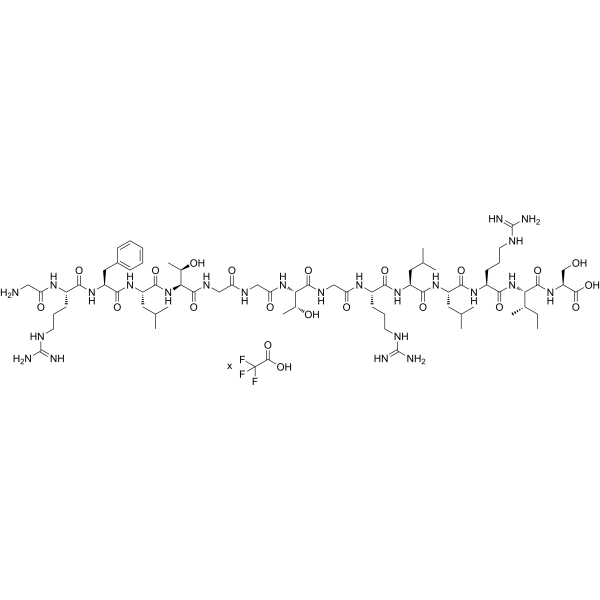
    PSMA targeting peptide TFA (PSMA-1 TFA) is a PSMA targeting peptide (GRFLTGGTGRLLRIS) and can be used for targeted delivery of glucose-regulated protein (GRP)-silencing siRNAs in PCa cells .
    PSMA targeting peptide TFA
  • HY-P4115

    FABP Cancer
    CooP is a linear glioblastoma-targeting nonapeptide. CooP binds to the mammary-derived growth inhibitor/fatty acid binding protein 3 (FABP3) in the glioblastoma cells and its associated vasculature. CooP is used for the targeted delivery of chemotherapy and different nanoparticles .
    CooP
  • HY-W250181

    Octyl β-D-thiomaltopyranoside

    Biochemical Assay Reagents Others
    Octyl thiomaltoside (OTM) is a nonionic detergent commonly used in the purification and crystallization of membrane proteins. It belongs to the family of maltoside detergents and has a hydrophilic head group and a lipophilic tail group, enabling it to interact with water-soluble and membrane-bound proteins. OTMs are known for their ability to solubilize integral membrane proteins without disrupting their structure or function, making them an invaluable tool in biochemical and biophysical research. In addition to protein research, OTMs are used in a variety of other applications, including drug delivery systems, nanotechnology, and diagnostic analysis.
    Octyl thiomaltoside
  • HY-155901

    Maleimide-NH-PEG2000-amine TFA

    Biochemical Assay Reagents Others
    Mal-NH-PEG2000-NH2TFA is a PEG derivative that may be used for thiol PEGylation of protein molecules. Its maleimide group (-Mal) degrades in aqueous media and finds application in drug delivery studies.
    Mal-NH-PEG2000-NH2 TFA
  • HY-W440912

    Liposome Others
    DSPE-PEG3400-Cy5 is a PEG phospholipid with Cy5 dye used in protein/nucelic acid labeling and fluorescence microscopy. The polymer can self-assemble in aqueous solution to form micelles/lipid bilayer and used to prepare liposomes or nanoparticles for nutrients delivery such as mRNA or DNA vaccine.
    DSPE-PEG3400-Cy5
  • HY-P4087B

    HIV Others
    Cys(Npys)-(Arg)9 acetate is a synthetic cationic cell-penetrating peptide with a reversible thiol-reactive nitropyridyl (Npys) group. Cys(Npys)-(Arg)9 acetate efficiently mediates the internalization and delivery of various "cargo" such as proteins and antibodies by forming reversible disulfide bonds with surface-exposed cysteine residues. Cys(Npys)-(Arg)9 acetate endows TALEN proteins with cell-penetrating activity, enabling gene knockout in mammalian cells and protein transduction in wheat microspores. Cys(Npys)-(Arg)9 acetate can be conjugated with antibodies to form cationized IgG for enhancing endosomal escape of oligonucleotides, or form siRNA delivery complexes. When the molar ratio of Cys(Npys)-(Arg)9 acetate to loaded molecules is higher than 1:1, it exerts certain cytotoxic effects on cells. Cys(Npys)-(Arg)9 acetate can be used in studies related to oral squamous cell carcinoma and HIV infection .
    Cys(Npys)-(Arg)9 acetate
  • HY-P1801

    Cys-[HIV-Tat (47-57)]

    HIV Drug Derivative Others
    Cys-TAT(47-57) (Cys-[HIV-Tat (47-57)]), TAT (HY-P0281) derivative, is a Cysteine (HY-Y0337)-tagged cell-penetrating peptide (CPP) derived from the HIV TAT protein. Cys-TAT(47-57) can be used for the research for the research of drug delivery .
    Cys-TAT(47-57)
  • HY-D2610

    Fluorescent Dye Others
    ICG PEG2000 DSPE is a PEG phospholipid with Indocyanine green (ICG) (HY-D0711) dye used in protein/nucelic acid labeling and fluorescence microscopy. ICG PEG2000 DSPE can self-assemble in aqueous solution to form micelles/lipid bilayer and used to prepare liposomes or nanoparticles for nutrients delivery such as mRNA or DNA vaccine (Ex/Em=785/813 nm).
    ICG PEG2000 DSPE
  • HY-P3402

    Amino Acid Derivatives Others
    HBpep-K is a peptide that can form co aggregated droplets. HBpep-K can efficiently load and deliver small peptides, proteins, and mRNA. HBpep-K can protect mRNA from RNase degradation. HBpep-K is commonly used for drug delivery .
    HBpep-K
  • HY-P3402A

    Amino Acid Derivatives Others
    HBpep-K acetate is a peptide that can form co aggregated droplets. HBpep-K acetate can efficiently load and deliver small peptides, proteins, and mRNA. HBpep-K acetate can protect mRNA from RNase degradation. HBpep-K acetate is commonly used for drug delivery .
    HBpep-K acetate
  • HY-P11083

    HBV Cancer
    Xentry is a cell-penetrating peptide (CCP) consisting of only 7 amino acids of hepatitis B virus: LCLRPVG. Xentry-linked anti-B-raf antibodies and siRNAs demonstrates the capability to kill B-raf-dependent melanoma cells. Xentry alone or conjugated to β-galactosidase leads to its delivery to most tissues in mice, except circulating blood cells. Xentry can be used for the delivery of large molecules (antibodies, siRNA, enzymes) .
    Xentry
  • HY-W1048851C

    4-Arm-PEG20000-Mal

    Biochemical Assay Reagents Others
    4-Arm-PEG20000-Maleimide can be used for site-specific protein and peptide modification and can be used for drug delivery .
    4-Arm-PEG20000-Maleimide
  • HY-W1052262B

    Biochemical Assay Reagents Others
    Silane-PEG5000-Mal is a PEG derivative that can be used to modify proteins, peptides and other materials. Silane-PEG5000-Mal can be used for peptide modification and drug delivery .
    Silane-PEG5000-Mal
  • HY-177921

    Liposome Others
    PL53 is a kind of cycloalkylamine lipid nanoparticles. PL53 exhibits outstanding transfection efficiency both in vitro and in vivo, especially showing strong protein expression ability and potential tissue targeting after intramuscular injection. PL53 can be used for the study of nucleic acid delivery .
    PL53
  • HY-116027A

    Biotin-PEG10-COOH

    Biochemical Assay Reagents Others
    Biotin-PEG10-acid (Biotin-PEG10-COOH) is a biotin-PEG compound containing a carboxyl group (-COOH) that can be used to react with an amine group (NH2) to form a stable amide bond. Biotin-PEG10-acid can be used for protein labeling and drug delivery research .
    Biotin-PEG10-acid
  • HY-167384

    Biochemical Assay Reagents Others
    PLLA1000-PEG1000-BIO is a polylactic acid derivative that can form micelles in water. In addition, PLLA1000-PEG1000-BIO can bind tightly to avidin or streptavidin for protein labeling. PLLA1000-PEG1000-BIO can be used in drug delivery research .
    PLLA1000-PEG1000-BIO
  • HY-P10983

    Biochemical Assay Reagents Cancer
    LS10 can specifically bind to NG2 protein and is a functional ligand for targeted drug delivery to glioma. NG2 proteins are widely overexpressed in the glioma cells and restricted in normal tissue .
    LS10
  • HY-W1048851A

    4-Arm-PEG5000-Mal

    Biochemical Assay Reagents Others
    4-Arm-PEG5000-Maleimide can be used for site-specific protein and peptide modification and can be used for drug delivery .
    4-Arm-PEG5000-Maleimide
  • HY-W1048851D

    4-Arm-PEG40000-Mal

    Biochemical Assay Reagents Others
    4-Arm-PEG40000-Maleimide can be used for site-specific protein and peptide modification and can be used for drug delivery .
    4-Arm-PEG40000-Maleimide
  • HY-W020780A

    mPEG350-Maleimide

    Biochemical Assay Reagents Others
    mPEG350-Mal is a PEG derivative used for thiol PEGylation of protein molecules. Its maleimide group (-Mal) degrades in aqueous media and finds application in drug delivery studies.
    mPEG350-Mal
  • HY-W020780B

    mPEG750-Maleimide

    Biochemical Assay Reagents Others
    mPEG750-Mal is a PEG derivative used for thiol pegylation of protein molecules. Its maleimide group (-Mal) degrades in aqueous media and finds application in drug delivery studies.
    mPEG750-Mal
  • HY-P10911

    LDLR Others
    IETP2 targets low-density lipoprotein receptor-related protein 1 (LRP1) with a KD of 738 nM and can be used for drug- and imaging agents delivery across the blood-labyrinth barrier (BLB) .
    IETP2

Inquiry Online

Your information is safe with us. * Required Fields.

Salutation


Country or Region *

Applicant Name *


Organization Name *

Department *


Email Address *


Product Name *

Cat. No.


Requested quantity *

Phone Number *


Remarks

Inquiry Online

Inquiry Information

Product Name:
Cat. No.:
Quantity:
MCE Japan Authorized Agent:

