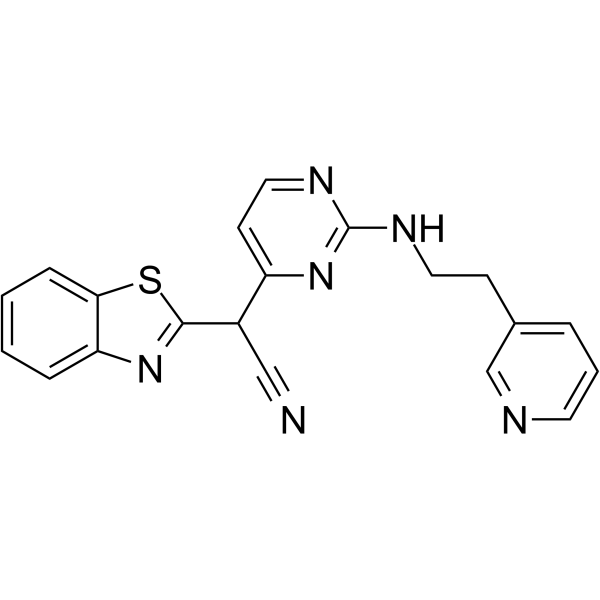
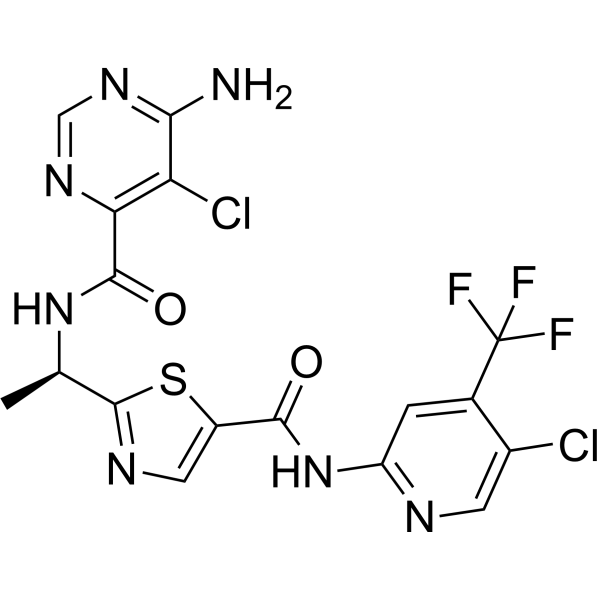
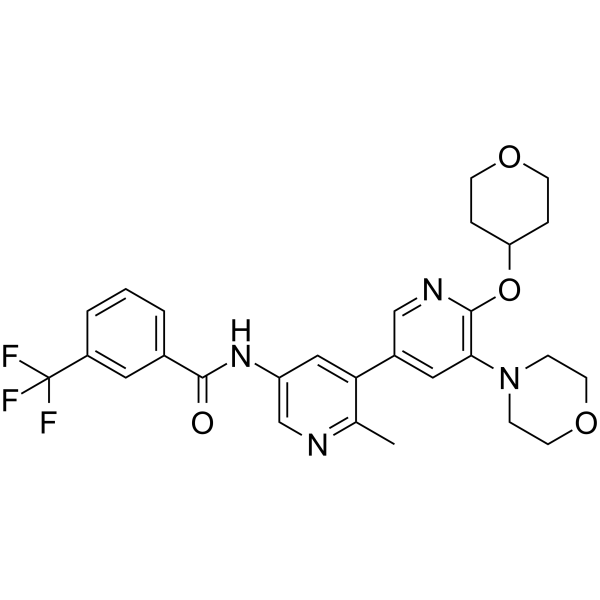
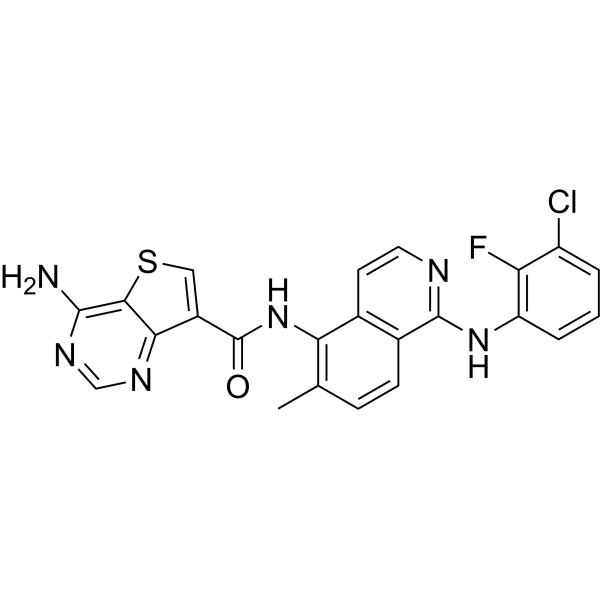
Search Result
Results for "
RAF Inhibitor
" in MedChemExpress (MCE) Product Catalog:
11
Isotope-Labeled Compounds
| Cat. No. |
Product Name |
Target |
Research Areas |
Chemical Structure |
-
- HY-14660
-
|
GSK2118436A; GSK2118436
|
Raf
|
Cancer
|
|
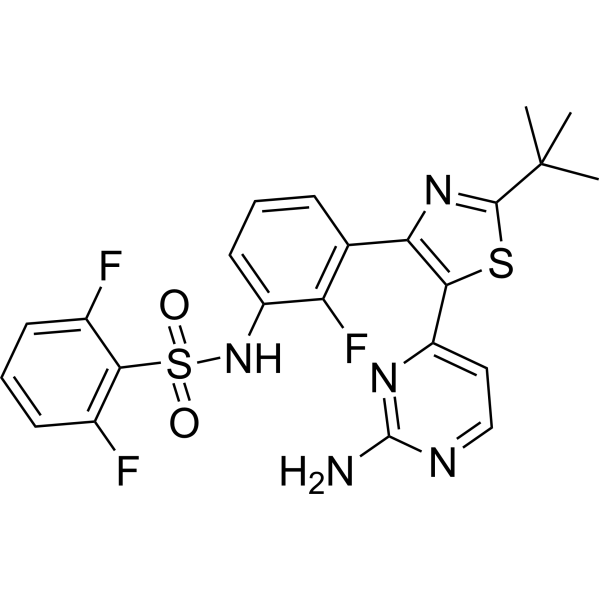
Dabrafenib (GSK2118436A) is an ATP-competitive inhibitor of Raf with IC50s of 5 nM and 0.6 nM for C-Raf and B-Raf V600E, respectively .
|
-
-
- HY-10331
-
|
BAY 73-4506
|
VEGFR
Autophagy
PDGFR
Raf
RET
c-Kit
FGFR
Tie
|
Cancer
|
|
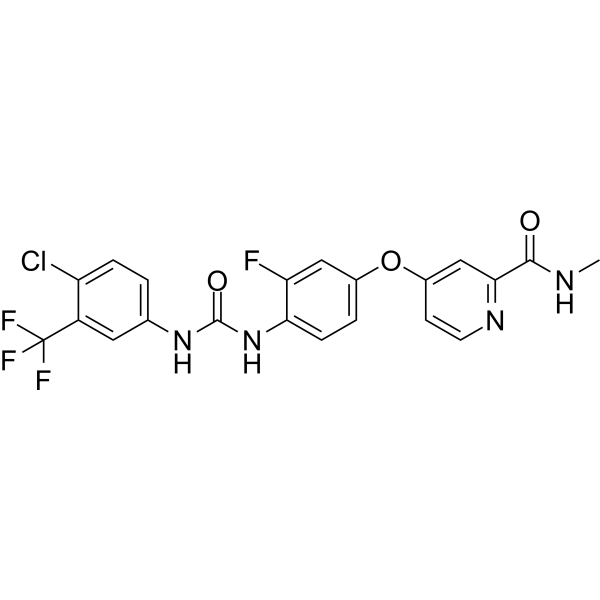
Regorafenib (BAY 73-4506) is an orally active and potent multi-targeted receptor tyrosine kinase inhibitor, with IC50 values of 13/4.2/46, 22, 7, 1.5 and 2.5 nM for VEGFR1/2/3, PDGFRβ, Kit, RET and Raf-1, respectively. Regorafenib shows very robust antitumor and antiangiogenic activity .
|
-
-
- HY-12057
-
|
PLX4032; RG7204; RO5185426
|
Raf
Autophagy
|
Cancer
|
|
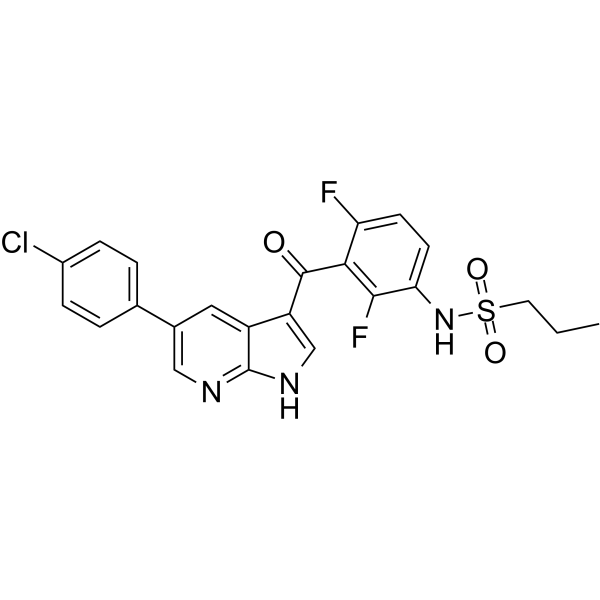
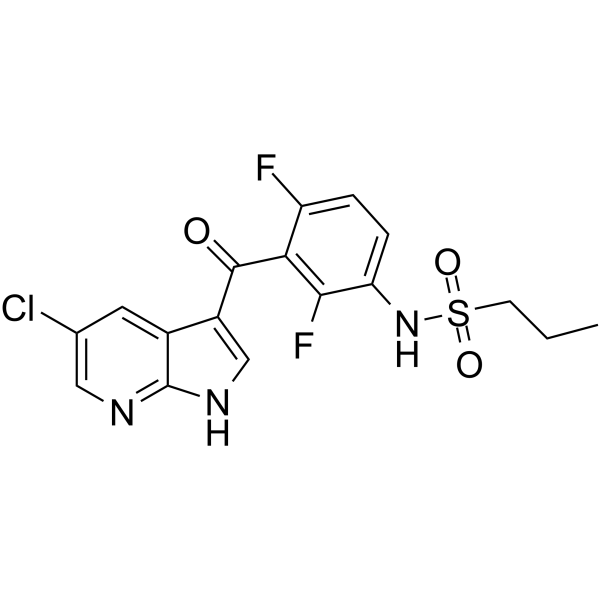
Vemurafenib (PLX4032) is a first-in-class, selective, potent inhibitor of B-RAF kinase, with IC50s of 31 and 48 nM for RAF V600E and c-RAF-1, respectively . Vemurafenib induces cell autophagy .
|
-
-
- HY-15246
-
|
TAK-580; MLN 2480; BIIB-024
|
Raf
|
Cancer
|
|
Tovorafenib (TAK-580, MLN 2480) is an orally active and selective inhibitor of pan-Raf kinase. Tovorafenib can be used for the study of glioma .
|
-
-
- HY-10966
-
|
|
Raf
Apoptosis
|
Neurological Disease
Metabolic Disease
Cancer
|
|
SB-590885 is a BRAF/c-Raf kinase inhibitor that selectively targets B-Raf, and it amplifies the ERK/MAPK signaling pathway in RAS-activated cells. SB-590885 effectively inhibits the malignant proliferation, transformation and tumorigenicity of oncogenic B-Raf cells; it also induces the proliferation of erythroid progenitor cells, delays their differentiation and promotes hemoglobin synthesis, thereby improving ineffective erythropoiesis and reducing apoptosis. SB-590885 exerts a synergistic effect with TGF-β inhibitors and glucocorticoids, significantly promoting the formation of erythroid colonies in cells from patients with Diamond-Blackfan anemia (DBA). SB-590885 is mainly used in relevant studies on DBA, cisplatin-induced myelosuppression-related anemia, and pan-cancers such as melanoma and colorectal cancer .
|
-
-
- HY-14660A
-
|
GSK2118436 Mesylate; GSK 2118436B
|
Raf
|
Cancer
|
|
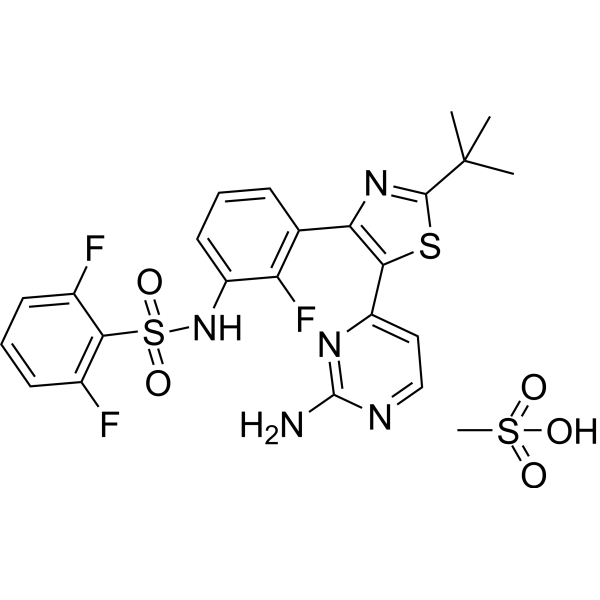
Dabrafenib Mesylate is a potent and selective Raf kinase inhibitor with IC50s of 0.6 and 5.0 nM for Raf V600E and c-Raf, respectively.
|
-
-
- HY-51424
-
|
|
Raf
|
Cancer
|
|
PLX-4720 is a potent and selective inhibitor of B-Raf V600E with IC50 of 13 nM in a cell-free assay, equally potent to c-Raf-1(Y340D and Y341D mutations), and 10-fold selectivity for B-Raf V600E than wild-type B-Raf.
|
-
-
- HY-158115
-
|
|
Molecular Glues
Raf
MEK
|
Cancer
|
|
NST-628 is a brain-permeable MAPK pathway molecule glue that inhibits RAF phosphorylation and MEK activation. NST-628 also binds RAF and prevents the formation of BRAF-CRAF and BRAF-ARAF heterodimers, effectively inhibiting the RAS-MAPK pathway. NST-628 inhibits RAS- and RAF-driven cancers and demonstrated potent inhibition in mutant KRAS, NRAS, BRAF class II/III, and NF1-mutant tumors .
|
-
-
- HY-132844
-
|
HL-085
|
MEK
|
Cancer
|
|
Tunlametinib is a highly selective, orally active MEK1/2 inhibitor (IC50=1.9 nM, MEK1). Tunlametinib blocks the RAS-RAF-MEK-ERK signaling pathway, arrests tumor cell cycle and promotes apoptosis. Tunlametinib potently inhibits the proliferation of RAS/RAF mutant cancer cells (such as BRAF V600E, KRAS G12C mutant cells). Tunlametinib shows synergistic anti-tumor effects with BRAF/KRASG12C/SHP2 inhibitors, Docetaxel (HY-B0011). Tunlametinib can be used to study targeted therapy for RAS/RAF mutation-driven malignancies (such as melanoma, colorectal cancer, and non-small cell lung cancer) .
|
-
-
- HY-109080
-
|
HM95573; GDC-5573; RG6185
|
Raf
|
Cancer
|
|
Belvarafenib (HM95573) is a potent and pan RAF (Rapidly Accelerated Fibrosarcoma) inhibitor, with IC50s of 56 nM, 7 nM and 5 nM for B-RAF, B-RAF v600E and C-RAF respectively .
|
-
-
- HY-147268
-
|
RAF/KIN_2787
|
Raf
p38 MAPK
|
Cancer
|
|
Exarafenib (RAF/KIN_2787) is an orally-available, selective pan-RAF inhibitor. Exarafenib is effective in RAF-dependent cancers, including all classes of BRAF alterations. Exarafenib suppresses MAPK signaling in RAF-dependent melanoma cell lines. Exarafenib has anticancer activity .
|
-
-
- HY-50864
-
|
|
Raf
|
Cancer
|
|
GDC-0879 is a potent and selective B-Raf inhibitor with an IC50 of 0.13 nM.
|
-
-
- HY-10248
-
-
-
- HY-101963
-
-
-
- HY-N6670
-
|
|
Antibiotic
Raf
ERK
Ras
MEK
Bacterial
|
Infection
|
|
Cefotetan is a binding agent that targets human Raf1 kinase inhibitor protein (hRKIP). Cefotetan binds to hRKIP, reduces the binding space between hRKIP and Raf1 kinase, relieves hRKIP's inhibition of the Ras/Raf1/MEK/ERK signaling pathway, and enhances ERK phosphorylation. Cefotetan can be used to study diseases associated with dysregulated Ras/Raf1/MEK/ERK signaling pathways. Cefotetan is also a broad-spectrum antibacterial agent that disrupts cell wall synthesis by binding to bacterial penicillin-binding proteins (PBPs). It is used to study bacterial infections such as bone, skin, urinary tract, and lower respiratory tract .
|
-
-
- HY-10331A
-
|
BAY 73-4506 monohydrate
|
VEGFR
Autophagy
PDGFR
Raf
RET
FGFR
c-Kit
Tie
|
Cancer
|
|
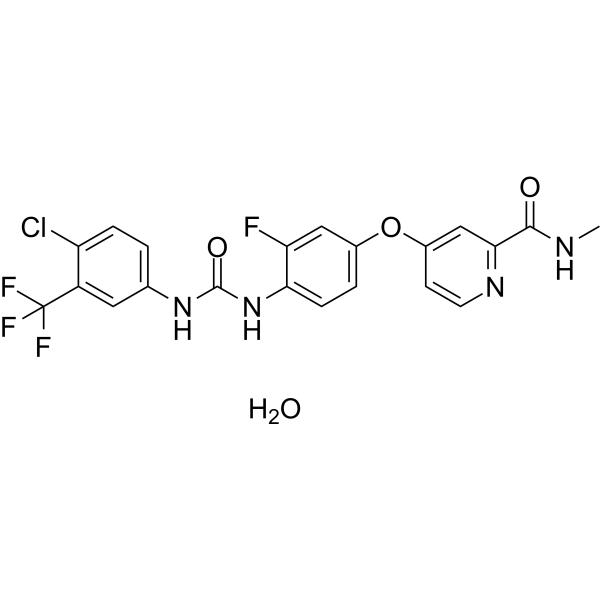
Regorafenib (BAY 73-4506) monohydrate is an orally active and potent multi-targeted receptor tyrosine kinase inhibitor, with IC50 values of 13/4.2/46, 22, 7, 1.5 and 2.5 nM for VEGFR1/2/3, PDGFRβ, Kit, RET and Raf-1, respectively. Regorafenib monohydrate shows very robust antitumor and antiangiogenic activity .
|
-
-
- HY-11004
-
|
|
Raf
Apoptosis
|
Cancer
|
|
AZ 628 is a pan-Raf kinase inhibitor with IC50s of 105, 34 and 29 nM for B-Raf, B-RafV600E, and c-Raf-1, respectively.
|
-
-
- HY-10201S
-
|
Donafenib; Bay 43-9006-d3
|
Raf
VEGFR
FLT3
Ferroptosis
Autophagy
Apoptosis
|
Cancer
|
|
Sorafenib-d3 (Donafenib), a deuterated compound of Sorafenib, is the first deuterium-generation tumor suppressor small molecule. Sorafenib is a multikinase inhibitor IC50s of 6 nM, 20 nM, and 22 nM for Raf-1, B-Raf, and VEGFR-3, respectively .
|
-
-
- HY-14177
-
|
|
Raf
|
Cancer
|
|
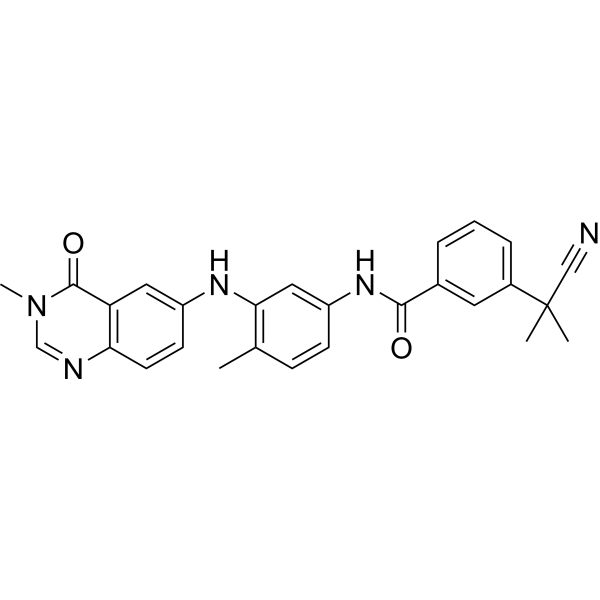
Raf inhibitor 1 is a potent Raf kinase inhibitor with Kis of 1 nM, 1 nM, and 0.3 nM for B-Raf WT, B-Raf V600E, and C-Raf, respectively.
|
-
-
- HY-100510
-
|
|
Raf
|
Cancer
|
|
RAF709 is a potent, selective, and efficacious RAF inhibitor with IC50s of 0.4 nM and 0.5 nM for BRAF and CRAF, respectively . Antitumor efficacy .
|
-
-
- HY-13308
-
|
BAY 73-4506 hydrochloride
|
VEGFR
Autophagy
PDGFR
Raf
RET
|
Cancer
|
|
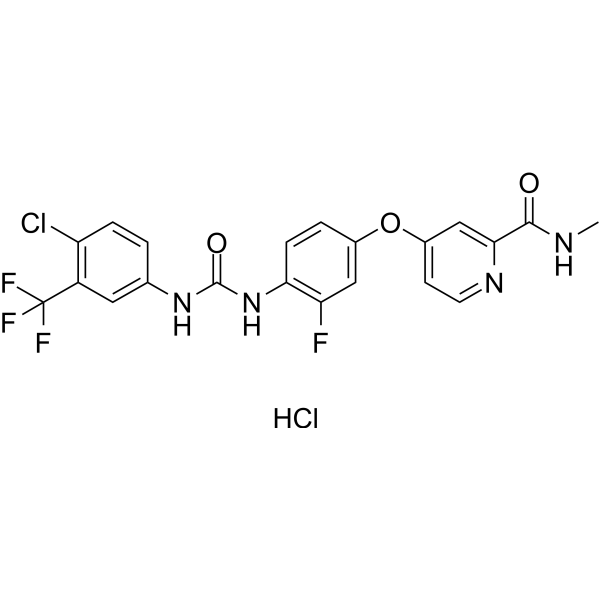
Regorafenib Hydrochloride (BAY 73-4506 hydrochloride) is a multi-target inhibitor for VEGFR1/2/3, PDGFRβ, Kit, RET and Raf-1 with IC50s of 13/4.2/46, 22, 7, 1.5 and 2.5 nM, respectively .
|
-
-
- HY-15716
-
|
|
Ras
Apoptosis
|
Cancer
|
|
Kobe0065 is a novel and effective inhibitor of Ras-Raf interaction, competitively inhibiting the binding of H-Ras·GTP to c-Raf-1 RBD with a Ki value of 46±13 μM.
|
-
-
- HY-12846
-
|
|
Raf
|
Cancer
|
|
CCT196969 is a pan-Raf inhibitor, which inhibits B-Raf, BRaf V600E and CRAF with IC50s of 0.1, 0.04, and 0.01 μM, respectively.
|
-
-
- HY-123673
-
MCP110
2 Publications Verification
|
Ras
Raf
|
Cancer
|
|
MCP110 is an inhibitor of Ras/Raf-1 interaction. MCP110 blocks the interaction of Ras with Raf. MCP110 disrupts this interaction might can be used for the research of human tumors .
|
-
-
- HY-12787
-
|
|
Raf
Autophagy
|
Cancer
|
|
L-779450 is a potent and selective B-Raf kinase inhibitor with a Kd of 2.4 nM.
|
-
-
- HY-10247
-
|
|
Raf
|
Cancer
|
|
BRAF inhibitor (Compound P-0850) is a B-Raf inhibitor with anti-tumor activity .
|
-
-
- HY-138294
-
|
|
Ras
Raf
|
Cancer
|
|
RAS/RAS-RAF-IN-1 is a potent RAS and RAS-RAF inhibitor. RAS/RAS-RAF-IN-1 has a KD of 5.0 μΜ-15 μΜ for cyclophilin A (CYPA) binding affinity. RAS/RAS-RAF-IN-1 has antitumor activity .
|
-
-
- HY-15717
-
|
|
Ras
|
Cancer
|
|
Kobe2602 is a Ras-Raf interaction inhibitor. Kobe2602 inhibits the binding of H-Ras·GTP to c-Raf-1 RBD with a Ki of 149 μM. Kobe2602 has antitumor activity .
|
-
-
- HY-10201S2
-
|
Bay 43-9006-13C,d3
|
Raf
VEGFR
FLT3
Autophagy
Apoptosis
Ferroptosis
|
Cancer
|
|
Sorafenib- 13C,d3 is the 13C- and deuterium labeled Sorafenib. Sorafenib (Bay 43-9006) is a potent and orally active Raf inhibitor with IC50s of 6 nM and 20 nM for Raf-1 and B-Raf, respectively. Sorafenib is a multikinase inhibitor with IC50s of 90 nM, 15 nM, 20 nM, 57 nM and 58 nM for VEGFR2, VEGFR3, PDGFRβ, FLT3 and c-Kit, respectively. Sorafenib induces autophagy and apoptosis. Sorafenib has anti-tumor activity. Sorafenib is a ferroptosis activator .
|
-
-
- HY-10201R
-
|
Bay 43-9006 (Standard)
|
Reference Standards
Raf
VEGFR
FLT3
Autophagy
Apoptosis
Ferroptosis
|
Cancer
|
|
Sorafenib (Standard) is the analytical standard of Sorafenib. This product is intended for research and analytical applications. Sorafenib (Bay 43-9006) is a potent and orally active Raf inhibitor with IC50s of 6 nM and 20 nM for Raf-1 and B-Raf, respectively. Sorafenib is a multikinase inhibitor with IC50s of 90 nM, 15 nM, 20 nM, 57 nM and 58 nM for VEGFR2, VEGFR3, PDGFRβ, FLT3 and c-Kit, respectively. Sorafenib induces autophagy and apoptosis. Sorafenib has anti-tumor activity. Sorafenib is a ferroptosis activator .
|
-
-
- HY-I0678
-
|
|
Drug Metabolite
PDGFR
|
Cancer
|
|
Regorafénib N-oxyde M2 is an active metabolite of Regorafenib. Regorafenib is a multi-target inhibitor for VEGFR1/2/3, PDGFRβ, Kit, RET and Raf-1 with IC50s of 13/4.2/46, 22, 7, 1.5 and 2.5 nM, respectively.
|
-
-
- HY-109574
-
|
|
Raf
|
Cancer
|
|
Raf inhibitor 2 is a potent raf kinase (IC50<1.0 μM) inhibitor, compound 32, extracted from patent EP1003721B1. Raf inhibitor 2 can be used for cancer research .
|
-
-
- HY-P10438
-
|
|
Raf
|
Cancer
|
|
TAT-Braftide is a peptide inhibitor designed to block the dimerization of BRAF, thereby inhibiting its kinase activity. The destruction of BRAF dimer by TAT-Braftide makes BRAF protein more susceptible to proteasome degradation, directly inhibits the activity of BRAF kinase, and reduces the activation of MAPK signaling pathway. Tat-braftide can be used for the role of RAF kinase in MAPK signaling pathway and for the study of BRAF mutant cancers .
|
-
-
- HY-77113
-
|
|
Raf
|
Cancer
|
|
B-Raf IN 11 is a B-Raf V600E mutant kinase inhibitor with an IC50 of 76 nM, and exhibits an IC50 of 238 nM against wild-type B-Raf kinase. B-Raf IN 11 inhibits the kinase activities of B-Raf V600E mutant and wild-type B-Raf kinase. B-Raf IN 11 is applicable to relevant research on colorectal cancer .
|
-
-
- HY-18227
-
|
|
Raf
|
Cancer
|
|
B-Raf IN 1 is a potent and selective B-Raf kinase inhibitor with an IC50 of 24 nM.
|
-
-
- HY-N13009
-
|
|
Raf
HIF/HIF Prolyl-Hydroxylase
ERK
MEK
Reactive Oxygen Species (ROS)
Apoptosis
Caspase
|
Cancer
|
|
MO-2097 is a RAF-1/HIF-1α inhibitor. MO-2097 induces RAF-1 destabilization, leading to a reduction in
EMT-associated transcription factors and mesenchymal markers. MO-2097 inhibits HIF-1a protein expression mediated by hnRNPA2B1 under hypoxic and mimetic hypoxia. MO-2097 induces mitochondrial ROS, which leads to apoptosis in cells. MO-2097 effectively suppresses colorectal cancer metastasis by inhibiting the RAF/MEK/ERK signaling pathway. MO-2097 attenuates tumor growth in a xenograft HCT116 cell mouse model. MO-2097 can be used for the study of colorectal cancer .
|
-
-
- HY-W013411A
-
|
UIC-1005
|
Raf
G Protein-coupled Receptor Kinase (GRK)
|
Cancer
|
|
Locostatin (UIC-1005) is a potent RKIP inhibitor. Locostatin binds Raf kinase inhibitor RKIP protein and disrupts the interaction of RKIP with Raf-1 kinase and G protein-coupled receptor kinase 2. Locostatin inhibits cell proliferation and migration. Locostatin can be used to synthesize chemical probes toward PEBP-proteins. Locostatin aggravates thioacetamide (HY-Y0698)-induced acute liver failure in mice .
|
-
-
- HY-14947
-
|
MKI 833
|
MEK
|
Cancer
|
|
Balamapimod (MKI 833) is a reversible Ras/Raf/MEK inhibitor with potential anti-tumor activity.
|
-
-
- HY-177511
-
|
|
Ras
p38 MAPK
Raf
MEK
ERK
|
Cancer
|
|
KRAS G12D-IN-30 (Compound 4) is a KRAS inhibitor. KRAS G12D-IN-30 inhibits the activation of the downstream MAPK signaling cascade (Raf1-MEK-ERK) by blocking the activity of the KRAS G12 mutant. KRAS G12D-IN-30 can be used for the research of cancer .
|
-
-
- HY-148059
-
|
B-RAF IN 10
|
Raf
|
Cancer
|
|
Uplarafenib (B-Raf IN 10) (Compound C09) is a BRAF inhibitor with an IC50 between 50 and 100 nM. Uplarafenib shows antitumor activity .
|
-
-
- HY-10201S1
-
|
Bay 43-9006-d4
|
Raf
VEGFR
FLT3
Ferroptosis
Autophagy
Apoptosis
|
Cancer
|
|
Sorafenib-d4 (Bay 43-9006-d4) is the deuterium labeled Sorafenib. Sorafenib is a multikinase inhibitor IC50s of 6 nM, 20 nM, and 22 nM for Raf-1, B-Raf, and VEGFR-3, respectively.
|
-
-
- HY-159534
-
|
FlezuRAFenib
|
Raf
|
Cancer
|
|
Flezurafenibum (Flezurafenib) is a rapidly accelerated fibrosarcoma (Raf) kinase inhibitor, with antineoplastic effect .
|
-
-
- HY-126298
-
|
|
Raf
|
Cancer
|
|
RAF mutant-IN-1 is a RAF kinase inhibitor, extracted from patent WO2019107987A1, with IC50 values of 21 nM, 30 nM and 392 nM for C-RAF 340D/Y341D, B-RAF V600E and B-RAF WT, respectively .
|
-
-
- HY-15198
-
|
|
Raf
PDGFR
FLT3
c-Kit
|
Cancer
|
|
KG5 is an orally active dual PDGFRβ and B-Raf allosteric inhibitor. KG5 also inhibits Flt3, KIT and c-Raf. KG5 has anticancer, antiangiogenic activities .
|
-
-
- HY-159508
-
|
|
Raf
|
Cancer
|
|
Brimarafenib is a rapidly accelerated fibrosarcoma (Raf) kinase inhibitor wtih antineoplastic effect .
|
-
-
- HY-14177A
-
|
|
Raf
|
Cancer
|
|
B-Raf inhibitor 1 dihydrochloride is a potent Raf kinase inhibitor with Kis of 1 nM, 1 nM, and 0.3 nM for B-Raf WT, B-Raf V600E, and C-Raf, respectively.
|
-
-
- HY-W013411
-
|
(E/Z)-UIC-1005
|
Raf
|
Cancer
|
|
(E/Z)-Locostatin ((E/Z)-UIC-1005) is a racemic of Locostatin. Locostatin (UIC-1005) is a potent RKIP inhibitor. Locostatin binds Raf kinase inhibitor RKIP protein and disrupts the interaction of RKIP with Raf-1 kinase and G protein-coupled receptor kinase 2. Locostatin inhibits cell proliferation and migration. Locostatin aggravates thioacetamide (HY-Y0698)-induced acute liver failure in mice .
|
-
-
- HY-14660S
-
|
GSK2118436A-d9; GSK2118436-d9
|
Isotope-Labeled Compounds
Raf
|
Cancer
|
|
Dabrafenib-d9 is the deuterium labeled Dabrafenib. Dabrafenib (GSK2118436A) is an ATP-competitive inhibitor of Raf with IC50s of 5 nM and 0.6 nM for C-Raf and B-RafV600E, respectively .
|
-
-
- HY-164492
-
|
|
Raf
|
Cancer
|
|
LSN3074753, an analog of LY3009120 (HY-12558), is a pan-RAF and Raf dimer inhibitor. LSN3074753 demonstrates activity against tumor cells with MAPK pathway activation driven by BRAF monomer or RAF dimers including BRAF- or KRAS-mutant colorectal cancer. LSN3074753 combined with Cetuximab (HY-P9905) shows additive and synergistic effects for colorectal cancer PDX models, particularly those with KRAS or BRAF mutation .
|
-
-
- HY-19343
-
|
BMS-908662
|
Raf
|
Cancer
|
|
XL-281 (BMS-908662) is an orally active inhibitor for RAF kinase, with IC50s of 2.6, 4.5 and 6 nM, for CRAF, B-RAF, and B-RAFV600E, respectively. XL-281 exhibits antitumor activity .
|
-
- HY-157740
-
|
|
HDAC
|
Cancer
|
|
XSJ-10 is a HDAC inhibitor containing a RAS/RAF protein interfering unit, with IC50s of 0.05 and 0.04 μM in PANC-1 cells and HT-29 cells. XSJ-10 can effectively induce the apoptosis of cancer cells and suppress the tumor by strongly inhibiting the RAS-RAF-MEK-ERK signaling pathway and the acetylation level of HDAC3 .
|
-
- HY-13308R
-
|
BAY 73-4506 hydrochloride (Standard)
|
VEGFR
Autophagy
PDGFR
Raf
RET
Reference Standards
|
Cancer
|
|
Regorafenib (Hydrochloride) (Standard) is the analytical standard of Regorafenib (Hydrochloride). This product is intended for research and analytical applications. Regorafenib Hydrochloride (BAY 73-4506 hydrochloride) is a multi-target inhibitor for VEGFR1/2/3, PDGFRβ, Kit, RET and Raf-1 with IC50s of 13/4.2/46, 22, 7, 1.5 and 2.5 nM, respectively .
|
-
- HY-18652A
-
|
Ro 5126766 potassium; CH5126766 potassium
|
Raf
MEK
|
Cancer
|
|
Avutometinib (CH5126766) (potassium) is a RAF/MEK clamp that potently inhibits RAF/MEK kinase activity and induces dominant negative RAF-MEK complexes preventing phosphorylation of MEK by ARAF, BRAF and CRAF. Avutometinib (potassium) shows anti-proliferative potency across tumor cell lines carrying KRAS mutations including PDAC cell lines. Avutometinib (potassium) induces tumor inhibition and increases survival in a KRAS/p53 pancreatic cancer mouse model. Avutometinib (potassium) is promising for research of low-grade-serous-ovarian-carcinoma (LGSOC), ovarian cancer and pancreatic ductal adenocarcinoma (PDAC) .
|
-
- HY-P10051
-
|
|
Ras
Raf
|
Cancer
|
|
Cyclorasin 9A5 is an 11-residue cell-permeable cyclic peptide that orthosterically inhibits the Ras-Raf protein interaction with an IC50 of 120 nM .
|
-
- HY-10331B
-
|
BAY 73-4506 mesylate
|
VEGFR
PDGFR
RET
Raf
c-Kit
FGFR
Autophagy
Tie
|
Cancer
|
|
Regorafenib (BAY 73-4506) mesylate is an orally active and potent multi-targeted receptor tyrosine kinase inhibitor, with IC50 values of 13/4.2/46, 22, 7, 1.5 and 2.5 nM for VEGFR1/2/3, PDGFRβ, Kit, RET and Raf-1, respectively. Regorafenib mesylate shows very robust antitumor and antiangiogenic activity .
|
-
- HY-156554
-
|
|
Raf
|
Cancer
|
|
Raf inhibitor 3 (Example 30) is a Raf inhibitor. Raf inhibitor 3 inhibits B-Raf and C-Raf with IC50 values less than 15 nM. Raf inhibitor 3 can be used for research of cancers .
|
-
- HY-142452
-
|
|
Raf
|
Cancer
|
|
Pan-RAF kinase inhibitor 1 is a potent inhibitor of Pan-RAF kinase. Pan-RAF kinase inhibitor 1 regulates MAPK signaling by inhibiting RAF kinase, thereby exerting an effect on the proliferation of RAS-mutant tumor cells. Pan-RAF kinase inhibitor 1 has the potential for the research of cancer diseases (extracted from patent WO2021110141A1, compound 16B) .
|
-
- HY-169869
-
|
|
Raf
|
Cancer
|
|
Pan-Raf/RTK inhibitor 1 (compound I-16) is a potent pan-Raf inhibitor with IC50 values of 3.49 nM (BRaf V600E), 8.86 nM (ARaf), 5.78 nM (BRaf WT), and 1.65 nM (CRaf). Pan-Raf/RTK inhibitor 1 exhibits antiproliferative activities against various cancer cell lines and can be utilized in cancer research .
|
-
- HY-157750
-
|
|
MEK
Raf
|
Cancer
|
|
MEK1/C-Raf-IN-1 (Compound 14d) is a MEK1/C-Raf inhibitor with IC50 values of 97 and 23 nM, respectively. MEK1/C-Raf-IN-1 has antitumor activity .
|
-
- HY-108887
-
|
|
Raf
|
Cancer
|
|
Anticancer agent 124 is an orally active, highly selective and potent pan RAF inhibitor. Anticancer agent 124 inhibits MAPK signalling in BRAF V600E, NRAS and KRAS mutant tumor cells .
|
-
- HY-173393
-
|
|
LXR
|
Cancer
|
|
LXRα agonist 1 (Compound 40) is a selective LXRα agonist (EC50: 42 nM). LXRα agonist 1 also has a certain agonistic effect on LXRβ (EC50: 266 nM). LXRα agonist 1 promotes target gene transcription by stabilizing the ligand binding domain (LBD) of LXRα. LXRα agonist 1 exhibits potent antitumor effects in hepatocellular carcinoma cells when combined with the Raf inhibitor Sorafenib (HY-10201). LXRα agonist 1 can be used in the study of lipotoxic cancers .
|
-
- HY-120676
-
|
|
Raf
|
Cancer
|
|
B-Raf IN 18 (compound 26) is a B-Raf inhibitor, with IC50 of 3.8 nM. B-Raf IN 18 can be used in anti-cancer related research .
|
-
- HY-146303
-
|
|
Raf
|
Cancer
|
|
C-RAF kinase-IN-1 (compound 1l) is a potent inhibitor of C-RAF kinase with an IC50 of 0.193 μM. C-RAF kinase-IN-1 is a quinoline derivative. C-RAF kinase-IN-1 has the potential for the research of cancer diseases .
|
-
- HY-142820
-
|
|
Raf
|
Cancer
|
|
B-Raf IN 5 (compound 3b) is a potent inhibitor of protein kinase B-Raf with an IC50 of 2.0 nM. B-Raf IN 5 is devoid of binding to the secondary target PXR and resists rapid metabolism. B-Raf IN 6 has the potential for the research of cancer disease .
|
-
- HY-142830
-
|
|
Raf
|
Cancer
|
|
B-Raf IN 6 (compound 2c) is a potent inhibitor of protein kinase B-Raf with an IC50 of 1.7 nM. B-Raf IN 6 is devoid of binding to the secondary target PXR and resists rapid metabolism. B-Raf IN 6 has the potential for the research of cancer disease .
|
-
- HY-153603
-
|
|
Raf
|
Cancer
|
|
B-Raf IN 15 (Compound 7) is a BRAF inhibitor. B-Raf IN 15 inhibits BRAF WT and BRAF V600E with IC50s of 2.0 and 0.8 μM. B-Raf IN 15 can be used for the research of cancer .
|
-
- HY-109080A
-
|
HM95573 TFA; GDC-5573 TFA; RG6185 TFA
|
Raf
|
Cancer
|
|
Belvarafenib TFA (HM95573 TFA) is a potent and pan RAF (Rapidly Accelerated Fibrosarcoma) inhibitor, with IC50s of 56 nM, 7 nM and 5 nM for B-RAF, B-RAFv 600E and C-RAF respectively .
|
-
- HY-164484
-
|
|
Raf
|
Cancer
|
|
IHMT-RAF-128, a highly potent pan-RAF inhibitor. IHMT-RAF-128 shows potent antitumor efficacy in xenograft mouse tumor models without causing any apparent toxicities .
|
-
- HY-N15264
-
|
(-)-Azaspirene
|
VEGFR
Raf
|
Cancer
|
|
Azaspirene ((-)-Azaspirene) is an angiogenesis and Raf-1 activation inhibitor isolated from the fungus Neosartorya sp. Azaspirene inhibits vascular endothelial growth factor (VEGF)-induced human umbilical vein endothelial cell (HUVEC) migration and Raf-1 activation, but has no effect on the activation of kinase insert domain-containing receptor/fetal liver kinase 1 (VEGF receptor 2) .
|
-
- HY-156590
-
|
|
Raf
|
Cancer
|
|
B-Raf IN 16 (Compound I) is a BRAF inhibitors that belongs a cyclic iminopyrimidine derivative. B-Raf IN 16 can be used for cancer research .
|
-
- HY-14660R
-
|
GSK2118436A (Standard); GSK2118436 (Standard)
|
Reference Standards
Raf
|
Cancer
|
|
Dabrafenib (Standard) is the analytical standard of Dabrafenib. This product is intended for research and analytical applications. Dabrafenib (GSK2118436A) is an ATP-competitive inhibitor of Raf with IC50s of 5 nM and 0.6 nM for C-Raf and B-Raf V600E, respectively .
|
-
- HY-147854
-
|
|
Raf
Apoptosis
|
Cancer
|
|
B-Raf IN 9 (compound 8b) is a potent B-Raf inhibitor, with an IC50 of 24.79 nM. B-Raf IN 9 induces apoptosis and shows cell cycle arrest at G2/M phase. B-Raf IN 9 exhibits potent antitumor activity against human prostate cancer PC-3 cell line, with an IC50 of 7.83 µM .
|
-
- HY-14979A
-
|
|
Raf
Bcr-Abl
Discoidin Domain Receptor
VEGFR
RET
Ephrin Receptor
|
Cancer
|
|
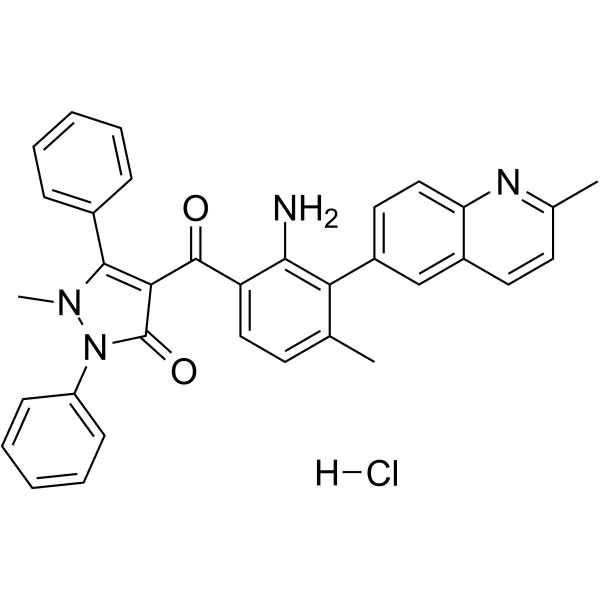
ML786 dihydrochloride is a potent and orally bioavailable Raf inhibitor, with IC50s of 2.1, 4.2, and 2.5 nM for V600EΔB-Raf, wt B-Raf, and C-Raf, respectively. ML786 dihydrochloride also inhibits Abl-1, DDR2, EPHA2, KDR, and RET (IC50=<0.5, 7.0, 11, 6.2, 0.8 nM). ML786 dihydrochloride can be used for the research of cancers .
|
-
- HY-14979
-
|
|
Raf
Bcr-Abl
Discoidin Domain Receptor
VEGFR
RET
Ephrin Receptor
|
Cancer
|
|
ML786 is a potent and orally bioavailable Raf inhibitor, with IC50s of 2.1, 4.2, and 2.5 nM for V600EΔB-Raf, wt B-Raf, and C-Raf, respectively. ML786 also inhibits Abl-1, DDR2, EPHA2, KDR, and RET (IC50=<0.5, 7.0, 11, 6.2, 0.8 nM). ML786 can be used for the research of cancers .
|
-
- HY-141868
-
|
|
Raf
|
Others
|
|
SB-682330A is a Raf kinase inhibitor.
|
-
- HY-10201AR
-
|
Bay 43-9006 tosylate (Standard)
|
Reference Standards
Raf
VEGFR
FLT3
Autophagy
Ferroptosis
Apoptosis
|
Cancer
|
|
Sorafenib tosylate (Standard) is the analytical standard of Sorafenib tosylate. This product is intended for research and analytical applications. Sorafenib tosylate (Bay 43-9006 tosylate) is a potent and orally active Raf inhibitor with IC50s of 6 nM and 20 nM for Raf-1 and B-Raf, respectively. Sorafenib tosylate is a multikinase inhibitor with IC50s of 90 nM, 15 nM, 20 nM, 57 nM and 58 nM for VEGFR2, VEGFR3, PDGFRβ, FLT3 and c-Kit, respectively. Sorafenib tosylate induces autophagy and apoptosis. Sorafenib Tosylate has anti-tumor activity. Sorafenib tosylate is a ferroptosis activator .
|
-
- HY-155942
-
|
|
p38 MAPK
Raf
|
Cancer
|
|
B-Raf IN 19 (compound 31) is a BRAF inhibitor that inhibits BRAF(WT) and BRAF(V600E) (IC50: 0.57 μM and 0.28 μM, respectively). B-Raf IN 19 inhibits MAPK signaling in melanoma cells .
|
-
- HY-150250
-
|
|
Raf
|
Cancer
|
|
B-Raf IN 13 is a BRAF inhibitor with an IC50 of 3.55 nM in BRAF V600E enzyme assay. B-Raf IN 13 has anticaner effects (WO2020261156A1, Example 74) .
|
-
- HY-12057R
-
|
PLX4032 (Standard); RG7204 (Standard); RO5185426 (Standard)
|
Reference Standards
Raf
Autophagy
|
Cancer
|
|
Vemurafenib (Standard) is the analytical standard of Vemurafenib. This product is intended for research and analytical applications. Vemurafenib (PLX4032) is a first-in-class, selective, potent inhibitor of B-RAF kinase, with IC50s of 31 and 48 nM for RAF V600E and c-RAF-1, respectively . Vemurafenib induces cell autophagy .
|
-
- HY-14660AR
-
|
GSK2118436 Mesylate (Standard); GSK 2118436B (Standard)
|
Raf
Reference Standards
|
Cancer
|
|
Dabrafenib (Mesylate) (Standard) is the analytical standard of Dabrafenib (Mesylate). This product is intended for research and analytical applications. Dabrafenib Mesylate is a potent and selective Raf kinase inhibitor with IC50s of 0.6 and 5.0 nM for RafV600E and c-Raf, respectively.
|
-
- HY-10201S4
-
|
Donafenib tosylate; Bay 43-9006-d3 tosylate
|
Isotope-Labeled Compounds
Raf
VEGFR
FLT3
Autophagy
Apoptosis
Ferroptosis
|
Cancer
|
|
Sorafenib-d3 (Donafenib-d3) tosylate is the deuterium labeled Sorafenib (HY-10201). Sorafenib is a potent and orally active Raf inhibitor with IC50s of 6 nM and 20 nM for Raf-1 and B-Raf, respectively. Sorafenib-d3tosylate is a multikinase inhibitor with IC50s of 90 nM, 15 nM, 20 nM, 57 nM and 58 nM for VEGFR2, VEGFR3, PDGFRβ, FLT3 and c-Kit, respectively. Sorafenib-d3tosylate induces autophagy and apoptosis. Sorafenib-d3tosylate has anti-tumor activity. Sorafenib is a ferroptosis activator .
|
-
- HY-158027
-
|
|
Raf
VEGFR
FGFR
|
Cancer
|
B-Raf IN 17 (Compound 8e) is a potent and orally active type II multi-kinase inhibitor. B-Raf IN 17 exhibits potent cellular-level suppression of BRAFWT, VEGFR-2, and FGFR-1 in A375 cell line, with IC50 values of 0.02, 0.18 and 1.65 μM, respectively. B-Raf IN 17 can be used for the research of cancer .
|
-
- HY-147853
-
|
|
Raf
|
Cancer
|
|
B-Raf IN 8 (compound 7g) is a potent B-Raf inhibitor, with an IC50 of 70.65 nM. B-Raf IN 8 exhibits antitumor activity against hepatocellular carcinoma (HEPG-2), colon carcinoma (HCT-116), mammary gland (MCF-7) and human prostate cancer (PC-3) cells, with IC50 values of 9.78, 13.78, 18.52 and 29.85 µM .
|
-
- HY-162873
-
|
|
MEK
Raf
|
Cancer
|
|
MEK/RAF-IN-1 (Compound 16b) is an inhibitor of both MEK and RAF. It shows potent inhibition with IC50 values of 28 nM for MEK1, and 3 nM each for BRAF and BRAFV600E. MEK/RAF-IN-1 demonstrates significant antitumor activity, effectively inhibiting cell proliferation in vitro against MIA PaCa-2 (G12C KRAS), HCT116 (G13D KRAS), and C26 (G12D KRAS) cells. Additionally, it inhibits tumor growth in xenograft mouse models of colorectal cancer .
|
-
- HY-147852
-
|
|
Raf
|
Cancer
|
|
B-Raf IN 7 (compound 6a) is a potent B-Raf inhibitor, with an IC50 of 110.23 nM. B-Raf IN 7 exhibits antitumor activity against colon carcinoma (HCT-116), mammary gland (MCF-7), hepatocellular carcinoma (HEPG-2), human cervical carcinoma (Hela) and human prostate cancer (PC-3) cells, with IC50 values of 7.50, 9.87, 10.57, 11.63 and 12.83 µM .
|
-
- HY-16063
-
|
|
Raf
|
Cancer
|
|
ARQ-736 is a potent and selective B-RAF inhibitor that plays an important role in cancer study .
|
-
- HY-12057S
-
|
|
Isotope-Labeled Compounds
Raf
Autophagy
|
Cancer
|
|
Vemurafenib-d5 is the deuterium labeled Vemurafenib. Vemurafenib (PLX4032) is a first-in-class, selective, potent inhibitor of B-RAF kinase, with IC50s of 31 and 48 nM for RAFV600E and c-RAF-1, respectively . Vemurafenib induces cell autophagy .
|
-
- HY-12057S1
-
|
PLX4032-d7; RG7204-d7; RO5185426-d7
|
Isotope-Labeled Compounds
Raf
Autophagy
|
Cancer
|
|
Vemurafenib-d7 is deuterium labeled Vemurafenib. Vemurafenib (PLX4032) is a first-in-class, selective, potent inhibitor of B-RAF kinase, with IC50s of 31 and 48 nM for RAFV600E and c-RAF-1, respectively . Vemurafenib induces cell autophagy .
|
-
- HY-18817
-
|
|
Bcr-Abl
FGFR
Raf
RET
VEGFR
|
Cancer
|
|
AFG210 is a potent multi-target kinase inhibitor that primarily inhibits Abl kinase (IC50=330 nM), and also has inhibitory effects on other kinases such as B-Raf, C-Raf, FGFR-1, RET and VEGF receptors. AFG210 can be used to study chronic myeloid leukemia and other diseases with abnormal activation of Abl kinase .
|
-
- HY-103086
-
|
|
Raf
Autophagy
Apoptosis
|
Cancer
|
|
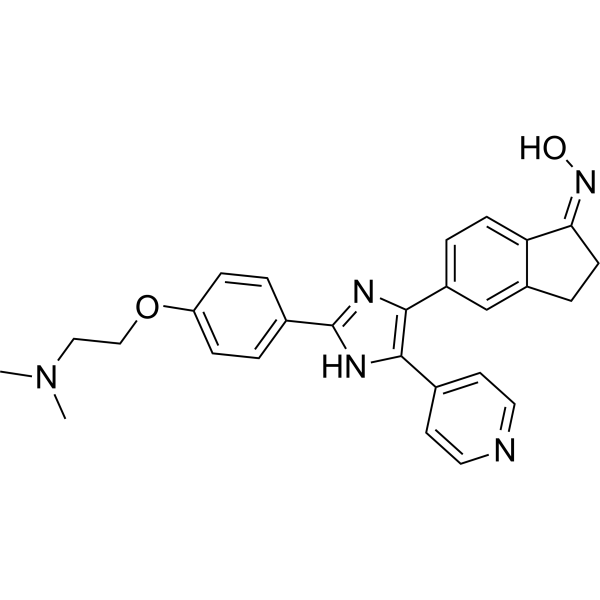
INU-152 is a potent and selective B-Raf inhibitor. INU-152 reduces tumor cell proliferation, enhances autophagy, and induces apoptosis by inhibiting B-Raf activity. INU-152 exhibits significant cytotoxicity against cancer cells transformed with v-Ha-ras (Ras-NIH 3T3). INU-152 can be utilized in cancer research .
|
-
- HY-117707
-
|
|
Raf
|
Cancer
|
|
EBI-907 is an orally active and highly potent B-Raf V600E inhibitor. EBI-907 demonstrates excellent A375 and Colo-205 cellular antiproliferative activity with IC50 values of 13 nM and 14 nM, respectively. EBI-907 can also cause tumor regression in a B-Raf V600E-dependent Colo-205 tumor xenograft model of mice. EBI-907 is promising for research of melanoma and B-Raf V600E associated cancers .
|
-
- HY-18957A
-
|
rel-BGB-283
|
Raf
EGFR
|
Cancer
|
|
rel-Lifirafenib (rel-BGB-283) is the relative configuration of Lifirafenib (HY-18957). Lifirafenib is a potent Raf Kinase and EGFR inhibitor .
|
-
- HY-153914
-
|
|
Raf
|
Cancer
|
|
B-Raf IN 14 (Comp 25) is a BRAF inhibitor with IC50 value of 11.08 μM, which can be used in cancer-related research .
|
-
- HY-164530
-
|
|
Src
VEGFR
Raf
p38 MAPK
|
Cancer
|
|
SKLB646 is an orally active multi-target kinase inhibitor. SKLB646 shows significant inhibitory effects on SRC and VEGFR2 with IC50 values ??of 0.002 μmol/L and 0.012 μmol/L, respectively. SKLB646 also shows significant inhibitory effects on B-Raf and C-Raf with IC50 values ??of 0.022 μmol/L and 0.019 μmol/L, respectively. SKLB646 inhibits the activation of the SRC signaling pathway and blocks the MAPK signaling pathway by inhibiting Raf kinase. In addition, SKLB646 can inhibit the proliferation, migration and invasion of human umbilical vein endothelial cells (HUVEC) to inhibit tumor-induced angiopoietic formation. SKLB646 shows significant anti-proliferative and anti-survival activities against triple-negative breast cancer (TNBC) cell lines .
|
-
- HY-P10051A
-
|
|
Ras
Raf
|
Cancer
|
|
Cyclorasin 9A5 TFA is an 11-residue cell-permeable cyclic peptide that orthosterically inhibits the Ras-Raf protein interaction with an IC50 of 120 nM .
|
-
- HY-177279
-
|
|
Raf
|
Inflammation/Immunology
Cancer
|
|
RAF-IN-2 is a RAF inhibitor. RAF-IN-2 can be used for proliferative diseases such as leukemia, psoriasis and fibrosis research .
|
-
- HY-177946
-
|
|
Raf
|
Cancer
|
|
RAF-IN-4 (Compound 120) is a Raf Kinase inhibitor. RAF-IN-4 shows IC50 values of 134.3, 118.6 and 276.7 nM for B-Raf, B-Raf (V600E) and C-Raf. RAF-IN-4 can inhibit the proliferation of cancer cells by blocking the Raf signaling pathway. RAF-IN-4 can be used for research of cancer, such as lung cancer and breast cancer .
|
-
- HY-10248R
-
|
CHIR-265 (Standard)
|
Reference Standards
Raf
VEGFR
Autophagy
Apoptosis
|
Cancer
|
|
RAF265 (Standard) is the analytical standard of RAF265 (HY-10248). This product is intended for research and analytical applications. RAF265 is a potent and orally active RAF/VEGFR2 inhibitor.
|
-
- HY-180161
-
|
|
Raf
|
Cancer
|
|
B-Raf-IN-20 (Compound Z-001) is a B-RAF inhibitor with an IC50 value of 37.80 nM. B-Raf-IN-20 binds to DFG-out/C-helix-in conformation in the B-RAF kinase. B-Raf-IN-20 has anti-cancer activity against non-small cell lung cancer .
|
-
- HY-100510R
-
|
|
Raf
Reference Standards
|
Cancer
|
|
RAF709 (Standard) is the analytical standard of RAF709 (HY-100510). This product is intended for research and analytical applications. RAF709 is a potent, selective, and efficacious RAF inhibitor with IC50s of 0.4 nM and 0.5 nM for BRAF and CRAF, respectively . Antitumor efficacy .
|
-
- HY-13343
-
|
|
Raf
Apoptosis
|
Cancer
|
|
ZM 336372 is a potent inhibitor of the protein kinase c-Raf. The IC50 value is 0.07 μM in the standard assay, which contains 0.1 mM ATP.
|
-
- HY-13810
-
|
|
Raf
|
Cancer
|
|
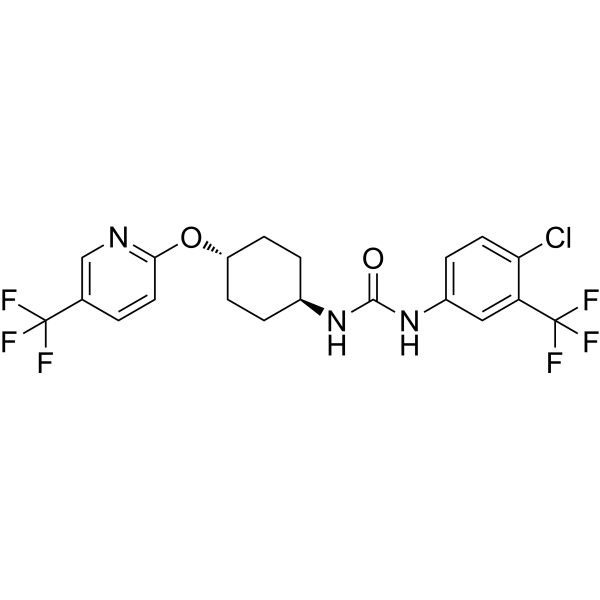
PF-04880594 is a potent and selective RAF inhibitor. PF-04880594 inhibits both wild-type and mutant BRAF and CRAF. PF-04880594 shows antitumor activity .
|
-
- HY-10331S1
-
|
BAY 73-4506-13C,d3
|
VEGFR
Autophagy
PDGFR
Raf
RET
|
Cancer
|
|
Regorafenib- 13C,d3 is the 13C- and deuterium labeled Regorafenib. Regorafenib (BAY 73-4506) is a multi-targeted receptor tyrosine kinase inhibitor with IC50s of 13/4.2/46, 22, 7, 1.5 and 2.5 nM for VEGFR1/2/3, PDGFRβ, Kit, RET and Raf-1, respectively.
|
-
- HY-155736
-
|
|
p38 MAPK
EGFR
Raf
CDK
c-Met/HGFR
|
Cancer
|
|
MAPK-IN-2 (compound 3h) is a potent MAPK inhibitor with antineoplastic activity. MAPK-IN-2 inhibits cancer cell proliferation among serval cancer cell lines, and suppresses MAPK pathway with potant efficacy (EGFR WT IC50=281 nM, c-MET IC50=205 nM, B-RAF WT IC50=112 nM, and CDK4/6 IC50=95 and 184 nM, respectively). MAPK-IN-2 even shows a remarkable potency against mutated EGFR and B-RAF (EGFR T790M IC50=69 nM and B-RAF V600E IC50=83 nM) .
|
-
- HY-18957
-
|
BGB-283
|
EGFR
Raf
|
Cancer
|
|
Lifirafenib (BGB-283) is a novel and potent Raf Kinase and EGFR inhibitor with IC50 values of 23 and 29 nM for recombinant BRaf V600E and EGFR, respectively.
|
-
- HY-18652
-
|
Ro 5126766; CH5126766
|
MEK
Raf
|
Cancer
|
|
Avutometinib (Ro 5126766) is a first-in-class dual MEK/RAF inhibitor that allosterically inhibits BRAF V600E, CRAF, MEK, and BRAF (IC50: 8.2, 56, 160 nM, and 190 nM, respectively).
|
-
- HY-144271
-
|
|
Raf
|
Cancer
|
|
RAF-IN-1 is a potent b/cRAF inhibitor with an IC50s of 3.8 nM, 36 nM, 29.4 nM for cRAF, bRAF wt, and bRAF V600E. RAF-IN-1 shows cell growth inhibition with GI50s of 3.4 and 2.9 nM for H358 and A375 cell line bearing bRAF V600E mutation, respectively .
|
-
- HY-10247R
-
|
|
Reference Standards
Raf
|
Cancer
|
|
BRAF inhibitor (Standard) is the analytical standard of BRAF inhibitor (HY-10247). This product is intended for research and analytical applications. BRAF inhibitor (Compound P-0850) is a B-Raf inhibitor with anti-tumor activity .
|
-
- HY-15767
-
TAK-632
4 Publications Verification
|
Raf
Aurora Kinase
|
Cancer
|
|
TAK-632 is a potent pan-RAF inhibitor with IC50 of 1.4, 2.4 and 8.3 nM for CRAF, BRAF V600E, BRAF WT, respectively.
|
-
- HY-117737A
-
|
|
Raf
Apoptosis
|
Cancer
|
|
RRD-251 is an inhibitor of retinoblastoma tumor suppressor protein (Rb)-Raf-1 interaction, with potent anti-proliferative, anti-angiogenic and anti-tumor activities .
|
-
- HY-18957B
-
|
BGB-283 maleate
|
EGFR
Raf
|
Others
Cancer
|
|
Lifirafenib (BGB-283) maleate is a novel and potent Raf Kinase and EGFR inhibitor with IC50 values of 23 and 29 nM for recombinant BRaf V600E and EGFR, respectively .
|
-
- HY-107415
-
|
|
Raf
|
Cancer
|
|
PLX7922, a RAF inhibitor, can bind with BRAF V600E. PLX7922 inhibits pERK in BRAF V600E cell lines, and activates pERK in mutant NRAS cell lines .
|
-
- HY-12558
-
|
DP-4978
|
Raf
Autophagy
|
Cancer
|
|
LY3009120 (DP-4978) is a pan RAF inhibitor which inhibits BRAF V600E, BRAF WT and CRAF WT with IC50s of 5.8, 9.1 and 15 nM, respectively.
|
-
- HY-132966
-
ASP2453
1 Publications Verification
|
Ras
ERK
|
Cancer
|
|
ASP2453 is a potent, selective and orally active KRAS G12C inhibitor. ASP2453 inhibits the Son of Sevenless (SOS)-mediated interaction between KRAS G12C and Raf with an IC50 value of 40 nM.
|
-
- HY-136567
-
|
|
Raf
|
Cancer
|
|
TBAP-001 (Synthesis 13), extracted from patent WO2015075483A1, is a pan-RAF kinase inhibitor, with an IC50 of 62 nM in BRAF V600E kinase assay .
|
-
- HY-I0678S
-
|
|
PDGFR
Drug Metabolite
|
Cancer
|
|
Regorafénib N-oxyde-d3(M2) is the deuterium labeled Regorafénib N-oxyde M2 . Regorafénib N-oxyde M2 is an active metabolite of Regorafenib. Regorafenib is a multi-target inhibitor for VEGFR1/2/3, PDGFRβ, Kit, RET and Raf-1 with IC50s of 13/4.2/46, 22, 7, 1.5 and 2.5 nM, respectively .
|
-
- HY-10331AR
-
|
BAY 73-4506 monohydrate (Standard)
|
Reference Standards
VEGFR
Autophagy
PDGFR
Raf
RET
FGFR
c-Kit
Tie
|
Cancer
|
|
Regorafenib (monohydrate) (Standard) is the analytical standard of Regorafenib (monohydrate). This product is intended for research and analytical applications. Regorafenib (BAY 73-4506) monohydrate is an orally active and potent multi-targeted receptor tyrosine kinase inhibitor, with IC50 values of 13/4.2/46, 22, 7, 1.5 and 2.5 nM for VEGFR1/2/3, PDGFRβ, Kit, RET and Raf-1, respectively. Regorafenib monohydrate shows very robust antitumor and antiangiogenic activity .
|
-
- HY-10331R
-
|
BAY 73-4506 (Standard)
|
Reference Standards
VEGFR
Autophagy
PDGFR
Raf
RET
c-Kit
FGFR
Tie
|
Cancer
|
|
Regorafenib (Standard) is the analytical standard of Regorafenib. This product is intended for research and analytical applications. Regorafenib (BAY 73-4506) is an orally active and potent multi-targeted receptor tyrosine kinase inhibitor, with IC50 values of 13/4.2/46, 22, 7, 1.5 and 2.5 nM for VEGFR1/2/3, PDGFRβ, Kit, RET and Raf-1, respectively. Regorafenib shows very robust antitumor and antiangiogenic activity .
|
-
- HY-I0678S1
-
|
|
Drug Metabolite
|
Cancer
|
|
Regorafénib N-oxyde (M2)- 13C,d3 is the 13C- and deuterium labeled Regorafénib N-oxyde (M2). Regorafénib N-oxyde M2 is an active metabolite of Regorafenib. Regorafenib is a multi-target inhibitor for VEGFR1/2/3, PDGFRβ, Kit, RET and Raf-1 with IC50s of 13/4.2/46, 22, 7, 1.5 and 2.5 nM, respectively.
|
-
- HY-10966R
-
|
|
Reference Standards
Raf
Apoptosis
|
Cancer
|
|
SB-590885 (Standard) is the analytical standard of SB-590885 (HY-10966). This product is intended for research and analytical applications. SB-590885 is a BRAF/c-Raf kinase inhibitor that selectively targets B-Raf, and it amplifies the ERK/MAPK signaling pathway in RAS-activated cells. SB-590885 effectively inhibits the malignant proliferation, transformation and tumorigenicity of oncogenic B-Raf cells; it also induces the proliferation of erythroid progenitor cells, delays their differentiation and promotes hemoglobin synthesis, thereby improving ineffective erythropoiesis and reducing apoptosis. SB-590885 exerts a synergistic effect with TGF-β inhibitors and glucocorticoids, significantly promoting the formation of erythroid colonies in cells from patients with Diamond-Blackfan anemia (DBA). SB-590885 is mainly used in relevant studies on DBA, cisplatin-induced myelosuppression-related anemia, and pan-cancers such as melanoma and colorectal cancer .
|
-
- HY-101963R
-
-
- HY-173341
-
|
|
Ras
|
Cancer
|
|
SOF-436 is a KRAS inhibitor that inhibits SOS1-mediated KRAS nucleotide exchange (IC50 = 60 μM) and the binding of KRAS to the effector protein RAF. SOF-436 can be used in cancer research .
|
-
- HY-51424R
-
|
|
Raf
|
Cancer
|
|
PLX-4720 (Standard) is the analytical standard of PLX-4720. This product is intended for research and analytical applications. PLX-4720 is a potent and selective inhibitor of B-RafV600E with IC50 of 13 nM in a cell-free assay, equally potent to c-Raf-1(Y340D and Y341D mutations), and 10-fold selectivity for B-RafV600E than wild-type B-Raf.
|
-
- HY-W065835
-
|
|
HIV
|
Infection
|
|
2-Bromoaldisine is a pyrrole alkaloid that can be isolated from the Red Sea: marine sponge Stylissa carter. 2-Bromoaldisine inhibits HIV-1 vector infection. 2-Bromoaldisine inhibits Raf/MEK/MAPK pathway .
|
-
- HY-161760
-
|
|
Raf
Ferroptosis
|
Cancer
|
|
Ferroptosis inducer-3 (compound JB3) is an oral bioactive inhibitor of RAF1, with the IC50 of 226.9 nM. Ferroptosis inducer-3 can induce ferroptosis and plays an important role in cancer research .
|
-
- HY-14716
-
|
|
DNA/RNA Synthesis
Raf
|
Cancer
|
|
CCT239065 is an orally available, effective inhibitor of the mutant protein kinase V600EBRAF (RAF) with anti-tumor activity. CCT239065 inhibits downstream signaling of V600EBRAF in cancer cells, blocking DNA synthesis and suppressing proliferation .
|
-
- HY-51424S
-
|
|
Isotope-Labeled Compounds
Raf
|
Cancer
|
|
PLX-4720-d7 is the deuterium labeled PLX-4720. PLX-4720 is a potent and selective inhibitor of?B-RafV600E?with?an IC50?of 13 nM in a cell-free assay, equally potent to c-Raf-1(Y340D and Y341D mutations), and 10-fold selectivity for B-RafV600E than wild-type B-Raf .
|
-
- HY-10542A
-
|
|
Atg8/LC3
Raf
|
Neurological Disease
|
|
(Z)-GW 5074 is a compound which interacts with both mHTT (mutant huntingtin protein) and LC3, but not but not with the wild-type HTT protein. (Z)-GW 5074 inhibits c-Raf, shows no effect on autophagy, and is effective for neurodegenerative disorder .
|
-
- HY-177081
-
|
|
MEK
|
Cancer
|
|
Envometinib (Compound B) is a dual-MEK inhibitor that works through Deep Cyclic Inhibition (DCI). Envometinib has antitumor activity in various in vivo models. Envometinib can be studied in RAS and RAF mutated cancer such as colorectal cancer and melanoma .
|
-
- HY-115501
-
|
|
Ser/Thr Protease
|
Cancer
|
(E)-FOBISIN101 is a 14-3-3 protein-protein interaction (14-3-3 protein-protein interaction) inhibitor, with IC50 values of 9.3 and 16.4 μM for disrupting the binding of 14-3-3ζ or 14-3-3γ to PRAS40, respectively. (E)-FOBISIN101 inhibits the binding of 14-3-3 to Raf-1 and proline-rich AKT substrate, and neutralizes the ability of 14-3-3 to activate exotoxin S ADP-ribosyltransferase. (E)-FOBISIN101 is applicable to 14-3-3-mediated cancer research .
|
-
- HY-12291
-
|
HMSL 10017-101-1
|
Raf
Apoptosis
|
Cancer
|
|
HG6-64-1 (HMSL 10017-101-1) is a B-raf kinase modulator.HG6-64-1 modulates B-raf kinase activity, including the V600E mutant form and the drug-resistant gatekeeper mutation T529I. HG6-64-1 is a germinal center kinase inhibitor. HG6-64-1 induces cell cycle arrest and apoptosis. HG6-64-1 can be used for the research of diffuse large B-cell lymphoma (DLBCL) .
|
-
- HY-18832
-
|
|
Ephrin Receptor
|
Cancer
|
|
AWL-II-38.3 is a potent ephrin-A receptor (EphA3) kinase inhibitor. AWL-II-38.3 does not exhibit significant cellular activity against Src-family kinases nor against b-raf .
|
-
- HY-116664
-
|
|
Apoptosis
Ras
Raf
Caspase
|
Cancer
|
|
DPQZ is an anti-tubulin agent that inhibits cell separation and induces cell cycle arrest at the G2/M phase. In addition, DPQZ induces caspase-dependent apoptosis of HSC-3 cells by inhibiting Ras/Raf and activating MAP kinase. DPQZ can be used in the study of oral cancer .
|
-
- HY-135216
-
|
|
Src
VEGFR
Raf
EGFR
|
Cancer
|
|
Antiproliferative agent-54 (Compound 6z) is the inhibitor for multiple kinases, such as ABL WT, B-RAF, EGFR, HCK, LYN A and SRC with IC50 of 6-50 nM. Antiproliferative agent-54 inhibits proliferation of several cancer cell, inhibits HUVEC and HepG2, with EC50 of 34 and 38 nM. Antiproliferative agent-54 exhibits good pharmacokinetic characteristics in rats .
|
-
- HY-122914
-
|
|
Ras
|
Cancer
|
|
KRAS inhibitor-3 is an inhibitor of KRAS inhibitor. KRAS inhibitor-3 binds to WT and oncogenic KRAS mutants with high affinity (KD: 0.28 μM for KRAS WT, 0.63 μM for KRAS G12C, 0.37 μM for KRAS G12D, 0.74 μM for KRAS Q61H). KRAS inhibitor-3 also disrupts interaction of KRAS with Raf .
|
-
- HY-10542
-
|
|
Raf
Apoptosis
|
Cancer
|
|
GW 5074 is a potent and selective c-Raf inhibitor with IC50 of 9 nM, and has no effect on the activities of JNK1/2/3, MEK1, MKK6/7, CDK1/2, c-Src, p38 MAP, VEGFR2 or c-Fms .
|
-
- HY-10201
-
Sorafenib
Maximum Cited Publications
283 Publications Verification
Bay 43-9006
|
Raf
VEGFR
FLT3
Autophagy
Apoptosis
STAT
Akt
MMP
Cadherin
p38 MAPK
ERK
MEK
PI3K
PARP
Bcl-2 Family
|
Infection
Neurological Disease
Metabolic Disease
Inflammation/Immunology
Cancer
|
|
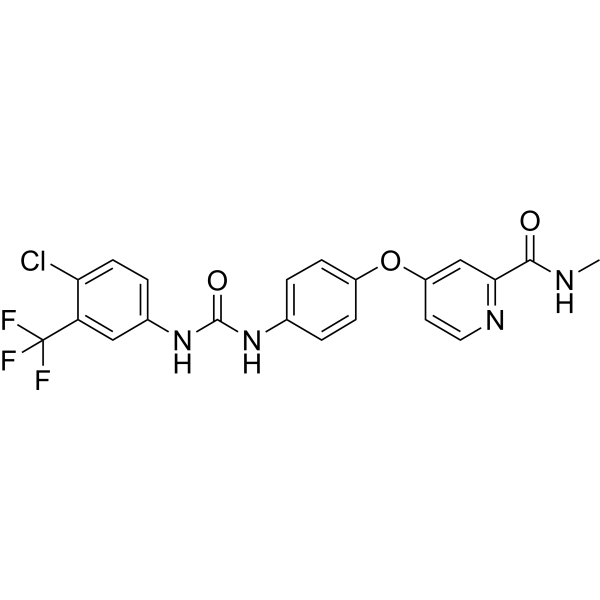
Sorafenib (Bay 43-9006) is a potent oral active multikinase inhibitor. Sorafenib blocks autophosphorylation and activity of receptor tyrosine kinases (VEGFR-2, VEGFR-3) and RAF family kinases, thereby suppressing the RAF/MEK/ERK and PI3K/Akt pathways, inhibiting STAT3 phosphorylation, and selectively inhibiting the MAPK pathway in cancer cells. Sorafenib induces cell cycle arrest, autophagy, apoptosis, and PARP cleavage, reduces Bcl-2, Bcl-XL, cyclin D1 levels, and activates Bak and Bax. Sorafenib inhibits tumor growth and metastasis in mouse and rat models. Sorafenib can be used for cancer research, such as colon, breast, non-small-cell lung cancer (NSCLC), ovarian, pancreatic, melanoma, colorectal and hepatocellular carcinoma .
|
-
- HY-10201A
-
|
Bay 43-9006 tosylate
|
Raf
VEGFR
FLT3
Autophagy
Apoptosis
STAT
Akt
MMP
Cadherin
p38 MAPK
ERK
MEK
PI3K
PARP
Bcl-2 Family
|
Infection
Neurological Disease
Metabolic Disease
Inflammation/Immunology
Cancer
|
|
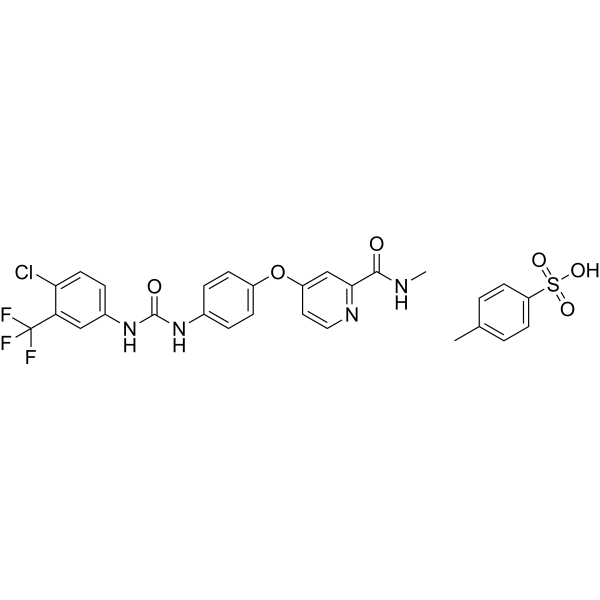
Sorafenib (Bay 43-9006) tosylate is a potent oral active multikinase inhibitor. Sorafenib blocks autophosphorylation and activity of receptor tyrosine kinases (VEGFR-2, VEGFR-3) and RAF family kinases, thereby suppressing the RAF/MEK/ERK and PI3K/Akt pathways, inhibiting STAT3 phosphorylation, and selectively inhibiting the MAPK pathway in cancer cells. Sorafenib tosylate induces cell cycle arrest, autophagy, apoptosis, and PARP cleavage, reduces Bcl-2, Bcl-XL, cyclin D1 levels, and activates Bak and Bax. Sorafenib tosylate inhibits tumor growth and metastasis in mouse and rat models. Sorafenib tosylate can be used for cancer research, such as colon, breast, non-small-cell lung cancer (NSCLC), ovarian, pancreatic, melanoma, colorectal and hepatocellular carcinoma .
|
-
- HY-112780
-
|
|
MDM-2/p53
Apoptosis
|
Cancer
|
|
UC2288 is a potent and orally active p21 attenuator (relatively selective activity for p21), which is synthesized based Sorafenib (HY-10201). UC2288 potently inhibits cancer cell growth by inducing apoptosis. UC2288 has no inhibition of VEGFR2 and Raf kinases even at 10 μM .
|
-
- HY-12661A
-
|
|
PERK
Autophagy
|
Cancer
|
|
AMG PERK 44 is an orally active and highly selective PERK inhibitor with an IC50 of 6 nM. AMG PERK 44 has 1000-fold and 160-fold selectivity over GCN2 (IC50=7300 nM) and B-Raf (IC50 >1000 nM), respectively. AMG PERK 44 induces autophagy .
|
-
- HY-W1126467
-
|
|
Ras
|
Cancer
|
|
RAS-IN-5 (Example 2) is a RAS inhibitor. RAS-IN-5 significantly inhibits the interaction between RAF1 and active KRAS mutant protein or HRAS WT protein. RAS-IN-5 significantly inhibits the cell viability of KRAS, NRAS, and EGFR mutant cells. RAS-IN-5 can be used in the research of colorectal cancer, liver cancer, and non-small cell lung cancer .
|
-
- HY-114491A
-
|
|
ERK
Raf
|
Cancer
|
|
Rineterkib hydrochloride (compound B) is an orally available ERK1 and ERK2 inhibitor in the treatment of a proliferative disease characterized by activating mutations in the MAPK pathway. The activity is particularly related to the treatment of KRAS-mutant NSCLC, BRAF-mutant NSCLC, KRAS-mutant pancreatic cancer, KRAS-mutant colorectal cancer (CRC) and KRAS-mutant ovarian cancer. Rineterkib hydrochloride can also inhibit RAF .
|
-
- HY-114491
-
|
|
ERK
Raf
|
Cancer
|
|
Rineterkib (compound B) is an orally available ERK1 and ERK2 inhibitor in the treatment of a proliferative disease characterized by activating mutations in the MAPK pathway. The activity is particularly related to the treatment of KRAS-mutant NSCLC, BRAF-mutant NSCLC, KRAS-mutant pancreatic cancer, KRAS-mutant colorectal cancer (CRC) and KRAS-mutant ovarian cancer. Rineterkib hydrochloride can also inhibit RAF .
|
-
- HY-141523
-
|
RMC-4630; SHP2-IN-7
|
SHP2
Phosphatase
|
Cancer
|
|
Vociprotafib (RMC-4630) is an orally active, selective and potent phosphatase SHP2 inhibitor, which blocks activation of the RAS-RAF-MEK-ERK signaling pathway with antitumor activity. Vociprotafib accelerates the time to, and increases the magnitude of, tumor regressions in Osimertinib (HY-15772)-sensitive EGFR-mutant tumors of mice .
|
-
- HY-119925
-
|
|
Drug Intermediate
|
Neurological Disease
|
|
Amaralin is a sesquiterpene lactone with analgesic activity, which exists in the leaves and stems of Helenium amarum (Raf.) H. Rock. When administered subcutaneously, Amaralin produces analgesic effects in the mouse tail-flick test. When administered subcutaneously, Amaralin inhibits acetic acid-induced writhing syndrome in mice. Amaralin can be used for pain-related research .
|
-
- HY-142160
-
|
|
Raf
|
Cancer
|
|
GNE-9815 (compound 7) is a highly selective, pan-RAF inhibitor with good oral bioavailability. GNE-9815 exhibits Ki values of 0.062 and 0.19 nM for CRAF and BRAF, respectively. GNE-9815 combines with MEK inhibitor Cobimetinib (HY-13064) shows synergistic modulation of MAPK pathway. GNE-9815 can be used in studies of KRAS mutant cancers .
|
-
- HY-12847
-
|
|
Raf
Src
Apoptosis
|
Cancer
|
|
CCT241161 is an orally active pan-RAF inhibitor with IC50s of 3, 6, 10, 15 and 30 nM for LCK, CRAF, SRC, V600E-BRAF and BRAF, respectively. CCT241161 shows good activity to in BRAF and NRAS mutant melanomas. CCT241161 also exhibits anticancer cell proliferative activity .
|
-
- HY-107779
-
|
|
Raf
|
Cancer
|
|
BI-882370 is a potent and selective RAF kinase inhibitor that binds to the ATP binding site of the kinase positioned in the DFG-out (inactive) conformation of the BRAF kinase. BI-882370 (BI 882370) inhibits the oncogenic BRAF V600E-mutant, the WT BRAF and CRAF kinases with IC50s of 0.4, 0.8, and 0.6 nM, respectively. BI-882370 also inhibits SRC family kinases .
|
-
- HY-10204
-
OSI-930
4 Publications Verification
|
c-Kit
VEGFR
c-Fms
Apoptosis
|
Cancer
|
|
OSI-930 is an orally selective inhibitor of Kit, KDR and CSF-1R (c-Fms) with IC50s of 80 nM, 9 nM and 15 nM, respectively. OSI-930 also moderately inhibits Flt-1, c-Raf, Lck and low activity against PDGFRα/β, Flt-3 and Abl. OSI-930 has antitumor activity .
|
-
- HY-182749
-
|
|
Ras
Akt
Raf
ERK
|
Cancer
|
|
KRAS-IN-58 is a KRAS inhibitor with a IC50 of 0.223 μM against KRAS G12D. KRAS-IN-58 binds to KRAS G12C and KRAS G12D proteins, and reduces the levels of phosphorylated Raf1, AKT and ERK in pancreatic cancer cells. KRAS-IN-58 can be used for the research of pancreatic cancer .
|
-
- HY-171777
-
|
ErPC3; Erucylphosphohomocholine
|
PI3K
Akt
Ras
Raf
p38 MAPK
|
Cancer
|
|
Erufosine is an inhibitor of PI3K/Akt and Ras/Raf/MAPK signaling pathways. Erufosine inhibits the activity of breast cancer cell lines MCF-7 and MDA-MB 231 (IC50: 40.95/40.8 μM). Erufosine reduces the phosphorylation of PI3K (p85), Akt (PKB), and cRaf. Erufosine can be used in the study of breast cancer and myeloid leukemia .
|
-
- HY-169212
-
|
|
PI3K
Annexin A
ERK
VEGFR
STAT
Raf
FAK
Akt
Ras
|
Cancer
|
|
I194496 is a potent cystathionine γ-lyase (CSE) inhibitor, with an IC50 of 0.79 mM. I194496 can inhibit the growth of human TNBC cells via the dual targeting PI3K/Akt and Ras/Raf/ERK pathway and suppress the metastasis of human TNBC cells via down-regulating Anxa2/STAT3 and VEGF/FAK/Paxillin signaling pathways .
|
-
- HY-175870A
-
|
|
Ras
ERK
|
Cancer
|
|
(7R)-Eras-4001 is an orally active KRAS mutant inhibitor with remarkable selectivity for H-RAS and N-RAS. (7R)-Eras-4001 effectively suppresses cancer cell viability by blocking downstream signaling pathways mediated by RAF family proteins, inhibiting the formation of the KRAS G12D-RAF1 RBD complex and the phosphorylation of ERK1/2. (7R)-Eras-4001 induces tumor growth inhibition and regression in a dose-dependent manner, and also reduces plasma ERK1/2 phosphorylation levels. (7R)-Eras-4001 exerts a synergistic effect with anti-PD-1 Cetuximab (HY-P9905). (7R)-Eras-4001 can be used in research on non-small cell lung cancer, pancreatic cancer, colorectal cancer, and ovarian cancer .
|
-
- HY-117658
-
|
|
MAP3K
|
Cardiovascular Disease
|
|
GSK-114 is a highly selective, orally active TNNI3K inhibitor (IC50= 25 nM). GSK-114 shows a 40-fold selectivity for TNNI3K over B-Raf kinase (IC50= 1 μM). Cardiac troponin I-interacting kinase (TNNI3K or CARK) is a member of the tyrosine-like kinase family that is selectively expressed in heart tissue .
|
-
- HY-N3634
-
|
|
EGFR
TAM Receptor
Tie
|
Cancer
|
|
Corylifol C is a potent protein kinase inhibitor with IC50 valueS of 8.7, 3.0, 2.1, 6.4, 4.5, 6.2, 2.3, 1.2, 5.1 μg/ml for ARK5, Aurora-A, Aurora-B, AXL, B-RAF-VE, CDK4/CycD1, TIE2, EGF-R, EPHB4, respectively .
|
-
- HY-N6796
-
|
|
Antibiotic
Exosomes
Farnesyl Transferase
Ras
Apoptosis
Phospholipase
TNF Receptor
Atg8/LC3
|
Infection
Inflammation/Immunology
Cancer
|
|
Manumycin A is a polyketide antibiotic and an inhibitor of thioredoxin reductase 1 (TrxR-1). Manumycin A can inhibit the growth of breast cancer cells and exert its anti-tumor activity through LC3. Manumycin A can downregulate the release of pro-inflammatory cytokines in human monocytes stimulated by TNF α, and has potential anti-inflammatory activity. Manumycin A can inhibit the Ras/Raf/ERK1/2 signaling and hnRNP H1 in castration resistant prostate cancer cells to suppress exosome biogenesis and secretion .
|
-
- HY-10542R
-
|
|
Reference Standards
Raf
Apoptosis
|
Cancer
|
|
GW 5074 (Standard) is the analytical standard of GW 5074 (HY-10542). This product is intended for research and analytical applications. GW 5074 is a potent and selective c-Raf inhibitor with IC50 of 9 nM, and has no effect on the activities of JNK1/2/3, MEK1, MKK6/7, CDK1/2, c-Src, p38 MAP, VEGFR2 or c-Fms .
|
-
- HY-10320
-
|
BIRB 796
|
p38 MAPK
Raf
Autophagy
|
Inflammation/Immunology
Cancer
|
|
Doramapimod (BIRB 796) is an orally active, highly potent p38 MAPK inhibitor, which has an IC50 for p38α=38 nM, for p38β=65 nM, for p38γ=200 nM, and for p38δ=520 nM. Doramapimod has picomolar affinity for p38 kinase (Kd=0.1 nM). Doramapimod also inhibits B-Raf with an IC50 of 83 nM .
|
-
- HY-180327
-
|
|
Drug Derivative
Apoptosis
Keap1-Nrf2
Raf
MEK
ERK
|
Neurological Disease
Inflammation/Immunology
|
|
NEPP11 is a cyclopentenone prostaglandin analogue. NEPP11 can inhibit glutamate-induced HT22 cell death in mouse hippocampus and prevent manganese-induced apoptosis in PC12 cells. NEPP11 can activate Nrf2 and maintain MEK1/2 and ERK1/2 activity by inhibiting c-Raf downregulation. NEPP11 exerts a neuroprotective effect in a mouse model of focal cerebral ischemia caused by permanent middle cerebral artery occlusion .
|
-
- HY-15873A
-
|
|
Farnesyl Transferase
Ras
p38 MAPK
|
Cancer
|
|
FTI 276 TFA is a farnesyltransferase (FTase) inhibitor with an IC50 of 0.5 nM, and it exhibits selectivity for FTase over geranylgeranyltransferase I (GGTase I). FTI 276 TFA blocks the farnesylation of H-Ras and K-Ras4B, causes inactive Ras-Raf complexes to accumulate in the cytoplasm, and inhibits constitutive MAPK activation. FTI 276 TFA reduces the number, incidence and volume of tumors, and restricts the growth of tumors expressing activated K-ras. FTI 276 TFA can be used in research related to pulmonary adenoma .
|
-
- HY-107779R
-
|
|
Reference Standards
Raf
|
Cancer
|
|
BI-882370 (Standard) is the analytical standard of BI-882370 (HY-107779). This product is intended for research and analytical applications. BI-882370 is a potent and selective RAF Kinase inhibitor that binds to the ATP binding site of the Kinase positioned in the DFG-out (inactive) conformation of the BRAF Kinase. BI-882370 (BI 882370) inhibits the oncogenic BRAFV600E-mutant, the WT BRAF and CRAF Kinases with IC50s of 0.4, 0.8, and 0.6 nM, respectively. BI-882370 also inhibits SRC family Kinases .
|
-
- HY-158107
-
|
|
Ras
|
Cancer
|
|
BBO-8520 is a direct small molecule covalent inhibitor targeting KRAS G12C with high oral availability. BBO-8520 has the characteristics of KRAS G12C (OFF) inhibitor and the function of blocking KRAS G12C (ON) signal. BBO-8520 inhibits cell proliferation by inhibiting KRAS G12C (ON) by binding GTP protein. BBO-8520 can block RAS-RAF1 interaction and return KRAS G12C to the inactive (OFF) state. BBO-8520 can be used for the research of cancer .
|
-
- HY-10204R
-
|
|
Reference Standards
c-Kit
VEGFR
c-Fms
Apoptosis
|
Cancer
|
|
OSI-930 (Standard) is the analytical standard of OSI-930 (HY-10204). This product is intended for research and analytical applications. OSI-930 is an orally selective inhibitor of Kit, KDR and CSF-1R (c-Fms) with IC50s of 80 nM, 9 nM and 15 nM, respectively. OSI-930 also moderately inhibits Flt-1, c-Raf, Lck and low activity against PDGFRα/β, Flt-3 and Abl. OSI-930 has antitumor activity .
|
-
- HY-174851
-
|
|
Ras
|
Cancer
|
|
KRAS G12C-IN-70 is a selective KRAS G12C mutant inhibitor. KRAS G12C-IN-70 blocks KRAS G12C-mediated downstream signaling pathways (e.g., RAF-MEK-ERK) and inhibits tumor cell proliferation. KRAS G12C-IN-70 is promising for research of KRAS G12C mutation-related tumors (such as non-small cell lung cancer, colorectal cancer) .
|
-
- HY-144269
-
|
|
Raf
|
Cancer
|
|
SHR902275 is a potent, selective, and orally active RAF inhibitor targeting RAS mutant cancers. SHR902275 has IC50s of 1.6 nM, 10 nM, and 5.7 nM for cRAF, bRAF wt, and bRAF V600E, respectively. SHR902275 shows cell growth inhibition with GI50s of 1.5 and 0.17 nM, 0.4 nM and 0.32 nM for H358, A375, Calu6, and SK-MEL2 cells respectively .
|
-
- HY-147125
-
|
|
HSP
Akt
CDK
Raf
Apoptosis
|
Cancer
|
|
DDO-6600 is a covalent Hsp90 inhibitor. DDO-6600 disrupts the interaction between Hsp90 and its co-chaperone protein Cdc37, thereby inducing the degradation of kinase client proteins (such as AKT, CDK4, c-Raf). DDO-6600 has inhibitory activity against various cancer cells. DDO-6600 inhibits the migration and invasion of HCT-116 cells, and induces cell cycle arrest and apoptosis. DDO-6600 significantly inhibits tumor growth in the HCT-116 xenograft tumor model. DDO-6600 can be used for research on colorectal cancer .
|
-
- HY-10320R
-
|
BIRB 796 (Standard)
|
Reference Standards
p38 MAPK
Raf
Autophagy
|
Inflammation/Immunology
Cancer
|
|
Doramapimod (Standard) is the analytical standard of Doramapimod. This product is intended for research and analytical applications. Doramapimod (BIRB 796) is an orally active, highly potent p38 MAPK inhibitor, which has an IC50 for p38α=38 nM, for p38β=65 nM, for p38γ=200 nM, and for p38δ=520 nM. Doramapimod has picomolar affinity for p38 kinase (Kd=0.1 nM). Doramapimod also inhibits B-Raf with an IC50 of 83 nM .
|
-
- HY-120548
-
|
|
TGF-β Receptor
Integrin
Raf
RIP kinase
ERK
|
Cancer
|
|
KBU2046 is an orally active transforming growth factor-β (TGF-β1) inhibitor. KBU2046 reduces integrin family protein expression, decreases Raf, RIPK1 and ERK phosphorylation to deactivate the ERK signaling pathway, and down-regulates genes linked to TGF-β1 maturation. KBU2046 suppresses tumor cell motility, impedes cancer invasion and metastasis, and inhibits human ESCC growth and metastasis in a murine model. KBU2046 can be used for the researches of triple-negative breast cancer and esophageal squamous cell carcinoma .
|
-
- HY-158107A
-
|
|
Drug Isomer
Ras
|
Cancer
|
|
(4R)-BBO-8520 (Compound 314), an isomer of BBO-8520 (HY-158107), is a selective KRAS G12C inhibitor. BBO-8520 has the characteristics of KRAS G12C (OFF) inhibitor and the function of blocking KRAS G12C (ON) signal. BBO-8520 inhibits cell proliferation by inhibiting KRAS G12C (ON) by binding GTP protein. BBO-8520 can block RAS-RAF1 interaction and return KRAS G12C to the inactive (OFF) state. (4R)-BBO-8520 can be used for the research of cancer .
|
-
- HY-N0226
-
|
|
Cholinesterase (ChE)
Beta-secretase
|
Neurological Disease
Metabolic Disease
|
|
Epiberberine is an alkaloid isolated from Coptis chinensis, acts as a potent AChE and BChE inhibitor, and a non-competitive BACE1 inhibitor, with IC50s of 1.07, 6.03 and 8.55 μM, respectively. Epiberberine has antioxidant activity, with peroxynitrite ONOO - scavenging effect (IC50, 16.83 μM), and can be used for the research of Alzheimer disease . Epiberberine inhibits the early stage of differentiation of 3T3-L1 preadipocytes, downregulates the Raf/MEK1/2/ERK1/2 and AMPKα/Akt pathways . Epiberberinecan be used for the research of diabetic disease .
|
-
- HY-164529
-
|
|
Raf
Ras
MEK
ERK
VEGFR
Tie
c-Fms
|
Cancer
|
|
SJ-C1044 is an orally available pan-RAF inhibitor with immunomodulatory and anti-tumor activities. SJ-C1044 inhibits wild-type BRAF, wild-type CRAF, and BRAF (V600E) with IC50 values ??of 331, 257, and 187 nM, respectively. SJ-C1044 inhibits tumor cell proliferation by inhibiting kras activation and MEK-ERK phosphorylation. In addition, SJ-C1044 also has a certain inhibitory effect on VEGFR2, TIE2, and CSF1R, with IC50 values ??of 100, 23, and 235 nM, respectively. SJ-C1044 improves the tumor immune microenvironment by inhibiting angiogenesis and regulating macrophage function. SJ-C1044 can be used in the study of colorectal cancer .
|
-
- HY-159127
-
|
|
Ras
MEK
PERK
Apoptosis
|
Cancer
|
|
HRS-4642 is a high affinity, selective, long-acting, and non-covalent KRAS G12D inhibitor with a Kd value of 0.083 nM. HRS-4642 inhibits the binding of KRAS G12D to SOS1 or RAF1, thereby blocking the downstream MEK-ERK signaling pathway. HRS-4642 promotes Apoptosis. HRS-4642 alone or combined with Carfilzomib (HY-10455) effectively shapes the tumor microenvironment. HRS-4642 has an anti-cancer effect on pancreatic and colorectal cancers carrying the KRAS G12D mutation[1][2][3].
|
-
- HY-181883
-
|
|
Ras
Raf
PI3K
p38 MAPK
|
Cancer
|
|
KRAS-IN-55 is a pan-KRAS inhibitor with IC50 values of 4.3, 9.6 and 1.6 nM against KRAS G12C, KRAS G12D and KRAS G12V, respectively. KRAS-IN-55 induces the formation of a new binding pocket on KRAS, thereby forming a high-affinity ternary complex with cyclophilin A (CYPA), inhibiting the interactions of KRAS with downstream effectors RAF and PI3K, and blocking oncogenic MAPK and PI3K signaling pathways. KRAS-IN-55 is applicable to cancer research such as colorectal cancer and non-small cell lung cancer .
|
-
- HY-N0226A
-
|
|
Cholinesterase (ChE)
Beta-secretase
Reactive Oxygen Species (ROS)
|
Neurological Disease
Metabolic Disease
|
|
Epiberberine chloride is an alkaloid isolated from Coptis chinensis, acts as a potent AChE and BChE inhibitor, and a non-competitive BACE1 inhibitor, with IC50s of 1.07, 6.03 and 8.55 μM, respectively. Epiberberine chloride has antioxidant activity, with peroxynitrite ONOO - scavenging effect (IC50, 16.83 μM), and may protect against Alzheimer disease . Epiberberine chloride inhibits the early stage of differentiation of 3T3-L1 preadipocytes, downregulates the Raf/MEK1/2/ERK1/2 and AMPKα/Akt pathways . Epiberberine has the potential effect in the research of diabetic disease .
|
-
- HY-182614
-
|
|
Src
Cathepsin
PI3K
Akt
Ras
Raf
ERK
MMP
|
Cancer
|
|
BJ-2302 is a Src kinase inhibitor with an IC50 of 3.23 μM, and inhibits cathepsin S (CTSS) activity .BJ-2302 binds to Src, suppresses PI3K/AKT and Ras/Raf/ERK pathways, and reduces CTSS and MMP-9 expression .BJ-2302 inhibits cancer cell invasion, metastasis, proliferation, and tumor growth .BJ-2302 does not induce cytotoxicity in normal breast epithelial cells .BJ-2302 can be used for the research of breast cancer and triple-negative breast cancer .
|
-
- HY-11010
-
|
|
JNK
|
Neurological Disease
Inflammation/Immunology
Cancer
|
|
AS601245 is an orally active, selective, ATP competitive JNK (c-Jun NH2-terminal protein kinase) inhibitor with IC50s of 150, 220, and 70 nM for three JNK human isoforms (hJNK1, hJNK2, and hJNK3), respectively. AS601245 exhibits 10- to 20-fold selectivity over c-src, CDK2, and c-Raf and more than 50- to 100-fold selectivity over a range of Ser/Thr- and Tyr-protein kinases. Neuroprotective properties .
|
-
- HY-N10503
-
|
|
Tyrosinase
Ras
Raf
MAPKAPK2 (MK2)
Apoptosis
|
Cancer
|
|
Norartocarpetin is a tyrosinase inhibitor. Norartocarpetin has strong tyrosinase inhibitory activity with an IC50 value of 0.47 μM. Norartocarpetin as an antibrowning agent can be used for the research of food systems. Norartocarpetin also has a significant anticancer activity in lung carcinoma cells (NCI-H460) with an IC50 value of 22 μM. Norartocarpetin has antiproliferative effects are mediated via targeting Ras/Raf/MAPK signalling pathway, mitochondrial mediated apoptosis, S-phase cell cycle arrest and suppression of cell migration and invasion in human lung carcinoma cells .
|
-
- HY-158409
-
|
|
Molecular Glues
Ras
Cyclophilin
PERK
|
Cancer
|
|
Pan-rasin-2 (compound 6A) is an orally active molecular glues that targets RAS. Pan-RAS-IN-2 inhibits pERK (IC50 in AsPC-1 cells: 0.3 nM). Pan-rasin-2 has significant inhibitory activity on cell proliferation of RAS mutant cell lines. Pan-rasin-2 can form ternary complexes with cyclophilin A (CYPA) and RAS (ON) proteins and the formation of ternary complexes can block the binding of RAF downstream of RAS, which has anti-tumor (such as colorectal cancer, pancreatic cancer) effects .
|
-
- HY-11010A
-
|
|
JNK
|
Neurological Disease
Inflammation/Immunology
Cancer
|
|
AS601245 TFA is an orally active, selective, ATP competitive JNK (c-Jun NH2-terminal protein kinase) inhibitor with IC50s of 150, 220, and 70 nM for three JNK human isoforms (hJNK1, hJNK2, and hJNK3), respectively. AS601245 TFA exhibits 10- to 20-fold selectivity over c-src, CDK2, and c-Raf and more than 50- to 100-fold selectivity over a range of Ser/Thr- and Tyr-protein kinases. Neuroprotective properties .
|
-
- HY-134813A
-
|
|
Ras
|
Cancer
|
|
MRTX1133 formic is a noncovalent, potent, and selective KRAS G12D inhibitor. MRTX1133 formic optimally fills the switch II pocket and extends three substituents to favorably interact with the protein, resulting in an estimated KD against KRAS G12D of 0.2 pM. MRTX1133 formic prevents SOS1-catalyzed nucleotide exchange and/or formation of the KRASG12D/GTP/RAF1 complex, thereby inhibiting mutant KRAS-dependent signal transduction. MRTX1133 formic shows efficacy in tumor models harboring KRAS G12D mutations .
|
-
- HY-164365
-
|
|
PROTACs
Ras
|
Cancer
|
|
PROTAC K-Ras degrader-2 (compound 48) is a KRAS G12V PROTAC degrader with an IC50 of 20-200 nM for KRAS G12V/RAF1. PROTAC K-Ras degrader-2 degrades SW620 KRAS G12V with a DC50 of 1-10 nM. PROTAC K-Ras degrader-2 inhibits cell growth of SW620 3D cell with an IC50 of ≤10 nM. PROTAC K-Ras degrader-2 can be used for the study of colorectal cancer (CRC) .
|
-
- HY-179133
-
|
|
P2Y Receptor
PKA
Raf
MEK
ERK
|
Inflammation/Immunology
|
|
HDB-1 is a selective inhibitor of the P2Y14 receptor (P2Y14R) with an IC50 of 26 pM. HDB-1 shows no significant inhibition on P2Y1R, P2Y2R, P2Y4R, P2Y6R, and P2Y12R. HDB-1 blocks the activation of hepatic stellate cells (HSC) by inhibiting the PKA/Raf1/MEK/ERK signaling pathway mediated by P2Y14R, thereby alleviating the core pathological process of liver fibrosis. HDB-1 can be used for the study of liver fibrosis .
|
-
- HY-153858
-
|
|
Raf
Discoidin Domain Receptor
MEK
TNF Receptor
Interleukin Related
JAK
STAT
Ras
|
Cancer
|
|
PHI-501 is a dual inhibitor targeting RAF/DDR. PHI-501 exhibits significant anti-proliferative effects in melanoma cell lines and significantly inhibits the colony formation of drug-resistant cells. PHI-501 strongly inhibits ERK and AKT phosphorylation. PHI-501 downregulates the gene sets in drug-resistant cells of TNFA-NFKB, IL6-JAK-STAT3, and KRAS signaling pathways as well as the epithelial-mesenchymal transition (EMT) signaling pathways. PHI-501 demonstrates significant anti-tumor effects in the SK-MEL3DR xenograft model. PHI-501 can be used for research on the problem of drug resistance in melanoma .
|
-
- HY-134813
-
|
|
Ras
|
Cancer
|
|
MRTX1133 is a noncovalent, potent, and selective alkyne-based KRAS G12D inhibitor. MRTX1133 optimally fills the switch II pocket and extends three substituents to favorably interact with the protein, resulting in an estimated KD against KRAS G12D of 0.2 pM. MRTX1133 prevents SOS1-catalyzed nucleotide exchange and/or formation of the KRAS G12D/GTP/RAF1 complex, thereby inhibiting mutant KRAS-dependent signal transduction. MRTX1133 selectively inhibits KRAS G12D mutant, but not KRAS wild-type, tumor cells. MRTX1133 has single digit nanomolar activity in cellular assays and marked in vivo efficacy in tumor models harboring KRAS G12D mutations .
|
-
- HY-181420A
-
|
|
Ras
Phosphatase
ERK
Apoptosis
|
Cancer
|
|
BBO-11818 is an orally active, highly selective (relative to NRAS and HRAS), non-covalent pan-KRAS inhibitor (IC50=28-120 nM). BBO-11818 specifically binds to the Switch-II/Helix 3 pocket, disrupts the KRAS:RAF1 interaction by inducing conformational changes, and blocks the MAPK signaling pathway. BBO-11818 exhibits significant anti-tumor activity, which not only inhibits cell proliferation and induces apoptosis, but also drives tumor regression in xenograft models. BBO-11818 produces synergistic effects when combined with Cetuximab (HY-P9905), anti-PD-1 antibody or PI3Kα inhibitor. BBO-11818 is used in the research of KRAS mutation-related malignancies such as pancreatic cancer, non-small cell lung cancer and colorectal cancer .
|
-
- HY-179012
-
|
|
APC
CDK
Raf
Akt
HSP
|
Cancer
|
|
CDC20/HSP90-IN-1 (Compound 2b) is a Cdc20/Hsp90 inhibitor with a Kd of 16.2 μM for Cdc20 and a Kd of 0.241 μM for Hsp90α. CDC20/HSP90-IN-1 exerts potent antitumor activity through reducing p53-mediated Cdc20, upregulating Bim, downregulating Cyclin B1 expression, and disturbing B-Raf and AKT pathways via destroying Hsp90 chaperone function. CDC20/HSP90-IN-1 overcomes Vemurafenib (HY-12057)-induced resistant melanoma .
|
-
- HY-B0766
-
|
SY801
|
Autophagy
Apoptosis
HBV
HCV
HSP
Reactive Oxygen Species (ROS)
Bcl-2 Family
Glutathione S-transferase
p38 MAPK
NF-κB
Microtubule/Tubulin
ERK
JNK
TNF Receptor
Interleukin Related
CDK
Cyclin G-associated Kinase (GAK)
mTOR
P-glycoprotein
Ferroptosis
|
Infection
Inflammation/Immunology
Cancer
|
|
Bicyclol (SY801) is an orally active derivative of the traditional Chinese medicine Schisandra chinensis, which has antiviral, anti-inflammatory, immunomodulatory, antioxidant, anti-steatosis, anti-fibrotic and anti-tumor activities. Bicyclol regulates the expression of heat shock proteins and plays an anti-apoptosis role in hepatocytes. Bicyclol reduces the activation of NF-κB and the levels of inflammatory factors in hepatocytes infected with hepatitis C virus (HCV) by inhibiting the activation of the ROS-MAPK-NF-κB pathway, and prevents ferroptosis in acute liver injury. Bicyclol can change the expression of Mdr-1, GSH/GST and Bcl-2, increase the intracellular concentration of anticancer drugs, and sensitize drug-resistant cells to anticancer drugs. Bicyclol inhibits the proliferation of human malignant hepatoma cells by regulating the PI3K/AKT pathway and the Ras/Raf/MEK/ERK pathway. Bicyclol can be used in the study of chronic hepatitis, acute liver injury, nonalcoholic fatty liver disease, liver fibrosis and hepatocellular carcinoma .
|
-
-
-
HY-L010
-
|
|
1,063 compounds
|
|
MAPK families play an important role in complex cellular programs like proliferation, differentiation, development, transformation, and apoptosis. In mammalian cells, four MAPK families have been clearly characterized: ERK1/2, C-Jun N-terminal kinse/stress-activated protein kinase (JNK/SAPK) , p38 kinase and ERK5. They respond to different signals. Each MAPK-related cascade consists of three enzymes that are activated in series: a MAPK kinase kinase (MAPKKK), a MAPK kinase (MAPKK) and a MAP kinase (MAPK). MAPK signaling pathways has been implicated in the development of many human diseases including Alzheimer's disease (AD), Parkinson's disease (PD), amyotrophic lateral sclerosis (ALS) and various types of cancers.
MCE designs a unique collection of 1,063 MAPK signaling pathway inhibitors that act as a useful tool for MAPK-related drug screening and disease research.
|
| Cat. No. |
Product Name |
Type |
-
- HY-114491
-
|
|
Fluorescent Dyes
|
|
Rineterkib (compound B) is an orally available ERK1 and ERK2 inhibitor in the treatment of a proliferative disease characterized by activating mutations in the MAPK pathway. The activity is particularly related to the treatment of KRAS-mutant NSCLC, BRAF-mutant NSCLC, KRAS-mutant pancreatic cancer, KRAS-mutant colorectal cancer (CRC) and KRAS-mutant ovarian cancer. Rineterkib hydrochloride can also inhibit RAF .
|
| Cat. No. |
Product Name |
Target |
Research Area |
-
- HY-P10438
-
|
|
Raf
|
Cancer
|
|
TAT-Braftide is a peptide inhibitor designed to block the dimerization of BRAF, thereby inhibiting its kinase activity. The destruction of BRAF dimer by TAT-Braftide makes BRAF protein more susceptible to proteasome degradation, directly inhibits the activity of BRAF kinase, and reduces the activation of MAPK signaling pathway. Tat-braftide can be used for the role of RAF kinase in MAPK signaling pathway and for the study of BRAF mutant cancers .
|
-
- HY-P10051
-
|
|
Ras
Raf
|
Cancer
|
|
Cyclorasin 9A5 is an 11-residue cell-permeable cyclic peptide that orthosterically inhibits the Ras-Raf protein interaction with an IC50 of 120 nM .
|
-
- HY-P10051A
-
|
|
Ras
Raf
|
Cancer
|
|
Cyclorasin 9A5 TFA is an 11-residue cell-permeable cyclic peptide that orthosterically inhibits the Ras-Raf protein interaction with an IC50 of 120 nM .
|
| Cat. No. |
Product Name |
Category |
Target |
Chemical Structure |
-
- HY-N6796
-
-
-
- HY-N0226A
-
-
-
- HY-N0226
-
-
-
- HY-N10503
-
|
|
Flavonoids
Flavones
Plants
Moraceae
|
Tyrosinase
Ras
Raf
MAPKAPK2 (MK2)
Apoptosis
|
|
Norartocarpetin is a tyrosinase inhibitor. Norartocarpetin has strong tyrosinase inhibitory activity with an IC50 value of 0.47 μM. Norartocarpetin as an antibrowning agent can be used for the research of food systems. Norartocarpetin also has a significant anticancer activity in lung carcinoma cells (NCI-H460) with an IC50 value of 22 μM. Norartocarpetin has antiproliferative effects are mediated via targeting Ras/Raf/MAPK signalling pathway, mitochondrial mediated apoptosis, S-phase cell cycle arrest and suppression of cell migration and invasion in human lung carcinoma cells .
|
-
-
- HY-N13009
-
|
|
Phenols
Polyphenols
Morus alba L.
Plants
Moraceae
Source Classification
|
Raf
HIF/HIF Prolyl-Hydroxylase
ERK
MEK
Reactive Oxygen Species (ROS)
Apoptosis
Caspase
|
|
MO-2097 is a RAF-1/HIF-1α inhibitor. MO-2097 induces RAF-1 destabilization, leading to a reduction in
EMT-associated transcription factors and mesenchymal markers. MO-2097 inhibits HIF-1a protein expression mediated by hnRNPA2B1 under hypoxic and mimetic hypoxia. MO-2097 induces mitochondrial ROS, which leads to apoptosis in cells. MO-2097 effectively suppresses colorectal cancer metastasis by inhibiting the RAF/MEK/ERK signaling pathway. MO-2097 attenuates tumor growth in a xenograft HCT116 cell mouse model. MO-2097 can be used for the study of colorectal cancer .
|
-
-
- HY-N3634
-
|
|
Leguminosae
Phenols
Polyphenols
Psoralea corylifolia L.
Plants
Source Classification
|
EGFR
TAM Receptor
Tie
|
|
Corylifol C is a potent protein kinase inhibitor with IC50 valueS of 8.7, 3.0, 2.1, 6.4, 4.5, 6.2, 2.3, 1.2, 5.1 μg/ml for ARK5, Aurora-A, Aurora-B, AXL, B-RAF-VE, CDK4/CycD1, TIE2, EGF-R, EPHB4, respectively .
|
-
-
- HY-N15264
-
|
(-)-Azaspirene
|
Natural Products
Microorganisms
Source Classification
|
VEGFR
Raf
|
|
Azaspirene ((-)-Azaspirene) is an angiogenesis and Raf-1 activation inhibitor isolated from the fungus Neosartorya sp. Azaspirene inhibits vascular endothelial growth factor (VEGF)-induced human umbilical vein endothelial cell (HUVEC) migration and Raf-1 activation, but has no effect on the activation of kinase insert domain-containing receptor/fetal liver kinase 1 (VEGF receptor 2) .
|
-
-
- HY-W065835
-
-
-
- HY-119925
-
-
| Cat. No. |
Product Name |
Chemical Structure |
-
- HY-10201S
-
1 Publications Verification
|
|
Sorafenib-d3 (Donafenib), a deuterated compound of Sorafenib, is the first deuterium-generation tumor suppressor small molecule. Sorafenib is a multikinase inhibitor IC50s of 6 nM, 20 nM, and 22 nM for Raf-1, B-Raf, and VEGFR-3, respectively .
|
-
-
- HY-10201S2
-
1 Publications Verification
|
|
Sorafenib- 13C,d3 is the 13C- and deuterium labeled Sorafenib. Sorafenib (Bay 43-9006) is a potent and orally active Raf inhibitor with IC50s of 6 nM and 20 nM for Raf-1 and B-Raf, respectively. Sorafenib is a multikinase inhibitor with IC50s of 90 nM, 15 nM, 20 nM, 57 nM and 58 nM for VEGFR2, VEGFR3, PDGFRβ, FLT3 and c-Kit, respectively. Sorafenib induces autophagy and apoptosis. Sorafenib has anti-tumor activity. Sorafenib is a ferroptosis activator .
|
-
-
- HY-10201S1
-
|
|
|
Sorafenib-d4 (Bay 43-9006-d4) is the deuterium labeled Sorafenib. Sorafenib is a multikinase inhibitor IC50s of 6 nM, 20 nM, and 22 nM for Raf-1, B-Raf, and VEGFR-3, respectively.
|
-
-
- HY-I0678S
-
|
|
|
Regorafénib N-oxyde-d3(M2) is the deuterium labeled Regorafénib N-oxyde M2 . Regorafénib N-oxyde M2 is an active metabolite of Regorafenib. Regorafenib is a multi-target inhibitor for VEGFR1/2/3, PDGFRβ, Kit, RET and Raf-1 with IC50s of 13/4.2/46, 22, 7, 1.5 and 2.5 nM, respectively .
|
-
-
- HY-14660S
-
|
|
|
Dabrafenib-d9 is the deuterium labeled Dabrafenib. Dabrafenib (GSK2118436A) is an ATP-competitive inhibitor of Raf with IC50s of 5 nM and 0.6 nM for C-Raf and B-RafV600E, respectively .
|
-
-
- HY-10331S1
-
|
|
|
Regorafenib- 13C,d3 is the 13C- and deuterium labeled Regorafenib. Regorafenib (BAY 73-4506) is a multi-targeted receptor tyrosine kinase inhibitor with IC50s of 13/4.2/46, 22, 7, 1.5 and 2.5 nM for VEGFR1/2/3, PDGFRβ, Kit, RET and Raf-1, respectively.
|
-
-
- HY-I0678S1
-
|
|
|
Regorafénib N-oxyde (M2)- 13C,d3 is the 13C- and deuterium labeled Regorafénib N-oxyde (M2). Regorafénib N-oxyde M2 is an active metabolite of Regorafenib. Regorafenib is a multi-target inhibitor for VEGFR1/2/3, PDGFRβ, Kit, RET and Raf-1 with IC50s of 13/4.2/46, 22, 7, 1.5 and 2.5 nM, respectively.
|
-
-
- HY-51424S
-
|
|
|
PLX-4720-d7 is the deuterium labeled PLX-4720. PLX-4720 is a potent and selective inhibitor of?B-RafV600E?with?an IC50?of 13 nM in a cell-free assay, equally potent to c-Raf-1(Y340D and Y341D mutations), and 10-fold selectivity for B-RafV600E than wild-type B-Raf .
|
-
-
- HY-10201S4
-
|
|
|
Sorafenib-d3 (Donafenib-d3) tosylate is the deuterium labeled Sorafenib (HY-10201). Sorafenib is a potent and orally active Raf inhibitor with IC50s of 6 nM and 20 nM for Raf-1 and B-Raf, respectively. Sorafenib-d3tosylate is a multikinase inhibitor with IC50s of 90 nM, 15 nM, 20 nM, 57 nM and 58 nM for VEGFR2, VEGFR3, PDGFRβ, FLT3 and c-Kit, respectively. Sorafenib-d3tosylate induces autophagy and apoptosis. Sorafenib-d3tosylate has anti-tumor activity. Sorafenib is a ferroptosis activator .
|
-
-
- HY-12057S
-
|
|
|
Vemurafenib-d5 is the deuterium labeled Vemurafenib. Vemurafenib (PLX4032) is a first-in-class, selective, potent inhibitor of B-RAF kinase, with IC50s of 31 and 48 nM for RAFV600E and c-RAF-1, respectively . Vemurafenib induces cell autophagy .
|
-
-
- HY-12057S1
-
|
|
|
Vemurafenib-d7 is deuterium labeled Vemurafenib. Vemurafenib (PLX4032) is a first-in-class, selective, potent inhibitor of B-RAF kinase, with IC50s of 31 and 48 nM for RAFV600E and c-RAF-1, respectively . Vemurafenib induces cell autophagy .
|
-
| Cat. No. |
Product Name |
|
Classification |
-
- HY-134813
-
|
|
|
Alkynes
|
|
MRTX1133 is a noncovalent, potent, and selective alkyne-based KRAS G12D inhibitor. MRTX1133 optimally fills the switch II pocket and extends three substituents to favorably interact with the protein, resulting in an estimated KD against KRAS G12D of 0.2 pM. MRTX1133 prevents SOS1-catalyzed nucleotide exchange and/or formation of the KRAS G12D/GTP/RAF1 complex, thereby inhibiting mutant KRAS-dependent signal transduction. MRTX1133 selectively inhibits KRAS G12D mutant, but not KRAS wild-type, tumor cells. MRTX1133 has single digit nanomolar activity in cellular assays and marked in vivo efficacy in tumor models harboring KRAS G12D mutations .
|
Your information is safe with us. * Required Fields.
Inquiry Information
- Product Name:
- Cat. No.:
- Quantity:
- MCE Japan Authorized Agent:

