24 Results for "

RD cells

" in MedChemExpress (MCE) Product Catalog:
Products (24)

24 Results for "RD cells" in MCE Product Catalog:

2
2 Cited Publications
Cat. No.: HY-14925
CAS No.: 189059-71-0
Purity:  99.81%
Synonyms: T-91485
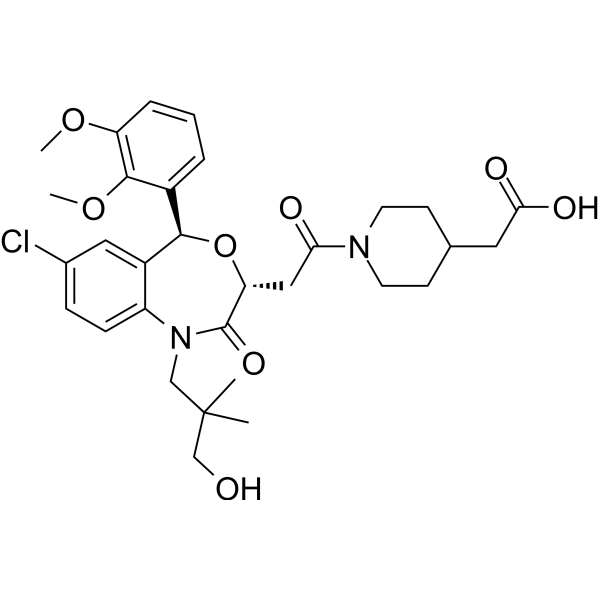
Lapaquistat (T-91485), a cholesterol biosynthesis inhibitor, is the active metabolite of Lapaquistat acetate (HY-16274). Lapaquistat can decrease statin-induced myotoxicity in lipid-lowering therapy .
loading...
    loading...
2
2 Cited Publications
Cat. No.: HY-N1966
CAS No.: 123694-03-1
Target:  

p38 MAPK PPAR

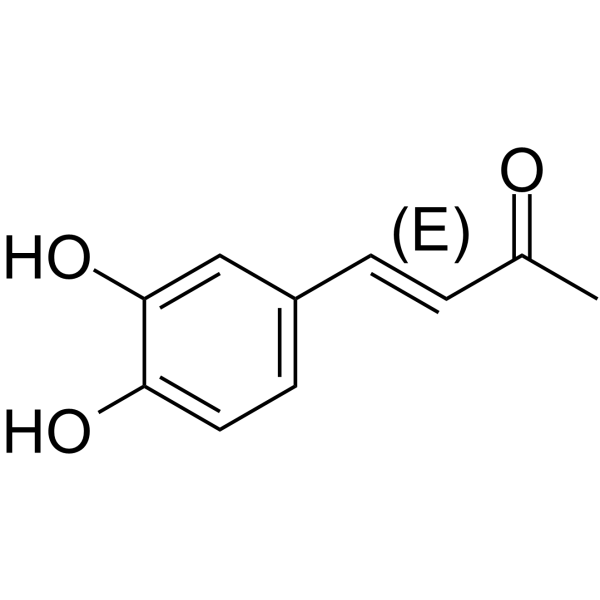
(E)-Osmundacetone is an inhibitor of the MAPK pathway. (E)-Osmundacetone inhibits the activation of the MAPK signaling pathway and restores the expression of PPARα/ACOX1. (E)-Osmundacetone abrogates abnormal cell proliferation, migration and liver metastasis induced by PTPRO silencing in colorectal cancer cells. (E)-Osmundacetone blocks OA-RD17-mediated activation of the MAPK signaling pathway, thereby reducing macrophage proliferation and migration. (E)-Osmundacetone is applicable to relevant research on colorectal cancer .
loading...
    loading...
1
1 Cited Publications
Cat. No.: HY-N0043
CAS No.: 52705-93-8
Synonyms: Gypenoside VIII
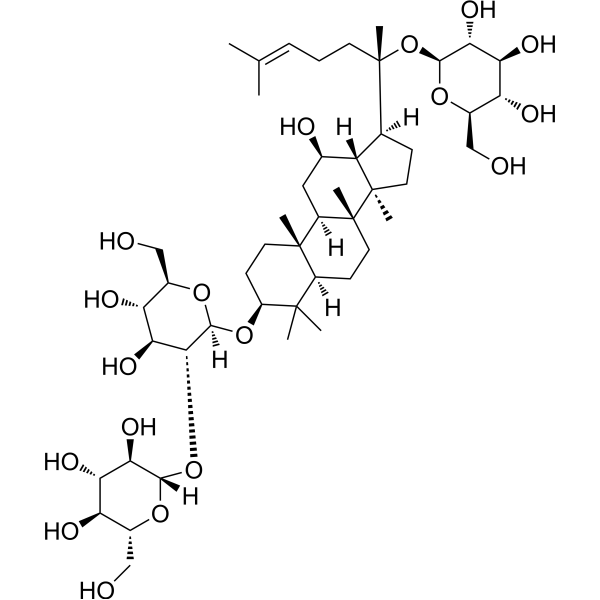
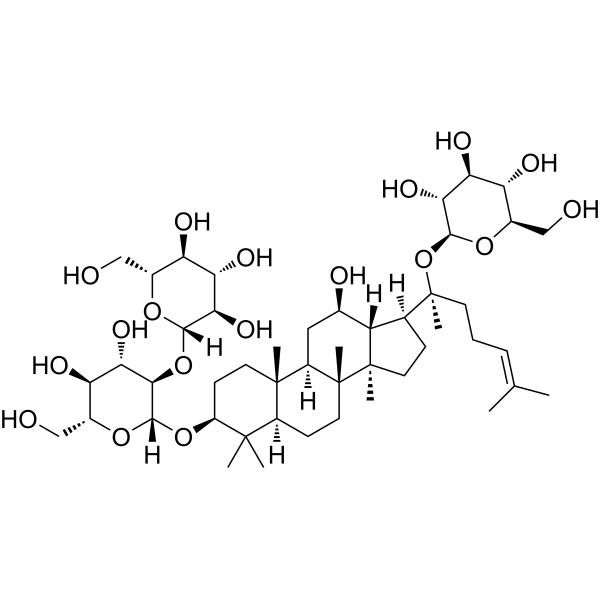
Ginsenoside Rd inhibits TNFα-induced NF-κB transcriptional activity with an IC50 of 12.05±0.82 μM in HepG2 cells. Ginsenoside Rd inhibits expression of COX-2 and iNOS mRNA. Ginsenoside Rd also inhibits Ca 2+ influx. Ginsenoside Rd inhibits CYP2D6, CYP1A2, CYP3A4, and CYP2C9, with IC50s of 58.0±4.5 μM, 78.4±5.3 μM, 81.7±2.6 μM, and 85.1±9.1 μM, respectively.
loading...
    loading...
1
1 Cited Publications
Cat. No.: HY-N0620
CAS No.: 102841-43-0
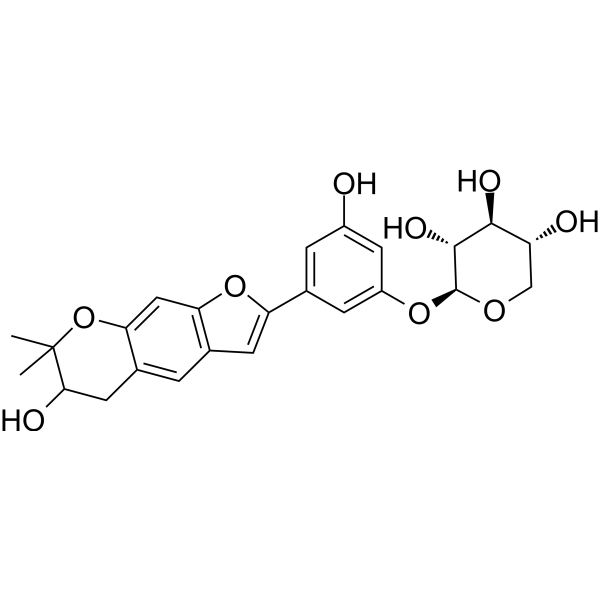
Mulberroside C is one of the main bioactive components in white mulberry (Morus alba L.). Mulberroside C exhibits antiplatelet, antiviral and neutrophil-regulating activities, and binds to EV-A71 VP1 with a Kd value of 1.289 nM. Mulberroside C reduces the phosphorylation level of ERK, promotes the phosphorylation of IP3RI at the Ser 1756 site, and decreases calcium influx and calcium mobilization. Mulberroside C inhibits the expression of P-selectin (P-selectin). Mulberroside C upregulates the cyclic nucleotide signaling pathway in human platelets. Mulberroside C binds to IL-23R, upregulates the expression of G-CSF, GM-CSF and RASGRP1, and activates the RAS/ERK signaling pathway. Mulberroside C promotes neutrophil maturation, accelerates the recovery of leukopenia, and enhances the antibacterial activity of neutrophils. Mulberroside C inhibits the replication of hepatitis C virus in replicon cells. Mulberroside C prevents the uncoating and genome release of EV-A71, and inhibits the synthesis of viral proteins and RNA. Mulberroside C can be used in studies related to thrombosis-mediated cardiovascular diseases, chemotherapy- and radiotherapy-induced leukopenia, hepatitis C virus infection, and hand, foot and mouth disease .
loading...
    loading...
Cat. No.: HY-W019806
CAS No.: 7578-25-8
Synonyms: LNFP I
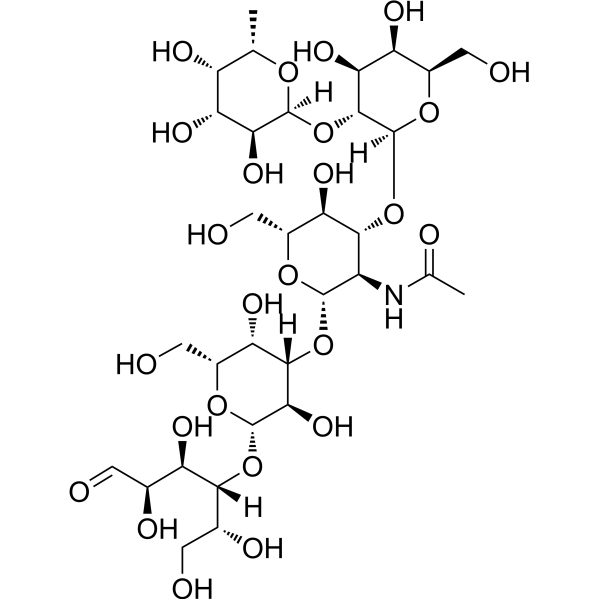
Lacto-N-fucopentaose I (LNFPI) is a human milk oligosaccharide (HMO), possessing antiviral and antibacterial activity. Lacto-N-fucopentaose I can reduce capsid protein VP1 to block virus adsorption, promote CDK2 and reduce cyclin E to recover cell cycle S phase block. Lacto-N-fucopentaose I inhibits ROS production and apoptosis in virus-infected cells. Lacto-N-fucopentaose I can also regulate intestinal microbiota to affect immune system development .
loading...
    loading...
Cat. No.: HY-136913
CAS No.: 69617-84-1
Purity:  99.76%
Synonyms: (Rac)-Betuligenol
Target:  

Endogenous Metabolite

Research Areas:  

Inflammation/Immunology

(Rac)-Rhododendrol ((Rac)-Betuligenol) is an aromatic compound with pro-oxidant activity. (Rac)-Rhododendrol may be useful in the suppression of liver diseases. (Rac)-Rhododendrol can be toxic to melanocytes, leading to cell death. The metabolite of (Rac)-Rhododendrol, RD-quinone, is cytotoxic and causes enzyme inactivation and endoplasmic reticulum stress by binding to thiol proteins. (Rac)-Rhododendrol-derived melanin exhibits potent pro-oxidant activity and may cause oxidative stress .
loading...
    loading...
Cat. No.: HY-W016407
CAS No.: 25379-88-8
Target:  

Enterovirus

Research Areas:  

Infection

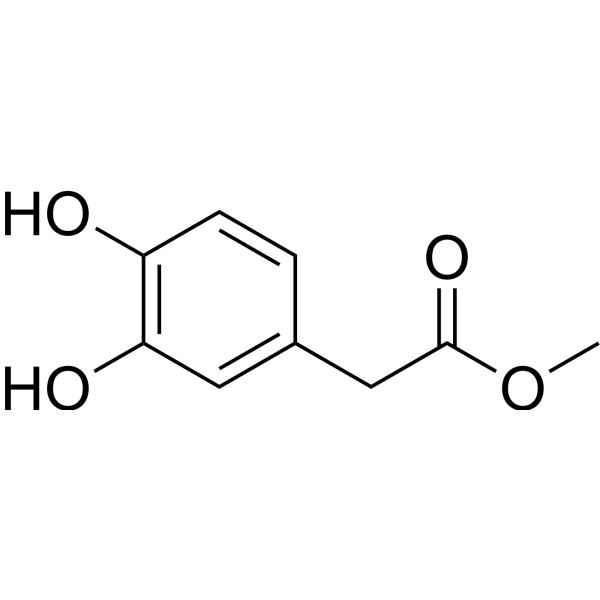
Methyl 3,4-dihydroxyphenylacetate is a potent enterovirus 71 (EV71) infection inhibitor. Methyl 3,4-dihydroxyphenylacetate inhibits EV71 replication in rhabdomyosarcoma (RD) cells .
loading...
    loading...
Cat. No.: HY-161687
CAS No.: 3049801-09-1
Target:  

Src

Research Areas:  

Cancer

Cisplatin/Dasatinib prodrug-1 (Compound 3) is a prodrug of Cisplatin (HY-17394) and Dasatinib (HY-10181). Cisplatin/Dasatinib prodrug-1 exhibits antiproliferative activity against A2780, MDA-MB-231, MCF7, HCT116, RD, Thp1 and HL60 cancer cells with IC50s of 0.1, 0.1, 0.36, 2.0, 0.4, 0.3 and 0.25 μM, respectively .
loading...
    loading...
Cat. No.: HY-178919
CAS No.: 2996841-28-0
N-19004 is a FPR1 antagonist. N-19004 shows broad-spectrum antibacterial effects against a variety of pathogens. N-19004 exhibits significant retinal protective effects in the rd10 mouse model of retinitis pigmentosa (RP). N-19004 can attenuate retinal dysfunction, mitigate rod and cone degeneration, and reduce immune cell activation, gliosis, inflammation, oxidative stress, and apoptosis. N-19004 can reduce the size of laser-induced choroidal lesions and promote edema absorption through dual anti-inflammatory and anti-angiogenic effects. N-19004 can be used for the research of retinal degenerative diseases such as retinitis pigmentosa .
loading...
    loading...
Cat. No.: HY-175671
Research Areas:  

Neurological Disease

LSD1/HDAC-IN-3 is a inhibitor targeting class I HDAC and LSD1 enzymes. LSD1/HDAC-IN-3 inhibits HDAC1, HDAC2, HDAC3, and LSD1 with IC50 values of 1702 nM, 842 nM, 358 nM, and 1074 nM, respectively. LSD1/HDAC-IN-3 exhibits antioxidant effects in H2O2-stressed ARPE-19 and 661W retinal cells, increasing levels of acetylated and methylated histone H3. LSD1/HDAC-IN-3 enhances photoreceptor survival in the rd10 mouse model of retinitis pigmentosa. LSD1/HDAC-IN-3 can be used for the study of inherited retinal diseases such as retinitis pigmentosa (RP) .
loading...
    loading...
Cat. No.: HY-162715
Target:  

Enterovirus

Research Areas:  

Infection

EV-A71-IN-2 (compound 6c) is a anti-EV-A71 agent with the EC50 values of 0.29 μM and 1.66 μM aganist of EV-A71-MRC-5 cells and EV-A71-RD cells, respectively. EV-A71-IN-2 can be used for study of enterovirus infection .
loading...
    loading...
Cat. No.: HY-N0043R
CAS No.: 52705-93-8
Synonyms: Gypenoside VIII (StandaRD)
Ginsenoside Rd (Standard) is the analytical standard of Ginsenoside Rd. This product is intended for research and analytical applications. Ginsenoside Rd inhibits TNFα-induced NF-κB transcriptional activity with an IC50 of 12.05±0.82 μM in HepG2 cells. Ginsenoside Rd inhibits expression of COX-2 and iNOS mRNA. Ginsenoside Rd also inhibits Ca2+ influx. Ginsenoside Rd inhibits CYP2D6, CYP1A2, CYP3A4, and CYP2C9, with IC50s of 58.0±4.5 μM, 78.4±5.3 μM, 81.7±2.6 μM, and 85.1±9.1 μM, respectively.
loading...
    loading...
Cat. No.: HY-174402
Target:  

SARS-CoV

Research Areas:  

Infection

PLpro-IN-9 (Compound 14e) is a SARS-CoV-2 PLpro inhibitor with an IC50 of 12.0 μM and a KD of 1.86 μM. PLpro-IN-9 has low cytotoxicity but poor metabolic stability. PLpro-IN-9 can be used in the research of SARS-CoV-2 .
loading...
    loading...
Cat. No.: HY-175740
Target:  

Enterovirus

Research Areas:  

Infection

Antiviral agent 71 (Compound 26) is an antiviral agent. Antiviral agent 71 has a broad-spectrum enterovirus antiviral activity, such as EV-D68, Echo-11 and HRV-14 with EC50s of 0.017-4.1 μM. EV-D68-IN-1 can be used for non-polio enteroviruses (NPEV) infections research .
loading...
    loading...
Cat. No.: HY-N1966R
CAS No.: 123694-03-1
(E)-Osmundacetone (Standard) is the analytical standard of (E)-Osmundacetone (HY-N1966). This product is intended for research and analytical applications. (E)-Osmundacetone is an inhibitor of the MAPK pathway. (E)-Osmundacetone inhibits the activation of the MAPK signaling pathway and restores the expression of PPARα/ACOX1. (E)-Osmundacetone abrogates abnormal cell proliferation, migration and liver metastasis induced by PTPRO silencing in colorectal cancer cells. (E)-Osmundacetone blocks OA-RD17-mediated activation of the MAPK signaling pathway, thereby reducing macrophage proliferation and migration. (E)-Osmundacetone is applicable to relevant research on colorectal cancer .
loading...
    loading...
Cat. No.: HY-161789
Research Areas:  

Infection

PROTAC SARS-CoV-2 Mpro degrader-3 is a SARS-CoV-2 Mpro PROTAC degrader with a DC50 of 27 μM in HEK 293T cells. It also acts as an inhibitor of HCoV-229E, HCoV-OC43 and SARS-CoV-2 Mpro, with an IC50 of 0.748 μM and a Kd of 37 μM against SARS-CoV-2 Mpro. PROTAC SARS-CoV-2 Mpro degrader-3 forms a ternary complex with purified SARS-CoV-2 Mpro and VCB E3 ligase to induce intracellular protease degradation. It reduces coronavirus replication and can be used in research on coronavirus infections .
loading...
    loading...
Cat. No.: HY-P991898
Synonyms: RD126

Target:  

CD19

Research Areas:  

Inflammation/Immunology

IASO-782 (RD126) is a fully human monoclonal antibody targeting human CD19. The Fc segment of IASO-782 is mutated to enhance antibody-dependent cell-mediated cytotoxicity (ADCC) while maintaining the integrity of other Fc segment functions, such as ADCP. IASO-782 effectively eliminates CD19+ B cells, plasmablasts, and some plasma cells, thereby reducing or completely eliminating autoreactive antibodies produced by these cells. IASO-782 can be used for the study of immune thrombocytopenic purpura (ITP), warm autoimmune hemolytic anemia (wAIHA) and systemic lupus erythematosus (SLE).
loading...
    loading...
Cat. No.: HY-184687
Target:  

SARS-CoV Virus Protease

Research Areas:  

Infection

SARS-CoV-2 3CLpro-IN-39 (compound 7c) is a broad-spectrum antiviral agent and 3CLpro inhibitor that inhibits SARS-CoV-2, HCoV-OC43, HCoV-HKU1 and HCoV-NL63 3CL pro with IC50 values of 20, 710, 22 and 470 nM, respectively. SARS-CoV-2 3CLpro-IN-39 functionally inhibits the 3CLpro enzymatic activity of different coronaviruses. SARS-CoV-2 3CLpro-IN-39 exhibits anti-SARS-CoV-2 and anti-HCoV-NL63 activities. SARS-CoV-2 3CLpro-IN-39 can be used in the research of coronavirus infections .
loading...
    loading...
Cat. No.: HY-182971
Target:  

PROTACs Enterovirus

Research Areas:  

Infection

PROTAC EV-A71 Degrader-1 is a PROTAC degrader targeting EV-A71 3D polymerase, with broad-spectrum activity against a variety of enteroviruses. PROTAC EV-A71 Degrader-1 induces the degradation of EV-A71 3D polymerase through the ubiquitin-proteasome and autophagy-lysosome pathways, and blocks viral replication. PROTAC EV-A71 Degrader-1 protects infected mice from death, alleviates tissue damage, and exhibits safety profiles. PROTAC EV-A71 Degrader-1 can be used in the research of enterovirus infections .
loading...
    loading...
Cat. No.: HY-182403
CAS No.: 138969-77-4
Target:  

Apoptosis

Research Areas:  

Others Cancer

GR-891 is an acyclic nucleoside 5-Fluorouracil (HY-90006) derivative. GR-891 exerts antiproliferative activity in human cancer cells and inhibits proliferation of human rhabdomyosarcoma cells. GR-891 induces terminal myogenic differentiation in human rhabdomyosarcoma cells, including modulation of desmin and vimentin expression. GR-891 is phosphorylated by kinases, incorporated into RNA, and releases acrolein. GR-891 can be used for the research of cancer and rhabdomyosarcoma .
loading...
    loading...

