



Search Result
Results for "
Raji
" in MedChemExpress (MCE) Product Catalog:
| Cat. No. |
Product Name |
Target |
Research Areas |
Chemical Structure |
-
- HY-12137
-
Volasertib
Maximum Cited Publications
35 Publications Verification
BI 6727
|
Polo-like Kinase (PLK)
Apoptosis
|
Cancer
|
|
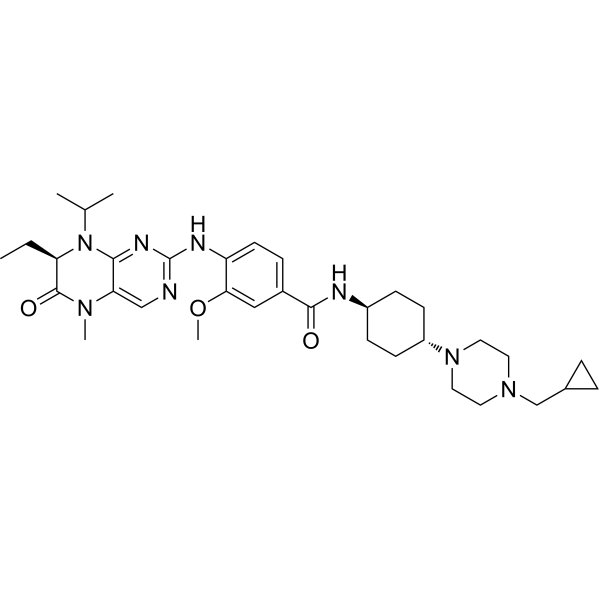
Volasertib (BI 6727) is an orally active, highly potent and ATP-competitive Polo-like kinase 1 (PLK1) inhibitor with an IC50 of 0.87 nM. Volasertib inhibits PLK2 and PLK3 with IC50s of 5 and 56 nM, respectively. Volasertib induces mitotic arrest and apoptosis. Volasertib, a dihydropteridinone derivative, shows marked antitumor activity in multiple cancer models .
|
-
-
- HY-79256
-
|
Monomethyl auristatin F methyl ester
|
ADC Payload
|
Cancer
|
|
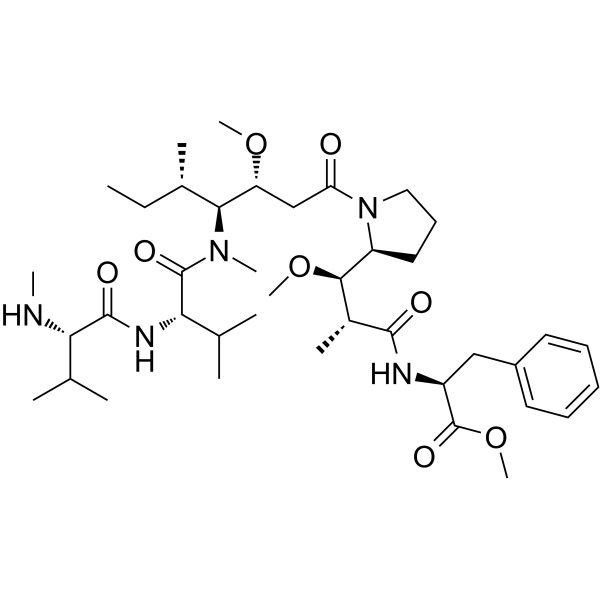
MMAF-Ome, an antitubulin agent, is also an ADC cytotoxin. MMAF-Ome inhibits several tumor cell lines with IC50s of 0.056 nM, 0.166 nM, 0.183 nM, and 0.449 nM for MDAMB435/5T4, MDAMB361DYT2, MDAMB468, and Raji (5T4 -) cell lines, respectively.
|
-
-
- HY-P99706
-
|
AK 117
|
CD47
Interleukin Related
|
Cancer
|
|
Ligufalimab (AK 117) is a humanized IgG4 anti-CD47 monoclonal antibody. Ligufalimab does not induce RBC hemagglutination, and induces phagocytosis. Ligufalimab shows anti-tumor activity .
|
-
-
- HY-107260
-
|
Lucidenic acid D2
|
NO Synthase
COX
|
Infection
Inflammation/Immunology
Cancer
|
|
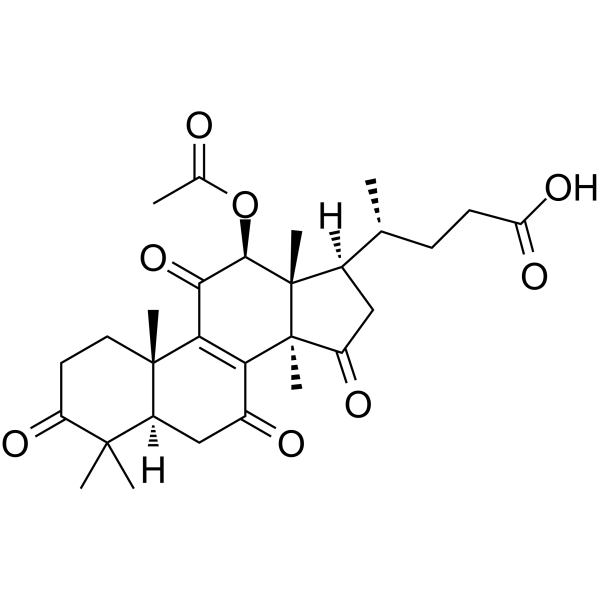
Lucidenic acid D is a highly oxidized triterpenoid with anti-inflammatory and antiviral activities. Lucidenic acid D attenuates lipopolysaccharide-induced release of proinflammatory cytokines and nitric oxide, reduces the expression of inducible nitric oxide synthase (iNOS) and cyclooxygenase-2 (COX-2), and inhibits skin inflammation. Lucidenic acid D suppresses 12-O-tetradecanoylphorbol-13-acetate (TPA)-induced expression of Epstein-Barr virus (EBV) early antigen and maintains the viability of Raji cells. Lucidenic acid D can be used in studies of cancer chemoprevention .
|
-
-
- HY-P99533
-
|
SRF-231; SRF231
|
CD47
Interleukin Related
|
Cancer
|
|
Urabrelimab (SRF231) is a fully human anti-CD47 monoclonal antibody that blocks the CD47-SIRP interaction .
|
-
-
- HY-133131
-
|
|
PROTACs
Epigenetic Reader Domain
|
Cancer
|
|
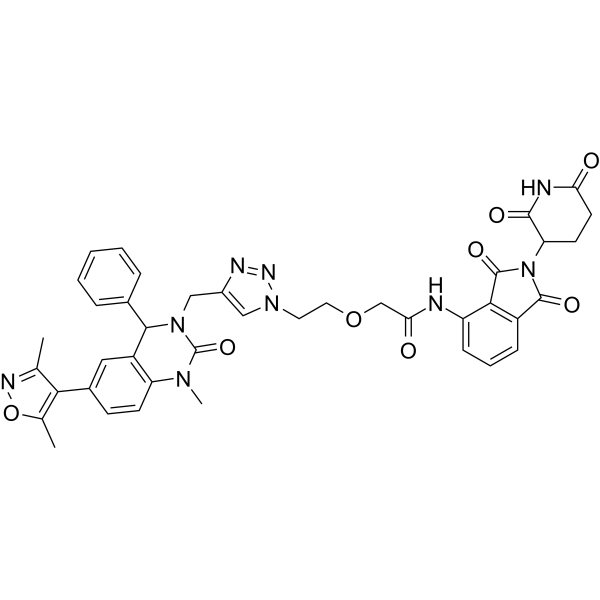
PROTAC BRD4 Degrader-1 is a PROTAC connected by ligands for Cereblon and BRD4 with an IC50 of 41.8 nM against BRD4 BD1. PROTAC BRD4 Degrader-1 can effectively degrade BRD4 protein and suppress c-Myc expression .
|
-
-
- HY-B2117
-
|
|
Epoxide Hydrolase
EBV
|
Infection
Neurological Disease
|
|
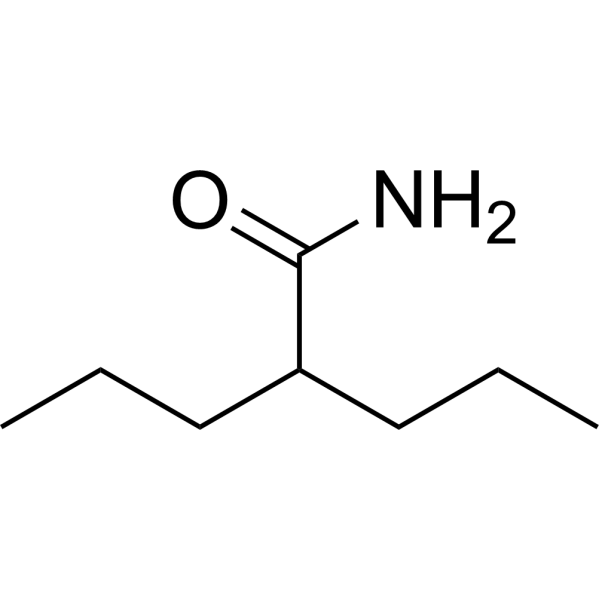
Valpromide is an amide derivative of Valproic acid (HY-10585) and an orally active epoxide hydrolase inhibitor that can cross the blood-brain barrier. Valpromide has antiepileptic, anticonvulsant, and antipsychotic effects. Valpromide also exhibits antiviral activity and can inhibit the reactivation of the EBV lytic cycle .
|
-
-
- HY-P99293
-
|
IDEC 114; Anti-Human CD80 Recombinant Antibody
|
CD28
Apoptosis
|
Cancer
|
|
Galiximab (IDEC-114) is a primatized monoclonal IgG1 antibody targeting CD80. Galiximab variable regions are primatized, and the constant regions are humanized. Galiximab induces antibody-dependent cellular cytotoxicity by blocking CD80-CD28 binding. Galiximab has antitumor activity and can induce apoptosis in tumor cells. Galiximab can be used in the research of relapsed Hodgkin lymphoma and solid tumors .
|
-
-
- HY-18974
-
-
-
- HY-12137A
-
|
BI 6727 trihydrochloride
|
Polo-like Kinase (PLK)
Apoptosis
|
Cancer
|
|
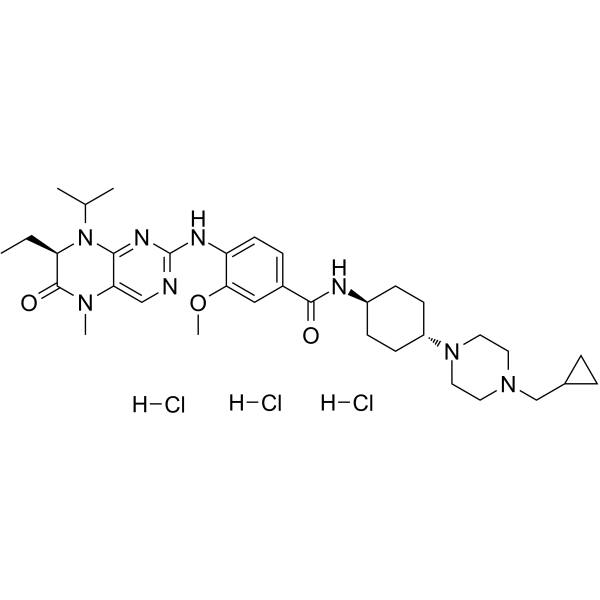
Volasertib (BI 6727) trihydrochloride is an orally active, highly potent and ATP-competitive Polo-like kinase 1 (PLK1) inhibitor with an IC50 of 0.87 nM. Volasertib trihydrochloride inhibits PLK2 and PLK3 with IC50s of 5 and 56 nM, respectively. Volasertib trihydrochloride induces mitotic arrest and apoptosis. Volasertib trihydrochloride, a dihydropteridinone derivative, shows marked antitumor activity in multiple cancer models .
|
-
-
- HY-133136
-
-
-
- HY-W743654
-
|
|
Apoptosis
|
Cancer
|
|
Capsorubin is a carotenoid found in peppers with multiple biological activities. Capsorubin (167 μM) inhibits lipid peroxidation induced by 2,2'-azobis(2,4-dimethylvaleronitrile) (AMVN) in vitro. Capsorubin (1 μM) reduces UVB-induced DNA strand breaks and apoptosis in human dermal fibroblasts. Capsorubin also inhibits Epstein-Barr virus early antigen (EBV-EA) activation induced by phorbol 12-myristate 13-acetate in Raji cells, a marker of tumorigenesis.
|
-
-
- HY-P990870
-
|
|
CD19
IFNAR
Interleukin Related
|
Inflammation/Immunology
|
|
Anti-CD19 Antibody (4G7) is an anti-human CD19 IgG1 monoclonal antibody. Anti-CD19 Antibody (4G7) reduces the killing effect of CAR T cells on Raji cells. Anti-CD19 Antibody (4G7) can be used for research on immunology. Anti-CD19 Antibody (4G7) is often used in flow cytometry. The recommend isotype control of Anti-CD19 Antibody (4G7): Mouse IgG1 kappa, Isotype Control (HY-P99977) .
|
-
-
- HY-168936
-
|
|
PROTACs
Epigenetic Reader Domain
Apoptosis
|
Cancer
|
|
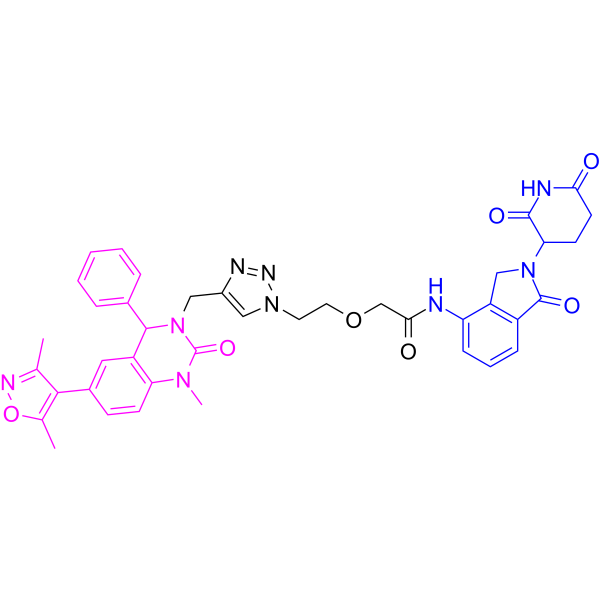
DP-15 is the degrader for GSPT1 and BRD4 with DC50s of 5.25 nM and 0.48 nM. DP-15 exhibits anti-proliferative activity of AML cells and NHL cells with an IC50 of nanomolar levels, arrests the cell cycle at G1 phase, and induces apoptosis in MOLM13. DP-15 exhibits anti-leukemia activity in MOLM-13 xenograft mouse models . (Pink: ligand for target protein JQ-1 carboxylic acid (HY-78695); Black: linker (HY-W262798); Blue: ligand for E3 ligase Cereblon Thalidomide-5-OH (HY-23095))
|
-
-
- HY-137257
-
-
-
- HY-P990189
-
|
|
MHC
Apoptosis
Reactive Oxygen Species (ROS)
|
Infection
Cancer
|
|
Anti-Monkey/Human MHC class II (HLA-DR) Antibody (L243) is a mouse-derived IgG2a κ type antibody inhibitor, targeting to monkey/human MHC class II. Anti-Monkey/Human MHC class II (HLA-DR) Antibody (L243) can inhibits tumor cells proliferation and induce apoptosis. Anti-Monkey/Human MHC class II (HLA-DR) Antibody (L243) increases cellular reactive oxygen species (ROS) and loss of mitochondrial membrane potential in human endothelial cells. Anti-Monkey/Human MHC class II (HLA-DR) Antibody (L243) can be used for the researches of cancer and infection, such as lymphoma .
|
-
-
- HY-W743654R
-
|
|
Apoptosis
Reference Standards
|
Cancer
|
|
Capsorubin (Standard) is the analytical standard of Capsorubin. This product is intended for research and analytical applications. Capsorubin is a carotenoid found in peppers with multiple biological activities. Capsorubin (167 μM) inhibits lipid peroxidation induced by 2,2'-azobis(2,4-dimethylvaleronitrile) (AMVN) in vitro. Capsorubin (1 μM) reduces UVB-induced DNA strand breaks and apoptosis in human dermal fibroblasts. Capsorubin also inhibits Epstein-Barr virus early antigen (EBV-EA) activation induced by phorbol 12-myristate 13-acetate in Raji cells, a marker of tumorigenesis.
|
-
-
- HY-163858
-
|
|
Haspin Kinase
|
Cancer
|
|
Haspin-IN-4 (Compound 60) is a selective inhibitor of Haspin with an IC50 value of 0.01 nM. Haspin-IN-4 possesses anticancer activity and can be used in cancer research .
|
-
-
- HY-P991057
-
|
|
CD47
|
Cancer
|
|
STI-6643 is a fully human IgG4 antibody that targets CD47. STI-6643 blocks CD47-SIRPα interaction, and enables macrophage-mediated phagocytosis of tumor cells. STI-6643 shows anti-tumor activity in mouse lymphoma xenograft models. STI-6643 can be used for the research of Burkitt's lymphoma, solid tumors, relapsed or refractory tumors, and lymphoma. The isotype control for STI-6643 can refer to Human IgG4 (S228P) kappa, Isotype Control (HY-P99003) .
|
-
-
- HY-118917
-
|
|
IMPDH
|
Inflammation/Immunology
|
|
VX-148 is an orally active immunosuppressant, which is a non-competitive inosine-5'-monophosphate dehydrogenase (IMPDH) inhibitor with Ki values for IMPDH Ⅱ and IMPDH Ⅰ of 6 and 14 nM respectively. VX-148 can significantly inhibit the proliferation of human peripheral blood mononuclear cells (PBMC) stimulated by T-cell mitogen (PHA) or B-cell mitogen (SPAS). VX-148 has high selectivity for lymphocytes (such as L1210, Jurkat T cells, and Raji B cells), but has no significant toxicity to non-lymphoid cells. VX-148 can inhibit antibody responses in mouse models and significantly prolong the survival time of transplanted skin in allogeneic skin transplantation models. VX-148 can be used in the research of autoimmune diseases (such as rheumatoid arthritis, psoriasis) and organ transplantation anti-rejection .
|
-
-
- HY-112608
-
|
|
PI3K
|
Cancer
|
|
CHMFL-PI3KD-317 is a highly potent, selective and orally active PI3Kδ inhibitor, with an IC50 of 6 nM, and exhibits over 10-1500 fold selectivity over other class I, II and III PIKK family isoforms, such as PI3Kα (IC50, 62.6 nM), PI3Kβ (IC50, 284 nM), PI3Kγ (IC50, 202.7 nM), PIK3C2A (IC50, >10000 nM), PIK3C2B (IC50, 882.3 nM), VPS34 (IC50, 1801.7 nM), PI4KIIIA (IC50, 574.1 nM) and PI4KIIIB (IC50, 300.2 nM). CHMFL-PI3KD-317 inhibits PI3Kδ-mediated Akt T308 phosphorylation in Raji cells, with an EC50 of 4.3 nM. CHMFL-PI3KD-317 has antiproliferative effects on cancer cells .
|
-
-
- HY-P99736
-
|
BI-754111
|
LAG-3
|
Cancer
|
|
Miptenalimab (BI-754111) is an anti-human LAG-3 antibody (KD: 88.6 nM for h LAG-3). Miptenalimab blocks the interaction of LAG-3 with its ligand MHC-II .
|
-
-
- HY-P991561
-
|
|
CD47
|
Cancer
|
|
AO-176 is a humanized anti-CD47 IgG2 monoclonal antibody. AO-176 induces tumor phagocytosis through blocking the CD47-SIRPα interaction. AO-176 preferentially binds to tumor versus normal cells and directly kills tumor by a cell autonomous mechanism not ADCC (antibody-dependent cell-mediated cytotoxicity). AO-176 demonstrates dose-dependent antitumor activity in tumor xenograft models. AO-176 can be used for the researches of cancer, such as lymphoma .
|
-
-
- HY-19826
-
|
|
DNA Methyltransferase
ADC Payload
Autophagy
Apoptosis
|
Cancer
|
|
Isofistularin-3 is a direct, DNA-competitive DNMT1 inhibitor, with an IC50 of 13.5 μM. Isofistularin-3, as a DNA demethylating agent, induces cell cycle arrest and sensitization to TRAIL in cancer cells. Isofistularin-3 can be used as an ADC cytotoxin .
|
-
-
- HY-114809
-
|
|
Reactive Oxygen Species (ROS)
NADPH Oxidase
|
Inflammation/Immunology
Cancer
|
|
AL-1 is a potent O2 - generation inhibitor (IC50 = 7.6 μM) through the inhibition of leukocytic NADPH oxidase. AL-1 inhibits 12-O-Tetradecanoylphorbol-13-acetate (TPA)-induced H2O2 production. AL-1 reduces tumor incidence in ICR mouse skin. AL-1 can be used for research on oxidative stress-related diseases including cancer .
|
-
-
- HY-12137R
-
|
BI 6727 (Standard)
|
Polo-like Kinase (PLK)
Apoptosis
Reference Standards
|
Cancer
|
|
Volasertib (Standard) is the analytical standard of Volasertib. This product is intended for research and analytical applications. Volasertib (BI 6727) is an orally active, highly potent and ATP-competitive Polo-like kinase 1 (PLK1) inhibitor with an IC50 of 0.87 nM. Volasertib inhibits PLK2 and PLK3 with IC50s of 5 and 56 nM, respectively. Volasertib induces mitotic arrest and apoptosis. Volasertib, a dihydropteridinone derivative, shows marked antitumor activity in multiple cancer models .
|
-
-
- HY-104072
-
-
-
- HY-P991462
-
|
|
CD38
|
Cancer
|
|
GBR-1342 is a human bispecific antibody (bsAb) targeting CD38 & CD3. GBR-1342 inhibits the activity of Daudi, RAJI, RPMI8226, IM-9, and NCI-H929 cancer cell lines. GBR-1342 can be used in myeloma research .
|
-
-
- HY-N7507
-
|
|
Others
|
Cancer
|
|
Sempervirine is an indole alkaloid isolated from Gelsemium sempervirens with anti-tumor activities. Sempervirine is against sempervirine-sensitive tumor cells with EC50 values of 2.7 μM, 1.77 μM, and 1.96 μM for Raji, MDA-MB-231 and HeLa cells, respectively .
|
-
-
- HY-136342
-
|
|
Others
|
Cancer
|
|
Antitumor agent-23 is a potent anti-cancer agent with GI50s of 38, 48, 5, 27, 80, and 28 nM for lymphoma cell line GRANTA-519, KARPAS-422, KARPAS-299, RAMOS, DAUDI, and RAJI, respectively. Antitumoral activity .
|
-
-
- HY-143427
-
|
|
MALT1
|
Cancer
|
|
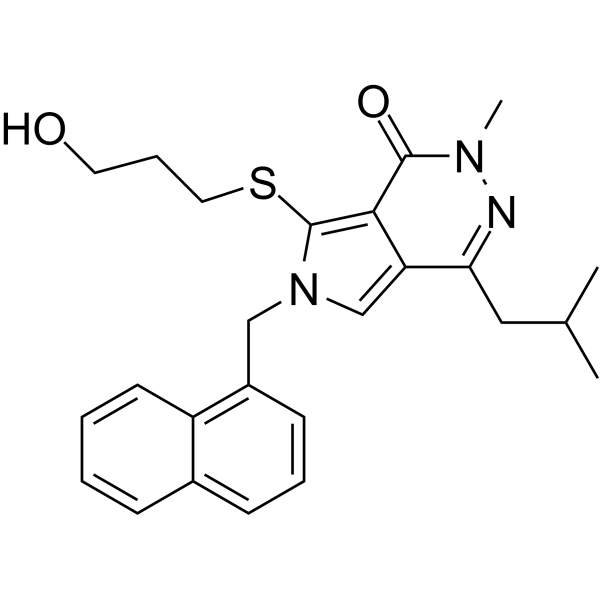
MALT1-IN-9 is a potent MALT1 protease inhibitor with a IC50 of <500 nM in Raji MALT1-GloSensor cells. MALT1-IN-9 has anticancer effects (WO2021000855A1; Compound 5) .
|
-
-
- HY-151381
-
|
|
Dihydroorotate Dehydrogenase
|
Cancer
|
|
hDHODH-IN-10 is a selective, potent and orally active hDHODH inhibitor, with an IC50 value of 10.9 nM. hDHODH-IN-10 forms hydrogen bonds with key residues Arg136 and Gln47. hDHODH-IN-10 inhibits the proliferation of cancer cells. hDHODH-IN-10 can be used in the research of cancers, such as AML, colorectal cancer .
|
-
-
- HY-163444
-
|
|
Apoptosis
|
Cancer
|
|
Apoptosis inducer 15 (Compound 3) induces cell apoptosis and cell cycle arrest at G2/M phase. Apoptosis inducer 15 is cytotoxicitic without causing DNA fragmentation .
|
-
-
- HY-151808
-
|
|
Btk
|
Neurological Disease
Inflammation/Immunology
Cancer
|
|
JS25 is a selective and covalent inhibitor of BTK that inactivates BTK with an IC50 value of 5.8 nM by chelating Tyr551. JS25 inhibits cancer cells proliferation, pronounces cell death, and promotes murine xenograft model of Burkitt’s lymphoma. JS25 effectively crosses the blood-brain barrier .
|
-
-
- HY-108352
-
|
VCE 004
|
Topoisomerase
|
Cancer
|
|
HU 331 (HU 331) is a highly specific Topoisomerase II inhibitor with anticancer activity. HU 331 has shown promising inhibitory effects on human cancer cell lines in vitro and human tumor xenografts in nude mice in vivo .
|
-
-
- HY-143472
-
|
|
PI3K
Akt
Apoptosis
|
Cancer
|
|
PI3Kδ-IN-11 is a highly potent and selective PI3Kδ inhibitor with IC50 value of 27.5 nM. PI3Kδ-IN-11 dose-dependently blocks the activity of PI3K/Akt pathway. PI3Kδ-IN-11 can be used for researching B or T cell-related malignancies .
|
-
-
- HY-147754
-
|
|
Btk
JAK
|
Inflammation/Immunology
|
|
JAK3/BTK-IN-6 (compound 14h) is a potent BTK and JAK3 dual inhibitor, with IC50 values of 0.6 and 0.4 nM, respectively. JAK3/BTK-IN-6 shows good metabolic stability in human liver microsome. JAK3/BTK-IN-6 can be used for hematological and immune diseases research .
|
-
-
- HY-N19721
-
|
|
EBV
|
Infection
Cancer
|
|
Brasimarin B is a 4-phenylcoumarin compound found in the stem bark of Calophyllum brasiliense. Brasimarin B inhibits TPA (HY-18739)-induced EBV-EA activation in Raji cells .
|
-
-
- HY-N13723
-
|
|
EBV
|
Cancer
|
|
Methyl lucidenate D is a selective inhibitor of Epstein-Barr virus early antigen (EBV-EA) activation with an IC50 of 290 mol ratio/32 pmol TPA. Methyl lucidenate D exerts potential anti-tumor promoting activity by inhibiting TPA-induced EBV-EA activation and maintains major Raji cell survival (70%) at effective concentrations. Methyl lucidenate D can be used in the field of cancer chemoprevention .
|
-
-
- HY-171186
-
|
|
Drug Derivative
|
Cancer
|
|
EAPB0202 is an imidazolium and quinoxaline derivative. EAPB0202 shows significant cytotoxicity to A375 human melanoma cell line with an IC50 of 2.35 μM. EAPB0202 can be used in the study of cancer .
|
-
-
- HY-N18238
-
|
|
EBV
|
Cancer
|
|
11-Oxomogroside I A1 is a cucurbitane-type triterpenoid glycoside and also an EBV-EA inhibitor. 11-Oxomogroside I A1 exerts 100% inhibitory effect on the induction of EBV-EA. 11-Oxomogroside I A1 can be used for cancer research .
|
-
-
- HY-183188
-
-
-
- HY-N16810
-
-
-
- HY-N17354
-
|
|
EBV
|
Infection
|
|
Glycocitrine II is an acridone alkaloid. Glycocitrine II can be isolated from the Rutaceous plants. Glycocitrine II inhibits 12-O-tetradecanoylphorbol-13-acetate (TPA)-induced EBV-EA activation .
|
-
-
- HY-N18310
-
|
|
Others
|
Cancer
|
|
Robustaflavone 4′-methyl ether is a biflavonoid compound that can be isolated from the whole plant of Selaginella gracillima. Robustaflavone 4′-methyl ether inhibits the growth of cancer cells. Robustaflavone 4′-methyl ether can be used in the research of EBV-transformed B-cell carcinoma and lung cancer .
|
-
-
- HY-182314
-
|
|
JAK
STAT
Apoptosis
|
Cancer
|
|
JAK3-IN-20 is a selective and orally active JAK3 inhibitor with an IC50 of 0.7473 nM. JAK3-IN-20 forms a covalent bond with JAK3 Cys909, outcompetes ATP for catalytic site binding, and blocks JAK-STAT pathway activation. JAK3-IN-20 inhibits migration, proliferation, and tumor growth of Bortezomib (HY-10227)-resistant cancer cells. JAK3-IN-20 induces dose-dependent apoptosis. JAK3-IN-20 can be used for the research of Bortezomib-resistant multiple myeloma .
|
-
-
- HY-N16853
-
-
-
- HY-N17638
-
|
|
EBV
NO Synthase
|
Infection
Cancer
|
|
7-Oxomogroside V is a cucurbitane-type glycoside isolated from the fruits of Siraitia grosvenorii. 7-Oxomogroside V inhibits the activation of Epstein-Barr virus early antigen (EBV-EA) induced by TPA (HY-18739). 7-Oxomogroside V also exerts weak inhibitory effects on the activation of the nitric oxide donor NOR 1. 7-Oxomogroside V is applicable to tumor-related research .
|
-
-
- HY-P991996
-
|
|
Fc Receptor (FcR)
|
Inflammation/Immunology
|
|
SM201 is a monoclonal antibody that targets FcγRIIB. SM201 specifically binds to FcγRIIB, enhances ITIM phosphorylation of FcγRIIB in an immune complex-dependent manner, and acts synergistically with immune complexes to amplify inhibitory signals. SM201 does not induce apoptosis, activate NK cells, or deplete B cells. SM201 can be used for the research of autoimmune diseases .
|
-
-
- HY-P992176
-
|
|
CD47
|
Cancer
|
|
ADU-1805 is a humanized monoclonal IgG2 antibody, a selective, pan-allelic anti-SIRPα antibody, with a Kd value of 11.0 × 10 -9 M for hSIRPαV1. ADU-1805 binds to all known hSIRPα alleles. ADU-1805 blocks the SIRPα-CD47 interaction, promotes phagocytosis of cells, and enhances trogocytosis of cells. ADU-1805 can be used in research related to Burkitt lymphoma .
|
-
- HY-N9752
-
|
|
EBV
|
Infection
|
|
Mogroside II B is a cucurbitane-type glycoside with a sweet taste in water. Mogroside II B inhibits the activation of Epstein Barr virus early antigen (EBV-EA) induced by Phorbol 12-myristate 13-acetate (TPA) (HY-18739). Mogroside II B exerts weak inhibitory effects on the activation of the nitric oxide (NO) donor (NOR1) .
|
-
- HY-N17999
-
|
|
EBV
|
Infection
Cancer
|
10-Hydroxypheophorbide A is a chlorophyll-related compound found in the leaves of Neptunia oieracea. 10-Hydroxypheophorbide A inhibits the activation of tumor promoter-induced Epstein-Barr virus (EBV) activation. 10-Hydroxypheophorbide A exhibits photo-induced cytotoxicity in cancer cells .
|
-
- HY-183187
-
|
|
Estrogen Receptor/ERR
COX
|
Cancer
|
|
4H-Chromen-4-one-o-carborane is an estrogen receptor (ER) agonist, with an EC50 of 0.9 μM for ERα and an EC50 of 11.1 μM for ERβ. 4H-Chromen-4-one-o-carborane also acts as an inhibitor of COX-1 and COX-2, with an IC50 of 6.6 μM for COX-1 and an IC50 of 17.7 μM for COX-2 .
|
-
- HY-182246
-
|
|
PARP
|
Neurological Disease
Inflammation/Immunology
Cancer
|
|
MC2050 is a selective PARP-1 inhibitor with an IC50 of 119 nM. MC2050 functionally inhibits PARP-1 activity, including hyperactivation induced by oxidative stress, and reduces the poly (ADP-ribosyl) ation level of histone H1. MC2050 protects neuroblastoma cells from oxidative stress-mediated cell death induced by hydrogen peroxide. MC2050 is applicable to research related to neuroblastoma and Burkitt lymphoma .
|
-
- HY-P992211
-
|
|
Fc Receptor (FcR)
|
Cancer
|
|
Anti-CD32b/FCGR2B Antibody (2B6) is a human monoclonal antibody targeting CD32B. Anti-CD32b/FCGR2B Antibody (2B6) can be used for research on B-cell lymphoma .
|
-
- HY-N18106
-
|
|
EBV
|
Cancer
|
|
Amygdalinic acid (Compound 3) is a glycoside. Amygdalinic acid can be isolated from Persicae Semen. Amygdalinic acid inhibits Epstein-Barr virus early antigen activation. Amygdalinic acid delays two-stage chemical carcinogenesis in mouse skin, reduces papilloma incidence .
|
-
- HY-P991902
-
|
|
CD20
|
Cancer
|
|
NAV006 is an anti-CD20 antibody variant of Rituximab (HY-P9913) with a Kd of 30.5 nM to CD20. NAV006 exhibits reduced interaction with CA125 and demonstrates enhanced antibody-dependent cellular cytotoxicity (ADCC) and complement-dependent cytotoxicity (CDC) activity. NAV006 displays antitumor activity against lymphoma and can be used in research on non-Hodgkin lymphoma .
|
-
- HY-N18117
-
|
|
EBV
|
Infection
Cancer
|
|
21-Hydroxyisoohchininolide is a salannin-type limonoid. 21-Hydroxyisoohchininolide inhibits lipopolysaccharide (LPS, HY-D1056)-induced nitric oxide production in mouse macrophages. 21-Hydroxyisoohchininolide exhibits cytotoxic activity against leukemia cells and breast cancer cells. 21-Hydroxyisoohchininolide suppresses phorbol 12-myristate 13-acetate (PMA) (HY-18739)-induced activation of Epstein-Barr virus early antigen in lymphocytes. 21-Hydroxyisoohchininolide can be used for the research of leukemia, breast cancer and inflammatory diseases .
|
-
- HY-P991935
-
|
|
Apoptosis
|
Cancer
|
|
ANT1034 is humanized anti-CD52 antibody. ANT1034 directs antibody dependent and complement dependent cell cytotoxicity, induces Apoptosis when cross-linked or in the presence of a cross-linking antibody. ANT1034 leads to increased survival in a SCID CD52 tumour xenograft model. ANT1034 can be used for the research of B cell malignancies .
|
-
| Cat. No. |
Product Name |
Target |
Research Area |
Image |
-
- HY-P99706
-
|
AK 117
|
CD47
Interleukin Related
|
Cancer
|
|
Ligufalimab (AK 117) is a humanized IgG4 anti-CD47 monoclonal antibody. Ligufalimab does not induce RBC hemagglutination, and induces phagocytosis. Ligufalimab shows anti-tumor activity .
|
-
(5)
-
- HY-P99533
-
|
SRF-231; SRF231
|
CD47
Interleukin Related
|
Cancer
|
|
Urabrelimab (SRF231) is a fully human anti-CD47 monoclonal antibody that blocks the CD47-SIRP interaction .
|
-
(5)
-
- HY-P99293
-
|
IDEC 114; Anti-Human CD80 Recombinant Antibody
|
CD28
Apoptosis
|
Cancer
|
|
Galiximab (IDEC-114) is a primatized monoclonal IgG1 antibody targeting CD80. Galiximab variable regions are primatized, and the constant regions are humanized. Galiximab induces antibody-dependent cellular cytotoxicity by blocking CD80-CD28 binding. Galiximab has antitumor activity and can induce apoptosis in tumor cells. Galiximab can be used in the research of relapsed Hodgkin lymphoma and solid tumors .
|
-
(5)
-
- HY-P990870
-
|
|
CD19
IFNAR
Interleukin Related
|
Inflammation/Immunology
|
|
Anti-CD19 Antibody (4G7) is an anti-human CD19 IgG1 monoclonal antibody. Anti-CD19 Antibody (4G7) reduces the killing effect of CAR T cells on Raji cells. Anti-CD19 Antibody (4G7) can be used for research on immunology. Anti-CD19 Antibody (4G7) is often used in flow cytometry. The recommend isotype control of Anti-CD19 Antibody (4G7): Mouse IgG1 kappa, Isotype Control (HY-P99977) .
|
-
(5)
-
- HY-P990189
-
|
|
MHC
Apoptosis
Reactive Oxygen Species (ROS)
|
Infection
Cancer
|
|
Anti-Monkey/Human MHC class II (HLA-DR) Antibody (L243) is a mouse-derived IgG2a κ type antibody inhibitor, targeting to monkey/human MHC class II. Anti-Monkey/Human MHC class II (HLA-DR) Antibody (L243) can inhibits tumor cells proliferation and induce apoptosis. Anti-Monkey/Human MHC class II (HLA-DR) Antibody (L243) increases cellular reactive oxygen species (ROS) and loss of mitochondrial membrane potential in human endothelial cells. Anti-Monkey/Human MHC class II (HLA-DR) Antibody (L243) can be used for the researches of cancer and infection, such as lymphoma .
|
-
(5)
-
- HY-P991057
-
|
|
CD47
|
Cancer
|
|
STI-6643 is a fully human IgG4 antibody that targets CD47. STI-6643 blocks CD47-SIRPα interaction, and enables macrophage-mediated phagocytosis of tumor cells. STI-6643 shows anti-tumor activity in mouse lymphoma xenograft models. STI-6643 can be used for the research of Burkitt's lymphoma, solid tumors, relapsed or refractory tumors, and lymphoma. The isotype control for STI-6643 can refer to Human IgG4 (S228P) kappa, Isotype Control (HY-P99003) .
|
-
(5)
-
- HY-P99736
-
|
BI-754111
|
LAG-3
|
Cancer
|
|
Miptenalimab (BI-754111) is an anti-human LAG-3 antibody (KD: 88.6 nM for h LAG-3). Miptenalimab blocks the interaction of LAG-3 with its ligand MHC-II .
|
-
(5)
-
- HY-P991561
-
|
|
CD47
|
Cancer
|
|
AO-176 is a humanized anti-CD47 IgG2 monoclonal antibody. AO-176 induces tumor phagocytosis through blocking the CD47-SIRPα interaction. AO-176 preferentially binds to tumor versus normal cells and directly kills tumor by a cell autonomous mechanism not ADCC (antibody-dependent cell-mediated cytotoxicity). AO-176 demonstrates dose-dependent antitumor activity in tumor xenograft models. AO-176 can be used for the researches of cancer, such as lymphoma .
|
-
(5)
-
- HY-P991462
-
|
|
CD38
|
Cancer
|
|
GBR-1342 is a human bispecific antibody (bsAb) targeting CD38 & CD3. GBR-1342 inhibits the activity of Daudi, RAJI, RPMI8226, IM-9, and NCI-H929 cancer cell lines. GBR-1342 can be used in myeloma research .
|
-
(5)
-
- HY-P991996
-
|
|
Fc Receptor (FcR)
|
Inflammation/Immunology
|
|
SM201 is a monoclonal antibody that targets FcγRIIB. SM201 specifically binds to FcγRIIB, enhances ITIM phosphorylation of FcγRIIB in an immune complex-dependent manner, and acts synergistically with immune complexes to amplify inhibitory signals. SM201 does not induce apoptosis, activate NK cells, or deplete B cells. SM201 can be used for the research of autoimmune diseases .
|
-
(5)
-
- HY-P992176
-
|
|
CD47
|
Cancer
|
|
ADU-1805 is a humanized monoclonal IgG2 antibody, a selective, pan-allelic anti-SIRPα antibody, with a Kd value of 11.0 × 10 -9 M for hSIRPαV1. ADU-1805 binds to all known hSIRPα alleles. ADU-1805 blocks the SIRPα-CD47 interaction, promotes phagocytosis of cells, and enhances trogocytosis of cells. ADU-1805 can be used in research related to Burkitt lymphoma .
|
-
(5)
-
- HY-P992211
-
|
|
Fc Receptor (FcR)
|
Cancer
|
|
Anti-CD32b/FCGR2B Antibody (2B6) is a human monoclonal antibody targeting CD32B. Anti-CD32b/FCGR2B Antibody (2B6) can be used for research on B-cell lymphoma .
|
-
(5)
-
- HY-P991902
-
|
|
CD20
|
Cancer
|
|
NAV006 is an anti-CD20 antibody variant of Rituximab (HY-P9913) with a Kd of 30.5 nM to CD20. NAV006 exhibits reduced interaction with CA125 and demonstrates enhanced antibody-dependent cellular cytotoxicity (ADCC) and complement-dependent cytotoxicity (CDC) activity. NAV006 displays antitumor activity against lymphoma and can be used in research on non-Hodgkin lymphoma .
|
-
(5)
-
- HY-P991935
-
|
|
Apoptosis
|
Cancer
|
|
ANT1034 is humanized anti-CD52 antibody. ANT1034 directs antibody dependent and complement dependent cell cytotoxicity, induces Apoptosis when cross-linked or in the presence of a cross-linking antibody. ANT1034 leads to increased survival in a SCID CD52 tumour xenograft model. ANT1034 can be used for the research of B cell malignancies .
|
-
(5)
| Cat. No. |
Product Name |
Category |
Target |
Chemical Structure |
Your information is safe with us. * Required Fields.
Inquiry Information
- Product Name:
- Cat. No.:
- Quantity:
- MCE Japan Authorized Agent:

